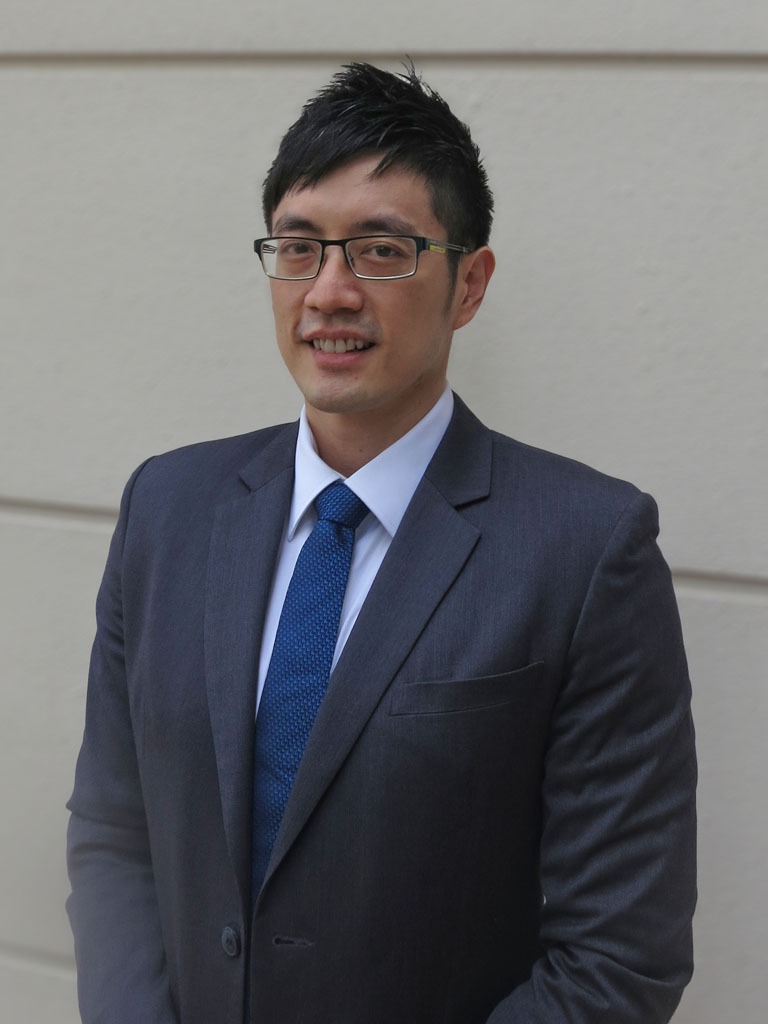
Sam Yam is a Professor and Head of the Management & Organisation Department at the National University of Singapore's (NUS) Business School. He holds the Jardine Cycle & Carriage Professorship and serves as Associate Dean. His research spans strategy, organisational behaviour, applied psychology, ethics, and human-technology interaction. Yam has contributed to over 125 publications, focusing on AI ethics, workplace dynamics, and cross-cultural management. He explores topics like robot replacement effects, abusive supervision, and financial anxiety's intergenerational impacts. His work bridges psychology, ethics, and organisational theory, addressing contemporary challenges in automation, leadership, and human-AI collaboration. Appointments: Head of Management & Organisation (2022–present), Joint Appointment in Arts & Social Sciences (2023–present). Key Research Themes: Future of work, human-technology interaction, ethical leadership, and Machiavellian dynamics. Notable Contributions: Multimodal ADHD diagnostics, leader biases toward robot-using employees, and cultural impacts on team performance. Yam’s interdisciplinary approach integrates psychology, technology, and management, addressing societal issues like AI ethics and workplace automation. His research frequently appears in top journals like the Journal of Management and Annual Review of Organizational Psychology .
Eduardo Araral is an Associate Professor at the Lee Kuan Yew School of Public Policy, National University of Singapore. With over 30 years of experience in academia and government, he holds a PhD in Public Policy from Indiana University-Bloomington under Nobel Laureate Elinor Ostrom. His research focuses on collective action, institutions, and water governance, with publications in Nature Human Behaviour , Public Administration Review , and World Development . He has held fellowships at Stanford University and centers associated with Coase, Ostrom, and Stigler. Research Interests : Collective action, institutional analysis, water governance, digital technologies in public policy, political economy, and socio-ecological systems. Scientific Awards : Ostrom Prize for the Governance of the Commons, Fulbright PhD Scholarship, and Presidential Award for Outstanding Overseas Filipinos. Leadership Roles : Vice Dean for Research, Assistant Dean for Academic Affairs, and Co-Director of the Institute of Water Policy (2016-2022) at LKYSPP. Global Engagement : Advised 20+ international organizations including ADB, World Bank, UNDP, and Fortune 500 companies, while lecturing to 7,000+ government officials across 50+ countries.
Pinchuan Ong is an Assistant Professor in the Strategy and Policy Department at the National University of Singapore (NUS) Business School. He holds dual bachelor’s degrees from NUS (B.Eng. and B.Soc.Sci.) and a Ph.D. in Economics from Northwestern University. Prior to academia, he worked as an economist at Singapore’s Ministry of Trade and Industry. His research focuses on labor economics, public economics, and applied microeconomics. Key areas include labor supply disincentives from child support obligations, taxation effects on labor participation, automation’s impact on labor markets, and the socioeconomic consequences of energy pricing on health outcomes. He has investigated winter mortality linked to heating costs and housing market risks influencing labor demand. Recent research trends emphasize policy-relevant analyses of taxation, automation, and public goods provision. His work bridges theoretical economic frameworks with empirical policy evaluation, often addressing labor market dynamics and welfare outcomes. Ong’s upcoming speaking engagements include the Hong Kong Labor Symposium (June 2024), ROCKWOOL Foundation visits in Berlin, and the BSE Summer Forum in Barcelona. He is open to collaborations during these travels. His full CV and publications are accessible via his personal webpage.
Xiaoyue Shan is an Assistant Professor of Economics at the National University of Singapore (NUS), located at 1 Arts Link, AS2 #05-36. She holds a Ph.D. in Economics from the University of Zurich (2021) and previously conducted postdoctoral research at the Wharton School of the University of Pennsylvania. Her research focuses on labor economics, behavioral/experimental economics, and gender economics, employing experimental and quasi-experimental methods to study topics like gender disparities, discrimination, social interactions, and skill development. Her work explores how peer groups influence personality traits (e.g., conscientiousness, competitiveness), discrimination mechanisms in labor markets, and the impact of policies on gender dynamics. Notable studies include examining sequential spillover effects in resume evaluations and analyzing pension systems' effects on child investment in China. Teaching interests align with her research, emphasizing behavioral and experimental economics. She is reachable at x.shan@nus.edu.sg .
Roles and Affiliations: Tien Foo Sing is the Provost's Chair Professor in the Department of Real Estate at the NUS Business School, National University of Singapore. He serves on the Management Board of the Institute of Real Estate and Urban Studies (IREUS) and was its former Director (2017–2022). He has held leadership roles including Head of the Department of Real Estate (2020–2022) and past President of the Asian Real Estate Society (AsRES). He is a CLC Fellow (2024–2026), Fellow of AsRES, and a Fellow of the Weimer School of Advanced Studies. He edits the International Real Estate Review and serves on editorial boards of journals like Real Estate Economics and Journal of Real Estate Finance and Economics. Education: PhD (Land Economy) and MPhil (Land Economy) from the University of Cambridge, UK; BSc (Estate Management) from NUS. Research Interests: Focuses on urban planning, real estate economics, housing markets, climate finance, transport economics, and environmental policy. His work bridges theory and policy, addressing issues like urban resilience, intergenerational mobility, and environmental externalities. Recent studies include impacts of sea level rise on housing prices, ESG-REIT linkages, and PropTech adoption. Awards: Recognized with the Outstanding Referee Award (2017) for Real Estate Economics, Fellowships from AsRES and the Weimer School, and book awards for his 'Kiasunomics' series. Professional Activities: Serves on government boards (e.g., Valuation Review Board, Singapore Chapter of APREA) and advises organizations like the PropTech Association of Singapore. His work influences policy on housing, transportation, and sustainable development. Labs/Teams: Leads research initiatives through IREUS and collaborates with institutions like the Sustainable & Green Finance Institute (SGFIN). His projects often involve large-scale data analysis (e.g., smart card transit data, housing transactions).
Alberto Salvo is an Associate Professor at the National University of Singapore (NUS), holding a PhD from the London School of Economics. His research spans environmental economics, industrial organisation, and applied microeconomics, with a focus on urban pollution, consumer behavior, and climate action. Environmental Economics & Policy (Undergraduate) Economics of the Environment (PhD) Advanced Industrial Organisation (PhD) His work examines air pollution impacts on health and productivity, fuel switching dynamics in megacities, and behavioral responses to environmental stress. Recent publications analyze particulate pollution in China, temperature effects in tropical cities, and plastic waste patterns linked to food delivery. Notable awards include the JAERE Best Paper Award (2020), Robert Mundell Prize (2010), and Antitrust Policy Award (2007). His collaborations span institutions in Brazil, China, and Singapore.
Zhaoli Song is an Associate Professor at the Department of Management and Organisation within NUS Business School, Singapore. His research bridges behavioral genetics with organizational behavior, focusing on leadership, AI in the workplace, cross-cultural management, and work-family dynamics. PhD in Human Resources and Industrial Relations (2004), University of Minnesota Master in Statistics (2004), University of Minnesota Master in Applied Psychology (1999), Chinese Academy of Sciences Bachelor in Optics (1995), Sichuan University Dr. Song pioneered molecular genetics applications in management research, achieving media recognition in Economist and Washington Post . His work spans AI strategy formulation, pandemic scenario modeling, and team innovation across Asia. He has taught organizational behavior, HRM, and research methods at undergraduate, Master's, EMBA, and executive levels. Recent publications analyze AI adoption frameworks, emotional dynamics in leader-member exchanges, and genetic determinants of creativity. He served as Academic Director for NUS Asian Pacific EMBA (Chinese) program (2013-2017), demonstrating educational leadership alongside scholarly contributions.
Andrew Francis-Tan serves as Assistant Dean (Student Affairs) and Senior Lecturer at the LKY School of Public Policy, National University of Singapore. Previously, he was associate professor of economics at Emory University. His academic journey spans prestigious institutions including the University of Chicago where he earned his Ph.D. in economics, establishing his foundation in quantitative research methods. Francis-Tan's research program focuses on education, labor economics, and demography, with particular emphasis on patterns of inequality and public policies designed to empower vulnerable populations. His work explores how factors such as race, gender, and religion influence social identities and outcomes across diverse contexts, especially in Asia and Latin America. His interdisciplinary approach bridges economics, sociology, and public policy to address complex social challenges. His extensive publication record shows a clear research trajectory examining ethnic identity formation, religious dynamics under restrictive regulation, gender empowerment effects, and affirmative action policies. The publications span multiple high-impact journals across disciplines including Political Science, Sociology, Public Health, and Economics, demonstrating the cross-cutting relevance of his work. As an educator, Francis-Tan teaches advanced quantitative methods courses for PhD students (PP6706), education economics and policy (PP5196), and principles of economics for policy (PP5001). His teaching portfolio reflects his expertise in applying economic frameworks to policy analysis and his commitment to training the next generation of policy professionals with rigorous analytical skills.
Maria Monica Wihardja serves as a Visiting Fellow and Co-coordinator of the Media, Technology and Society Programme at ISEAS–Yusof Ishak Institute while holding an Adjunct Assistant Professor position at the National University of Singapore. Her career bridges academic research and high-impact policy engagement, including former roles as World Bank Economist in the Poverty and Equity Global Practice and senior advisor to Indonesia's Presidential Executive Office on strategic economic reforms. Her educational background features: PhD in Regional Science, Cornell University MPhil in Economics, Cambridge University BA in Applied Mathematics-Economics, Brown University Wihardja's research integrates economic analysis with sociotechnical systems, focusing on digital transformation's impact on labor markets, food security, and democratic processes. She examines how technological disruption creates both opportunities for inclusion and risks of inequality, particularly through studies of platform economies, electoral disinformation, and sustainable agro-food systems. Her methodology combines quantitative econometrics with policy-oriented field research, often leveraging large-scale datasets from government and private sector partnerships. Analysis of her recent publications reveals three dominant research trajectories: (1) Digital economy effects on labor market polarization and inclusion, (2) Food system resilience through agricultural modernization, and (3) Geopolitical dimensions of supply chain reconfiguration. These intersect with her policy engagement in ASEAN economic integration frameworks and Indonesia's G20 presidency initiatives. Her scientific recognition includes: Nikkei Asian Scholar 2023 award Wihardja actively shapes regional discourse through editorial roles at East Asia Forum and Center for Indonesian Policy Studies. Her grant-funded work frequently involves World Bank partnerships and Indonesian government collaborations, particularly on stunting prevention and food policy reforms. Current projects examine deepfake impacts on electoral integrity and sustainable financing mechanisms for green transitions. She leads the Media, Technology and Society Programme at ISEAS, coordinating interdisciplinary research on digital governance and Southeast Asian technology policy. The programme partners with regional think tanks, government agencies, and private sector stakeholders to develop evidence-based policy responses to technological disruption.
Dr. Hongxuan Lin serves as an Assistant Professor in the Department of Southeast Asian Studies at the National University of Singapore (NUS), Faculty of Arts and Social Sciences. His academic work centers on the complex relationship between Islam and Marxism in Indonesia, with broader interests in progressive Islamic discourses across the Muslim world. As a faculty member at one of Asia's premier research universities, Dr. Lin contributes significantly to Southeast Asian studies through his research, teaching, and publications. Dr. Lin earned his Doctor of Philosophy in History from the University of Washington, Seattle, between 2015 and 2020. His doctoral research focused on Indonesian intellectual history, examining how Muslim identity and Marxist analytical frameworks coexisted in the minds of Indonesian nationalists during the anti-colonial struggle and early republic period. His supervisors were Laurie J. Sears, Christoph Giebel, and Vicente L. Rafael, all prominent scholars in Southeast Asian studies. Dr. Lin's research primarily investigates the intersection of Islam and Marxism in Indonesia from 1915 to 1965, exploring conciliatory discourses where Marxist ideas were theorized as compatible with Islam within frameworks of anti-colonial resistance. He examines how Indonesian intellectuals adapted global political currents to local contexts, challenging state-driven narratives that position Islam and Marxism as mutually exclusive. His work also considers women's contributions to these discourses and is expanding to study the circulation of progressive Islamic ideas across the Indian Ocean region connecting Egypt, Arabia, Iran, South Asia, and the Malay Archipelago. His research reveals how progressive Islamic thinkers addressed socio-economic inequity, women's rights, intercommunal tolerance, and religious governance. Dr. Lin's publications demonstrate a consistent focus on Southeast Asian political history, particularly Indonesia's intellectual landscape during the colonial and post-colonial periods. His scholarship reveals patterns of creative adaptation where Indonesian thinkers engaged with global political currents while transforming them for local contexts. A notable trend across his work is the examination of transnational intellectual networks that connected Southeast Asia with broader global movements, showing how ideas traveled and were transformed across borders. His research challenges simplistic narratives about religious and political identity, revealing instead complex intellectual traditions that defy easy categorization. Dr. Lin is multilingual with proficiency in Indonesian (reading, writing, speaking, and understanding), Chinese (Mandarin) (reading, writing, speaking, and understanding), Dutch (reading), and French (reading). This linguistic capability supports his research across multiple archives and sources in different languages, enhancing the depth and authenticity of his historical analysis. His work bridges multiple disciplinary approaches including history, political science, religious studies, and post-colonial theory.
Assoc Prof Haoming Liu is an Associate Professor in the Department of Economics at National University of Singapore. His research focuses on applied economics, econometrics, and labor economics, with a particular emphasis on labor and demographic economics, health, education, and welfare, as well as economic development and technological change. His work often examines the intersections between environmental factors (e.g., heat, pollution) and economic outcomes, such as labor productivity, crime rates, and educational attainment. He has also contributed to studies on minimum wage policies, housing markets, and fertility-education trade-offs in developing economies. Education: PhD in Economics from the University of Western Ontario, Canada. Research highlights include analyzing the impact of heat on economic activity in tropical cities like Singapore, the effects of air pollution on labor productivity in China, and the role of discount rates in long-term housing market decisions. His teaching interests span labor economics, income distribution, and applied econometrics. Key contributions include demonstrating how heat influences workplace attendance and student performance in air-conditioned versus non-air-conditioned environments, and how minimum wage increases reduce urban crime disparities between low- and high-income communities. His articles frequently employ innovative econometric methods to address policy-relevant questions, such as optimal contest design, microgrid energy trading mechanisms, and urban density pricing in housing markets.
Aidan M Wong is a full-time Assistant Professor of Urban Studies (Education) at the College of Integrative Studies, Singapore Management University. He also serves as Programme Co-Director for the Master of Sustainability (MST) program and holds the Urban Fellow position at the SMU Urban Institute. His work bridges urban studies, economic geography, and sustainability education through interdisciplinary research and teaching. PhD : Queen Mary University of London (2014) MSc : National University of Singapore (2010) BSc : National University of Singapore (2008) Wong's research explores intersections of urban sustainability, active citizenship, and labor dynamics. His publications demonstrate expertise in: Broad Disciplines : Urban Studies, Environmental Science, Economic Geography Key Themes : E-waste regulation, informal labor networks, urban heritage preservation, and circular economy implementation He contributes to educational initiatives through courses like 'Big Questions', 'Urban Cultures', and 'Singapore: Imagining the Next 50 Years', while coordinating the 'Cultures of the Modern World' basket in the MST program.
Melvyn TEO is a Lee Kong Chian Professor of Finance and Deputy Dean (Faculty & Research) at the Lee Kong Chian School of Business, Singapore Management University. He holds a PhD in Economics from Harvard University and has been a prominent figure in finance academia since joining SMU in 2007. Education: PhD in Economics, Harvard University (2002) MA in Economics, Harvard University (1998) BA in Economics and Mathematics (cum laude), Cornell University (1997) Research Interests focus on Empirical Asset Pricing, Hedge Funds, and Behavioral Finance . His work explores topics like hedge fund diversification, manager traits, and socially responsible investing. Notable contributions include analyzing hedge fund performance, liquidity risks, and behavioral biases influencing investment decisions. Awards and Recognition include the 2024 Higher Education Award, Jack Treynor Prize (2017), and Lee Kong Chian Professorship. He has held leadership roles such as Deputy Dean since 2017 and Associate Dean for Research (2011–2016). His research spans 25+ years, with over 50 peer-reviewed articles published in top journals like Journal of Finance and Journal of Financial Economics . Key themes include hedge fund dynamics, market efficiency, and institutional investor behavior. He directs the BNP Paribas Hedge Fund Centre and actively serves on academic conference committees (e.g., China International Conference in Finance). His grants include a Singapore MOE Tier 2 grant (2015–2017).
Eric Charles Thompson is an Associate Professor of Anthropology in the Department of Sociology and Anthropology at the National University of Singapore. With a PhD in sociocultural anthropology from the University of Washington and postdoctoral experience at UCLA's Center for Southeast Asian Studies, his academic career spans over two decades. Teaching Focus: Anthropology, Gender Studies, Southeast Asian Studies, Research Methods Research Specializations: Transnational networking, planetary urbanization, agrarian transitions, and ASEAN regionalism. He has conducted fieldwork across Malaysia, Singapore, Thailand, and Indonesia, examining urban-rural dynamics and cultural shifts in Malay society. His publications include books on rural Malaysia and ASEAN youth identity, with work appearing in journals like Urban Studies and Current Anthropology . Thompson also serves as co-editor of the Asian Journal of Social Sciences and associate editor of the Journal of Southeast Asian Studies .
Eugene TAN Kheng Boon is an Associate Professor of Law at the Yong Pung How School of Law, Singapore Management University (SMU), where he has served since 2013. He holds a JSM from Stanford University (2004), an MSc in Comparative Politics from the London School of Economics (1998), and an LL.B. from the National University of Singapore (1995). His academic roles have included Co-Director of the Centre for Scholars' Development (2012–2017) and earlier positions as Assistant Professor, Lecturer-in-Law, and Senior Tutor. His research focuses on constitutional law, public policy, business ethics, and governance in Singapore. He explores themes such as ethnic relations, corporate social responsibility, and the intersection of law with societal values. Notable projects include studies on Singapore’s management of immigration, religious regulation, and the ASEAN Charter’s implications. Tan’s publications span constitutional law treatises, counter-terrorism policy analyses, and critiques of Singapore’s legal traditions. His work often emphasizes Singapore’s unique blend of pragmatic governance and ethical considerations. He has contributed to international discussions on corporate responsibility in Asia and the evolution of pluralist legal systems. Awarded fellowships from Stanford and the Fulbright Program, Tan has also engaged in public service as a Nominated Member of Parliament (2012–2014) and held roles in bodies like the Singapore Compact for Corporate Social Responsibility. His interdisciplinary approach bridges legal scholarship with real-world governance challenges.