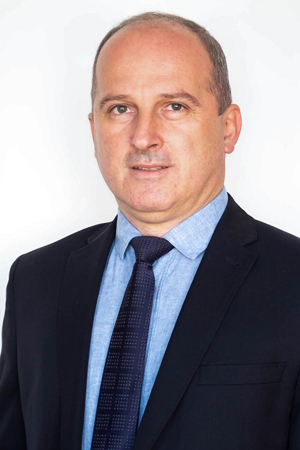
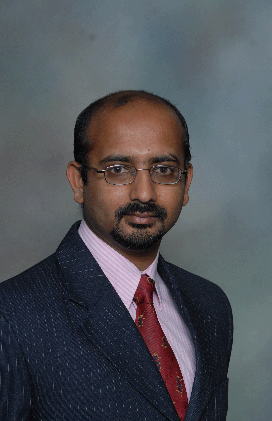
Lauri Laakso is a distinguished academic and researcher holding the title of Extraordinary Professor in Environmental Physics at North-West University, South Africa, alongside his role as Head of Group and Principal Scientist at the Finnish Meteorological Institute (FMI). His primary affiliation is with the FMI's Marine Research Department, where he specializes in atmospheric and marine observations. Laakso holds advanced degrees from the University of Helsinki, including a PhD in Physics (2004) and Docent in Physics (2007). He has held academic positions at the University of Helsinki and North-West University, where he contributed to aerosol physics research. His career includes roles as a Visiting Professor (2008–2010) and University Researcher (2010–2011). His research focuses on aerosol physics, climate change, marine-atmospheric interactions, and defense-related technologies. Key projects include the Utö Marine Research Station (Baltic Sea) and the Welgegund measurement station in South Africa. He has secured over €4.3M in competitive research funding and supervised four PhD students. Laakso's work addresses critical issues like carbon sinks in coastal seas, atmospheric ducting for radar surveillance, and environmental impacts of shipping. His contributions span interdisciplinary fields, combining observational data with advanced modeling to inform climate and environmental policy.
Dr. Xiong Xiao is a Research Fellow in Chemical Engineering at the School of Engineering, University of Western Australia, specializing in thermodynamic and transport properties. His research focuses on heat capacity measurements of hydrocarbon mixtures, refrigerants, and liquefied natural gas, with significant contributions to improving industrial understanding of thermodynamic behaviors. He collaborates globally with institutions including Imperial College London, Ruhr-University Bochum, and NIST. Dr. Xiao leads multiple funded projects including 'Australia-China Net-Zero Collaboration' and 'Investigating Thermodynamic Properties of Hydrogen Enriched Natural Gas'. His work spans thermophysical property analysis of nitrate solutions, hydrogen blends, ammonia mixtures, and LNG systems. Research interests include equation of state development, cryogenics, viscosity modeling, and residual entropy scaling applied to energy systems. Recent publications demonstrate advances in calorimetry techniques and sustainable refrigeration solutions. UWA Research Collaboration Award IACT Junior Award (2023) Best Presenter at Present Around the World IChemE Postgraduate Excellence Award Dr. Xiao maintains active research collaborations through the Fluid Science and Resources Group and secures funding from Australia-Japan Foundation, Woodside FutureLab, and Australian Nuclear Science Organisation.
Dr. James Xiao is an Adjunct Research Fellow in the Department of Chemical Engineering at The University of Western Australia's School of Engineering. His research primarily focuses on the fundamentals of adsorption science and adsorptive separation processes with applications in natural gas processing, carbon capture, and hydrogen purification. His research interests include: Pressure swing adsorption processes Nitrogen rejection from methane Carbon dioxide capture technologies Helium separation and recovery Hydrogen purification Zeolite synthesis from mining byproducts Biogas upgrading to renewable natural gas Dr. Xiao has secured over $2.8 million in research funding since 2016, with $1.4 million as Lead Chief Investigator and another $1.4 million as Co-Chief Investigator. His current projects focus on low-cost separation technology for hydrogen and helium recovery, membrane and adsorption technology for helium production, and biogas upgrading processes. He contributes significantly to teaching as Lecturer and Coordinator for: Gas Processing Technologies Gas Processing 2: Treatment & LNG Production Chemical Engineering Design Project Engineering Research Project supervision Dr. Xiao champions blended learning methodologies, incorporating educational videos and practical exercises to enhance students' understanding of chemical engineering principles and their real-world applications.
Dr. Tom Hughes is a Senior Lecturer in the Department of Civil & Environmental Engineering at Monash University. His research focuses on high-accuracy thermophysical measurements for energy systems, including natural gas, liquefied natural gas (LNG), hydrogen production, and environmentally-friendly refrigerants. He contributes to UN Sustainable Development Goals by advancing sustainable energy technologies and reducing environmental impacts. Education: BEng (Hons) in Chemical Engineering, University of Canterbury, New Zealand PhD in Chemical Engineering, University of Canterbury (2009) Research Interests: Dr. Hughes specializes in thermophysical property measurements at extreme conditions, gas hydrate dissociation, and improving LNG/LH2 production and storage. His work spans carbon capture, hydrogen logistics, and eco-friendly refrigerants. Recent projects include: Integration of liquid air energy storage with LNG production Numerical modeling of liquid hydrogen sloshing in tanks Green methanol production via supercritical water electrolysis Advising & Grants: Accepting PhD students in energy systems, hydrogen technology, and thermodynamics. Projects funded by Mitsubishi Heavy Industries, Shell, Chevron, and the Australian Research Council. Labs/Teams: Member of the Fluid Science and Resources group, collaborating globally on energy sustainability.
Sara Casagrande is a Tutor in the Department of Economics and Management at the University of Trento, affiliated with the Faculty of Economics. She has held teaching roles since 2014, instructing courses such as Investment Instruments and Derivatives, Macroeconomics and Monetary Policy, and Global Economic Scenarios. Her academic career includes post-doctoral research and research assignments at the University of Trento, focusing on projects like the PRIN 2022 initiative analyzing post-pandemic European governance and Eurozone institutional reforms. Education: Higher Diploma in Accounting (2007), Bachelor’s in Economics and Business Management (2010), Master’s in Finance (2012), and PhD in Economics and Management (2017), all from the University of Trento. Research interests span macroeconomics, European integration dynamics, institutional variety, and econometric modeling. She has organized and participated in numerous conferences, including the EASET Conference and events at the Jean Monnet European Centre of Excellence, focusing on comparative economic systems and EU policy analysis. She currently serves as an External Fellow at CefES (University of Milano Bicocca) and on the Scientific Advisory Committee of the EASET Conference. Her recent work emphasizes algorithmic modeling of economic systems, EU core-periphery divides, and the role of comparative economics in post-pandemic policy design. She has contributed to special journal issues on globalization and European integration and serves as a referee for journals like the European Journal of Law and Economics.
Javad Keypour is a Lecturer at the Department of Law, School of Business and Governance, Tallinn University of Technology (since September 2024). He previously held roles such as Senior Expert of Energy Law (April–August 2024) and Junior Research Fellow (2019–2024). His research focuses on energy law, EU legal frameworks, energy security, and geopolitical dynamics. He holds a PhD (2024) and M.A. (2019) from Tallinn University of Technology. Education includes a PhD in Law (2024), M.A. in International Relations (2019), and prior degrees in Chemical Engineering (B.Sc., M.Sc.). He has conducted extensive research on energy policy, including projects on gas market regulation, flaring reduction in Iran, and Caspian energy dynamics. His work bridges legal analysis with geopolitical strategy, emphasizing EU energy security and legal adaptation during energy transitions. Research interests span energy law, EU policy, geopolitical energy dynamics, and sustainable development. Notable awards include the 2022 School of Business and Governance Best Research Article Award. He has supervised two master’s theses and contributed to projects like Georgia’s strategic asset legislation. His publications analyze EU hydrogen strategies, Crimea’s energy implications, and post-Soviet energy geopolitics. Key administrative roles include Editor-in-Chief of Energy Diplomacy Journal since 2015 and previous positions in energy think tanks. Public outreach includes interviews on EU energy policy with Estonian Public Broadcasting and The Geopolitical Puzzle podcast.
Saša Milojević is an Assistant Professor at the Faculty of Engineering, University of Kragujevac , specializing in the Department for Motor Vehicles and Motors. His research focuses on automotive engineering, tribology, alternative fuels, and mechanical systems optimization. He holds a scientific expertise in motor vehicles and engines, with a strong emphasis on material science applications in automotive components and emission reduction strategies. His work spans composite materials for vehicle components, energy efficiency in hybrid powertrains, and tribological optimization of mechanical systems. Recent studies include biomethane-powered vehicles, particulate matter emission control, and machine learning applications in electric vehicle maintenance. He also explores sustainable logistics for recycling rare metals in hybrid vehicles and digital technologies for waste collection services. Publications highlight advancements in stress analysis of structural components, numerical hybridization optimization, and safety protocols for LNG-fueled trucks. His research reflects a commitment to eco-friendly transportation solutions and industrial maintenance innovation. Affiliated with the University of Kragujevac, he contributes to academic activities through the SciDAR repository, publishing works on vehicle dynamics, tribology, and alternative fuel systems. His interdisciplinary approach bridges mechanical engineering with environmental science and digital technologies.
Tore Selland Kleppe is a Professor of Mathematics at the University of Stavanger, affiliated with the Faculty of Science and Technology and the Department of Mathematics and Physics. His research focuses on computational statistics, Bayesian methods, Monte Carlo techniques, and their applications in econometrics and energy economics. Key research interests include Hamiltonian Monte Carlo (HMC) methods, stochastic volatility modeling, commodity price dynamics, and Markov-switching models. He has contributed to advancements in numerical integration for stochastic differential equations, adaptive sampling algorithms, and efficient computation in high-dimensional Bayesian models. Notable work includes developing dynamically rescaled HMC algorithms, incorporating transport maps and importance sampling for hierarchical models, and analyzing commodity futures using state-space frameworks. His publications span top journals like Journal of Computational and Graphical Statistics , Statistics and Computing , and Energy Economics . Collaborations involve experts in econometrics (e.g., Roman Liesenfeld, Atle Oglend) and computational methods. His recent work addresses challenges in restricted domain sampling, storage constraints in energy markets, and adaptive step-size strategies for MCMC efficiency. No awards or grants are explicitly mentioned, but his extensive publication record reflects sustained academic contributions. He actively participates in conferences like the International Conference on Econometrics and Statistics and Norwegian Statistical Association meetings.
Iris Vis is a Professor of Industrial Engineering at the Faculty of Economics and Business, University of Groningen. Her expertise lies in the design and optimization of complex logistics systems, with particular focus on container terminals, vehicle routing, inventory management, and sustainable supply chains. She has established herself as a leading researcher in operations management and operations research, with strong connections to both academic and industry partners. Vis earned her Master's degree in Mathematics from Leiden University and completed her PhD at Erasmus University Rotterdam. Prior to joining the University of Groningen, she served as an Associate Professor at VU University Amsterdam. She has held visiting researcher positions at CIRRELT (Canada), Virginia Tech (USA), and Georgia Institute of Technology (USA), establishing an international research network. Her research interests span multiple domains within logistics and operations management, with recent emphasis on sustainable transport solutions, LNG as an alternative fuel, and the application of mathematical modeling to optimize complex systems. Vis has pioneered the application of Lean principles to educational logistics, working with secondary schools to optimize personalized learning processes. Her work bridges theoretical operations research with practical applications in maritime transport, energy infrastructure, and supply chain management. Analysis of her recent publications shows a clear trend toward sustainability-focused logistics research, with increasing attention to renewable energy integration, alternative fuels (particularly LNG), and environmentally conscious supply chain design. Her work combines rigorous mathematical modeling with practical implementation considerations, making significant contributions to both academic literature and industry practice. Captain of Science of the Top Sector Logistics (2023) Presentation of research results to Queen Máxima Multiple NWO grants for sustainable logistics research Vis has extensive experience collaborating with industry partners, having served as Dean of Industry Relations at the University of Groningen. She actively seeks engagement with businesses and non-profit organizations through direct visits and collaborative projects that bridge fundamental research questions with practical business challenges. Her research has led to numerous industry implementations, particularly in the areas of sustainable transport and logistics optimization. She frequently presents research findings at in-house company trainings and professional conferences. Her work with Groningen Seaports and the logistics industry has established her as a key figure in developing sustainable transport solutions. She leads research teams focused on optimizing container terminal operations, vehicle routing, and inventory management systems, with particular attention to environmental sustainability. Her collaboration with the Top Sector Logistics has positioned her at the forefront of Dutch logistics research and innovation.
Ranjeet Utikar is an Associate Professor at Curtin University's WASM School of Minerals, Energy and Chemical Engineering, within the Faculty of Science and Engineering. His research focuses on multiphase flows, computational fluid dynamics (CFD), energy storage systems, and process intensification. He is also part of the university's Office of the Provost, contributing to academic governance. His work spans diverse applications including lithium-metal battery modeling, LNG vaporization systems, and fluidized bed reactor design. Key areas of expertise include phase-field modeling, bubble dynamics, and structured packing hydrodynamics. Collaborations with industry and academia highlight his commitment to bridging theory and practical engineering solutions. His recent publications emphasize energy storage innovations, particularly in lithium battery dendrite formation, and advanced CFD techniques for multiphase systems. Ongoing projects address challenges in cryogenic surface interactions and novel reactor designs for enhanced process efficiency. Research Interests: Multiphase Flows, Energy Storage, CFD, Process Intensification Key Technologies: Phase-Field Modeling, Droplet Dynamics, 3D Printed Reactor Components
Mauricio Di Lorenzo serves as an Adjunct Research Fellow at the School of Engineering, The University of Western Australia, focusing on critical flow assurance challenges in offshore energy systems. His work addresses hydrate formation risks and operational safety in subsea infrastructure, with direct applications to natural gas production and hydrogen energy transition projects. Research interests center on hydrate management, including blockage prevention in subsea jumpers, techno-economic assessments for LNG-hydrogen systems, and sensor validation for real-time hydrate monitoring. His fingerprint analysis reveals dominant expertise in Hydrate Formation (100%), Test Section Engineering (56%), and Natural Gas Engineering (53%), contributing to UN Sustainable Development Goals for clean energy and climate action. Recent publications demonstrate consistent focus on experimental validation of hydrate behavior in gas-dominant flows, with significant emphasis on pilot-scale testing (40% of work) and environmental/economic analysis (40%). The research trajectory shows increasing interdisciplinary integration between chemical engineering fundamentals and practical offshore operational constraints, particularly through collaborations with industry partners on subsea system safety.
Dr. Tohid N. Borhani is a Senior Lecturer in Chemical Engineering at the University of Wolverhampton's Faculty of Science and Engineering, appointed in December 2020 and promoted to his current position in September 2022. He holds a PhD in Chemical Engineering from University Technology Malaysia (2014) and an MSc from University of Tehran (2009). Prior to Wolverhampton, he held positions at Heriot-Watt University (Assistant Professor), Cranfield University (Research Fellow), University of Sheffield (Research Associate), and Imperial College London (Research Associate). His research focuses on: Process modeling and simulation Machine learning applications in energy systems CO2 capture technologies (absorption/adsorption) Energy conversion and storage solutions Chemometrics and separation processes Dr. Borhani's 60+ publications demonstrate strong focus on sustainable technologies, with recent works concentrated on carbon capture innovation (novel contactors, solvent systems), renewable energy integration, photocatalytic applications, and computational modeling of chemical processes. His articles frequently appear in high-impact energy and environmental journals. Awards & Recognition: Fellow of the Higher Education Academy (FHEA) Research Leadership: Actively supervises PhD students in projects related to CO2 absorption process modification, amine/ionic liquid development for carbon capture, energy systems optimization, and battery performance monitoring. Secured 11 research grants including: IDRIC Ammonia Hydrogen Network (2023-2024) UKCCSRC Flexible Funding for CO2 Capture Modeling (2022-2023) Mercia Clean Tech Project (2023-2025) Carbon capture system design for diesel generators (2024-2026)
Dr James Price is a Principal Research Fellow at The Bartlett School of Environment, Energy and Resources, University College London (UCL), where he has progressed from Research Associate (2014-2018) to Senior Research Associate (2018-2023) and currently holds his principal position since October 2023. His academic home resides within the UCL Energy Institute, a globally recognized center for energy systems research that develops foundational models used by UK government policymakers. Dr Price earned his PhD in Physics from the University of Bristol, establishing his technical foundation before gaining practical experience at the Met Office Hadley Centre, environmental consultancy firms, and environmental NGOs. This multidisciplinary background bridges rigorous scientific analysis with real-world environmental challenges. His research program centers on developing and applying advanced energy system models to navigate the complexities of low-carbon transitions. As co-developer of the highRES model—which provides unprecedented spatial and temporal resolution for analyzing renewable integration in Great Britain—he addresses critical questions about grid stability and system adequacy in high-renewable scenarios. His work with UK TIMES (the UK government's core energy model) and TIAM-UCL for global analysis consistently emphasizes the social and environmental dimensions of energy transitions, moving beyond purely technical solutions to examine community impacts and ecological consequences. Recent research has expanded into the geopolitics of fossil fuel phase-out, investigating how energy security concerns intersect with climate imperatives. Analysis of Dr Price's recent publication record reveals a strategic focus on the operational challenges of energy transition. His work demonstrates particular expertise in wind energy integration economics, electricity market design for decarbonization, and the socio-political dimensions of retiring fossil infrastructure. A recurring theme examines the tension between climate goals and energy security, increasingly incorporating geopolitical analysis as seen in studies of Russian gas realignments and global energy interdependencies. Dr Price actively shapes energy policy through formal consultation responses to UK government bodies on critical topics including electricity market reform, long-duration storage investment frameworks, and national energy security strategies. His research directly supports UN Sustainable Development Goals 7 (Affordable and Clean Energy) and 13 (Climate Action), with practical implications for policymakers navigating the twin challenges of decarbonization and system reliability.
Przemysław Błasiak is a researcher at the Department of Thermodynamics and Renewable Energy Sources , Faculty of Mechanical and Power Engineering , Wrocław University of Science and Technology. His work focuses on thermal engineering, heat transfer, and fluid dynamics in cryogenic and energy systems. Research Interests : Cryogenics, thermal energy storage, nuclear reactor heat transfer, computational fluid dynamics (CFD), and renewable energy systems. His studies address heat pipe technology, organic Rankine cycles, and energy efficiency in industrial processes. Publication Trends : His recent research emphasizes advanced thermal modeling for superfluid helium and pulsating heat pipes optimization of energy systems like ORC with thermal storage CFD applications in cryogenics and nuclear engineering experimental validation of thermal processes design improvements for heat exchangers and expanders Contact : Email: przemyslaw.blasiak@pwr.edu.pl Office: D-2, room 11c, Wrocław, Poland
Dr. Maciej Cholewiński is a researcher at the Faculty of Mechanical and Power Engineering, Wrocław University of Science and Technology, specializing in the Department of Cryogenics and Aerospace Engineering. His work focuses on energy conversion systems, hydrogen propulsion technologies, and cryogenic applications in aerospace contexts. Developing numerical models for photovoltaic energy generation and thermal behavior of superconducting components Investigating cold exergy utilization from LNG regasification Studying mercury emissions from solid fuel combustion Designing waste heat recovery systems for heavy-duty vehicles His recent publications demonstrate interdisciplinary expertise spanning thermal sciences, renewable energy integration, and environmental impact assessment. While no explicit awards or advisees are mentioned, his research contributes to sustainable energy solutions and pollution mitigation strategies.