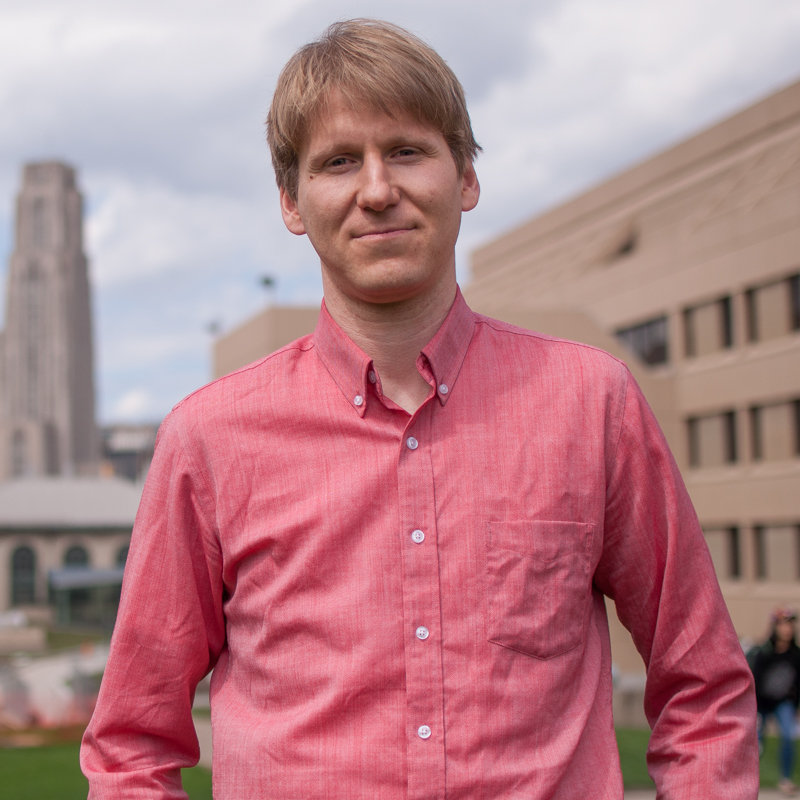
Enea Zaffanella is an Associate Professor in Computer Science at the University of Parma , where he has been affiliated since 2000. His academic career spans from Fellow Researcher to Assistant Professor, culminating in his current role since 2006. He teaches courses in Programming Methodologies , Compilers , and Foundations of Computer Science at both undergraduate and graduate levels. PhD in Computer Science from School of Computing, University of Leeds (2002) Laurea in Computer Science from University of Pisa (1993) Research focuses on Static Analysis and Software Verification using Abstract Interpretation . Key contributions include theoretical frameworks for Constraint Logic Programs analysis, Convex Polyhedra abstractions, and Widening Operators design. His work bridges formal theory with practical implementations like the Parma Polyhedra Library (PPL) and its successor PPLite . Recent publications explore Hybrid Systems verification, Data Science linting tools (Pyra), and EVM Bytecode analysis. He received the Radhia Cousot Young Researcher Best Paper Award in 2019. Collaborations include academic Research Projects (PRIN, ESPRIT) and industrial partnerships through BUGSENG srl .
Raul Castro Fernandez is an Assistant Professor of Computer Science at the University of Chicago and co-founder and Chief Research Officer at invocate. He originated the concept of 'data ecology,' which frames his research on how data moves through and transforms technological, economic, and social systems—and how we can design interventions to make those ecosystems more valuable, equitable, and resilient. He co-leads the Data Ecology research initiative at the Data Science Institute and co-runs Chicago Data Night, a forum that brings together industry and academia in Chicago. Dr. Castro Fernandez's research centers on data ecology, data discovery, data markets, and data integration. His work develops both theoretical frameworks and practical systems that help organizations find, evaluate, and use data effectively. He approaches data as a socio-technical phenomenon, examining how data shapes our world and how we can shape it back through technical, economic, and social interventions. His research bridges computer science, economics, and social science to address fundamental challenges in data ecosystems. His recent publications reveal a strong focus on applying large language models to data management challenges, particularly for tabular data discovery and integration. He has developed innovative systems like Pneuma for LLM-based tabular data navigation, Solo for natural language data discovery, and Nexus for correlation discovery in spatio-temporal data. His work also addresses critical challenges in data valuation, data markets, and responsible data sharing, with applications across industry and research contexts. SIGMOD Test-of-Time Award (2023) NSF CAREER Award (2024) Sloan Research Fellowship (2025) Dr. Castro Fernandez actively mentors students across multiple levels, advising PhD students including Qiming Wang, Yue Gong, and Zhiru Zhu, as well as numerous master's and undergraduate students. His group has developed influential systems including Data Station (for trustworthy data sharing), Ver (for view discovery), Metam (for goal-oriented data discovery), and Solo (for natural language data discovery). These systems address fundamental challenges in data discovery, sharing, and integration, with applications across various domains. He leads the Data Ecology research group at the University of Chicago, which focuses on developing technical, economic, and social interventions to make data ecosystems more valuable, equitable, and resilient. His team works at the intersection of database systems, machine learning, and economics to build practical systems that address real-world data challenges faced by organizations and individuals, with a particular emphasis on the socio-technical aspects of data sharing and discovery.
Wissam Antoun is a PhD Researcher at ALMAnaCH, a research team within INRIA (Institut National de Recherche en Informatique et en Automatique) in Paris. Specializing in Natural Language Processing with a focus on Arabic and French language models, he has developed several influential models including AraBERT (the first Arabic BERT), AraGPT2 (the first Arabic LLM), and CamemBERTa (a French language model based on DeBERTa V3). Prior to his current position, he served as a Research Engineer at ALMAnaCH, a Senior Machine Learning Engineer at Siren Analytics in Beirut, and co-founded the Machine INtelligence Development (MIND) Lab at the American University of Beirut. Wissam's research focuses on developing state-of-the-art NLP technologies for languages displaying high variability, particularly Arabic dialects used on social media. His work spans multilingual language modeling, tokenization techniques for morphologically rich languages, and the development of comprehensive language model suites. Recent projects include Gaperon (a French LLM suite with 1.5B, 8B, and 24B parameters), ModernCamemBERT (the first non-English ModernBERT model), and pioneering work on detecting French AI-generated text. His research demonstrates expertise in model training, evaluation, and practical implementation for real-world NLP applications. His publication record shows consistent high-impact contributions, with AraBERT becoming the most cited Arabic AI paper and most starred Arabic GitHub repository, with over 10 million downloads on Hugging Face. His work has been published at major venues including Findings of ACL 2023 and preprints on arXiv. The trends in his recent articles show a progression from foundational Arabic language models to more sophisticated French language modeling and analysis of AI-generated content. Wissam has received multiple prestigious awards including First Place in the Arabic Sentiment Analysis competition at KAUST (2021) and Second Place in the OSACT4 Shared task on Offensive Language Detection (2020). His technical capabilities span the full AI stack from research to deployment, with expertise in major frameworks, software tools, and programming languages. As an educator, Wissam has served as a Graduate Teaching Assistant at the American University of Beirut, teaching courses in Software Tools, Parallel Programming, and Data Structures and Algorithms. He has also provided NLP instruction through workshop series and supported contestants in the Stars of Science program. His lab work centers around the ALMAnaCH research team at INRIA, where he contributes to advancing French language modeling capabilities through active development on GitHub repositories.
Danfeng Zhang is an Associate Professor of Computer Science at Duke University's Trinity College of Arts & Sciences since 2024. He received his Ph.D. from Cornell University in 2015 . Specializes in computer security and privacy Focuses on timing channels, differential privacy, and formal verification Develops static analysis tools for security guarantees His recent research includes: LLM-assisted verification (HOTOS 2025) Per-user differential privacy in online advertising (IEEE Security & Privacy 2025) GPU uncore vulnerabilities (MICRO 2024) Cache timing analysis (POPL 2024) Key funded projects: NSF SaTC Frontiers (2023-2027): Center for Distributed Confidential Computing CAREER Grant (2023-2026): Non-static information flow policies NSF-Penn State Collaboration (2024-2028): Differentially Private SQL systems Teaching: COMPSCI 390 (System Software) - Spring 2025, 2024 COMPSCI 590 (Advanced Topics) - Fall 2024
Amy Pavel is an Assistant Professor in the Department of Computer Science at the University of Texas at Austin. Prior to this role, she was a Postdoctoral Fellow at Carnegie Mellon University and a Research Scientist at Apple. Her research bridges Human-Computer Interaction and Accessibility, focusing on AI-driven systems for efficient and inclusive communication. Education: PhD in Computer Science from UC Berkeley (2019), advised by Björn Hartmann and Maneesh Agrawala. Teaching: Regularly teaches Human-Computer Interaction courses at UT Austin and UC Berkeley. Her work addresses accessibility challenges through systems like Rescribe (audio descriptions), CrossA11y (video accessibility), and GenAssist (image generation). Recent projects explore AI applications for low-vision learners, photosensitivity warnings in VR, and collaborative video editing. Award highlights include 2023 UIST Best Paper 2022 UIST Best Paper 2020 CHI Honorable Mention (twice) 2018 UC Berkeley EECS Outstanding Graduate Student Instructor She advises PhD students like Mina Huh and Yi-Hao Peng, as well as undergraduates and masters students. Her lab collaborates with institutions including Google, Carnegie Mellon, and UC Berkeley.
Dr. Ana Oprescu is a Visiting Professor at the Informatics Institute of the University of Amsterdam. Her research focuses on the intersection of software engineering, AI, energy efficiency, and data privacy, with particular emphasis on sustainable computing practices. University of Amsterdam, Faculty of Science Key Research Areas: Green software engineering for AI systems, energy-efficient code generation using Large Language Models, privacy-preserving machine learning techniques, and sustainable data processing methods. She actively explores trade-offs between energy consumption, data privacy, and algorithmic accuracy. Her recent publications demonstrate a strong focus on environmentally sustainable computing, with articles covering quantisation effects on AI energy consumption, k-anonymisation impacts on machine learning, and dynamic federated learning approaches. She has also contributed to educational initiatives in green software practices. Scientific Recognition: Recipient of VENI-2014 research grant Dr. Oprescu works at the intersection of software optimization, security, and sustainability, with a particular interest in microservice architectures, model-based testing, and energy-aware system design. She has published extensively on topics like energy-driven software engineering, code clone refactoring, and distributed tracing.
Zhijiang Guo is an Assistant Professor at the DSA Thrust, HKUST (GZ), and an Affiliated Assistant Professor of HKUST. Previously, he was a Senior Researcher at Huawei Noah's Ark Lab and a Postdoc at the Department of Computer Science and Technology at the University of Cambridge, where he was also a member of Trinity College. Dr. Guo earned his PhD in Computer Science from Singapore University of Technology and Design (SUTD) in 2020 under Professor Wei Lu. During his doctoral studies, he was a visiting student at the University of Edinburgh (2019-2020), collaborating with Professors Shay Cohen and Giorgio Satta on Structured Prediction. His undergraduate education was completed at Sun Yat-sen University. Dr. Guo's research focuses on natural language processing and machine learning, with particular emphasis on large language models (LLMs). His work explores fundamental questions about knowledge representation and reasoning capabilities in LLMs, examining how these systems understand and process information. Key research areas include logical consistency in language models, efficient code generation, autoformalization techniques, meta-reasoning benchmarks, and parameter-efficient fine-tuning methods. His work bridges theoretical insights with practical applications requiring systematic reasoning and knowledge representation. Dr. Guo's publication record demonstrates significant contributions to advancing reasoning capabilities in language models. His work spans top-tier conferences including ICML (with spotlight papers in 2025), NeurIPS (including an oral presentation in 2024), ICLR (with spotlight papers in 2024), and ACL. His research shows a clear progression from foundational LLM capabilities toward more sophisticated reasoning systems, with particular attention to evaluating and improving logical consistency, developing meta-reasoning benchmarks, and creating frameworks for automated alignment evaluation. Dr. Guo has served as an Area Chair for NeurIPS 2025, reflecting his standing in the research community. His work on MR-Ben introduced a novel benchmark for evaluating System-2 thinking in LLMs, while his contributions to AVeriTeC created an important dataset for real-world claim verification with web evidence. Dr. Guo actively seeks strong and motivated students to join his research group. His advising philosophy emphasizes fundamental research questions about LLM capabilities while maintaining practical relevance. Current projects focus on understanding the transition from System 1 to System 2 reasoning in language models, with significant implications for creating more reliable and trustworthy AI systems. Dr. Guo leads research efforts focused on the intersection of knowledge representation and reasoning in large language models. His group develops new methodologies for evaluating and improving logical consistency, knowledge composition, and reasoning processes in AI systems. Current projects include investigating the transition from intuitive to deliberate reasoning in LLMs, developing efficient fine-tuning techniques like HydraLoRA, and creating frameworks for automated alignment evaluation in complex reasoning tasks.
Sivajeet Chand is a Researcher at the Technical University of Munich , affiliated with the Chair of Software & Systems Engineering . He began his PhD in July 2024 under the supervision of Prof. Dr. Alexander Pretschner . His research focuses on Generative AI and Large Language Models (LLMs) for code migration and modernization. He holds a master's degree in Software Engineering and Technology from Chalmers University of Technology, Sweden , and has prior industry experience as a Data Engineer at Volvo Group and as a student engineer at Aptiv and Good Solutions. His research interests span Generative AI , LLMs , Software Engineering , and Code Migration . Recent publications highlight his work on design pattern recognition using LLMs (2023), automating requirements review in the automotive sector (2024), and empirical evaluations of LLMs in code migration (2025). His projects often intersect with automotive industry applications , code refactoring , and AI-assisted software development .
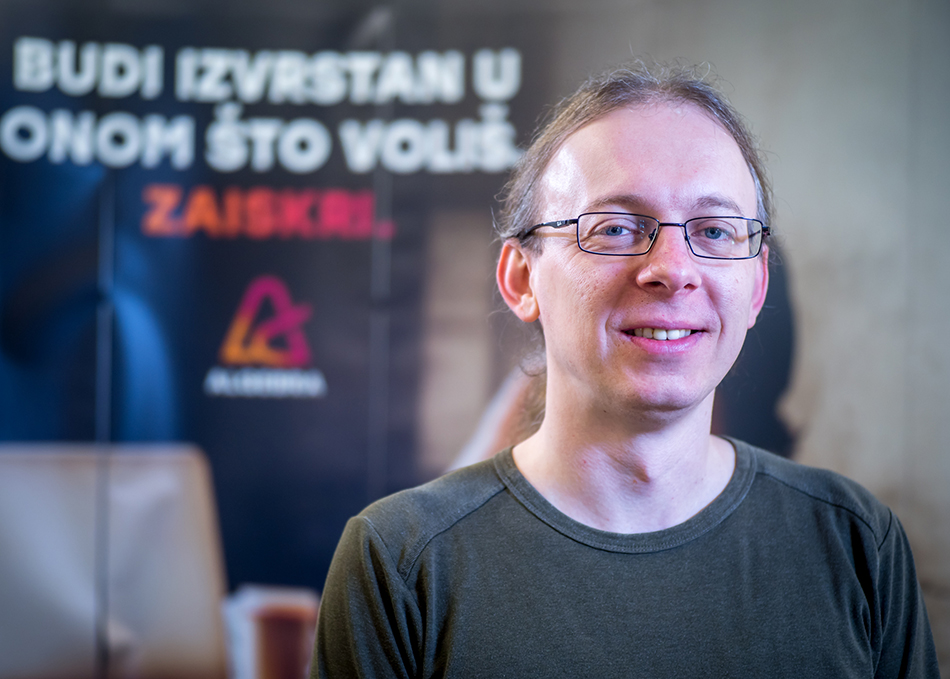
Assoc. Prof. Dr. Sc. Goran Đambić is an Associate Professor at Algebra University in Croatia, focusing on information sciences , computer science , and digital technologies applied to education and social/economic challenges. His work bridges software engineering , machine learning , and cybersecurity with pedagogical innovation in higher education. MSc in 2007, Faculty of Electrical Engineering and Computing, Zagreb His research emphasizes machine learning and automated assessment in education (via systems like AcpSQL), cybersecurity (honeypots), and IoT applications for environmental monitoring. He has published over 25 scientific papers and contributed to advancements in Kubernetes orchestration , ARM/RISC-V architectures , and LPWAN networks . Recent publications highlight trends in AI-driven education , smart public transport , and secure business systems . His work spans SQL query evaluation , containerization , and blockchain applications in communication systems. As a lecturer and researcher, he has held roles at Algebra University since 2007, advancing from lecturer to assistant professor and scientific associate . While no specific scientific awards are listed, his career reflects continuous engagement in digital transformation and pedagogical innovation .
Yizheng Chen is an Assistant Professor in the Department of Computer Science at the University of Maryland, College Park, with a joint appointment at the University of Maryland Institute for Advanced Computer Studies (UMIACS). She holds a Ph.D. in Computer Science from Georgia Institute of Technology and completed postdoctoral research at UC Berkeley and Columbia University. Her research focuses on the intersection of Artificial Intelligence and Security , including: Developing AI techniques for security challenges (malware/vulnerability detection, fraud prevention) Enhancing robustness of machine learning models against adversarial attacks Securing AI coding assistants and LLM-based code generation Analyzing security/privacy risks in AI agents and web-based AI systems Creating datasets and benchmarks for vulnerability detection (e.g., DiverseVul) Her recent publications demonstrate strong emphasis on AI security applications , particularly in malware detection (Android/PDF systems), vulnerability analysis using language models, adversarial robustness techniques, and security implications of AI agents. Research consistently addresses practical security challenges through machine learning innovations. Awards and Honors: ACM CCS Best Paper Award Runner-up (2021) NSF CAREER Award Google ASPIRE Award Anita Borg Memorial Scholarship Top 10 Finalist, CSAW Applied Research Competition (2023, 2017) She leads a research group focused on AI security and actively recruits PhD students. Major grants include NSF CAREER and Google ASPIRE awards supporting work on secure code generation and LLM security.
Stephan Zdancewic is the Schlein Family President’s Distinguished Professor and Associate Chair in the Department of Computer and Information Science. His research primarily focuses on Programming Languages and Security , with emphasis on formal verification, language-based security mechanisms, and compiler design. He leads projects in quantum computing verification, parallel lambda calculus, and LLVM formalization. Research Interests: Formal methods for program verification and synthesis Security in programming language design and low-level systems Parallel and concurrent programming models Quantum computing reliability and error correction Educational initiatives in programming languages His recent publications demonstrate a strong focus on bridging theoretical computer science with practical applications, particularly in verification tools (e.g., Vellvm for LLVM), quantum error correction, and parallel computation models for AI systems. Work frequently appears in top venues like POPL and ECOOP. Awards & Honors: Distinguished Paper Award, ECOOP (2023) Distinguished Paper Award, POPL (2020) Lindback Award for Distinguished Teaching (2018) Alfred P. Sloan Research Fellowship (2009) NSF CAREER Award (2004) He advises PhD students including Calvin Beck, Lawrence Dunn, Joey Velez-Ginorio, Stephen Mell, and Nicholas Rioux. He directs the REU Site for undergraduate research in programming languages (REPL), emphasizing mentorship and formal methods education.
Wei Chen is a Professor at the State Key Laboratory of CAD&CG, College of Computer Science, Zhejiang University, Hangzhou, China. His academic journey began and ended at Zhejiang University, where he earned both his Bachelor's (1996) and Ph.D. (2002) in Computer Science, followed by a visiting Ph.D. position at the Fraunhofer Institute in Germany (2000-2002) and a visiting scholar role at Purdue University (2006-2008). Research Focus: Visualization, Visual Analytics, Biomedical Image Computing, Big Data Analytics. Academic Leadership: Served on editorial boards of journals like IEEE Transactions on Visualization and Computer Graphics, Journal of Visual Informatics, and as Chair of IEEE Pacific Visualization Symposium. Impact: Over 110 IEEE/ACM Transactions and CCF-A papers, four Chinese textbooks on visualization, and two monographs on big data technology. His recent publications (2023-2024) span domains like visual analytics for health insurance fraud detection, quantum circuit visualization, federated learning visualization, urban mobility modeling, and AI-enhanced cultural heritage preservation. A thematic trend shows integration of deep learning, large language models, and human-in-the-loop systems with visual interfaces. Scientific Awards include the Zhejiang Province Natural Science First Prize (2021, 2017), CCF Technology Invention First Prize (2020), Wu Wenjun Artificial Intelligence Science and Technology Progress First Prize (2023), and multiple Best Paper/Poster recognitions at IEEE VIS and Pacific Visualization conferences. He actively mentors graduate students and leads the Visual Analytics Group , contributing to national and international standards in visualization research. His editorial and organizational roles in top conferences further solidify his influence in shaping the field.
Daniel Amyot is a Professor at the School of Electrical Engineering and Computer Science , University of Ottawa , with research spanning Requirements Engineering, Business Process Modeling, Regulatory Compliance, Healthcare Informatics, and Smart Contracts. He is affiliated with the LIFE Research Institute , Institut du Savoir Montfort , and the IBM/Telfer Centre for Business Analytics and Performance . Degrees: Ph.D., Computer Science, University of Ottawa (2001) M.Sc., Computer Science, University of Ottawa (1994) B.Sc., Informatique de génie, Université Laval (1992) Research Interests focus on modeling methodologies like the User Requirements Notation (URN) standard and its jUCMNav tool, integrating BPM with AI for Process Mining, and applying these in healthcare and FinTech contexts. Recent work explores Smart Contracts for transactive energy systems and regulatory intelligence using LLMs. Recent Trends across 15 articles highlight LLM applications in requirements classification, Smart Contract formalization for compliance, Process Mining in governmental services, and interdisciplinary collaborations in Legal Informatics and Healthcare. Key tools developed include Symboleo for contract specification and jUCMNav for URN modeling. Scientific Contributions include editorial roles at Requirements Engineering Journal and Software and Systems Modeling , leadership in the Requirements Engineering Conference (General Chair 2015, Program Co-Chair 2018), and IEEE Senior Membership. Labs and Teams include the Contract Specification and Monitoring Lab and affiliations with the Telfer Health Transformation Exchange and SDL Forum Society (former Chair). His work bridges academic rigor with industrial applications, particularly in Canada’s healthcare and energy sectors.
Julian McAuley is a Professor in the Department of Computer Science at the University of California, San Diego (UCSD). His research bridges machine learning, natural language processing, and computer music, with a focus on generative models, recommender systems, and multimodal learning. He leads a lab that has produced influential datasets and frameworks for recommendation tasks. Primary Affiliation: UCSD, Department of Computer Science Research Themes: Generative AI, Recommender Systems, Music-Cognition Interfaces, Multimodal Learning McAuley's work explores the intersection of large language models (LLMs) with sequential recommendation, causal inference, and creative applications in music generation. His lab develops novel architectures like CoMMIT (multimodal instruction tuning) and SAND (LLM agent deliberation), while also advancing ethical AI through normative alignment techniques. Recent publications highlight trends in code-augmented reasoning , symbolic music processing , and contextual preference optimization . Notable applications include video-guided music synthesis, Explainable Chain-of-Thought systems, and tools for scalable self-updating models. He advises PhD students in areas spanning large language models , vision-language systems , and healthcare-driven AI . Collaborations span institutions like MIT-IBM Watson AI Lab, CMU, and companies including Google Deepmind, Meta, and Nvidia.
Christian Kästner is an Associate Professor in the Software and Societal Systems Department (S3D) within Carnegie Mellon University's School of Computer Science, where he also serves as the director of the CMU Software Engineering Ph.D. Program. His work bridges software engineering and machine learning, focusing on the practical challenges of building production systems with ML components. His research spans several interconnected areas: software engineering for AI-enabled systems (particularly "Machine Learning in Production"), sustainability and fairness in open source communities, and software-supply-chain security. He investigates the limits of modularity and complexity caused by variability in software systems, with applications in quality assurance, interoperability, and feature interactions. His approach combines rigorous empirical research with program analysis and tool building. His recent publications reveal a strong trend toward ML systems engineering, with numerous papers on building reliable ML products, understanding open source sustainability challenges, and securing software supply chains. His work often involves large-scale empirical studies and the development of practical tools to address real-world software engineering problems. He has received multiple distinguished paper awards at top software engineering conferences including ICSE and FSE for his work on dependency abandonment, supply chain security, and collaboration challenges in ML systems. As an educator, he created and teaches the "Machine Learning in Production" course, which formed the basis for his MIT Press book of the same name. He has advised numerous PhD students and mentored many REU students, with several former students now holding faculty positions or working at major tech companies. His service to the community includes extensive program committee work for major software engineering conferences and editorial roles, demonstrating his significant influence in the field.