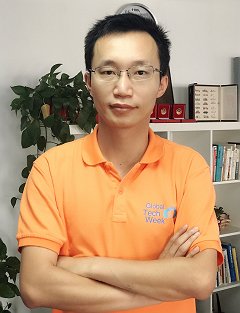
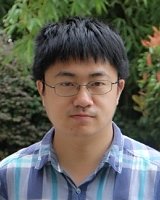
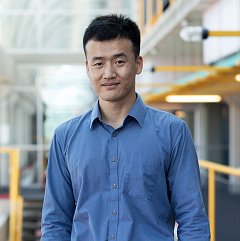
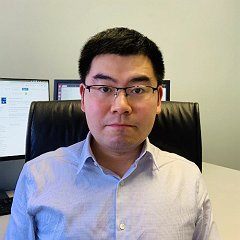
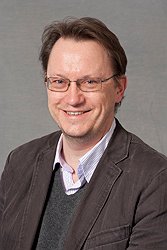
Dr. Jae Hee Lee is a postdoctoral researcher in the Knowledge Technology Group at the University of Hamburg, holding a PhD in Computer Science from the University of Bremen. His research focuses on multimodal language models, explainable AI, and neuro-symbolic integration to enhance model robustness and generalization. Previously, he specialized in spatio-temporal reasoning and multiagent systems, supported by grants like the Feodor Lynen Fellowship (2016–2017). He is an associate editor of AI Communications and co-organizes the International Workshop on Spatio-Temporal Reasoning and Learning. His recent work includes projects like LUMO (DFG-funded, 2025–2029), exploring lifelong multimodal learning through compositional knowledge. Lee advises multiple students, including Björn Plüster, developer of the LeoLM German LLM. Key research interests span explainable vision-language models, causal reinforcement learning, and concept-based explanations. He frequently serves on program committees for AI/NLP conferences (e.g., IJCAI, COLING) and organizes reading groups on LLM/XAI topics.
Dr. Seongmin Lee is a researcher at the Max Planck Institute for Security and Privacy, specializing in software security and program analysis. Their work bridges theoretical and practical aspects of software testing, with a particular focus on automated testing techniques, dependency modeling, and genetic improvement. Research interests include: Software Security Software Testing and Fuzzing Program Analysis and Slicing Machine Learning Applications in Software Engineering Genetic Algorithms for Code Optimization Statistical and Causal Analysis of Code Behavior Recent publications (2016–2025) demonstrate a trajectory from foundational work on GPU parameter optimization to cutting-edge research on LLM-driven regression testing. Key trends include: Statistical modeling of software behavior Machine learning for bug classification and optimization Approximate analysis techniques for scalability Advancements in greybox fuzzing and coverage prediction Application of causal inference to mutation testing
Chao Peng is a Principal Research Scientist at ByteDance where he leads the Software Engineering Lab, focusing on AI agents for software engineering. He holds a part-time position as a Postgraduate Student Mentor at Fudan University's School of Computer Science. His research bridges industry and academia, with significant contributions to software testing, program repair, and LLM applications in software development. Education: PhD in Informatics, 2021, University of Edinburgh, UK MSc in High Performance Computing and Data Science, 2017, University of Edinburgh, UK BEng in Computer Science and Technology, 2016, Xuzhou University of Technology, China Dr. Peng's research interests center on the intersection of artificial intelligence and software engineering. He explores how large language models can transform traditional software development practices, particularly in code generation, testing, and bug fixing. His work on LLM4Code has led to innovative frameworks like CodeVisionary for evaluating code generation capabilities and Trae Agent for software engineering tasks with test-time scaling. He investigates the synergy between machine learning techniques and compiler optimizations to enhance software reliability and developer productivity. His recent publications reveal a strong focus on practical evaluation frameworks for LLMs in real-world software engineering contexts. Rather than theoretical benchmarks, his work emphasizes real-world applicability, as seen in RepoMasterEval which evaluates code completion in actual repository settings. He examines multi-faceted challenges including code generation, bug reproduction, issue resolution, and repository-level question answering, consistently addressing the gap between laboratory evaluations and practical development environments. Scientific Awards: Distinguished Reviewer for FSE'25 Invited to program committees for FSE'26, SANER 2026, ASE 2025, and others School of Informatics Scholarship (fully-funded PhD) Multiple national scholarships during undergraduate studies Honours Spot Bonus at ByteDance Dr. Peng actively mentors postgraduate students at Fudan University while leading research initiatives at ByteDance that foster university collaborations. His laboratory work translates academic research into practical tools for software development, with several frameworks deployed in industrial settings. He serves on multiple conference program committees, contributing to the advancement of software engineering research through rigorous peer review and community building. His Software Engineering Lab at ByteDance operates at the forefront of AI-assisted development, exploring how agent-based systems can automate complex software engineering tasks. The team's work on frameworks like AEGIS for bug reproduction and DialogAgent for code question answering demonstrates their commitment to solving practical challenges faced by developers in real-world settings.
Zhenyu Chen is a Full Professor and Director of the iSE Laboratory at Nanjing University, specializing in AI-driven software testing methodologies. His research bridges artificial intelligence and software engineering with dual focus areas: leveraging AI to enhance testing processes ( AI for Testing ) and validating AI/ML systems ( Testing for AI ). His research interests center on deep learning framework testing , crowdsourced testing optimization , and Large Language Model applications in verification . Recent work demonstrates innovative approaches to metamorphic testing of neural networks, LLM-based test report analysis, and security hardening of code models against backdoors. Key contributions include the development of mooctest.com and frameworks like DevMuT for mutation testing of deep learning APIs. His publication trajectory reveals evolving focus from crowdsourced testing (2018-2020) to deep learning system validation (2021-2023) and current emphasis on LLM-powered testing solutions. Major venues include ASE, ICSE, and ISSTA where he serves regularly on program committees.
Dr. Jifeng Xuan is a Professor and Deputy Dean at the School of Computer Science, Wuhan University, China. He founded the CSTAR (Centre of Software Testing, Analysis and Reliability) and holds editorial roles at Empirical Software Engineering and PLOS One . Previously, he was a postdoctoral researcher at INRIA Lille-Nord Europe (France) and earned his PhD from Dalian University of Technology. Research Interests: His work focuses on software testing, debugging, automated program repair, software data analysis, and search-based software engineering. He integrates AI/ML techniques for tasks like log analysis, fuzz testing, and vulnerability detection, with applications in robotics, microservices, and Android development. Publication Trends: Recent articles (2022–2025) emphasize AI-driven software engineering, including LLM-based repair, reinforcement learning for testing, and deep learning surveys. Security (vulnerability logs) and empirical studies on industrial challenges (e.g., C program repair) are recurring themes. Awards & Honors: ACM SIGSOFT Distinguished Paper Award (2025) IEEE TCSE Distinguished Paper Award (2025) CCF NASAC Youth Software Innovation Award (2024) Outstanding Doctoral Dissertation Award, China Computer Federation (2014) Luojia Young Scholar (2015) Student Advising & Labs: Actively recruits PhD and master students for CSTAR Lab. Research areas include automated debugging, testing tools (e.g., Mergebot, FastLog), and AI-generated code assessment. No specific grants listed.
Chengnian Sun is an Associate Professor at the Cheriton School of Computer Science , University of Waterloo, Canada. His research focuses on software engineering and programming languages with an emphasis on software reliability and programming productivity. Education : Ph.D. in Computer Science from National University of Singapore (2013) His work spans compiler testing (EMI, Dfusor, Kitten), program reduction (Perses, Vulcan, PPR), Android testing, and DNN testing. He has received multiple grants including Google Research Scholar Program (2025) and NSERC Discovery Grants (2024-2029). His recent publications focus on LLM-based compiler testing, weighted delta debugging, and ransomware resilience. Scientific Awards : Most Influential Paper Award at SANER (2022) NUS Research Scholarship (2008-2012) ACM SIGSOFT Distinguished Paper Award at ASE (2012) IBM Cup Campus Innovation Contest First Prize (2005) He advises Ph.D. and MMath students in software engineering, compiler testing, and program analysis, including several who have contributed to top-tier conferences like ICSE, ISSTA, and ASPLOS. His service includes program committee roles in ICSE, OOPSLA, and ISSTA.
Andreas Zendler serves as Director of the Institute of Computer Science at Ludwigsburg University of Education (2023-25), where he has held various leadership positions since 2004, including Head of the Department of Computer Science (2018-2022) and Director of the Institute of Mathematics and Computer Science (2011-2016). As a Professor (C4) for Computer Science and its Didactics since 2004, he has shaped computer science education programs including the BA/MA degree program in Computer Science. Zendler earned dual doctorates - a Dr. rer. nat. in Practical Computer Science from the University of Potsdam (1997) and a Dr. phil. in Experimental Psychology from the University of Regensburg (1988), followed by his habilitation in Practical Computer Science at the University of Potsdam (2000). His academic journey spans computer science, psychology, and education, creating a unique interdisciplinary foundation for his research. His research focuses on empirical computer science didactics, software engineering for cloud computing, data science, and the digitalization of teaching through SaaS models. He investigates content and process concepts for computer science teaching, compares learning effectiveness of instructional methods, and develops research methodologies specifically for educational contexts with small sample sizes. His work bridges theoretical frameworks with practical classroom applications across STEM disciplines. Zendler's publication record reveals a consistent trajectory from foundational software engineering research toward educational applications. His recent work (2018-2025) demonstrates increasing specialization in computer science education, particularly in competence measurement frameworks like cpm.4.CSE/IRT and their adaptations for small sample sizes. His upcoming publications indicate a strategic pivot toward AI applications, exploring how LLMs and GPTs can transform both data science practices and software engineering education. Throughout his career, Zendler has served as a dissertation reviewer for Practical Computer Science since 2001 and contributed to numerous research projects funded by organizations including the European Union, the Bavarian Research Foundation, and the German Aerospace Center (DLR). His project leadership spans bioinformatics, educational informatics, and software engineering domains. His methodological expertise includes experimental design for teaching research (particularly 3-factorial designs with repeated measurements), statistical evaluation approaches for small samples, and handling missing data in educational contexts. This technical proficiency supports his broader mission to establish rigorous empirical foundations for computer science education.
Anna-Carolina Haensch is a Lecturer at the University of Munich in the Chair of Statistics and Data Science in Social Sciences and the Humanities and an Assistant Professor at the University of Maryland in the International Program in Survey and Data Science. Her interdisciplinary work bridges statistics, computational social science, and natural language processing, with a focus on methodological innovation in social research. Education: PhD in Sociology, University of Mannheim (2017-2021) M.Sc. in Survey Statistics, University of Bamberg (2014-2017) B.A. in Political Science/Sociology, Ludwig-Maximilians-Universität München (2011-2014) Dr. Haensch's research centers on missing data, synthetic data, and big data applications in social sciences. She develops advanced statistical methods for survey data harmonization, multiple imputation techniques, and leverages natural language processing to analyze complex social phenomena. Her work consistently addresses methodological challenges in social research with practical applications for data collection and analysis. Her recent publications reveal a significant trend toward integrating large language models with traditional survey methodology, exploring how AI can enhance data collection, analysis, and interpretation in social science research. She has made substantial contributions to understanding missing data patterns, developing synthetic data approaches, and examining the societal implications of AI tools across multiple domains including mental health, political science, and housing policy. Scientific Awards: 2022 AAPOR Burns "Bud" Roper Fellow Award 2022 AAPOR Warren J. Mitofsky Innovators Award (as part of CTIS team) 2022 AAPOR Policy Impact Award (as part of CTIS team) 2011-2017 Max-Weber-Programm (undergraduate and graduate stipend) Dr. Haensch actively mentors the next generation of researchers, currently supervising 3 PhD theses on statistical education, machine learning applications in social sciences, and synthetic data generation with LLMs. She has guided approximately 6 master's theses and 15 bachelor's theses at the University of Munich since 2022, with topics primarily related to synthetic data, multiple imputation, and LLM applications. Her teaching spans statistical methods, data science techniques for survey researchers, and specialized topics in big data analysis. She has secured teaching grants including a €20,000 promotion for the RAINER project (R Assistant IN Error Resolution) for 2024-2025 and a €10,000 LMU-NYU Scholarship in 2023. She serves on several important boards including the Eurostat EMOS Board (2024-2026), the Ethics Commission of Faculty 16 at LMU (2023-2025), and as Women's Representative at the Institute for Statistics, LMU (2024-2026). Her collaborative work with the University of Maryland Social Data Science Center and involvement in the Global COVID-19 Trends and Impact Survey demonstrates her commitment to large-scale data collection initiatives and real-time social research.
Parminder Bhatia is a prominent research scientist at Amazon with over 49 publications and 1,400+ citations spanning natural language processing, vision-language models, and medical AI. As a key contributor to Amazon's AI research initiatives, Bhatia has developed influential frameworks including A³Tune for medical vision-language alignment, SIMA for visual-language modality improvement, and ReCode for evaluating code generation robustness. Their work bridges theoretical advances with practical applications across healthcare, software engineering, and multimodal systems. Bhatia's research primarily focuses on enhancing large language models through innovative alignment techniques, efficient fine-tuning strategies, and robustness evaluation frameworks. Key contributions include solving attention distribution challenges in medical VLMs, improving cross-file context understanding for code completion, and developing self-improvement mechanisms for visual-language alignment without external dependencies. Their work demonstrates consistent innovation in addressing fundamental limitations of current AI systems while maintaining practical applicability across diverse domains. Analysis of Bhatia's 15 most recent publications reveals a strong emphasis on medical AI applications (40%), code generation/analysis (30%), and foundational LLM improvements (30%). The research shows an evolving trajectory from basic NLP tasks toward complex multimodal integration, with increasing focus on practical constraints like computational efficiency, robustness to perturbations, and adaptation to specialized domains. Notably, over 60% of recent work involves medical applications, establishing Bhatia as a leader in healthcare AI.
Prof. Dr. Uli Sauerland is Deputy Director at the Leibniz Centre for General Linguistics (ZAS) in Berlin and Adjunct Professor at the University of Potsdam since 2018. He leads Research Area 4 'Semantics & Pragmatics' and oversees key projects including the ERC-funded Realizing Leibniz’s Dream , DFG-ANR Boolean Connectors , and CRC 1412 projects A05 and B06 . PhD in Linguistics (MIT, 1998) Habilitation (Tübingen, 2003) Rehabilitation (Potsdam, 2007) His research focuses on semantic-pragmatic interfaces , register variation , language acquisition , and cognitive modeling of linguistic phenomena . Recent work includes LMBayes (Bayesian language modeling), DUAL (semantic-pragmatic interactions), and studies on quantifier scope in children. Publications span formal grammar , cognitive development , and language processing . Notable scientific awards : CNRS Fellowship (2024) Academia Europea Membership (2019) ESF Community of Experts (2018) He contributes to editorial boards of First Language , Journal of Semantics , and Language Acquisition , and co-founded the CRC 1412 Register research program.
Prof. Dr. Emanuel Kitzelmann is a Professor of Applied Artificial Intelligence at Brandenburg University of Technology and Scientific Director of the AI Laboratory since 2023. His work bridges classical symbolic AI and modern machine learning, with a focus on integrating Large Language Models (LLMs) with structured knowledge bases like knowledge graphs and ontologies to enable reliable, explainable AI. He co-leads the SCALE-C research project on secure AI content generation for cybersecurity and directs the SmartRetrieve project on GraphRAG for campus chatbots. University: Brandenburg University of Technology Department: Computer Science and Media Rank: Professor His research spans hybrid neurosymbolic AI, inductive program synthesis, and robotics as AI application areas. Recent publications explore hallucination mitigation in LLMs, RAG techniques, and AI educational tools. He actively collaborates with industry partners like membraPure and REMINE GmbH, supervising student projects in cybersecurity, chatbots, and image-based analysis. Key initiatives include workshops on machine learning with ZF Getriebe Brandenburg and program committee roles for ECAI 2025 and IJCLR 2025.
Yeting Li is a researcher at the Institute of Information Engineering, Chinese Academy of Sciences, with academic affiliation at the University of Chinese Academy of Sciences. Their work bridges software security and artificial intelligence, focusing on practical vulnerabilities in modern systems. Research spans vulnerability analysis in Kubernetes ecosystems, AI-driven binary similarity detection , and semantic-enhanced static analysis for baseband firmware. Recent work explores large language models for security applications including fuzz driver generation and data contamination mitigation in benchmarking, alongside accessibility-focused testing for speech recognition systems. Publications reveal a clear trajectory toward integrating AI with traditional security analysis, particularly in containerized environments and binary code analysis. Emerging themes include LLM-based tooling for vulnerability identification and specialized testing methodologies for emerging technologies like automatic speech recognition and deep learning operators. Key contributions include Kubernetes resource injection vulnerability studies, Aster for stutterer accessibility testing, and ACETest for deep learning operator validation. Research demonstrates consistent focus on empirical evaluation of security tools across ASE, ICSE, and ISSTA venues from 2023-2025.
Daoyuan Wu is an Assistant Professor at the School of Data Science, Lingnan University, Hong Kong, one of eight UGC-funded universities in the region. Previously, he held positions as a Research Assistant Professor at HKUST CSE, Senior Research Fellow at Nanyang Technological University, Senior Researcher at Huawei HKRC, and Research Assistant Professor in the Department of Information Engineering at The Chinese University of Hong Kong (CUHK), where he also served as an Adjunct Assistant Professor from 2022-2023. His research focuses on the intersection of Large Language Models and security, with specialization in LLM for Security and Security of AI/Blockchain/Code/Mobile . His work spans multiple domains including AI/LLM4Sec (using LLMs for vulnerability detection), AI/LLM-Sec (securing LLMs themselves), Blockchain and Web3 Security, and Mobile and Software Security. He leads the AIS2Lab which is actively researching LLM applications in cybersecurity contexts. His recent publications demonstrate a strong trend toward applying LLMs to security problems across multiple domains, with significant contributions to smart contract security through tools like PropertyGPT (which received a Distinguished Paper Award at NDSS 2025), GPTScan, and ACFix. His work combines program analysis with LLM capabilities to address complex security challenges that traditional methods struggle with. Distinguished Paper Award at NDSS 2025 for PropertyGPT: LLM-driven Formal Verification of Smart Contracts through Retrieval-Augmented Property Generation Dr. Wu actively advises PhD and research students, with several former students now working at top institutions and companies including Huawei, OKX, and academia. He's currently hiring PhD students for Fall 2026 with scholarship support of approximately HK$19,000 per month. His lab receives funding from multiple internal and external grants supporting PhD students, RAs, and PostDocs. He leads the AIS2Lab which focuses on AI/LLM applications in security contexts across multiple domains including blockchain, mobile security, and software security. The lab maintains active collaborations with researchers at top institutions globally and has developed multiple influential tools and frameworks for security analysis.
Mark Harman is a part-time Professor of Software Engineering at University College London's Department of Computer Science within the Faculty of Engineering Sciences, while working full-time as a Research Scientist at Meta Platforms in the Instagram Product Performance team. He previously served as head of Software Engineering at UCL and director of its CREST centre from 2006 to 2017 before joining Meta when his startup Majicke was acquired in 2017. Harman's research spans multiple domains of software engineering, with particular emphasis on Search Based Software Engineering (SBSE), which he co-founded in 2001. His work has evolved to include LLM-based software engineering, software testing, program analysis, and bias mitigation in machine learning systems. He has made significant contributions to automated testing through systems like Sapienz and WW that have been deployed at scale at Meta. His publication record shows a clear evolution from traditional software testing and analysis toward increasingly sophisticated integration of machine learning techniques. Recent work demonstrates strong focus on addressing fairness challenges in ML systems, improving test reliability in continuous integration environments, and exploring the applications of large language models in software engineering tasks. This reflects both his ability to identify emerging challenges and his commitment to practical, industry-relevant research. IEEE Harlan Mills Award (2019) ACM Outstanding Research Award (2019) Fellowship of the Royal Academy of Engineering (2020) Harman maintains a unique bridge between academia and industry, having co-founded the Simulation-Based Testing team at Meta and previously directing UCL's CREST research centre. His work on Sapienz grew from his startup Majicke and has had significant industrial impact while maintaining strong academic foundations. He frequently participates in academic conferences as both contributor and committee member, demonstrating ongoing commitment to the research community despite his industry position. At Meta, Harman works within the Instagram Product Performance team, building on his earlier work with the Simulation-Based Testing team where he co-developed platforms for client- and server-side testing. His research on cyber-cyber digital twins represents an innovative application of simulation techniques to virtual software systems rather than physical ones.
Sen Chen is a Professor at Nankai University, holding positions in both the College of Cryptology and Cyber Science and the College of Computer Science. He leads the Nankai Software Security Laboratory (NKSSecLab) and is a member of Professor Zheli Liu's research group. Previously, he served as a tenured associate professor and research professor at Tianjin University (2021-2024), and as a research assistant professor at Nanyang Technological University (NTU), Singapore. Dr. Chen's research focuses on software security and software supply chain security, with particular emphasis on vulnerability analysis and malware detection. His work spans multiple domains including mobile security, AI security, open-source security, and intelligent software development and testing. His research has led to significant contributions in automated security vulnerability detection, software composition analysis, and security tool development for various platforms including Android, Java, and blockchain systems. Analysis of Dr. Chen's recent publications (2023-2025) reveals a strong focus on software supply chain security, with particular attention to vulnerability detection and remediation in open-source ecosystems. His work demonstrates expertise in applying advanced machine learning techniques to security problems, especially in the context of Android applications and containerized environments. There's a clear trajectory toward addressing emerging challenges in AI security and large language model supply chains, reflecting his ability to adapt research directions to evolving technological landscapes. ACM SIGSOFT Distinguished Paper Award (FSE 2024) ACM SIGSOFT Distinguished Paper Award (ASE 2023) First Place of the 13th Challenge Cup China College Students' Entrepreneurship Competition ACM SIGSOFT Distinguished Paper Award (ICSE 2023) Prototype Research Tool Award 2nd Place (Freestyle) in CCF ChinaSoft 2022 First Place of The 8th China International College Students' 'Internet+' Innovation and Entrepreneurship Competition ACM SIGSOFT Distinguished Paper Award (ASE 2022) ACM China Rising Star Award (ACM Tianjin Council) ACM SIGSOFT Distinguished Paper Award (ICSE 2021) First Class of Progress of Science and Technology Prize of Tianjin, 2020 Dr. Chen has successfully secured funding from multiple prestigious sources including key R&D programs, general and pre-research projects of the National Natural Science Foundation of China, and the Populus euphratica Forest Fund. His theoretical research has been applied by major companies such as State Grid, China Automotive Industry Corporation, and Huawei. He has mentored students to win national gold medals in both the 'Internet Plus' and Challenge Cup programs, demonstrating his commitment to student development and practical application of research. Dr. Chen leads NKSSecLab (Nankai Software Security Laboratory), which focuses on cutting-edge research in software security and supply chain security. The lab has developed several notable tools including SCTruster (a digital trust chain platform for software supply chain security) and LiDetector. The lab maintains strong international collaborations with institutions like Nanyang Technological University in Singapore and has established itself as a leading research group in software security within China.