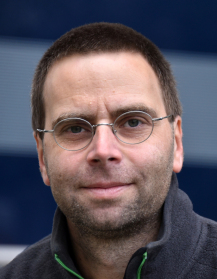
Eric Medvet is a professor specializing in evolutionary computation, genetic programming, and robotics. He is actively involved in research areas such as neuroevolution, soft robotics, and modular robotics. His work bridges theoretical advancements in evolutionary algorithms with practical applications in robotics and AI. Roles: Conference chair for EuroGP (2020-2022), co-chair of multiple workshops and sessions. Key Research: Focus on genetic programming, embodied intelligence, and the design of adaptive robotic systems. Research Interests: His work emphasizes the development of scalable and interpretable AI systems, particularly through evolutionary methods applied to robotics. He explores topics like neuroevolution for soft robots, quality diversity algorithms, and the integration of machine learning with evolutionary computation. Publications: His recent work highlights trends in interpretable AI, modular robotics control, and evolutionary algorithms for complex systems. Notable contributions include studies on MAP-Elites, graph-based genetic programming, and the application of LLMs in automated testing. Grants & Labs: Developed frameworks like JGEA for evolutionary computation experiments. Collaborates on projects integrating evolutionary methods with real-world robotics applications.
Prof. Dr. Ilona Buchem is a Professor of Communication and Media Studies at the Berlin University of Applied Sciences (BHT), Department I of Business and Social Sciences. She serves as Head of the Communication Laboratory and leads research in human-robot interaction, educational robotics, and technology-enhanced learning. Her work spans multiple interdisciplinary projects including Social Robotics, Open Virtual Mobility, and ePA-Coach, focusing on digital media for communication, collaboration, and digital sovereignty for older adults in healthcare contexts. Dr. Buchem holds a doctorate in business education from Humboldt University and a certificate in business administration from the University of St. Gallen, Switzerland. Her academic background bridges business education with digital media expertise, positioning her at the intersection of technology and communication for innovative educational approaches. Her research interests focus on human-robot interaction in educational contexts, social robotics for learning, AI applications in education, and digital media for communication and collaboration. She explores how robots can serve as educational tools in business studies, language learning, and health-related applications. Her work also investigates digital sovereignty, particularly for older adults using electronic health records, and the use of open digital credentials like Open Badges for recognizing learning achievements. The integration of gamification elements with social robots represents another significant strand of her research, enhancing student engagement and learning outcomes. Analysis of her recent publications reveals a strong focus on practical applications of social robots in educational settings, particularly examining student perceptions of different robot platforms (NAO, Pepper, Furhat). Her work increasingly integrates generative AI with robotics, exploring conversational interfaces and new learning paradigms. There's also a consistent thread examining digital literacy for seniors, especially regarding electronic health records, and innovative approaches to recognizing learning through micro-credentials and digital badges. Dr. Buchem actively supervises numerous bachelor's and master's theses across multiple programs including Business Administration: Digital Economy and Media Informatics Online. She has established a digital award system based on Open Badges to recognize outstanding thesis work with top grades. Her research is supported through various funding sources including BMBF, EU, DFG, and industry partners, with projects spanning social robotics, virtual reality applications, and digital credentialing systems that connect academic research with practical applications. She leads the Communication Laboratory at BHT and is actively involved in the 'House of Robotics' initiative at the university. Her work connects with international partners through projects like Social Robotics (EU) and Open Virtual Mobility, creating a global network for educational robotics research and development that bridges European institutions and promotes cross-cultural educational exchange.
Steffen Becker is a Professor at the University of Stuttgart's Faculty of Computer Science, Electrical Engineering and Information Technology, affiliated with the Institute for Software Engineering's Software Quality and Architecture group. His work focuses on software engineering, cloud systems, model-driven engineering, and cybersecurity. He leads research in architectural modeling tools like Slingshot, GUI testing frameworks (ViMoTest), and hardware security analysis. Recent studies explore AI integration in testing, education, and automotive systems (CARISMA). Research interests include elasticity modeling, self-adaptive systems, and educational technology. His 2025 publications address issues like end-user hardware comprehension, FPGA security, and LLM-driven test generation. Notable tools developed include the Slingshot Simulator for cloud-native systems and Gropius for cross-component issue management. Becker contributes to both theoretical advancements and practical implementations in software quality, security, and cloud infrastructure. Key Areas: Software Architecture, Cyber-Physical Systems, Testing, Reverse Engineering Tool Developments: ViMoTest, Slingshot, Gropius Education Focus: Online programming pedagogy and curriculum innovation His work bridges foundational research with industry applications, addressing challenges in automotive computing, cloud elasticity, and human-centric security awareness. Recent efforts emphasize explainable hardware (XHW) and AI's role in qualitative analysis automation.
Simone Ferlin is an Adjunct Senior Lecturer at Karlstad University working with 5G and Internet evolution. She completed her PhD in computer science in 2017 at the Simula Research Lab and Universitetet i Oslo under the supervision of Dr. Ozgu Alay and Prof. Michael Welzl. Her PhD dissertation focused on increasing robustness in multipath transport with MPTCP. Dr. Ferlin's educational background includes a PhD in Computer Science from the Simula Research Lab and Universitetet i Oslo (2017). Her doctoral research centered on enhancing robustness in multipath transport protocols, specifically focusing on MPTCP (Multipath TCP). She also completed undergraduate work that contributed to a book project with Prof. Friedrich Oehme on electronics and circuit technology. Dr. Ferlin's research spans multiple domains at the intersection of networking, systems, and performance engineering. Her primary interests include network and system measurements, performance analysis, security, and congestion control. She investigates how networks like the Internet evolve, examining technology development, adoption patterns, and their impacts on various entities. Additionally, she explores ways to harmonize security and privacy while making them more usable and assessable. Her work particularly focuses on transport layer and multipath transport protocols, examining their performance and security aspects. She also investigates application and transport layer performance, automation, and monitoring. Her research extends to network programming in both Linux kernel and user space, mobile broadband networks from 2G to 5G, and their intersection with the Internet. She is deeply engaged in observability, distributed and system performance monitoring, and automation. Analysis of Dr. Ferlin's recent publications reveals a strong focus on next-generation networking technologies. Her work spans multiple domains including 5G/6G networks, transport protocols (particularly QUIC and MPTCP), network virtualization, container orchestration, and the application of machine learning to networking problems. She has increasingly incorporated large language models into network configuration and automation research. Her publications demonstrate a consistent emphasis on performance measurement, optimization, and security across diverse networking environments from the edge to the cloud. Dr. Ferlin has received notable recognition for her research contributions: Best paper award at IEEE ICIN'21 for 'Learning-based Incast Performance Inference in Software-Defined Data Centers' Applied Networking Research Prize (ANRP)'25 winner for 'NetConfEval: Can LLMs Facilitate Network Configuration?' Dr. Ferlin is actively involved in mentoring the next generation of networking researchers. She has co-supervised numerous Master's and PhD students across multiple institutions including Karlstad University, KTH, TU Berlin, University of Oslo, and universities in Brazil. Her students have worked on diverse topics including NAT64 performance comparison, system tracing visualization, network observability, ML applications to multipath transport, FEC integration with QUIC, high-performance networking for 5G, congestion control, shared bottleneck detection, multipath IoT applications, and container runtime performance. She is also involved in several significant research projects including Vinnova's SEMLA (Securing Enterprises via Machine-Learning-based Automation), Horizon Europe's CODECO (Cognitive Decentralised Edge Cloud Orchestration), and the Knowledge Foundation of Sweden's DRIVE (Data-driven Latency-Sensitive Mobile Services for a Digitized Society). Dr. Ferlin serves as Workshop Chair for ACM SIGCOMM '25, is a member of the ACM/IRTF Applied Networking Research Workshop (ANRW) steering committee, and co-chairs the Internet Congestion Control Research Group (ICCRG) at the IRTF. She previously served as Associate Technical Editor for IEEE Communications Magazine and has been active on numerous program committees for major networking conferences including SIGCOMM, CoNEXT, IMC, and PAM.
Wolfgang Stammer is a PostDoc researcher in the Machine Learning Group at TU Darmstadt's Computer Science Department. His work focuses on making AI models more interpretable and interactive, particularly in explainable AI (XAI), neuro-symbolic architectures, and systematic compositionality challenges in neural networks. He completed his Ph.D. in Machine Learning at TU Darmstadt (2019–2025), an M.Sc. in Computer Science at Goethe University Frankfurt (2016–2018), and a B.Sc. in Cognitive Science at the University of Osnabrück (2011–2015). Research Interests : Stammer's research bridges gaps between human understanding and AI capabilities. Key areas include: Explainable AI (XAI) and interactive machine learning (XIL) Neuro-symbolic integration for logical reasoning and visual concepts Mitigating shortcut learning and confounding factors in datasets Concept discovery and program synthesis for interpretable models Publications : His work spans foundational contributions to AI benchmarks (e.g., V-LoL, SLR-Bench) and frameworks (Neural Concept Binder, Revision Transformers). Recent studies highlight AI's limitations in systematic generalization and propose solutions for aligning reinforcement learning agents with human values. Grants & Labs : He contributes to the Machine Learning Lab at TU Darmstadt and co-organized workshops like the Interactive Machine Learning Workshop @ AAAI 2022. His research bridges theoretical advances with practical applications in healthcare and ethical AI systems.
Zhongxin Liu is an Assistant Professor at the College of Computer Science and Technology , Zhejiang University , China. He earned his Ph.D. from the same institution in 2021. His research focuses on Intelligent Software Engineering (AI4SE) , leveraging software "big data" to improve code understanding, generation, and security through machine learning techniques. Published in top-tier venues: TSE, TOSEM, ICSE, FSE, ASE, ISSTA Active in academic service: Reviewer for TSE, TOSEM, ASEJ, etc. Visiting Professor at University of Stuttgart (2024-2025) His recent work explores Large Language Models (LLMs) for code intelligence, security hardening, and vulnerability detection. Papers emphasize cross-domain applications, zero-shot learning, and API/code dependency analysis. Scientific awards include: ACM SIGSOFT Distinguished Paper Awards (ASE 2018, 2019, 2020; ISSTA 2025) Zhejiang University Qizhen Scholar (2021) CCF TCSE Doctoral Dissertation Award (2023) Recruiting undergraduate interns, graduate students (MS/Ph.D.), and postdocs for code intelligence research. Contact: liu_zx@zju.edu.cn .
Daye Nam is an Assistant Professor in the Department of Informatics at the University of California, Irvine, where they design, build, and evaluate AI tools for developers using natural language processing techniques. Their work sits at the intersection of software engineering, artificial intelligence, and human-computer interaction, with a strong focus on creating useful and usable tools that make software development more accessible, efficient, and enjoyable. Education PhD in Software Engineering, Carnegie Mellon University (2018-2024) MS in Computer Science, University of Southern California (2016-2018) BS in Computer Science, Yonsei University (2012-2016) Research Interests Dr. Nam's research focuses on designing, building, and evaluating AI tools for programmers at all levels, with an emphasis on making these tools both useful and usable. Their work spans several key areas including machine learning for software engineering (ML4SE), developer experience, and human-AI interaction. They employ a user-centered approach that involves conducting empirical studies to understand programmers' needs, building and training machine learning models based on those insights, creating tools for programmers, and evaluating them using human-computer interaction methods. Their research has particular relevance to AI-powered developer tools, API documentation and discovery, and educational applications of AI for programming students. Publications and Research Trends Dr. Nam's recent publications demonstrate a clear trajectory toward understanding and improving how developers interact with AI systems. Their work increasingly focuses on empirical studies of developer-AI interaction, particularly with large language models for code generation and understanding. There's a strong emphasis on understanding trust in AI systems among developers, measuring the actual impact of AI on development speed, and designing tools that balance automation with user control. Their research methodology often combines log analysis, user studies, and the development of novel AI-powered tools that address specific developer pain points. Scientific Awards and Honors Best Tool Paper Award at ASE ACM Student Research Competition 2nd Place SIGSOFT CAPS Student Travel Award for FSE ACM SIGSOFT NSF Travel Award NSF Travel Award for ICSE SIGSOFT Best Research Award from University of Southern California Teaching and Service Dr. Nam teaches SWE 233: Intelligent User Interfaces at UC Irvine, guiding students through the design and evaluation of AI-powered interfaces for software development. They have previously served as a Teaching Assistant and Co-Instructor for Foundations of Software Engineering at Carnegie Mellon University. In terms of service, they've been on program committees for major software engineering conferences including ICSE, ASE, and FSE, and have reviewed papers for journals like TOSEM and Empirical Software Engineering. They've also been active in student support programs, organizing and mentoring for graduate applicant support initiatives.
Sarah Fakhoury is a Senior Researcher in the Research in Software Engineering (RiSE) group at Microsoft Research, Redmond. Her work bridges formal methods, empirical software engineering, machine learning, and human-computer interaction to optimize developer cognitive effort in AI-assisted programming tools. Her research focuses on trustworthy AI for code generation , leveraging formal verification to ensure correctness in LLM-generated outputs. Key areas include program comprehension, source code readability, and empirical evaluation of developer-AI interaction. She develops tools like 3DGen for provably correct binary parsers and NL2Fix for natural language-based code repair. Her publications reveal strong trends in formal methods integration with AI (60% of recent work), empirical developer studies (30%), and readability/metrics innovation (10%). Keywords cluster around program verification, LLM evaluation, and cognitive load measurement. ACM/SIGSOFT Distinguished Paper Award (ICPC 2018) Fakhoury actively contributes to the academic community as PC member for ASE, ICSE, and ESEC/FSE. She co-organizes workshops like Muslims in ML at NeurIPS and mentors through SMeW. Her RiSE group collaboration with Shuvendu Lahiri and Madanlal Musuvathi drives Microsoft's trustworthy AI4Code initiatives, focusing on verifiable developer tools.
Prof. Wolfgang Ecker is a Professor at the Technical University of Munich (TUM), affiliated with the Chair of Design Automation within the TUM School of Computation, Information and Technology . His research focuses on Electronic Design Automation (EDA), RISC-V processor architectures, and hardware-software co-design. He leads projects advancing EDA tools for embedded systems, neural network acceleration, and formal verification methodologies. Ecker's work bridges machine learning techniques with traditional EDA challenges, addressing topics like energy-efficient AI inference and automated documentation generation. His contributions span compiler optimization, FPGA implementations, and fault analysis in digital systems. Recent research highlights include contributions to the TRISTAN project for RISC-V ecosystem development, model-driven architecture frameworks, and AI-driven timing analysis. He actively collaborates on open-source EDA tools and explores Rust-based embedded systems development. Ecker’s lab emphasizes practical applications in edge computing and automotive microcontroller safety, with a strong emphasis on interdisciplinary collaboration across TUM’s CIT School. His publications (15 most recent listed) reflect a focus on EDA tool innovation, processor design, and leveraging machine learning for hardware optimization. While no specific awards are mentioned, his involvement in ERC-funded projects and leadership in international collaborations underscores his academic impact.
Claudia Nerdel is a Professor at the Technical University of Munich (TUM) within the Chair of Life Sciences Didactics . Her work focuses on science education innovation, particularly integrating digital technologies like AI and augmented reality into teacher training and classroom practices. Current research spans AI literacy assessment , modelling competences , and sustainable biotechnology education Active in teacher professional development and digital competency frameworks Her research explores: Mathematical modelling in science education Augmented reality applications for chemistry terminology AI literacy frameworks (e.g., AILIT-S test development) Digital transformation challenges in schools Recent publications analyze AI self-efficacy, LLM feedback quality, and biotech experiment implementation. The TUM-DigiLLab serves as a key lab environment for digital competence development, though specific grants or awards aren't mentioned in the text. Her work emphasizes creating adaptive feedback systems , inclusive digital tools , and evidence-based teacher training .
Fengjunjie Pan is a PhD student and research assistant at the Chair of Robotics, Artificial Intelligence and Embedded Systems at the Technical University of Munich since 2021. He holds an M.Sc. in Electrical Engineering from TU Berlin (2019) and a B.Eng. in Electrical Engineering from Hamburg University of Applied Sciences. His research focuses on automotive systems engineering and generative AI applications in model-based engineering. His publications (2022-2025) demonstrate expertise in: LLM integration for automotive software development Containerized architectures for autonomous driving Virtualization technologies in vehicular systems Constraint generation and model transformation He supervises multiple Master's and Bachelor's theses on generative AI applications and privacy-enhancing technologies in automotive contexts, working alongside Prof. Alois Knoll's team.
Davide Di Ruscio is a Full Professor at the Department of Information Engineering Computer Science and Mathematics of the University of L'Aquila (Italy), where he leads research in Model-Driven Engineering and Software Engineering. His work spans domain-specific modeling languages, model transformations, and recommender systems applied to open source software and autonomous systems. His research interests focus on Model Driven Engineering , Model evolution , Open Source Software , and Recommender Systems , with recent work exploring LLM applications in code analysis and fairness engineering. Key application domains include service-based systems, autonomous systems, and hybrid polystore systems. Di Ruscio actively contributes to the software engineering community through leadership roles in major conferences and journals. He serves on the steering committees of ICMT, SLE, SATTOSE, MiSE, and RoSE, and is on the editorial boards of SoSyM, IEEE Software, Journal of Object Technology, and IET Software. His work has been published in over 200 papers across top-tier venues. He has contributed to numerous European and Italian research projects since 2006, applying MDE concepts to real-world systems. Current teaching includes Software Engineering for Autonomous Systems and Software Engineering for the Internet of Things, with office hours on Tuesdays and Wednesdays from 11:30-13:30 at Edificio Alan Turing, Room 208.
David Lo is the OUB Chair Professor of Computer Science and the founding Director of the Center for Research in Intelligent Software Engineering (RISE) at Singapore Management University. He has held significant leadership roles including General Chair of MSR'22 and ASE'16, and Program Committee Co-Chair for ASE'20, FSE'24, and ICSE'25. Lo has championed the field of AI for Software Engineering (AI4SE) since the mid-2000s, demonstrating how data mining, machine learning, information retrieval, natural language processing, and search-based algorithms can transform software engineering data into actionable insights and automation. His research spans Mining Software Repositories (MSR), large language models for code, software testing, smart contract analysis, and developer tooling. His recent publications reveal a strong focus on the intersection of large language models and software engineering, with particular attention to code generation, evaluation, documentation, and the practical implications of AI tools for developers. His work increasingly addresses economic efficiency, privacy concerns, and human factors in AI-assisted development. Two Test-of-Time awards Eleven ACM SIGSOFT/IEEE TCSE Distinguished Paper awards ACM Fellow IEEE Fellow ASE Fellow National Research Foundation Investigator (Senior Fellow) Lo has supervised numerous students and collaborated extensively across the software engineering community. His work on Mining Software Repositories has led to practical tools and insights that have shaped the field. He regularly contributes to major conferences and has served in leadership roles across ASE, ICSE, and FSE communities. As founding Director of the Center for Research in Intelligent Software Engineering (RISE) at SMU, Lo leads a research group focused on advancing AI techniques for software engineering problems, with emphasis on practical applications that address real developer pain points.
Alessio Gambi is a Researcher at the Austrian Institute of Technology (AIT) within the Security & Communication Technologies department, specializing in software engineering for autonomous systems. His current work focuses on testing methodologies for self-driving cars, self-adaptive systems, and cloud environments. His research interests center on Software Testing for Autonomous Vehicles , where he develops novel techniques for scenario generation, safety validation, and uncertainty management. Key areas include search-based procedural content generation, simulation-based testing, and the integration of large language models for test learning. His work bridges theoretical advances with practical tools like Flexcrash and TEASER for real-world validation. Analysis of his recent publications (2023-2025) reveals a strong trend toward autonomous vehicle testing with increasing incorporation of AI techniques. Approximately 60% of his work addresses self-driving car validation, 25% focuses on general software testing methodologies, and 15% explores AI/LLM applications in testing. His subfield specialization shows consistent emphasis on critical scenario generation, mixed-traffic simulation, and safety monitoring. Gambi actively contributes to the software engineering community through program committee roles at major conferences including ASE (2023-2025), ICSE (2024-2026), ISSTA (2021-2025), and ESEC/FSE. He has served as session chair, workshop organizer, and track committee member across these venues, demonstrating leadership in software testing research. His professional activities include developing open-source testing tools (visible on GitHub), teaching engagements like the Database Systems course at AIT (2024), and industry collaborations through AIT's research infrastructure. Current projects focus on predictive safety monitoring and uncertainty management for automated driving systems.
Matthias Hagen is Professor of Databases and Information Systems at Friedrich-Schiller-Universität Jena. His research focuses on information retrieval (query understanding, conversational search, comparative questions, known-item search, user simulation), natural language processing (clickbait, argumentation), and web data mining. He earned his Ph.D. from Friedrich-Schiller-Universität Jena with a thesis on algorithmic complexity, and previously led research groups at Bauhaus-Universität Weimar and Martin-Luther-Universität Halle-Wittenberg. His current work develops novel methods for retrieval-augmented generation evaluation, neural information retrieval efficiency, and user-centered search systems. Recent publications examine crowdsourcing for RAG evaluation, LLM-based relevance assessment, corpus subsampling techniques, and child-friendly web search evaluation frameworks. He contributes to open web search initiatives and develops tools like the TIREx Tracker for experimental reproducibility in IR research. Dr. Hagen serves on program committees for major conferences including SIGIR, ECIR, and ACL. His research group participates in competitive evaluations such as TREC, CLEF, and Touché. Recent projects explore axiomatic approaches to retrieval, argumentation systems, and the impact of search result quality on decision-making.