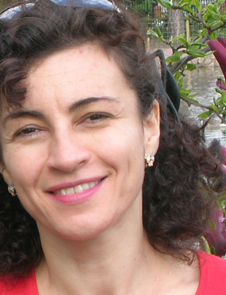
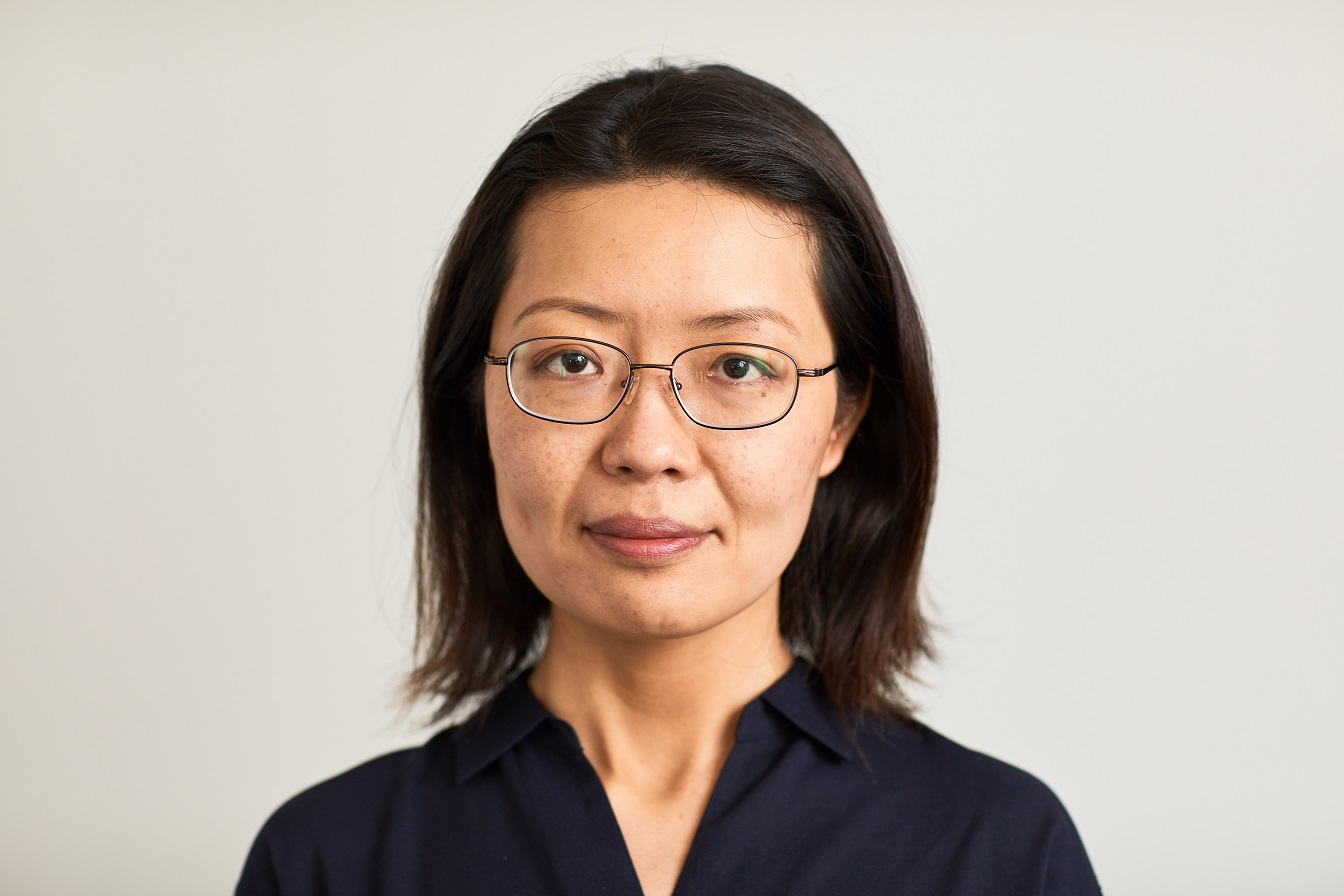
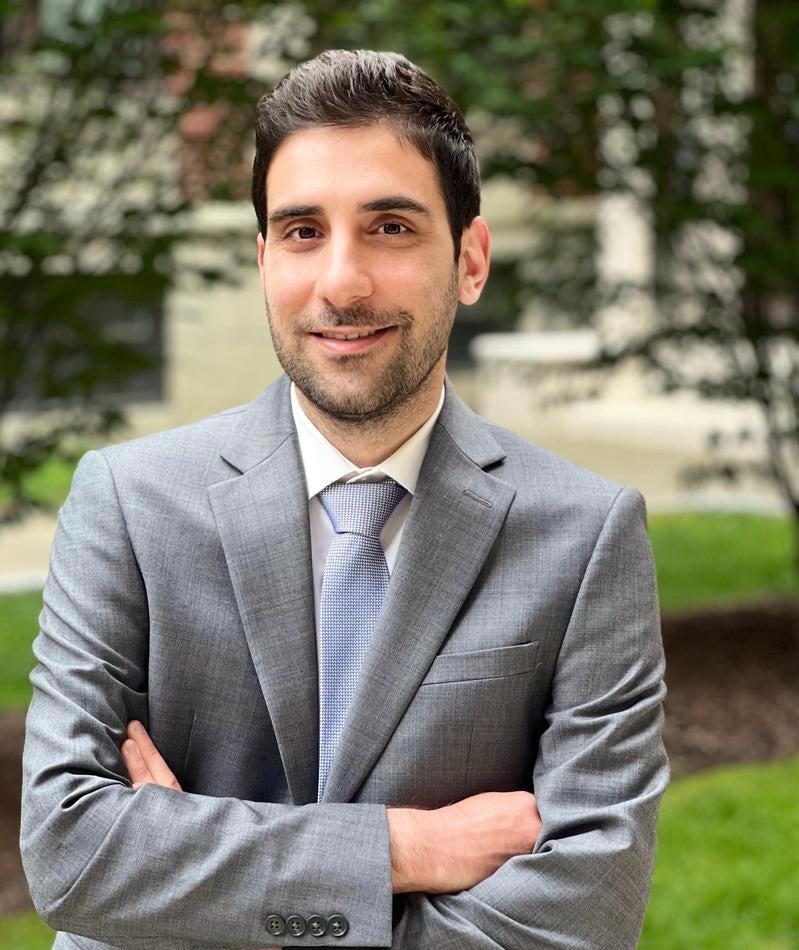
Tatsunori Hashimoto is an Assistant Professor of Computer Science at Stanford University, specializing in artificial intelligence, machine learning, and natural language processing. His research focuses on developing robust and ethical language models, addressing challenges in bias mitigation, fairness, and transparency. He leads projects like the Stanford Alpaca, exploring instruction-following models and their societal impacts. Key research interests include generative models, AI ethics, and privacy-preserving techniques. His recent work examines language model behaviors, security risks, and the societal implications of AI systems. Notable contributions include frameworks for auditing language models, improving factual accuracy, and reducing disparities in speech recognition. His publications highlight advancements in long-context processing, few-shot learning, and automated benchmarking. He emphasizes practical applications of AI while addressing dual-use concerns and ensuring alignment with human values.
Professor Diana Inkpen is a faculty member at the School of Electrical Engineering and Computer Science, University of Ottawa. She holds a Ph.D. from the University of Toronto's Department of Computer Science and degrees from the Technical University of Cluj-Napoca, Romania (M.Sc. and B.Eng.). Her research focuses on computational linguistics, natural language processing (NLP), and artificial intelligence, with specialties in natural language understanding/generation, lexical semantics, and semantic web agents. Education: Ph.D., Computer Science, University of Toronto M.Sc., Computer Science and Engineering, Technical University of Cluj-Napoca B.Eng., Computer Science and Engineering, Technical University of Cluj-Napoca Affiliations: Director, NLP Lab Editor-in-Chief, Computational Intelligence journal Associate Editor, Natural Language Engineering journal Her research has led to roles such as program co-chair for AI 2012 and leadership in organizing international workshops. She has received funding from NSERC, SSHRC, and OCE, and was honored with a Visiting Professor title at the University of Wolverhampton, UK. Her teaching spans courses like Information Retrieval, Natural Language Processing, and Prolog programming. Professor Inkpen's work bridges NLP innovations with societal challenges, including mental health surveillance via social media analysis and bias mitigation in AI systems. She actively contributes to interdisciplinary projects, such as detecting hate speech and legal text entailment, while maintaining a global research network through collaborations and international conference involvement.
Chaowei Xiao is an Assistant Professor at the University of Wisconsin-Madison (starting 2023), affiliated with the School of Computer, Data & Information Sciences. His research focuses on securing AI systems, particularly exploring robustness in trustworthy machine learning, autonomous systems, and large language models (LLMs). He holds a Ph.D. from the University of Michigan, Ann Arbor, and a B.S. from Tsinghua University. Before joining UW-Madison, he worked as a research scientist at NVIDIA (2020–2022) and at Arizona State University (2022–2023). His work bridges model and system perspectives to ensure practical robustness and provable guarantees in AI applications like autonomous driving, healthcare, and IoT. Key research areas include adversarial robustness, AI security, and ethical AI. Recent contributions include frameworks for detecting LLM hallucinations, mitigating jailbreak attacks, and securing multi-modal systems. His work on diffusion models for adversarial purification and physical-world attacks on autonomous driving systems has been widely recognized. Notable awards include the 2024 USENIX Security Distinguished Paper Award, ACM Gordon Bell Finalist (2024), and Schmidt Sciences AI2050 Fellowship. He has advised students like Xiaogeng Liu (NVIDIA Fellow) and secured grants from Amazon, Apple, and UW-Madison. His lab actively publishes at top venues like NeurIPS, ICML, and CVPR.
Elena Simperl is a Professor of Computer Science and Deputy Head of Department for Enterprise and Engagement at King's College London's Department of Informatics. She co-directs the King's Institute for Artificial Intelligence and serves as Director of Research for the Open Data Institute. As a Hans Fischer Senior Fellow at the Technical University of Munich's Institute for Advanced Study, she leads the Trustworthy Knowledge Graphs focus group and contributes to advancing human-centric AI research across European institutions. Professor Simperl obtained her doctoral degree in Computer Science from the Free University of Berlin and her diploma from the Technical University of Munich. Prior to joining King's, she held academic positions in Germany, Austria, and at the University of Southampton, and was a Turing Fellow. Her career trajectory demonstrates consistent leadership in bridging academic research with practical applications in data ecosystems. Her research sits at the critical intersection of AI and social computing, focusing on human-centric approaches to building sociotechnical systems that integrate data, algorithms, and human capabilities. She investigates how to make knowledge engineering more accessible, how to leverage collective intelligence for data quality improvement, and how to design participatory AI systems that address societal challenges like misinformation. Her work spans knowledge graphs, semantic technologies, crowdsourcing, and open data, with particular emphasis on the social dimensions of data-intensive systems and the governance frameworks needed for trustworthy AI deployment. Analysis of her recent publications reveals a strong evolution toward integrating large language models with traditional knowledge engineering practices while maintaining human oversight. There's a clear trajectory from foundational work on knowledge representation toward increasingly applied research addressing real-world challenges in media ecosystems, citizen science, and data governance, with growing attention to policy implications of AI technologies. Fellow of the British Computer Society Fellow of the Royal Society of Arts Hans Fischer Senior Fellow at TUM-IAS (2023) Ranked among top 100 most influential scholars in knowledge engineering of the last decade Included in Women in AI 2000 ranking Professor Simperl has led 14 major European and national research projects totaling millions in funding, including MediaFutures (a Horizon 2020 program tackling online misinformation), QROWD, ODINE, Data Pitch, and ACTION. She currently co-chairs the Croissant working group in ML Commons developing data standards for AI, and serves as president of the Semantic Web Science Association. Her research has directly influenced the development of data ecosystems supporting startups and citizen science initiatives across Europe, demonstrating exceptional ability to translate theoretical advances into practical impact. As Director of Research at the Open Data Institute, she oversees initiatives connecting data entrepreneurs with artists and civic organizations. Her leadership in the MediaFutures project established a data-driven innovation hub that supported 51 startups/SMEs and 43 artists through three open calls, creating a sustainable model for arts-technology collaborations addressing media challenges. Her work with the ODINE project helped create a European ecosystem for data-driven startups, demonstrating her commitment to building practical applications of open data principles.
Matthieu Cord is a Professor at Sorbonne University and Scientific Director of valeo.ai, leading research in computer vision, deep learning, and computational cooking. He heads the MLIA team at ISIR Lab, focusing on multimodal models, transformers, and efficient architectures. Research areas include computer vision, large language models with vision, and AI-driven food analytics. Key projects: VISA-DEEP AI chair, Foundation VaViM models, and SmolVLA collaboration with Hugging Face. His recent work examines scalable multimodal models , trajectory prediction , and diffusion-based segmentation , with studies on in-context learning and biased shortcut learning in visual question answering. Articles highlight DeiT variants , fishr for OoD generalization , and STEEX for counterfactual explanations . Scientific awards include IUF Honorary Membership (2009), BMVC 2017 Best Paper, and ICIP 2018 Best Paper. As an advisor, he supervised PhD theses on topics like GAN editing , semantic segmentation , and multimodal retrieval . Current roles involve mentoring the 'Research Band' at MLIA and leading EU-funded initiatives like SCAPE. His work bridges theoretical AI exploration with practical applications in autonomous driving and food technology.
Cecilia O. Alm is a Professor in the Department of Psychology within the College of Liberal Arts at Rochester Institute of Technology (RIT), where she serves as the Artificial Intelligence Program Director. She holds multiple leadership roles including Director of the Center for Human-aware AI and Director of the Computational Linguistics and Speech Processing Lab (CLaSP). Her institutional affiliations span the School of Information, Ph.D. Programs in Cognitive Science and Computing and Information Sciences, Department of Computer Science, and MS in Data Science program. Dr. Alm earned her Ph.D. from the University of Illinois at Urbana-Champaign. Her research focuses on human-centered artificial intelligence with particular emphasis on linguistic and multimodal sensing, affective computing, and natural language processing. She investigates how AI systems can better understand and respond to human communication through multimodal dialogue processing, with applications in accessibility, education, and healthcare. Her recent publications demonstrate a strong trend toward developing inclusive AI systems, particularly through projects addressing Deaf community needs (MULTICOLLAB-ASL), subtle emotion recognition (FUSE corpus), and bias mitigation in NLP. The work consistently integrates multimodal data streams (speech, gaze, gesture) to create more responsive human-AI interaction frameworks. Current research directions emphasize diversity in AI education, visual prosody in sign languages, and human-in-the-loop AI development. Dr. Alm leads several significant NSF-funded initiatives including the AWARE-AI program, IRES AI-PROWIL international research experience, and collaborative projects with Gallaudet University focused on Deaf scientist-centered AI research. She has secured over $2.5 million in external funding for her work on human-aware AI systems. She directs the CLaSP lab which provides research opportunities for PhD, MS, and undergraduate students, with graduates employed at major technology companies including Amazon, Apple, Microsoft, and Facebook. The lab focuses on real-world AI applications in accessibility, human-robot interaction, and multimodal communication systems.
Mark Coeckelbergh is a Professor of Philosophy at the University of Vienna, specializing in the philosophy of technology, AI ethics, and robot ethics. He is affiliated with the Department of Philosophy and the Research Network Data Science at the University of Vienna. In addition to his academic position, Coeckelbergh has held significant roles including Former President of the Society for Philosophy and Technology (SPT) and Member of the European Commission's High-Level Expert Group on Artificial Intelligence (AI HLEG). His research focuses on the ethical, political, and philosophical implications of emerging technologies, particularly artificial intelligence and robotics. Coeckelbergh has published extensively in these areas, authoring influential books such as Robot Ethics (2022), The Political Philosophy of AI (2022), and Why AI Undermines Democracy and What To Do About It . His work explores how AI systems affect democratic processes, human agency, and social relationships. Recent publications demonstrate a strong focus on the relationship between AI, democracy, and ethical governance, examining how AI systems can both threaten and potentially enhance democratic processes through algorithmic transparency and participatory design approaches. Finalist of the World Technology Award 2017 Coeckelbergh teaches various courses including 'Introduction to Philosophy of LLMs,' 'LLMs and the Future of Writing,' 'Ethics and Robotics,' and 'Global Governance of AI.' He has supervised numerous students working on topics related to technology ethics and philosophy. He has been involved in several major research projects including H2020 PERSEO, WWTF Democracy Responsible Entrepreneurship, and FP7 DREAM (Development of Robot-Enhanced therapy for children with Autism spectrum disorders). Coeckelbergh has also announced upcoming guest professorships at the Institute of Philosophy of the Czech Academy of Sciences and Uppsala University, where he will work on environmental and technology ethics projects.
Leo Schwinn is a Lecturer at the Technical University of Munich (TUM) within the Department of Computer Science (I26), working in the Data Analytics and Machine Learning group supervised by Prof. Stephan Günnemann at the TUM School of Computation, Information and Technology. His research focuses on robust machine learning with particular emphasis on data-efficient learning and robustness vulnerabilities of Large Language Models (LLMs). Dr. Schwinn's research interests span multiple critical areas in contemporary machine learning including: Robustness against adversarial attacks in LLMs Embedding space vulnerabilities and defenses Model unlearning and privacy preservation Efficient training methodologies for large models Time-series forecasting with probabilistic frameworks Graph-based machine learning approaches His work bridges theoretical understanding with practical security implications of modern AI systems. Analysis of his recent publications (2023-2025) reveals a strong focus on LLM security, with multiple papers accepted at premier conferences including ICML, CVPR, ICLR, and NeurIPS. His research demonstrates consistent innovation in identifying novel attack vectors while developing practical defense mechanisms, particularly through embedding space manipulation techniques. The work shows increasing sophistication in handling both theoretical aspects of model robustness and practical deployment concerns. His notable scientific achievements include: Receiving the ATE dissertation price for his PhD work at FAU Securing an oral presentation at ICLR 2025 Organizing the ICLR BlogPost Track Becoming a member of ELLIS (European Laboratory for Learning and Intelligent Systems) Dr. Schwinn has served as review process chair for the 2024 Conference on Lifelong Learning Agents (CoLLAs) and actively collaborates with researchers at Mila Quebec AI Institute. His research group at TUM focuses on addressing fundamental challenges in machine learning robustness, particularly as they apply to real-world deployment scenarios where security and reliability are paramount. He maintains active GitHub repositories related to LLM security research, including circuit-breakers-eval and LLM_Embedding_Attack, demonstrating his commitment to open science and reproducible research in the field of AI security.
Steve Hailes is a Professor of Wireless Systems at the Department of Computer Science, University College London. He has served as Head of Department since 2019 and Deputy Head from 2005. His research spans wireless networks, computational trust, AI, and sensor systems for health, ecological, and environmental applications. Education: PhD and undergraduate degree from Cambridge University Appointment: Joined UCL in 1991 (postdoc), Lecturer in 1992 Research interests include: Trust and security in networked systems (co-founder of computational trust) Security of industrial control systems AI/ML applications in security and causal discovery Multi-agent reinforcement learning and moral behavior modeling Gas sensor fabrication and deployment for diverse applications Recent publications focus on feature selection for cybersecurity , moral alignment in LLM agents , trust-based consensus algorithms , and causal discovery using reinforcement learning . Collaborations include co-authors like Westphal, Musolesi, and Tennant. Applications span healthcare (dementia, JIA), ecology (endangered species in Botswana), and environmental monitoring (CO distribution, meth lab detection).
Xuezhe Ma is an Assistant Professor in the Department of Computer Science at the University of Southern California's Viterbi School of Engineering. Previously, he was a Ph.D. student at Carnegie Mellon University's Language Technologies Institute, where he worked under the supervision of Professor Eduard Hovy. His academic journey includes a Master's degree from Shanghai Jiao Tong University's Center for Brain-like Computing and Machine Intelligence and a Bachelor's degree in Computer Science from the same institution. Ph.D. in Computer Science, Carnegie Mellon University (completed ~2020) M.S. in Brain-like Computing, Shanghai Jiao Tong University B.S. in Computer Science, Shanghai Jiao Tong University Dr. Ma's research spans multiple areas at the intersection of Natural Language Processing and Machine Learning, with particular focus on structured prediction, syntactic and semantic parsing, machine translation, language generation, and deep generative models. His recent work has expanded into vision-language models, large language model architectures, and applications across computer vision tasks. His research combines theoretical foundations with practical implementations, as evidenced by his development of tools like NeuroNLP2 and MaxParser. His publication record shows a clear trajectory from foundational NLP work during his PhD (including papers on dependency parsing and sequence labeling) to more recent contributions in generative models and large language systems. The 15 most recent publications reveal a strong focus on addressing fundamental challenges in generative modeling, context handling, and multimodal integration, with applications spanning literary translation, medical imaging, and news diffusion analysis. AI2 Outstanding Intern Award (2018) Dr. Ma has secured research funding supporting his work in generative models and language technologies, with projects focusing on improving the efficiency and capabilities of large language models. His research group at USC is actively working on next-generation language understanding and generation systems, with particular emphasis on context-aware modeling and multimodal integration. He has established collaborations with industry partners including the Allen Institute for AI and has contributed to open-source projects like Texar. At USC, Dr. Ma leads research in the Information Sciences Institute, directing projects on efficient large language model architectures and multimodal reasoning systems. His lab focuses on developing novel approaches to context handling, model efficiency, and multimodal integration, with applications across diverse domains including healthcare, literary analysis, and news media.
Hima Lakkaraju is an Assistant Professor at Harvard University with dual appointments in the Harvard Business School and the Department of Computer Science. Her research focuses on trustworthy AI, including machine learning interpretability, fairness, privacy, and safety. She holds a PhD from Stanford University and has received accolades such as the Alfred P. Sloan Fellowship and NSF CAREER Award. Her work bridges algorithmic foundations and societal implications of AI, with applications in healthcare, policy, and business. Education: PhD in Computer Science from Stanford University (2013-2017). Academic background includes roles at IBM Research, Microsoft Research, and Adobe. Research Interests: Algorithmic Foundations of AI Interpretability and Explainable AI Fairness and Bias Mitigation Privacy-Preserving ML Generative Models and LLMs Ethical AI Policy and Regulation Key Achievements: Over 100 publications in top venues like NeurIPS and ICML; co-founder of the Trustworthy ML Initiative; featured in MIT Tech Review, Forbes, and Harvard Business Review. Current projects include the AI4LIFE research group and work on regulatory frameworks for AI. Advising and Grants: Supervises over 30 students across PhD, master's, and postdoc levels. Research supported by NSF, Sloan Foundation, Schmidt Sciences, Google, Amazon, and others. Initiatives include the Regulatable ML workshop and NeurIPS ethics co-chair roles. Labs and Collaborations: Leads Harvard's AI4LIFE group and collaborates with industry partners like Fiddler AI. Active in policy discussions on AI regulation and societal impact.
Yang Song is an ARC Future Fellow and Scientia Associate Professor at the School of Computer Science and Engineering , University of New South Wales (UNSW) . She serves as Associate Head of School (Research) and Co-Director of iCinema , focusing on AI and Computer Vision applications for social good. Education: BEng in Computer Engineering (Nanyang Technological University, Singapore), PhD in Computer Science (UNSW, 2013) Research Areas: Biomedical image analysis, human-centred AI, graph data modeling, neuro-symbolic learning, and AI trustworthiness. Her work develops domain-specific deep learning models for radiological segmentation, histopathology cancer analysis, and 3D reconstruction. Recent projects address explainability in LLMs, fairness in AI, and human-robot interaction frameworks. With over 200 peer-reviewed publications in top venues like CVPR , MICCAI , and NeurIPS , her research spans biomedical imaging, robotics, and general multimodal AI. Scientific Awards include: 2024: ARC Industrial Transformation Research Hub for Human-Robot Teaming 2023: Google Inclusion Research Award 2022: NHMRC Ideas Grant for computational brain imaging 2021: UNSW Engineering Research Excellence Award 2020: Scientia Fellowship (UNSW) 2019: ARC Future Fellowship She supervises 24 current PhD/MPhil students and has graduated 15 advisees, including placements at Harvard University and Siemens Healthineers. Her grants include collaborations with Surf Life Saving Australia and industry partnerships for AI-driven solutions.
Mohammad Mohammadi Amiri serves as an Assistant Professor in the Department of Computer Science at Rensselaer Polytechnic Institute (RPI), appointed in Fall 2023. His research focuses on advancing artificial intelligence through strategic data utilization, with emphasis on large language models, data valuation, federated learning, and deep learning. Previously, he held postdoctoral appointments at Princeton University and MIT Media Lab, building on his strong educational foundation from Imperial College London, University of Tehran, and Iran University of Science and Technology. Education: Ph.D. in Electrical and Electronic Engineering, Imperial College London (2019) - Best Ph.D. Thesis Award recipient M.Sc. in Electrical and Computer Engineering, University of Tehran (2014) - Ranked 1st among all M.Sc. students B.Sc. in Electrical Engineering, Iran University of Science and Technology (2011) - Ranked 1st among all B.Sc. students Dr. Amiri's research centers on optimizing artificial intelligence systems through innovative data strategies. His work addresses critical challenges in large language models including efficiency, memory usage, alignment, and reasoning capabilities. In data valuation, he develops principled methods to quantify data worth for fair trading platforms. His federated learning research tackles privacy concerns, heterogeneous data distribution, and communication overhead in decentralized environments. The deep learning component explores theoretical foundations to improve model interpretability and robustness. Analysis of his recent publications reveals a strong focus on making AI systems more efficient and accessible, with particular emphasis on large language model optimization, federated learning advancements, and data valuation frameworks. His work bridges theoretical foundations with practical applications in wireless communications and distributed computing environments. Scientific Awards: IEEE Communications Society Young Author Best Paper Award (2022) Best PhD Thesis Award from IEEE Information Theory Chapter of UK and Ireland (2019) Eryl Cadwallader Davies Prize for Outstanding PhD Thesis (2019) EEE Departmental Scholarship at Imperial College London (2015-2019) Ranked 1st among M.Sc. students at University of Tehran (2014) Ranked 1st among B.Sc. students at Iran University of Science and Technology (2011) Dr. Amiri actively mentors graduate students, currently supervising five Ph.D. candidates and one M.Sc. student working on efficient LLM fine-tuning, inference, and storage. His research has attracted significant attention, evidenced by numerous keynote invitations at prestigious institutions including Bell Labs, MIT, King's College London, and various IEEE conferences. He serves on program committees for major conferences including IEEE Globecom and ICC, demonstrating his growing influence in the academic community. His research group operates at the intersection of machine learning and wireless communications, developing innovative solutions for resource-constrained environments while addressing fundamental theoretical challenges in AI systems. Current projects focus on making advanced AI more scalable and accessible through efficiency improvements in model training and inference.
LEE Wee Sun is a Professor in the Department of Computer Science at the National University of Singapore (NUS), where he previously served as Head of Department, Vice Dean of Undergraduate Studies, and Vice Dean of Research. His academic journey began with a B.Eng. in Computer Systems Engineering from the University of Queensland (1992) and a Ph.D. from the Australian National University (1996), followed by research roles at the Australian Defence Force Academy and MIT. Education: Ph.D., Australian National University, Canberra, Australia (1996) B.Eng. in Computer Systems Engineering, University of Queensland, Brisbane, Australia (1992) Research Focus: Professor Lee pioneers work in Machine Learning , Planning Under Uncertainty , and Approximate Inference , with emphasis on integrating AI subfields for holistic reasoning. His current projects include "Learning to Decompose for Reasoning and Planning" (enhancing LLMs via self-supervised problem decomposition) and "Learning to Reason with Visual-Linguistic Inputs" (unifying vision, language, and reasoning in single architectures). Publication Trends: Recent work (2023-2025) centers on bridging LLMs with classical AI techniques, featuring breakthroughs in uncertainty quantification, multi-task optimization, and graph-based reasoning. Key themes include sparsity-aware vehicle routing, epistemic uncertainty for reliable LLMs, and differentiable neural solvers for combinatorial problems. Awards: IJCAI-JAIR Best Paper Prize (2022) RSS Test of Time Award (2021) RoboCup Best Paper Award (IROS 2015) HRATC 1st Place (2015) IPPC POMDP Track 1st Place (2011, 2014) UAI Google Best Student Paper (2014) Semeval-1 1st/2nd Place (2007) J.G. Crawford Prize (ANU 1996) Leadership & Service: As steering committee chair for ACML and area chair for NeurIPS/ICML/AAAI/IJCAI, Professor Lee shapes global AI discourse. His administrative roles at NUS and collaborations with MIT/Singapore-MIT Alliance demonstrate commitment to advancing AI education and research infrastructure. While student advisees aren't listed, his leadership positions imply extensive mentoring. Research Ecosystem: His work drives NUS's AI initiatives including Knowledge@Computing projects on reasoning frontiers. Current efforts focus on making AI systems robust through uncertainty-aware planning and multi-modal integration, with applications in robotics, verification systems, and combinatorial optimization.
Jiang Hu is a Professor in the Department of Electrical and Computer Engineering at Texas A&M University, holding the Eric D. Rubin '06 Endowed Professorship. He also serves as Co-Director of Graduate Programs and is affiliated with the Computer Science & Engineering department. His research focuses on VLSI design automation, machine learning applications, and hardware security. He has held roles as editor for IEEE Transactions on CAD and ACM Transactions on Design Automation, and chaired the 2012 ACM International Symposium on Physical Design. Education: B.S. in Optical Engineering (Zhejiang University, 1990), M.S. in Physics (1997), and Ph.D. in Electrical Engineering (University of Minnesota, 2001). He worked at IBM Microelectronics before joining Texas A&M in 2002. Research interests include energy-efficient VLSI circuits, on-chip communication fabrics, analog layout automation, and AI-driven EDA. Recent work emphasizes machine learning for design closure, privacy-preserving frameworks, and systolic array-based architectures. Awards: IEEE Fellow (2016) Humboldt Research Fellowship (2012) Multiple best paper awards at DAC, ICCAD, and ASPDAC Advising and grants: Leads initiatives like the SLICE project, NSF workshops on ML-EDA infrastructure, and serves as Editor-in-Chief of ACM TODAES since 2024. His work bridges academic research and industry applications in EDA and semiconductor design. Labs/Teams: Active contributor to open-source tools like ALIGN for analog layout generation and collaborations on machine learning for EDA commons.