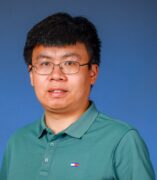
Xiaoguang Wang is an Assistant Professor in the Department of Computer Science at the University of Illinois Chicago. His research spans systems and software security, focusing on heterogeneous CPU architectures, secure software systems, and virtualization-based security frameworks. He actively mentors PhD and Master’s students and offers funded research opportunities for UIC students. University of Illinois Chicago, Department of Computer Science Research: Systems & Software Security, Heterogeneous Architectures, Virtualization His work includes projects like sMVX (multi-variant execution), Dapper (live program rewriting), and DynaCut (dynamic program customization). Recent publications address cross-architecture process migration, Linux kernel security, and using large language models (LLMs) for software security. He teaches advanced courses such as CS 487: Building Secure Computer Systems and CS 594/561: Adv. Linux Kernel Programming , emphasizing hands-on kernel development and security techniques. Grants from the U.S. Office of Naval Research and NSF support his work on secure systems and cross-architecture security solutions.
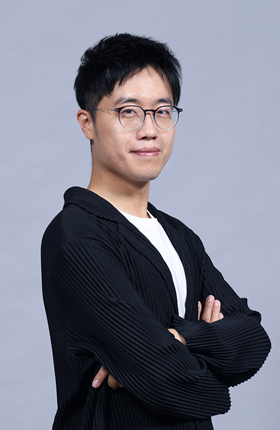
Dr. Qiuyu (Luca) Lu is an Assistant Professor (Presidential Young Scholar) at the School of Design of The Hong Kong Polytechnic University and Director of the Interbeing Lab , which focuses on designing intelligence for mutualism between humans, nature, and machines. He holds a Ph.D. in Design and a B.Eng. in Mechanical Engineering from Tsinghua University. Ph.D. in Design, Tsinghua University B.Eng. in Mechanical Engineering, Tsinghua University His research bridges Ecological HCI, Computational Design , and Bio-inspired Engineering , creating sustainable interactive systems that leverage natural processes. Recent projects include: RoboMoRe (2025): LLM-driven robotic morphology optimization Degrade to Function (2024): Programmable eco-degradable interfaces Sustainflatable (2023): Ambient energy harvesting for morphing devices His work has been exhibited internationally at Ars Electronica and the Milan Triennale . Scientific recognition includes a Best Paper Honorable Mention at UIST 2023. Dr. Lu is actively recruiting PhD students and postdocs across disciplines, including design, computer science, mechanical engineering, and materials science, with research tracks in: Experimental Track: Interactive hardware prototyping Computational Track: AI-aided design tools Design Track: User experience frameworks
Christos Ouzounis is a Professor of Bioinformatics at the Department of Informatics, Aristotle University of Thessaloniki , with a career spanning institutions including the European Bioinformatics Institute , King's College London , and University of Toronto . His work bridges Computational Biology , Digital Biology , and Metagenomics , focusing on large-scale data analysis, machine learning applications, and functional annotation of proteins. Education : BSc in Biological Sciences (1986), MSc in Biological Computation (1987), and DPhil in Computational Chemistry (1993) Key Roles : Director of the Bioinformatics Centre at King's College London (2007-2010), Research Director at IDEP-EKETA (2014-2020) His research interests include low-complexity protein sequences , Covid-19 seasonality patterns linked to UV radiation, and metagenomic analysis of urban microbiomes in cultural heritage sites. Current projects involve machine learning models for microbial coexistence networks, ontological classification of biomedical literature, and bioinformatics tool development . Publications highlight trends in archaeal genomics , functional dark matter in metagenomics, and epidemiological modelling . Notable collaborations include work on BioTextQuest v2.0 for concept discovery and MjCyc for metabolic pathway analysis.
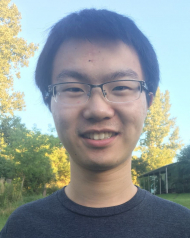
Zhuang Liu is an Assistant Professor of Computer Science at Princeton University, where he leads a research group focused on deep learning and computer vision. His work spans vision and language, unified by a focus on deep learning methods, representations, and architectures. Prior to joining Princeton, he was a Research Scientist at Meta AI Research (FAIR) in New York City. He received his Ph.D. from UC Berkeley and his B.E. from Tsinghua University, both in Computer Science. His educational background includes: Ph.D. in Computer Science, University of California, Berkeley, 2022 B.E. in Computer Science, Tsinghua University (Yao Class) Liu's research focuses on empirical approaches to understanding how deep learning models work and behave. He explores simple approaches to gain empirical insights into neural networks, often challenging existing beliefs in architectures, training, pruning, and datasets. His work spans multiple domains including computer vision, natural language processing, and multimodal learning. He has made significant contributions to the field, including DenseNet and ConvNeXt architectures, which have influenced modern neural network design. His recent publications reveal a strong focus on understanding and improving large language models and vision-language systems. His work examines idiosyncrasies in LLMs, pruning approaches for efficient inference, visual shortcomings of multimodal systems, and bias in large-scale visual datasets. He also investigates fundamental questions about neural network architectures, exploring the relationship between ConvNets and Transformers, and developing normalization-free transformer variants. His research consistently bridges theoretical insights with practical applications, as evidenced by his numerous conference publications and industry collaborations. His notable scientific achievements include: CVPR Best Paper Award NeurIPS'18 Compact Neural Networks Workshop Best Paper Award Professor Liu actively mentors students and postdoctoral researchers, currently advising seven Ph.D. students including Wenhao Chai, Tony Chen, Sachin Konan, Taiming Lu, Zhuorui Ye, David Yin, and Boya Zeng. He has successfully guided graduates such as Jiachen Zhu (now at Skild AI) and Mingjie Sun (now at Thinking Machines Lab). His research has practical implications for improving the efficiency, interpretability, and fairness of deep learning systems, with applications across multiple domains. His research group maintains active collaborations with industry partners including Meta FAIR, NVIDIA Research, and Adobe, and regularly hosts research interns. The group's work has established Zhuang Liu as a leading voice in empirical deep learning research, with invitations to speak at top academic institutions including Harvard, Stanford, Columbia, and Boston University.
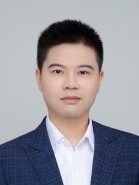
Jianke Zhu is a Professor at the College of Computer Science and Technology of Zhejiang University . He obtained his Ph.D. in Computer Science and Engineering from The Chinese University of Hong Kong and conducted postdoctoral research at the BIWI Computer Vision Lab, ETH Zurich . His research focuses on Computer Vision and Machine Learning , with a particular emphasis on 3D scene understanding, LiDAR-based mapping, and neural rendering. Dr. Zhu’s research spans several subfields, including 3D Reconstruction , Semantic Segmentation , Multimodal Learning , and Autonomous Driving . His work integrates Neural Networks , LiDAR Processing , and Uncertainty Quantification to address challenges in real-time and adverse conditions. Selected Recent Trends: 2025 publications highlight his work in Hexagonal Mesh-based Neural Rendering , Instance-aware 3D Scene Understanding , and Efficient Visual Projectors for Multimodal LLMs . Earlier works include Box2Mask for Instance Segmentation (2024) and Token Selection for Point Cloud Learning (2025). Scientific Awards : Senior member of the IEEE Advising and Grants : As a Doctoral Supervisor , he mentors students in advanced topics like LiDAR Odometry and Multi-view Stereo Recovery . His projects have attracted funding for autonomous driving , 3D scene modeling , and neural rendering .
Simon Ostermann serves as a Senior Lecturer at Saarland University and Senior Researcher & Deputy Director at the Multilinguality and Language Technology (MLT) lab of the German Research Center for Artificial Intelligence (DFKI). He leads the Efficient and Explainable NLP (E&E) research group and contributes to major projects including lorAI (Low Resource AI), TRAILS (Trustworthy Machines), PERKS (Procedural Knowledge), DAM-S (Semantic Search), and DisAI (Disinformation Combat). His research centers on democratizing language technology through transparent, robust models—specializing in mechanistic interpretability to reverse-engineer LLM internals and enhance efficiency for low-resource languages. Key focus areas include reducing model size for constrained environments, improving cross-lingual transfer via adapters, and developing structured input techniques. His work bridges theoretical interpretability with practical applications in resource-limited settings. 2025 publications reveal concentrated efforts in low-resource adaptation (language adapters, graph-enhanced embeddings), explainable AI (counterfactual generation, conversational XAI datasets), and multilingual fact-checking systems. Notable trends include systematic neuron manipulation frameworks, rigorous evaluation of synthetic data strategies, and cross-lingual claim verification benchmarks. Ostermann advises six PhD candidates (Anikina, Oguz, Bäumel, al Ghussin, Gurgurov, Vykopal) and multiple MSc students on topics spanning RAG hallucinations, multilabel classification, and adapter interpretability. His research receives funding through DFKI-led consortia with European and international partners focusing on trustworthy, efficient AI deployment. The E&E group under his leadership drives innovation in efficient NLP through biweekly seminars, collaborative coding sessions, and partnerships with institutions like KInIT. Current initiatives prioritize green computing for language models and real-world deployment in industrial procedural knowledge systems.
Sahar Abdelnabi is an AI Security Researcher at Microsoft and will join the ELLIS Institute Tübingen as a Faculty/Principal Investigator. She is co-affiliated with the Max-Planck Institute for Intelligent Systems and Tübingen AI Center , leading the COMPASS Research Group focused on safe, aligned, and steerable AI agents with emphasis on security, human-AI interaction, and cooperative systems. Her research spans three pillars: (1) Probing AI failures through biases, emergent risks, and misuse scenarios; (2) Developing defenses like white-box control methods and reasoning enhancements; and (3) Leveraging AI for societal good through scientific discovery. Key contributions include coining indirect prompt injection vulnerabilities (2023), pioneering generative AI watermarking (2020), and receiving the ACL2025 Best Paper Award for work on LLM sampling heuristics. PhD in Computer Science (2019-2024) from CISPA Helmholtz Center , advised by Prof. Dr. Mario Fritz MSc in Computer Science from Saarland University Research Highlights Her work bridges AI security and safety with sociopolitical implications, focusing on prompt injection , cooperative multi-agent systems , and contextual integrity . She has been recognized by policymakers and industry leaders, including NIST , OWASP , and Microsoft's AI Bug Bounty Program . Scientific Awards Best Paper Award at ACL2025 Best Paper Award at AISec'23 Workshop Spotlight Paper at NeurIPS Datasets and Benchmarks 2024 Academic Leadership She actively contributes to the AI and security communities through: Program Committee: IEEE S&P (2026) , SaTML (2024-2026), USENIX Security (2025) Organized IEEE SaTML'25 LLMail-Inject Challenge Reviewed for top conferences: ICLR , NeurIPS , CVPR
Dr. Zheng Yuan is a Senior Lecturer (Associate Professor) in Natural Language Processing at the School of Computer Science, University of Sheffield. He holds affiliated positions at the University of Cambridge and King's College London, and is a Fellow of Trinity College, Cambridge. His research focuses on NLP applications in education, healthcare, and multilingual systems. Education: PhD in Natural Language Processing, University of Cambridge MPhil in Advanced Computer Science, University of Cambridge BSc(Eng) from Queen Mary University of London Research: Dr. Yuan's work spans educational NLP, multilingual systems under low-resource conditions, and explainable machine learning. His group develops technologies for grammatical error correction, automated assessment, and cross-lingual applications, with significant contributions to computer-assisted language learning and computational creativity. Publications: Recent works (2023-2025) demonstrate strong focus on educational NLP, multilingual systems, and LLM evaluation. Key themes include grammatical error correction for code-switched languages, creativity assessment frameworks, and robust evaluation methods for large language models across diverse linguistic contexts. Awards: Winning systems at SemEval-2021 and CoNLL-2014 Fellowship at Trinity College Cambridge Fellow of Higher Education Academy Grants & Advising: Principal Investigator for Royal Society grant 'Large Language Models as Agents for Intelligent Language Tutoring' (2025-2027). Actively supervises PhD students in NLP and machine learning, welcoming new research collaborations. Affiliations: Member of Alan Turing Institute (Data-Centric Engineering), King's Institute for AI, and ACL committees. Organizes major NLP workshops including ACL/NAACL BEA workshops and AIED tutorials.
Larry P. Heck is a Professor with a joint appointment in the School of Electrical and Computer Engineering and School of Interactive Computing at the Georgia Institute of Technology. He holds the Rhesa S. Farmer Advanced Computing Concepts Chair and is a Georgia Research Alliance Eminent Scholar . Education: BSEE, Texas Tech University (1986) MSEE, Georgia Institute of Technology (1989) PhD EE, Georgia Institute of Technology (1991) His research focuses on conversational AI , dialogue systems , and machine learning applied to natural language processing and speech recognition . He pioneered early industrial applications of deep learning in speech processing and has contributed to advancements in multimodal interaction, knowledge distillation, and real-time question answering systems. Recent publications emphasize moral reasoning in AI , multimodal dialogue , and large-scale dataset creation for conversational systems. His work bridges language modeling , sensor fusion , and ethical AI through innovations in contextual reasoning and interface masking. Scientific Distinctions: IEEE Fellow (2020) IEEE Signal Processing Society Best Paper Award Academy of Distinguished Engineering Alumni, Georgia Tech (2017) Distinguished Engineer Award, Texas Tech University (2017) Fellow, National Academy of Inventors (2025) He has secured significant funding from DARPA and NSA for speaker recognition systems and has led cutting-edge research at institutions including Microsoft, Google, and Samsung. His lab focuses on conversational systems and deep learning for speech and multimodal data.
Shuyin Jiao is an active Associate Teaching Professor in the Department of Computer Science at North Carolina State University's College of Engineering. She serves as course coordinator for CSC 111 Introduction to Computing: Python and teaches multiple core undergraduate courses including CSC 116 (Java) and CSC 246 (Operating Systems), with extensive teaching experience spanning over 9 years at both NC State and the College of William & Mary. Her educational background includes a Ph.D. from the University of Houston (2015), a Diplôme d'Ingénieur from Ecole Central de Lyon, France, and a B.S. from Beihang University, China. She previously held positions as Assistant Teaching Professor (2020-2025) and Lecturer at NCSU, and taught as Lecturer and Adjunct Lecturer at William & Mary from 2015-2020. Dr. Jiao's research focuses on computing education and program analysis, with particular emphasis on developing tools to enhance student learning in computer science. Her work explores pedagogical methods to address diverse learning styles in increasingly large CS classrooms and investigates code inefficiencies through memory profiling and performance analysis. She leads the CERES lab at NCSU and serves as Publications Co-Chair for SIGCSE TS 2026. Her publication record shows consistent output in top venues including SIGCSE, CGO, MobiCom, and ICSE, with recent work spanning from 2025 back to 2012. Her research trajectory demonstrates a clear evolution from materials science (early career) to software engineering and computer science education, with current work heavily focused on educational technology and program analysis tools. Dr. Jiao has secured significant funding including as PI for NSF Grant DUE-#2417469 (2024-2027), NCSU Data Science Academy Seed Grant (2023-2024) as Co-PI, and NCSU GEARS Grants (2023-2024) as PI. She also serves as Co-PI for NSF Grant OAC-#2411136 (2025-2028) focused on computer system research. She actively involves undergraduate students in research through COE REU and CSC 498/499 projects, recruiting at CSC Undergraduate Research Lightning Talks each semester. Her course redesign projects include enhancing operating systems education through multimedia and redesigning CSC 111 with DELTA funding to address challenges in large-class instruction.
Abdelkader Mekrache is a doctoral researcher in the Communication Systems department at EURECOM. His work focuses on integrating artificial intelligence (AI) and large language models (LLMs) into next-generation (6G) network management frameworks, emphasizing intent-driven systems, zero-touch automation, and explainable AI (XAI) for enhanced trustworthiness. Institution: EURECOM Email: Abdelkader.Mekrache@eurecom.fr Research Interests: Mekrache's research explores AI-driven solutions for telecommunications, including: Intent-based networking for 6G LLM-powered operations support systems Explainable AI (XAI) for network transparency Deep reinforcement learning (DRL) for task scheduling Machine reasoning in FCAPS models Edge computing and network-compute abstraction Publication Trends: His recent work highlights the convergence of AI/LLMs with telecommunications, particularly in automating network management for 6G systems through intent-driven architectures and trustworthy AI paradigms.
Alessandro (Alex) Orso is the Dean and Professor at the University of Georgia College of Engineering , starting in 2025. Previously, he spent 25 years at Georgia Institute of Technology , where he served as a Professor in the College of Computing , Director of the Scientific Software Engineering Center , and Associate Dean for Off-Campus and Special Initiatives . Education: Ph.D. in Computer Science – Politecnico di Milano, Italy M.S. in Electrical Engineering – Politecnico di Milano, Italy B.S. in Electrical Engineering – Politecnico di Milano, Italy Research Focus: Alex Orso is a leading expert in software engineering , with a focus on software testing , program analysis , and debugging . His work aims to improve software reliability, security, and trustworthiness , and has been validated on real-world systems. He has led initiatives to integrate AI and large language models into testing workflows, particularly for REST APIs and mobile applications . Scientific Recognition: Distinguished Member of the Association for Computing Machinery (ACM) Fellow of the Institute of Electrical and Electronics Engineers (IEEE) ISSTA Impact Paper Award (2021) Research Funding & Leadership: Orso has secured major funding from Google, IBM, Microsoft , and government agencies. In 2021, he led the acquisition of $11 million from Schmidt Futures to establish the Scientific Software Engineering Center at Georgia Tech, where he served as inaugural director. Teaching & Innovation: He was an early advocate of Georgia Tech’s Online Master of Science in Computer Science (OMSCS) and has taught a virtual software engineering course since its launch in 2014.
Fosca Giannotti is a Full Professor at Scuola Normale Superiore in Pisa, Italy, and leads the Pisa KDD Lab - Knowledge Discovery and Data Mining Laboratory, a joint research initiative of the University of Pisa and ISTI-CNR. Founded in 1994, the Pisa KDD Lab is one of the earliest research labs focused on data mining. Giannotti is a pioneering scientist in mobility data mining, social network analysis, and privacy-preserving data mining. Her educational background includes a Master Degree in Computer Science from the University of Pisa (1982) with 110/100 cum laude. She has held numerous visiting positions including at MCC in Austin, CWI Amsterdam, UCLA, and the Barabasi Lab at Northeastern University. Giannotti's research focuses on social mining from big data, encompassing smart cities, human dynamics, social and economic networks, ethics and trust, and diffusion of innovations. She has authored more than 300 papers and coordinated tens of European projects and industrial collaborations. Her current work increasingly centers on Explainable AI (XAI), as evidenced by her prestigious ERC Advanced Grant for the XAI project focused on "Science and technology for the explanation of AI decision making." Her recent publications reveal a strong emphasis on trustworthy AI, with research spanning privacy-preserving techniques, fairness in machine learning, human-AI collaboration frameworks, and medical applications of explainable AI. The breadth of her work demonstrates how data mining principles are being applied across diverse domains from social sciences to healthcare. ERC Advanced Grant for XAI project Premio Internazionale Tecnovisionarie 2021 Intelligenza Artificiale Giannotti has coordinated numerous significant projects including SoBigData (the European research infrastructure on Big Data Analytics and Social Mining), XAI, TAILOR (Foundations of Trustworthy AI), HumanE-AI-Net, and AI4EU. As former coordinator of SoBigData, she led an ecosystem of ten cutting-edge European research centers providing an open platform for interdisciplinary data science. She leads the Pisa KDD Lab, which serves as a hub for research on knowledge discovery and data mining. The lab has been instrumental in developing techniques for mobility data analysis, social network mining, and privacy-preserving data analytics, with applications ranging from smart cities to pandemic response.
Valeria Filippou is a Researcher at the Computation-based Science & Technology Research Center (CaSToRC) within The Cyprus Institute. She holds an MEng in Medical Engineering, an MSc in Tissue Engineering and Regenerative Medicine, and a PhD in Medical Engineering with a focus on Machine Learning, Signal Processing, and Wearable Technologies from the University of Leeds. Her research spans interdisciplinary applications of AI in healthcare, financial services, and environmental monitoring. Key areas include developing credit risk models, medical diagnostics algorithms, AI-driven data privacy solutions, and consulting on large language models (LLMs) and retrieval-augmented generation (RAG) systems. Her recent publications focus on wearable sensor data analysis for activity recognition, multimodal prediction of psychological conditions like alexithymia, and advancements in medical imaging phantoms via 3D printing. These works bridge computational methods with practical healthcare and environmental monitoring challenges. No scientific awards or grant details are explicitly stated in the provided information.
Zhen Xie is an Assistant Professor in the Department of Computer Science at Binghamton University (SUNY), serving as Director of the Parallel Computing and Intelligent System (PCIS) Lab. He holds a PhD from the Chinese Academy of Sciences and a BA from Wuhan University of Technology. His research focuses on high-performance computing (HPC), machine learning, and their intersections, particularly optimizing performance for HPC and AI/DL applications across heterogeneous architectures. Research Highlights: Dr. Xie’s work emphasizes system-level performance optimization for ML and HPC, including GPU acceleration, memory optimization, and AI accelerator selection. His team has won the ACM Gordon Bell Special Prize (2022) for their GenSLMs project predicting SARS-CoV-2 evolution. Recent grants include a 2024 gift from OpenAI for AI testbed initiatives. Awards: ACM Gordon Bell Special Prize (2022), Impact Argonne Awards (2023) Lab: PCIS Lab explores middleware for parallel computing, targeting scientific simulations and big data analytics. Collaborations include Argonne National Lab and Lawrence Berkeley National Lab. Teaching: Teaches Distributed Systems (CS 457/557) and oversees independent studies. Previously trained researchers at Argonne’s ATPESC program. Grants & Collaborations: Subcontract with Lawrence Berkeley Lab (HEVI-LOAD), Argonne testbed expeditions, and OpenAI-funded projects. Active in DOE labs like Summit and Aurora supercomputers.