M. Yasin Akhtar Raja is a Professor of Physics and Optical Science at the University of North Carolina at Charlotte (UNC Charlotte), where he has served since 2004. He also holds an adjunct professorship in Electrical and Computer Engineering since 2011. As an undergraduate advisor, he plays a key role in student mentorship. Ph.D. in Optical Physics from the University of New Mexico (1988) M. Phil in Laser Physics from Quaid-i-Azam University (Pakistan) B.Sc. in Physics and Math from Punjab University (Lahore, Pakistan) His research focuses on optoelectronics, photonics, and optical communication networks, with expertise in VCSELs, optical amplifiers, and solar energy harvesting. He has authored over 170 publications and secured multiple patents, including foundational work on surface-emitting lasers (VCSELs). Raja has supervised 42 graduate students and chairs the undergraduate committee in his department. He co-founded the HONET-ICT international conference series and advises research initiatives in Pakistan. Notable achievements include his invention of the surface-emitting RPG laser (VCSEL), a Merit Scholarship from Pakistan, and contributions to fiber optic networks and smart grid technologies. His work spans theoretical and applied research, with applications in telecommunications, energy, and materials science.
Debra Richardson: Academic Overview Debra Richardson is a Professor of Informatics and the founding Dean of the Donald Bren School of Information and Computer Sciences (ICS) at the University of California, Irvine. She has held leadership roles since joining UCI’s faculty in 1987, including serving as Chair of ICS and Dean for ten years. Her academic work bridges software engineering, sustainability, and requirements engineering. Key research projects include Software Engineering for Sustainability (SE4S) and Requirements Engineering at the Margins (RE@tM) , which address global challenges in ICT development and environmental impact reduction. Education Ph.D., Computer and Information Science, University of Massachusetts Amherst (1981) M.S., Computer and Information Science, University of Massachusetts Amherst (1978) B.A., Mathematics, University of California, San Diego (1976) Research Interests Richardson’s research focuses on adapting software engineering methods to socially relevant domains. She advocates for sustainable ICT systems and inclusive computing practices that address marginalized communities. Her work emphasizes integrating sustainability as a first-class requirement in software development and rethinking requirements engineering for global accessibility. She also explores gender diversity in technology and has pioneered initiatives like the Women in ICS (WICS) program. Recognition & Contributions She has been recognized as a Fellow of Automated Software Engineering and led the National Center for Women & Information Technology (NCWIT). Her efforts include chairing Computer Science Education Week and advocating for K-12 CS education reforms in California. Richardson also chairs the California Computing Education Advocacy Network (CCEAN) to ensure equitable access to computing education. Service & Advocacy Her service extends to promoting diversity in STEM, including roles with the Computing Research Association (CRA) Deans Group and Girls Incorporated of Orange County. Richardson’s leadership has transformed ICS into a top-tier interdisciplinary school and fostered initiatives like the Debra J. Richardson Student Support Fund to support underrepresented students in computing. Personal Interests Beyond academia, Richardson is an avid outdoors enthusiast, practicing rock climbing, scuba diving, and yoga. She supports women’s sports and has been a dedicated fan of UCI’s women’s basketball team.
Hamdi Torun is a Professor in the Department of Mathematics, Physics and Electrical Engineering at Northumbria University, UK. His research focuses on micro/nanoengineering for sensor development, electromagnetic metamaterials, and acoustofluidics. He holds a Ph.D. from Georgia Institute of Technology (2010) and has held academic positions at Bogazici University, Turkey, prior to joining Northumbria in 2017. He is a co-founder of GlakoLens, a biomedical technology startup. Education: B.S. Electrical Engineering, Middle East Technical University (2003) M.S. Electrical Engineering, Koc University (2005) Ph.D. Electrical Engineering, Georgia Institute of Technology (2010) Research Interests: Microelectromechanical systems (MEMS) integrated with optical systems SAW-based sensors for biomedical and environmental applications Terahertz metamaterials for imaging/sensing Lab-on-chip acoustofluidic platforms Wearable health monitoring devices Recent Work Trends: Recent publications emphasize integration of SAW technology with flexible substrates for applications in drug delivery, anti-icing systems, and wearable diagnostics. His team develops novel hydrogel materials for extreme environment monitoring and explores LED-pumped masers for quantum sensing. Awards: 2024 Medical Design Award (Create the Future) 2016 Technology Award (Elginkan Foundation) 2014 MIT Tech Review Innovator Under 35 2011 Marie Curie Fellowship Grants & Labs: Lead investigator on Engineering and Physical Sciences Research Council (EPSRC) project 'Advanced Thin Film Sputtering Fabrication Facility (TF-FAB)'. Active in developing SAW-based platforms for aerospace, biomedical, and environmental applications through collaborations with industry partners like GlakoLens. Labs/Teams: Heads the Micro/Nano Engineering Lab at Northumbria, focusing on sensor innovation and metamaterials. Collaborates with multidisciplinary teams in photonics, materials science, and biomedical engineering.
Jon Marangos is Professor of Laser Physics and Lockyer Chair in the Department of Physics at Imperial College London's Faculty of Natural Sciences, where he directs the Blackett Laboratory Laser Consortium and previously led the Quantum Optics and Laser Science Group (2003-2008). Education: BSc in Physics, Imperial College London, 1982 PhD in Physics, Imperial College London, 1986 His research pioneers attosecond-scale measurement techniques, coherent X-ray/VUV generation via nonlinear optics, and high-intensity laser-matter interactions with molecules/clusters. Recent work focuses on controlling electron dynamics in complex systems and developing sub-femtosecond light sources, with applications spanning atomic physics to quantum engineering. Analysis of his 2023-2025 publications reveals dominant themes in attosecond electron dynamics using XFELs and high-harmonic generation, particularly probing electronic coherence, charge migration, and ultrafast structural changes in molecules and condensed matter. Awards and Honors: EPSRC Advanced Fellow (1990) Fellow of the Optical Society of America Fellow of the Institute of Physics ERC Advanced Grant on ASTEX (2012) EPSRC Programme Grant on Attosecond Electron Dynamics (2011) As Principal Investigator, he leads major grants including the EPSRC Programme Grant 'Attosecond Electron Dynamics' and ERC's ASTEX project, supervising numerous PhD students and postdocs while securing sustained funding from UKRI and European agencies. He directs the Blackett Laboratory Laser Consortium and collaborates through Imperial's Frontiers of Ultrafast Measurement, Physics of Life, and Quantum Engineering communities, maintaining active roles in LCLS (SLAC) and FLASH (DESY) experiments.
Timothée Pourpoint is a Professor in the School of Aeronautics and Astronautics at Purdue University, where he conducts advanced research in aerospace propulsion, combustion, and energy storage. He holds the title of University Faculty Scholar (2020–2025) and is an AIAA Associate Fellow, highlighting his national recognition and leadership in the field. Research Interests: Dr. Pourpoint's research centers on propulsion systems, with a focus on hypergolic and storable propellants, rocket engine combustors, and high-pressure hydrogen storage. His work emphasizes experimental testing and advanced diagnostics, particularly in novel propellant combinations and metal hydride-based energy storage systems. He investigates ignition mechanisms, combustion efficiency, and material behavior under extreme conditions. Publications Trends: His recent publications span hybrid rocket motors, hypergolic ignition, metal hydride thermal systems, and laser-based combustion diagnostics. The research integrates experimental validation with modeling, targeting applications in sustainable propulsion and clean energy. Key themes include green propellants, hydrogen storage efficiency, and high-speed imaging of reactive flows. University Faculty Scholar, Purdue University (2020–2025) AIAA Associate Fellow Advising and Grants: Dr. Pourpoint has mentored students through hands-on projects in hybrid rocket design, turbopump development, and propellant characterization. His research is supported by collaborations with industry leaders like General Motors and has led to the development of advanced testing facilities at the Maurice Zucrow Laboratories. He has led projects on hydrogen storage, catalyst development, and high-pressure systems. Labs and Teams: He is actively involved with the Maurice Zucrow Laboratories, where he has designed and operated high-pressure hydrogen and hypergolic propellant testing facilities. His team conducts system-level experiments with monomethylhydrazine, nitrogen tetroxide, hydrogen peroxide, and pyrophoric materials, contributing to both academic and industrial advancements in propulsion technology.
C. Martin Stickley is a retired Professor of Electrical Engineering and former Associate Director at CREOL, The College of Optics and Photonics, University of Central Florida. His career spans roles at the Air Force Cambridge Research Laboratory, ARPA, ERDA, BDM Corporation, AFOSR, and DARPA, with significant contributions to laser technology, materials science, and optics. He holds a Life Fellowship in IEEE and Fellow status in the Optical Society of America. Education: Electrical Engineering degrees from University of Cincinnati, MIT, and Northeastern University Research Focus: Innovations in high-power lasers, optical computing, semiconductor processes, and advanced materials. His work includes pioneering developments in laser fusion systems, focal plane arrays, and diode pump technologies. Current affiliations include advisory roles and contributions to optics research through CREOL. Awards: Secretary of Defense Meritorious Civilian Service Award (1976) OSD Medal for Exceptional Public Service (2006) Special DARPA Recognition for SHEDS Program Key Contributions: Led ARPA programs in GaAs integrated circuits and HgCdTe materials; initiated NOV A laser at LLNL; developed particle bed reactors and microantenna arrays. His career bridges defense research, academic leadership, and advanced technology development. Labs/Teams: Played pivotal roles in institutions like CREOL, DARPA, and AFOSR, fostering global leadership in optics and photonics research.
Philipp Schütz is a Professor at the Lucerne School of Engineering and Architecture (HSLU), part of the Lucerne University of Applied Sciences and Arts. He holds dual appointments in the Institute of Mechanical Engineering and Energy Technology (IME) where he leads the CC Thermal Energy Storage research group, and the Institute of Natural and Social Sciences (ING). His office is located in Room E300/E311 at Technikumstrasse 21, 6048 Horw, Switzerland. Dr. Schütz earned his Physics degree from ETH Zürich with specialization in theoretical physics and optics. He completed his PhD in 2009 at the University of Zürich's Biochemical Institute, focusing on computer-aided modeling of spectroscopy experiments and pattern recognition in biochemical networks. From 2010-2014, he worked as a researcher at Empa in Dübendorf developing non-destructive testing methods before joining HSLU in September 2014 as a Physics lecturer. He completed a Certificate of Advanced Studies in Higher Education Didactics in 2015 and the 'Exzellenz in der Lehre' program in 2019. Professor Schütz's research spans Non-destructive Testing with emphasis on X-ray computed tomography , Energy System Modeling , and Computational Physics . His work on phase change materials and thermal energy storage has led to significant advancements in understanding calcium chloride hexahydrate solidification and salt hydrate behavior. He combines experimental work with sophisticated computational modeling, including Monte Carlo simulations and high-performance computing approaches. His expertise in algorithm development for large image datasets has applications across energy systems, materials science, and archaeological conservation. His publication record shows a clear evolution from fundamental physics toward applied engineering solutions, with recent work (2023-2025) increasingly focused on practical thermal energy storage applications for residential and district heating systems. The integration of X-ray computed tomography with energy system modeling represents his unique interdisciplinary approach. Professor Schütz actively leads numerous research initiatives including SWEET PATHFNDR, SWEET DeCarbCH TES, WindCoEconomy, and INTERSTORES. He teaches Mathematics & Physics for Engineering students and Time Series Analysis in the Master of Science in Applied Information and Data Science program. His research group operates advanced X-ray computed tomography facilities for studying material properties, energy storage systems, and conservation methods for archaeological materials, bridging theoretical physics with practical engineering applications in the energy sector.
Christopher Grieco is an Assistant Professor in the Department of Chemistry and Biochemistry at Auburn University. His research focuses on developing an understanding of mixed ionic-electronic conduction in conjugated polymers for energy storage and bioelectronic applications. He employs ultrafast spectroscopic techniques such as broadband visible/near-infrared pump-probe and FTIR spectroscopy to study charge carrier dynamics in functional materials. Education: Ph.D. Chemistry, The Pennsylvania State University (2012–2017); B.S. Chemistry & Applied Mathematics, Rochester Institute of Technology (2008–2012). Professional employment includes a postdoctoral position at The Ohio State University (2017–2021). Research emphasizes probing the interplay of ionic and electronic transport in polymers, with particular attention to their nanoscale morphology and environmental dependence. His lab has developed specialized instrumentation, including an ultrabroadband near-infrared transient absorption spectrometer. Teaching includes courses like Molecular Spectroscopy and Physical Chemistry. Award highlights: NSF CAREER Award (2025), Norman Edmund Inspiration Award (2024), and multiple postdoctoral and teaching recognitions. His work has led to over 20 peer-reviewed publications, spanning topics from eumelanin photoprotection to singlet fission mechanisms in organic semiconductors. Lab members include PhD candidates Caitlyn Clark and Rashid, with Zainab Aderoju Adeoluwa joining recently. The lab’s NSF-funded research explores asphaltene science and energy materials, leveraging advanced spectroscopic tools to bridge fundamental understanding and applied innovation.
CHEN Rui is a Professor in the Department of Electronic and Electrical Engineering at Southern University of Science and Technology (SUSTech) since 2020, with prior roles as Associate Professor (2014-2020) and Postdoctoral Fellow at Nanyang Technological University, Singapore (2011-2014). He holds dual PhDs in Applied Physics (Nanyang Technological University) and Microelectronics & Solid State Electronics (Xiamen University), alongside a BSc in Physics from Xiamen University. Research Focus: Laser Spectroscopy, Optical Properties of Materials, Optical Microcavities, Micro/Nano Lasers, Optoelectronic Device Design. Key Trends: Published 15 recent works span optical microcavities, strain effects in nanowires, and optoelectronic device innovations, with keywords including Nanophotonics , Optical Resonators , and UV Emission . Honors: 2019 SUSTech Excellent Teaching Award 2017 SUSTech Young Scientist Award 2014 Singapore Physical Society Outstanding Poster Award 2012 Singapore MRS-S Gold Medal for Best PhD Thesis Grants: Led a SUSTech start-up grant (2014) and Singapore NRF Proof-of-Concept Grant (2012-2013, SGD 240,000) for high-efficiency LEDs.
Dr. Simon Betzold is a Group Leader of the Hybrid Polaritonics group within the Department of Technical Physics at the University of Würzburg. His research focuses on light-matter coupled systems, particularly microcavities integrated with low-dimensional materials such as quantum wells, organic emitters, and monolayer materials. He leads investigations into exciton-polaritons, hybrid organic-inorganic systems, and room-temperature polaritonics for applications in quantum communication and medical imaging. Key research areas include strong light-matter interaction, polariton lasing, and topological photonics. His work bridges condensed matter physics and photonics, with emphasis on developing advanced polaritonic devices. Recent projects explore organic semiconductors for stable polariton condensates and electrically pumped topological lasers. Dr. Betzold is affiliated with the Cluster of Excellence ctd.qmat and contributes to EU, DFG, and KAIST-JMU quantum technology initiatives. He has published extensively in high-impact journals like Advanced Optical Materials , Nano Letters , and Nature Communications , with a focus on polariton dynamics, hybrid materials, and nanophotonic systems. His research has led to breakthroughs in room-temperature polariton lasing and topological waveguiding. Dr. Betzold teaches advanced laboratory courses in optical spectroscopy and semiconductor nanostructures, reflecting his expertise in experimental quantum physics. His group collaborates internationally, with projects involving KAIST, Wroclaw University, and institutions in the EU.
Alberto Vallan is an Associate Professor in the Department of Electronics and Telecommunications at Politecnico di Torino, Italy. He is actively engaged in research, teaching, and academic leadership, particularly in the fields of measurement science, optical sensors, and biomedical instrumentation. Research Interests: His work focuses on Fiber Bragg Grating sensors , optical and plastic fiber sensors , measurement uncertainty , and biomedical device development . He also contributes to low-cost space systems and lyophilization process monitoring . His research integrates metrology, photonics, and real-world applications in healthcare and industry. The recent publications highlight a strong trend in fiber-optic sensing for medical diagnostics , smart wearable systems , and real-time monitoring technologies . These works span applications from cancer therapy and mental stress detection to cultural heritage preservation and space-based power delivery, reflecting a highly interdisciplinary approach. Scientific Honors: Elevation to IEEE Senior Member (2012) IEEE Fellow (2013) IEEE IMS Outstanding Reviewer (2014) Guest Editor, Sensors (2023–2024) Advising and Grants: He supervises PhD students such as Chiara Bellezza Prinsi, Matteo Raggi, and Aurora Bellone, whose projects include smart textiles and tumor therapy monitoring. He has led multiple funded research projects, including PRIN-funded work on intrinsic optical fiber sensors and commercial projects on energy harvesting and lyophilization monitoring. His work is co-financed by entities like the European Union (NextGenerationEU). Labs and Research Groups: He is affiliated with the Electrical and Electronics Measurements and Nanosatellites research groups at DET. He also collaborates with Advanced Magnetic Controls A.M.C. srl and industry partners like H-Cube srl.
Professor Kenneth Grattan OBE FREng is a leading academic at City St George's, University of London , where he holds the position of Professor of Measurement and Instrumentation and the Royal Academy of Engineering Research Chair in Scientific Instrumentation. He has served in major leadership roles including Head of the Department of Electrical, Electronic and Information Engineering, Dean of the School of Engineering & Mathematical Sciences, and inaugural Dean of the City Graduate School. He is currently the George Daniels Professor of Scientific Instrumentation. Education: BSc in Physics (First Class Honours), Queen's University Belfast (1974) PhD in Laser Physics, Queen's University Belfast (1979) Doctor of Science (DSc), City, University of London (1992) Honorary Doctorate (DUniv), University of Oradea (2014) His research interests focus on the development and application of fibre optic and optical sensing systems for measuring physical and chemical parameters in industrial, environmental, and structural contexts. His work spans structural health monitoring , high-temperature sensing , chemical detection , and industrial process monitoring , often involving custom instrumentation and patented technologies. Supported by EPSRC, EU, and industry partners, his research has led to over 700 publications and strong international collaborations. The recent publications highlight a trend toward advanced optical fibre sensors integrated with nanomaterials (e.g., graphene oxide), molecular imprinting, and machine learning for enhanced sensitivity and specificity. Applications include infrastructure monitoring (pipelines, bridges), environmental sensing (greenhouse gases, humidity), and security (explosives, drugs), demonstrating his focus on real-world industrial and societal challenges. Scientific Awards and Honors: Callendar Medal, Institute of Measurement and Control (1992) Honeywell Prize (twice) Sir Harold Hartley Medal (2012) Applied Optics Divisional Prize (2010) OBE for services to science and engineering Fellow of the Royal Academy of Engineering (FREng) President of IMEKO (2015–2018) Professor Grattan has supervised over 60 PhD and MPhil students and continues to advise research students in optical sensing. He has led numerous grants from EPSRC, EU, and industry, and serves on the editorial boards of key journals such as Measurement Science and Technology and Measurement . He is actively involved in professional societies including the IET, IOP, and IMEKO, and holds visiting professorships in China. He chairs university committees on sustainability and business continuity, reflecting his broader institutional leadership. Labs and Research Teams: He leads a prominent research group in optical fibre sensors at City St George's, collaborating with institutions in the UK, Europe, and China. The team focuses on developing next-generation sensors for industrial and environmental applications, often integrating photonics with material science and data analytics.
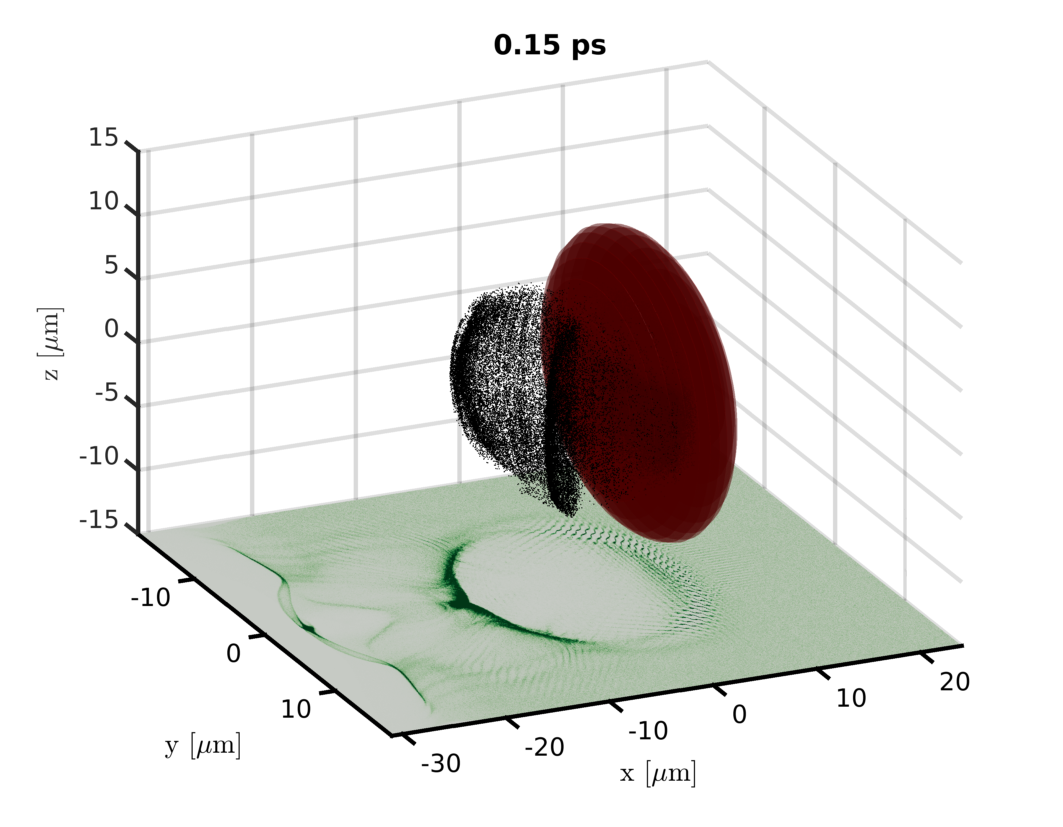
Ing. Vojtěch Horný, Ph.D., is a plasma physicist specializing in laser-plasma interactions and advanced accelerator physics. He is currently a Research Scientist III at the Extreme Light Infrastructure – Nuclear Physics (ELI-NP) in Romania, where he works on the world's most powerful laser systems. His research focuses on ion acceleration, neutron beam generation, laser wakefield acceleration, and secondary radiation sources (terahertz to X-rays). Education: Ph.D. in Physical Electronics (2018) from the Faculty of Nuclear Sciences and Physical Engineering, Czech Technical University, Prague. M.Sc. and B.Sc. in related physics fields from the same institution. Research Interests: Horný's work emphasizes high-intensity laser applications, including proton/neutron acceleration for nuclear astrophysics and advanced diagnostics. He explores novel injection schemes for wakefield accelerators and optimizes plasma-based radiation sources. Recent Work Trends: His articles highlight advancements in multi-petawatt laser systems, attosecond-scale electron bunches, and feasibility studies for laboratory astrophysical processes (e.g., neutron capture sequences). Collaborations include CEA, LULI, and Chalmers University. Awards & Recognition: His papers have been featured in Physics World and Physics . He has been invited to speak at international conferences such as EPS Plasma Physics and SPIE. Grants & Advising: Supervised 3 students and co-led projects like the Apollon facility commissioning. Active in EU-funded initiatives and international workshops. Labs & Facilities: Principal user of ELI-NP's 10 PW laser, Apollon facility, and other high-power laser systems (e.g., PALS in Prague).
Haifeng Lin is a Researcher at the Department of Physics, Umeå University, Sweden, within the Ultrafast Nanoscience Group led by Dr. Nicolò Maccaferri. His research focuses on ultrafast lasers, spectroscopy, and plasmonic systems, with applications in advanced nano- and metamaterials for optoelectronics. He holds a Ph.D. in Materials Science from the FuJian Institute of Research on the Structure of Matter (FJIRSM), Chinese Academy of Sciences (2012–2017), with a research exchange at the University of Pavia (Italy) under Prof. Antonio Agnesi. Postdoctoral work includes studies on ionization at CRYRING (GSI Helmholtzzentrum, Germany) and ultrafast plasmonics at Umeå University. Key research areas include diode-pumped solid-state lasers (Nd, Yb, and Cr-doped materials), Raman lasers, Q-switched lasers, waveguide lasers, and mode-locked lasers for ultra-short pulses (ps/fs). His recent work explores light-matter interactions in nanostructured materials using optical spectroscopy. Over 50 peer-reviewed articles (2013–2025) reflect his expertise in ultrafast laser design, plasmonics, and novel crystal materials. Current projects (2022–2026) include developing two-dimensional time-domain vibrational spectroscopy for structural biology, supported by grants. Active in international conferences (e.g., CLEO 2024), he collaborates on advanced laser systems, metamaterials, and ultrafast dynamics in magnetic nanostructures.
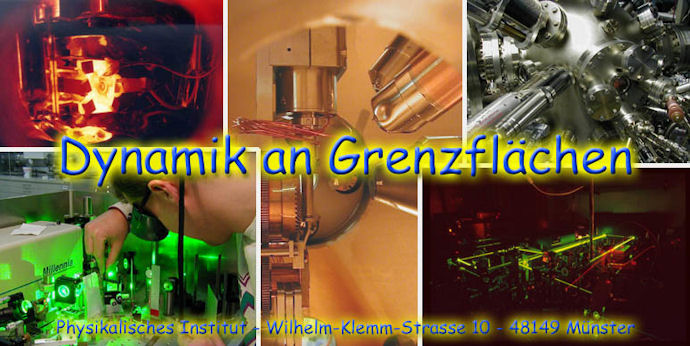
Prof. Dr. Helmut Zacharias is a distinguished Professor of Experimental Physics at the Physical Institute of the University of Münster, where he leads a dynamic research group focused on ultrafast surface dynamics, quantum materials, and molecular spintronics. He is affiliated with the Center for Soft Nanoscience (SoN) and the Center for Nanotechnology (CeNTech), and has led numerous national and international research projects funded by DFG, EU Horizon 2020, and Volkswagen Foundation. His education includes a Dr. rer. nat. from the University of Bielefeld (1978) and habilitation there in 1984. He has held leadership roles as Managing Director of the Physical Institute, Dean of the Physics Department, and co-founder of CeNTech and SoN. He has also served on the ERC Starting Grant Panel and organized major international conferences. PhD, University of Bielefeld (1978) Habilitation, University of Bielefeld (1984) His research centers on chiral molecule-based spin filters , graphene and nanoribbons , ultrafast electron dynamics , and interstellar photochemistry . His group uses advanced techniques such as time-resolved photoemission, high-harmonic generation, and free-electron lasers (FLASH, European XFEL) to probe electron behavior at surfaces. The work has significant implications for spintronics, quantum computing, and astrochemistry. The recent publications reflect a strong focus on chirality-induced spin selectivity (CISS) , electron dynamics in 2D materials , and ultrafast pump-probe experiments at FELs . Themes include spin filtering through DNA and bacteriorhodopsin layers, band structure engineering in graphene nanoribbons, and desorption dynamics in interstellar ice analogs. His scientific honors include: Habilitation Prize, Westfälisch-Lippische Universitätsgesellschaft (1984) Heisenberg Fellowship, DFG (1986) Prof. Zacharias has supervised over 30 doctoral students and numerous master’s and bachelor’s candidates, fostering a strong training environment. His group has received significant funding for projects such as CHIRAL (spintronics), EUROPAH (interstellar molecules), and development of optical systems for FLASH and European XFEL. He collaborates internationally with institutions including Weizmann Institute, Max Planck Institutes, TU Berlin, and UC Berkeley. His laboratory specializes in ultrafast laser systems, including OPCPA, Mott polarimeters, and PEEM setups, enabling cutting-edge experiments in surface science and quantum materials. The group continues to push boundaries in understanding electron-spin interactions in chiral systems and dynamics in low-dimensional carbon materials.