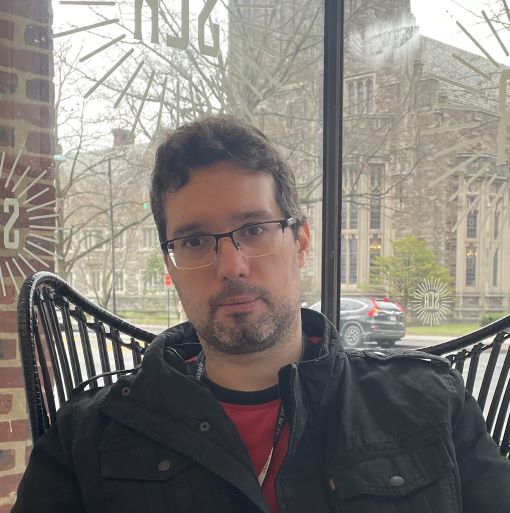
Dr. Alexander Barg is a Professor of Electrical and Computer Engineering (ECE) at the University of Maryland, College Park, with affiliate appointments in Computer Science, Mathematics, and the Institute for Systems Research. He holds a Ph.D. from the Russian Academy of Sciences (1987). His research focuses on coding theory, quantum codes, information theory, and distributed storage systems. He has advised numerous graduate students and postdocs, contributing to advancements in error-correcting codes and quantum computing. His work spans theoretical foundations and applications, including smoothing of codes, quantum code design, and recoverable storage systems. He has authored over 200 publications and serves on editorial boards of leading journals like IEEE Transactions on Information Theory and Foundations and Trends® in Communications and Information Theory . He teaches graduate and undergraduate courses on information theory, coding, and probability. Research highlights include contributions to classical and quantum coding bounds, LDPC codes, and polar codes. His grants and awards reflect sustained NSF support for projects on discrepancy theory, energy optimization, and distributed storage.
Joerg Kliewer is a Professor in the Department of Electrical and Computer Engineering at NJIT. His research focuses on information theory, secure distributed computing, error correction, and network communication resilience. Education: Ph.D. in Electrical Engineering, University of Kiel (1999) M.S. in Computer Science, Stanford University (1984) Diploma in Electrical Engineering, Hamburg University of Technology (1993) Research: Develops coding schemes for distributed storage, privacy-preserving machine learning, and straggler-tolerant cloud computing. Recent work includes federated learning optimization and reinforcement learning-based decoding.
Dr. Ian D. Marsland is an Associate Professor in the Department of Systems and Computer Engineering at Carleton University (Faculty of Engineering and Design). He holds a Ph.D. from the University of British Columbia and has been affiliated with Carleton since 1999. His research focuses on wireless digital communications, noncoherent receiver design, error control coding, and indoor localization using wireless networks. He has contributed to advancements in SCMA, FTN signaling, and polar codes, with a strong emphasis on iterative decoding applications. Education: B.Sc.Eng. (Honours) in Mathematics and Engineering, Queen's University (1987) M.Sc. in Electrical Engineering, University of British Columbia (1994) Ph.D. in Electrical Engineering, University of British Columbia (1999) Research Interests: Wireless communication systems (stationary/mobile) Error control coding (LDPC, turbo, polar codes) Noncoherent receiver design Faster-than-Nyquist (FTN) signaling and neural network-aided detection Multidimensional constellations for SCMA systems Indoor localization via wireless networks Recent Research Trends: Dr. Marsland’s recent work emphasizes low-complexity detection algorithms for FTN signaling, SCMA constellation design, and polar code optimization. His publications highlight advancements in throughput-based coding, sphere decoding for SCMA, and high-resolution positioning techniques using MUSIC-based methods. Grants & Advising: While specific grants or student advisees are not detailed in the provided texts, his research portfolio indicates sustained involvement in collaborative projects with industry and academic partners. His lab focuses on next-generation wireless systems and signal processing innovations. Labs & Teams: His research is conducted within Carleton’s Department of Systems and Computer Engineering, emphasizing interdisciplinary work in communications and signal processing. Collaborators include researchers from institutions like the University of Toronto and industry partners.
Sergiu NIMARĂ is a Lecturer at the Politehnica University of Timisoara, affiliated with the Faculty of Electronics, Telecommunications and Information Technology (DCTI). His research focuses on system reliability, embedded systems, and sensor networks, with emphasis on fault modeling and reliability analysis in digital circuits and FPGA architectures. He holds a Dr. Eng. degree from the same institution, completing his thesis on transient errors in sub-powered CMOS circuits in 2016 under Dr. Mircea POPA's supervision. He contributed to projects like the CloudPUTing platform and published extensively in areas including probabilistic fault modeling, timing error analysis, and LDPC decoder architectures. His work bridges theoretical reliability studies with practical hardware implementations, particularly in low-power and near-threshold CMOS environments. Notable collaborations include research on FPGA-based LDPC decoders optimizing memory usage and error correction mechanisms for storage failures. Recent involvement includes organizing technical workshops on real-time data transmission systems and participating in academic events such as the IEEE Symposium on Applied Computational Intelligence and Informatics. His contributions reflect a balance between foundational circuit research and applied embedded systems development.
Thomas Vidick is a Professor of Computing and Mathematical Sciences at the California Institute of Technology (Caltech). As of 2022–2023, he held a visiting position at the Weizmann Institute in Israel. He earned his Ph.D. from the University of California, Berkeley in 2011. His research focuses on quantum information, complexity theory, and cryptography, with a particular emphasis on applying complexity-theoretic tools to quantum computing challenges. Notably, his work resolved Tsirelson's problem and demonstrated that MIP* = RE, a landmark result in computational complexity and operator algebras. Research Interests: Quantum information and its intersections with complexity theory Entanglement in multi-prover interactive proofs and device-independent cryptography Quantum verification, cryptography, and protocols Applications of semidefinite programming and approximation algorithms in quantum contexts Awards and Honors: Simons Investigator (2021) NSF CAREER Award (2015) AFOSR Young Investigator Award (2015) Presidential Early Career Award for Scientists and Engineers (2016) Okawa Research Grant (2014) Teaching and Academic Contributions: Regularly teaches courses such as Analysis and Design of Algorithms (CMS/CS/IDS 139) and Introduction to Cryptography (CS 152) at Caltech. Co-organizes the TCS+ online seminar series and contributed to QIP 2022 as a host. Research activities include collaborations on quantum-proof extractors, certifiable randomness, and cryptographic protocols.
Sunil Khatri is a Professor in the Department of Electrical and Computer Engineering at Texas A&M University, affiliated with the College of Engineering and the Computer Engineering and Systems Group. He holds a Ph.D. from the University of California, Berkeley (1999), an M.S. from the University of Texas at Austin (1989), and a B.S. from the Indian Institute of Technology Kanpur (1987). His academic progression includes roles as Assistant Professor (2000–2004) at the University of Colorado Boulder and Associate Professor (2010–2015) at Texas A&M. Educational Background: Ph.D., University of California, Berkeley, 1999 M.S., University of Texas at Austin, 1989 B.S., Indian Institute of Technology Kanpur, 1987 Research Interests: Intelligent and Secure Computing Systems: Focused on hardware architectures for machine learning (e.g., neuromorphic circuits, NoCs, sub-threshold circuits) and secure hardware design (blockchain, physically unclonable functions). Logic Synthesis and Applications: Includes VLSI CAD, gene regulatory network modeling, noise-based logic, and Boolean satisfiability (SAT) solvers. Interdisciplinary Extensions: Explores routing table compression, radar signal processors, optical networking (DWDM), and LDPC decoders. Research Trends in Publications: Recent work emphasizes neuromorphic hardware acceleration (e.g., CapsPDNet for insulator discharge prediction, FFIR filters for IoT), secure protocols (multi-factor authentication frameworks), and energy-efficient circuits (flash-based designs, low-voltage regulators). His contributions span VLSI, machine learning, and cybersecurity, often leveraging FPGA/GPU acceleration. Grants & Labs: Leads projects in the Computer Engineering and Systems Group, focusing on secure computing, machine learning hardware, and interdisciplinary VLSI applications. Active in grant-driven research with a focus on practical implementations in industry.
Dr. Alexios Balatsoukas-Stimming is an Assistant Professor in the Electronic Systems group of the Department of Electrical Engineering at Eindhoven University of Technology (TU/e). His research focuses on the intersection of communications, hardware design, and machine learning, with specific interests in VLSI circuits for communications, error-correction coding, non-linear signal processing, and massive MIMO systems. He also explores applications of approximate computing and machine learning in communication signal processing. Education: Dipl.-Ing. (2010) Electronics and Computer Engineering, Technical University of Crete MSc (2012) Electronics and Computer Engineering, Technical University of Crete PhD (2016) Computer and Communications Sciences, École polytechnique fédérale de Lausanne (EPFL) Research Interests: His work emphasizes interdisciplinary approaches to improve communication systems' speed, reliability, and energy efficiency. Key areas include VLSI implementation of coding algorithms, belief propagation decoding, and leveraging machine learning for signal processing tasks. He has contributed to advancements in polar codes, LDPC codes, and full-duplex communication systems. Affiliations: Holds an honorary adjunct assistant professor position at Rice University (USA). Active in conferences and journals as a committee member, founding editor (IEEE journal), and reviewer. Labs/Teams: Associated with the Signal Processing for Communications Lab , Electronic Systems group, Center for Wireless Technology Eindhoven , and the EAISI initiative at TU/e.
Dr. Faramarz Fekri is the John Pippin Chair Professor and ECE-GTRI Fellow at Georgia Tech's School of Electrical and Computer Engineering. He leads the SENTINEL Research Lab, focusing on interdisciplinary research in machine learning, semantic communication, causal discovery, and biomarker sensing. His work bridges theoretical foundations with practical applications in federated learning, neuro-symbolic AI, and molecular communication. He has held editorial roles at IEEE Transactions journals and has received numerous awards including IEEE Fellow (2015) and the Sony Faculty Research Innovation Award (2018). His research spans over 150 publications, with recent emphasis on differentiable inductive logic programming, adversarial defense frameworks, and compressed sensing systems. Education: B.Sc./M.Sc. from Sharif University, Ph.D. from Georgia Tech. Affiliations include the Center for Machine Learning and the Center for Energy and Geo Processing (CeGP). Current projects include learning via inductive logic reasoning, neuro-symbolic reinforcement learning, and causal discovery from data. Notable achievements include developing BP-based trust systems, network compression frameworks using finite-field wavelets, and frameworks for analog joint source-channel coding. His SENTINEL Lab collaborates on biomarker sensing and molecular communication in biological systems.
Paul H. Siegel is a Professor in the Department of Electrical and Computer Engineering at the University of California, San Diego (UCSD), within the Jacobs School of Engineering. He holds an Endowed Chair at the Center for Memory and Recording Research (CMRR) and is affiliated with the California Institute for Telecommunications and Information Technology (Calit2) and the Center for Wireless Communications (CWC). He previously served as Director of CMRR from 2000 to 2011 and maintains an active research and teaching presence at UCSD. Ph.D. in Mathematics, Massachusetts Institute of Technology, 1979 S.B. in Mathematics, Massachusetts Institute of Technology, 1975 Prof. Siegel's research centers on the mathematical foundations of signal processing and coding, with applications to digital data storage and wireless communications. His work spans constrained coding, error-correcting codes, trellis modulation, and algorithm design. He has made foundational contributions to matched spectral null codes, finite-state modulation, and coding for partial response channels. His recent publications emphasize coding for flash and non-volatile memories, polar and LDPC codes, and interference mitigation in high-density storage. His 15 most recent publications (2021–2018) demonstrate continued leadership in constrained coding, shaping codes, insertion/deletion channels, and neural network-based detection. The research integrates deep information-theoretic analysis with practical applications in storage systems, particularly flash and magnetic recording. Topics include rate-compatible codes, locally recoverable codes, polar coding for asymmetric channels, and robust neural networks using coding principles. IEEE Fellow (1997) IEEE Information Theory Society Paper Award (1992) IEEE Communications Society Leonard G. Abraham Prize (1993) IEEE Communications Society Data Storage Technical Committee Best Paper Award (2007) IEEE Information Theory Society Padovani Lecturer (2015) Member, National Academy of Engineering (2008) Best Graduate Teacher Award (2009–2010, 2015–2016) Best Undergraduate Teacher Award (2017–2018) Teacher of the Year, Jacobs School (2007–2008) Outstanding Mentor Award (2020–2021) Prof. Siegel has advised numerous Ph.D. and Master’s students, including Joseph B. Soriaga, Henry D. Pfister, Mohammad H. Taghavi, and Eitan Yaakobi. He has received research funding from industry and government agencies for projects in data storage and communications. He served as Editor-in-Chief of IEEE Transactions on Information Theory (2001–2004) and has held editorial roles in multiple IEEE journals. He co-organizes the Annual Non-Volatile Memories Workshop (NVMW) at UCSD, fostering collaboration in next-generation memory technologies. His primary research lab is the Center for Memory and Recording Research (CMRR), a leading interdisciplinary research center focused on magnetic, optical, and solid-state data storage technologies. CMRR supports projects in coding, signal processing, device physics, and system architecture. Prof. Siegel leads a team of graduate students and postdoctoral researchers investigating advanced coding schemes for emerging memory systems.
Dr. Alexandru Amăricăi-Boncalo is a Lecturer at the Department of Computer Science, Politehnica University of Timisoara. He holds a Dr. Eng. degree and has served as Scientific Secretary of the Department from 2016 to 2023. His roles include academic instruction, research coordination, and administrative leadership in technical departments. Education: PhD in Computer Science (2009) and MSc in Computer Engineering (2006), both from Politehnica University of Timisoara Visiting researcher at University College Cork (2012) and ENSEA Cergy-Pontoise (2016) Senior Fulbright grant recipient at University of Arizona (2017) Research focuses on computing architectures, systems reliability, and FPGA-based signal processing implementations. His work addresses challenges in digital systems reliability, embedded architectures, and cyber-physical systems. Key publication themes: FPGA optimization (40%), digital arithmetic (30%), LDPC decoders (20%), image processing architectures (10%) Notable projects: CloudPUTing (high-performance cloud platform) and GEMSCLAIM (energy-efficient mobile systems) Scientific achievements include: Senior Fulbright Award (2017) Professional engagements span international collaborations, workshop organization, and participation in conferences like IEEE COMCAS and FPL. His technical expertise covers computer architecture, arithmetic algorithms, and hardware-software co-design.
Christophe Jégo is a researcher specializing in hardware/software co-design for communication systems, with affiliations suggesting connections to Université de Bordeaux's College of Engineering. His core expertise spans error-correction coding (LDPC, polar, turbo codes), FPGA/ASIC implementations, and high-performance computing architectures for telecommunications. Research interests focus on: Hardware acceleration of communication algorithms (LDPC/polar decoders, FFT processors) Multicore/GPU optimization for real-time signal processing RTL design automation tools and high-level synthesis frameworks 5G physical layer implementations including MIMO detection Resource-constrained embedded systems for IoT and space applications Publication analysis reveals strong emphasis on: FPGA implementations of communication blocks (67% of recent works) Parallel processing techniques for LDPC/polar decoding (2014-2025) Open-source tool development for hardware design (AFF3CT, Odatix) Cross-layer optimization from algorithms to silicon implementation
Dr. Paolo Santini is a Researcher in the College of Engineering at Marche Polytechnic University . His work focuses on code-based cryptography , post-quantum cryptographic protocols , and information security , particularly in the context of digital signatures and error-correcting codes. Research Focus : Code-based cryptography, digital signatures, post-quantum security, blockchain protocols Dr. Santini's recent publications (2025-2023) highlight advancements in: Code equivalence problems for secure signatures Bit-flipping decoders with predictable failure rates Blockchain consensus using fuzzy signatures Optimization of LESS protocols for shorter signatures Group action-based cryptographic designs His work intersects with quantum-resistant algorithms and practical implementations in blockchain and embedded systems. No specific awards or student advisement details were found in the provided materials.
Zeyu Guo is an Assistant Professor in the Department of Computer Science and Engineering at The Ohio State University , based in Dreese Laboratories, Columbus, Ohio. He earned his Ph.D. in Computer Science from the California Institute of Technology in 2017 under the supervision of Chris Umans, followed by postdoctoral appointments at the University of Texas at Austin, the University of Haifa (Israel), and the Indian Institute of Technology Kanpur (India). Research Interests Theoretical Computer Science Computational Complexity Pseudorandomness and Derandomization Coding Theory Algebraic Complexity Theory Algebraic Algorithms His work explores deep interplay between algebra and computation, designing efficient algorithms, constructing pseudorandom objects, and establishing fundamental limits in error-correcting codes. Recent Publication Landscape Across 2021-2025, Guo’s papers predominantly target list decoding capacity for Reed–Solomon and Gabidulin codes, polynomial identity testing for restricted circuit classes, and fast algebraic algorithms such as multivariate multipoint evaluation. A recurring theme is leveraging algebraic geometry and additive combinatorics to derandomize constructions and achieve optimal parameters. Awards & Funding NSF CAREER Award (current support) Advising & Mentoring PhD student: Zihan Zhang Postdoc mentee: Ashish Dwivedi (2023–2024) Teaching & Course Development Guo regularly teaches core graduate and undergraduate courses including Algorithms, Computability and Complexity, and specialized topics in algebraic complexity theory and error-correcting codes.
Fernando Granha Jeronimo is an Assistant Professor at the Siebel School of Computing and Data Science, University of Illinois Urbana-Champaign. His research explores theoretical computer science with emphases on coding theory, expander graphs, quantum computing, and optimization. He holds a PhD from the University of Chicago, M.Sc./B.Sc. degrees from Unicamp (Brazil), and an engineering degree from Telecom Paris. His work investigates interactions between complexity theory, pseudorandomness, quantum algorithms, and high-dimensional expanders. Recent studies focus on explicit code constructions near information-theoretic bounds, quantum-classical complexity separations, and efficient decoding algorithms leveraging expander properties. Publications demonstrate consistent focus on coding theory (explicit codes, list decoding), quantum complexity (unentangled proofs, pseudoentanglement), and optimization (LP/SDP hierarchies). A trend toward quantum applications is evident in recent works on quantum LDPC codes and property testing. Awards & Fellowships: Simons-Berkeley Fellow Google Research Fellow TA Prize, University of Chicago (awarded twice) Advising & Grants: Actively recruits graduate students for his research group. Previously supported by Simons Institute and Google Research Fellowship during postdoctoral work at IAS. Current courses include quantum computing (CS 498) and advanced topics in codes/optimization (CS 598). Leads the Local-to-Global TCS Mentorship Program and research groups focused on coding theory, quantum complexity, and expander applications.
Ali Emre Pusane is a Professor in the Department of Electrical and Electronics Engineering at Bogazici Universitys Faculty of Engineering. He holds a PhD in Electrical Engineering from the University of Notre Dame (2008), an MSc in Applied Mathematics, and dual MSc degrees in Electrical Engineering and Electronics/Communications. His research focuses on signal analysis theory with applications in digital communications, molecular networks, error-correcting codes, and nanoscale communication systems. Key interests include low-complexity algorithms for signal detection, modulation techniques for biological channels, and optimization of distributed systems. Recent publications demonstrate strong emphasis on molecular communication modeling, machine learning applications in signal classification, and hardware implementation of communication protocols. Articles frequently explore intersections of information theory, computational methods, and biophysics. As senior IEEE member, he leads the Bogazici University Signal Analysis Research Group (BUSARG), investigating automatic signal detection, spectrum monitoring, and emitter identification. His laboratory develops embedded systems for FEC encoders/decoders and radar signal processing.