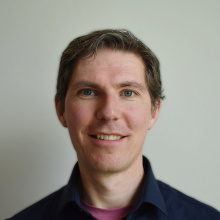
David RuleView profile
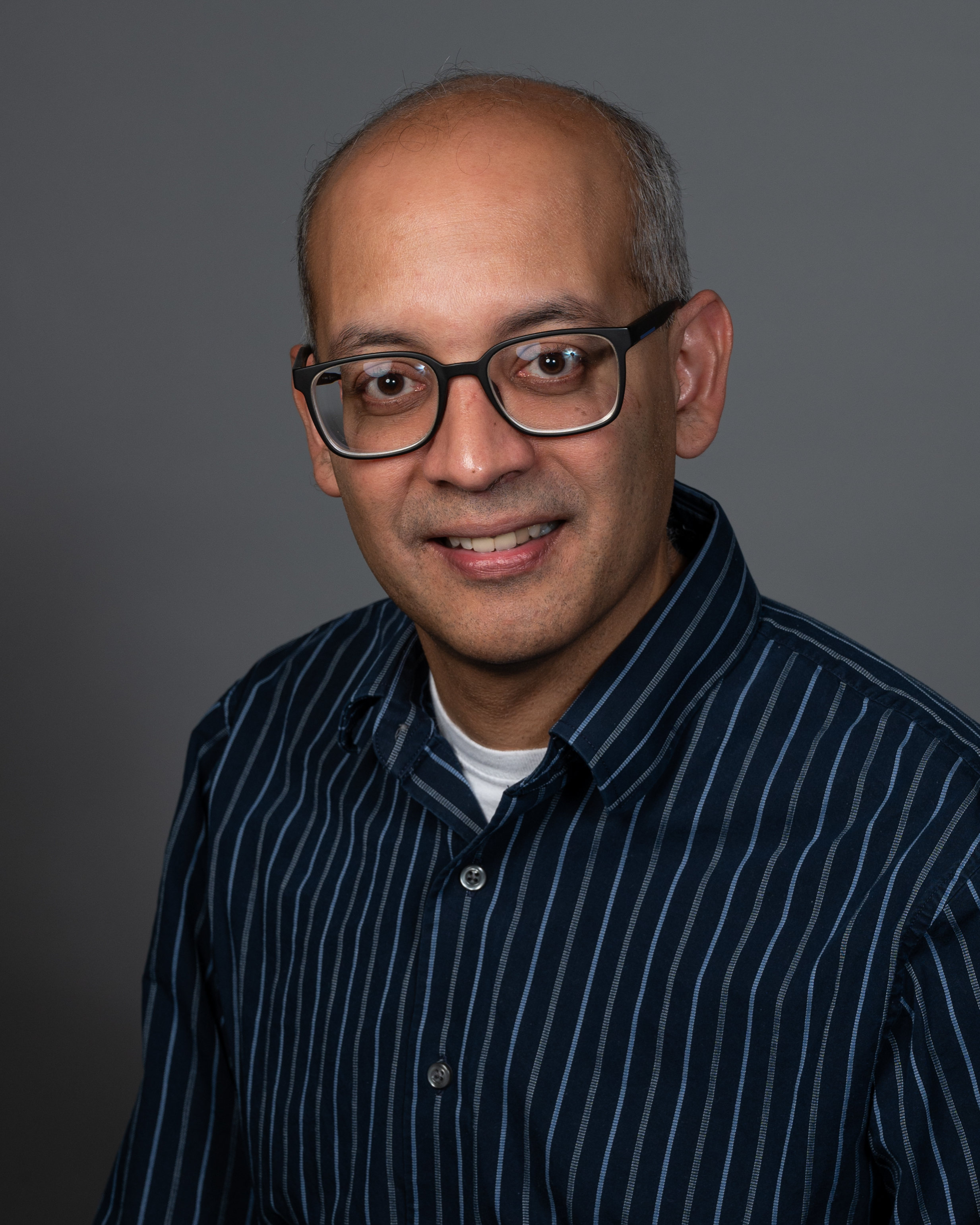
Associate Professor
David Rule is an Associate Professor (Docent) in the Department of Mathematics at Linköping University, affiliated with the Faculty of Science and Engineering. His research lies at the intersection of harmonic analysis and partial differential equations, with a focus on pseudodifferential, Fourier integral, and oscillatory integral operators. He also contributes significantly to mathematics education, both through teaching and pedagogical development at Didacticum. Education: PhD in Mathematics, University of Chicago, 2007 MSc in Mathematics, University of Chicago, 2003 MMath in Mathematical Physics, University of Sussex, 2001 His research interests center on the analytical properties of operators arising in PDEs, particularly their boundedness, regularity, and solvability in various function spaces. He investigates multilinear and degenerate forms of these operators, often under non-standard conditions such as Carleson measure control or non-symmetry. In mathematics education, he emphasizes reasoning, proof, and communication, challenging the notion that mathematics is inherently difficult by fostering intuitive development alongside logical rigor. The recent publications reflect a sustained focus on multilinear harmonic analysis, especially the boundedness of oscillatory and Fourier integral operators in both classical and weighted settings. His work spans pure analysis, with deep connections to operator theory and function spaces, and applied contexts such as fluid mechanics. The trend shows increasing collaboration and generalization beyond classical Calderón-Zygmund theory. Scientific Awards: No specific awards mentioned in the text. David Rule advises no listed students, but he teaches a range of courses from introductory calculus to advanced PDEs and graduate-level topics. He has received research support from institutions including the Simons Foundation. His work with Didacticum and academic unions like SULF and Saco-S highlights his commitment to improving teaching practices and defending academic autonomy. He is a member of the Division of Analysis and Mathematics Education (ANDI), where he contributes to interdisciplinary research in analysis and pedagogy. His union roles include service on the national and local SULF boards and Linköping's Saco-S council, emphasizing collegiality and democratic values in academia.