Heiko Peuscher is a Professor Dr.-Ing. at Technische Hochschule Ulm (THU) , where he serves as Dean of the Medical Technology B.Eng. program . His teaching focuses on Control Engineering, Medical Control Engineering, System Analysis and Simulation, Automation Technology, PLC Programming, and Scientific Computing for Medical Devices, reflecting his expertise in integrating engineering principles with medical applications. Heiko's research bridges model order reduction (via Krylov subspace methods) and the modeling, simulation, and control of physiological systems . Notable projects include Regelungstechnik.de (interactive textbook), LT1.org (diabetes simulation), and The Glass Lung (electromechanical lung simulator for low-resource regions). His work emphasizes translating complex systems into practical medical and engineering solutions. Contact: Room Q257, Albert-Einstein-Allee 53-55, 89081 Ulm. Phone: +49 731 96537-557. Email: Heiko.Peuscher@thu.de .
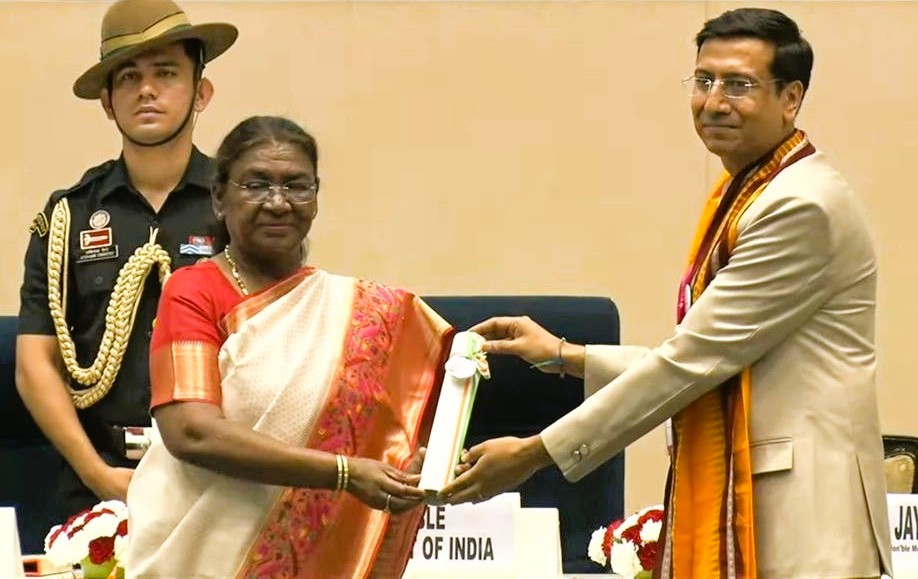
Prof. Kapil Ahuja is a Full Professor in the Department of Computer Science & Engineering at the Indian Institute of Technology Indore (IIT Indore), where he heads the Mathematics of Data Science and Simulation (MODSS) research lab. After completing dual Master's degrees and a Ph.D. from Virginia Tech (USA) followed by postdoctoral work at the Max Planck Institute in Germany, he has held visiting positions at UT Austin, IMT Atlantique, Sandia National Labs, TU Dresden, and TU Braunschweig. His administrative roles include founding Dean of International Affairs and former Head of Computer Science & Engineering at IIT Indore. Education: Ph.D. in Mathematics, Virginia Tech (2011) M.S. in Mathematics, Virginia Tech (2009) M.S. in Computer Science, Virginia Tech (2007) B.Tech. in Mechanical Engineering, IIT (BHU) Varanasi (2001) Research Focus: Prof. Ahuja's work bridges theoretical advances with real-world applications, emphasizing machine learning algorithms for plant/cancer studies, game-theoretic poverty reduction models, exascale climate modeling solvers, and drone trajectory optimization. His interdisciplinary approach integrates numerical linear algebra with network science to solve complex systems problems across healthcare, agriculture, and climate science, supported by 4.85 Crores INR in external funding. Publication Trends: Recent work demonstrates growing emphasis on AI-driven optimization for physical systems (drones, climate models) and biomedical applications (cancer classification). His publications increasingly feature cross-disciplinary collaborations between computer science, biology, and economics, with notable contributions in explainable AI for healthcare and resource allocation algorithms for social networks. Scientific Recognition: National Teacher's Award (2024) from the President of India Five-time recipient of IIT Indore's Best Teacher Award (2013-2023) Best Poster Award at International Workshop on Game Theory & Networks (2019) Steeneck Graduate Research Fellowship (Virginia Tech, 2011) Multiple SIAM travel awards for international conferences Mentorship & Service: Prof. Ahuja has graduated 5 Ph.D. and 4 M.S. (Research) students while mentoring 75 B.Tech. projects. He serves as Associate Editor for Applied Intelligence Journal (Springer Nature) and Knowledge and Information Systems, organizes international conferences, and reviews for 35+ academic sources. His administrative leadership significantly expanded IIT Indore's global partnerships through the Research Park initiative. Research Infrastructure: The MODSS lab maintains active collaborations with Oak Ridge National Lab, Sandia National Labs, and European institutions. Current projects include AI-optimized drone swarms for agricultural monitoring and game-theoretic models for poverty intervention, utilizing high-performance computing resources for large-scale simulations.
Bin Gao is an Associate Professor at the Academy of Mathematics and Systems Science (AMSS), Chinese Academy of Sciences. He holds a Ph.D. in Applied Mathematics (2019, University of Chinese Academy of Sciences) and a B.Sc. in Mathematics (2014, Sichuan University). His postdoctoral experience includes positions at UCLouvain (2019-2021) and the University of Münster (2021-2022). Research Interests: Riemannian optimization, tensor computation, parallel/distributed algorithms for orthogonality constraints, machine learning applications. Key Contributions: Development of retraction-free methods on Stiefel manifolds, preconditioned Riemannian algorithms, and geometric frameworks for symplectic eigenvalue problems. Article Trends: Recent work focuses on overcoming the curse of dimensionality via manifold-based optimization, including distributed algorithms for Stiefel manifolds, graph-regularized tensor completion, and second-order methods for symplectic structures. Keywords span numerical analysis, quantum information, and machine learning. Scientific Awards: 2021 Zhong Jiaqing Mathematics Award 2018 Best Student Paper Award (CSIAM) 2018 CAS Special President Scholarship 2017 National Scholarship for Doctoral Students (China) 2016 Honor Student Award (International Workshop on Modern Optimization and Application) Advising & Collaborations: Collaborates with researchers from UCLouvain, University of Münster, and AMSS. Mentors students in Riemannian optimization and tensor computation. Leads the popman research group.
Dominique Orban is a Full Professor in the Department of Mathematics and Industrial Engineering at Polytechnique Montréal. He holds a Ph.D. from FUNDP Namur and INP Toulouse and has established himself as a leading researcher in numerical optimization. His academic affiliations include the Institute for Data Valorization (IVADO) and the Decision Analysis Study and Research Group (GERAD). Professor Orban's research focuses on numerical mathematics, particularly continuous nonlinear optimization, nonlinear systems of equations, and numerical linear algebra. His work involves designing specialized numerical algorithms for optimization problems, with particular interest in degeneracy and ill-posed problems. His research spans theoretical development of algorithms, their implementation in software, and applications to real-world problems such as image reconstruction, optimal structure design, and optimization under differential constraints. Analysis of his recent publications (2021-2025) reveals a strong focus on developing practical optimization algorithms with theoretical guarantees. His work spans multiple areas including nonsmooth optimization, iterative methods for linear systems, regularization techniques, and software implementation in Julia. A notable trend is his increasing focus on developing open-source software tools that make advanced optimization methods accessible to practitioners. Over 160 publications including journal articles, conference papers, and technical reports Multiple publications in top optimization journals each year through 2025 Strong emphasis on both theoretical foundations and practical implementation Increasing focus on Julia-based optimization software development Professor Orban has successfully supervised 9 doctoral students and 13 master's students to completion, demonstrating his commitment to mentoring the next generation of researchers. His supervision style appears to balance theoretical depth with practical implementation skills, preparing students for both academic and industry careers. His research has been supported through various institutional and collaborative grants, enabling him to maintain an active research program with multiple ongoing projects. His contributions to the field include significant software developments such as Krylov.jl, JSOSuite.jl, and DCISolver.jl, which have made advanced optimization techniques more accessible to the broader scientific community. These tools reflect his philosophy of bridging theoretical optimization with practical computational implementation.
Thorkild Maack Rasmussen is a Professor and Head of Division for Geosciences and Environmental Engineering at Luleå University of Technology's Department of Civil, Environmental and Natural Resources Engineering. His academic leadership spans both research and educational initiatives with a strong international dimension. Professor Rasmussen's research focuses on Applied Geophysics, with particular expertise in mineral resource exploration, electromagnetic modeling, and geological modeling of mineral deposits. His work bridges theoretical geophysics with practical applications in mining and resource management, as evidenced by his publications on iron oxide-apatite deposits in Norrbotten, electromagnetic forward modeling, and kimberlite systems in Greenland. His recent publications (2023-2025) demonstrate consistent scholarly output in high-impact venues including IEEE Transactions on Geoscience and Remote Sensing and Geophysical Journal International. These works reveal a research trajectory emphasizing advanced computational methods for geophysical problems, international mineral resource management education, and detailed geological modeling of economically significant deposits. Professor Rasmussen leads the DREX Common Earth Modelling project of the Kiruna mining district, funded by ERAMIN and LKAB, and coordinates an international education program between Luleå University of Technology and Eduardo Mondlane University in Mozambique. His academic leadership extends to supervising research within the Geosciences and Environmental Engineering division, with opportunities for students to engage in cutting-edge geophysical research and international collaborations. The interdisciplinary nature of his work creates pathways for students interested in both theoretical geophysics and practical mineral exploration applications.