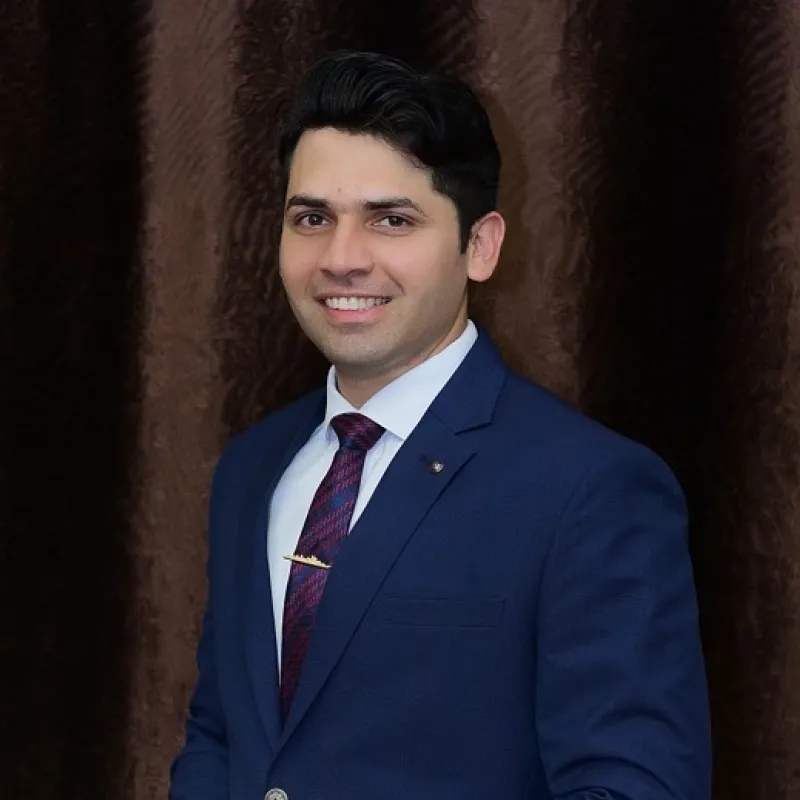
Adeel Tariq is a Post-Doctoral Researcher at the Industrial Engineering and Management department of LUT School of Engineering Sciences , Lappeenranta University of Technology, Finland. He completed his Ph.D. (2019) and MBA (2014) at the School of Management , Asian Institute of Technology, Thailand. Research Focus: Technology and innovation management, digital transformation, sustainable development, knowledge management, and leadership studies. Peer Review: Active reviewer for journals including Leadership & Organization Development Journal , Journal of Intellectual Capital , and European Journal of Innovation Management . Collaborations: Regular co-author with Waqas Tariq, Muhammad Saleem Sumbal, and Marko Torkkeli on topics like digital governance, fintech, and SME sustainability.
Dan Nguyen, Ph.D., is a faculty member in the Department of Radiation Oncology at UT Southwestern Medical Center, where he is part of the Division of Medical Physics and Engineering. He is a founding member of the Medical Artificial Intelligence and Automation (MAIA) Laboratory, collaborating closely with Dr. Steve Jiang to advance AI applications in radiotherapy. His work focuses on deep learning for treatment planning, dose prediction, auto-segmentation, and adaptive radiotherapy. Ph.D. in Biomedical Physics, University of California, Los Angeles (UCLA), 2017 Mentor: Dr. Ke Sheng Faculty appointment at UT Southwestern since 2017 Dr. Nguyen’s research is centered on applying artificial intelligence to solve critical challenges in radiation oncology. His primary interests include deep learning-based dose prediction, auto-segmentation of anatomical structures, optimization of treatment plans, and real-time adaptive radiotherapy. He has pioneered work in direct aperture optimization, 4π radiotherapy, and uncertainty quantification in AI models. His research bridges the gap between AI innovation and clinical implementation, with a focus on improving plan quality, reducing planning time, and enhancing accessibility for less experienced clinicians. The most recent publications (2023–2025) demonstrate a consistent trend in developing fast, accurate, and robust deep learning models for radiotherapy. Key themes include dose prediction with transfer and meta-learning, adaptive segmentation using test-time optimization, uncertainty assessment in AI predictions, and mathematical modeling of radiotherapy-immunotherapy synergy. These works span high-impact journals in medical physics, AI, and oncology, reflecting interdisciplinary innovation. While no specific scientific awards are listed, Dr. Nguyen’s leadership in the MAIA Lab and extensive publication record in top-tier journals indicate significant recognition in the field of medical physics and AI in medicine. Dr. Nguyen has co-authored numerous studies involving mentoring and collaborative research, particularly with trainees and junior faculty in the MAIA Lab. His work is supported by institutional and likely federal funding, given the scale and scope of AI deployment studies. He has contributed to large-scale collaborative efforts such as OpenKBP-Opt, involving international teams evaluating knowledge-based planning pipelines. The MAIA Laboratory is a multi-investigator research group focused on innovating, developing, and applying artificial intelligence technologies to empower clinicians—especially those with less experience or limited resources—for improved patient care. The lab’s work spans machine learning, deep learning, reinforcement learning, and mathematical modeling in radiation oncology.
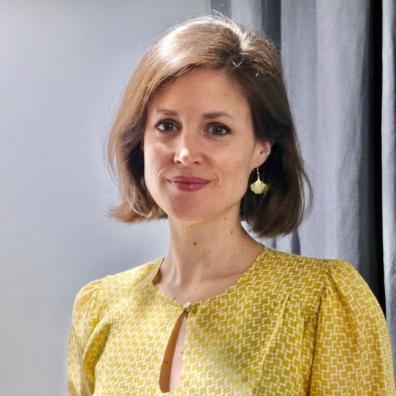
Delphine Allès is a University Professor at the National Institute of Oriental Languages and Civilizations (INALCO) in Paris, France, where she serves as Vice-President responsible for board of directors, organization and resources. She is a leading scholar in International Relations with a focus on Southeast Asia, particularly Indonesia, and specializes in non-Western approaches to international relations, religion in global politics, and Indo-Pacific security dynamics. Her research interests span multiple interconnected domains: Religion and International Relations Non-Western Approaches to International Relations Diplomacy, Security and Multilateral Cooperation in Southeast Asia (Indonesia / Indo-Pacific) Civilizational Narratives Global International Relations and Area Studies Allès's scholarly work demonstrates a consistent focus on decentralizing International Relations theory through empirical studies of Southeast Asian practices. Her recent publications examine the Indo-Pacific concept, religious diplomacy between Russia and Indonesia, and critiques of Western-centric security frameworks. She has pioneered research on how non-Western civilizations conceptualize international order, particularly through religious frameworks. Professor Allès serves on the editorial boards of multiple prestigious journals including European Journal of East Asian Affairs, Global: Jurnal politik internasional, and Archipel. She is also Scientific manager of the AMI-SHS DECRIPT program focused on crises and civilizational narratives. Her administrative leadership includes membership on the Scientific and Strategic Council of Pôle Asie (MEAE) and the board of the French Political Science Association. Previously, she directed the International Relations department at INALCO (2018-2023) and co-edited the journal Etudes internationales (2021-2024).
Laurie Williams serves as a Goodnight Distinguished University Professor in the Computer Science Department within the College of Engineering at North Carolina State University. She co-directs both the NCSU Secure Computing Institute and the NC State Science of Security Lablet, demonstrating deep institutional leadership in cybersecurity research. With over 260 refereed publications, her work establishes her as a prominent figure in software security academia. Her research spans critical areas including software security, agile development practices (particularly continuous deployment), software reliability, and software supply chain security. Williams focuses on practical security solutions addressing modern challenges like malicious dependencies in open-source ecosystems, AI-generated code vulnerabilities, and runtime protection mechanisms. Her work bridges theoretical security principles with industry-relevant applications. Recent publications reveal strong trends toward software supply chain security, with multiple 2024-2025 papers addressing vulnerability exploitability, malicious commit detection, and metrics-driven security control selection. Her research increasingly incorporates machine learning for threat detection while maintaining focus on human factors in secure development practices. IEEE Fellow (2018) National Science Foundation CAREER Award (2004) ACM SIGSOFT Influential Educator Award (2009) Multiple IBM Faculty Awards (2002-2012) NCSU Alumni Association Outstanding Research Award (2015-2016) Williams leads multiple major NSF-funded projects including the $5.7M SaTC Frontiers grant on secure software supply chains and the Science of Security Lablet with $3.6M in DoD funding. Her research emphasizes practical industry impact through collaborations with Cisco and Laboratory for Analytic Sciences. She actively mentors through the NCSU Research Leadership Academy and maintains significant educational outreach in software security. Her laboratory work centers on the Secure Computing Institute and Science of Security Lablet, where her team develops frameworks for vulnerability prediction, supply chain risk assessment, and secure development methodologies. Current projects focus on machine learning integrity, cognitive modeling for security decisions, and empirical analysis of build/deployment logs for anomaly detection.
Marco Heurich serves as the head of the 'Monitoring and Open-Air Wildlife Enclosures' department at the Bavarian Forest National Park. He is also a Professor of Wildlife Ecology and Wildlife Management at the University of Freiburg and the Inland Norway University of Applied Sciences. Research Focus: Combines modern technologies (e.g., telemetry, remote sensing, automated image processing) with classical ecological methods to study near-natural ecosystems and enhance their conservation. Expertise: Recognized as one of Europe's leading authorities in wildlife and forest ecology, contributing to large-scale nature conservation and wildlife monitoring advancements. Academic Contributions: Authored or edited over 350 peer-reviewed articles and six books, emphasizing ecological research and conservation strategies. Actively promotes knowledge transfer into practice through co-founding national and international networks in wildlife management and nature conservation.
Arash Joorabchi is an Assistant Professor at the Department of Electronic and Computer Engineering, Faculty of Science and Engineering, University of Limerick, Ireland. His research focuses on the intersection of machine learning, educational technology, and digital library systems, with particular emphasis on automated assessment, text mining, and knowledge organization techniques. Research Trends: Analysis of his publications reveals sustained contributions to automated short-answer grading, Arabic text classification, and semantic integration of Wikipedia with academic resources. Key methodologies include sentence transformers, hybrid text representation models, and citation-based indexing techniques. Technical Domains: His work spans natural language processing, educational data mining, metadata management, and semantic web technologies. Specific applications include Q&A platform analysis, library resource discovery, and curriculum development systems.
Christos Gatzidis serves as Executive Dean of Bournemouth University's Faculty of Science and Technology since October 2023, overseeing six departments including Computing and Informatics, Creative Technology, and Psychology. Previously Deputy Dean (2021-2023) and Head of Creative Technology Department (2016-2021), he was appointed Professor in Creative Technology in November 2019. The Faculty leads five REF Units of Assessment and secures funding from AHRC, NIHR, and Innovate UK for research spanning digital healthcare, gaming technologies, and cultural heritage applications. His educational qualifications include: PhD in Information Science, City University London (2010) PG Cert in Research Degree Supervision, Bournemouth University (2010) MA in Computer Animation, Teesside University (2003) BSc (Hons) in Computer Studies (Visualisation), University of Derby (2002) Professor Gatzidis specializes in computer graphics with research spanning virtual reality, serious games, and digital healthcare applications. His work bridges technical innovation and practical implementation, particularly in mindfulness prototypes for healthcare and stroke rehabilitation systems. Current projects focus on the multidisciplinary application of gaming technologies in medical contexts, emphasizing user experience and therapeutic outcomes through collaborations with industry partners. His publication record (2014-2025) demonstrates evolving expertise from foundational computer graphics research in terrain generation and deformation to applied work in healthcare, cultural heritage, and music education. Key trends include virtual reality for therapeutic mindfulness, usability studies in mobile gaming, and digital cultural presentation techniques, reflecting a trajectory toward socially impactful technological solutions with strong industry translation. No scientific awards are documented in the provided information. He has supervised PhD students and secured competitive research funding, including two Innovate UK Knowledge Transfer Partnerships. His principal investigator role in a virtual reality mindfulness prototype project exemplifies his approach to translating academic research into practical industry solutions, with current focus on expanding knowledge exchange activities to support the University's civic engagement mission. As Executive Dean, he leads faculty-wide research strategy across six departments, fostering interdisciplinary collaborations particularly in digital healthcare and cultural heritage. His personal research integrates computer graphics expertise with clinical applications through partnerships with healthcare providers and technology companies, driving innovation in therapeutic VR systems and educational gaming platforms.
Salome Voegelin is a Professor of Sound Art at the London College of Communication, University of the Arts London. She is a leading figure in sound studies, focusing on listening as a socio-political practice and the transversal potential of sound across disciplines. Her research explores the intersections of sound with politics, feminism, and pedagogy, and she leads projects like Listening across Disciplines II (LxDII), funded by the AHRC, which investigates listening as a research methodology. Education: PhD in Sound Art, Goldsmiths, University of London (2000–2004) BA (Hons) Fine Art Film and Video, Central Saint Martins (1994–1997) PGCertHE, Middlesex University Research Interests: Sound Studies, Sonic Pedagogy, Feminism, Interdisciplinary Knowledge Production, Sonic Methodologies Her work bridges artistic practice and theory, including collaborations with David Mollin and co-convening Points of Listening . Key books include Listening to Noise and Silence (2010), The Political Possibility of Sound (2018), and Sonic Possible Worlds (2021). She is a member of the Creative Research into Sound Arts Practice (CRiSAP) and leads the Sounding Knowledge Network. Recent articles and presentations highlight themes like transversal sound studies, the ethics of listening, and curatorial practices. Her projects emphasize participatory engagement and the socio-political dimensions of sound.
Radu Atanasiu is a Lecturer at the Department of Management and Organisation within the School of Business and Economics at Vrije Universiteit Amsterdam. His research focuses on managerial heuristics, decision-making processes, and organizational behavior. He holds a PhD in Management, as evidenced by his 2023 doctoral thesis titled 'Simple rules made simple: The origins and outcomes of managerial heuristics.' His research interests include the application of heuristics in leadership, the integration of intuition into managerial practices, and the lifecycle of organizational proverbs. He has published extensively in journals such as International Journal of Management Reviews and Journal of Management Studies , with a focus on understanding how CEOs and managers develop and utilize simple rules in complex environments. Dr. Atanasiu's work bridges theoretical frameworks with practical managerial challenges, emphasizing the dynamic processes of heuristic formation and their impact on organizational decision-making. His contributions address topics such as emotional intelligence in leadership, informal communication, and the cultural transmission of managerial proverbs within organizations.
Laura Hengehold is a Professor of Philosophy at Case Western Reserve University, holding the endowed Beamer-Schneider Professorship in Ethics. Her research focuses on intersections of language, embodiment, and political conflict, drawing on 20th-century French philosophy (Foucault, Deleuze), feminist theory, and African-European political dialogue. She explores how knowledge systems shape women’s bodily experiences, emphasizing ethical and political implications. Key works include Simone de Beauvoir’s Philosophy of Individuation and The Body Problematic . She co-edited African Philosophy for the 21st Century and translated works by Seloua Luste Boulbina. Her scholarship bridges existentialism, post-structuralism, and transnational feminism. Research Interests: Feminist philosophy, continental philosophy, political theory, embodiment studies, decolonial thought. Awards: Beamer-Schneider Professorship in Ethics (2017–present). Teaching: Courses on social/political philosophy, feminist theory, African political thought, and Deleuze. Recent talks include engagements on Simone de Beauvoir’s ethics, African political thought, and Foucault’s influence. She collaborates with the Women and Gender Studies and World Literature Programs at CWRU.
Megan Lawrence is an Assistant Professor of Strategic Management in the Strategy and Business Economics group at the Vanderbilt Owen Graduate School of Management . Her research focuses on organizational adaptation, knowledge evolution, and managerial strategies across firms ranging from Fortune 500 companies to startups. Education: D.B.A. in Strategy from Harvard Business School (2016), B.S.E. in Operations Research & Financial Engineering from Princeton University (2006) Her research interests include organizational management practices, firm capabilities, and structural adaptation. Articles like 'The Growth of Hierarchy in Organizations' and 'Learning to Manage Breadth' highlight her work on knowledge scope, experience repetition, and implementation performance. Scientific Awards: Brownlee O. Currey Jr. Dean’s Faculty Fellow, Poets & Quants 40-Under-40, Strategic Management Society Best Video Abstract Winner, and others Professor Lawrence teaches strategic management in MBA and Specialized Masters programs and has prior industry experience in quantitative consulting at Merrill Lynch. Her email is megan.lawrence@vanderbilt.edu .
Chao Ma is a Lecturer at the Research School of Management, Australian National University (ANU). He holds a Doctor of Philosophy, MPhil, Master of Business, and BBA in Human Resource Management from ANU and HKBU. His research focuses on Human Resource Management (e.g., perceived overqualification, career development) and Organisational Behaviour (e.g., leadership, unethical pro-organisational behaviour). He has supervised research students and contributed to over 22 peer-reviewed articles since 2016, exploring topics like AI in HR, knowledge-sharing platforms, and leadership dynamics. His work often examines cross-cultural contexts, particularly in China, addressing themes such as temporary worker integration, follower behaviour under authoritarian leadership, and the dual effects of overqualification on workplace outcomes. Collaborations span international scholars, focusing on topics like employee voice, humility in leadership, and stress management in multi-employment environments. Chao Ma's research bridges theoretical frameworks with practical implications for managing modern organisational challenges, emphasizing ethical leadership, employee well-being, and leveraging technology in HR practices. His recent studies highlight AI's role in improving migrant worker conditions and resolving knowledge-sharing dilemmas in digital platforms.
Ari Y. Kelman is an Associate Professor of Education at Stanford University’s Graduate School of Education (GSE), with a courtesy appointment in Religious Studies. He holds the Jim Joseph Chair in Education and Jewish Studies. His research focuses on religious knowledge transmission, particularly within American Jewish communities, and intersects sociocultural learning theory with critical religious studies. Education: BA in Sociology from UC Santa Cruz (1994), PhD in American Studies from New York University (2003). Kelman’s work spans books such as Shout to the Lord: Making Worship Music in Evangelical America (2018) and Station Identification: A Cultural History of Yiddish Radio (2009), as well as edited volumes on Jewish identity and education. Teaching includes courses like “Understanding Jews” and “Religion and Education in America.” Administrative roles include directing the Undergraduate Honors Thesis Program, the Concentration in Education and Jewish Studies, and the Taube Center for Jewish Studies. His current projects explore AI’s impact on religion, Google’s algorithmic definitions of religion, and post-war religious education trends. Affiliations include the Center for Jewish Studies, American Studies Program, and Center for Comparative Studies in Race and Ethnicity. Kelman advises numerous doctoral and master’s students and collaborates on initiatives like the BJPA@Stanford research network.
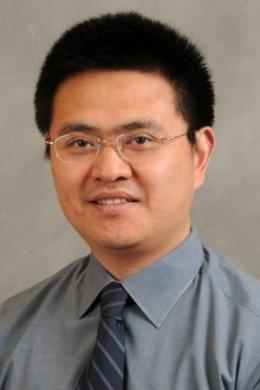
Yading Yuan, PhD is an Associate Professor of Radiation Oncology (Physics) at Columbia University Irving Medical Center and a member of the Data Science Institute. He holds a PhD in medical physics from the University of Chicago (2010) and completed clinical residency at Harvard Medical Physics Program (2013). His research focuses on AI-driven innovations in radiation oncology, including automated medical image analysis systems, federated learning frameworks for tumor segmentation, and data-driven approaches to personalized cancer treatment. He is certified by the American Board of Radiology and licensed in New York State. Education: PhD in Medical Physics (University of Chicago, 2010); Clinical Residency (Harvard Medical Physics Program, 2013). Research interests include: automated knowledge-based treatment planning, large-scale clinical AI systems, medical image reconstruction algorithms, and panomics integration for precision oncology. His work emphasizes translating data science advancements into clinical practice to improve patient outcomes. Key trends in his publications include federated learning for privacy-preserving medical AI, tumor segmentation in multi-modal imaging (PET/CT, MRI), and AI-driven prediction of treatment outcomes and recurrence risks. Recent work emphasizes decentralized learning architectures and cross-institutional collaboration systems. Scientific Awards: Distinguished Reviewers 2013 (selected by peer review committees) Advising/grants: No specific student names or grant details listed in provided text. His work is supported through institutional and collaborative research initiatives. Labs/teams: Active member of Columbia's Data Science Institute and Radiation Oncology department, contributing to interdisciplinary medical AI research groups.
David Wooten is the Alfred L. Edwards Collegiate Professor of Marketing and a University Diversity and Social Transformation Professor at the University of Michigan’s Stephen M. Ross School of Business. He holds a PhD (1992), MBA (1987), and BBA (1985) from the University of Michigan and Georgia State University, respectively. His research explores consumer behavior through social psychology and micro-sociological theories, focusing on gift-giving, word-of-mouth, and the impact of racial/stigmatized identities on marketplace dynamics. He has published extensively in journals like Journal of Consumer Research and served as Editor-in-Chief of the Journal of Consumer Psychology . Notable awards include the 2022 Taylor & Francis Distinguished Scholar Award and the 2015 AMA Multicultural Mentoring Award. Wooten’s work bridges theory and practice, addressing topics such as racial identity in consumer research, the presenter’s paradox in service interactions, and the role of ambient lighting in prosocial behaviors. He has led editorial roles and mentored doctoral students through forums like the AMA-Sheth Doctoral Consortium (2013) and SCP Doctoral Symposium (2023). His research also emphasizes equity and social transformation, advocating for inclusive consumer research frameworks.