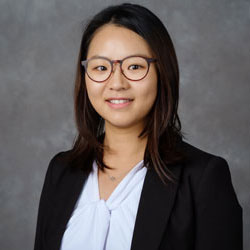
Kuan Fang is an Assistant Professor in the Department of Computer Science at Cornell University, specializing in robotics, machine learning, and computer vision. His research focuses on enabling robots to perform complex tasks in unstructured environments through deep learning and scalable algorithms. Education: Ph.D. and M.S. in Computer Science from Stanford University, advised by Fei-Fei Li and Silvio Savarese Bachelor's degree from Tsinghua University Previous roles: Postdoc at UC Berkeley (advised by Sergey Levine), research experience at RAI Institute, Google Brain, Google X Robotics, and Microsoft Research Asia His work emphasizes: Acquisition of versatile skills for visuomotor control via massive data learning Continuous robot improvement through autonomous data generation Boosting generalization by integrating prior knowledge across domains Recent publications span topics in interlimb coordination, diffusion policy learning, visual prompting for reinforcement learning, and language-guided decomposition. While specific scientific awards aren't listed, his work appears in top robotics conferences including RSS, ICRA, IROS, and CoRL. He actively mentors students and maintains collaborations with UC Berkeley, Boston Dynamics AI Institute, and Stanford researchers.
Halil Kilicoglu is an Associate Professor at the School of Information Sciences (iSchool), University of Illinois at Urbana-Champaign. He holds affiliate appointments at the National Center for Supercomputing Applications , Division of Nutritional Sciences , Personalized Nutrition Initiative , and Center for Health Informatics . His research bridges Natural Language Processing , Biomedical Informatics , and Scientific Reproducibility . Education: PhD in Computer Science (2012), Concordia University Previous Role: Staff Scientist, U.S. National Library of Medicine (NIH) Research Focus: Kilicoglu develops advanced NLP and machine learning techniques to extract and organize knowledge from biomedical texts. His work enhances clinical trial transparency , drug repurposing , literature-based discovery , and scientific communication . Current projects include automated assessment of randomized controlled trials and knowledge graph construction for biomedical domains. Recent Article Trends: His publications emphasize transformer models , retrieval-augmented generation , and multi-label classification applied to citation integrity , diet-microbiome associations , and clinical trial reporting . Scientific Awards: TrustNLP 2023 Best Paper SemEval 2021 Best System Paper IMIA Yearbook Best Paper (2020, 2017) AMIA Distinguished Paper (2016, 2007) Students: Mentors PhD candidates in information science and informatics , including Janina Sarol, Lan Jiang, Mengfei Lan, Shufan Ming, Gibong Hong, Evan Guerra, and Joe Menke. Labs & Teams: Leads a lab at the iSchool focused on biomedical text mining , collaborating with institutions like NIH and SpringerNature. Projects include SemRep extension , MENAGERIE tool , and COMBINI initiative .
Bin Peng is an Assistant Professor in Crop Sciences and the Center for Digital Agriculture at the University of Illinois's National Center for Supercomputing Applications (NCSA). Their work focuses on agroecosystem modeling, climate-smart agriculture, and environmental sustainability, leveraging machine learning and data assimilation techniques. Key research areas include carbon budget quantification, crop response to environmental stress, soil biogeochemistry, and agrivoltaic systems integration. Affiliations: Crop Sciences Department, NCSA, Center for Digital Agriculture Research Themes: Agroecosystem dynamics, climate resilience, precision agriculture, and interdisciplinary sustainability solutions Recent projects emphasize model-data fusion for cotton agroecosystems, transpiration stress modeling, and scalable carbon budget quantification using knowledge-guided AI. Collaborations span hydrology, remote sensing, and agricultural engineering. Publications highlight advancements in crop yield modeling, soil nitrogen dynamics, and the environmental impacts of cover crops and tile drainage systems. Work frequently appears in journals like Agricultural and Forest Meteorology and the Journal of Advances in Modeling Earth Systems.
Yuke Zhu is an Assistant Professor in the Department of Computer Science at The University of Texas at Austin, directing the Robot Perception and Learning Lab . His research spans robotics, computer vision, and machine learning, focusing on general-purpose robot autonomy through perception-action integration. Key Affiliations: University of Texas at Austin (Department of Computer Science), Stanford University (Ph.D. alumnus) Research Focus His work explores: Robotic perception and decision-making in unstructured environments Embodied AI frameworks for active, situated agents Sim-to-real transfer and humanoid whole-body control Collaborative methods drawing from neuroscience and philosophy Scientific Contributions Google Scholar profile with 15+ recent publications on visuomotor policies, deformable object manipulation, and robotic foundation models Recipient of the IEEE RAS Early Career Award Developer of open-source frameworks like robosuite and RoboCasa for robotic simulation Lab Leadership The RPL Lab actively investigates robotics and embodied AI, emphasizing: Closing perception-action loops for autonomous systems Computational frameworks for open-world interactions Collaborative research with six ICRA 2025 papers
Larry Rudolph is a Research Professor at the Massachusetts Institute of Technology (MIT), affiliated with the Computer Science and Artificial Intelligence Laboratory (CSAIL). He holds the role of Principal Research Scientist and has been a key contributor to projects like the Oxygen Research Group and the Computational Structures Group (CSG). His academic journey includes roles as a Full Professor at the Hebrew University of Jerusalem and postdoctoral research at the University of Toronto. Rudolph specializes in pervasive computing, mobile systems, and virtualization, with notable contributions to Bluetooth technology and location-aware computing. He has advised numerous students and pioneered courses such as MIT's 6.883 Pervasive Human-Centric & Mobile Computing. Education: PhD in Mathematics, Courant Institute, NYU (1977-1981) Postdoc in Computer Science, University of Toronto (1981-1982) Research Faculty, Carnegie-Mellon University (1982-1986) Full Professor, Hebrew University (1986-1997) Research Interests include mobile device virtualization, privacy in pervasive systems, and adaptive algorithms for personal data management. He co-founded Redigi, a marketplace for digital music resale, and led VMware's Mobile Virtualization Project. His work emphasizes experimental approaches to computer science, integrating hardware and software innovations. Notable Projects: Bluetooth Essentials for Programmers (book, 2007) Oxygen Research Group (2000-2005) Virtualization and pervasive computing systems Advising and Collaborations: Guided over 15 students to completion of Master’s and PhD theses Co-organizer of DOE Supercomputer Valuation and Workshop on Job Scheduling Contributions to CSAIL and NECSI (New England Complex Systems Institute) Labs/Teams: Active in CSAIL's Pervasive Computing initiatives and Oxygen sub-projects. Current focus includes mobile phone security, privacy-aware systems, and adaptive learning frameworks for personal data tagging.
Hao Peng is a Senior Lecturer in the School of Computing at the University of Georgia, holding a Ph.D. in Computer Science (2019) and B.S. degrees in Computer Science and Statistics (2013). His research bridges Machine Learning and Computational Biology to address challenges in Traffic Flow Forecasting and Glycosylation Analysis . He was promoted to Senior Lecturer effective August 2025, following six years as a Lecturer. Doctor of Philosophy, Computer Science, University of Georgia (2019) Bachelor of Science, Statistics and Computer Science, University of Georgia (2013) Peng’s work spans two primary domains: Machine Learning for Transportation Systems and Bioinformatics for Glycan Analysis . His traffic forecasting models integrate Temporal-Spatial Data and Knowledge-Guided AI , while his computational biology research focuses on Glycan Microheterogeneity , Kinase Regulation , and Immune Response Modeling . He also contributes to Probabilistic Graphical Models for hierarchical data and Ontology-Based Big Data Analytics . Hao Peng’s publications highlight interdisciplinary trends, including Machine Learning for Traffic Simulation (2018-2020), Computational Glycobiology (2015-2022), and Neurodegenerative Disease Analysis (2025). His work often combines Algorithm Development and Data-Driven Biological Discovery , reflecting a dual focus on predictive modeling and biomedical applications. Scientific Awards : Student Career Success Influencer Award (2024) Best Student Paper Award (BigData Congress 2019, 2018) Outstanding Teaching Assistant Award (2018)
Ruzica Piskac is a Professor of Computer Science at Yale University, leading the Rigorous Software Engineering (ROSE) group. She previously held an Independent Research Group Leader position at the Max Planck Institute for Software Systems (2012–2013) and earned her PhD from EPFL (2011), awarded the Patrick Denantes Prize for her thesis on decision procedures for program synthesis and verification. Her research focuses on improving software reliability and trustworthiness through formal methods, encompassing software verification, automated reasoning, applied cryptography, and code synthesis. Notable honors include multiple Amazon Research Awards, the Yale Ackerman Award, and the Microsoft Research Award. She currently serves as Program Chair for the International Conference on Computer Aided Verification (CAV 2024) and on the Steering Committee for Formal Methods in Computer-Aided Design (FMCAD). Education: PhD in Computer Science (EPFL, 2011), MSc in Computer Science (Saarland University, 2005) Key Projects: ROSE group’s work on legal accountability for automated decisions (soid tool), privacy-preserving model checking, and quantum computing security Professional Activities: Editorial roles for conferences like LPAR, FMCAD, and VMCAI Her research group has graduated five PhD students, four now holding assistant professor roles. Current projects include formal XAI via syntax-guided synthesis, privacy-preserving cryptographic protocols, and quantum circuit vulnerability analysis.
Eric Coleman is a Professor of Political Science at Florida State University's College of Social Sciences and Public Policy. His research focuses on environmental governance, collective action mechanisms, and policy effectiveness in developing countries. He earned his PhD under Nobel Laureate Elinor Ostrom at Indiana University. Key research areas include the intersection of environmental policy with political institutions, the role of stakeholder engagement in governance, and the equity implications of natural resource management strategies. His work combines experimental methods with policy analysis, often focusing on case studies in India, Uganda, and Colombia. Recent projects examine the limitations of tree-planting programs in Northern India and collaborative governance in Ugandan oil/gas extraction. He has contributed to high-impact journals like Nature Sustainability and PNAS, emphasizing the need for people-centered approaches in climate solutions. Dr. Coleman's research highlights systemic challenges in policy implementation, particularly in balancing ecological goals with socio-economic outcomes. His work bridges academic theory and practitioner needs through synthetic research frameworks informed by Ostrom's institutional analysis.
Professor Trevor Darrell is a faculty member in the Department of Electrical Engineering and Computer Sciences at UC Berkeley. He leads research in computer vision, machine learning, and robotics, focusing on algorithms for visual recognition and perception-based interfaces. His affiliations include the Berkeley Artificial Intelligence Research Lab (BAIR), Berkeley Center for Responsible, Decentralized Intelligence (RDI), and the International Computer Science Institute (ICSI). Education: PhD, MIT (1996) BSE in Computer Science, University of Pennsylvania (1988) Research Interests: Professor Darrell’s work spans Artificial Intelligence , Computer Vision , Robotics , and Multimodal Learning . His recent efforts emphasize vision-language models, embodied AI, and ethical AI frameworks for healthcare and robotics. Notable Contributions: His articles in 2025 highlight advancements in multimodal generation, humanoid control, and model alignment. Trends include leveraging vision-language integration for robotics tasks and addressing AI bias and hallucination. Awards: ICML Test of Time Award (2024) ACM SIGMM Test of Time Paper Award (2024) CVPR Longuet-Higgins Prize (2024) Labs & Collaborations: Leads BAIR and RDI, advancing responsible AI and geospatial analysis through initiatives like Berkeley Deep Drive and the CITRIS People and Robots (CPAR) program.
Yoav Artzi is an Associate Professor in the Department of Computer Science at Cornell University and a core faculty member at Cornell Tech in NYC. He serves as the Associate Faculty Director at arXiv.org and is a researcher at ASAPP. His work focuses on building systems that enable machines to interact with humans through natural language while continuously improving through dynamic interactions. Key roles include: Cornell University, Department of Computer Science Cornell Tech, NYC campus arXiv.org Associate Faculty Director ASAPP Research Scientist Education: B.Sc. from Tel Aviv University, Ph.D. from the University of Washington (advised by Luke Zettlemoyer). Research integrates NLP with robotics, computer vision, and cognitive science, emphasizing situated learning in multi-agent systems. Notable projects include the COLM conference, RecNet paper recommendation network, and LM-class educational resource. Awards include an NSF CAREER Award and paper recognitions at top venues. Research interests span automated language acquisition, situated systems, and interactive learning. Recent work explores tokenization challenges, heterogeneous cluster training, and the role of RAG systems in modern LLMs. Advises students in vision-language systems and robotics. Active in organizing workshops like InterNLP and SpLU-RoboNLP. Teaching includes advanced NLP courses (CS 5740, CS 6741). Labs focus on collaborative interaction platforms (CB2), visual reasoning benchmarks (lilGym), and multimodal learning tools. Current initiatives include launching COLM 2025 and advancing RecNet's paper discovery network.
Yuxiong Wang is an Assistant Professor in the Department of Computer Science at the University of Illinois Urbana-Champaign (UIUC). His research focuses on computer vision, machine learning, and robotics, particularly in open-world perception, meta-learning, generative modeling, and agent learning. He previously held a postdoctoral position at Carnegie Mellon University and obtained his Ph.D. from the Robotics Institute under Prof. Martial Hebert. He has received notable awards including the Best Paper Honorable Mention at ECCV 2020 and Best Paper Finalist awards at CVPR 2019 and 2022. His work bridges generative and discriminative AI, with contributions to 3D vision, human-object interaction, and vision-language models. Recent research highlights include RandAR (decoder-based visual generation), InterMimic (physics-based human-object control), and Argus (vision-centric reasoning). He teaches courses such as CS 445 (Computational Photography) and CS 598 LTL (Learning to Learn). His group actively collaborates with NVIDIA and Electronic Arts, and his work has been funded by grants from NASA and the NCSA. Current projects explore meta-learning, open-world learning, and applications in robotics, healthcare, and materials science.
Xiaoli Zhang serves as Associate Professor in the Department of Mechanical Engineering at Colorado School of Mines, where she leads cutting-edge research in human-robot cooperation, intelligent control systems, and teleoperation with applications spanning healthcare, surgery, additive manufacturing, and underground construction. Her work focuses on enhancing robot adaptability and robustness through optimal control, machine learning, and cognitive science principles, supported by facilities like the Intelligent Robotics and Systems Lab. Dr. Zhang's research integrates artificial intelligence with robotics to solve complex engineering challenges, particularly in smart human-machine interaction and shared autonomy systems. Key areas include natural-language-based robot control, gaze-driven assistance interfaces, and physics-informed machine learning for additive manufacturing processes. Her methodologies emphasize real-world applicability in medical robotics and industrial automation, where systems must dynamically adapt to environmental changes and human collaborators. Analysis of her recent publications reveals dominant trends in machine learning-enhanced robotics, with significant contributions to additive manufacturing quality control, dexterous manipulation, and safety-conscious teleoperation systems. Her work consistently bridges theoretical AI advancements with practical engineering applications, particularly in laser-based manufacturing and assistive robotics where human-robot synergy is critical. Scientific recognition includes: NSF CAREER award for pioneering research in robotics and intelligent systems Dr. Zhang directs the Intelligent Robotics and Systems Lab, which develops advanced control frameworks for human-robot teams while securing competitive funding like the NSF CAREER grant. Her educational impact extends through courses such as MEGN 545 Advanced Robot Control and MEGN 441 Introduction to Robotics, training next-generation engineers in autonomous systems design. The lab maintains strong industry partnerships for translating research into surgical robotics and manufacturing applications. The Intelligent Robotics and Systems Lab operates as a multidisciplinary hub where computer vision, machine learning, and mechanical engineering converge to solve real-world problems. Current projects focus on gaze-based control systems for surgical assistance, transfer learning for multi-platform additive manufacturing, and adaptive shared autonomy frameworks that maintain safety during human-robot collaboration in dynamic environments.
Warren D. D'Souza serves as Adjunct Professor in the Department of Radiation Oncology at the University of Maryland School of Medicine, where he leads the Medical Physics Division. Concurrently, he holds the position of Vice President for Enterprise Data and Analytics at the University of Maryland Medical System. His academic career spans over two decades, beginning at MD Anderson Cancer Center in 2000 before joining the University of Maryland in 2002, where he progressed from Assistant Professor to full Professor by 2014. His educational background includes: B.S. in Applied Physics (summa cum laude), Xavier University, 1995 M.S. in Medical Physics, University of Wisconsin-Madison, 1998 Ph.D. in Medical Physics, University of Wisconsin-Madison, 2000 MBA, Duke University's Fuqua School of Business, 2013 (Fuqua Scholar and Health Sector Management Scholar) Dr. D'Souza's research integrates advanced computational techniques with clinical radiation oncology, focusing on radiation treatment plan optimization through combinatorial methods derived from operations research. His work bridges medical physics with data science through machine learning applications for treatment outcomes prediction, multi-modality imaging for therapeutic response assessment, and development of novel analytic approaches in medicine. His expertise spans both theoretical optimization frameworks and practical clinical implementations. His publication record (2007-2009) reveals a strategic evolution toward integrating machine learning with radiation therapy planning, particularly in multi-plan IMRT frameworks and motion management solutions. Key thematic clusters include beam angle optimization using nested partitioning algorithms, real-time motion compensation systems, and 4D CT-based stereotactic body radiotherapy planning - demonstrating consistent innovation at the intersection of operations research, medical physics, and clinical oncology. Scientific recognition includes: Medical Physics Travel Award, American Association of Physicists in Medicine Fellow, American Association of Physicists in Medicine (2015) Fuqua Scholar designation at Duke University (top 10% of class) Health Sector Management Scholar at Duke University As Principal Investigator, he has secured substantial research funding from NIH, NSF, and industry partners to advance radiation therapy optimization and motion management technologies. His leadership extends to mentoring medical physics trainees and directing the Medical Physics Division's clinical and research operations, with six U.S. patents reflecting his translational impact. Current initiatives focus on enterprise data analytics applications within the medical system. He directs the Medical Physics Division within Radiation Oncology, fostering collaborations between radiation oncologists, medical physicists, and computer scientists. Current team projects include developing motion-synchronized treatment couches, implementing 4D CT for stereotactic radiotherapy, and creating machine learning models for predicting treatment complications - all aimed at enhancing precision radiation therapy delivery.
Minghan Chen is an Associate Professor in the Computer Science Department at Wake Forest University and a Z. Smith Reynolds Foundation Faculty Fellow. Her research bridges computational methods with biological applications, focusing on developing innovative algorithms for understanding complex biological systems and diseases. Education: PhD from Virginia Tech (2019) Dr. Chen's research interests center on multiscale modeling, knowledge-guided machine learning, and parameter optimization algorithms specifically designed for bio-related applications. Her work particularly focuses on Alzheimer's disease progression, where she develops computational frameworks to model the spatiotemporal dynamics of neuropathological events. She integrates techniques from computational biology, bioinformatics, and machine learning to create models that can simulate and predict disease progression at multiple scales. Her recent publications demonstrate a strong trend toward increasingly sophisticated computational approaches to Alzheimer's disease research, with particular emphasis on brain network analysis, single-cell genomics, and multimodal data integration. Her work combines graph theory, deep learning, and multiscale modeling to create comprehensive frameworks that capture the complexity of neurodegenerative processes. Awards and Recognition: Z. Smith Reynolds Foundation Faculty Fellow Dr. Chen actively mentors students in her research group, currently recruiting both graduate and undergraduate students interested in computational biology and machine learning. She has successfully guided students to recognition, including Jingwen who received the best poster award at ACM-BCB in 2022. Her research is supported by stipend funding for students engaged in rigorous, publication-quality research. Dr. Chen has organized significant academic events including the Biological Modeling and Mining workshop (BMM, 2021) and the Virtual Deep Learning Bootcamp (May 2022), demonstrating her commitment to advancing computational methods in biological sciences.
Subhashish Samaddar is a Professor of Managerial Sciences at the J. Mack Robinson College of Business, Georgia State University. His expertise spans business analytics, operations management, and decision strategy. He holds a Ph.D. from Kent State University, an MBA from Clarion University, and a B.E. from Regional Engineering College, Durgapur. Dr. Samaddar’s research focuses on optimizing organizational effectiveness through analytics and managing complex supply systems. He has received multiple national and regional research awards, including the Decision Sciences Outstanding Associate Editors and Reviewers Award (2009). His teaching includes business analytics for graduate/undergraduate programs and research methods for the Ph.D. program. Previously, he directed the college’s Ph.D. program in Decision Sciences. Engaged with INFORMS, he chairs the CAP certification guide committee and contributes to exam development. His interdisciplinary work addresses challenges in healthcare, logistics, and technology adoption, emphasizing practical applications of analytics in real-world scenarios. Notable contributions include frameworks for disease detection algorithms, supply chain disruption analysis, and e-commerce growth modeling. His writings span top journals like Management Science and Manufacturing & Service Operations Management . Recent work explores human vs. machine investment decisions and pandemic impacts on SMEs. His career reflects a commitment to bridging academic research and industry needs through collaborative and innovative approaches.