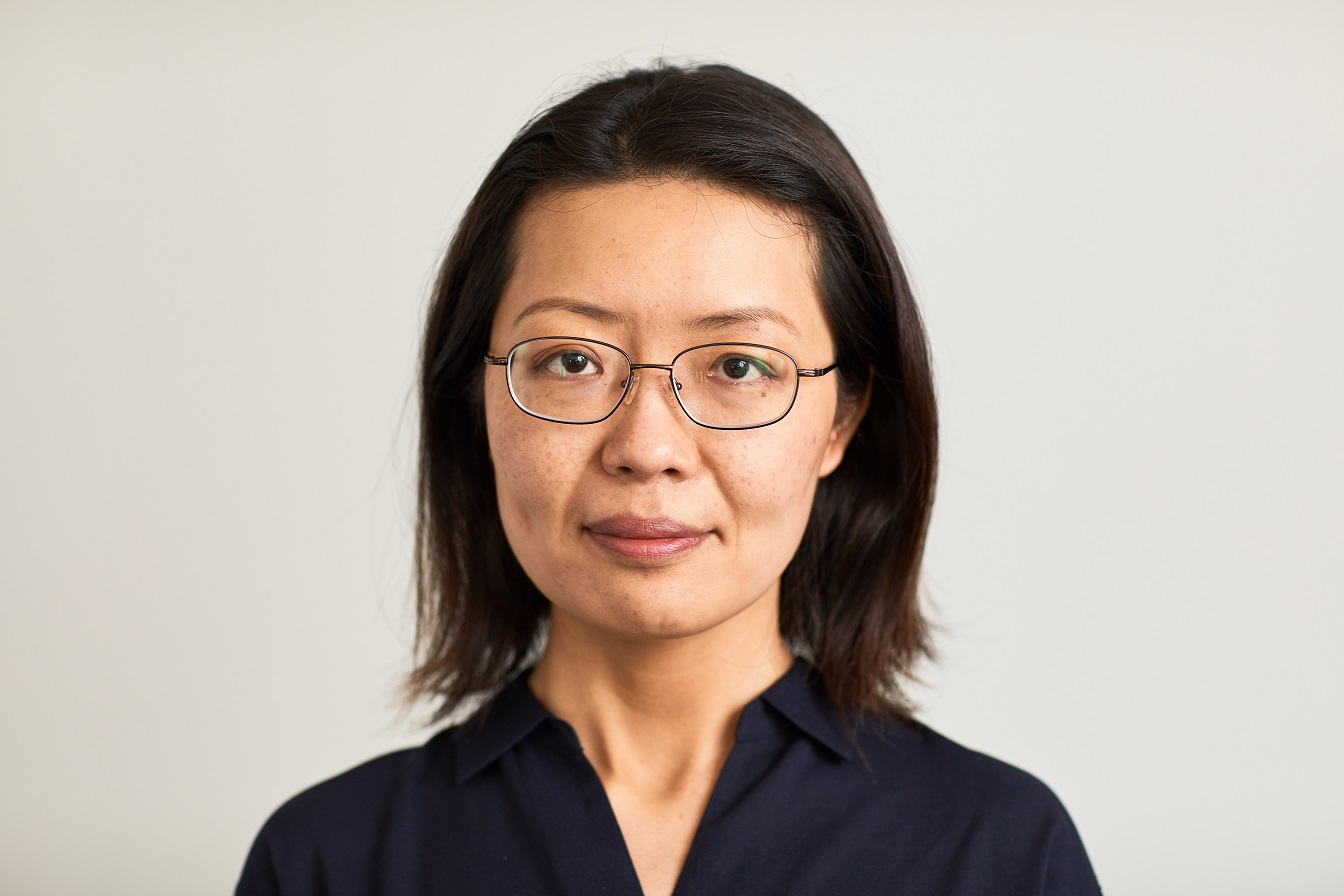
Dr. Sirui Li is a Lecturer at Murdoch University's School of Information Technology within the College of Science, Technology, Engineering and Mathematics. Her research focuses on Artificial Intelligence, Natural Language Processing (NLP), Machine Learning, Knowledge Graphs, Data Analysis, Temporal Data, and Multi-modal Models, with applications in medicine, agriculture, and mining. She collaborates with industry partners like BHP and has published in journals such as Food Chemistry and Knowledge and Information Systems , as well as conferences like ICSME and IJCNN. Education: Bachelor of Advanced Computing (Honours) in Computer Science at Australian National University Master of Computing (Specialising in AI) at ANU Ph.D. in Information Technology (AI) at Murdoch University Research interests include interdisciplinary applications of AI, such as clinical coding privacy solutions, disease spread modeling, and drug repurposing for pandemics. Her work emphasizes practical industry integration, demonstrated through awards like the 2024 EMNLP Best Demo Award and the 2023 Iron Ore Circuit Hackathon innovation prize. Professional roles include IEEE Western Australia Section committee membership, conference chair positions, and peer review for top journals. She actively mentors students pursuing Honours, Master's, or PhD projects in her areas of expertise.
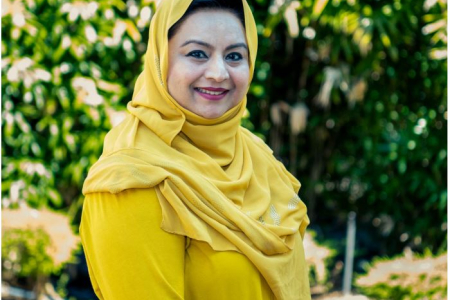
Dr. Farha Sattar is a Lecturer in Education (Mathematics) at the Faculty of Arts and Society, Charles Darwin University. With over thirty years of teaching experience in Mathematics, Science education, GIS, Remote Sensing, and e-Learning technologies at undergraduate and postgraduate levels, Dr. Sattar brings extensive expertise to her academic role. She holds a PhD in Geospatial Science from Charles Darwin University, focusing on Spatial Mathematical Modelling for 3D Gully Mapping and Erosion Quantification. Her educational background includes: PhD in Geospatial Science (Three Dimensional Gully Mapping and Erosion Quantification within a Geoinformatics Framework), Charles Darwin University (2012) Prior academic experience at several Asian and European universities Dr. Sattar's research spans multiple interdisciplinary fields with a strong focus on the intersection of education and technology. Her primary research interests include Mathematics Education, STEM Education, Geoscience Education, Spatial Mathematical Modelling, Drone Technology, Remote Sensing, Geographic Information Systems, and Innovative Pedagogies such as experiential learning and inquiry-based approaches. She has developed expertise in cognitive development, particularly in fostering critical and creative thinking skills through iSTEM approaches. An analysis of Dr. Sattar's recent publications reveals a consistent trajectory toward integrating emerging technologies like drones, augmented reality, and geospatial artificial intelligence into educational contexts. Her work demonstrates a progression from foundational geospatial research on erosion mapping to innovative applications in STEM education. Recent publications increasingly focus on drone technology for educational purposes, spatial data infrastructure for policy development, and computational thinking development through technology-enhanced learning. Dr. Sattar has received numerous accolades for her contributions to education and research: NT Science Week Awards – Inspired NT STEM Hero of the Year award (2021) Long Service Recognition Award (2023) Finalist, CDU Alumni Award (2023) Multiple Best Presentation Awards (2008, 2010, 2017) Australian College of Educators - 2021 College Medal Nominee As a supervisor, Dr. Sattar mentors postgraduate research students including Ayesha Farhan, who is working on "A Framework for Cognitive Development: Fostering Critical and Creative Thinking Skills, Using iSTEM Approach." She actively secures research funding through various projects such as "DBELaSTEM: Drone-Based Experiential Learning and STEM Education," "STEM_D & VR: Youth STEM Learning and Empowerment with Drones and VR," and "CodProg Drone Lab." Her research is supported by grants from NT Government projects and other external funding sources. Dr. Sattar leads the CodProg Drone Lab, an innovative research space exploring drone technology applications in education. She is a certified drone pilot and aeronautical radio operator, which enables her to bridge theoretical knowledge with practical applications. Her work with the "Flying Forward: Drones, STEM Equity, and Indigenous Empowerment" initiative demonstrates her commitment to community engagement and addressing educational disparities through technology.
Dr. Zara Ersozlu is a Senior Lecturer in Mathematics Education within the School of Education at the University of Newcastle, Australia. With a distinguished international career spanning multiple continents, she has held academic positions at prestigious institutions including North Carolina State University (USA), Gazi and Gaziosmanpasa Universities (Turkey), National Taiwan Normal University (Taiwan), The University of Western Australia, Murdoch University, and Deakin University. Her academic journey includes tenured positions as an Associate Professor and leadership roles as Department Head and Chair in teacher education disciplines. Currently, she teaches undergraduate and postgraduate courses in mathematics education, including Effective Pedagogies in Primary Mathematics, K-6 Mathematics, K-6 Numeracy, and Digitally Supported Learning. Dr. Ersozlu earned her Doctor of Philosophy from Firat University in Turkey and her Master of Art from Sakarya University. Her extensive academic preparation is complemented by five years of practical teaching experience in public schools prior to entering academia. This blend of theoretical knowledge and practical classroom experience informs her approach to teacher education and educational research. At the broadest level, Dr. Ersozlu's research investigates solutions to real-life problems impacting people's well-being, success, and capacity to achieve. Her scholarly work spans primary and secondary mathematics education, the psychology of mathematics (including metacognition, self-regulation, and anxiety), cross-cultural educational studies, teacher education, virtual simulated learning environments, and educational assessment. She has increasingly focused on the transformative potential of AI and machine learning in education, exploring how these technologies alter teaching, learning, and research processes. Her methodological expertise encompasses both quantitative and qualitative approaches, allowing her to effectively analyze both small and large educational datasets. Analysis of Dr. Ersozlu's recent publications reveals a strong emphasis on mathematics anxiety, teacher education, and the integration of technology in learning environments. Her work demonstrates a consistent focus on practical applications of educational research to address real-world challenges in mathematics education. The interdisciplinary nature of her research connects educational psychology, technology integration, and cross-cultural perspectives, with particular attention to how these elements intersect in teacher preparation and student learning outcomes. 2023 ATEA Research Recognition Award from the Australian Teacher Education Association 2021 Fellow of the Higher Education Academy (Advance HE, UK) 2010 Fellowship Program for Postdoctoral Researchers from the Council of Higher Education of Turkey Dr. Ersozlu is deeply committed to mentoring the next generation of scholars, currently supervising four PhD students and having successfully guided ten students to completion. Her grant portfolio includes significant funding for projects such as Best Practice Guidelines for RPL in Initial Teacher Education Programs ($60,000), Exploring the Reciprocal Relationship Between Mathematics Anxiety and Mathematical Resilience ($2,599), and multiple conference travel awards. She serves as an Associate Editor for several prominent journals including the International Electronic Journal of Mathematics Education and as Editor for Interdisciplinary STEM Education. Her editorial work reflects her standing as a respected voice in mathematics education research. Dr. Ersozlu's academic leadership extends to her role in developing innovative teaching approaches that integrate virtual simulation technology and learning analytics. Her work with TeachLivE™, a mixed-reality classroom simulation platform, demonstrates her commitment to creating authentic learning experiences for teacher education students. Through these initiatives, she bridges the gap between educational theory and classroom practice, preparing future educators to effectively implement evidence-based teaching strategies in diverse learning environments.
Yang Song is an ARC Future Fellow and Scientia Associate Professor at the School of Computer Science and Engineering , University of New South Wales (UNSW) . She serves as Associate Head of School (Research) and Co-Director of iCinema , focusing on AI and Computer Vision applications for social good. Education: BEng in Computer Engineering (Nanyang Technological University, Singapore), PhD in Computer Science (UNSW, 2013) Research Areas: Biomedical image analysis, human-centred AI, graph data modeling, neuro-symbolic learning, and AI trustworthiness. Her work develops domain-specific deep learning models for radiological segmentation, histopathology cancer analysis, and 3D reconstruction. Recent projects address explainability in LLMs, fairness in AI, and human-robot interaction frameworks. With over 200 peer-reviewed publications in top venues like CVPR , MICCAI , and NeurIPS , her research spans biomedical imaging, robotics, and general multimodal AI. Scientific Awards include: 2024: ARC Industrial Transformation Research Hub for Human-Robot Teaming 2023: Google Inclusion Research Award 2022: NHMRC Ideas Grant for computational brain imaging 2021: UNSW Engineering Research Excellence Award 2020: Scientia Fellowship (UNSW) 2019: ARC Future Fellowship She supervises 24 current PhD/MPhil students and has graduated 15 advisees, including placements at Harvard University and Siemens Healthineers. Her grants include collaborations with Surf Life Saving Australia and industry partnerships for AI-driven solutions.
Minh Hue Nguyen is a Senior Lecturer in EAL/TESOL Teacher Education at Monash University's School of Curriculum, Teaching and Inclusive Education within the Faculty of Education. She holds a PhD in Education (TESOL focused) from Monash University and has taught at Vietnam National University, Deakin University, and the University of Melbourne. Her educational background includes: PhD in Education (TESOL focused), Monash University (2015) MA in Applied Linguistics, Victoria University of Wellington (2008) BA in English Language Teaching, Vietnam National University (2003) Nguyen's research centers on teachers' professional learning, curriculum, and pedagogy in TESOL and EAL contexts, with specific focus on emotional experiences, identity development, mentoring, agency, and collaboration. She explores sociocultural contexts of teacher development through activity theory and sociocultural perspectives, examining how institutions support teachers' learning journeys from preservice to in-service stages. Recent work investigates professional learning for teacher educators and implementation of the Victorian EAL Curriculum. Her 15 most recent publications (2024-2025) reveal a strong thematic focus on language teacher agency, identity negotiation, and multilingual pedagogies. The research increasingly examines emotional dimensions of teaching, cross-cultural identity tensions, and collaborative models between EAL and content teachers, with significant contributions to understanding how teachers navigate complex educational contexts while developing professional identities. Her scientific recognition includes: Penny McKay Award Special Commendation Monash Education Research Community's Publication Award ATEA/Kay Martinez Award for Best Paper Monash Dean of Education’s ECR Project Award Advancing Women's Research Success Grant Vietnamese Government Merit-based Scholarships Nguyen actively supervises PhD research in TESOL teacher professional learning, teacher identity, and curriculum development, though is currently unavailable for new PhD students until 2027. She contributes to editorial boards for Teaching and Teacher Education, Second Language Teacher Education, and System journals, and serves on the Australian Teacher Education Association. Her work supports UN Sustainable Development Goal 4 (Quality Education) through inclusive pedagogical frameworks. She leads research projects including 'Elucidating practices to assist EAL learners to acquire specialised science vocabulary' and 'Establishing an online community-of-practice model for learner agency during work placements,' demonstrating commitment to practical educational innovations.
Professor Gary Edmond is a law professor at the University of New South Wales School of Law, directing the Program in Expertise, Evidence and Law. Holding a BA(Hons) from the University of Wollongong, LLB(Hons) from the University of Sydney, and PhD from the University of Cambridge, he bridges legal scholarship with forensic science expertise through extensive research grants and international collaborations. Education: BA(Hons), LLB(Hons), PhD Institutions: University of New South Wales, Australian Academy of Forensic Sciences His research focuses on the intersection of law and forensic science, examining expert evidence reliability, forensic reporting practices, and the adversarial legal system's limitations. With over $1.4 million in research funding since 2007, he leads interdisciplinary projects involving policing agencies and forensic institutions across Australia and international partners. Recent publications analyze judicial handling of expert evidence, cognitive biases in courtroom identification, and forensic science reform. His work has shaped evidence law understanding through the 6th edition of 'Australian Evidence: A principled approach to the common law and the uniform acts' and advisory roles in high-profile inquiries like the Goudge Inquiry. Awards: Fellow of the Royal Society of New South Wales As Chair of the Evidence-based forensics initiative and member of Standards Australia’s forensic science committee, he continues to influence policy while teaching core legal subjects including Courts, Procedure, Evidence and Proof, and Introducing Law and Justice.
Dr. Teresa Wang is a Senior Lecturer in Data Science at Monash University's Faculty of Information Technology, specializing in entity/user modeling, relational/structural machine learning, and graph/network analysis. She holds a Ph.D. from the University of Queensland and degrees from Nanjing University. Currently, she directs the Master of Data Science Program and teaches courses like FIT5201 Machine Learning. Her research focuses on social, e-commerce, and health data modeling, with notable projects including the Knowledge Enriched Approach for Effective Personalization (2025–2027) and collaborations on AI in Mental Health and Site Safety. Dr. Wang has co-authored over 59 publications, emphasizing areas like ontology matching and multimodal data analysis. She actively supervises PhD students and contributes to initiatives like the CSIRO Next Generation Graduates Program for clean energy and sustainability. Education: Ph.D. in Computer Science (2017), University of Queensland Master of Computer Science (2013), Nanjing University Bachelor of Software Engineering (2010), Nanjing University Research Interests: Entity modeling, spatio-temporal data analysis, graph mining, recommender systems, and health/medical records mining. She explores applications in social media, e-commerce, and healthcare sectors. Projects: "Knowledge Enriched Approach for Effective Personalization" (2025–2027) "AI for Clean Energy and Sustainability" (2023–2027) "CSIRO Next Generation Graduates Program: AI in Mental Health" (2023–2027) "Large-scale multimodal knowledge management" (2022–2025) Grants & Collaborations: Engaged with CSIRO, Crank Group, and Pola Practice Pty Ltd. Her work aligns with UN SDGs in education and sustainable energy systems. Labs/Teams: Part of the Monash Energy Institute and Monash Data Futures Institute, contributing to interdisciplinary AI and energy research.
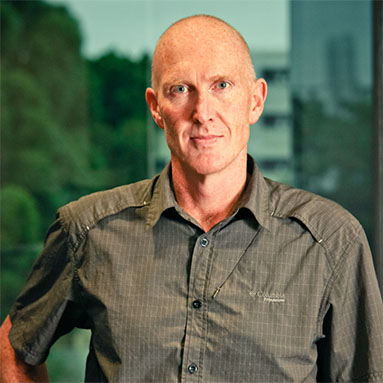
Vince Wright is a Sessional Academic in the School of Education at the Faculty of Education and Arts. His research focuses on mathematics education, pedagogical content knowledge, and the application of global perspectives in educational policy and curriculum design. He has contributed to understanding how teachers develop effective instructional strategies and how students engage with mathematical concepts such as ratios, geometry, and percentages. His work spans journal articles and book chapters, examining topics like metaphor-based problem-solving frameworks, diagnostic tools for geometric reasoning, and the role of demonstration lessons in teacher professional development. Wright's research emphasizes practical applications for improving mathematics teaching methods and aligning pedagogy with international evidence-based practices. While no formal academic awards are listed, his contributions to mathematics education research reflect a commitment to bridging theoretical frameworks with classroom realities. His collaborative projects include co-authored studies with educators like Ken Smith and Rose Knight, exploring diagnostic assessments and pre-service teacher training.
Associate Professor David Smith is a Senior Lecturer in American Politics and Foreign Policy at the University of Sydney, jointly appointed between the United States Studies Centre and the School of Social and Political Sciences. Dr. Smith earned his BA from the University of Sydney and his PhD from the University of Michigan. His academic journey has positioned him as a leading expert in American politics with a distinctive Australian perspective. Dr. Smith's research focuses on the intersection of religion and politics, American and comparative political development, collective violence, and theories of the state. His work often examines how religious identity shapes political behavior and policy outcomes, with particular attention to the American context. His comparative approach extends to examining Australian politics through the lens of American political development, creating a unique transnational perspective that informs both fields. His recent publications demonstrate a strong trend toward examining the relationship between identity politics, religious values, and public policy. He has made significant contributions to understanding vaccine policy acceptance across political spectrums, the role of religion in foreign policy decisions, and the dynamics of racism and anti-racism in contemporary politics. His research bridges theoretical political science with practical policy implications, particularly in the areas of public health communication and international relations ethics. Dr. Smith has supervised several graduate students including Anastasiya BYESYEDINA working on "The Re-construction of Ukrainian Identity During Revolutions" and Yiyang XU researching "Rationality and Beauty in International Politics." He is currently leading an Australian Research Council Discovery Project titled "The ideologies and practices of anti-racism in Australia" alongside colleagues Soutphommasane T and Park J.
Dr Vu Minh Hieu Phan is a Research Fellow at the Australian Institute for Machine Learning , University of Adelaide. His work focuses on foundational models, multimodal learning, and medical image analysis, leveraging deep learning and large language models. Research Interests : Medical Image Analysis, Vision-Language Models, Generative AI, Semantic Segmentation, Continual Learning, Knowledge Distillation. Key Venues : CVPR, ACL, EMNLP, IJCAI, MICCAI, NeurIPS, TPAMI, and IJCV. Notable Contributions include advancements in multimodal learning for medical imaging, explainable AI frameworks, and efficient knowledge distillation techniques. He serves as a reviewer for top-tier journals and conferences. Email : vu.minhhieu.phan@adelaide.edu.au
Dr. Ben Swift is a Senior Lecturer at the School of Cybernetics, ANU, specializing in AI, computational art, and cybernetics. He leads the Cybernetic Studio, an interdisciplinary collective exploring cybernetic systems through hardware/software/people collaborations. As a livecoding artist, he performs globally and co-founded the ANU Laptop Ensemble. His research spans generative AI, open-source tools like Extempore, and UX design. Education: PhD in Computer Science (ANU) Projects: Australia's Digital Economy (2022), The Augmented Web (2019) Research focuses on AI creativity, biofeedback interfaces, and computational music. His work bridges technical innovation with artistic expression, evident in projects like TSPNet and adversarial camera systems. Key contributions include Extempore’s development and studies in live coding disruption. Awards unspecified but recognized internationally for interdisciplinary impact.
Ben R. Newell is a Professor of Cognitive Psychology and Deputy Head of the School of Psychology at the University of New South Wales (UNSW Sydney). In 2023, he was appointed Director of the interdisciplinary UNSW Institute for Climate Risk and Response, reflecting his leadership in applying psychological science to societal challenges. He is a leading figure in judgment and decision-making research, with broad interdisciplinary applications. His research focuses on the cognitive processes underlying human judgment, choice, and decision-making. Key interests include how people learn from feedback, acquire knowledge, and make decisions under uncertainty. He investigates these processes in real-world contexts such as environmental risk, medical decisions, financial behavior, and forensic reasoning. His work integrates cognitive modeling with behavioral experimentation to understand both biases and adaptive strategies in decision-making. Recent publications highlight his innovative use of natural language models to validate cognitive theories, experimental studies on saving behavior under income volatility, and investigations into how task context affects effort and boredom. These works reflect a trend toward integrating computational methods with traditional experimental psychology to deepen understanding of decision architecture. Ben Newell is actively engaged in the academic community, serving on the editorial boards of premier journals including: Psychological Science Perspectives on Psychological Science Psychonomic Bulletin & Review Thinking & Reasoning Decision Journal of Behavioral Decision Making Experimental Psychology He is also a Consulting Editor for Judgment & Decision Making and a member of the inaugural Academic Advisory Panel of the Behavioural Economics Team of the Australian Government, advising on evidence-based policy. He co-authored the influential textbook Straight Choices: The Psychology of Decision Making (3rd ed., 2022) and Open Minded: Searching for Truth about the Unconscious Mind . Though specific advisees are not listed, he mentors students within UNSW’s School of Psychology and leads a research team focused on cognitive and decision sciences. His work at the UNSW Institute for Climate Risk and Response involves interdisciplinary collaboration to improve societal responses to climate-related risks through behavioral insight.
Yuan-Fang Li is an Associate Professor in the Department of Data Science & AI at Monash University's Faculty of Information Technology. He also serves as Associate Dean International. His research focuses on knowledge graphs, natural language processing, multimodality, and graph representation learning. He holds a PhD from National University of Singapore (2006) and a Bachelor of Computing (Honours) from the same institution (2002). Affiliations: Monash University (since 201?), National University of Singapore (PhD 2002-2006) Key Projects: Leading research on neuro-symbolic systems (HARNESS project), large-scale multimodal knowledge management, and maritime knowledge graphs Teaching: Taught courses including FIT4002, FIT4004, and supervised over 20 PhD students Research interests include complex question answering over knowledge graphs, knowledge extraction from text/images, and structural/temporal graph learning. He has published 152+ works with notable contributions to scene graph generation, event extraction, and LLM-based reasoning. Key awards include the 2020 Best Student Paper Award and 2017 Kurzweil Prize. Grants: ARC Discovery Projects, industry collaborations (e.g., Outotec Oy) Labs/Teams: Active in Monash's Data Science & AI research groups, leading neuro-symbolic AI initiatives
Zhe Hou is a Senior Lecturer at the School of Information and Communication Technology , Griffith University, Australia. His academic journey includes a PhD in automated reasoning for separation logic from the Australian National University (2015) and prior research roles at Nanyang Technological University, Singapore (2015-2017). He joined Griffith University in 2017 and became permanent faculty in late 2019. Research Interests : Formal methods for software verification Automated reasoning with logical frameworks Blockchain technology and security Quantum computing verification Integration of LLMs with rigorous reasoning Sports analytics via model checking Recent Publications demonstrate expertise in neural-symbolic reasoning, blockchain security, quantum SAT solvers, and runtime verification frameworks. His work combines formal logic with machine learning for applications in cybersecurity and AI trustworthiness. Scientific Awards : ACM SIGSOFT Distinguished Paper Award (2025) Supervision Roles : Principal/Associate Supervisor for 6+ doctoral projects in blockchain security, AI verification, and network security. Professional Activities : Editor for Springer-Nature and Formal Aspects of Computing special issues, conference chair for ICFEM, ICECCS, and ISACE symposia.
Professor Ron Van der Meyden is a faculty member at the School of Computer Science and Engineering at the University of New South Wales, Sydney. His work focuses on the intersection of logic, security, and distributed systems, with particular expertise in blockchain technology and smart contracts. He leads the UNSW Interest Group in Blockchain, Smart Contracts and Cryptocurrency and organizes related seminar series. Professor Van der Meyden's research spans formal methods, computer security, and distributed systems. His work on epistemic logic has been influential in understanding knowledge-based systems and security protocols. He has made significant contributions to the formal verification of blockchain protocols and smart contracts, bringing rigorous mathematical approaches to these emerging technologies. His recent work explores the application of knowledge-based reasoning to consensus protocols and intersection management in autonomous systems. ACM Distinguished Scientist, 2009 As an advisor, Professor Van der Meyden has mentored numerous PhD and Masters students who have gone on to successful careers in academia and industry. His research is supported by grants including Australia's Economic Accelerator Grant for developing a commercial version of a software model checker and an AFOSR/DST Australia grant for verification and synthesis of fault-tolerant autonomous systems. He has received multiple ARC Discovery and Linkage grants over the years. Professor Van der Meyden leads the UNSW Interest Group in Blockchain, Smart Contracts and Cryptocurrency, fostering interdisciplinary research in this area. He has played key roles in major research centers including Smart Internet CRC and National ICT Australia (NICTA), where he established and led the Formal Methods program. His work on the formal verification of the seL4 microkernel and the Goanna static analysis tool has had significant practical impact.