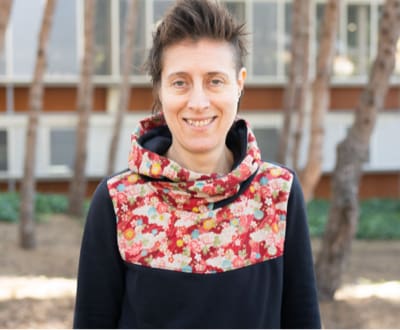
BONILLA MANRIQUE, OSCAR ELIAS is an Assistant Professor at Carlos III University of Madrid. His affiliation is listed under the Torres Quevedo building (Leganés campus), office 4.0.F21. Contact details include the email oscarelias.bonilla@uc3m.es and phone number 916248398. Research interests are associated with the Grupo Universitario de Tecnologías de Identificación (GUTI), focusing on identification technologies, computer science applications, and engineering solutions. Specific areas include data security, signal processing, and applied mathematics methodologies. His professional activities include participation in research projects and co-authorship networks, though specific publications or grants are not detailed in the provided information. He is part of the university’s research portal infrastructure, indicating active involvement in academic collaboration and knowledge transfer initiatives. Laboratory/team affiliation: Member of GUTI (Grupo Universitario de Tecnologías de Identificación).
Sergio Moreno Gil is a Professor in the Department of Economics and Business Management at Universidad de Las Palmas de Gran Canaria (ULPGC), Spain. He is affiliated with the GIR TIDES research group (Economy, Environment, Sustainability and Tourism) and the Institute of Tourism and Sustainable Economic Development. His academic work focuses on tourism economics, marketing, and sustainability within the Social and Legal Sciences branch. Dr. Moreno Gil's research interests span across multiple dimensions of contemporary tourism. His primary focus areas include sustainable tourism development, destination marketing, sharing economy platforms in tourism, and consumer behavior analysis. He has made significant contributions to understanding tourism in the Canary Islands, particularly through his work with the Canary Islands Tourism Observatory. His research integrates traditional tourism studies with emerging fields like neurotourism and biometric analysis of tourist experiences. His publication record shows a clear trend toward addressing contemporary challenges in tourism. Recent works focus on sustainability in mass tourism destinations, the impact of sharing economy platforms, gastronomic tourism marketing, and collaborative tourism networks. His research demonstrates a strong methodological diversity, employing bibliometric analysis, social network analysis, and empirical studies of tourist behavior. Dr. Moreno Gil has been actively involved in the Canary Islands Tourism Observatory, contributing to annual reports on tourism sustainability in the region. His collaborative work spans across the Ibero-American region, with numerous co-authorships reflecting international research networks in tourism studies.
Jordi Galí is a Professor at the Department of Economics and Business at Universitat Pompeu Fabra (UPF), a Senior Researcher at the Center for Research in International Economics (CREI), and a Research Professor at the Barcelona School of Economics (BSE). He holds a PhD from MIT and has played a central role in shaping modern macroeconomic theory, particularly the New Keynesian framework used by central banks worldwide. Education: PhD in Economics, Massachusetts Institute of Technology (MIT), 1989 Master in International Management, ESADE, 1985 Bachelor in Economics, Universitat Pompeu Fabra, 1994 His research focuses on macroeconomic theory, monetary economics, and macroeconometrics. He is best known for his work on the New Keynesian Phillips Curve, optimal monetary policy rules, and the role of technology and expectations in business cycles. His influential book, Monetary Policy, Inflation and the Business Cycle , is a standard reference in graduate programs globally. The most recent articles highlight a continued focus on critical issues in modern macroeconomics: the implications of a low natural rate of interest (r*), the effectiveness of monetary policy at the zero lower bound, the role of wage and price flexibility, and the interaction between fiscal and monetary policy. His work increasingly integrates heterogeneity, financial frictions, and experimental methods, reflecting the evolving frontiers of the field. Scientific Awards: BBVA Foundation Frontiers of Knowledge Award (2025) Yrjo Jahnsson Award (2005) Premi Rei Jaume I d'Economia (2004) Premio Nacional de Investigación “Pascual Madoz” (2022) Three ERC Advanced Grants Foreign Honorary Member, American Economic Association (2020) Galí has advised numerous central banks, including the ECB, Federal Reserve, and Banque de France. He has held leadership roles as President of the European Economic Association (2012), co-editor of the Journal of the European Economic Association , and co-director of the CEPR International Macroeconomics Programme. He is a Research Fellow at CEPR, a Research Associate at NBER, and a Fellow of the Econometric Society. He has also been actively involved in public policy debates in Spain and Europe, particularly on issues of productivity, labor market reform, and fiscal policy. His research program continues to explore the design of stabilization policies in open and currency union economies.
Michalis Vazirgiannis is a Professor at LIX, École Polytechnique (France) leading the Data Science and Mining (DaSciM) group. With academic backgrounds in Physics (Athens University), AI (Heriot-Watt University), and Informatics (Athens University), he has conducted research at Fraunhofer, Max Planck MPI, and INRIA/FUTURS while teaching at institutions across Greece, France, China, and Spain. His research spans Machine/Deep Learning for Graphs (GNNs, graph kernels, embeddings) Text Mining & NLP (Graph-of-Words, biomedical text analysis) Combinatorial Optimization for pandemic forecasting and energy systems Event/Anomaly Detection in time series and sensory data Industrial collaborations with Airbus, Google, Tencent, and BNP . He has supervised 29 completed PhD theses, published over 250 papers, and received prestigious awards including Marie Curie and Tencent Rhino-Bird Fellowships. His team leads the ANR-HELAS Chair (2020-2025) focusing on heterogeneous data deep learning.
Francesc Miralles Torner is an Associate Professor affiliated with the Department of Enterprise and Technology, specializing in digital innovation, artificial intelligence, and entrepreneurial ecosystems. He leads the BOCETO: Boosting Comfort in Educational Environments project and participates in initiatives like Digital Innovation and AI as an agent for Digital Transformation . His work focuses on sustainability frameworks, innovation intermediaries, and technology's role in addressing global challenges. Academic Rank: Associate Professor Department: Enterprise and Technology Key Research Areas: Digital Innovation, Entrepreneurial Ecosystems, Sustainability, AI Recent research explores configurational approaches to startup innovativeness, orchestration of innovation networks, and digital transformation through global and sustainable lenses. His collaborations span institutions like AGAUR and international researchers.
Dae-Jin Lee is an Assistant Professor at IE University’s School of Science and Technology, specializing in statistical modeling and data science. Previously, he served as a Research Line Leader at the Basque Centre for Applied Mathematics (BCAM) and coordinated the Knowledge Transfer Unit in Data Science/AI. His academic background includes a Ph.D. in Mathematical Engineering (2010) from Universidad Carlos III de Madrid and postdoctoral research at CSIRO (Australia). His research focuses on statistical methods for complex data, including penalized splines, tensor product smooths, and applications in biomedicine, epidemiology, environmental science, and sports analytics. He has led multidisciplinary projects funded by public and industry grants, collaborating globally with experts across fields like engineering, medicine, and biology. Key research themes include predictive modeling for health outcomes (e.g., SARS-CoV-2 pneumonia severity), sports injury prevention, and AI in healthcare. His work integrates machine learning with traditional statistical techniques, addressing real-world challenges like pedestrian dynamics simulations and automated medical diagnostics. He is actively involved in scientific organizations, including the Spanish Biostatistics Society and the Statistical Modelling Society. His recent publications highlight innovations in growth curve modeling, AI ethics, and spatiotemporal data analysis, reflecting his commitment to advancing both theoretical and applied statistics.
Jordi Guitart Fernández is a Professor at the Department of Computer Architecture, Barcelona School of Informatics (FIB), Universitat Politècnica de Catalunya (UPC). He is also affiliated with the Barcelona Supercomputing Center (BSC-CNS), a leading national supercomputing facility. He leads the CROMAI research group, focusing on Computing Resources Orchestration and Management for AI. His work bridges high-performance computing, cloud systems, and artificial intelligence. Research Interests: Cloud Computing and Edge Computing Green and Energy-Efficient Computing Containerization and Virtualization for HPC Resource Orchestration and Management Autonomic and Self-Adaptive Systems Machine Learning Workflow Management AI-Driven System Optimization His recent publications reveal a strong focus on intelligent management of computing resources across cloud, edge, and HPC environments using machine learning and agent-based frameworks. He investigates performance, efficiency, and reliability in containerized AI and HPC workloads, particularly within Kubernetes and distributed infrastructures. His work increasingly integrates human-in-the-loop and trustworthiness aspects into AI systems. Scientific Awards: CLOUD Conference 2025 Best Paper Award VISIGRAPP 2025 Best Student Paper Award Premi Extraordinari de Doctorat 2025 - Àmbit d'Enginyeria de les TIC Test of Time Award Honorable Mention (e-Energy) Reconeixement als Mèrits Docents d'Especial Qualitat Top reviewers for Polytechnic University of Catalonia (Computer Science) - September 2017 Advising and Grants: He has advised doctoral students, including Peini Liu. He leads and participates in numerous competitive R+D+i projects, such as CROMAI and DALEST, funded by national and European programs like HORIZON 2020 and the Spanish State Research Plans. His work is supported by grants focused on knowledge generation and industrial leadership in computing technologies. Labs and Teams: He is the leader of the CROMAI - Computing Resources Orchestration and Management for AI research group at UPC. He also collaborates closely with the Barcelona Supercomputing Center (BSC-CNS), contributing to large-scale computing initiatives and strategic research agendas in Europe.
Isabel Gemma Fajardo García is an Associate Professor in the Department of Mercantile Law at the Faculty of Law, University of Valencia, Spain. She is affiliated with the Institut d'Investigació en Economia Social, Cooperativisme i Empresa (IUDESCOOP), where she conducts research on cooperative law, social economy, and related legal frameworks. Research Interests: Her work focuses on Commercial Law, Cooperative Law, Social Economy, Credit Cooperatives, Mutual Societies, and the legal regulation of solidarity-based enterprises. She explores both national and European dimensions, with comparative studies including Greece’s solidarity economy legislation. Her recent publications reflect a strong trend in analyzing the legal and institutional evolution of social economy actors across Europe, particularly in Spain and Greece. She has contributed extensively to journals such as CIRIEC España and REVESCO , and has co-authored books on worker-managed enterprises and social economy manuals. Her research emphasizes democratic governance, self-management, and the balance between economic viability and social objectives in cooperatives. Scientific Contributions: Author of numerous scholarly articles on cooperative banking, agri-food cooperatives, and legal frameworks for social economy. Co-author of the book Empresas Gestionadas por sus trabajadores and editor of Manual de economía social . Contributor to international academic networks, such as RULEESCOOP, fostering Europe-Latin America research collaboration. She advises on legal and policy aspects of cooperatives and social enterprises, though specific advisees are not listed. Her work is supported through institutional research frameworks and academic publishing. She is actively engaged in shaping legal discourse around cooperative models and social economy development. She leads and participates in research initiatives within IUDESCOOP, focusing on legal scenarios for social economy actors in the EU and member states, and exploring new perspectives for housing cooperatives and mutualist entities.
Chelo Vargas Sierra is a Professor at the University of Alicante, affiliated with the Department of English Philology within the Faculty of Philosophy and Letters I (Philology). As a founding member and director since 2021 of the Interuniversity Institute of Applied Modern Languages (IULMA), she leads innovative research in terminology and translation technologies. Her academic background includes a PhD in Translation and Interpreting, a Master's in Audiovisual Translation (University of Cádiz), and a Master's in Terminology (Universitat Pompeu Fabra). PhD in Translation and Interpreting (University of Alicante) Máster en Traducción Audiovisual (University of Cádiz) Máster en Terminología (Institut Universitàri de Llingüística Aplicada) Her research focuses on terminology applied to translation, specialized languages (English-Spanish), corpus linguistics, and gender-sensitive terminology. She directs the DIGITENDER project (TED2021-130040B-C21) for digitizing multilingual terminological resources. She has participated in over 90 international conferences and chaired events like enTRetextos 2021 and AESLA 2016. Recent publications highlight trends in metaphor analysis in medical discourse, gender-sensitive terminology, and cross-linguistic sentiment studies in financial journalism. She chairs the Technical Standardisation Committee 191 for Terminology and has delivered 50+ international seminars for institutions like the European Union. Doctorate Extraordinary Award She serves on editorial boards of journals like Ibérica and Sendebar , contributes to translation technology training, and collaborates in international academic programs. Her work combines theoretical research with practical applications in translation technologies and terminological standardization.
Susana Franco is Research Director at Orkestra Basque Institute of Competitiveness and holds a PhD in Economics from the University of Nottingham. With prior academic experience at British and Latin American universities, she coordinates research on territorial competitiveness and regional development. Her research expertise spans: Quantitative analysis of regional competitiveness indicators Cluster development in evolving economies Employment-wellbeing relationships Policy evaluation methodologies Her publications primarily analyze competitiveness frameworks through longitudinal regional studies, with recent focus on inclusive growth and digital transformation impacts. As research director, she supervises doctoral candidates and manages international projects with UN agencies, facilitating knowledge exchange between academic and policy stakeholders.
Montserrat Palma Muñoz is an Associate Professor at the Universitat de Girona, affiliated with the Faculty of Education and Psychology and the Department of Psychology. Her research focuses on Higher Education and University Policy , with a strong emphasis on legislative frameworks and the Bologna Process. Her research interests include: European Higher Education Area University-Society Relations Educational Policy Analysis Knowledge Transfer Mechanisms Teacher Training Human Development Recent publications address topics such as legislative dynamics of the Bologna Process in Spain (2009), the social contract of universities (2011), and knowledge transfer policies (2012). Her work bridges Educational Psychology and Policy Analysis . She is also actively involved in academic management, serving as Director of the UNED Associated Centre in Girona since 2012 and a member of the Advisory Council of the UNESCO Chair in University Management and Policy at Universidad Politécnica de Madrid.
Dr. Elisabet Romero is a Group Leader at the Institute of Chemical Research of Catalonia (ICIQ) , where she leads research in bio-inspired solar energy conversion . Her work focuses on designing chromophore-protein assemblies capable of efficiently converting sunlight into electrochemical energy, mimicking natural photosynthesis. She is supported by prestigious grants, including an ERC Starting Grant and a Marie Curie Fellowship . Education: PhD in Biophysics, VU Amsterdam (2011) Master’s in Chemistry, Institute of Advanced Chemistry of Catalonia BSc in Chemistry (Physical Chemistry specialization), University of Barcelona (2003) Research Interests: Dr. Romero’s research lies at the intersection of physical chemistry, photophysics, and sustainable energy . She investigates the quantum mechanical principles underlying energy and electron transfer in photosynthetic systems, applying this knowledge to engineer artificial systems for solar fuel production. Her group uses ultrafast spectroscopy techniques like transient absorption and 2D electronic spectroscopy to probe femtosecond-scale dynamics. Publications & Research Trends: Her recent publications reflect a strong trend in de novo protein design for artificial light harvesting , excitonic coupling in chromophore systems , and quantum effects in biological energy transfer . Collaborative work with leading institutions highlights her role in advancing synthetic biology and quantum bio-inspired materials. Scientific Awards: European Research Council (ERC) Starting Grant Marie Curie Fellowship Advising and Grants: Dr. Romero mentors a dynamic team of PhD students, postdoctoral researchers, and master’s students . Her group has secured competitive funding from the ERC, Severo Ochoa Programme, and Marie Skłodowska-Curie Actions , supporting innovative research in renewable energy technologies. Labs and Teams: Her laboratory at ICIQ is equipped with state-of-the-art ultrafast spectroscopy facilities. The team fosters a collaborative and inclusive environment, combining rigorous scientific inquiry with social engagement and cultural exchange.
Gerardo Boto Varela is an Associate Professor in the Department of History and Art History at the University of Girona, where he has been a faculty member since 1995 and holds the title of 'Professor Titular d'Universitat'. He earned his PhD in Art History from the Universitat Autònoma de Barcelona in 1998 and currently serves as Director of the School of Doctoral Studies. His academic affiliations include the Institute of Historical Research and the Research Group in Cultural, Artistic, and Political Studies (9th–21st centuries). His research focuses on medieval religious architecture, particularly Romanesque cathedrals and monastic cloisters in the Iberian Peninsula. He investigates spatial organization, visual programs, liturgical practices, and memorial discourses, combining architectural archaeology with theological and historical analysis. His work emphasizes materiality, perception, and the symbolic function of sacred spaces. Boto Varela's recent publications and edited volumes explore themes such as cathedral urban contexts, episcopal memory, emerging naturalism in sculpture, and the ritual use of space. His research is supported by major grants from the Spanish Ministry of Economy, La Caixa, and the European Union (Marie Curie Project), and he leads the recognized research group 'Edificis i escenaris medieval de la Corona d'Aragó'. He is a leading figure in medieval art scholarship, serving as scientific editor of Codex Aquilarensis. Revista de Arte Medieval and on the editorial boards of several international journals. He has organized numerous international conferences and collaborative research initiatives across Europe. Scientific Editor, Codex Aquilarensis Member, Scientific Committees of Medievalista , Quintana , Cahiers de Saint Michel de Cuxa , and others Principal Investigator, TEMPLA Research Team Principal Investigator, SGR 110 Research Group Member, Catalan Society of Liturgical Studies Boto Varela has supervised interdisciplinary research projects involving scholars from Spain, France, the Netherlands, and beyond. He promotes knowledge transfer through public engagement, digital documentation (3D scanning, georadar), and the integration of technology in heritage studies. His work bridges academic research and cultural preservation, contributing significantly to the understanding of Europe’s shared medieval architectural heritage.
Antoni Verger i Planells is Professor of Sociology at the Autonomous University of Barcelona and ICREA Acadèmia researcher specializing in educational policy and comparative education. He serves as editor-in-chief of the Journal of Education Policy and World Yearbook of Education, and coordinates the European Master GLOBED (Education Policies for Global Development) and GLANCE research group within GEPS-UAB. His research centers on the political economy of global education governance, with primary focus on privatization, marketization, and accountability systems. He examines how international organizations drive policy convergence through instruments like large-scale assessments and public-private partnerships, while analyzing equity implications across diverse national contexts including Spain, Latin America, and OECD countries. His work critically engages with theories of policy transfer, network governance, and the emerging global education industry. Verger's recent publications (2024-2025) reveal intensifying research on privatization dynamics, showing how corporate strategies shape education reform through policy entrepreneurship and regulatory innovation. His analysis of accountability regimes demonstrates how hybrid systems create contradictory pressures on schools, while his work on teacher governance exposes tensions between performance metrics and professional autonomy across regulatory contexts. Scientific recognition: ICREA Acadèmia award for research excellence He has directed major funded projects including ILSAINC (2019-2023) mapping the global assessment industry, REFORMED (2016-2022) analyzing autonomy/accountability policies, and EDUPARTNER (2013-2016) studying public-private partnerships. His grant portfolio demonstrates sustained funding for critical analysis of global education governance structures and their implementation. Through GLANCE research group and GLOBED master program, Verger fosters international collaboration on comparative education studies, connecting scholars from Global South and North to examine power dynamics in transnational education policy processes.
Claudio Ulises Cortes Garcia is a Professor at the Department of Computer Science , Technical University of Catalonia, and leads the IDEAI-UPC (Intelligent Data Science and Artificial Intelligence Research Group) and KEMLG (Knowledge Engineering and Machine Learning Group). He is affiliated with the Barcelona Supercomputing Center (BSC-CNS) and the Barcelona School of Informatics (FIB). With a Doctor en Informática (PhD in Computer Science) and Ingeniero Industrial y de Sistemas (Industrial and Systems Engineering) degrees, his work spans Artificial Intelligence , Intelligent Agents , and Assistive Technology . His research integrates European Programs and Internet with applications in Second Life and Software . His recent publications focus on Post-COVID cognitive effects , AI ethics , and agent-based modeling for urban water management. He received the Doctor Honoris Causa from Universitat de Girona in 2024 and has collaborated on projects like DIGITAfrica and HUB D'INNOVACIÓ PEDIÀTRICA . His work bridges Neuroscience , Environmental Modeling , and Digital Humanities , with over 650 activities recorded in his academic career. ORCID : 0000-0003-0192-3096 WoS Researcher ID : B-7284-2009 Scopus Author ID : 7004065770