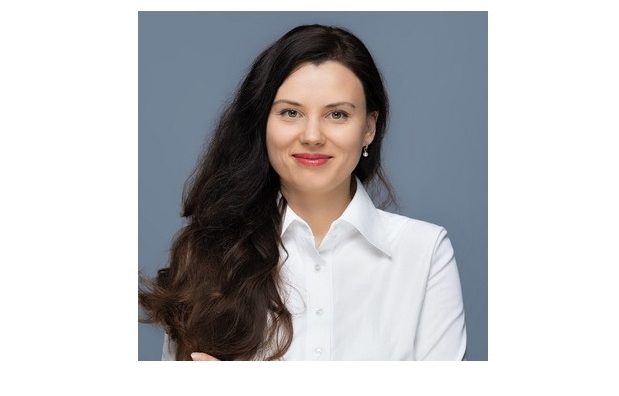
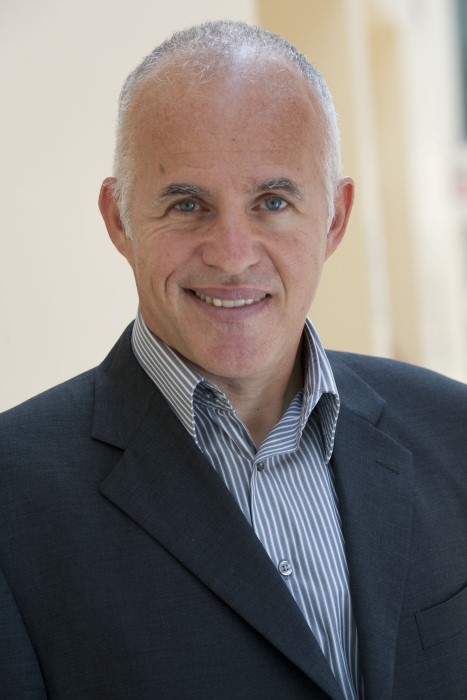
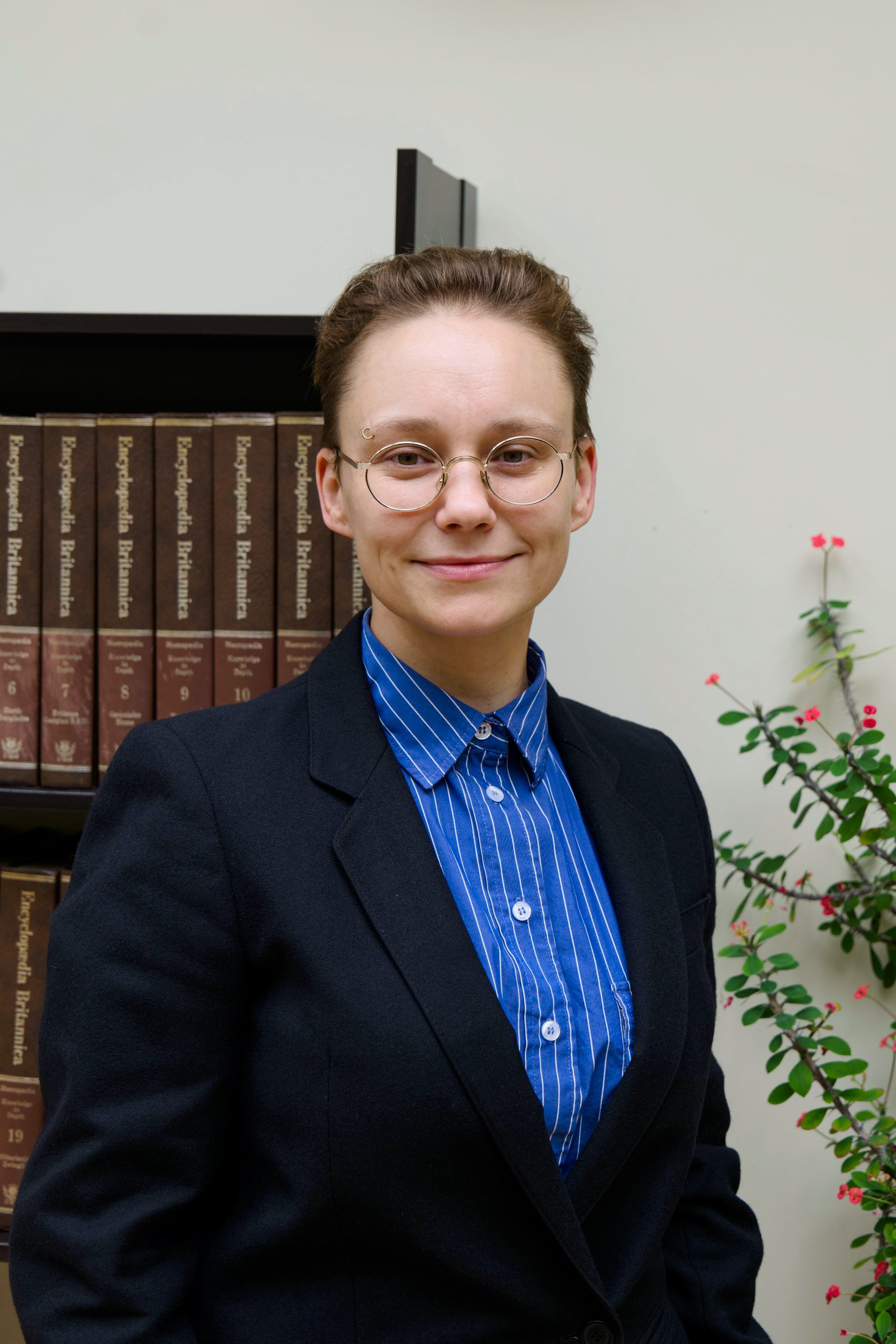
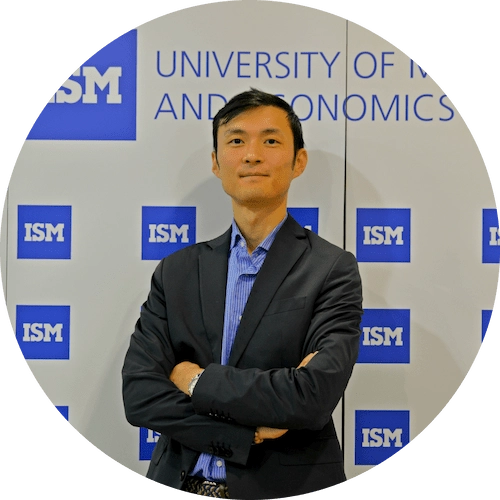
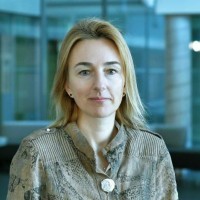
Katažyna Bogdzevič is a Professor at Mykolas Romeris University (MRU) Law School, specializing in Private International Law , European Law , Human Rights , and Environmental Law . She leads the MRU Human Rights LAB and contributes to the Environmental Management Research LAB, focusing on legal frameworks for ecosystem services, climate change mitigation, and stakeholder engagement. Key Research Themes: Integration of Private International Law with Environmental Law , analysis of legal conflicts in nature-based solutions, and name rights under international human rights conventions. Policy Engagement: Serves as advisor to Lithuania's Minister of Justice Ewelina Dobrowolska , emphasizing knowledge transfer to legislative and judicial practices. Email: roffice@mruni.eu
Vilius Dranseika is a Lecturer and researcher affiliated with Vilnius University (Department of Logic and History of Philosophy) and Jagiellonian University (Department of Philosophy and Bioethics). His work bridges philosophy, bioethics, and empirical research, focusing on cross-cultural studies, personal identity, and experimental philosophy. Research interests include metaphysical questions about personal identity, ethics in biomedical research, moral psychology, and the application of quantitative methods to philosophical inquiry. He has published extensively on topics like euthanasia, consent in research, and cultural variations in moral judgments. Key contributions include analyses of ethical frameworks in predictive medicine, cross-cultural perspectives on moral transgressions, and the role of empirical methods in resolving philosophical debates. Notable projects investigate the psychological underpinnings of concepts like persistence, responsibility, and identity across diverse populations. His work frequently engages with real-world ethical dilemmas, such as the use of residual biological materials in research and ethical challenges posed by emerging technologies like AI and pharmacological enhancements.
Dr. Vytautas Čyras serves as an Associate Professor at Vilnius University's Faculty of Mathematics and Informatics, specifically within the Institute of Computer Science and Department of Software Engineering. With over three decades of academic experience since 1984, he bridges computer science and legal theory through groundbreaking interdisciplinary research. Education: Master's in Applied Mathematics (Computer Science) from Vilnius University (1979) Doctorate from Moscow State University's Faculty of Computational Mathematics and Cybernetics (1985) Second Master's in Law from Vilnius University and German Law Centre (2007) Dr. Čyras' research spans legal informatics, information systems, and computer science. His primary focus includes artificial intelligence and law, regulatory compliance, legal requirements, and pioneering work in legal visualization. His Structural Blanks approach to programming with recurrences demonstrates deep expertise in both foundational computer science and legal applications. His research explores how visual and multisensory approaches can transform legal reasoning and compliance in digital environments. His publication trajectory reveals an evolution from technical computer science topics toward sophisticated legal informatics applications. Recent work emphasizes multisensory legal machines, legal visualization frameworks, and the integration of AI with legal reasoning systems. He has made significant contributions to understanding how legal norms can be transformed into operational rules for virtual environments and digital governance systems. Professional Activities: Active participant and organizer of major legal informatics conferences including IRIS, Baltic DB&IS, and EGOVIS Contributor to European Framework Programme projects including VirtualLife and SKY-Scanner Longstanding member of the Lithuanian Computer Society and its Intellectics Section Dr. Čyras teaches courses including Artificial Intelligence, Knowledge Representation, and Human-Computer Interaction. His interdisciplinary background enables him to bridge theoretical legal concepts with practical applications in regulatory compliance systems and legal technology development.
Prof. Konstantinos Dallas is the Head of the Department of Digital Cultures and Communication at Vilnius University's Faculty of Communication. He holds a DPhil in Classical Archaeology from the University of Oxford (1987), with a thesis on costume analysis in Attic grave stelae. His research focuses on digital memory, socio-technical infrastructures, and semiotic practices in social media. Currently leading projects like 'Integrative Digital Memory for Communities,' he explores cultural identity formation through digital platforms. Research interests include cultural heritage representation, social media analytics, and interdisciplinary methodologies. He co-authored key works on museum quality evaluation via social media and digital archival frameworks. His work bridges archaeology's traditional methods with modern digital humanities approaches. Recent publications emphasize digital memory curation, contested heritage discourse analysis, and ontology development for social media practices. He participated in editorial roles for journals like Information & Media and co-organized conferences on populism in media. Active in academic governance, he sits on dissertation committees and contributes to communication education through courses on research design.
Prof. Dr. (HP) Saulius Gudas is an Affiliated Professor in the Cybersocial Systems Engineering Group of the Institute of Data Science and Digital Technologies at Vilnius University . His office is located at Akademijos St. 4, room 603, Vilnius, Lithuania. Education & Background: While explicit degrees are not listed in the provided source, his long-standing professorship and extensive publication record spanning over a decade indicate advanced doctoral training and senior academic status. Research Interests: Prof. Gudas focuses on the intersection of software engineering, enterprise modelling, and knowledge-based systems . Core themes include: Causal knowledge modelling to enhance agile enterprise application development. Model-driven approaches for ensuring business-IT alignment. Deep knowledge-based evaluation and interoperability of enterprise applications. Quality modelling of web services and financial process mining. Publication Trends: Across the most recent works (2017–2024), a clear trajectory emerges from foundational enterprise modelling and interoperability assessment toward leveraging causal models and data analytics to improve agile development processes, service quality, and financial anomaly detection. Doctoral Supervision & Training: Prof. Gudas has successfully supervised the following PhD projects: Andrius Valatavičius – “Assessment of application program interoperability using autonomous computing technologies” (defended 2019). Mindaugas Jusis – “Research on synchronization methods for autonomous port loading processes” (2016–2020). Karolis Noreika – “Evaluation of the application development process using an improved Agile project management method” (2019–2023). Laboratory & Team Involvement: As a senior member of the Cybersocial Systems Engineering Group, he contributes to interdisciplinary projects that integrate software engineering methodologies with socio-technical system analysis within the larger Institute of Data Science and Digital Technologies.
Assoc. Prof. Vassia Atanassova, PhD is an Associate Professor in the Bioinformatics and Mathematical Modelling Department at the Institute of Biophysics and Biomedical Engineering , Bulgarian Academy of Sciences. She holds a PhD in Informatics and Computer Sciences (2013) and has been actively contributing to generalized nets, intuitionistic fuzzy sets, and decision-making under uncertainty since 2002. Education : PhD in Informatics and Computer Sciences (2013), Institute of Information and Communication Technologies – BAS Master in Marketing (2009), University of National and World Economy Bachelor in Informatics (2004), Faculty of Mathematics and Informatics, Sofia University Her research focuses on intuitionistic fuzzy logic applications, generalized net modeling , and Wiki technologies for knowledge transfer . She has developed novel intuitionistic fuzzy operators and conducted extensive work on intercriteria analysis for complex systems. Recent publications emphasize fuzzy decision-making frameworks (2015-2019), with applications in Algorithm optimization Economic modeling Bioinformatics Medical data analysis Scientific Awards : Youngest Researcher Award 'Ivan Evstratiev Geshov' (2011) 2nd Award, VIII Youth Session of Federation of Scientific-Technical Unions (2010) She serves as Guest Editor for MDPI Mathematics and technical editor for international journals. Her teaching includes PhD-level courses on Wikipedia-based knowledge transfer and fuzzy set theory at Bulgarian universities.
ISM University of Management and EconomicsLithuania
Alfredas Chmieliauskas is a Professor at ISM University of Management and Economics, where he teaches project, program, and portfolio management, innovation, and change management. He co-founded ISM in 1999 and served as its Rector from 2014 to 2018. His academic background includes a mathematics degree from Vilnius University (1978), a doctoral degree in computer systems from the Latvian Academy of Sciences (1989), and an MPA from Hamline University (1994). He holds IPMA Level A certification and is an accredited IPMA assessor. Chmieliauskas has advised over 250 organizations through his consulting firm and serves on the board of Lithuania's Strategic Analysis Center (STRATA). His research focuses on project work organizations, governance of interorganizational networks, and leadership dynamics. Notable contributions include studies on ESG implementation governance, multi-level governance frameworks, and balanced leadership. He co-authored the award-winning Analysis of Balanced Leadership Phenomenon in Projects (2019) and contributed to the 2025 Governance of ESG Implementations paper. Chmieliauskas also lectures internationally and chairs conferences on project management. Education: Bachelor's in Mathematics, Vilnius University (1978) Doctorate in Computer Systems, Latvian Academy of Sciences (1989) Master's in Public Administration, Hamline University (1994) Affiliations: Founder and Former Rector of ISM University Board Member, Strategic Analysis Center (STRATA) President, Lithuanian Project Management Association (2004–2015) His awards include the ISM Researcher of the Year Team Award (2018) and the IPMA Award (2019). Current research explores ESG governance, agile methodologies in globally distributed teams, and multi-level project network frameworks.
Goda Klumbytė is a Lecturer and post-doctoral researcher at the University of Kassel, working within the Participatory IT Design department in the Faculty of Electrical Engineering and Computer Science. She is an interdisciplinary scholar bridging informatics with humanities and social sciences, with particular expertise in feminist new materialism, posthumanism, and human-computer interaction. Her research focuses on creating more contextualized and accountable machine learning systems through feminist and critical theoretical approaches. Her research interests include Critical Algorithm Studies, Science and Technology Studies, Human-Computer Interaction Design, Feminist Epistemology, Critical Theory, Posthumanism, and New Materialism. She approaches the study of algorithmic systems from a feminist perspective that emphasizes situated knowledges, intersectionality, and material-semiotic approaches to technology design. Her recent publications demonstrate a clear trend toward developing feminist frameworks for explainable AI and accountable machine learning systems. Her work examines how critical theoretical concepts from social sciences and humanities can be integrated into computing practices, with particular attention to how power relations and structural inequalities manifest in algorithmic systems. She has been particularly active in exploring how feminist intersectional perspectives can reshape approaches to AI explainability and accountability. Co-edited 'More Posthuman Glossary' with R. Braidotti and E. Jones (Bloomsbury, 2022) Published in 'Posthuman Glossary' (Braidotti & Hlavajova, 2018) Contributed to 'Everyday Feminist Research Praxis' (Leurs & Olivieri, 2015) Published in journals including Online Information Review, Digital Creativity and ASAP Presented at major informatics conferences including ACM's CHI, nordiCHI and FAccT Dr. Klumbytė leads significant research projects including 'AI Forensics: Accountability through Interpretability in Visual AI Systems' (funded by Volkswagen Foundation, 2022-2025) and 'CF+: Reconfiguring Computing Through Cyberfeminism and New Materialism' (University of Kassel, 2018-2019). She also serves as one of the editors of the critical computing blog 'engines of difference,' which provides a platform for critical perspectives on computing and technology.
ISM University of Management and EconomicsLithuania
Dr. Jason Li-Ying is an Associate Professor at the Department of Management Engineering, Technical University of Denmark (DTU), and holds a visiting position at ISM. He leads the Innovation, Design, and Entrepreneurship (IDE) research group and is affiliated with the Eurotech Universities alliance. His expertise spans innovation strategy, technology transfer, and open innovation, with a focus on SMEs and public sector innovation. Jason co-edited key works like Innovation Management: Perspectives from Strategy, Product, Process and Human Resources Research (2020) and publishes in journals such as Technovation and R&D Management . His research addresses innovation ecosystems, digital business models, and the socio-economic impacts of big science facilities like the European Spallation Source (ESS). He explores how firms balance external technology sourcing with internal capabilities, emphasizing strategic alliances and governance in virtual communities. Recent work highlights challenges in digital innovation units, business model innovation for sustainability, and managing innovation in public sectors. Jason’s contributions bridge theoretical frameworks and practical applications, influencing policy and corporate strategies globally.
Vilma Naujokienė serves as a Senior Researcher at Vytautas Magnus University's Bioeconomy Research Institute and Department of Agricultural Engineering and Safety within the Agricultural Academy. Holding a Doctor of Sciences degree since 2018, she maintains active research engagement across multiple institutional units including the Faculty of Engineering and Department of Mechanical, Energy and Biotechnology Engineering. Her research spans Environmental Engineering , Agricultural Engineering , and Bioeconomy with particular focus on energy cost reduction, multicriteria bioimpact analysis, and sustainable resource management. Her scholarly work demonstrates consistent engagement with critical agricultural and environmental challenges through conference participation and collaborative research. Analysis of her seven most recent publications reveals strong thematic concentration on climate change adaptation , soil carbon sequestration , biodiversity conservation , and sustainable agricultural practices . Her research trajectory shows increasing emphasis on digital technologies in precision agriculture and chemical-free farming systems. Vilma Naujokienė actively participates in major international conferences including the AgroEco series and Human and Nature Safety events, contributing to knowledge exchange across 7 countries with institutions from Sweden, Germany, Belgium, Turkey, Poland, and South Africa. Her work connects academic research with practical agricultural applications through strong industry partnerships. Based at Vytautas Magnus University in Kaunas, Lithuania, she operates within the Bioeconomy Research Institute's collaborative framework, contributing to Lithuania's agricultural research infrastructure and the university's centennial research legacy established since 1924.
Arvydas-Vytautas Povilaitis is a Professor in the Department of Water Engineering at the Agricultural Academy of Vytautas Magnus University (VMU), with affiliations since September 2021 and September 2022 (Bioeconomy Research Institute). His research focuses on water systems, including quality assessment, hydrological modeling, sustainable management, and ecosystem restoration. Education: Doctor of Technology (1993). Research Interests: Dr. Povilaitis specializes in: Water quality monitoring and modeling River hydrology dynamics Integrated water resource management Ecological restoration of degraded environments Nature-based water treatment solutions Expertise: Fluent in Lithuanian (native) and English (very good), with technical knowledge in water engineering and environmental science.
Jūratė Aleinikovienė is an Associate Professor at Vytautas Magnus University's Department of Agroecosystems and Soil Sciences. She specializes in soil microbiology, sustainable agriculture, and ecosystem management. Doctor of Biomedical Sciences (2009) Active in EU-funded initiatives like HoliSoils Focuses on soil health, microbial dynamics, and bioremediation Coordinates national projects on agricultural sustainability Her research explores soil microbiota dynamics, bio-based solutions for soil restoration, and climate-resilient agricultural practices. Recent projects analyze nano-fertilizers, organic residue mineralization, and soil carbon stabilization. Scientific activities intersect with economic modeling, environmental policy, and stakeholder engagement. She collaborates with institutions like the Bioeconomy Research Institute and European climate-focused consortia.
Romas Alonderis is a Researcher at the Cybersocial Systems Engineering Group within the Institute of Data Science and Digital Technologies at Vilnius University, Lithuania. His work focuses on mathematical logic and its applications in computer science, particularly in the areas of proof theory and automated reasoning. Dr. Alonderis earned his Doctor of Mathematics degree in 2001 with a dissertation titled "Investigation of the Proof Theory of Time Logic with Time Slots." His academic career has been dedicated to advancing the understanding of logical systems and their computational applications. Dr. Alonderis specializes in the proof theory of classical and non-classical logics, with particular expertise in temporal logic, intuitionistic logic, and modal logic. His research focuses on developing efficient proof-search methods, analyzing sequent calculi, and exploring applications of logical systems in computer science. He has made significant contributions to the understanding of cut elimination, loop-check mechanisms, and the automation of reasoning processes in various logical frameworks. His work bridges theoretical foundations with practical applications in formal verification, knowledge representation, and multi-agent systems. Analysis of Dr. Alonderis's recent publications reveals a consistent focus on advancing proof-theoretic methods for various logical systems. His work spans mathematical logic, theoretical computer science, and artificial intelligence, with particular emphasis on temporal reasoning, epistemic logic, and automated theorem proving. A notable trend in his research is the development of efficient algorithms for proof search in non-classical logics, addressing challenges related to termination, complexity, and practical implementation. His publications demonstrate a progression from foundational work on temporal logic to more recent applications in multi-agent systems and quantum computing contexts. Member of the Lithuanian Mathematical Society Throughout his career, Dr. Alonderis has participated in research projects focused on "Proof-finding methods for non-classical logics and communicative complexity." His work has been presented at numerous Lithuanian Mathematical Society Conferences, covering topics such as Indexed Multisuccessive Constructive Logic Calculus, intuitionistic discrete-time logic, and structural rules in temporal logic. As a member of the Cybersocial Systems Engineering Group at Vilnius University, Dr. Alonderis collaborates with interdisciplinary teams working at the intersection of logic, computer science, and social systems. His office is located at Akademijos St. 4, room 228, Vilnius, where he continues his research on advanced logical frameworks and their computational applications.
Assoc. Prof. Dr. Asta Slotkienė is an Associate Professor and Researcher at the Cybersocial Systems Engineering Group , Institute of Mathematics and Informatics, Vilnius University , Lithuania. She has been a faculty member since at least 2009 and is based at Akademijos St. 4, Vilnius. Education PhD in Computer Science Engineering, Kaunas University of Technology (2009) MSc in Computer Science Engineering, Kaunas University of Technology (2004) BSc in Physics and Computer Science, Šiauliai University (2002) Research Interests Dr. Slotkienė’s research spans software quality assurance , development process improvement , e-learning systems , and cognitive decision-making . She investigates how rigorous evaluation methodologies and AI techniques can enhance the reliability and usability of software products and services. Her recent work explores the intersection of large language models and automated software testing , as well as the modeling of web service quality using fuzzy logic and ontology-based approaches. Research Trends Across her latest publications, a clear trend emerges toward leveraging AI and machine learning , particularly large language models , to automate and improve software testing practices. Simultaneously, she continues to deepen the theoretical foundations of software and service quality modeling , integrating fuzzy logic , ontology engineering , and bibliometric analyses to build robust frameworks for quality evaluation. Scientific Service & Awards Program Committee Member: ACM/SIGAPP SAC (2023–2025) Organizing Committee Member: Baltic DB&IS 2024 Program Committee Member: SS AIEDUMED’25, CompSysTech’25 Reviewer for Informatica, Baltic Journal of Modern Computing, New Trends in Computer Sciences Projects & Funding 2022–2026 Master of Science in Smart, Secure and Interconnected Systems (EU Grant 101083531) 2022–2024 Embracing RAD Skills for Employability and Innovation 2020–2022 AI-Enhanced Accounting and Business Management Systems (Grant 01.2.1-LVPA-K-856-01-0083) 2014–2018 Erasmus+ “Open University for Virtual Mobility” (2014-1-LT01-KA203-000550) 2012–2015 Tempus “High Objectives of National Organizational Reform” (530284-TEMPUS+1-2012-1-ES-TEMPUS-JPHES) International Collaboration & Training Through multiple Erasmus+ teaching and learning visits (Las Palmas de Gran Canaria, Madeira, Azores, Maia), as well as participation in DeepLearn schools and professional training (Devbridge/Cognizant Softvision, Robotic Process Automation, Creative Commons, Contextual Modeling), Dr. Slotkienė actively fosters cross-border academic cooperation and continuous professional development.
Aida Pliuškevičienė serves as an Associate Professor and Affiliated Scientist at Vilnius University's Institute of Data Science and Digital Technologies within the Cybersocial Systems Engineering Group. Her research is centered at the intersection of mathematical logic and theoretical computer science. Her primary research interests include Temporal Logic , Modal Logic , and Proof Theory , with significant contributions to sequent calculi, loop-check elimination, and termination methods in automated deduction. Her work demonstrates consistent focus on formal verification systems and computational logic frameworks. Analysis of her 25+ publications reveals sustained expertise in developing decision procedures for temporal and modal logics, with recent work advancing cyclic sequent calculus strategies (2025) and loop-check specifications (2022). Her research trajectory shows evolution from foundational work on Gentzen-type calculi (1992) to contemporary applications in distributed knowledge systems. As an active researcher at Vilnius University's Akademijos St. 4 campus, she collaborates extensively with Romas Alonderis, Regimantas Pliuškevičius, and Haroldas Giedra on temporal logic frameworks. Her publication record in journals like Lithuanian Mathematical Journal and Journal of Automated Reasoning demonstrates sustained scholarly output over three decades.