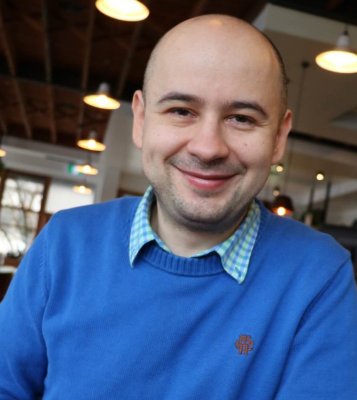
Dr. Gavin Morris is a Lecturer in Education at Charles Darwin University's College of Education, with over two decades of teaching experience in Australian schools. His academic qualifications include a PhD from Charles Darwin University (2019), Master of Education from University of Sydney (2016), and Bachelor of Education from James Cook University (2000). Morris specializes in Indigenous research methodologies, Health & Physical Education, and Sport Science. His qualitative work focuses on trauma healing, truth-telling, and decolonization practices in Aboriginal communities, particularly using Dadirri (deep listening) methodologies. Recent research explores digital platforms for cultural preservation and community resilience. As a registered postgraduate research supervisor, Morris contributes to undergraduate and postgraduate programs while maintaining active fieldwork in remote Northern Territory communities like Nauiyu at Daly River.
Lexing Xie is a Professor in Computer Science at the Australian National University. He leads the ANU Computational Media Lab ( http://cm.cecs.anu.edu.au ) and the ANU Integrated AI Network. His work focuses on the intersection of machine learning, social media analysis, and multimedia understanding. Dr. Xie's research broadly focuses on innovative design and use of machine learning algorithms, especially on large-scale graph data and collective behaviour. His recent work spans several key areas: Popularity in social media -- understanding, predicting, and optimization Multimedia knowledge graphs, vision and language integration Humanising machine intelligence through better understanding of social dynamics His publications reveal a strong trend toward understanding information diffusion patterns in social media, particularly through visual content. He has made significant contributions to the study of visual memes, popularity prediction using point processes, and multimodal learning that connects vision with language. His work often bridges theoretical machine learning with practical applications in social media analysis. Dr. Xie has received recognition for his research, including an Honourable Mention at CSCW 2019 for his work on attention flow in online video networks. His research has been supported by collaborations with major institutions including IBM Research and Columbia University. As an advisor, Dr. Xie has mentored numerous students who have gone on to contribute significantly to publications in top-tier conferences. His lab, the ANU Computational Media Lab, serves as a hub for interdisciplinary research connecting computer science with social sciences.
Professor Kathy Bowrey is a leading academic in Intellectual Property Law at UNSW Sydney's Faculty of Law. Her work explores laws shaping knowledge creation, technology, and culture, with expertise in IP, Indigenous rights, and open research advocacy. She holds a Doctor of Juridical Studies from the University of Sydney and a BA LLB from Macquarie University. Her research focuses on historical and contemporary IP frameworks, including their impact on creators, Indigenous communities, and global innovation systems. Notable projects include the ARC-funded 'Producing, Managing and Owning Knowledge in the 21st Century University' (2019–2022), which shaped Australia's open research policies. Awards include the 2022 ANZLHS Book Prize for *Copyright, Creativity, Big Media & Cultural Value* and fellowships at the State Library of NSW and Museum of Applied Arts and Sciences. She co-authored *Adventures in Childhood* (2023), examining IP in toy and media industries, and *David Unaipon* (2023), exploring Indigenous innovation. Professor Bowrey co-leads the International Society for the History and Theory of Intellectual Property (ISHTIP) and advises on national research policies. Her grants include ARC Discovery Projects on Australian copyright history and IP commercialization.
Dr. Sirui Li is a Lecturer at Murdoch University's School of Information Technology within the College of Science, Technology, Engineering and Mathematics. Her research focuses on Artificial Intelligence, Natural Language Processing (NLP), Machine Learning, Knowledge Graphs, Data Analysis, Temporal Data, and Multi-modal Models, with applications in medicine, agriculture, and mining. She collaborates with industry partners like BHP and has published in journals such as Food Chemistry and Knowledge and Information Systems , as well as conferences like ICSME and IJCNN. Education: Bachelor of Advanced Computing (Honours) in Computer Science at Australian National University Master of Computing (Specialising in AI) at ANU Ph.D. in Information Technology (AI) at Murdoch University Research interests include interdisciplinary applications of AI, such as clinical coding privacy solutions, disease spread modeling, and drug repurposing for pandemics. Her work emphasizes practical industry integration, demonstrated through awards like the 2024 EMNLP Best Demo Award and the 2023 Iron Ore Circuit Hackathon innovation prize. Professional roles include IEEE Western Australia Section committee membership, conference chair positions, and peer review for top journals. She actively mentors students pursuing Honours, Master's, or PhD projects in her areas of expertise.
Lisa L. Wynn is Professor in the School of Social Sciences (Discipline of Anthropology) at Macquarie University in Sydney, Australia. She serves as Associate Editor of American Ethnologist (2022-2027) and previously held leadership positions including President of the Australian Anthropological Society (2020) and membership on the AAS Executive Committee (2018-2021). Wynn earned her PhD in 2003 from Princeton University's Anthropology Department, followed by postdoctoral positions at Princeton's Office of Population Research and Center for Health and Wellbeing. Her research program centers on gender, reproductive health technologies, sexuality, and religion, with continuous fieldwork in Egypt since 1998. More recently, she has expanded her work to examine ethics review bureaucracies, lay understandings of infectious disease, and young adult vaping behaviors in Australia. Her methodological approach combines deep ethnographic engagement with critical analysis of how power structures intersect with medical technologies and bodily experiences, particularly among marginalized communities. Analysis of her recent publications reveals an evolving trajectory that maintains her foundational interest in Middle Eastern contexts while increasingly addressing digital spaces (as seen in studies of online fatwas) and contemporary health crises (including pandemic responses and vaping culture), with consistent attention to bodily autonomy and reproductive justice. Her significant scholarly contributions have been recognized through multiple prestigious awards: Vice Chancellor's Teaching Excellence Award from Macquarie University (2009) Australian Award for Teaching Excellence (2012) OLT National Teaching Fellowship (2012-2014) Leeds Honor Prize from the Society for Urban, National, and Transnational/Global Anthropology (2008) Wynn actively mentors graduate researchers specializing in gender, sexuality, medicine and technology, with particular emphasis on sexual and reproductive health. Her research program has received substantial funding from the Social Science Research Council, Australian Research Council, Office of Learning and Teaching, and Hort Innovation. Notably, she co-led a major international project to develop multilingual sexual and reproductive health resources that have reached millions of users across 208 countries. She also created a free online ethics training program for humanities and social sciences researchers at Macquarie University. Through collaborations with Cambridge Reproductive Health Consultants and other partners, Wynn has successfully translated academic research into accessible public resources, including evidence-based information on medication abortion available in six languages (English, Spanish, French, Arabic, Turkish, and Farsi).
Jan de Gier is a Professor at the School of Mathematics and Statistics, The University of Melbourne . He is also the Founding Director of MATRIX , Australia’s residential research institute in the mathematical sciences, and a former Deputy Director and Chief Investigator in the Australian Research Council Centre of Excellence for Mathematical and Statistical Frontiers (ACEMS) . Additionally, he co-founded the Australian and New Zealand Association for Mathematical Physics (ANZAMP) in 2011 and served as its inaugural Chair. His research focuses on solvable lattice models at the intersection of mathematical physics and statistical mechanics . Key areas include the application of quantum integrability , algebraic structures like the Yang-Baxter equation, Hecke algebras, and quantum groups, as well as analytical methods such as complex analysis and elliptic curves. His work bridges pure and applied mathematics through connections between enumerative combinatorics , representation theory , and real-world phenomena like traffic flow modeling via exclusion processes . The 15 most recent articles reflect his expertise in integrable systems , non-equilibrium statistical mechanics , and algebraic combinatorics . Topics span Macdonald polynomials , stochastic duality , quantum spin chains , and traffic modeling , with methodologies involving matrix product forms , exact solutions , and critical phenomena analysis. He has contributed to editorial efforts through the AustMS Gazette and MATRIX Annals, and has been involved in public science communication via opinion pieces on mathematics funding and applications. His work emphasizes the importance of fundamental research in driving technological innovation, as highlighted in media articles discussing pi calculation , zero-knowledge proofs , and mathematics education .
Kerry Taylor is an Associate Professor (Data Science) at the School of Computing, Australian National University (ANU). She holds visiting roles at the University of Surrey (UK) and University of Melbourne. Her career spans 20 years at CSIRO, UN big data projects with ABS, and interdisciplinary research in data management, IoT, and semantic technologies. She lectures in data mining and convenes ANU's postgraduate applied data analytics programs. Education includes a BSc (Hons 1) in Computer Science from UNSW (1983) and a PhD in Computer Science and Technology from ANU (1996). She co-chaired the W3C/OGC Spatial Data on the Web working group (2015-2017) and serves on editorial boards for Knowledge-Based Systems and International Journal of Distributed Sensor Networks . Research focuses on ontologies, semantic web, machine learning in IoT, and spatial data systems. Active projects include government information frameworks, distributed IoT facilities, and sensor data integration. Her work emphasizes interdisciplinary applications of logic-based and semantic approaches to data challenges.
Dr. Bo Liu is an Associate Professor in the School of Computer Science at the University of Technology Sydney (UTS), where he serves as a core member and director of the AI Security and Privacy (AISP) Research Lab at the Australian Artificial Intelligence Institute (AAII). With expertise spanning cybersecurity, privacy protection, AI and machine learning, and wireless communications, Dr. Liu has established himself as a leading researcher in the field of AI security and privacy. Dr. Liu earned his PhD from the Department of Electronic Engineering at Shanghai Jiao Tong University in 2010. His academic journey at UTS has progressed from Senior Lecturer (November 2019-December 2022) to his current position as Associate Professor (January 2023-present). Dr. Liu's research focuses on the critical intersection of artificial intelligence and security, particularly addressing emerging threats in the age of advanced AI systems. His work spans multiple dimensions of security and privacy, including deepfake detection, privacy-preserving data synthesis, AI model security, and fair machine learning. He has pioneered approaches to detect AI-generated content, protect visual privacy through de-identification techniques, and address the complex relationship between algorithmic fairness and privacy preservation. His publication record demonstrates significant contributions across multiple cutting-edge research areas, with particular emphasis on detecting and mitigating threats from generative AI systems. His recent work reveals a strong focus on deepfake detection across multiple modalities (images, video, and audio), privacy-preserving techniques for sensitive data, and the security implications of emerging AI architectures like Retrieval-Augmented Generation systems. Dr. Liu has secured substantial research funding, including as Lead Chief Investigator on multiple ARC Discovery and Linkage Projects, totaling over $3.5 million AUD. His industry collaborations include partnerships with the NSW Department of Planning and the Reserve Bank of Australia, demonstrating the practical applicability of his research. As an academic leader, Dr. Liu serves as Associate Editor for IEEE Transactions on Broadcasting and actively contributes to the academic community through conference organization, peer review for top-tier venues, and assessment for ARC grant schemes. He also teaches courses including Penetration Testing, Ethical Hacking and Offensive Security, and supervises Masters and PhD students in cybersecurity and privacy research.
Dr. Holly Doel-Mackaway is an Associate Professor at Macquarie Law School and a leading expert in children's rights, Indigenous studies, and international law. She co-leads the Children’s Rights, Participation and Protection Research Stream in Macquarie’s Faculty of Arts and serves as Co-Editor-In-Chief of the Australian Journal of Human Rights. Her interdisciplinary research focuses on advancing children’s rights globally, with a particular emphasis on Indigenous children’s participation in law and policy development. Dr. Doel-Mackaway holds a PhD in Law from Macquarie University and has extensive international experience with organizations like UNICEF and Save the Children. She teaches courses on Child and Elder Law, International Human Rights Law, and Research Methodologies. Recognized for her teaching excellence, she won the Vice-Chancellor's Learning & Teaching Award in 2021 and was nominated again in 2024. Her research includes groundbreaking work such as the 2022 book Indigenous Children's Right to Participate in Law and Policy Development , which provides a framework for involving Indigenous youth in policy decisions. She leads major grants like the 2024 ARC Linkage Grant on child-centered evidence for social change and collaborates with NGOs and governments across five continents. Key awards include the Macquarie University Executive Dean’s Higher Degree Research Excellence Award (2017) and the Erasmus+ Mobility Grant (2023). She actively participates in international committees like LAWASIA’s Human Rights Committee and advises on child rights in Australia, the Pacific, and beyond. Current research projects include exploring intergenerational policymaking, child protection in the Pacific, and the impact of the Voice to Parliament referendum on Indigenous rights.
Uri Onn is a Professor at the Mathematical Sciences Institute of the Australian National University (ANU). His research focuses on advanced algebraic structures, including zeta functions, arithmetic groups, and representation theory. He contributes to the understanding of nilpotent groups, valuation rings, and Lie algebras through rigorous mathematical frameworks. Research Interests: Dr. Onn’s work spans number theory, group theory, and algebraic geometry, with a particular emphasis on zeta functions, arithmetic groups, and representation growth. His studies explore the interplay between algebraic structures and their applications in modern mathematics. Key Research Trends: His articles address topics like zeta functions in nilpotent groups, representation theory over finite rings, and the behavior of arithmetic groups under base change. These contributions advance foundational knowledge in abstract algebra and number theory. Grants and Projects: He leads projects such as the Geometry of Character Varieties (2025–2028) and Representations of Arithmetic Groups (2017–2023), focusing on algebraic and geometric representations.
Piotr Koniusz is a Principal Research Scientist at Data61/CSIRO and an Honorary Associate Professor at the Australian National University (ANU), with an Adjunct role at UNSW. He holds a PhD in Computer Vision from the University of Surrey (2013) and a BSc from Warsaw University of Technology (2004). His research focuses on Foundation Models, Representation Learning, and Few-shot Learning, with contributions to Graph Neural Networks and Adversarial Robustness. Key roles include Program Chair for NeurIPS’25, Senior Area Chair for ICML’25 and ICLR’25, and Workshop Co-Chair for WWW’25. Awards include the Sang Uk Lee Best Student Paper (ACCV’22) and recognition as an Outstanding Area Chair (ICLR 2021–2023). Research interests span Vision-Language Models (VLMs), Generative Adversarial Networks (GANs), and Domain Adaptation. He supervises PhD students at ANU and collaborates with industry on projects like traffic forecasting and ecotoxicology prediction.
Dr. Teresa Wang is a Senior Lecturer in Data Science at Monash University's Faculty of Information Technology, specializing in entity/user modeling, relational/structural machine learning, and graph/network analysis. She holds a Ph.D. from the University of Queensland and degrees from Nanjing University. Currently, she directs the Master of Data Science Program and teaches courses like FIT5201 Machine Learning. Her research focuses on social, e-commerce, and health data modeling, with notable projects including the Knowledge Enriched Approach for Effective Personalization (2025–2027) and collaborations on AI in Mental Health and Site Safety. Dr. Wang has co-authored over 59 publications, emphasizing areas like ontology matching and multimodal data analysis. She actively supervises PhD students and contributes to initiatives like the CSIRO Next Generation Graduates Program for clean energy and sustainability. Education: Ph.D. in Computer Science (2017), University of Queensland Master of Computer Science (2013), Nanjing University Bachelor of Software Engineering (2010), Nanjing University Research Interests: Entity modeling, spatio-temporal data analysis, graph mining, recommender systems, and health/medical records mining. She explores applications in social media, e-commerce, and healthcare sectors. Projects: "Knowledge Enriched Approach for Effective Personalization" (2025–2027) "AI for Clean Energy and Sustainability" (2023–2027) "CSIRO Next Generation Graduates Program: AI in Mental Health" (2023–2027) "Large-scale multimodal knowledge management" (2022–2025) Grants & Collaborations: Engaged with CSIRO, Crank Group, and Pola Practice Pty Ltd. Her work aligns with UN SDGs in education and sustainable energy systems. Labs/Teams: Part of the Monash Energy Institute and Monash Data Futures Institute, contributing to interdisciplinary AI and energy research.
Dr. Will Grant is an Associate Professor in Science Communication at the Australian National University’s Australian National Centre for the Public Awareness of Science. His work focuses on science communication, public policy, and the intersection of science with politics and technology. He holds a PhD from The University of Queensland and has been at ANU since 2008. His research explores science communication strategies, misinformation dynamics, and the societal impacts of emerging technologies. He has authored over 100 publications in outlets like Public Understanding of Science and Environmental Communication , and his work has reached 1.8 million readers on The Conversation . He co-founded PostAc, a platform analyzing PhD job markets, and has advised organizations including the Office of the Chief Scientist and CSIRO. Grant’s research interests include science communication pedagogy, the role of social media in shaping public discourse, and the ethical dimensions of geoengineering. He has organized high-impact outreach initiatives like the Long Conversations dialogue series and hosts the podcast The Wholesome Show . His awards include the Vice Chancellor’s Award for Public Policy and Outreach (2015) and the Sidney Sax Medal (2020). He supervises numerous graduate students and teaches courses on science communication ethics, digital media, and science-policy interaction.
Associate Professor Tongliang Liu is affiliated with the School of Computer Science at the University of Sydney, serving as Director of the Sydney Artificial Intelligence Centre and Trustworthy Machine Learning Lab. He holds a BEng and PhD, and is an ARC Future Fellow. His research focuses on trustworthy machine learning, including adversarial defense, causal representation learning, and robust AI systems. He has authored over 200 papers in top venues like NeurIPS and ICML, and serves as co-Editor-in-Chief of Neural Networks. Research Interests: Developing reliable algorithms for machine learning, emphasizing generalizability and safety. Specific areas include learning with noisy labels, causal inference, and foundational model ethics. He aims to bridge theoretical guarantees and practical applications in computer vision and data mining. Awards: 2024 CORE Award, 2023 IEEE AI's 10 to Watch, 2022 ARC Future Fellowship. Notable recognitions include Eureka Prize shortlist and DECRA. Advising & Grants: Supervises 12 PhD/Master’s students on topics like trustworthy AI, causal discovery, and quantum machine learning. Leads grants on robust learning and AI safety. Labs: Sydney AI Centre and Trustworthy Machine Learning Lab.
Associate Professor Mahsa Baktashmotlagh is an ARC Future Fellow at the School of Electrical Engineering and Computer Science, University of Queensland. Her research focuses on machine learning techniques applied to visual data analysis, biomedical data (e.g., antibacterial activity prediction), and cybersecurity. She holds a PhD from the University of Queensland (2014) and has contributed to over 50 peer-reviewed publications. Her research interests include domain adaptation, deep learning, and robust generalization across domains. Notable contributions include the development of DI-NIDS (a domain-invariant network intrusion detection system) and advancements in open-set domain adaptation. Her work bridges theoretical machine learning with practical applications in healthcare and computer vision. Education: PhD in Machine Learning, The University of Queensland (2014) Awards: ARC Future Fellowship (202X) Research Themes: Domain Adaptation, Cybersecurity, Biomedical AI Her recent work explores challenges in cross-domain generalization, adversarial machine learning, and scalable 3D object detection. She is actively involved in supervising graduate students and collaborates on interdisciplinary projects involving robotics and medical imaging.