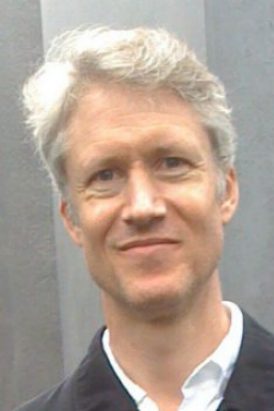
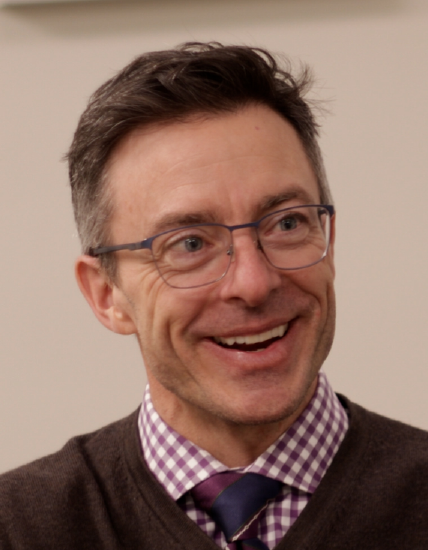
Terrence Chapman is a Professor of Government at the University of Texas at Austin, affiliated with the Robert S. Strauss Center for International Security and Law, Center for European Studies, and Clements Center on History Strategy, and Statecraft. His research focuses on international organizations, conflict resolution, and political economy frameworks. Key research areas include: International institutional legitimacy Global regulatory regimes Public opinion in international affairs Conflict management mechanisms Formal modeling of diplomatic interactions Recent scholarly trends reveal expertise in climate governance negotiations, digital surveillance politics, and regulatory effectiveness. His work spans theoretical modeling and empirical analysis of international collaboration dynamics. Scientific recognition includes: 2011-2012 APSA Conflict Processes Section Book Award Teaching portfolio covers: Science Fiction and Politics International Organization and Law Research Methods in International Politics Previously served as associate/senior editor for International Studies Quarterly .
Gita Steiner-Khamsi is the William Heard Kilpatrick Professor of Comparative Education at Teachers College, Columbia University, where she chairs the Department of International and Transcultural Studies. She also holds a UNESCO Chair in Comparative Education Policy at the Geneva Graduate Institute of International and Development Studies. Her career spans over three decades with significant contributions to understanding how educational policies travel across national borders and are adapted in local contexts. Her educational background includes a Ph.D. in Social Psychology from the University of Zürich (1983) and an honorary doctoral degree from Mongolian State University of Education (2004). Prior to joining Columbia, she worked for ten years on multicultural and anti-racist education policies at the Ministry of Education in Zurich, Switzerland. Steiner-Khamsi's research focuses on policy borrowing and lending, globalization studies, comparative policy analysis, school reform, and teacher policy. She has pioneered system-theoretical approaches to understanding externalization, reception, and translation of educational policies across borders. Her work examines how international organizations govern education in the absence of coercive measures and how governments respond to global norm-setting. Her publication record shows consistent scholarly output with increasing focus on knowledge brokerage as a global governance tool, soft governance through international comparison, and transnational accreditation of public schools. Her most recent book (2025) explores the seven temporalities of global school reform, demonstrating her continued evolution in examining the time dimensions of policy transfer. William Heard Kilpatrick Professor of Comparative Education UNESCO Chair in Comparative Education Policy Dr. h.c. from Mongolian State University of Education Steiner-Khamsi has supervised over 60 doctoral students (PhDs and EdDs) and has led significant international projects including the USAID Teacher Education Project in Pakistan, which she describes as giving "ownership to Pakistanis" rather than having donors dictate implementation. Her research has been supported by various international organizations including UNICEF, where she investigated teacher shortages in Eastern Europe and Central Asia. She maintains active research projects examining public-private partnerships in education, global governance mechanisms, and transnational accreditation systems, continuing to shape the field of comparative education policy through both theoretical contributions and practical applications in diverse international contexts.
Ola Wikander is Senior Lecturer and Associate Professor in Old Testament Exegesis at Lund University 's Centre for Theology and Religious Studies, with affiliations to the Joint Faculties of Humanities and Theology. His work bridges Ancient Near Eastern languages with Indo-European studies through etymological poetics . Pro Futura Scientia Fellow (2017-2023) Visiting Scholar at Wolfson College, Cambridge (2021-2022) Member of Royal Physiographic Society in Lund Wikander's research focuses on: Philological analysis of Hebrew, Ugaritic, Hittite, and Luwian texts Interactions between Indo-European and Semitic linguistic cultures Historical phonology of Northwest Semitic languages Preservation of knowledge for nuclear waste communication Mythological motif transmission across cultures His scholarly output (69 items) covers: Ugaritic epic analysis Hebrew tense system typology Indo-European loanwords in Semitic Theurgical motifs in religious texts Hydro-philology intersections Comparative mythological studies Notable Awards Pro Futura Scientia Fellowship Eva och Lars Gårding Linguistics Prize August Prize Shortlist (2006) Carlo Landberg Foundation Award Academic Contributions include: Editorial board, Coniectanea Biblica Co-editor, Ugarit-Forschungen (2022-2024) Research projects on Semitic-Indo-European interactions Multi-year nuclear waste communication studies
Christopher L. Hill is Professor of Modern Japanese Studies in the Department of Asian Languages and Cultures at the University of Michigan. His scholarly work bridges Japanese studies, comparative literature, and intellectual history with a focus on transnational literary and intellectual currents from the nineteenth century to the present. Research Interests: Hill's research centers on the global circulation of literary forms and intellectual concepts. He investigates how genres like the novel travel across borders and how concepts such as 'civilization' and 'culture' become universalized. His work spans Japanese, French, and American contexts while emphasizing intra-Asian connections among Japan, Korea, mainland China, and Taiwan. Hill is particularly fascinated by the 'flow of ideas and literary forms around the world in the modern age,' examining nationalist thought, Japanese intellectuals' views of Asia in the post-imperial postwar era, and the 'Bandung moment' of the 1950s-1960s when decolonizing countries sought to form political and cultural relations outside European and North American frameworks. Publication Trends: Hill's scholarship consistently explores transnational literary history, particularly the movement and transformation of naturalist fiction across global contexts. His work challenges conventional diffusion models by demonstrating the complex, multi-directional pathways through which literary forms travel and transform. Rather than focusing on origination and reception, Hill emphasizes the 'conditions of travel' that enable unexpected transformations of literary forms as they cross cultural boundaries. His recent work has increasingly focused on Japan's relationship with the Global South and anti-colonial movements. Current Projects: "Facing South: Japanese Writers in the Bandung Moment" - examining Japanese writers' responses to decolonization in Africa and Asia during the 1950s-1970s Research on Japanese writers' participation in the Afro-Asian Writers Association and literary conferences following the 1955 Bandung Conference Studies on the reception of Frantz Fanon in Japan during the 1960s Teaching: Hill teaches undergraduate courses on the modern Japanese novel, cultural history of postwar Japan, modernism, samurai representations, and contemporary Japanese social issues. His graduate seminars cover modern Japanese fiction, literature and social theory, cultural history, and the novel in global context. His courses frequently incorporate film, anime, visual art, and philosophy alongside literary texts.
Jesper Strandgaard Pedersen is a Professor at Copenhagen Business School (CBS) in the Department of Organization, serving as co-director of the Imagine .. Creative Industries Research Centre. He previously chaired SCANCOR (Scandinavian Consortium for Organizational Research) hosted at Stanford and Harvard Universities, establishing his prominence in global organizational studies. His research centers on organizational and institutional change dynamics, examining institutional action, industry emergence, field structuring, and organizational identity construction. Key studies investigate cultural transformation in high-tech firms, mergers in knowledge-intensive industries, diffusion of managerial practices, and creative enterprise organization in film and culinary sectors. Recent work focuses on culinary movements as innovation drivers, analyzing how gastronomic traditions are strategically constructed and institutionalized. Publication analysis reveals consistent emphasis on creative industries (particularly culinary and film), sustainability intersections, and institutional entrepreneurship. His work demonstrates evolving focus from organizational identity in knowledge firms toward sustainability-driven innovation in food systems, with increasing European collaborations. Methodologically, he bridges qualitative case studies with institutional theory frameworks. Professor Strandgaard supervises PhD students and teaches advanced courses including Research Methodology in Organization and Management Analyses and Institutional Organizational Analysis across MSc, HD, and BSc programs. His external engagement includes executive education with CBS Executive Fonden in 2024. He leads the Imagine .. Creative Industries Research Centre, which investigates creative sector dynamics, and maintains influence through SCANCOR networks despite stepping down as chairman. His research directly informs European creative industry policy debates through frequent media contributions and international conference leadership.
David Rabouin is a Directeur de Recherche at the CNRS , affiliated with the SPHERE laboratory (UMR 7219) at the Université de Paris. His work bridges the history and philosophy of mathematics with a focus on early modern figures like Leibniz, Descartes, and Pascal, as well as contemporary French philosophy . He leads the ERC Adg PHILIUMM project (2021–2026) on Leibniz’s manuscripts and previously directed the ANR Mathesis (2017–2021). His research interests include mathesis universalis , the philosophy of infinitesimals , and the historiography of mathematical concepts . His recent publications analyze the interplay between mathematical methods and philosophical frameworks , particularly in 17th-century Europe. He has also organized seminars on mathematical generality and classical age mathematics. Rabouin’s contributions extend to editorial leadership, including co-directing volumes like The Oxford Handbook of Generality in Mathematics and the Sciences (2016) and G.W. Leibniz. Mathesis Universalis (2018). He is a leading voice in historical approaches to mathematical philosophy .
John Slater is a Professor in the Department of Languages, Literatures and Cultures at Colorado State University, specializing in Early Modern Hispanic Literatures, History of Science, and History of Medicine. His research focuses on knowledge production in 17th-century Spain, particularly how literature disseminated ideas about health and healing. He examines print genres like sermons and drama as vehicles for scientific and medical discourse, highlighting conflicts between religious and medical practices. Slater joined CSU in 2020 after roles at UC Davis, University of Colorado, and Indiana University. He holds a PhD from Brandeis University and a BA from Earlham College. His research explores Jesuit and Franciscan healing practices, their impact on medical reforms, and intersections between literature and science. Awards include the 2023 Interdisciplinary Scholarship Award and 2025 Excellence in Teaching Award (CLA). Key publications analyze alchemy in sermons, venereal disease in Baroque Spain, and transatlantic medicinal plant trade. His edited works include studies on Cervantes and medical drama. Slater’s pedagogical contributions include annotated editions of works by Lope de Vega, Juana Inés de la Cruz, and María de Zayas. He has been honored for innovative mentorship models and career advising. His interdisciplinary approach bridges literary analysis with historical, scientific, and cultural studies, emphasizing early modern Spain’s intellectual networks and global exchanges.
Guilherme Martins Rodrigues Sampaio is a Research Fellow in the Department of History at the European University Institute (EUI), Florence. His academic work focuses on the history of economic thought, transnational economic institutions, and 20th-century global economic history. Institution: European University Institute School: Department of History Position: Research Fellow Email: guilherme.sampaio@eui.eu His research interests include economic history, intellectual history, transnational history, and the history of economic ideas, with a particular focus on the global circulation of economic knowledge and the role of international institutions in shaping postwar economic order. Recent publications analyze the 1944 International Business Conference as an alternative to Bretton Woods, the contributions of women economists in the International Chamber of Commerce, and the reception of Keynesian economics in France. These works reflect a consistent engagement with the transnational dimensions of economic thought and policy formation in the 20th century. No scientific awards or honors are mentioned in the available text. There is no information about student supervision, teaching responsibilities, or grant funding. No details are provided about laboratory affiliations or research teams.
Anthony Grafton is the Henry Putnam University Professor of History at Princeton University. A leading scholar of Renaissance Europe, he completed his Ph.D. at the University of Chicago and studied with Arnaldo Momigliano at University College London. His research spans cultural history, historical scholarship, book history, and the history of science. Research focuses on: Transformation of scholarly practices from antiquity to modernity Cultural transmission and reception of classical texts Development of historical methodology and chronology Material culture of knowledge production His publications demonstrate expertise in Renaissance humanism, early modern science, and the history of information. Recent work explores printing practices, information networks, and intellectual biographies of polymaths. Major honors include Guggenheim Fellowship, Balzan Prize, and Mellon Distinguished Achievement Award. Grafton served as President of the American Historical Association (2011) and is affiliated with the Program in History of Science.
Julie Yu-Wen Chen is Professor of Chinese Studies at the University of Helsinki's Faculty of Arts, where she serves as Asian Studies coordinator. Her roles include editorial membership at the Journal of Chinese Political Science (Springer, SSCI) and leadership in EU-funded projects like The EU in the Volatile Indo-Pacific Region (EUVIP) and Order in the Indo-Pacific (Mercator Stiftung). PhD (University of Konstanz) MA (Leiden University) Research interests span China's soft power dynamics, Belt and Road Initiative implementation, and political-economic initiatives in post-Soviet societies. She examines transnational advocacy networks, globalization-glocalization interplay, and comparative nation-building frameworks between China and Taiwan. Academic output appears in journals like Globalizations , China Report , and Asian Survey with 139 research outputs documented. Recent publications focus on Indo-Pacific security architectures, China's Central Asian engagements, and geocultural calculus in BRI projects. This work intersects with her EUVIP project leadership and policy-oriented research outputs. Awarded the Outstanding Alumni Award from Sheng Kung Girls' High School (2025) , she contributes through 476 documented activities including conference organization, editorial work, and public lectures. Notable roles include chairing the Nordic Asia Podcast series and serving on the Central European Institute of Asian Studies board. Her methodological approach combines fieldwork surveys (e.g., Central Asian student perceptions), comparative analysis, and digital humanities methodologies. Current projects include Southeast Asian regional alignments in the Indo-Pacific and Central Asian academic knowledge production about China.
Ulrike Stark is Professor in the Department of South Asian Languages and Civilizations at the University of Chicago, where she has taught since 2005 after over a decade at Heidelberg University's South Asia Institute. Her scholarship centers on modern Hindi literature, South Asian book history, and colonial North India's intellectual landscape with emphasis on print culture, public discourse, education, and gender dynamics. Her academic formation includes Classical and Modern Indology alongside French and Hispanic literatures at Bonn University, followed by a 1994 Bamberg University Ph.D. and 2004 Heidelberg University Habilitation in Modern South Asian Languages and Literatures. Key research areas encompass nineteenth-twentieth century North Indian cultural history, Hindi-Urdu linguistic interfaces, and indigenous publishing enterprises like the Naval Kishore Press, complemented by sustained engagement with contemporary Hindi fiction and translation. Analysis of her publications reveals a cohesive trajectory exploring print's role in shaping colonial Indian identity, with increasing methodological innovation through digital humanities. Her award-winning translation work demonstrates applied scholarship bridging literary cultures. Recognition includes: Global Humanities Translation Prize (2018) for co-translation of Manzoor Ahtesham's The Tale of the Missing Man Stark mentors undergraduate, master's, and doctoral students across Hindi literature, North Indian intellectual history, and book history methodologies. She leads the digital humanities initiative Chapakhana , which systematically maps South Asia's print diffusion through collaborative research and spatial analysis of publishing networks.
Jamel Ostwald is a Professor of History at Eastern Connecticut State University specializing in Early Modern European History, with particular focus on the military history of the Louis XIV era (17th-18th centuries). He earned his M.A. and Ph.D. in Early Modern European History from The Ohio State University and has established himself as a leading scholar on siege warfare during the War of the Spanish Succession. Dr. Ostwald's research interests center on Early Modern European Military History, with special emphasis on siege warfare, the 'way of war' during Louis XIV's reign, and the military strategies employed during the War of the Spanish Succession. He has pioneered the integration of Digital History methodologies into traditional historical research, developing Python-based tools for text analysis of historical documents, particularly focusing on cleaning and analyzing OCRed early modern texts. His work bridges traditional military history with digital humanities approaches, creating innovative ways to study historical warfare patterns. His publication record reveals a strong focus on the intersection of military engineering, siege tactics, and political strategy during the Louis XIV era. Analyzing his body of work shows a progression from traditional military history studies toward more methodologically innovative digital approaches, while maintaining his core focus on early modern siege warfare. His work demonstrates particular interest in Vauban's engineering principles, Marlborough's siege operations, and the cultural representations of siege warfare in early modern Europe. 2009 Society for Military History Best Book Award in Non-American History for Vauban under Siege: Engineering Efficiency and Martial Vigor in the War of the Spanish Succession Dr. Ostwald has developed and teaches within Eastern Connecticut State University's growing Digital History curriculum, mentoring students in conducting digital historical research on various topics. His methodological work focuses on creating tools for historians, including Python scripts for cleaning OCRed historical texts, web scraping for historical data collection, and developing methods to convert unstructured historical documents into structured datasets for analysis. He has also worked extensively with QGIS for mapping early modern military operations, realizing what he described as his '25-year dream to map early modern military operations.' His research program combines traditional archival work with innovative digital methodologies, particularly in analyzing campaign journals, siege narratives, and military correspondence from the early modern period. He maintains an active blog where he shares his digital history projects and methodological insights.
Mauro Caputo is a Full Professor at the University of Salerno, Department of Industrial Engineering (DIIN), based at the Fisciano Campus in Building E, Room 018. With over 77 publications and 2,215 citations, he maintains regular reception hours on Mondays and Thursdays from 2:30 PM to 4:30 PM. His research bridges theoretical frameworks with practical applications across multiple industries, particularly in digital transformation and sustainable innovation. Professor Caputo's research spans several interconnected domains with a strong focus on supply chain management and digital transformation. His primary interests include the integration of emerging technologies like blockchain, IoT, and RFID within industrial contexts. He has extensively studied open innovation practices and their impact on business performance, with special attention to sustainable development applications. His recent work explores Industry 4.0/5.0 technologies, examining how AI and other digital tools can enhance production systems while advancing sustainable development goals. The smartphone industry has been a recurring case study in his research on knowledge management and component supplier relationships, where he employs patent analysis and big data techniques to measure innovation impact. Analysis of Professor Caputo's publication trends reveals a strategic evolution toward integrating digital technologies with sustainability objectives. His work demonstrates increasing focus on how Industry 4.0 technologies can be strategically implemented to achieve Sustainable Development Goals across supply chains. A notable pattern is his methodological approach, frequently employing patent analysis and big data techniques to measure innovation impact. His research increasingly addresses the metaverse and Web3 technologies, examining their business implications while maintaining a strong emphasis on triple bottom line considerations - environmental, social, and economic impacts of technological adoption. Professor Caputo has formed a productive research group with collaborators including Antonello Cammarano, Francesca Michelino, and Vincenzo Varriale. His work appears to have practical industry applications, particularly in the agri-food sector (as evidenced by his cheese supply chain research) and high-tech manufacturing. While specific grant information isn't detailed in the available materials, his extensive publication record suggests successful funding for multiple research projects focused on digital transformation and innovation management.
Karin Geuijen is an Assistant Professor at Utrecht University's Faculty of Law, Economics and Governance , specializing in Public Governance and Management . Her work focuses on public value creation in forced migration contexts, hybrid collaborations across sectors, and community-driven entrepreneurship for sustainable governance. Current Affiliations: Co-director of NWO-funded research program on social entrepreneurship ecosystems (2023–2027) Fellow at UGlobe, Navigating Deep Transitions flagship (2021–present) Member of Migration and Societal Change steering committee (2019–2024) Research Interests revolve around: Refugee integration strategies Wicked problems in migration governance Commons-based collaborations Living Labs for policy experimentation Asylum seeker reception innovation Scientific Contributions include: 15+ years of fieldwork on Plan Einstein multi-sector asylum models Over 70 publications across journals, book chapters, and policy reports Cited in 94+ academic works and 5+ policy sources Peer-review roles at Public Administration , Policy Sciences , and Clinic in Practice journals Grants & Awards: Recipient of the De Brouwer Prijs (2017) and shortlisted for Agnites Vrolikprijs (2020). Secured €50,000+ grants for police performance evaluation (2011) and EU policy analysis (2008). Media Engagement: 31+ media contributions on asylum policy challenges since 2004, including ARD1: Tagesthemen (2024) and Rwandadeal critiques (2024).
Natalia Bachour is a Lecturer at the Institute of Asian and Oriental Studies, University of Zurich, specializing in Early Modern Medical and Scientific History, Translation Studies, and Arabic Language Pedagogy. She holds a PhD in the History of Pharmacy from Heidelberg University and has conducted research on topics like the therapeutic use of human body fluids, Arabic morphology teaching, and Ottoman medical knowledge transfer. Her work bridges historical pharmacology and contemporary language education. PhD in History of Pharmacy (Heidelberg, 2006-2011) Diploma in Translation Studies (Mainz, 2004-2011) Certificate in Arabic Didactics (Zurich, 2011-2012) Her research focuses on intercultural medical history, analyzing how Arabic texts adapted European chemical medicine. She developed digital tools like Kalimāt (Arabic vocabulary database) and Dandanāt (Levantine Arabic lexicon), funded by UZH's Digital Teaching and Research Unit. Her projects address challenges in teaching Arabic morphology and diglossia to non-native speakers. Her publications span 2012-2019, emphasizing Ottoman medical pluralism, Arabic pedagogy, and historical pharmacology. Recent grants reflect her role in digitizing language education. She has taught courses on Arabic dialects, classical literature, and cross-cultural medical history. Herzog-Ernst Scholarship (2018) Bachour's collaborative projects with Fabian Frei and Henning Sievert include creating interactive verb tables, multimedia materials, and bilingual subtitling strategies. She continues advancing methods for teaching Arabic as a foreign language, particularly in dialect-standard continua.