Dr. Stefan Kroll is Head of Science Communication and Senior Researcher at PRIF's Research Department International Institutions. With a PhD from Georg-August-University Göttingen, his interdisciplinary work bridges political science, international law, and conflict studies. His research focuses on norms and institutions in global governance, knowledge transfer mechanisms, and peace education methodologies. His extensive publication record examines legal pluralism, security politicization, and colonial legacies in international relations. Recent work analyzes environmental peacebuilding in Ukraine, counterterrorism legislation, and diversity governance frameworks. His scholarship demonstrates consistent engagement with the tensions between power asymmetries and normative orders in transnational contexts. Honors include the Otto-Hahn-Medal (2011) and Friedrich-Christoph-Dahlmann-Award (2011), recognizing his contributions to legal sociology and political theory. He leads knowledge transfer initiatives like PRIF@School and Global House of Young Voices, promoting civic education on peace and conflict topics.
Professor Marianne O'Doherty is a faculty member in Medieval Literature and Culture at the University of Southampton. She specializes in medieval spatial representation, travel writing, and pilgrimage texts, with a focus on digital humanities methodologies. Her research explores the cultural impact of medieval geographical knowledge and the reception of texts like *Mandeville's Travels*. She actively supervises PhD students in medieval literature and interdisciplinary projects involving languages like Latin, French, and Italian. Education: BA (English), MA (Medieval Studies), PhD (Medieval Studies), all from the University of Leeds. Previously taught at the University of Leeds and Open University before joining Southampton in 2007. Her 2014 monograph *The Indies and the Medieval West* won the European Society for the Study of English Cultural Studies Prize. Research affiliations include the Centre for Medieval and Renaissance Culture (CMRC). Current projects involve medieval map analysis and the diffusion of *Mandeville's Travels* in England. Her work bridges textual analysis with digital humanities, exemplified by collaborations with the Pelagios team. Awards: 2014 European Society for the Study of English Prize. Active in public engagement via blogs (Public Medievalist, Pilgrims’ Libraries Network) and media appearances (BBC *In Our Time*). Teaching focuses on Old English literature, Arthurian legends, and medieval otherness. Offers MA supervision in medievalism and monsters/monstrosity. Known for fostering innovative interdisciplinary research proposals.
Jose Raul Fernandez Sanchez-Alarcos is a Professor at the Department of Philology and Translation, Pablo de Olavide University. His primary research area is Spanish Literature, focusing on modernist narrative, intercultural communication, and literary theory. He is affiliated with research groups 'HUMANISTIC TEXTS', 'ILA' (Applied Linguistics), and 'Studies on Europe, the Mediterranean World and its Atlantic Diffusion'. His doctoral thesis (1991, Complutense University of Madrid) examined Ángel Ganivet's novels under the supervision of Dr. Fernando García Lara. Education: PhD in Spanish Literature (1991), Complutense University of Madrid Sanchez-Alarcos explores the intersection of myth, modernity, and intercultural pedagogy in his research. He investigates how modernist authors like Ganivet, Bergamín, and d'Ors transcended traditional frameworks to address transcendental human conditions, critique positivism, and propose new aesthetic models. His work bridges literary analysis with sociology, hermeneutics, and comparative studies. His publications examine inter-artistic dialogues (e.g., between music and literature), science fiction's rise, and the role of poetry in challenging materialist worldviews. He advocates for humanistic-cultural teaching models that transcend localism through universal literature. While no explicit scientific awards are listed, his editorial work on Ganivet's complete letters (2011) highlights his impact on literary scholarship. As co-author in multiple collaborative studies and contributor to journals like Hispanic Research Journal and XLinguae , Sanchez-Alarcos maintains an active presence in academic circles. His 19 papers and 2 books reflect sustained engagement with 19th-20th century Spanish literature, comparative frameworks, and pedagogical innovation.
Seyoon Jeong is a Professor in the Department of Computer Science and Engineering at Korea University's College of Engineering, with an extensive research career spanning over two decades in video coding, image compression, and computer vision. His scholarly contributions demonstrate consistent engagement with cutting-edge research topics in multimedia processing. Jeong's research primarily focuses on video and image compression technologies, with recent emphasis on Video Coding for Machines (VCM), High Efficiency Video Coding (HEVC), and machine learning applications for visual data processing. His work bridges traditional signal processing with modern AI techniques, particularly in optimizing compression algorithms for both human perception and machine vision tasks. Over the past five years, his research has increasingly concentrated on feature map compression, multi-scale processing, and the development of specialized coding techniques for machine-oriented applications. Analysis of his recent publications (2020-2024) reveals a clear research trajectory toward optimizing video coding specifically for machine vision systems rather than traditional human viewing. This emerging field addresses the challenge of efficiently transmitting visual data to AI systems that process video for tasks like object detection and scene understanding, where conventional perceptual quality metrics are less relevant. His work often involves collaboration with researchers from Korean institutions and international partners, reflecting the global nature of multimedia research. While specific awards aren't documented in the provided materials, his consistent publication record in top-tier journals and conferences (IEEE Transactions, CVPR, NeurIPS) indicates significant recognition within the multimedia research community. His research has practical applications in areas including 5G video transmission, machine vision systems, and efficient visual data processing for AI applications.
Dr. Marina Tulin is an Assistant Professor at the University of Amsterdam's Faculty of Social and Behavioural Sciences, specializing in Political Communication & Journalism. Her research investigates misinformation dynamics, fact-checking efficacy, and media literacy in digital environments, with particular focus on electoral contexts and crisis communication. Research interests center on: Generative AI's impact on disinformation ecosystems Cross-cultural perception of misinformation during conflicts Media literacy as cognitive heuristic Political communication in polarized environments Algorithmic accountability in platform governance Publications demonstrate consistent focus on misinformation mechanisms through experimental and survey methodologies, with recent emphasis on: Generative AI's disruptive influence on information integrity Cross-national analysis of war-related disinformation Electoral integrity in contested information environments Behavioral interventions for media literacy No information available regarding research awards, student advising, or laboratory affiliations at this time.
Outi Paloposki is Professor of English at the Department of English, School of Languages and Translation Studies, University of Turku, Finland. She holds a docentship in the Department of Languages within the Faculty of Humanities. Her academic career spans over two decades with significant contributions to translation studies. Paloposki's research focuses on the history of translation, translators' social networks and working environments, and the cultural, societal and linguistic impact of translation in Finland. Her recent publications deal with retranslations, translators' agency, professionalisation and paratextual issues. She has co-edited a history of the translation of non-fiction and scientific literature in Finland with Professor HK Riikonen (2013) and contributed to the two-volume Finnish translation history published by the Finnish Literature Society SKS in 2007. Her publication record includes 39 research outputs spanning from 2000 to 2020, demonstrating consistent scholarly activity in translation history and related fields. The most recent works focus on textual spaces in translation studies, retranslation practices, and the historical development of Finnish publishing. J. A. Hollo Award (2013) Paloposki has supervised doctoral candidates as evidenced by her role as a preliminary inspector for PhD theses. She has led significant research projects including 'Translation Studies and Terminology (TraST)' (2013-2016) where she served as Principal Investigator, and participated in 'The development of Finnish literary language in the 19th century' (2001-2004). She actively participates in academic networks, notably chairing the Nordic network for Translation Studies since 2010 and contributing to the Women Writers in History COST Action. Her academic leadership extends to organizing and participating in numerous conferences and seminars, including serving as keynote speaker at translation workshops and as an opponent at academic events.
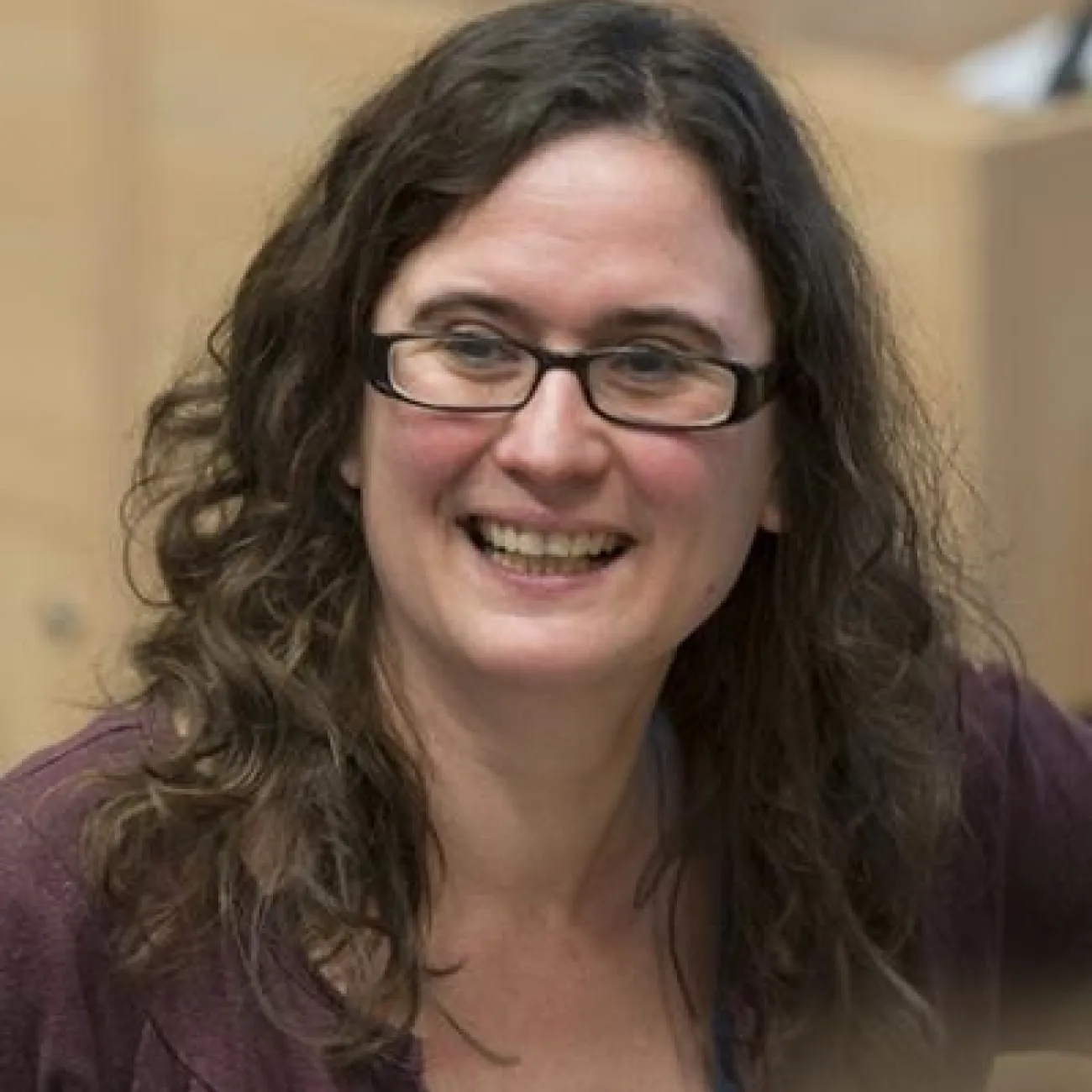
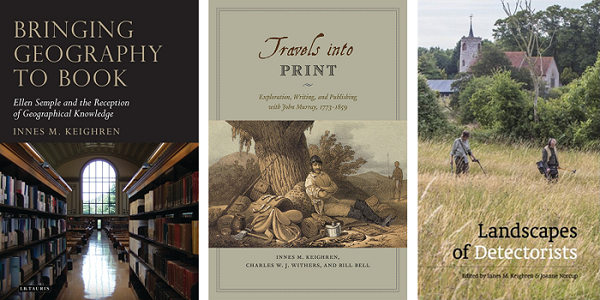
Professor Innes M. Keighren is a historical geographer at Royal Holloway, University of London, affiliated with the Department of Geography and the Royal Holloway Centre for the GeoHumanities. His research focuses on geography’s disciplinary history, book history, and the history of science, with particular attention to eighteenth-century travel writing, scientific communication, and the reception of knowledge. He holds fellowships from the Royal Geographical Society, Higher Education Academy, and Royal Historical Society. Education: PhD in Historical Geography (University of Edinburgh, 2008), MSc by Research (2003), BSc (2002). Prior roles include Teaching Fellow at University of Edinburgh (2009–10) and Research Associate (2008–10). Research interests include William Macintosh’s global networks, polar science history, and the cultural dimensions of exploration. Supervised 8 PhD students on topics ranging from Victorian publishing to colonial cartography. Current projects involve a monograph on William Macintosh and funded collaborations with institutions like the Royal Botanic Gardens and Science Museum. Publications include Travels into Print (2015) and Bringing Geography to Book (2010). Awards include a British Academy fellowship (2025) and a Leverhulme Trust grant (2020–21).
Laure Miolo is a Research Fellow at the University of Oxford, affiliated with Lincoln College. Her research focuses on medieval scientific manuscripts and early libraries in France and England (12th–15th centuries), emphasizing the diffusion of scientific knowledge and the reception of Arabic science in Europe. She specializes in the intellectual practices of medieval scholars, particularly astronomers like Simon Bredon and William Reed, and their influence on later practitioners such as Lewis of Caerleon. Her doctoral work reconstructed the scientific collection of the early Sorbonne library, exploring its owners and users. Postdoctoral research expanded into medieval scholarly networks and the transmission of mathematical sciences, especially astronomy and astrology. She is affiliated with the Oxford Centre for History of Science, Medicine and Technology and Oxford Medieval Studies. Awards: Lyell Career Development Fellowship in Latin Palaeography Her work bridges manuscript analysis, textual editing, and interdisciplinary approaches to understanding medieval scientific practices. Current projects include studies on Oxford’s 14th-century astronomical manuscripts and their 15th-century legacies.
Professor Mikko Tolonen is a leading scholar in Digital Humanities and Computational History at the University of Helsinki's Faculty of Arts, where he serves as Subject Head of Digital Humanities and PI of the Helsinki Computational History Group (COMHIS). His work integrates computational methods with historical research, focusing on early modern print culture, book history, and Enlightenment studies. He holds a PhD in Intellectual History (2010) and has pioneered interdisciplinary projects like the Reception Reader tool for text reuse analysis. Tolonen has been recognized with awards including the Open Science and Research Award (2016) and the Annual Voltaire Foundation Lecture (2025). He is an active contributor to research infrastructures, including DARIAH-FI and the European Association for Digital Humanities (EADH). His research spans topics from quantitative analysis of book prices to social network analysis of publishing networks, emphasizing methodological innovation and open data workflows. Tolonen also leads the annual Helsinki Digital Humanities Hackathon, fostering collaborative problem-solving in the field. Key research interests include computational approaches to historical discourse, text reuse in early modern texts, and the evolution of language and knowledge systems. He supervises doctoral students across these themes and collaborates internationally on projects like the Marie Curie Training Networks CASCADE and MECANO. Tolonen’s infrastructure contributions include advancing standards for bibliographical data and promoting open science practices in the humanities. Awards include the European Heritage Award (2024) and multiple best paper awards for innovative interdisciplinary work. His ongoing projects explore challenges in multilingual bibliographical data and the application of machine learning to historical language change. Tolonen’s work bridges traditional humanities scholarship with cutting-edge computational methods, ensuring historical research remains at the forefront of interdisciplinary innovation.
Pier Vittorio Mannucci is an Associate Professor at Bocconi University whose research explores creativity at individual and team levels. His work employs diverse theoretical frameworks to demonstrate how individuals can unlock their creative potential in professional settings. Key research areas include creativity networks, innovation processes, cultural influences on idea generation, and career-long creative development. Research Focus Mannucci investigates how network structures impact novelty recognition and creative output, examining phenomena like social brokerage, multicultural team dynamics, and network rejuvenation strategies. His studies reveal how cultural tightness affects creative collaboration and how women can overcome identity threats in brokerage positions. Recent work analyzes audience reception of creative content and temporal patterns in creative careers.
Veronika Karnowski is Professor of Media Communication at Chemnitz University of Technology's Faculty of Philosophy, Institute for Media Research. She joined the university in May 2023 after holding positions at Ludwig Maximilian University of Munich, Julius Maximilian University of Würzburg, University of Leipzig, Hanover University of Music, Drama and Media, and University of Erfurt. Her educational background includes studies in communication science, political science, and business administration at Ludwig Maximilian University of Munich. She earned her doctorate from the University of Zurich in 2008 and completed her habilitation at LMU Munich in 2018, receiving teaching qualification in communication science. Research Focus: Karnowski specializes in mobile media research, examining use and appropriation of mobile online media, situational influences on mobile media consumption, and mobile media in migration contexts. Her work extends to social media news dissemination and reception patterns, and health communication with emphasis on eHealth and mHealth applications. She has developed expertise in Mobile Experience Sampling Method (MESM), qualitative and quantitative survey techniques, automated observation, and content analysis. The analysis of her recent publications reveals a strong focus on situational contexts of media use, with particular attention to how mobile devices shape information consumption, health behaviors, and social interactions. Her research increasingly examines the interplay between individual characteristics and situational factors in digital media engagement, with applications in health communication, political communication, and news consumption. Awards and Recognition: Fellow of the International Communication Association (2024) Editorial and Professional Service: Karnowski served as co-editor of Mobile Media & Communication (2013-2024) and currently serves as Associate Editor of the Journal of Computer-Mediated Communication (2022-present). She chaired the Mobile Communication Division of the International Communication Association (2015-2017) and currently serves as Vice-Chair of the Communication and Technology Division (2024-present). Research Projects: Karnowski leads the DFG-funded subproject 'Use niches of mobile media in the self-management of chronic diseases' (2023-2027) and has previously directed projects on passive smoking reduction, news dissemination in social web, and mobile media for preventive health measures.
Professor Hu Danian is a tenured faculty member at the Center for Social Sciences, School of Humanities and Social Sciences, Southern University of Science and Technology (SUSTech). After taking early retirement from The City University of New York (CUNY), he returned to China in spring 2022 to continue his scholarly work. Education: Ph.D. in History, Yale University (2001) M.Phil. in History, Yale University (1997) M.A. in History, Case Western Reserve University (1991) Bachelor of Engineering, Northern Jiaotong University (1984) Research Interests: Professor Hu’s scholarship centers on the history of science and technology in twentieth-century China, with a particular emphasis on the history of modern Chinese physics. His research explores how Einstein’s theories and modern physics were received, translated, and debated in China, the transnational networks linking Chinese and international scientists, and the interplay between science, politics, and ideology during periods such as the Cultural Revolution. He also investigates the institutional development of physics education and research in China, as well as the role of philanthropy and foreign foundations in shaping scientific agendas. Major Publications & Editorial Contributions: His monograph China and Albert Einstein (Harvard University Press, 2005) was recognized by Physics Today as one of the five essential books on the history of physics. The Chinese edition, Einstein in China (2006), was named one of the ten best books of the year by China Reading Weekly . He has guest-edited two special journal issues: The Transnational Dimensions of Science, Technology, and Medicine in Modern China (2019) and Science, Technology, and Medicine in China’s Cultural Revolution (2017). Scientific Awards & Honors: China and Albert Einstein selected among the “five fundamental works on the history of physics” by Physics Today (2017). Einstein in China selected as one of the “top ten books in China” by China Reading Newspaper (2006). Teaching & Advising: At SUSTech, Professor Hu currently teaches “20th Century Chinese Physics and Physicists” and “Einstein and the World He Lived in.” Previously, he held tenured and tenure-track positions at CUNY, Morgan State University, and the University of Massachusetts-Amherst, and served as a visiting faculty member at Peking University’s BiMBA program. No specific student advisees are listed in the provided materials. Laboratory & Research Teams: While no dedicated laboratory is mentioned, Professor Hu leads collaborative projects through the Center for Social Sciences at SUSTech and maintains international research networks with historians of science in Canada, China, Singapore, and the United States.
Andrew M Riggsby is the Lucy Shoe Meritt Professor in Classics at the University of Texas at Austin, with a courtesy appointment as Professor of Art History. His research focuses on the ancient Roman world, particularly the period 200 BC-AD 300, with specialized expertise in the history of information, cognitive theory applications to ancient history, Roman law, and Latin prose. Professor Riggsby holds an A.B. summa cum laude from Harvard University and a Ph.D. from the University of California, Berkeley. His academic credentials include prestigious fellowships at the American Academy in Rome and as a Guggenheim Fellow. He has held distinguished visiting positions including the Stanley Kelley, Jr. Visiting Professor for Distinguished Teaching at Princeton University. His research interests center on three major areas: (1) the history of information in the Roman world, examining how information was produced, stored, organized, and diffused; (2) applications of cognitive science to historical questions about ancient Rome; and (3) Roman law. He is currently completing a book on cognitive theory and the ancient Roman world under contract with Johns Hopkins University Press, followed by a volume on Information in the Roman Empire for Cambridge University Press. Professor Riggsby's scholarly output reveals a consistent pattern of interdisciplinary research bridging classics, cognitive science, and information studies. His recent publications demonstrate growing interest in cognitive spatial models, memory technologies, and standardization practices in the ancient world, reflecting his innovative approach to understanding Roman information systems. John Simon Guggenheim Memorial Foundation Fellowship (2024) Loeb Classical Library Foundation Fellowship (2024) Senior Core Fellowship, Institute for Advanced Study, Central European University (2024) Texas Classical Association, William R. Nethercut Excellence in Postsecondary Teaching Award (2023) Cognitive Science Society, Disciplinary Diversity & Integration Award (2021) National Endowment for the Humanities/Roger A. Hornsby Rome Prize (2010-2011) Association of American Publishers PROSE award for Classics and Ancient History (2006) Professor Riggsby maintains an active teaching schedule covering Roman history, Latin prose, cognitive approaches to antiquity, and Roman law. His courses include both undergraduate and graduate offerings, with particular emphasis on the Roman Republic and Empire, Cicero, and specialized topics like literacy, numeracy, and visuality. His teaching philosophy integrates his research interests, creating a dynamic learning environment that bridges traditional classical studies with contemporary cognitive science approaches.
Shanghua Gao serves as a Research Fellow at Harvard Medical School's Department of Biomedical Informatics, Harvard University, where he develops foundation models and universal representation learning methods to advance artificial general intelligence across computer vision, biomedical applications, and time series analysis. His research focuses on creating generalizable AI techniques including AI agents, generative modeling, and self-supervised learning frameworks. Gao emphasizes resource-efficient architectures that maintain high performance while minimizing computational demands, with notable contributions in salient object detection and biomedical AI systems. His work bridges theoretical innovation and practical deployment, with several projects transitioning into real-world applications. Analysis of his recent publications reveals a strategic shift toward foundation models for biomedical reasoning (e.g., TxAgent for therapeutic applications) and unified time-series frameworks (UniTS), while maintaining expertise in efficient computer vision systems. His research consistently prioritizes model generalizability across domains, evident in cross-disciplinary applications from medical diagnostics to creative AI systems.
Dr. Moshe Eliasof is a researcher at the University of Cambridge's Department of Computer Science and Technology. His primary research focuses on advancing graph neural networks (GNNs), temporal modeling, and generative AI systems. He develops novel architectures like adaptive autoregressive models and diffusion-based frameworks to enhance performance in graph-based learning tasks. His research spans machine learning fundamentals, including: Graph neural network architectures and optimization Temporal and sequence modeling techniques Efficient training methodologies for large-scale networks Generative modeling for image and graph synthesis Inverse problems and regularization in graph domains Dr. Eliasof's publications demonstrate consistent focus on improving GNN performance through innovations in message-passing frameworks, positional encodings, and multiscale approaches. His recent work emphasizes efficiency optimization and invariance properties in graph representations.