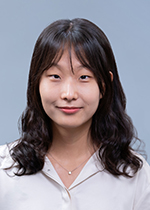
Sewon Min is an Assistant Professor at UC Berkeley's Electrical Engineering and Computer Sciences (EECS) department and a research scientist at the Allen Institute for AI. Her research focuses on Natural Language Processing (NLP) and Machine Learning, particularly Large Language Models (LLMs), emphasizing data-centric approaches and ethical AI practices. She holds a Ph.D. from the University of Washington (2024) and a B.S. from Seoul National University (2018). Her work includes advancements in retrieval-based models, mixture-of-experts architectures, and data privacy in LLMs. Notable projects include FlexOlmo (flexible data use in LLMs) and OLMoE (open mixture-of-experts models). She has been recognized with the ACM Doctoral Dissertation Award Honorable Mention (2025) and WAGS/ProQuest Innovation in Technology Award. Recent articles highlight her contributions to reasoning models, data tracing (OLMoTrace), and scalable retrieval systems (MassiveDS). She leads the Berkeley NLP Group and collaborates with BAIR, exploring topics like model transparency and ethical data usage.
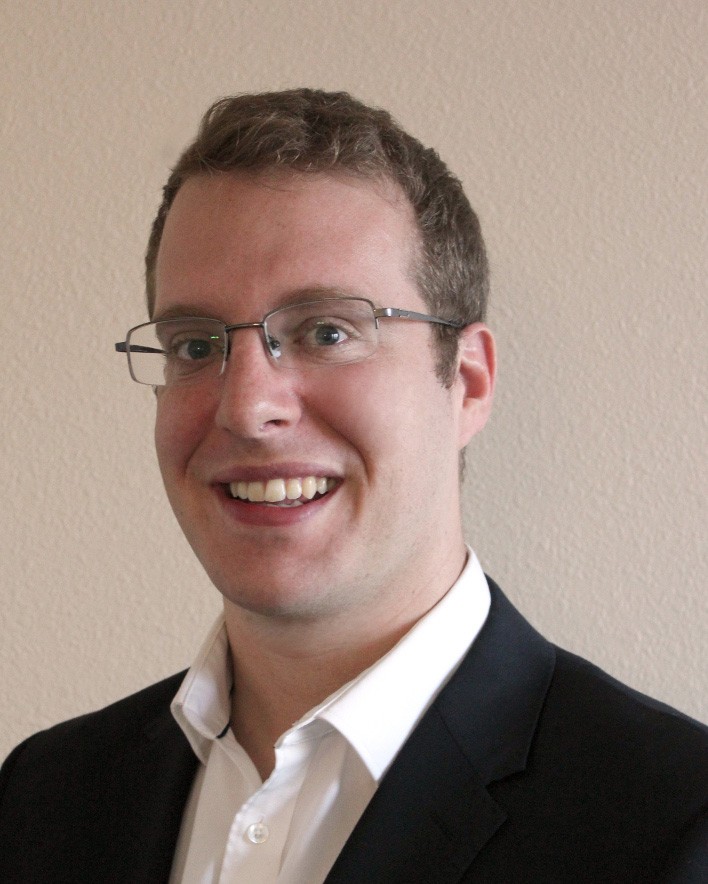
Brad Hayes is an Associate Professor of Computer Science at the University of Colorado Boulder within the College of Engineering and Applied Science, where he directs the Collaborative AI and Robotics (CAIRO) Laboratory. He also serves as Chief Technology Officer at Circadence, leading efforts in developing AI-enabled products for cybersecurity training and assessment. Undergraduate degree from Boston College PhD in Computer Science from Yale University Postdoctoral Associate at MIT Professor Hayes' research focuses on developing techniques that enable autonomous agents and robots to learn from and collaborate with humans safely, reliably, and productively. His work occurs at the intersection of pervasive and personalized artificial intelligence, human-robot teaming, and decision support. He has made significant contributions to collaborative robotics, dependable explainable AI, and imitation learning, with applications spanning manufacturing, healthcare, disaster response, autonomous vehicles, and space exploration. His recent publications reveal a strong emphasis on human-robot interaction, with particular focus on improving predictability in collaborative tasks, developing explainable AI systems that build trust, leveraging augmented and virtual reality for enhanced collaboration, and creating more efficient learning algorithms from human demonstrations. His work increasingly integrates large language models and advanced neural network architectures while maintaining a strong human-centered design approach. Sustainability Recognition (2025) for computational efficiency in motion planning Best Student Paper Runner-up at AAMAS 2022 Nominated for Best Technical Paper at HRI 2024 Best Technical Paper Runner-up at HRI 2019 Hayes has successfully mentored numerous graduate students through the CAIRO Lab, including multiple PhD graduates in 2024 alone. His lab receives funding from various organizations supporting research in human-robot interaction and collaborative AI. He frequently collaborates with industry partners and has established connections with major technology companies through his research and speaking engagements. The CAIRO Lab, under Hayes' direction, is a vibrant research environment focused on turning theoretical concepts into practical applications through hands-on work with real robots and human participants. The lab's research spans multiple domains including manufacturing, disaster response, autonomous vehicles, and space exploration, with a consistent emphasis on safe and effective human-machine teaming.
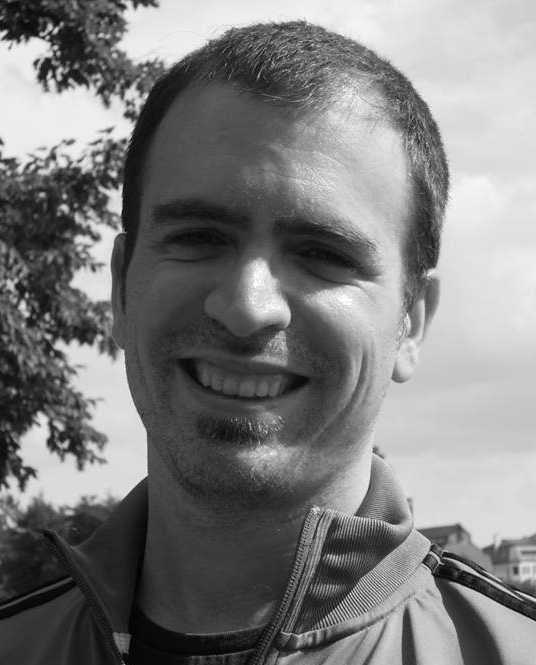
Jordi Perelló Muntan is an Associate Professor in the Department of Computer Architecture at the Universitat Politècnica de Catalunya (UPC), Barcelona, Spain, where he is also affiliated with the Escola Tècnica Superior d'Enginyeria de Telecomunicació de Barcelona (ETSETB). He is a member of the Broadband Communications Systems and Architectures (CBA) and IDEAI-UPC research groups, focusing on advanced optical and future internet networking technologies. Research Interests: His research spans telecommunications networks, optical fiber and optical networking, resource optimization, network architectures, and the Future Internet. He investigates performance optimization in 5G transport networks, Spatial Division Multiplexing (SDM), Recursive Inter-Network Architecture (RINA), elastic optical networks, and cognitive networking. His work integrates SDN, network virtualization, and green networking principles for scalable and efficient infrastructures. Publication Trends: His recent publications focus on probabilistic constellation shaping in multicore fiber networks, cognitive strategies for optical margin reduction, RINA-based QoS assurance, and migration planning toward spectrally-spatially flexible optical networks. These reflect a strong trend toward intelligent, adaptive, and energy-efficient network design for future communication systems. Scientific Awards: Co-recipient of the 2020 Fabio Neri Best Paper Award Runner-up (Elsevier Journal of Optical Switching and Networking) Co-recipient of the ONDM 2021 Best Paper Award Co-recipient of the 2019 IEEE Communications Society Charles Kao Award Co-recipient of the ONDM 2012 Best Student Paper Award Advising and Grants: He has advised multiple PhD students on topics including RINA, optical network planning, and virtual provisioning. He has led or participated in major European (H2020, FP7) and national (PID, TEC) research projects such as SLICENET, PRISTINE, TRAINER, and ALLIANCE, focusing on 5G, RINA, and sustainable network infrastructures. Labs and Teams: He is an active member of the CBA research group at UPC, contributing to experimental and theoretical advancements in optical and programmable networks. His team collaborates internationally on testbed development and standardization efforts in next-generation networking.
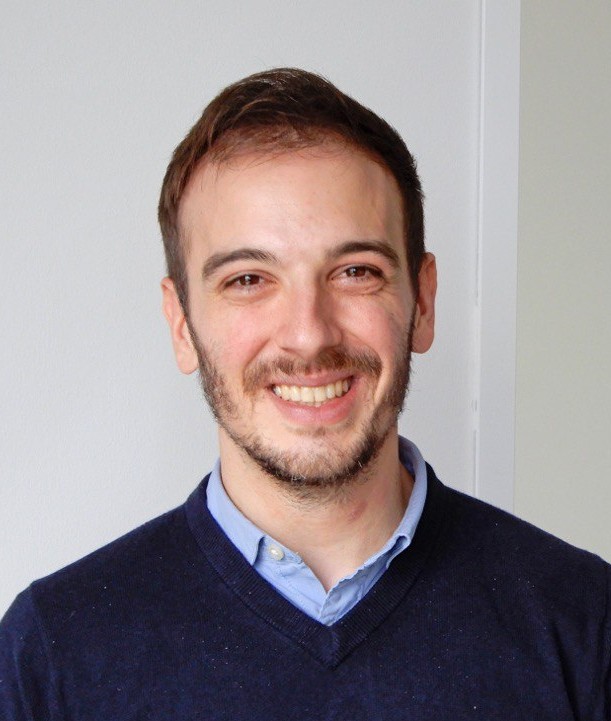
Carlo D'Eramo is a Professor of Reinforcement Learning and Computational Decision-Making at the University of Würzburg. He leads the LiteRL group at hessian.AI until 2025 and is affiliated with the Intelligent Autonomous Systems group at TU Darmstadt's Computer Science Department, as well as the Hessian Centre for Artificial Intelligence. Ph.D. : Information Technology, Politecnico di Milano (2019) Double MSc : Computer Engineering, Politecnico di Milano (2015) and University of Illinois at Chicago (2015) BSc : Computer Engineering, Politecnico di Milano (2011) His research focuses on lightweight reinforcement learning methods for adaptive autonomous agents, spanning multi-task/curriculum RL, multi-agent RL, deep RL, uncertainty quantification, residual learning, and planning. He developed MushroomRL, a widely adopted RL library, and investigates how agents can acquire real-world expert skills efficiently. The 15 most recent publications highlight trends in deep reinforcement learning architectures, adversarial and multi-agent systems, domain randomization, and curriculum design. Key subfields include optimal transport applications, entropy maximization, neural network distillation, and bounded rationality frameworks for robust learning. He has contributed to top venues like ICML, NeurIPS, AAAI, ICLR, JMLR, and IEEE Transactions on Pattern Analysis and Machine Intelligence, with a focus on advancing scalable and adaptive RL methodologies.
Sheena Malhotra is a Professor of Gender & Women’s Studies at California State University, Northridge (CSUN), where she serves as Director of Queer Studies and Academic Director of the MA in Humanities Program. She holds concurrent appointments within the College of Humanities and Gender and Women's Studies Department, with extensive administrative experience including former roles as Associate Dean of the College of Humanities (2017-2019) and Chair of Gender and Women's Studies (2009-2013). Her academic trajectory bridges Indian film/television production and critical academia. Her educational background includes a Ph.D. in Communication Studies (1999) from the University of New Mexico, an M.A. (1993) from Pepperdine University, and a B.A. (1991) from DePauw University. Research interests span Media and Gender , Postcolonial Analysis of Indian Media , Queer Diasporic Audiences , and Racialized Implications of Silence , with methodological roots in intercultural communication and feminist theory. Her publication portfolio reveals consistent thematic evolution toward intersectional analyses of globalization, media, and identity. Early work focused on Indian television commercialization and Bollywood's cultural politics, while recent scholarship examines neoliberal impacts on youth imaginaries and queer coalition-building. Key methodological threads include postcolonial critique, discourse analysis, and embodied feminist approaches across 15+ peer-reviewed articles and two major books. Silence, Feminism, Power: Reflections at the Edges of Sound (2013, Palgrave MacMillan) - Co-edited anthology exploring silence as political strategy Answer the Call: Virtual Migration in Indian Call Centers (2013, University of Minnesota Press) - Co-authored ethnographic study of call center labor National Television Award nominations (India, 1995) during executive television production career Her advisory work includes five years on SATRANG's board (serving South Asian LGBTQIA+ communities in SoCal) and founding directorship of CSUN's Queer Studies Program. Current teaching includes GWS 351 (Gen Race Clas Sex) with hybrid/online course design expertise. Documentary film production remains integral to her scholarly practice through projects like The Shape of Water (2006) examining global feminist organizations.
Rishab Goyal is an Assistant Professor in the Computer Sciences Department at the University of Wisconsin-Madison , affiliated with the School of Computer, Data & Information Sciences . His research spans Cryptography , Computer Security , and Theoretical Computer Science , with a focus on post-quantum cryptography , lattice-based systems , and the policy implications of advanced cryptography . Research interests include secure systems with advanced capabilities and cryptographic proof systems. Teaching graduate and undergraduate courses in cryptography and theoretical computer science. His work on functional encryption , traitor tracing , and obfuscation has been published in top venues like CRYPTO, STOC, and FOCS. He has served on program committees for EUROCRYPT, TCC, PKC, FOCS, and ASIACRYPT. Scientific Awards : Invited to STOC 2018 special issue in SIAM Journal on Computing. Rishab collaborates with PhD students including Jiaqi Cheng , Abtin Afshar , and Saikumar Yadugiri , and hosts visiting researchers from institutions like GMU and IIT Madras.
Kathleen M. Carley is a full professor at Carnegie Mellon University's School of Computer Science with courtesy appointments in Engineering and Public Policy, Heinz School, and Electrical and Computer Engineering. As director of the Center for Computational Analysis of Social and Organizational Systems (CASOS) and the Center for Informed Democracy and Social-Cybersecurity (IDeaS) , she leads interdisciplinary research at the intersection of network science, cognitive modeling, and cybersecurity. Ph.D. in Sociology from Harvard University SB degrees in Economics and Political Science from MIT Her research focuses on Dynamic Network Analysis (DNA) and Social-Cybersecurity (SC) , developing tools like ORA (network analysis), AutoMap (semantic mining), Construct (influence simulation), and BotHunter (bot detection). She has over 400 publications and 15+ active research projects addressing disinformation, cognitive security, and organizational resilience. Recent work examines LLM-powered bots , multi-platform misinformation dynamics , and public health analytics . As an IEEE Fellow, she contributes to standards in computational social science while teaching courses on network analysis and complex socio-technical systems.
Florian Zemmin is a Professor at Freie Universität Berlin's Institute of Islamic Studies , serving as Co-Director of the Berlin Graduate School Muslim Cultures and Societies (BGSMCS). His research focuses on Islamic reformism , Middle Eastern conceptual history , and Arabic sociologies of religion within broader debates about modernity and secularity . Current affiliations: Freie Universität Berlin (since 2020) Previous affiliations: Universität Bern (2010-2020), Universität Leipzig (2015-2021) His research interests examine how Islamic traditions intersect with modern secular concepts through: Historical conceptual analysis in Arabic and Ottoman contexts Comparative secularisms beyond Western frameworks Postcolonial critiques of Eurocentric theory Sociological approaches to Islamic knowledge production Current projects include: Das soziokulturelle Leben soziologischer Konzepte – creating a critical lexicon of 60 sociological terms in Arabic Global Secularity: A Sourcebook – co-editing a 7-volume series on secular formations across regions Arabic Sociologies of Religion – challenging Eurocentric sociology through Arabic theoretical work Key publications address: Conceptual transfers in Islamic modernism Secularism in Islamic intellectual history Arabic sociology of religion Ottoman conceptual transformations Islamic responses to global social theory
Kaoru Nabeshima is a Professor at the Faculty of International Research and Education, Waseda University. With a PhD and MA in Economics from the University of California at Davis, their research focuses on International Trade, Development Economics, and Economic Policy, particularly analyzing regulatory impacts on global trade dynamics and sustainability. Key research projects include empirical studies on non-tariff measures (NTMs) and their effects on trade, funded by Japan Society for the Promotion of Science. Recent work explores de jure and defacto approaches to sustainability, regulatory compliance costs, and knowledge network formation in East Asia. Education: PhD & MA in Economics, University of California at Davis. Current Roles: Concurrent Researcher at Waseda Center for a Carbon Neutral Society (2024–2029); Director of Vietnam Research Institute. Research Grants: Multiple JSPS grants (2015–2030) on NTMs, product safety regulations, and trade liberalization.
Anders Åkerman is a Professor in the Department of Economics and Finance at the UiS School of Business and Law, University of Stavanger. He is an active researcher in applied economics with a focus on labor, trade, technology, and environmental policy. His research interests span applied microeconomics , international trade , labor economics , and environmental economics . He investigates how technological change, market structure, and global shocks affect firms, workers, and policy outcomes. His work often combines empirical methods with policy relevance. The recent articles reflect a strong trend in analyzing digital transformation (e.g., broadband and trade), environmental impacts of trade and production , and economic resilience during crises such as the pandemic. His publications appear in leading journals like the Quarterly Journal of Economics and American Economic Journal: Applied Economics . He has contributed to public discourse through op-eds in Dagens Nyheter and Svenska Dagbladet , and has been involved in policy commissions like Sweden's Coronakommissionen. He regularly presents research at seminars and international conferences, including the Nordic International Trade Seminar and Stockholm Institute of Transition Economics. Anders Åkerman has advised or collaborated with several researchers and policy experts, including Torsten Persson, Magne Mogstad, and Karolina Ekholm. While formal student advisees are not listed, his collaborative work suggests active mentorship and team leadership. He is affiliated with research networks and institutes such as IFN (Research Institute of Industrial Economics) and participates in interdisciplinary teams focused on economic policy and transition. His upcoming work continues to explore the intersection of technology, environment, and labor markets.
James A. Evans is the Max Palevsky Professor of Sociology and Data Science at the University of Chicago, where he is a faculty member in the Department of Sociology within the Division of the Social Sciences. He is the director of Knowledge Lab and the Faculty Director of the Masters Program in Computational Social Science . He holds additional affiliations as an External Professor at the Santa Fe Institute , External Faculty at the Complexity Science Hub, Vienna , and Visiting Faculty Researcher at Google . Education: B.A. in Anthropology, Brigham Young University (1994) M.A. in Sociology, Stanford University (1999) Ph.D. in Sociology, Stanford University (2004) His research centers on the collective system of thinking and knowing , exploring how ideas emerge, spread, and evolve through social and technical systems. He investigates innovation, collective intelligence, and the science of science , using large-scale data modeling, machine learning, generative AI, and network analysis to study knowledge creation. His work spans domains including science, technology, law, and religion, with a focus on how AI is reshaping discovery processes. The most recent publications highlight trends in AI and scientific discovery , with a strong emphasis on innovation, knowledge systems, and human-machine intelligence . His research increasingly explores AI as a transformative agent in science , including the concept of 'alien intelligence' and the development of complementary AI to augment human capacity. Projects like the $20M NSF-funded APTO initiative aim to build language models that predict technological outcomes by analyzing historical data. Scientific Recognition and Funding: Research supported by the National Science Foundation (NSF) , National Institutes of Health (NIH) , Air Force Office of Scientific Research (AFOSR) , and philanthropic sources Work published in Nature, Science, PNAS , and leading social science journals Featured in The New York Times, The Economist, The Atlantic, Wired, NPR, BBC, Le Monde , and others James Evans advises on science policy and funding strategies, emphasizing the importance of diversity, interdisciplinary collaboration, and demographic balance in fostering innovation. He critiques current academic incentives and proposes alternative discovery regimes. He leads Knowledge Lab , a collaborative research environment that conducts seminars, grants, and employment opportunities in computational social science and AI.
Amir Rahmati is an Assistant Professor in the Department of Computer Science at Stony Brook University , where he directs the Ethos Security and Privacy Lab and contributes to the Stony Brook National Security Institute . His research focuses on system security , with specific emphasis on the security and privacy challenges of emerging technologies such as IoT , AR , and ML systems . Teaching: Instructor of SBU102: Computer Security (Spring 2025) Collaborations: Frequent collaborations with institutions like University of Michigan, University of Toronto, and IEEE/USENIX conferences. Rahmati’s research addresses security vulnerabilities in resource-constrained devices and real-world ML applications. His work includes adversarial robustness in neural networks, attack synthesis on medical devices, and privacy-preserving frameworks for IoT ecosystems. Trends in his publications reveal a focus on practical system design to mitigate security threats in cyber-physical systems , augmented reality , and blockchain technologies . Prospective students: Rahmati seeks researchers with expertise in hardware/software, machine learning, network protocols, and security to tackle system-stack challenges in his lab.
Professor Vania Sena is a Chair in Entrepreneurship and Enterprise at the Management School of the University of Sheffield. She is a leading scholar in innovation, entrepreneurship, big data analytics, and institutional economics, with a strong focus on productivity, SMEs, and collaborative innovation systems. Her work spans finance, public policy, and technology management, often employing advanced econometric and network analysis methods. Her research interests include big data and performance , open and collaborative innovation , institutional impacts on innovation , entrepreneurship and SMEs , circular economy , and peer-to-peer lending . She has extensively studied the role of human capital, governance, and intellectual property in firm performance and innovation outcomes. The 15 most recent articles reflect a consistent trajectory in data-driven innovation research, with increasing emphasis on AI, machine learning, resilience in supply chains (notably hydrogen), and the circular economy. Her publications appear in top journals such as Technological Forecasting and Social Change , British Journal of Management , Journal of Banking & Finance , and Journal of Economic Literature , showcasing interdisciplinary reach and methodological rigor. Her scientific contributions include influential reviews on appropriability mechanisms and innovation, empirical studies on R&D spillovers, and frameworks for evaluating resilience in emerging energy systems. While specific awards are not listed, her publication record indicates significant recognition in the field. She has supervised doctoral researchers, including recent completions on immigrant entrepreneurship and institutional effects on business survival. Her work is supported by extensive collaborations across Europe and beyond. She is actively involved in PhD supervision and research leadership within the Entrepreneurship, Strategy and International Business group. Professor Sena has contributed to major research themes such as the impact of big data on SMEs, stakeholder diversity in innovation, and the role of policy in enabling circular economy business models. She is also engaged in policy-relevant research on financial inclusion, data intelligence in local government, and the effects of labor market restructuring.
Mikko Kurimo is a Full Professor at Aalto University's Department of Information and Communications Engineering, School of Electrical Engineering. He earned his M.Sc., Lic.Tech., and D.Sc.(Tech.) from Helsinki University of Technology (1992, 1994, 1997) and pioneered neural networks for automatic speech recognition (ASR) in his PhD thesis. After research roles at IDIAP (Swiss AI center) and visiting positions at University of Colorado, Edinburgh, SRI, ICSI, and Nitech, he leads Aalto's ASR group since 2000. His work focuses on unsupervised subword modeling for morphologically complex languages (Finnish, Estonian, Turkish, Arabic) and large speech foundation models. PhD in Neural ASR (Helsinki University of Technology, 1997) Research Scientist at IDIAP (Switzerland) Visiting Fellow at University of Colorado, Edinburgh, SRI, ICSI, Nitech Head of Aalto ASR Group (2000-present) His research spans deep learning for ASR, spoken language modeling , and low-resource language solutions . Recent work explores continued pre-training of self-supervised models, multimodal emotion recognition, and pronunciation assessment using LLMs. He led the winning team in the 2017 Multi-Genre Broadcast challenge and secured competitive funding in Tekes Challenge Finland and EC's H2020-ICT-2017. Key article trends include: Advancements in children's speech recognition and dysarthric speech processing Integration of generative AI for language learning feedback Specialization in low-resource Uralic languages (Finnish, Northern Sámi) Development of robust ASR systems for complex phonetic environments Scientific Awards ACM Multimedia 2023 Computational Paralinguistics Challenge Prize First place in MGB3 2017 Arabic ASR Challenge ISCA Best Student Paper Award (2011) Professeur Invité at Université de Saint-Etienne (2005-2006) Royal Society International Short Visit Fellowship (2004) Professor Kurimo leads the Speech Recognition Group at Aalto, collaborating with COIN (Centre of Excellence in Computational Inference) and AIRC (Adaptive Informatics Research Centre). His projects like CaptainA mobile app demonstrate practical applications of ASR in language education. He has supervised numerous publications with co-authors in domains spanning bandwidth extension, stuttering detection, and speech sound disorder assessment.
Ghassan AlRegib is the John and Marilu McCarty Chair Professor in the School of Electrical and Computer Engineering at Georgia Institute of Technology. He directs the Omni Lab for Intelligent Visual Engineering and Science (OLIVES), the Center for Energy and Geo Processing (CeGP), and previously led Georgia Tech's MENA initiatives (2015-2018). His research spans machine learning, image processing, and seismic interpretation with real-world applications in autonomous vehicles, medical imaging, and subsurface analysis. His research focuses on trustworthy AI systems through three pillars: enhancing interpretability, improving robustness/generalizability, and tackling domain-specific challenges. Key interests include human-in-the-loop frameworks, uncertainty quantification, explainable AI, and physics-driven learning. The OLIVES lab pioneered modern machine learning applications in seismic interpretation and developed open-source datasets for geological fault analysis. Dr. AlRegib's scientific contributions include over 270 publications, multiple U.S. patents, and leadership roles as Technical Program co-Chair for ICIP 2020/2024. His work demonstrates significant impact through awards like the IEEE Fellow designation (2022) and multiple best paper awards at premier conferences. IEEE Fellow (2022) 2023 EURASIP Best Paper Award 2019 ICIP Best Paper Award 2017 Denning Faculty Award for Global Engagement CSIP Research & Service Awards (2003) He has advised numerous PhD students including Dr. Ashraf Alattar (now Auburn professor) and Dr. Zhiling Long (Kennesaw State faculty). His lab structure emphasizes collaborative teams comprising postdocs, senior/junior PhD students, and undergraduates working on high-impact problems from autonomous systems to medical diagnostics. Current research thrusts include trustworthy neural networks, human-in-the-loop frameworks, and deployment of machine learning in seismic interpretation and ophthalmology.