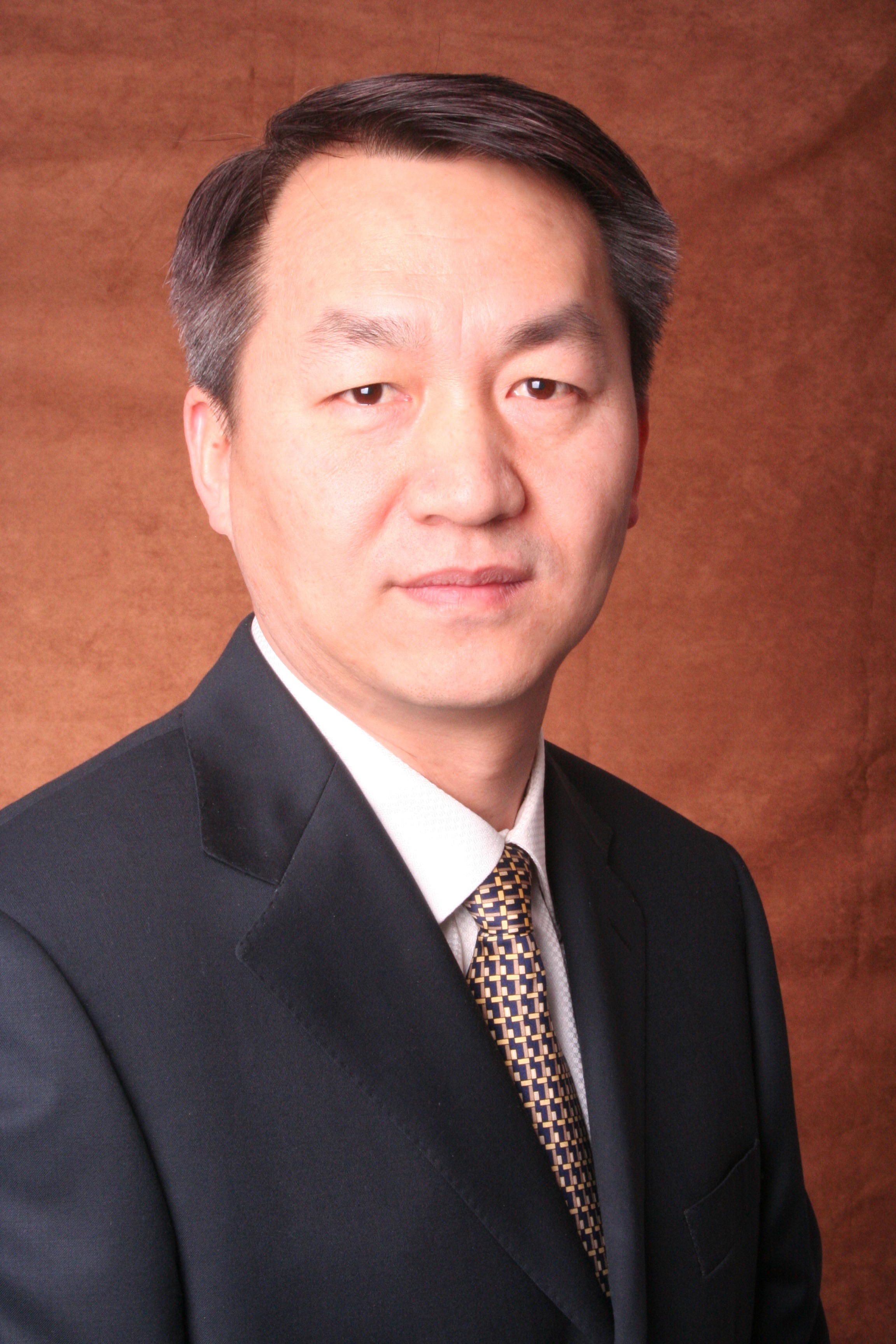
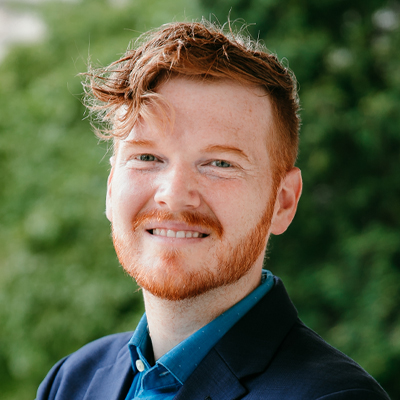
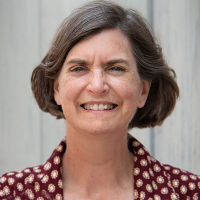
Professor Michael Dickmann is a distinguished academic at Cranfield School of Management, Cranfield University, where he serves as Professor of International Human Resource Management and Course Director for the Management MSc program. With extensive international experience spanning multiple continents and industries, Professor Dickmann brings both academic rigor and practical insights to his work in international business and human resource management. Professor Dickmann holds a first class honours degree in Economics from London University and an MSc in Industrial Relations and Personnel Management from LSE. His professional background includes work in Germany, Australia, the USA, Colombia, Spain and Britain, and he is fluent in English and Spanish, enabling cross-cultural research and consulting engagements. His scholarly focus centers on human resource strategies, structures and processes of multinational organizations, international mobility and global careers. Professor Dickmann's research examines career capital development, talent management systems, and the evolving nature of global assignments, with increasing attention to sustainability, mental health in the workplace, and paradigm shifts in global mobility accelerated by geopolitical tensions and the pandemic. His work bridges theoretical frameworks with practical applications in multinational contexts. As Senior Editor-in-Chief of The International Journal of Human Resource Management, Professor Dickmann significantly shapes scholarly discourse in the field. His extensive publication record demonstrates consistent engagement with evolving challenges in international HRM, including the organizational value of international assignments, career adaptability across borders, and the impact of institutional contexts on career pathways. Professor Dickmann maintains strong connections between academia and practice through consulting with major organizations across professional services (PricewaterhouseCoopers), industry (Siemens, Oracle), finance (HSBC, Deutsche Bank), and government/non-profit sectors (United Nations, WorldVision). This practical engagement informs his research and teaching, creating a valuable bridge between academic theory and organizational practice. His leadership as Course Director for the Management MSc program, combined with his editorial responsibilities and extensive publication record, positions Professor Dickmann as a significant contributor to the advancement of international human resource management knowledge and practice globally.
Assoc. Prof. Dr. Adem YOLCU is an active faculty member at Kafkas University's Faculty of Arts and Sciences, Department of Mathematics, specializing in advanced topological structures with applications in decision-making systems. Holding a PhD in Mathematics from Kafkas University (2020), he has established himself as a leading researcher in fuzzy topology and soft set theory. PhD in Mathematics (2020), Kafkas University Master's in Mathematics (2016), Kafkas University Bachelor's in Mathematics (2014), Kafkas University His research focuses on the intersection of topology, fuzzy logic, and decision theory, particularly exploring neutrosophic soft sets, hypersoft topological spaces, and their applications in multi-criteria decision-making problems. His work bridges theoretical mathematics with practical computational applications in risk assessment and building safety analysis. Recent publications demonstrate a consistent trajectory in developing novel frameworks for fuzzy parameterized systems, with 15+ articles published between 2019-2024 in SCI/ESCI-indexed journals. His work shows particular strength in extending classical topological concepts to neutrosophic and Pythagorean fuzzy environments. As an academic advisor, he has supervised Master's research including Büşra Aka's thesis on neutrosophic soft multisets. His collaborative network spans international researchers including Taha Yasin Öztürk (60+ joint publications), Florentin Smarandache, and Sadık Bayramov. His research group focuses on computational topology applications, with particular emphasis on developing mathematical frameworks for uncertainty handling in decision support systems. Current projects include hypersoft set applications in sustainable security systems and Fermatean fuzzy topological structures.
Rasmus Koss Hartmann serves as an Associate Professor in the Department of Management, Society and Communication at Copenhagen Business School, Denmark. His scholarly work critically examines innovation and entrepreneurship through interdisciplinary lenses, contributing to United Nations Sustainable Development Goals related to responsible consumption, reduced inequalities, and sustainable economic growth. His research interests center on critical innovation management and entrepreneurship studies , with particular focus on deconstructing mainstream narratives around entrepreneurial culture. Key themes include organizational reflexivity in university incubators, the political economy of 'tech theater' in Silicon Valley, and Veblenian critiques of contemporary entrepreneurialism. Hartmann's work consistently challenges assumptions about acceleration in startup culture while exploring alternatives like slow management and untrepreneurial economic models. Analysis of his 39 publications reveals evolving scholarly trajectories: early work examined user innovation in government settings (2013-2018), followed by critical CMS contributions (2014-2016), and recent intense focus (2021-2025) on deconstructing entrepreneurial mythology through books like Innovation Management: Foundations and Futures (2025) and articles analyzing 'wantrepreneurs' and the 'speed ethic'. Hartmann has supervised three research projects including one PhD thesis, demonstrating commitment to mentoring next-generation critical scholars. His work shows significant interdisciplinary reach with publications spanning management journals ( Scandinavian Journal of Management ), innovation outlets ( Innovation: Organization & Management ), and engineering management forums ( IEEE Engineering Management Review ).
Professor Karin Sanders serves as Associate Dean (Research) at the UNSW Business School, where she is affiliated with the School of Management and Governance. With over two decades of academic experience, she has established herself as a leading scholar in Human Resource Management, particularly focusing on the HR process approach and employee perceptions of HR practices. Her research has been published in top-tier journals including HRM (Wiley), Academy of Management Learning & Education, Human Resource Management Journal, and International Journal of HRM. Professor Sanders' research primarily centers on the HR process approach, examining how employees' perceptions, understanding, and attributions of HR practices influence their attitudes and behaviors. Her work explores critical areas such as informal learning activities, cooperative behavior, commitment, knowledge sharing, team learning, and absenteeism. She has made significant contributions to understanding the effects of alignment between line managers and HR managers on organizational climate, defined as shared perceptions of the organization among employees within a team. Her methodological approach often employs multi-actor, multi-level, and multi-method research designs, reflecting the complexity of HR phenomena in organizational contexts. As an influential academic leader, Professor Sanders serves as Editor for Special Issues at the International Journal of HRM and Associate Editor for Human Resource Management and Frontiers of Business Research in China. She sits on the Editorial Boards of six HRM and management journals. Previously serving as Head of School for Management between 2015 and 2019, she was also a member of the Executive Committee of the HR Division Academy of Management from 2013 to 2018. Her recent work has increasingly focused on HRM during crises, including the development of HR analytics and responses to the pandemic. Professor Sanders has secured substantial research funding, including an Australian Research Council Linkage Project on capacity building in the Not-For-Profit sector and multiple industry collaborations. She has edited several books, including the "Handbook on HR Process Research" (2021) with Huadong Yang and Charmi Patel. Her scholarly contributions bridge theoretical rigor with practical relevance, influencing both academic discourse and HR practice worldwide.
高建 (Gao Jian) is a Professor and doctoral supervisor at Tsinghua University's School of Economics and Management, where he also serves as Deputy Director of the Academic Committee and Director of the G20 Entrepreneurship Research Center. His prior leadership roles include Party Committee Secretary (2014–2019), Vice Dean (2012–2015), and Department Director. He holds visiting scholar credentials from Stanford University and MIT. Education: 2004: Visiting Scholar, Stanford University Graduate School of Management 2000: Visiting Scholar, MIT Sloan School of Management 1997: Visiting Scholar, MIT Sloan School of Management 1996: PhD, Tsinghua University Research Interests: Gao Jian specializes in venture capital, entrepreneurship, strategic management, and corporate transformation. His recent work explores G20 entrepreneurship policies, technology-driven ventures, sustainable business models, and digital innovation. His interdisciplinary approach integrates economics, psychology, and policy analysis to address global entrepreneurial challenges. Publications: His research spans empirical studies on entrepreneurial psychology, innovation ecosystems, venture financing, and policy impacts. Articles frequently analyze China's entrepreneurial landscape, emphasizing job creation, technology commercialization, and cross-border investment trends. Longitudinal and large-scale datasets underpin his work on startup success factors and ecosystem development. Awards & Honors: 2021–2020: Tsinghua SEM EMBA/Executive Education Teaching Excellence Awards 2020: National First-Class Undergraduate Course (co-led) 2019: Outstanding Master’s Thesis Supervisor 2018: National Education Award (Second Prize), Outstanding Doctoral Supervisor 2017: Beijing Education Award (First & Second Prize) 2014: Best Paper Award (China Strategy Forum) 2013: National Research Award (Third Prize) 2007: Ministry of Education ‘New Century Talent’ Teaching & Advising: He teaches courses across undergraduate, MBA, EMBA, and executive programs, including Entrepreneurial Management , Venture Capital , and Corporate Control . Recognized for mentoring excellence, he received Tsinghua’s Outstanding Thesis Supervisor awards (2018–2019) and led the design of nationally accredited curricula. Leadership: As Director of the G20 Entrepreneurship Research Center, he coordinates international policy analyses and promotes best practices in entrepreneurship ecosystems. The center’s outputs include comparative studies and global reports influencing G20 policy frameworks.
Steven Semken is a President's Professor of Geology and Education in the School of Earth and Space Exploration at Arizona State University. He holds additional affiliations as an Affiliated Faculty member with the Humanities for the Environment Global Network, the Global Drylands Center, the Osher Lifelong Learning Institute, the Global Futures Scientists and Scholars program, and the Division of Teacher Preparation at the Mary Lou Fulton College for Teaching and Learning Innovation. Dr. Semken earned his educational credentials from prestigious institutions: Certificate in Diné (Navajo) Educational Philosophy, Diné College, 1991 Ph.D., Materials Science (Ceramics), Massachusetts Institute of Technology, 1989 M.S., Geochemistry, University of California, Los Angeles, 1984 S.B., Earth and Planetary Science, Massachusetts Institute of Technology, 1980 As an ethnogeologist and geoscience-education researcher , Dr. Semken's work spans multiple interconnected domains that bridge scientific inquiry with cultural understanding. His primary research focuses on place-based and culturally responsive geoscience teaching methods, which he has developed through extensive fieldwork in geologically and culturally diverse regions of southwestern North America and Latin America. His research specifically investigates how sense of place influences geoscience learning, particularly among Indigenous and Latina/o communities, and how teaching approaches can be modified to honor cultural connections to land. This work extends to studying geological heritage and developing virtual field geology education experiences that maintain the pedagogical value of traditional fieldwork while increasing accessibility. His scholarship also encompasses the geological evolution of southwestern North America , which informs both his research and teaching practices. Analysis of Dr. Semken's recent publications reveals several key trends in his scholarly work. His research increasingly focuses on the integration of virtual and immersive technologies in geoscience education, particularly examining how virtual field experiences compare with traditional in-person fieldwork. There is also a strong emphasis on culturally responsive pedagogy , with numerous studies exploring how Indigenous knowledge systems can inform and enhance geoscience teaching. His work consistently bridges cognitive and affective domains of learning, recognizing that emotional connections to place are as important as intellectual understanding in geoscience education. Additionally, his scholarship demonstrates growing attention to issues of accessibility and inclusion in geoscience field education, developing methods to make geological field experiences available to students with diverse abilities. Dr. Semken's scientific achievements have been recognized with numerous prestigious awards: Fellow of the Geological Society of America Past-President and former Distinguished Speaker of the National Association of Geoscience Teachers ASU President's Professor (2025) 2014-2015 Zebulon Pearce Distinguished Teaching Award in Natural Sciences Highest awards for science teaching at Diné College in 1990, 1991, 1992, and 1995 Goodwin Medal (highest award for graduate teaching assistants at MIT) in 1985 Winner of the 2020 JGE Outstanding Paper Award from the National Association of Geoscience Teachers Winner of the 2015 Best Geologic Guidebook Award from the Geoscience Information Society Dr. Semken has been deeply involved in mentoring graduate students and early-career educators through numerous professional development workshops and research collaborations. He has co-organized and led over 20 educator professional-development workshops since 2009, focusing on place-based teaching, cultural context in geoscience education, and virtual field experiences. His grant-funded work includes collaborations with NASA, the American Geosciences Institute, and the EarthScope National Office, particularly supporting teacher leadership academies and workshops for Native American science educators. As a Principal Investigator and Co-PI on multiple NSF-funded projects, he has secured significant resources to advance research on the affective domain in geoscience education, place-based learning methodologies, and culturally responsive teaching approaches. Dr. Semken's research activities are supported by multiple collaborative teams and initiatives. He is associated with the Julie Ann Wrigley Global Futures Laboratory and is a Community Member of the Science Education Resource Center (SERC). His work on the "Trail of Time" at Grand Canyon National Park represents a significant public-facing educational initiative that combines geological time education with place-based interpretation. He has also developed the "Regional Geology of the Southwest" course as a living laboratory for place-based education research. His current research group includes graduate students working on projects related to virtual field experiences, ethnogeological knowledge systems, and cross-cultural science education. Through his leadership in the Earth Educators' Rendezvous and other professional networks, he has helped establish communities of practice focused on innovative geoscience teaching methods.
Dr. Daniel J. Simons is a Professor of Psychology at the University of Illinois, Urbana-Champaign, leading the Visual Cognition Laboratory. He holds a courtesy appointment in the Charles H. Sandage Department of Advertising and affiliations with the Center for Social and Behavioral Science. His research focuses on the limits of awareness and memory, and how these limitations affect daily life. Simons has authored/co-authored influential books like The Invisible Gorilla and Nobody’s Fool , and has published over 100 papers in fields ranging from cognitive psychology to science communication. Education: B.A. from Carleton College Ph.D. in Experimental Psychology from Cornell University Research Interests: Simons investigates inattentional blindness, change blindness, and the 'illusion of knowledge' across contexts like healthcare, law enforcement, and everyday decision-making. His work bridges experimental psychology with real-world applications, emphasizing methodological rigor and open science practices. Articles Trends: His recent work examines overconfidence in experts (e.g., chess players), the role of familiarity in attentional failures, and leveraging magic principles to study perception. He also advocates for scientific transparency through initiatives like the Transparency Checklist and serves as editor for Advances in Methods and Practices in Psychological Science . Awards and Honors: 2004 Ig Nobel Award (shared with Chabris) Alfred P. Sloan Fellowship APS Early Career Award (2003) Fellowships from APS and the Psychonomic Society Teaching and Outreach: Simons teaches courses on research practices, statistical analysis, and psychology of magic. He actively communicates science via media outlets (e.g., New York Times , TED-style talks), and advises students on critical thinking and scientific writing. Labs and Teams: He directs the Visual Cognition Lab, which explores how attention and awareness shape perception. Collaborations include studies with magicians, healthcare professionals, and interdisciplinary teams addressing applied cognitive challenges.
Tamara Moore is a Professor of Engineering Education at Purdue University, holding the title of Purdue University Faculty Scholar . She is affiliated with the School of Engineering Education , part of Purdue's College of Engineering. Her research focuses on integrating engineering principles into K-12 and higher education curricula to enhance STEM learning through computational thinking, systems thinking, and interdisciplinary approaches. Education: Ph.D., Engineering Education, Purdue University M.S.Ed., Mathematics Education, Purdue University B.S.E., Interdisciplinary Engineering, Purdue University B.S., Mathematics with minor in Mathematics Education, Purdue University Research Interests: Dr. Moore investigates how engineering methodologies (e.g., design thinking, systems analysis) can be used to improve mathematics and science education at all levels. She develops curricula and professional development programs for teachers, emphasizing STEM integration through projects like the STEM Road Map and Engineering Design-Based Curricula . Her work explores computational thinking in early childhood, microelectronics education, and the use of evidence-based reasoning in student projects. Key Contributions: Authored the STEM Road Map framework for K-12 integrated education Developed curricula like Turn the Lights On! and Mineral Mayhem Conducted studies on microelectronics awareness and systems thinking in synthetic biology Advocated for inclusive computational thinking education in early childhood Awards: Purdue University Faculty Scholar (current) Lab & Teams: Her research is conducted from the WANG 3514 Lab , focusing on teacher professional development, student learning trajectories, and curriculum design. Collaborates with interdisciplinary teams on NSF-funded projects like EngrTEAMS: Engineering to Transform the Education of Analysis, Measurement, and Science .
Dr. Erika Katzman is an Assistant Professor at Western University's Department of Health Professional Education within the Health and Rehabilitation Sciences faculty. Her work bridges critical disability studies and healthcare education, focusing on support systems, labor dynamics, and anti-oppressive pedagogy. She holds a PhD from Western University (SSHRC Doctoral Fellowship), an MSc in Occupational Therapy, and a BA in Latin American Studies from the University of Toronto. Her research examines invisible labor in support services, time management in healthcare, and critical methodologies. Key themes include disability autonomy, relational work dynamics, and epistemic justice in clinical practice. Teaching courses include 'Rethinking Disability,' 'Disability and Applied Health Fields,' and research methods. Publications emphasize the interplay between disability, labor, and policy, with recent work exploring chronopolitics and self-managed attendant services. Her 2023 articles advance critical disability time studies while earlier works address clinical ethics and embodied reflexivity in healthcare education.
Prof. Jeroen de Ridder is a Full Professor at the Vrije Universiteit Amsterdam (Faculty of Humanities, Department of Epistemology and Metaphysics). His primary roles include teaching epistemology, philosophy of science, business ethics, and occasional philosophy of religion courses. He holds ancillary roles such as Director/Owner of De Ridder Onderwijs en trainingen (Gouda, 2020–present) and Member of the Scientific Advisory Board at Driestar educatief (Gouda, 2023–2028). He also chairs committees for syllabus development and research integrity in Utrecht and Amsterdam. Education: He earned a Ph.D. in Philosophy from Delft University of Technology (2007), an M.A. in Philosophy (cum laude) from Vrije Universiteit Amsterdam (2007), and an M.Sc. in Systems Engineering and Policy Analysis (cum laude) from Delft University of Technology (2000). Research Interests: De Ridder’s work centers on social epistemology, philosophy of science, and philosophy of religion, with a focus on collective and political epistemology. He explores whether groups can possess beliefs/knowledge, collective intellectual virtues, and how political beliefs form in liberal democracies. His research applies epistemic frameworks to democratic institutions and scientific practices. Grants & Awards: He secured notable grants including the Templeton World Charity Foundation’s Epistemic Progress in the University (2020) and Epistemic Responsibilities of the University (€1.75M, 2016). His projects address topics like online political conflict frames, knowledgeable democracy, and the university’s epistemic role. Advising & Grants: De Ridder has led multiple grants (e.g., NWO Open Competition for Digitalization SSH, 2020–2024; NWO Veni/Vidi projects). He examines epistemic responsibilities in academia and advises doctoral candidates. His work bridges theoretical philosophy with practical ethics in education and research. Labs/Teams: Collaborates across disciplines through projects like Epistemic Progress in the University and Knowledgeable Democracy , involving researchers from institutions like ASCoR (UvA) and Templeton Foundation initiatives.
Professor Kalpana Shankar is a Full Professor at the School of Information and Communication Studies at University College Dublin (UCD). She holds roles such as former Head of School (2015-2018) and Co-Director of the UCD Centre for Digital Policy. Her research focuses on data management, peer review processes, research evaluation, and digital policy, with notable projects funded by Science Foundation Ireland, the Irish Research Council, and the U.S. National Science Foundation. Key contributions include studies on the sustainability of social science data archives and peer review at SFI. Education: PhD in Library and Information Science from UCLA, postdoctoral fellowships at UCLA (Center for Embedded Networked Sensing) and NIH (Science Policy). Professional Roles: Editor-in-Chief of Online Information Review , member of the Royal Irish Academy’s Equity Diversity and Inclusion committee, and representative on the National Open Research Forum (NORF). Teaching: Coordinator for UCD’s MSc/Diploma in Digital Policy and PhD supervision in critical data studies, open data, and research evaluation. Research Interests: Sociotechnical imaginaries of data, peer review fairness, digital policy frameworks, and the impact of pandemic responses on academia. Awards include the 2020 UCD College of Social Sciences and Law Teaching Excellence Award.
Giorgia Dona is Professor at the University of East London's Business and Law school, specializing in forced migration, refugee studies, and decolonial approaches to displacement. Her research examines asylum systems in Italy, France and the UK, digital equity in humanitarian contexts, and psychosocial impacts on displaced youth. Recent work explores carceral aspects of asylum accommodation, mental health outcomes for young migrants in Iceland, and the emotional labor of digital service provision. She critically engages with technologies of border governance while advocating for ethical participatory research with displaced communities. Her publications demonstrate sustained focus on child protection frameworks, diaspora knowledge production, and decolonization of refugee paradigms through collaborative methodologies.
Kale Monk is an Associate Professor and State Specialist in Couple and Family Relationships at the University of Missouri's College of Education & Human Development , within the Department of Human Development & Family Science . His work focuses on relationship quality across life transitions, particularly for military couples and marginalized groups. He holds a PhD from the University of Illinois (2017) and an MS from Kansas State University (2013). Research interests include: Relational instability during transitions (e.g., marriage, deployment) Military/veteran couples' mental health Engaged scholarship and translational research Racial/ethnic disparities in relationship dynamics His recent work explores pandemic effects on relationships, deployment-reintegration cycles, and public-facing interventions. He collaborates with organizations like Relevate and Focus on Kids to bridge academic research with community needs. Affiliations include the National Council of Family Relations and International Association for Relationship Research. He leads initiatives in relationship education and policy advocacy, emphasizing evidence-based practices for vulnerable populations. Current projects involve co-parent education programs, veteran family support, and culturally responsive relationship maintenance strategies. His research combines qualitative and quantitative methods to address real-world challenges in family dynamics.
Denghui Zhang is an Assistant Professor in the School of Business at Stevens Institute of Technology. His research focuses on data science, large language models (LLMs), and business analytics, with particular emphasis on applications in financial systems, knowledge graphs, and spatio-temporal prediction. He is a member of the Stevens Institute for Artificial Intelligence and has held academic roles including reviewer positions for prestigious journals like Nature Communications and conferences such as AAAI and SIGKDD. Dr. Zhang holds a PhD in Information Systems from Rutgers University (2023) and an MS in Computer Science from the University of Chinese Academy of Sciences (2018). His educational background bridges computer science and business analytics, enabling his cross-disciplinary research. His research explores cutting-edge topics like federated learning optimization for LLMs, theory-of-mind reasoning mechanisms, and ethical AI governance. Notable contributions include turbulence forecasting models, traffic prediction frameworks, and venture capital investment strategies leveraging reinforcement learning. Dr. Zhang has received prestigious recognitions including the ICIS 2023 Best Student Paper Award and AAAI-23 Student Scholar distinction. His work frequently addresses practical challenges in AI ethics, financial decision-making systems, and scalable machine learning architectures. He actively contributes to academic communities through program committee roles for top conferences and has pioneered novel methodologies in multi-agent financial systems and graph neural network design.
Cati Coe is Professor and Canada Research Chair in Migration and Care in the Department of Political Science at Carleton University. Previously at Rutgers University for twenty years as Professor of Anthropology, Dr. Coe specializes in transnational migration, aging, and care work, with extensive fieldwork in Ghana and among African immigrants in North America. Her research examines: Transnational family dynamics and care arrangements Aging and social protection policies in migration contexts Labor experiences of African immigrant care workers Community-based organizations supporting elderly populations Dr. Coe's publications consistently explore how migration transforms care practices across generations, with recent work focusing on the commodification of elder care, racialization of care labor, and innovative methodologies combining ethnographic writing with documentary filmmaking. Her articles published between 2022-2024 demonstrate a sustained focus on aging experiences in Ghanaian communities and diaspora contexts. She has produced documentary films including 'Stories from Home Care' (2021) and 'Making Happiness: Older People Organize Themselves' (2020) to disseminate research findings to broader audiences. Dr. Coe advises graduate students in migration studies and contributes to policy discussions on pension portability for transnational migrants.