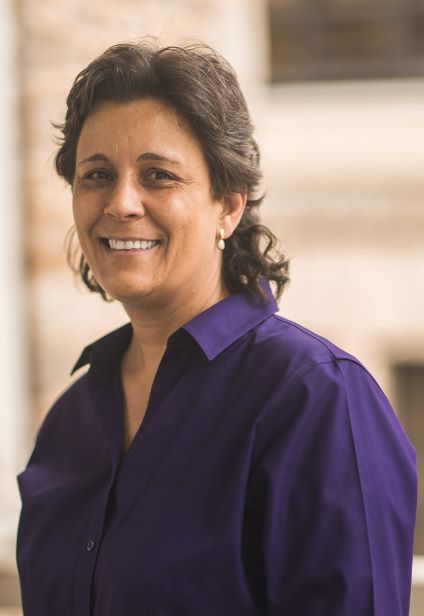
David Evan Harris is a Senior Research Fellow at the International Computer Science Institute (ICSI) and a Chancellor’s Public Scholar at the University of California, Berkeley. He serves as a Continuing Lecturer at the Haas School of Business and Senior Advisor for AI Ethics at the Psychology of Technology Institute. He is affiliated with multiple UC Berkeley centers, including CITRIS, the Center for Latin American Studies, EGAL, and the Business and Public Policy Group. M.S., Sociology, University of São Paulo B.A., Political Economy of Environment & Development, UC Berkeley His research focuses on AI ethics, misinformation, civic technology, social media policy, and global development. He explores deceptive design, digital literacy, and the societal impacts of AI, with a particular emphasis on democratic governance and human rights. His recent publications highlight AI ethics, regulatory challenges in AI governance, and international policy frameworks. Earlier work spans social movements, open knowledge, and poverty visualization. David teaches UC Berkeley courses including AI Ethics for Leaders, Civic Technology, and Futures Thinking. He founded the Global Lives Project in 2004 and previously led research at the Institute for the Future (2008–2018). Fluent in English, Portuguese, and Spanish, he has conducted research in 37 countries.
Thomas Berger is a Professor at the University of Hohenheim , affiliated with the Faculty of Agricultural Sciences and leading the Department of Economics of Land Use . He also contributes to the Computational Science Hub and Hohenheim Tropics initiatives. Focus Areas: Climate change adaptation, land-use modeling, biodiversity-productivity trade-offs, agent-based simulation, and machine learning in agricultural systems. Key Projects: Simulation frameworks for smallholder resilience in Ethiopia, bioeconomic modeling in the Amazon, and hybrid intelligence applications in European agricultural policy. Recent Publications: 2025 study on climate change effects on insecticide reduction in Germany, 2024 work on reconciling biodiversity with productivity via hybrid models, and 2023 methodological contributions to surrogate modeling and seasonal forecast integration. Research Trends: Interdisciplinary integration of climate science, agricultural economics, and computational modeling, with increasing emphasis on AI-assisted decision support systems and sustainability policy validation. Teaching & Outreach: Offers Agricultural Economics seminars and Hohenheim Tropics discussions, requiring advance email registration for office hours.
Maria Navarro is a Teaching Professor at the University of Georgia's College of Agricultural & Environmental Sciences, specifically within the Department of Agricultural Leadership, Education & Communication. She holds a Ph.D. in Agricultural Education from Texas A&M University (2004) and a BS/MS equivalent in Agricultural Engineering from Universitat Politècnica de Catalunya, Spain (1992). Ph.D., Agricultural Education, Texas A&M University (2004) BS/MS, Agricultural Engineering, Universitat Politècnica de Catalunya (1992) Her research focuses on High-Impact Practices (HIPs), interdisciplinary education, and integrating STEM with social sciences to create globally conscious curricula. She has led transformative projects in curriculum operations, faculty development, and student equity, with recent work emphasizing sustainable food systems and biocultural diversity. 2018 Fellow, Association for International Agricultural and Extension Education 2017 D.W. Brooks Faculty Award for Excellence in Teaching 2016 Outstanding Graduate Faculty Mentor Award 2014 UGA Richard B. Russell Award for Excellence in Undergraduate Teaching Dr. Navarro has secured competitive grants totaling over $1.1 million from USDA-NIFA-HEP for projects like 'Interdisciplinary graduate research and education in sustainable food systems' and 'Integrating humanistic studies into engineering education.' Her teaching includes international study-abroad programs, graduate seminars, and first-year courses, with a focus on experiential learning and curriculum innovation.
Freda Shi is an Assistant Professor at the David R. Cheriton School of Computer Science, University of Waterloo, and a Faculty Member at the Vector Institute. She holds a Canada CIFAR AI Chair. Her research focuses on computational linguistics, natural language processing (NLP), and grounded language learning, with emphasis on multilingualism and spatial reasoning in vision-language systems. She earned her Ph.D. in Computer Science from the Toyota Technological Institute at Chicago (2024), advised by Karen Livescu and Kevin Gimpel, supported by a Google Ph.D. Fellowship. Her undergraduate degree is from Peking University (2018), with a minor in Sociology. Her academic career includes affiliations with the CompLING Lab at Waterloo and contributions to major conferences like ACL and NAACL. She has organized tutorials on NLP grounding and is actively involved in research on model robustness and cognitive insights. Awards include the Google Ph.D. Fellowship and Best Paper Nominations at ACL 2024 and EMNLP 2021, alongside her Thesis of Distinction. She teaches courses such as CS 784 (Computational Linguistics) and CS 486/686 (Artificial Intelligence), emphasizing both theoretical and applied aspects of NLP. Research trends in her articles highlight advancements in vision-language spatial reasoning, multilingualism, and model interpretability. Her work bridges cognitive science and computational methods, exploring how human language mechanisms inform the design of more trustworthy AI systems. Scientific Awards: Google Ph.D. Fellowship Best Paper Nominee (ACL 2024) Best Paper Nominee (EMNLP 2021) Thesis of Distinction (2024) Advising and Grants: As an advisor, she encourages prospective students to review her guidelines. Her grants include support from the Canada CIFAR AI Chair program and the Vector Institute. She collaborates in labs such as CompLING at Waterloo and co-organizes events at NAACL and ICLR. Labs/Teams: She leads the CompLING Lab at the University of Waterloo, affiliated with the Vector Institute. Her work integrates interdisciplinary teams focusing on grounded learning and multilingual NLP challenges.
Sergey Gorbunov is an Associate Professor in the Department of Computer Science at the University of Waterloo . He holds a Ph.D. from MIT (2015), an M.Sc. and H.B.Sc. from the University of Toronto (2012 and 2011, respectively). His research focuses on Cryptography, Network Security, Blockchain Technology, Secure Protocols, and Privacy-Preserving Systems . He explores advanced cryptographic techniques for decentralized systems, privacy-enhancing technologies, and secure communication protocols. His work includes pioneering contributions to blockchain security (e.g., mitigating front-running attacks, enhancing transaction privacy) and foundational cryptographic tools like homomorphic encryption and multi-signature schemes. Recent publications emphasize resilient consensus mechanisms, anonymous payment channels, and efficient cryptographic primitives for distributed systems. Notable projects include Astrape (anonymous payment channels), Algorand Agreement (fast Byzantine consensus), and StealthDB (encrypted SQL databases). His research bridges theoretical cryptography with practical applications in secure computing and decentralized technologies.
Jian Zhao is an Associate Professor at the University of Waterloo's School of Computer Science, specializing in Information Visualization (InfoVis), Human-Computer Interaction (HCI), and Data Science. With a Ph.D. from the University of Toronto (2016), his research emphasizes interactive visualization techniques, AI integration in design processes, and socio-technical systems. He explores how human-AI collaboration can enhance data analysis, presentation, and user experience in complex systems. Key research areas include: 1) AI-Driven Design (e.g., code generation via sketching, infographic creation), 2) Health Informatics (therapeutic AI tools for autism support), 3) Immersive Technologies (VR/AR interfaces for presentations and education), and 4) Social Computing (remote family communication, multi-modal emoticons). His work bridges technical innovation with human-centered design principles. His publications (2021–2025) reflect a focus on interactive visualization frameworks (e.g., iTrace for cross-view data analysis), AI-human collaboration (CoLadder for hierarchical code editing), and specialized applications like TherAIssist for art therapy and EMooly for autism support. Zhao frequently explores novel interaction modalities , including gesture-based VR interfaces and sketch-based programming tools. He leads projects in computational notebooks (EDAssistant, Slide4N), visual analytics (MissBin for bipartite networks), and neurofeedback training games (Eggly). His work often emphasizes systematic design considerations for missing data, cross-view analysis, and contextual visualization in spatial AR environments.
Aniket 'Niki' Kittur is a Professor in the Human-Computer Interaction Institute at Carnegie Mellon University's School of Computer Science. His research focuses on AI-augmented cognition, exploring how human and machine intelligence can collaborate to enhance creativity, decision-making, and innovation. He leads projects like the Semantic Reader and Skeema browser extension, aiming to reduce cognitive overload through intelligent systems. Education: BA in Psychology & Computer Science from Princeton University; PhD in Cognitive Psychology from UCLA. His work bridges HCI, crowdsourcing, and cognitive science, with 100+ publications and 17 best paper awards. He advises industry partners including Google, Microsoft, and Toyota while maintaining a lab focused on real-world impact. Research interests center on accelerating knowledge acquisition via systems that scaffold sensemaking (e.g., Selenite for web exploration) and fostering analogical innovation through crowdsourced/AI hybrid approaches. Notable contributions include CrowdForge (human-machine workflows) and Kinetica (touch-based data visualization). Awards include NSF CAREER Award, Allen Newell Award, and CHI Academy membership. His lab's Skeema tool has achieved 79% 30-day retention in beta, reflecting impactful user-centered design principles. Current projects emphasize LLM integration for composite cognition, aiming to create systems where 'LLMs + Humans > Either Alone.' Funding来自NSF, NIH, ONR, and industry partners like Bosch and Wikimedia. Teaching includes PhD bootcamps and user-centered research courses. Over 100 students have contributed to his projects, many advancing to tech leadership roles.
Scott Stern is the David Sarnoff Professor of Management at the MIT Sloan School of Management, specializing in the economics of innovation and entrepreneurship. His research focuses on entrepreneurial strategy, innovation-driven ecosystems, and policy. Stern holds a BA from NYU and a PhD from Stanford. He is a leading scholar in regional innovation ecosystems, having co-founded MIT’s Regional Entrepreneurship Acceleration Program (REAP) and co-led the U.S. Cluster Mapping Project. Stern’s work bridges academia and practice, advising startups and governments on innovation strategies. He has been awarded the Kauffman Prize Medal (2005) and the Jamieson Prize (2024). Education: Bachelor of Arts in Economics, New York University Doctor of Philosophy in Economics, Stanford University Research Interests: Stern explores how innovation and entrepreneurship differ from traditional economic activities, emphasizing their strategic and policy implications. Key areas include entrepreneurial ecosystems, regional competitiveness, and the role of institutions in fostering innovation. His frameworks, such as Entrepreneurial Strategy, are taught in MIT Sloan’s curriculum and published in textbooks. Recent Work: Stern’s recent studies address the impact of clusters, the Startup Cartography Project, and the effects of policy on entrepreneurship. He co-authored Entrepreneurship: Choice and Strategy (2024), blending academic rigor with practical insights. Awards and Recognition: Kauffman Prize Medal for Distinguished Research in Entrepreneurship (2005) Jamieson Prize (2024) 2021 Innovation in Entrepreneurship Pedagogy Award Grants and Initiatives: Stern directs the National Bureau of Economic Research’s Innovation Policy Working Group and advises the Social Progress Index. His executive education courses, including Strategy for Startups , integrate theory and practice for leaders. Labs and Teams: Stern collaborates with institutions like the National Academy of Sciences and co-leads MIT’s innovation initiatives, fostering cross-sector partnerships to advance entrepreneurship and policy.
Associate Professor Fiona O'Leary is affiliated with the University of Sydney's Sydney Nursing School and the Discipline of Nutrition and Dietetics within the Faculty of Medicine and Health. She holds membership in the Charles Perkins Centre's Brain and Body, Biology of Ageing, and Healthy Food Systems research nodes. Her academic qualifications include a PhD, BSc (Hons), and a Graduate Diploma in Nutrition and Dietetics. Her research focuses on dietary assessment, malnutrition, public health nutrition, and evidence translation for healthy ageing. Notable projects include the NHMRC-funded Maintain Your Brain dementia prevention trial and secondary analysis of the Australian National Nutrition Survey. She also leads initiatives in Tanzania and Zambia addressing childhood malnutrition through poultry and crop integration. Current research projects: Maintain Your Brain trial, dietary patterns analysis, COPD supplementation, and food security initiatives in Africa. Dr. O'Leary has 33 peer-reviewed publications, primarily in ageing and dementia. She teaches Medical Nutrition Therapy and coordinates the Dietetic Professional Studies course. Awards include Advanced Accredited Practising Dietitian status. Her advisory roles include associate supervision of PhD and MPhil students in nutrition and cognitive function, oral health, and biomarker panel development.
Prof. Helen Blank is a Professor leading the Multisensory Perception Group and the Prediction in Communication Lab at the Institute for Systems Neuroscience, University Medical Center Hamburg-Eppendorf. Her work focuses on understanding how sensory information is integrated and predicted in contexts like speech perception and face recognition. She holds a Marie Curie Fellowship for her research on prior information's role in human communication. Fluent in German, English, and French, she contributes to experimental medicine and systems neuroscience. Her research spans predictive coding, neuroimaging, and clinical applications in Parkinson’s and developmental disorders. Education: Not explicitly stated in text, inferred as advanced degrees in neuroscience or related fields. Her research interests emphasize multisensory integration, predictive processing in speech and vision, and the neural bases of perception. Recent articles explore topics such as pupil responses to auditory surprise, face expectation hierarchies, and audio-visual speech processing. Awards include the Marie Curie Fellowship supporting her predictive communication work. She leads interdisciplinary teams within the Center for Experimental Medicine, advancing knowledge on perceptual mechanisms and their clinical implications.
Dr. Shirley Coleman is a distinguished Professor at Newcastle University Business School, specializing in the application of statistical methods to business and industrial problems. With over two decades of academic contributions, she has established herself as a leading expert in statistics, data science, and quality management within industrial contexts. Her research interests span several interconnected domains: Statistics, Data Science, Business Analytics, Quality Management, Six Sigma methodologies, Kansei Engineering (which integrates emotional design with product development), Industrial Statistics, Design of Experiments, Predictive Maintenance, and Customer Lifetime Value analysis. Coleman's work consistently bridges theoretical statistical concepts with practical business applications across diverse sectors including healthcare, manufacturing, facilities management, and digital marketing. Analysis of her recent publications reveals a strong focus on the evolving role of statistics in the digital age, particularly examining how statistical expertise contributes to AI development, Industry 4.0 initiatives, and data-driven business transformation. Her work demonstrates increasing emphasis on customer analytics, predictive maintenance modeling, and the strategic implementation of data science in small and medium enterprises. Coleman's publications frequently address methodological challenges while maintaining strong practical relevance for industry practitioners. Throughout her career, Coleman has been actively involved with the European Network for Business and Industrial Statistics (ENBIS), contributing to the development and dissemination of statistical methods in business contexts. Her collaborative approach is evident in numerous co-authored publications across disciplines, demonstrating her ability to work effectively with researchers from diverse fields including engineering, healthcare, and business management. Her advisory work appears focused on helping organizations implement statistical thinking in business processes, with particular attention to small and medium enterprises seeking to leverage data analytics for competitive advantage. Though specific grant information isn't detailed in the available publications, her extensive industry-focused research suggests significant engagement with practical business problems and industry partnerships. Dr. Coleman has made substantial contributions to the field through her leadership in professional organizations, particularly ENBIS, where she has helped shape the discourse around industrial statistics and their business applications. Her work on Kansei Engineering demonstrates innovative approaches to integrating human factors with statistical methods for product development.
Magnus Boman is a Professor of AI and Health at the Department of Medicine, Solna, Karolinska Institutet (KI), where he leads the AI@KI initiative to support researchers in AI integration. He is affiliated with the Chronic Inflammatory Disease Epidemiology research group under Johan Askling. His research focuses on AI applications in precision medicine, multimodal prediction, ethical norms in AI systems, energy-efficient computing, and quantum sensor data interpretation. Research Interests: Artificial Intelligence in healthcare and precision medicine Multimodal data analysis for disease prediction and treatment Machine learning for clinical decision support systems Ethical and societal implications of AI Grants: Swedish Research Council: Improving breast cancer histology image classification (2024-2026) Scalable Federated Learning (2022-2025) Ai in sustainable cities (VINNOVA, 2019) Advising & Students: Supervised over 50 PhD and Master's students across KI, KTH, and Stockholm University, focusing on AI applications in healthcare, machine learning, and computational epidemiology. Notable projects include predictive modeling for mental health outcomes and variant filtering in genetic data. Labs & Teams: Leads AI@KI, fostering AI adoption in medical research. Collaborates with the Johan Askling group on epidemiology and chronic disease studies.
Jun Li is a Full Professor in the Department of Applied and Computational Mathematics and Statistics at the University of Notre Dame's College of Science. He specializes in developing statistical and computational methods for big data, with a focus on interdisciplinary applications in bioinformatics, machine learning, and data mining. His career includes tenure as an Assistant Professor (2012–2017) and promotion to Associate Professor (2017) before becoming Full Professor (2020). Dr. Li holds a Ph.D. in Statistics from Stanford University (2012), supervised by Robert Tibshirani, and earlier degrees from Tsinghua University: a B.E. in Automation (2004) and an M.S. in Pattern Recognition and Intelligent Systems (2007). Research Interests : Dr. Li’s work centers on advancing computational frameworks for handling large-scale datasets, integrating statistical rigor with algorithmic innovation. Recent themes include AI-driven code improvement, ethical LLM applications in HCI, and GUI automation. His methodologies emphasize human-AI collaboration and transparency in algorithmic systems. Publications : His 2025 work explores LLM vulnerabilities in GUI agents, AI-assisted education tools like GLITTER, and ethical challenges in HCI research. Earlier studies (2024–2023) address topics such as natural language database queries, privacy-preserving app promotion analysis, and multimodal task learning. Lab/Teams : Affiliated with Notre Dame’s computational statistics research groups, focusing on interdisciplinary projects bridging statistics, computer science, and applied mathematics. His work often involves collaborations with industry and academic partners to translate theoretical advancements into practical applications.
Athanasios Rontogiannis is an Associate Professor at the School of Electrical and Computer Engineering of the National Technical University of Athens (NTUA). He holds a PhD in Signal Processing from the National University of Athens (1997) and has held roles including Research Director at the National Observatory of Athens (2017–2021). His research focuses on signal processing, machine learning, and hyperspectral image analysis. Education: MEng (Electrical Engineering, NTUA, 1991), M.A.Sc. (University of Victoria, Canada, 1993), PhD (Signal Processing, National University of Athens, 1997). Research interests include adaptive algorithms, sparse representations, and tensor models. He has served on editorial boards of IEEE Transactions on Signal Processing and EURASIP journals, receiving an honorary distinction in 2020. He is a Senior Member of IEEE and affiliated with EURASIP and the Technical Chamber of Greece. Key contributions span hyperspectral unmixing, Bayesian algorithms, and space data exploitation. His work integrates machine learning for applications in space science and signal processing.
Daniel J McAllister is an Associate Professor at the National University of Singapore Business School , Department of Management and Organisation. His research explores interpersonal relationships in organizations , with particular emphasis on social emotions , trust dynamics , and their implications for organizational citizenship behavior and ethical leadership . He has published extensively in top-tier journals such as Academy of Management Review, Journal of Applied Psychology, and Academy of Management Journal. Academic Focus: Organizational Behavior, Trust/Distrust, Workplace Emotions Teaching Interests: Technical Knowledge, Practical Application, Ethical Decision-Making Key Courses: MNO2007 (Undergraduate), BMA5004A (MBA), MNO6012A (PhD) McAllister's research spans workplace underdog trajectories, awe in leadership, abusive supervision, and cross-cultural management in China. His work examines how emotions like contempt, envy, and schadenfreude influence organizational outcomes. He emphasizes creating a safe learning environment that integrates theoretical knowledge ( technical ), real-world application ( practical ), and ethical judgment ( wisdom ). McAllister has received consistently positive student feedback for his engaging teaching style , with recent evaluations highlighting improvements in time management and practical relevance. He distributes course materials post-class and avoids rote memorization, prioritizing conceptual understanding. His 2025 work on workplace underdogs and awe-driven leadership continues to shape contemporary organizational theory.