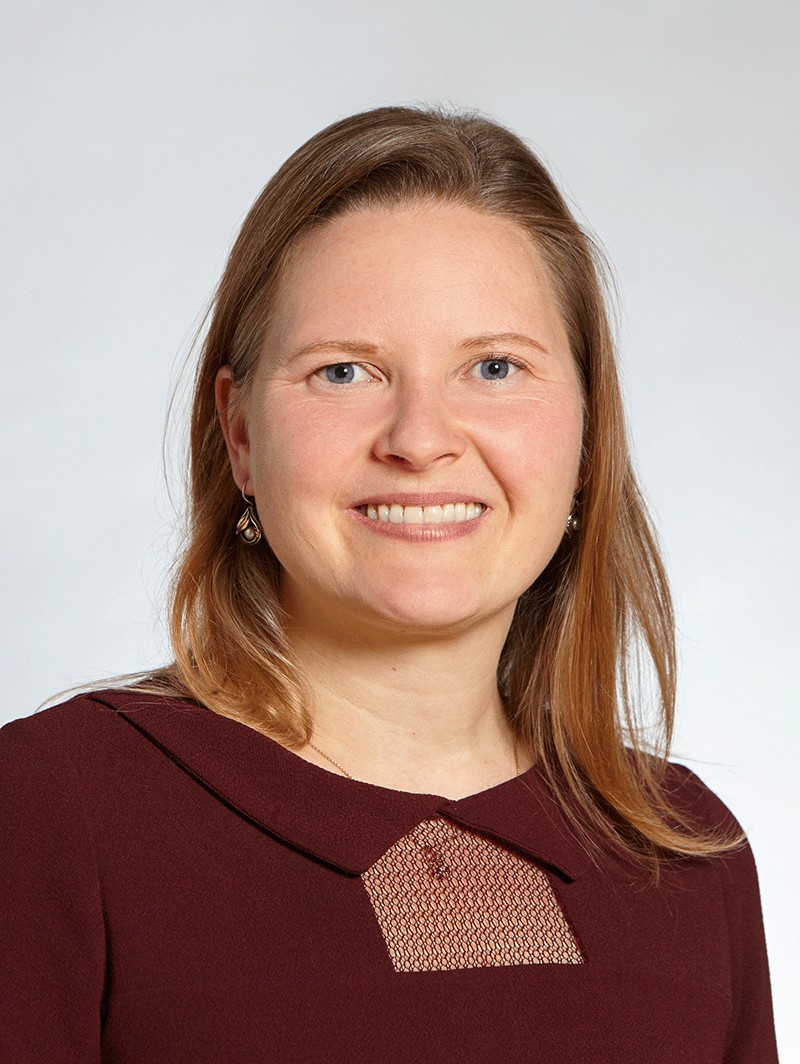
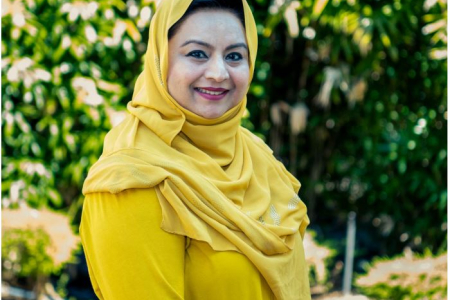
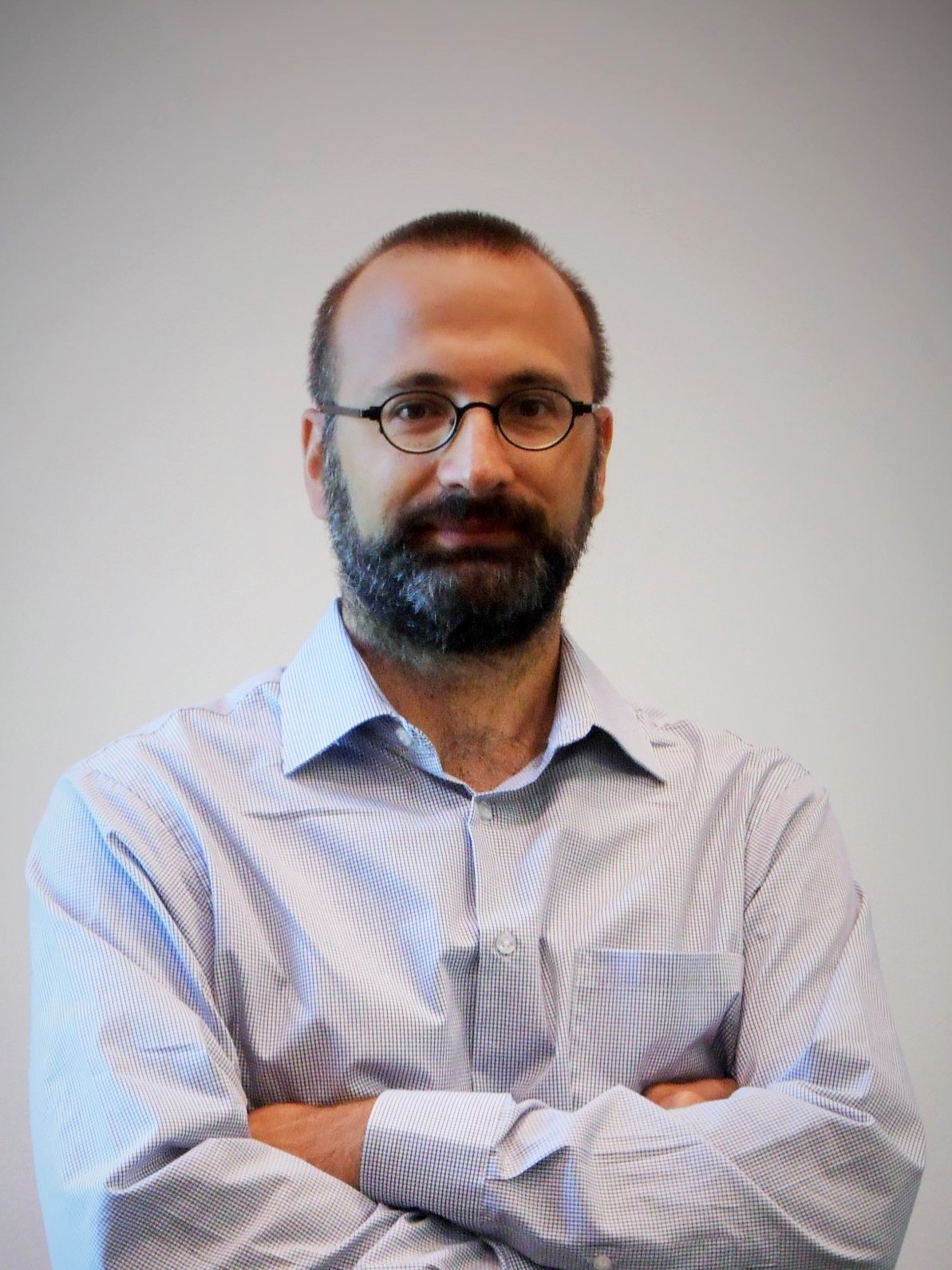
Anu Ramaswami is the Sanjay Swani ’87 Professor of India Studies and Professor of Civil and Environmental Engineering at Princeton, directing the M.S. Chadha Center. She leads research on sustainable, equitable urban systems, integrating infrastructure, food, energy, and water policies. Her work employs nexus modeling to co-produce decarbonization pathways with global cities, emphasizing health, equity, and resilience co-benefits. Recent projects analyze fine-scale urban metabolism and heat vulnerability in India. Awards include the AAEES Science Award (2022) for interdisciplinary impact. She chairs the Urban Nexus Lab, advancing data-driven urban transitions.
Aeli Roberts is a Professorial Teaching Fellow at The Bartlett School of Sustainable Construction, University College London, specializing in sustainability, health and safety, and sustainable construction practices. She is a member of BSSC's Centre for Sustainable Governance and Law in the Built Environment, a partnership between UCL and Gatehouse Chambers. Her educational background includes a diverse range of qualifications: PhD from Open University (2004), Bar Vocational Course from BPP Law School (2005), BSc in Construction Management from University College London (2003), MSc from Royal Holloway (1988), BSc from Royal Holloway (1986), and Higher National Diploma from Camberwell College of Art (1990). Initially trained as a chemist, she worked in industry and taught material science to conservation students before transitioning to construction management. Roberts' research focuses on integrating green space within urban environments for environmental and social benefits, health and safety in construction, and sustainable building practices. Her work examines sustainability in small and medium enterprises (SMEs), which employ 85% of UK construction workers, and explores architect-client interactions for sustainable domestic construction. She has conducted comparative studies of health, safety, and well-being in UK and Hong Kong construction industries. Her publication record shows a strong focus on operational failure mitigation, knowledge transfer for safety culture, and the role of building control in sustainable construction. Recent work emphasizes climate change impacts on construction, wellbeing in the industry, and sustainable design integration. Her research bridges academic theory with practical application in the construction sector. Scientific Awards: Significant contributions serving the Design Futures Council's London and Cambridge Think Tank (2012) Roberts has held teaching positions across multiple subject areas including materials science, law, and sustainability. She has developed a third-year module on built asset management, emphasizing the importance of post-occupancy building performance. Her teaching philosophy connects historical building conservation with contemporary sustainability challenges, particularly in the context of upgrading existing housing stock to meet carbon reduction targets. She has been involved in collaborative research projects with organizations including the London Chamber of Commerce and Industry (LCCI), focusing on eco-design training for the construction supply chain. Her work with the CIC 2050 Group demonstrates engagement with industry-wide sustainability initiatives.
Reed Maxwell is the William and Edna Macaleer Professor of Engineering and Applied Science in the Department of Civil and Environmental Engineering and the High Meadows Environmental Institute at Princeton University. He serves as Director of the Integrated Groundwater Modeling Center (IGWMC) and leads a research group comprising graduate students, postdoctoral researchers, and staff. His academic appointments include concurrent roles in both the School of Engineering and Applied Science and the High Meadows Environmental Institute. Maxwell's research focuses on understanding connections within the hydrologic cycle and how they relate to water quantity and quality under anthropogenic stresses. His work centers on hard problems in hydrology including groundwater, evapotranspiration and snow. His research group uses integrated hydrologic modeling, field observations, and remote sensing products to study terrestrial freshwater systems. Key research areas include surface water and the terrestrial hydrologic cycle; interactions of the land-surface, surface water and groundwater; and human health risk assessment. Maxwell has authored more than 185 peer-reviewed journal articles with an H-Index of 66 and over 19,000 citations. His recent work emphasizes machine learning applications in hydrology, continental-scale modeling, and physically rigorous scenario generation through projects like HydroFrame and HydroGEN. He teaches courses including CEE 306/ENV 318 Hydrology: Water and Climate and CEE 586/ENV 586 Physical Hydrology. 2020 Distinguished Henry Darcy Lecturer American Geophysical Union Fellow (2019) 2018 Boussinesq Lecturer Belle van Zuylen Chair (visiting), University of Utrecht 2017 School of Mines Research Award recipient Maxwell has mentored 17 PhD students and 20 MS thesis students throughout his career. His current research group includes multiple postdocs, research software engineers, and graduate students working on projects spanning continental-scale hydrologic modeling, groundwater-stream interactions, and machine learning applications in hydrology. The IGWMC maintains an active education and outreach program including STEM fairs, school visits, and digital educational tools like the HydroFrame Education Team's virtual sandtank aquifer model.
Margarita Boenig-Liptsin is a tenure-track Assistant Professor of Ethics, Technology and Society at ETH Zurich's Department of Humanities, Social and Political Sciences, a position she has held since September 2022. Trained in Science, Technology and Society with dual PhDs from Harvard University (History of Science) and Université Paris-Sorbonne (Philosophy), she brings interdisciplinary expertise to examining the relationship between technology, power, democracy, and ethics. Her research spans several interconnected areas focusing on transformations to human identity and citizenship in relation to information technologies across time and cultures. She investigates the social and political aspects of digital technologies, identity and selfhood in technological societies, ethics of technology, and comparative cultures of innovation. Her work uniquely bridges historical analysis with contemporary ethical concerns, examining how concepts like human dignity evolve alongside technological developments from punch cards to AI governance frameworks. Her recent publications (2023-2025) reveal a strong focus on AI ethics, data justice, and the philosophical implications of algorithmic systems. These works demonstrate her consistent interest in how technology shapes democratic processes, citizenship, and ethical frameworks. Her research shows progression from historical studies of computer literacy programs to contemporary analyses of generative AI's impact on knowledge production and everyday ethics. Her scientific recognition includes: NSF funding for her collaborative project on Silicon Valley's innovation imaginary Mozilla Foundation Responsible Computer Science Challenge grant (2018-2021) Academic Data Science Alliance support (2020-2022) Sorbonne Université's Paris IAS Chair on 'Major Changes' (2021-2022) At ETH Zurich, she leads research and teaching initiatives that build connections between engineering and social sciences. Previously at UC Berkeley, she directed the Human Contexts and Ethics Program, developing the Human Contexts and Ethics component for data science education. Her work consistently emphasizes translating social science theory for diverse audiences and connecting scholarly work to community needs in Zurich, Switzerland, and Europe. She teaches courses including 'Artificial Intelligence and Human Values' and 'Research in Ethics, Technology and Society' for the Fall 2025 semester.
Mauro Barelli is Professor of International Law at The City Law School, City, University of London. He holds a PhD from Cardiff University and an LLM from the University of Bristol, and has been a faculty member at City since 2009, progressing from Lecturer to Professor in 2024. He teaches Advanced Issues of International Law, International Human Rights Law, and a course on Minority and Indigenous Peoples' Rights. He has held visiting positions at the University of Cambridge (Lauterpacht Centre), Nanjing University, the University of Iceland, and the University of Trento. His research focuses on: Rights of ethno-cultural and indigenous peoples Law on the use of force Chinese perspectives on international law Soft law and normative development Minority rights and litigation His publications include four books and numerous articles in leading journals such as Journal of Conflict and Security Law , Human Rights Quarterly , and Asian Journal of International Law . His recent work analyzes China’s engagement with international law, the UK’s relationship with the ICJ, and the synchronization of biodiversity protection with indigenous rights. Key scientific recognitions include: Higher Education Academy Fellow (since 2012) He is an experienced PhD supervisor, having chaired and served on numerous doctoral committees, including as PhD Programme Director. His advisee Engin Firat is currently a research student at City. He has also served in administrative roles such as Assistant Dean (Research). His expertise has been sought by national governments, parliaments, and international NGOs. He is an active participant in international academic events, particularly through the European China Law Studies Association.
Haidy Geismar serves as Professor of Anthropology at University College London (UCL), where she is affiliated with the Department of Anthropology. She co-directs UCL's Digital Anthropology Program and is the founding director of the School for the Creative and Cultural Industries at UCL East. Geismar also serves as curator of the UCL Ethnography collections, facilitating exhibitions with community groups, students, and artists. Her institutional affiliations extend to the Tate and Victoria and Albert Museum in London, where she maintains long-term professional relationships. Geismar's research explores the intersections of intellectual and cultural property, indigenous rights, and colonial legacies with digital technologies and museum practices. Her work focuses on how digital platforms transform cultural representation, particularly in the South Pacific region including Vanuatu and New Zealand. She investigates how communities engage with digital collections, examining both the materiality of digital objects and their social implications. Her research demonstrates how indigenous knowledge systems interact with contemporary digital infrastructures to create new forms of cultural expression and preservation. Analysis of Geismar's recent publications reveals a clear trajectory toward examining the material dimensions of digital culture within museum and archival contexts. Her work increasingly addresses how digital technologies reshape cultural heritage practices while maintaining critical attention to postcolonial perspectives. There is a notable emphasis on sensory experiences in digital spaces, the politics of representation in digital collections, and the ways digital platforms enable or constrain indigenous knowledge systems. Geismar's professional recognition includes: Mellon Research Fellow at Tate (2019-2020) Fellow of the Royal Anthropological Institute Chairperson of Te Maru o Hinemihi (since January 2024) Photography Committee member of the Royal Anthropological Institute (2016-2024) While specific grant information isn't detailed in the available materials, Geismar's sustained research projects indicate successful funding acquisition. Her long-term collaborations with the Vanuatu Cultural Centre since 2000 and with Maori curators in New Zealand since 2004 suggest significant research support. Current projects like 'Finding Photography' and 'Collecting in Context' demonstrate ongoing research activity requiring funding. Geismar has created the Culture Lab at UCL East, an experimental curatorial space designed as a collections-rich environment for innovative display and research. This facility serves as a hub for her work with the School for the Creative and Cultural Industries, which brings together academic research with creative practice. The Culture Lab hosts exhibitions like 'Power!' and facilitates collaborations between university researchers, community groups, and students, creating a dynamic space for exploring the intersection of material culture and digital technologies.
Dr. Farha Sattar is a Lecturer in Education (Mathematics) at the Faculty of Arts and Society, Charles Darwin University. With over thirty years of teaching experience in Mathematics, Science education, GIS, Remote Sensing, and e-Learning technologies at undergraduate and postgraduate levels, Dr. Sattar brings extensive expertise to her academic role. She holds a PhD in Geospatial Science from Charles Darwin University, focusing on Spatial Mathematical Modelling for 3D Gully Mapping and Erosion Quantification. Her educational background includes: PhD in Geospatial Science (Three Dimensional Gully Mapping and Erosion Quantification within a Geoinformatics Framework), Charles Darwin University (2012) Prior academic experience at several Asian and European universities Dr. Sattar's research spans multiple interdisciplinary fields with a strong focus on the intersection of education and technology. Her primary research interests include Mathematics Education, STEM Education, Geoscience Education, Spatial Mathematical Modelling, Drone Technology, Remote Sensing, Geographic Information Systems, and Innovative Pedagogies such as experiential learning and inquiry-based approaches. She has developed expertise in cognitive development, particularly in fostering critical and creative thinking skills through iSTEM approaches. An analysis of Dr. Sattar's recent publications reveals a consistent trajectory toward integrating emerging technologies like drones, augmented reality, and geospatial artificial intelligence into educational contexts. Her work demonstrates a progression from foundational geospatial research on erosion mapping to innovative applications in STEM education. Recent publications increasingly focus on drone technology for educational purposes, spatial data infrastructure for policy development, and computational thinking development through technology-enhanced learning. Dr. Sattar has received numerous accolades for her contributions to education and research: NT Science Week Awards – Inspired NT STEM Hero of the Year award (2021) Long Service Recognition Award (2023) Finalist, CDU Alumni Award (2023) Multiple Best Presentation Awards (2008, 2010, 2017) Australian College of Educators - 2021 College Medal Nominee As a supervisor, Dr. Sattar mentors postgraduate research students including Ayesha Farhan, who is working on "A Framework for Cognitive Development: Fostering Critical and Creative Thinking Skills, Using iSTEM Approach." She actively secures research funding through various projects such as "DBELaSTEM: Drone-Based Experiential Learning and STEM Education," "STEM_D & VR: Youth STEM Learning and Empowerment with Drones and VR," and "CodProg Drone Lab." Her research is supported by grants from NT Government projects and other external funding sources. Dr. Sattar leads the CodProg Drone Lab, an innovative research space exploring drone technology applications in education. She is a certified drone pilot and aeronautical radio operator, which enables her to bridge theoretical knowledge with practical applications. Her work with the "Flying Forward: Drones, STEM Equity, and Indigenous Empowerment" initiative demonstrates her commitment to community engagement and addressing educational disparities through technology.
Andrea Lanza serves as Associate Professor in the Department of Italian Studies within the Faculty of Arts & Science at the University of Toronto. Originally from Italy, he completed his academic training in France at the École des Hautes Études en Sciences Sociales (EHESS), earning both his Diplôme d'Études Avancées and Doctorat degrees, following his Laurea from Università degli Studi di Milano La Statale. His scholarly profile demonstrates extensive transnational engagement with French political thought while maintaining institutional affiliation with Italian Studies. Doctorat, École des Hautes Études en Sciences Sociales (Paris) Diplôme d'Études Avancées, École des Hautes Études en Sciences Sociales (Paris) Laurea, Università degli Studi di Milano La Statale Lanza's research focuses on the historical intersections between political thought and social science, with particular emphasis on Early French Socialism (1800-1850), the making of French working classes, and Contemporary French Political Thought. His scholarly trajectory follows two interrelated axes: the emergence of socialist discourse in 19th century France and historic-philosophical debates on democratic society, especially regarding French thinkers like Lefort, Gauchet, Rosanvallon, Foucault, and Rancière. His work demonstrates remarkable interdisciplinary range, connecting political philosophy with historical anthropology, sociology, and religious studies. His recent publications reveal a growing engagement with contemporary issues including decolonization debates, cancel culture, and the epistemological challenges facing social sciences today. Lanza has also held significant administrative roles, serving as Associate Chair for Undergraduate Studies in the Department of Italian Studies during 2022-2023. Administrative Service: Associate Chair - Undergraduate, Department of Italian Studies (2022-2023) Lanza's scholarly network extends across North America and Europe, with collaborations spanning multiple disciplines. His recent editorial work on Claude Lefort's political philosophy and Marcel Gauchet's theories of democratic society demonstrates his position at the forefront of contemporary political thought scholarship.
Ian Miers serves as an Assistant Professor in the Department of Computer Science at the University of Maryland, holding a joint appointment with the University of Maryland Institute for Advanced Computer Studies (UMIACS) and serving as a core faculty member of the Maryland Cybersecurity Center (MC2). His academic home resides within the Department of Computer Science, though the overarching college/school structure is not explicitly stated in available materials. His research program centers on applied cryptography with a context-driven methodology: starting from real-world security challenges to develop deployable cryptographic protocols. Key focus areas include blockchain privacy (notably Zerocoin/Zerocash), zero-knowledge proofs, anonymous credentials, and secure messaging systems. Miers emphasizes practical implementations that address subtle security requirements in production environments, bridging theoretical cryptography with tangible system security. Analysis of his 15 most recent publications reveals dominant trends in zero-knowledge proof scalability (zkSNARKs), privacy-preserving infrastructure for blockchains, and cryptographic solutions for content moderation in encrypted messaging. His work consistently targets deployable systems, with increasing focus on balancing privacy guarantees with accountability requirements in real-world applications. Miers actively recruits PhD students for hands-on research in his small lab, emphasizing direct collaboration on applied security and blockchain problems. As a founding scientist of Aleo, Bolt Labs, and Zcash, he translates academic research into commercial products, with his work receiving coverage from major media outlets including The Washington Post, The New York Times, and Wired.
Benjamin Mako Hill is an Associate Professor in the University of Washington Department of Communication and an Adjunct Associate Professor in Human-Centered Design & Engineering , the Paul G. Allen School of Computer Science & Engineering , and the Information School at UW. He is a Faculty Associate at the Berkman Klein Center for Internet and Society at Harvard University and a Fellow at the Center for Information Technology Policy at Princeton University during the 2023–2024 academic year. Educational Background : PhD in an interdepartmental program at Massachusetts Institute of Technology (MIT) , involving the MIT Sloan School of Management and the MIT Media Lab , advised by Eric von Hippel, Yochai Benkler, Tom Malone, and Mitch Resnick. MS in Media Arts and Sciences from MIT. B.A. in Technological and Legal History from Hampshire College . Research Interests span peer production, online communities, collective action, cooperation, learning, and computer-mediated communication. His work explores how communication and information technologies shape social outcomes in collaborative environments like Wikipedia and Linux, focusing on governance, moderation, anonymity, and educational platforms such as Scratch. Article Trends : His publications analyze peer production dynamics, privacy in open collaboration, and computational thinking in youth. Topics include underproduction in open source software, algorithmic fairness, taboo knowledge production, and legitimate peripheral participation in online communities. Methodologies combine big data, quasi-experimental, and comparative analyses. Scientific Awards : Dordick Award for Best Dissertation (2013). CHI '22 Best Paper Honorable Mention (2022). CSCW '18 Best Paper Honorable Mention (2018). CHI '17 Best Paper Honorable Mention (2017). CSCW '13 Best Paper Award (2013). CHI '11 Best Paper Honorable Mention (2011). Advising and Grants : He co-founded the Community Data Science Collective and collaborates with researchers like Aaron Shaw. Grants include multiple National Science Foundation awards for studies on digital knowledge commons, anonymous participation, and collaborative success, as well as a Sloan Foundation grant for modeling underproduction in peer production. Labs and Teams : He leads the Community Data Science Collective , an interdisciplinary research group studying online communities, and contributes to open-source projects like Debian and Ubuntu . He actively edits Wikimedia projects and participates in the Cascadia Wikimedians User Group .
Dr. Miemie Winn Byrd is an Adjunct Professor at the Daniel K. Inouye Asia-Pacific Center for Security Studies (DKI APCSS), where she researches, teaches, and publishes on security dynamics in Myanmar/Burma & Southeast Asia, economics & security linkages, and organizational development. A retired US Army Lieutenant Colonel with 28 years of distinguished service, she brings extensive experience from military, private sector, and nonprofit organizations to her academic work. Dr. Byrd earned her educational credentials from prestigious institutions: Bachelor of Arts in Economics and Accounting from Claremont McKenna College Master of Business Administration with emphasis in Asia-Pacific Economics and Business from University of Hawaii Doctorate in Education Leadership from the University of Southern California Her research focuses on the complex interplay between security, economics, and social development in Southeast Asia, with particular expertise in Myanmar's political and security landscape. Dr. Byrd examines how civil-military operations, women's roles, and educational approaches impact socioeconomic development and security outcomes in the region. She investigates the strategic implications of Myanmar's internal conflicts for broader Indo-Pacific security dynamics, and analyzes how private sector engagement can contribute to poverty alleviation and stability. Dr. Byrd serves on multiple advisory boards that extend her influence in policy and research: Board of Governors of the Keck Center for International and Strategic Studies at Claremont McKenna College Regional Advisory Committee for Knowledge for Democracy Myanmar Initiative of the Asia Regional Office, International Development Research Centre The Oxford-Thanakha International based in Chiang Mai, Thailand Myanmar Policy Institute based in Washington, D.C. Her military career included significant roles such as Deputy Economic Advisor and Civil-Military Operations Plans Officer at U.S. Pacific Command, where she supported Operations Enduring Freedom. She served as a linguist and cultural advisor for U.S. delegations at the Association of Southeast Asian Nations Regional Forum and during POW/MIA recovery negotiations in Myanmar. Her civilian career spans 16 years in auditing, accounting, and financial management with multinational corporations.
Dr. Feng Cheng is a Senior Researcher and head of the IT Security Engineering (Sec-Eng) Team at the Hasso Plattner Institute (HPI), Germany, and serves as the Representative of the Chair "Internet Technologies and Systems" at the Digital Engineering Faculty, University of Potsdam. He holds a PhD from the University of Potsdam, an MEng from Beijing University of Technology, and a BEng from Beijing University of Aeronautics and Astronautics. His research is centered on data-driven security engineering, security analytics, network security, cloud security, firewall, IDS/IPS, attack modeling, and penetration testing. Dr. Cheng's research interests span a broad range of cybersecurity domains, with a strong emphasis on security analytics , data-driven threat detection , cloud and network security , and authentication . His work integrates advanced data engineering and machine learning techniques to enhance security operations, including intrusion detection, threat intelligence, and security information and event management (SIEM). Key application areas include IoT security, mobile security, and web security. The recent publications of Dr. Cheng and his team reflect a significant trend towards leveraging big data analytics , machine learning , and graph-based methods for cybersecurity. Their work focuses on developing frameworks for blockchain-based public key infrastructures, advanced SIEM analytics, malware detection using NLP, and chaos engineering for cloud security. This demonstrates a strong commitment to creating practical, scalable, and intelligent solutions for modern security challenges in complex, distributed environments. Dr. Cheng is actively involved in the academic community as a member of ACM and IEEE, a program committee member for numerous international conferences, and an organizer of workshops on cloud computing and cybersecurity. He has also served on editorial boards for international journals. He supervises a large group of PhD, master's, and bachelor's students, guiding research on topics such as security analytics, cyber threat intelligence, digital credentials, and behavioral authentication. He leads the Sec-Eng team, which conducts research on a diverse portfolio including the Security Analytics Lab, HPI-VDB (vulnerability database), Lock-Keeper (physical separation technology), and the Security Lab Generator for scenario-driven security training.
David L. Schwartz serves as the William G. and Virginia K. Karnes Research Professor of Law at Northwestern University's Pritzker School of Law, where he joined the faculty in 2015 and served as Associate Dean of Research & Intellectual Life from 2019-2022. His interdisciplinary work bridges legal scholarship, data science, and technology policy with emphasis on patent systems and judicial transparency. His educational foundation includes a BS from the University of Illinois at Urbana-Champaign and a JD cum laude from the University of Michigan Law School. Professor Schwartz specializes in empirical analysis of intellectual property systems , particularly patent litigation dynamics and court record accessibility. His research leverages computational methods to transform legal scholarship through projects like SCALES OKN, where he examines how technological interventions can democratize access to justice. This work situates him at the nexus of legal informatics , patent policy , and court system innovation , challenging traditional methodologies in legal academia. His publication trajectory reveals a decisive shift toward technology-driven legal transparency since 2018, with recent work focusing on large-scale court record analysis and open justice infrastructure. The 2024 Northwestern University Law Review article represents the culmination of his NSF-funded SCALES initiative, demonstrating how machine-readable litigation data can reshape legal scholarship and practice. As Co-Principal Investigator of the NSF-funded Systematic Content Analysis of Litigation EventS Open Knowledge Network (SCALES OKN), he leads a multidisciplinary consortium developing tools to convert opaque court records into structured, analyzable datasets. This $1.2M grant supports collaboration between legal scholars, computer scientists, and data engineers to build public infrastructure for judicial transparency. The SCALES OKN project operates as a cross-institutional research collective involving Northwestern faculty, data scientists from multiple universities, and partnerships with legal technology organizations. It maintains active development teams for natural language processing pipelines, litigation event databases, and public-facing analytical interfaces serving legal practitioners and researchers.
Astrid Wagner is a Senior Scientist and Deputy Director at the Institute of Philosophy (IFS) of the Spanish National Research Council (CSIC) in Madrid. She holds a PhD in Philosophy from Technische Universität Berlin, recognized by the National University of Distance Education (UNED), and previously served as professor for 20 years at TU Berlin. Her research focuses on philosophy of culture, science epistemology, and digital society challenges. Key interests include philosophy of language, perception phenomenology, pragmatism, and ethical implications of digital transformation. Recent work examines uncertainty dynamics, trust frameworks, post-truth phenomena, infodemics, conspiracy theories, cognitive vulnerability, and digital citizenship. Wagner leads major research initiatives including the INconRES project on ethical-epistemological keys to digital social dynamics (2021-2025), the ORTEGA-CM interdisciplinary innovation consortium on José Ortega y Gasset's legacy (2024-2026), and previously directed the RESPONTRUST project combating COVID-19 disinformation (2021-2023). She co-leads the DESTERRA project analyzing disinformation's societal foundations (2022-2025) and participates in UCM's Rationality, Knowledge and Action research group. She serves on Spain's Committee of Experts for National Security against disinformation, advises the Congressional Science Office, and holds editorial positions at the Journal of Ortega Studies. Wagner contributes to GENET Association's Gender Studies Network and juries for the Princess of Asturias Award and Javier Muguerza Philosophy Prize.
Michael R. Dove is the Margaret K. Musser Professor of Social Ecology and Professor of Anthropology at Yale University, where he also serves as Curator of Anthropology at the Peabody Museum and Co-Coordinator of the Combined YSE/Anthropology Doctoral Program. With over forty years of research experience, his work focuses on environmental anthropology, particularly the environmental relations of local communities in South and Southeast Asia. Dove earned his B.A. from Northwestern University and his M.A. and Ph.D. from Stanford University. His academic journey has spanned decades of field research in Asia, including more than a dozen years conducting long-term studies on human ecology in Borneo and Java, developing government research capacity in Indonesia, and advising the Pakistan Forest Service on social forestry policies. Professor Dove's research interests encompass the anthropology of climate change, cultural and political aspects of natural hazards and disasters, indigenous environmental knowledge and practice, environmental institutions and movements, history of environment-related sciences, and multispecies ethnography. His work often examines how local environmental systems interact with national and global markets, politics, and ideologies, with a focus on problematizing orthodox approaches to conservation and development. He has made significant contributions to understanding human-environment relations through both theoretical frameworks and practical applications. Dove's recent scholarly output demonstrates a progression toward more integrated approaches to environmental challenges, blending historical perspectives with contemporary issues. His publications increasingly focus on the intersections of climate change, social justice, and indigenous knowledge systems, while maintaining his longstanding interest in Southeast Asian environmental relations. The work shows a growing emphasis on post-humanist approaches and multispecies ethnography, reflecting broader trends in environmental anthropology while maintaining his distinctive focus on political ecology and institutional analysis. As an educator, Professor Dove has supervised numerous doctoral and master's students, many of whom have gone on to win research awards and secure prestigious positions. He organizes separate research labs for doctoral students from Yale School of the Environment and other departments, as well as for joint YSE/Anthropology doctoral students. His advisees typically conduct international research and have excellent records of obtaining research support both within and beyond Yale. The Dove Lab at Yale School of the Environment serves as a hub for environmental anthropology research, focusing on topics including natural resource management, property rights, power struggles, household energy transitions, and human-wildlife interactions. The lab fosters a collaborative environment with 30-50 students working on related issues each year, characterized by supportive peer dynamics rather than competition. It also contributes to policy and social change through its research and the work of its alumni.