German National Library of Science and TechnologyGermany
Dr. Oliver Koepler is a Researcher at the German National Library of Science and Technology (TIB), leading the Linked Scientific Knowledge Lab within the Data Science & Digital Libraries department. He holds a PhD in Chemistry from the Technical University of Braunschweig and specializes in research data management systems, ontology development, and semantic networking. His work focuses on advancing national research data infrastructures, particularly through initiatives like NFDI4Chem, the Research Data Alliance (RDA), and Go FAIR. He co-leads the Chemistry Consortium NFDI4Chem, fostering collaboration across disciplines to improve data interoperability and FAIR compliance. Koepler also serves as an ombudsperson for promoting good scientific practice at TIB. Key projects include developing the TIB Discovery System, advancing visual search in research data, and coordinating metadata standards workshops. His research interests span ontology integration, terminology services, and cross-disciplinary data integration. Collaborative efforts include contributions to the Collaborative Research Centres SFB 1153 and SFB 1368, addressing data management challenges in production engineering and oxygen-free processes. Publications emphasize FAIR data principles, metadata harmonization, and interdisciplinary collaboration. Koepler’s work bridges technical innovation with practical applications, aiming to enhance accessibility and reusability of scientific data across domains.
German National Library of Science and TechnologyGermany
Dr. Angelina Kraft is a Research Professor at the Technische Informationsbibliothek (TIB), leading the Research Data Services Lab and deputy head of the Non-Textual Materials Lab. Her work focuses on developing FAIR-compliant data management standards, metadata systems, and infrastructure for research data. Current projects include Leibniz Data Manager, NFDI4Ing, and the NFDI Terminology Service. She has extensive experience in oceanography and Arctic marine ecosystems, with contributions to studies on zooplankton dynamics and climate impacts in the Fram Strait. Research Focus : - Research Data Management (RDM) services and FAIR principles - Metadata standards (e.g., ATMODAT, DCAT) - Persistent Identifiers (PIDs) and DOI systems - Digital curation of non-textual materials (e.g., videos, graphics) - Long-term data preservation and repository design (e.g., RADAR project) - Climate science and Arctic marine ecology Key Projects : Leibniz Data Manager: A tool for research data lifecycle management NFDI4Ing: National infrastructure for engineering sciences data RADAR Project: Generic research data repository for 'long tail' data Awards & Grants : None explicitly listed in the provided text. Labs & Teams : - Research Data Services Lab (TIB) - Non-Textual Materials Lab (TIB) - Collaborations with AWI (Alfred Wegener Institute) on Arctic observations
German National Library of Science and TechnologyGermany
Dr. Dirk Betz is a Researcher affiliated with the Forschungsgruppe Data Science and Digital Libraries at the Open Research Knowledge Graph Program. His work focuses on advancing reproducible research practices, metadata standards, and experimental methodologies. Betz contributes to interdisciplinary efforts in data science and digital libraries, emphasizing FAIR data principles and workflow frameworks. His research interests span data infrastructure interoperability, metadata schema design, and the application of game theory in social science experiments. He has co-authored seminal papers on public goods experiments, rational choice theory critiques, and transdisciplinary research frameworks. Betz collaborates extensively with institutions like GESIS and Swissuniversities, addressing challenges in open research data strategies and academic collaboration models. Key contributions include developing the x-science Metadata Schema, analyzing reference point variations in dictator games, and evaluating national open research policies. His publications reflect a blend of technical data science innovations and foundational social science inquiry, positioning him as a bridge between computational methods and theoretical social inquiry.
German National Library of Science and TechnologyGermany
Gullal Singh Cheema is a Researcher at the Leibniz Information Centre for Science and Technology (TIB) within the Visual Analytics research group (Program Area C - Research and Development). His work bridges computer vision and natural language processing to advance multimodal analysis in digital media contexts. His research spans multimodal learning, natural language processing, and computer vision with emphasis on fact-checking systems, claim detection, and social media analytics. Key contributions include the MM-Claims dataset for multimodal verification and leadership in the CLEF CheckThat! lab series addressing political bias and news source authority. His work integrates visual and textual evidence for applications in news analysis, event-centric knowledge graphs, and wildlife conservation. Recent publications (2021-2023) reveal a concentrated focus on multimodal news verification, with significant output in CLEF and SemEval evaluation campaigns. His research demonstrates consistent innovation in fusing transformer architectures with syntactic features while expanding into multilingual sentiment analysis and misogynistic meme detection. Cheema actively shapes the research community through workshop organization (MUWS'22) and dataset development. His Visual Analytics group at TIB drives methodological advances in multimodal understanding with direct applications for social media monitoring and digital humanities.
Schloss Dagstuhl - Leibniz Center for InformaticsGermany
Vivek Kulkarni is a Professor at Stanford University's Department of Computer Science, with extensive contributions to natural language processing, machine learning, and intelligent IoT environments. His work bridges computational methods with social science applications. Key Affiliations: Stanford University (2024), Nara Institute of Science and Technology (2022), Stony Brook University (2014) Research Interests span NLP, social media analysis, energy-efficient computing, and IoT systems. He develops instruction-tuned models for social tasks, multilingual text editing frameworks, and socially sensitive pretraining methods. Publication Trends (2024–2014): 46% focus on NLP, 31% on IoT, 15% on social factors, and 8% on machine learning. Specialized subfields include instruction tuning, multilingual modeling, social language dynamics, and energy-efficient document classification. Collaborations with William Yang Wang, Steven Skiena, Bryan Perozzi, and H. Andrew Schwartz demonstrate interdisciplinary engagement. 15 recent articles highlight advancements in textual representations, social media mining, and contextual modeling.
Anxiang Zeng is a researcher affiliated with the University of Kansas School of Business , Department of Management and Leadership. His work focuses on machine learning applications in e-commerce , particularly in search engines, recommender systems, and preference optimization.
Schloss Dagstuhl - Leibniz Center for InformaticsGermany
Liangmin Wang is a Professor at the School of Cyber Science and Engineering, Southeast University, Nanjing, China. His research spans cybersecurity, smart contract vulnerability detection, internet of things security, data deduplication, and blockchain technology. He actively contributes to advancements in secure computation, privacy preservation, and network threat analysis. Current affiliation: Southeast University Research focus: Cybersecurity, blockchain, IoT security, federated learning, and malware detection His recent publications demonstrate expertise in applying machine learning and cryptographic methods to security challenges in blockchain systems, fog-assisted cloud storage, and vehicular networks. He collaborates extensively with researchers like Xiaoyu Zhang, Xia Feng, and Wenjin Wang.
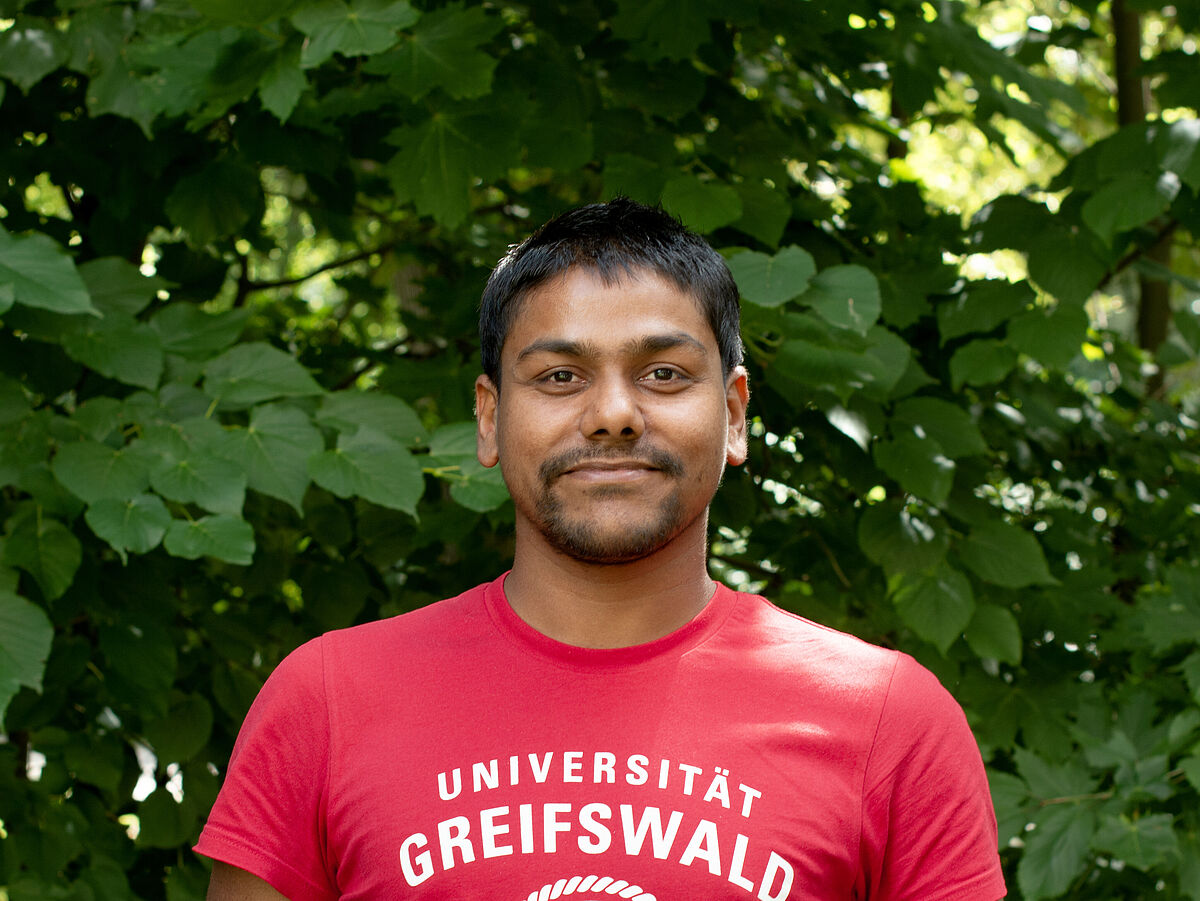
Dipendra Yadav is a scientific researcher and PhD student at the Institute of Data Science, University of Greifswald, Germany, working under Prof. Dr.-Ing Kristina Yordanova since January 2023. His research focuses on natural language processing with expertise in transfer learning, multilinguality, and domain adaptation for low-resource languages, alongside innovative work on symbolic reasoning for explainability in large language models. Yadav holds an M.Sc. in Electrical Engineering from the University of Rostock (2020). Prior to his current role, he worked as a data science student assistant at Market Logic Software in Berlin and completed an NLP internship/Master's thesis at PlanetAI GmbH, where he continued as a software engineer. His research spans critical NLP challenges including cross-lingual transfer for languages like Nepali and Hindi, domain adaptation in resource-constrained environments, and enhancing LLM explainability through symbolic reasoning integration. He also investigates AI safety dimensions such as dangerous capability evaluation and situational awareness in large language models. Recent publications reveal strong trends in low-resource language processing through cross-lingual transfer techniques, domain-specific NLP applications (particularly in dementia research), and safety evaluations of large language models. His work consistently addresses real-world data challenges while advancing methodologies for underrepresented languages. No scientific awards are currently documented. Yadav has not taken formal advising roles for students. His research operates within the Institute of Data Science's framework, which emphasizes interdisciplinary applications in healthcare and language technologies through collaborative projects like ARDUOUS.
Heidelberg Institute for Theoretical StudiesGermany
Michael Strube is an Honorary Professor at the Department of Computational Linguistics at Heidelberg University and leads the Natural Language Processing (NLP) Group at HITS (Heidelberg Institute for Theoretical Studies) in Germany. He has been with HITS (previously EML Research and European Media Laboratory) since 2003 and became an Honorary Professor at Heidelberg University in 2010. He is also a Fellow of the Association for Computational Linguistics (2019). Dr. Strube received his PhD from the Computational Linguistics Department at the University of Freiburg in December 1996 under the supervision of Udo Hahn. Between 1997 and 1999, he was a postdoctoral fellow at the Institute for Research in Cognitive Science at the University of Pennsylvania, Philadelphia. Michael Strube's research focuses on semantics and discourse pragmatics, graph-based methods for text representation and analysis, extraction of world knowledge from Wikipedia for computational linguistics, and development of methods to synchronize multilingual content. His work spans coreference resolution, discourse processing, text summarization, entity linking, and natural language generation. He has made significant contributions to coherence modeling, anaphora resolution, and the application of geometric deep learning in NLP. His recent publications demonstrate strong trends in discourse processing, coreference resolution, and the application of geometric approaches to NLP problems. Strube has pioneered work in hyperbolic space for entity typing and graph embeddings, while maintaining his foundational work in discourse and coherence. His research bridges theoretical linguistics with practical NLP applications across multiple languages. Dr. Strube has received several prestigious awards, including: Fellow of the Association for Computational Linguistics (2019) Best Paper Award for "Fine-grained entity typing in hyperbolic space" (2019) Honorable Mention for the IJCAI-JAIR best paper prize 2010 for "Knowledge Derived from Wikipedia for Computing Semantic Relatedness" Professor Strube has advised numerous PhD students who have gone on to successful careers in academia and industry. His current PhD students include Yi Fan, Wei Liu, Haixia Chai, Mehwish Fatima, and Sungho Jeon, working on topics such as discourse structure, discourse relations, coreference resolution, and cross-lingual summarization. His former students include Federico Lopez, Benjamin Heinzerling, Mohsen Mesgar, and Nafise Moosavi, who now hold positions at institutions like Argo AI, RIKEN, Bosch Center for AI, and the University of Sheffield. As group leader of the NLP Group at HITS, Strube oversees a team focused on advancing natural language processing through research in discourse analysis, coreference resolution, text generation, and knowledge extraction. The group has been involved in numerous collaborative projects and has made significant contributions to the field through publications, shared tasks, and community building via workshops and conferences.
Wenjie Li is a Professor at the Department of Computing, Hong Kong Polytechnic University, and holds a PhD from the Chinese University of Hong Kong (1997). His research spans Natural Language Processing, Artificial Intelligence, and Machine Learning , focusing on Large Language Models (LLMs) Multimodal Systems Dialogue and Recommender Systems Speculative Decoding and Inference Optimization Chain-of-Thought Reasoning Recent work emphasizes generative retrieval , personalized web agents , and error-resilient LLM frameworks . Key contributions include the JobFormer for skill-aware recommendations, STeCa for trajectory calibration, and TokenSkip for controllable reasoning compression. Publications reveal a trend toward enhancing multimodal alignment and safety mechanisms in aligned LLMs. Li actively collaborates with institutions like Queen's University , Tsinghua University , and Nanjing University , working on projects such as text-image interleaved retrieval and speculative decoding surveys . His 2024-2025 output includes 15+ papers at venues like ACL, CVPR, ICLR , and journals like IEEE Transactions on Neural Networks .
Samira Babalou is an active researcher affiliated with the University of Jena, Germany. Her work primarily focuses on ontology merging, knowledge graph management, and semantic data integration in the biodiversity and biomedical domains. She has developed tools like CoMerger and SimBio for ontology integration and similarity assessment. Education: PhD in Computer Science from University of Jena (2021). Key Contributions: Developed methods for handling inconsistencies during ontology merging, partitioning-based approaches for ontology aggregation, and tools for semantic similarity computation. Collaborations: Works with Birgitta König-Ries, Erik Kleinsteuber, and other researchers in semantic web and knowledge graph projects. Her recent publications (2020-2024) demonstrate expertise in provenance management, domain-specific knowledge graphs, and semantic annotation frameworks. She contributes to open science through systematic literature reviews and reproducible workflows for biodiversity data.
Deng Cai is a Professor at Zhejiang University's College of Computer Science, working in the State Key Laboratory of CAD&CG in Hangzhou, China. He also maintains an affiliation with Tencent AI Lab, demonstrating his strong connection between academic research and industry applications in artificial intelligence. His academic background includes a PhD from the University of Illinois at Urbana-Champaign, Department of Computer Science (2009). Professor Cai's research spans multiple domains within artificial intelligence, with particular emphasis on computer vision, deep learning, and their applications. His work shows strong focus on 3D object detection, lane detection for autonomous vehicles, and the application of large language models to various vision tasks. He has made significant contributions to traffic forecasting, trajectory prediction, and CAD generation systems. His recent work increasingly integrates large language models with computer vision tasks, demonstrating the evolving nature of his research interests toward multimodal AI systems. The trajectory of Professor Cai's publications reveals a clear progression from foundational computer vision and machine learning research toward increasingly complex and applied systems. His work shows strong emphasis on practical applications in autonomous driving, with numerous papers on 3D object detection, lane detection, and trajectory prediction. More recently, his research has expanded to include generative models for CAD systems and video customization, often leveraging large language models in innovative ways. The consistent publication output across top-tier venues including CVPR, ICCV, AAAI, and NeurIPS demonstrates sustained research productivity and impact. Professor Cai has established significant research collaborations, particularly with Xiaofei He (161 joint publications), Haifeng Liu (50), Zhou Zhao (42), Wenxiao Wang (41), and Binbin Lin (39). His work appears across diverse publication venues including IEEE Transactions on Pattern Analysis and Machine Intelligence, IEEE Transactions on Image Processing, and proceedings of major AI conferences. The breadth of his publication venues reflects the interdisciplinary nature of his research spanning theoretical machine learning to applied computer vision systems. Professor Cai leads research activities within Zhejiang University's College of Computer Science, particularly focusing on the State Key Laboratory of CAD&CG. His work bridges academic research with practical industry applications through his affiliation with Tencent AI Lab. The laboratory environment supports research in computer vision, machine learning, and their applications to real-world problems in autonomous systems, content generation, and intelligent transportation.
Hayder Murad is a researcher with expertise in machine learning, sentiment analysis, and hybrid filtering algorithms, particularly applied to intelligent tutoring systems and medical diagnostics. His work bridges computational methods with practical applications in education and healthcare. He earned his PhD from the University of Portsmouth in 2019 with a thesis titled An integrated approach to recommending online video materials through sentiment analysis and hybrid filtering algorithms . His recent publications focus on knowledge graph construction, large language model applications, and open science initiatives. Notable contributions include enhancing systematic literature reviews, improving dataset interoperability, and advancing FAIR data principles across disciplines. Research Interests Machine learning for healthcare diagnostics Hybrid recommendation systems Knowledge graph development Open science infrastructure Intelligent tutoring systems LLM-based research synthesis
Sihem Amer-Yahia is a distinguished Research Professor at the University of Grenoble Alpes (affiliated with Grenoble Informatics Laboratory ), with significant contributions to database systems , data exploration , and fairness in AI . Her work bridges human-computer interaction and machine learning to create systems that enhance data-driven decision-making. Research Pillars : Algorithmic fairness, interactive data mining, recommender systems, and human-AI collaboration Recent Advances : 2023-2025 publications focus on statistically sound hypothesis testing , multi-objective recommendation , and conversational analytics Leadership : Co-organized major conferences (DASFAA 2024) and led DEI initiatives in database communities Her 15 most recent articles (2020-2025) span topics like producer fairness in recommendation , statistical hypothesis frameworks , and AI-powered education systems , with keywords covering database optimization , reinforcement learning , and ethical data mining . She actively contributes to ACM/IEEE journals and VLDB/SIGMOD conferences.
Chien-Sheng Wu is a prominent researcher in natural language processing and artificial intelligence, actively contributing to advancements in large language models (LLMs), dialogue systems, and information retrieval. His work focuses on enhancing factual consistency, developing frameworks for service AI agents, and exploring vision-language model limitations in arithmetic tasks. Key research areas: LLMs, knowledge grounding, dialogue summarization, and human-AI collaboration Recent publications analyze the capacity of LLM agents in CRM tasks, multihop reasoning frameworks, and content moderation tools. His collaborations span institutions like ACL, EMNLP, and NAACL. 2025 papers address workflow extraction, visual arithmetic understanding, and RAG system evaluation 2024 work includes Haystack summarization challenges and executable text-editing interfaces Scientific awards and student mentorship details are not explicitly mentioned in available data. Affiliations remain unspecified, but his contributions to NLP benchmarks and evaluation frameworks are significant.