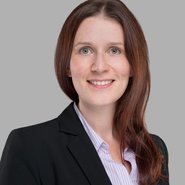
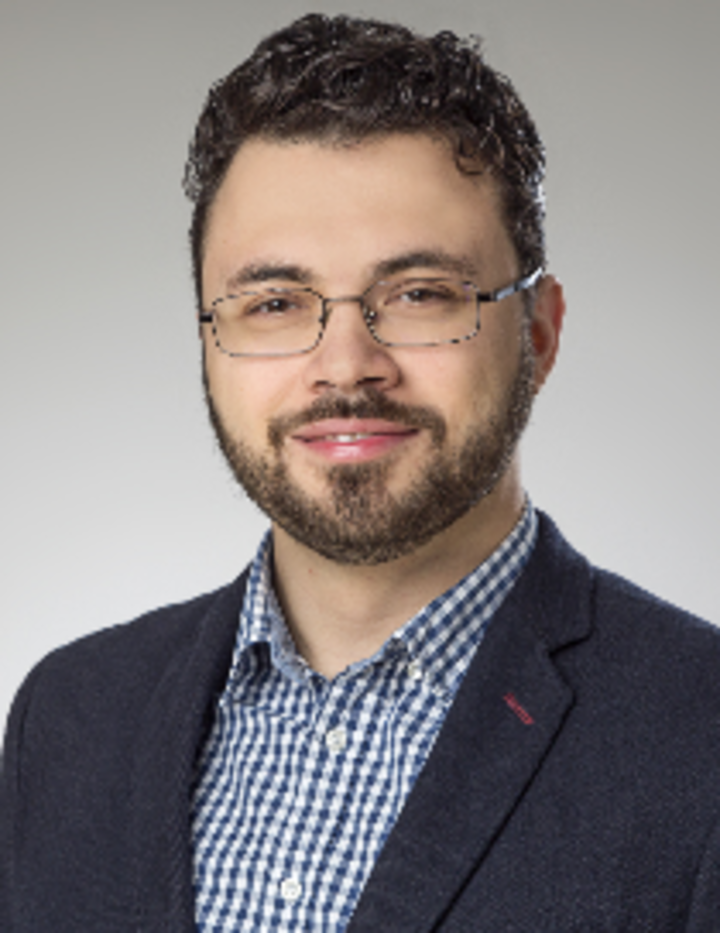
Chantal Pellegrini is a Lecturer and PhD student at the Chair of Computer Aided Medical Procedures (Prof. Navab) at Technical University of Munich (TUM). Her research focuses on Deep Learning applications in medical imaging, including explainable AI for radiology report generation and Vision-Language Models for clinical decision support. She actively contributes to the DHM, NARVIS Lab, and RobUSt research groups. Teaching responsibilities include courses such as 'Computer Aided Medical Procedures', 'Medical Augmented Reality', and 'Surgical Robotics'. She supervises student projects in medical AI and healthcare innovation, with recent projects involving multimodal report generation and graph pretraining for medical applications. Education: BSc/MSc Computer Science (TUM), current PhD student since 2022 Labs: DHM (German Heart Center), NARVIS Lab, RobUSt Robotics & Ultrasound Research Keywords: Medical Image Understanding, Radiology Reports, LLMs in Healthcare Her publications span surgical OR dataset development, reinforcement learning for clinical decisions, and explainable X-ray diagnosis systems. She mentors MA/BA students in medical AI and project management for healthcare applications.
Prof. Anika Groß is a Professor for Database Systems and Programming at the Department of Computer Science and Languages at Anhalt University of Applied Sciences in Köthen, Germany. She holds a PhD from the University of Leipzig (2014) and has held roles as a PostDoc in strategic research at Daimler AG and as a research assistant at the Interdisciplinary Centre for Bioinformatics (IZBI). She is actively involved in academic governance, serving on the faculty council, board of examiners, and various sustainability and research data management committees. Her research focuses on database systems, knowledge graphs, and ontology engineering, with applications in environmental science, medicine, and material sciences. Education - PhD (Dr. rer. nat.) in Computer Science, University of Leipzig (2014) - Diploma in Bioinformatics, MLU Halle-Wittenberg (2007) - Postdoctoral research at University of Leipzig's Database Group (2008–2013) Research Interests Her work emphasizes temporal graphs, ontology evolution, and semantic data integration. She develops tools like Region Evolution eXplorer (REX) and contributes to projects such as AgriRestore (ecosystem restoration) and MeineWaldKI (AI-based forest monitoring). Her recent focus includes wearable device applications in healthcare and digital twins for lithium value chains. Recent Research Trends Recent publications highlight interdisciplinary applications of knowledge graphs in agriculture and environmental science, leveraging temporal analysis and machine learning for tasks like chemical transformation prediction and bladder monitoring. She also explores cross-lingual semantic annotations in medical forms and holistic clustering of linked data. Professional Roles - Executive Committee Member, GI Database Systems Group - Fellow, Institute for Technologies and Economics of Lithium (ITEL) - Co-Chair of multiple workshops including FGDB-Workshop @ LWDA 2018 and BigDS@BTW 2017 Labs & Collaborations She leads research teams in projects funded by DFG, European Union (EFRE), and ITEL, collaborating with organizations like Daimler AG and ANU. Her lab focuses on advancing database systems and interdisciplinary data science applications.
Kiril Gashteovski is a PhD candidate at the Chair of Practical Computer Science I: Data Analytics within the School of Business Informatics and Mathematics at the University of Mannheim. He is supervised by Prof. Dr. Rainer Gemulla and affiliated with the Data and Web Science Group. His primary research focuses on open information extraction, natural language processing, and machine learning applications. He concurrently holds a position as Research Scientist at NEC Laboratories Europe GmbH in Heidelberg, Germany. Education: PhD candidate (University of Mannheim, ongoing), prior academic background includes studies and research roles at institutions in Bulgaria, France, and North Macedonia. Research interests emphasize developing efficient open information extraction systems, knowledge base construction, and text analytics applications. His work bridges theoretical advancements with practical implementations in areas like entity linking and corpus development. Publications span topics such as OPIEC corpus development, citation-centered extraction, and toolkit creation for entity aspect linking. He actively presents at venues like AKBC and EMNLP. Advising and supervision include leading team projects like 'Complaint Handling via Text Analytics for Roche' and 'Data analytics on a ticketing system' with Abbvie. He also teaches courses in data mining and machine learning. Labs/Teams: Core member of the Data and Web Science Group at University of Mannheim, collaborating with industry partners like NEC Labs Europe.
Prof. Dr. Jonathan Jeschke is a Professor at the Department of Biology, Chemistry, Pharmacy of the Free University of Berlin and Head of the Department of Evolutionary and Integrative Ecology at the IGB Berlin. Since 2014, he has held a DFG-funded Heisenberg Professorship in Ecological Novelty. He is a member of the Berlin-Brandenburg Institute of Advanced Biodiversity Research (BBIB) since 2014 and previously served as Spokesperson for the Aquatic Biodiversity Programme at IGB Berlin (2016–2021). Education: Habilitation in Ecology (2011, LMU Munich & TUM), Doctorate in Ecology (2002, LMU Munich) Research Interests: Theoretical ecology, invasion biology, ecological novelty, evolutionary ecology, predator-prey relationships, biodiversity research, urban ecology, interdisciplinary integration, and research synthesis His research explores the dynamics of biological invasions, particularly focusing on niche shifts, management frameworks, and ecological novelty. He has contributed to the development of classification systems like EICAT+ and SEICAT, and his work bridges invasion ecology with network theory, game design, and citizen science. Recent publications emphasize predictive modeling, climate-driven invasions, and cross-border aquatic species management. Scientific awards include the DFG Heisenberg Professorship (2014–2019). He has served as an editor for Basic and Applied Ecology , Diversity and Distributions , and NeoBiota , among others. His group actively collaborates with international institutions and engages in policy advising for biodiversity protection.
Maribel Acosta is a Professor of Databases and Information Systems at Ruhr-Universität Bochum's Faculty of Computer Science. She holds affiliations with the Institut für Neuroinformatik (INI), focusing on interdisciplinary research combining natural and artificial cognitive systems. Her work spans databases, semantic web technologies, artificial intelligence, and machine learning applied to knowledge graphs. Acosta earned her Ph.D. (Summa Cum Laude, 2017) and Master's in Computer Science from Karlsruhe Institute of Technology (KIT). She has held roles including Junior Professor at RUB (2020–present), Deputy Professor at KIT (2019–2020), and Assistant Lecturer at Heidelberg University (2020). Research Interests: Her primary research focuses on efficient querying of knowledge graphs, integration of machine learning in data management, and semantic web technologies. Key areas include knowledge graph population, federated query processing, and stability in neural networks. Recent work explores applications in automotive systems and social science data integration. Awards: Notable recognitions include a 2022 WWW Best Paper nomination, Aminer's Top-100 Influential Scholars (2020–2021), and multiple teaching excellence awards from KIT (2017–2020). Teaching & Labs: She teaches courses on database systems, knowledge graphs, and artificial intelligence at RUB. Her lab contributes to projects like SMART-KG and has pioneered federated SPARQL query frameworks. She actively supervises doctoral research in knowledge graph applications and machine learning.
Martin Theobald is a Professor in the Department of Computer Science at the University of Luxembourg's Faculty of Science, Technology and Communications. Previously affiliated with University of Ulm, Germany, his research spans database systems, information retrieval, and knowledge extraction with over 120 publications since 2002. His work bridges theoretical database foundations with practical applications in large-scale data processing. His research focuses on: Probabilistic and uncertain database systems Stream processing frameworks (notably the AIR architecture) Knowledge extraction from heterogeneous data sources Integration of machine learning with database systems Efficient query processing for structured and semi-structured data Recent publications demonstrate an evolving research trajectory toward real-time data stream processing with machine learning integration. His work on the AIR (Asynchronous Iterative Routing) framework and its extensions (TensAIR, OPTWIN) addresses critical challenges in concept drift detection, neural network training on streaming data, and efficient resource utilization. These contributions sit at the intersection of database systems, distributed computing, and machine learning, with applications in knowledge graph construction and question answering systems. Martin Theobald has mentored numerous researchers including Mauro Dalle Lucca Tosi, Alessandro Temperoni, and Vinu E. Venugopal, who have become active contributors to the database community. His collaborative network spans institutions across Europe, with frequent partnerships with researchers from University of Ulm, Max Planck Institute, and other European universities. His laboratory work focuses on developing scalable systems for processing evolving data streams, with particular emphasis on creating lightweight architectures that maintain high performance while minimizing resource consumption. Current projects involve integrating knowledge graphs with real-time analytics and developing adaptive systems that can handle concept drift in streaming environments.
Jens Stoye is a Professor of Genome Informatics at the Faculty of Engineering , Bielefeld University, where he has held this position since 2002. He leads the Genome Informatics Working Group at CeBiTec and serves as Managing Director of the Bielefeld Institute for Bioinformatics Infrastructure (BIBI). Additionally, he is a member of the Board of Directors at the Center for Interdisciplinary Research (ZiF) and held numerous administrative roles, including Dean of the Faculty of Technology and Speaker of the DFG Research Training Group. Education: Diploma in Informatics in the Natural Sciences (1995) and PhD (1997) from Bielefeld University Current Roles: Full University Professor, Managing Director of BIBI, Executive Director of ZiF (2023-2025) His research focuses on computational genomics , including genome rearrangement, comparative genomics, and pangenomics. Recent work explores the double distance problem , natural genome phylogeny reconstruction, and efficient pangenome storage techniques. He has developed algorithms for genome assembly benchmarking (GABenchToB), rearrangement epidemiology (pling), and core genome detection. Scientific Contributions include best paper awards and editorial roles at IEEE/ACM Transactions on Computational Biology and Bioinformatics , BMC Bioinformatics , and Discrete Applied Mathematics . He has served on over 20 conference committees (WABI, ISMB, RECOMB) and advised 165+ theses (36 PhD, 71 Master/Diploma, 58 Bachelor). Leadership Roles: Vice-Speaker of German Bioinformatics Society (2002-2014) Dean of Faculty of Technology (2007-2009) Speaker of DFG Research Training Group (2013-2019) Member of DAAD Postdoc Fellowship Committee (2014-2025)
So Young Sohn is a distinguished Professor at Korea University's College of Business, Department of Management Engineering, with over two decades of impactful research in technology management and operations research. Her scholarly contributions have established her as a leading expert in technology credit scoring, data mining applications, and technology convergence analysis. Dr. Sohn's research interests span technology credit scoring for SMEs, operational research methodologies, data mining techniques, machine learning applications in business contexts, technology convergence patterns, patent analysis, and SME financing mechanisms. Her work bridges theoretical rigor with practical business applications, particularly focusing on Korean case studies that have broader international relevance. She has pioneered innovative approaches using knowledge graphs, multiplex networks, and deep learning techniques to solve complex business problems. Her publication portfolio reveals consistent research trends toward increasingly sophisticated analytical methods, evolving from traditional statistical models to advanced machine learning and network science approaches. Recent work demonstrates particular focus on technology convergence, digital therapeutics, and AI applications in business decision-making. The interdisciplinary nature of her research spans business analytics, engineering, healthcare, and environmental science. Dr. Sohn has received recognition through numerous high-impact publications in premier journals including Expert Systems with Applications, European Journal of Operational Research, Scientometrics, and IEEE Transactions. Her research has been consistently funded through competitive grants focusing on technology management and innovation. As an academic mentor, Dr. Sohn has advised numerous doctoral students who have gone on to productive research careers, with many continuing to collaborate with her on ongoing projects. Her research team has secured substantial funding for projects related to technology credit scoring, technology convergence analysis, and predictive analytics applications. Dr. Sohn leads a dynamic research laboratory focused on technology analytics and decision support systems, collaborating with industry partners and government agencies to translate research findings into practical business solutions. Her current work emphasizes sustainable technology development and AI-driven decision support systems for complex business environments.
Markus Stocker is a researcher leading the Knowledge Infrastructures Lab at TIB - Leibniz Information Centre for Science and Technology. He holds a PhD in Environmental Informatics from the University of Eastern Finland, an MSc in Environmental Sciences from the same university, and an MSc in Computer Science from the University of Zurich. His work focuses on research infrastructures, knowledge synthesis, and FAIR data principles, with a strong emphasis on environmental and earth sciences. He collaborates with major European infrastructures like ACTRIS, ICOS, and NEON. His research interests include neurosymbolic systems, digital scholarship, and the integration of research data across disciplines. Prior roles include a postdoc at PANGAEA (University of Bremen) and positions at Hewlett Packard Labs and Clark & Parsia. He actively contributes to the Research Data Alliance, co-chairing the WG Persistent Identification of Instruments. Markus has pioneered projects like the Open Research Knowledge Graph (ORKG) and the sciqa benchmark for scientific question answering. His work emphasizes interoperability, automation, and community-driven knowledge curation, addressing challenges in data management and scholarly communication.
Matthew Watson is a researcher at Durham University , Department of Computer Science, UK. His work spans Computer Science , Artificial Intelligence , and Human-Computer Interaction , with a focus on autonomous systems , semantic search , and pedagogical tools . Research Trends : Recent publications include applications of machine learning in adaptive cruise control , UAV-based wildlife tracking , and deep learning frameworks like KerasCV/KerasNLP. Earlier work involved mathematical combinatorics and cognitive modeling in dialogue systems. Collaborations : Co-authored with Navid Mohajer, Darius Nahavandi, Ashok K. Krishnamurthy, and others in domains like robotics, bioinformatics, and software engineering. Publications include 13 peer-reviewed articles from 2008–2025, covering topics in control systems , knowledge graphs , and algorithm design .
Prof. Dr.-Ing. Christian Grimme is an Associate Professor and Extraordinary Professor in the Department of Information Systems at the University of Münster. He leads the Computational Social Science and Systems Analysis research group. His roles include acting professorships, research group leadership, and academic co-direction of the ERCIS Competence Center for Social Media Analytics. He holds a Dr.-Ing. in Computer Science and has extensive postdoctoral and habilitation experience. Education Timeline: 2015–2018: Habilitation and venia legendi in Information Systems 2006–2012: PhD in Computer Science (Dr.-Ing.) 1999–2006: Diploma in Computer Science Research Interests focus on Multiobjective Evolutionary Computation, Social Media Analysis, Disinformation Detection, and AI Ethics. His work bridges algorithmic innovation (e.g., optimization algorithms) with societal challenges (e.g., automated propaganda detection). Recent projects include analyzing Large Language Models' role in disinformation mitigation and real-time social media content analysis using human attention mechanisms. Awards include the Best Teaching Award (2024), PPSN XIV Best Paper Award (2016), and multiple travel grants from ACM and DAAD. He actively participates in conferences like GECCO and EMO, contributing to both theoretical and applied research. Advising and grants highlight his role in guiding over 20 theses, spanning Master's and Bachelor's projects in IS/WI. Notable grants include DAAD-funded collaborations and internal university funding for projects like MODERAT! (moderation tools) and ERCIS SMA Competence Center. Labs/Teams: Leads the Computational Social Science & Systems Analysis group, collaborating with global partners via ERCIS. Engages in initiatives like CLAIRE and the Integrity & Security Initiative to address AI ethics and information security challenges.
Frank Heidmann is a Research Professor for Design of Software Interfaces at the University of Applied Sciences Potsdam, where he serves as Program Director for the Master's degree program in Design. He leads the Interaction Design Lab (IDL) and holds leadership roles including membership in the Research and Transfer Commission and Ethics Committee of FH Potsdam, and serves as Ombudsperson for good scientific practice. His educational background includes: PhD in Applied Physical Geography (1999, University of Trier) Studies in Applied Physical Geography with cartography focus (1988-1994, University of Trier) Heidmann's research spans human-computer interaction, usability engineering, and interface design, with evolving focus from cartographic communication to XR interfaces and mental health applications. His work integrates eye-tracking, tangible interfaces, and user-centered design methods, particularly addressing aging society needs and social anxiety disorders. Recent projects emphasize collaborative XR learning and neurofeedback systems. His publication trends reveal consistent contributions to HCI conferences (CHI, DIS, NordiCHI) with growing emphasis on: Immersive technologies (XR/VR) Mental health applications Collaborative interaction paradigms Critical design approaches Heidmann actively supervises design education initiatives and leads significant projects including DISA (Digital Inclusion for Social Anxiety), FUX-XR@FH:P (Extended Reality), and international partnerships with National Taipei University of Technology. As project manager at IDL, he implements research on human-technology interaction, interface design for aging populations, and user-centered design integration. His leadership extends to curriculum development projects like Design '0815' for adapting design education to digital workplaces.
Prof. Dr.-Ing. Robert Heyer is a full professor at Bielefeld University and leads the Multidimensional Omics Analyses Group within the Faculty of Engineering and the Center for Biotechnology (CeBiTec) . He is also affiliated with the Institute for Bioinformatics Infrastructure (BIBI) and collaborates with the Leibniz Institute for Analytical Science (ISAS) . His work focuses on developing cloud-based bioinformatics tools and integrating multi-omics data using machine learning and knowledge graphs. Research Interests: His group specializes in: Software development for omics data analysis Cloud-based web platforms for bioinformatics Knowledge graph integration of omics and clinical data Microbiome and metaproteomics research Machine learning applications in biomedical data His research bridges computational biology, clinical informatics, and systems medicine, aiming to translate complex omics data into actionable clinical insights. Recent Publications: His 2024–2025 publications emphasize the application of AI and graph-based models in sepsis prediction, IBD remission profiling, and microbial community analysis. These works highlight a consistent trend toward explainable AI, clinical translation, and integrative multi-omics frameworks. Teaching & Infrastructure: Prof. Heyer contributes to teaching in scientific informatics and oversees infrastructure development at the Institute for Bioinformatics Infrastructure (BIBI).
Volker Tresp is a Professor at the Ludwig-Maximilians-Universität München (LMU) and a leading researcher in machine learning for relational structured domains . His work bridges cognitive AI , knowledge graphs , and quantum computing . He is a PI in the Munich Center for Machine Learning (MCML) and co-director of the ELLIS program on Semantic, Symbolic, and Interpretable Machine Learning . His research interests focus on temporal knowledge graphs , foundation models , multimodal learning , and quantum machine learning . Recent projects include WebPilot (multi-agent web task execution) and FedBiP (federated learning with diffusion models). His work on PyKEEN and RESCAL has advanced knowledge graph embeddings . Volker Tresp's scientific contributions are recognized through ELLIS Fellowship (2020) , Siemens Inventor of the Year (1996) , and Best Paper Awards at ISWC 2021 and IEEE ICHI 2020 . His students have published extensively at top AI venues like AAAI , CVPR , and ECCV . Awards and Honors: ELLIS Fellow (2020) Siemens Inventor of the Year (1996) Best Paper Award, ISWC 2021 Student Best Paper Award, ISWC 2017 Best Paper Runner-up, PKDD 2005
Prof. Dr. Ulf Leser serves as Professor and Deputy Director at the Institute of Computer Science within Humboldt University of Berlin's Faculty of Mathematics and Natural Sciences. His work bridges computer science and life sciences through bioinformatics and knowledge management systems, with significant contributions to scientific workflow optimization and biomedical text mining. His research spans multiple high-impact areas: Bioinformatics and precision oncology tool development (e.g., OncoTagger for cancer gene curation) Scientific workflow systems with focus on carbon-aware execution and energy efficiency Biomedical natural language processing for relation extraction and knowledge base curation Advanced time series analysis methods (e.g., ClaSP for segmentation) Environmental monitoring through satellite data analysis He actively develops infrastructure for reproducible scientific computing while addressing sustainability challenges in HPC environments. Recent publications (2023-2026) reveal three dominant trends: (1) Integration of explainable AI in healthcare assessment systems, (2) Sustainable computing approaches for scientific workflows including carbon-aware scheduling, and (3) Advancement of biomedical text mining through knowledge-augmented language models. His work consistently targets real-world applications in precision medicine and environmental science. Prof. Leser currently supervises students including Michael Piechotta (Diplom in Bioinformatics, defense scheduled September 2025). As Deputy Director and Faculty Council member, he shapes institutional research strategy while leading projects at the intersection of computer science and life sciences. His group maintains active collaborations with biomedical research institutions and contributes to community standards in scientific workflow systems.