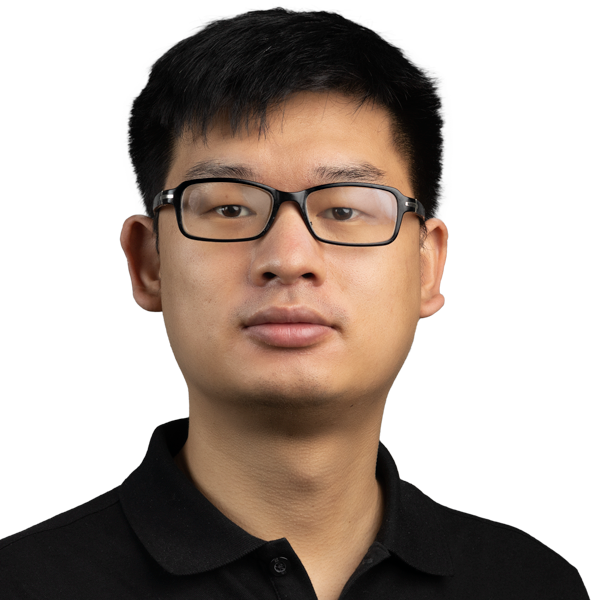
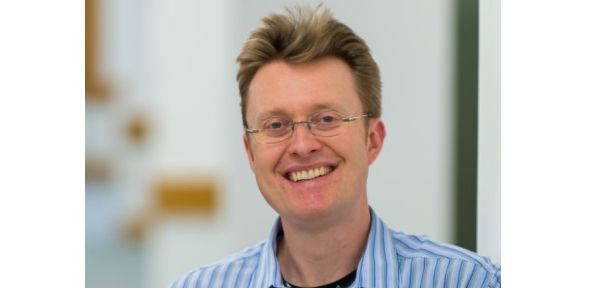
Basil Ell is a Researcher at the University of Oslo's Department of Data and Knowledge Management, affiliated with SIRIUS labs. He holds a PhD from Karlsruhe Institute of Technology (KIT) and has held postdoctoral positions at Bielefeld University's CITEC. His work bridges Semantic Web technologies and Natural Language Processing, focusing on knowledge base population, semantic parsing, and information extraction from text/tables. He splits his time between Oslo and Bielefeld, contributing to projects like semantically enhanced Virtual Research Environments and table understanding systems. Education: B.Sc./M.Sc. in Computer Science from Mannheim University of Applied Sciences, Pohang University of Science and Technology, and IIT Madras. PhD (2015) from KIT under Prof. Rudi Studer. Research Trends: Recent publications emphasize semantic data integration (e.g., materials informatics), link prediction in knowledge graphs, and clinical trial evidence synthesis. His work often combines RDF data structures with NLP techniques. Labs/Teams: Active in SIRIUS labs (Oslo) and previously at CITEC/Bielefeld's Semantic Computing group.
Benjamin Roth is a Professor at Saarland University holding dual affiliations in the Faculty of Computer Science (Research Group Data Mining and Machine Learning) and the Faculty of Philological and Cultural Studies (Department of European and Comparative Literature and Language Studies). His research focuses on natural language processing, large language models, machine learning, and computational linguistics. He leads multiple active research projects including 'Understanding Language in Context' (2025–2033) and 'Linguistic Methods for the Detection of Implicit Abuse' (2024–2027). Notable collaborations span cross-functional studies on LLM behavior, clinical text analysis, and knowledge graph integration. He actively participates in conference organization and has presented at venues like the Konferenz zur Verarbeitung natürlicher Sprache (2024). His work emphasizes methodological innovation in weak supervision, model calibration, and multimodal reasoning. Recent contributions include studies on persona effects in LLMs, specification overfitting mitigation, and zero-shot temporal relation extraction. He has co-authored over 20 peer-reviewed publications since 2020, with a focus on advancing ethical AI, model interpretability, and NLP education.
Prof. Amel BOUZEGHOUB is a Professor at Telecom SudParis, affiliated with the SAMOVAR research center. Her work focuses on AI, IoT, and data-driven systems with applications in smart environments, robotics, and education. She has contributed to over 50 peer-reviewed publications spanning machine learning, reinforcement learning, and semantic data processing. Research Interests: Her research bridges theoretical advances in machine learning with practical applications in smart homes, autonomous systems, and educational technology. She explores topics like human activity recognition, anomaly detection in social networks, and real-time data stream processing. Recent Trends: Her 2023-2024 work emphasizes explainable AI, reinforcement learning for autonomous systems, and multi-agent frameworks for stream reasoning. Earlier contributions include IoT-based supply chain traceability and distributed human activity recognition models. Grants & Projects: Key contributions include the ANR INCOME project on multi-scale context management for IoT systems and ACMES initiatives in educational technology. Labs/Teams: Active within the SAMOVAR lab at Telecom SudParis, collaborating with international teams in AI and robotics research.
Dr. Michael Stewart is a postdoctoral research fellow at The University of Western Australia (UWA), affiliated with the School of Physics, Maths and Computing's Computer Science and Software Engineering department. He holds a PhD from UWA (2020) and works on knowledge graph construction, information extraction, and deep learning methods. His research focuses on technical text analysis, including maintenance documents and log data. Key research areas include entity typing, lexical normalisation, and semantic parsing. He co-leads the UWA Natural and Technical Language Processing Group, co-supervising Honours, Masters, and PhD students. Notable contributions include the MaintIE benchmark, MWO2KG knowledge graph, and tools like Echidna and QuickGraph. His work contributes to UN Sustainable Development Goals through technical innovation in data-driven decision-making. Awards include the 2019 WAITTA INCITE Award and first prize in the ICDM 2019 Knowledge Graph Contest. Current projects explore deep learning-based methods for knowledge graph construction from short technical texts.
Neil Hurley is an Associate Professor and Head of School in the School of Computer Science at University College Dublin. He holds a BSc and MSc from University College Dublin and a PhD from Trinity College Dublin. Before academia, he worked at the Hitachi Dublin Laboratory from 1989 to 1999, leading research in parallel computing and knowledge-based systems. He joined UCD in 1999 and founded the Information Hiding Laboratory in 2001, focusing on digital content security. His research spans recommender systems, social network analysis, high-performance computing, and data hiding technologies. He has secured over €1 million in research funding from agencies like Enterprise Ireland and the EU. His teaching includes coordinating modules on Artificial Intelligence, Recommender Systems, and Computational Science. He has reviewed for journals such as IEEE Transactions on Image Processing and serves on the EMPS Graduate School Board. His recent work emphasizes scalable recommendation algorithms, privacy-preserving distributed systems, and strategic network analysis.
Yao Ma is an Assistant Professor in the Department of Computer Science at Rensselaer Polytechnic Institute (RPI). His research bridges graph machine learning, natural language processing, and trustworthy AI, with a focus on scalable and robust computational frameworks. He directs the Graph Machine Learning Lab at RPI, advancing methodologies for graph condensation, neural architecture robustness, and foundation models. Research Interests: Dr. Ma's work spans graph neural networks (GNNs), adversarial robustness, language model efficiency, and data-centric AI. Key innovations include techniques for graph condensation, trustworthiness in LLMs, and multi-agent learning systems. His recent surveys systematize advancements in small language models and graph foundation models, highlighting scalability and transferability challenges. Publication Trends: His 2024–2025 articles emphasize graph-based NLP, efficient data valuation, and adversarial defenses. Dominant themes include graph condensation (6 papers), LLM/GNN integration (4 papers), and robustness benchmarking (3 papers), reflecting a cohesive agenda in scalable, reliable graph AI. Awards & Advising: No awards or students are noted in available sources. Lab & Team: Leads the Graph Machine Learning Lab at RPI, focusing on theoretical and applied graph AI. Collaborative projects include cross-departmental initiatives in quantum computing and NLP.
Professor Ah-Hwee Tan is a distinguished faculty member at Singapore Management University's School of Computing and Information Systems, Department of Information Systems. With over 30 years of academic contributions since 1991, his research has significantly advanced neural network architectures, particularly Adaptive Resonance Theory (ART), with applications spanning multiple domains of artificial intelligence. His primary research interests include Neural Networks , Adaptive Resonance Theory , Machine Learning , Reinforcement Learning , Knowledge Graphs , Natural Language Processing , and Multi-Agent Systems . Professor Tan's work bridges theoretical neural computation with practical applications, developing novel approaches for knowledge representation, semantic understanding, and intelligent decision-making systems. His recent publications (2022-2025) demonstrate continued innovation across multiple AI subfields, with particular emphasis on hierarchical reinforcement learning, knowledge graph refinement, sentiment analysis, and federated learning architectures. The research shows a clear trajectory from foundational neural network theory toward increasingly complex real-world applications in healthcare, social media analysis, and multi-agent coordination. Professor Tan has mentored numerous researchers who have become significant contributors in their own right, including Budhitama Subagdja, Shubham Pateria, and Di Wang. His collaborative work spans international institutions, reflecting his standing in the global AI research community. His research has been consistently published in top-tier venues including IEEE Transactions, Neural Networks, ACM journals, and major AI conferences (AAAI, IJCAI), demonstrating both theoretical rigor and practical impact across computer science and interdisciplinary applications.
Yue Yu is a Professor in the Department of Mathematics at Lehigh University, specializing in applied mathematics and computational mathematics. Their research focuses on hybrid modeling, physics-informed machine learning, and nonlocal operators for material science and engineering applications. Yu has developed innovative methods for data-driven constitutive law discovery, peridynamic modeling, and causal graph learning. Their work bridges computational mathematics with real-world challenges in materials, biomedical systems, and fluid-structure interactions. Key research directions include operator learning frameworks (e.g., neural operators, nonlocal attention mechanisms), physics-guided smoothing techniques for material modeling, and scalable causal inference algorithms. Yu has pioneered methods like the Peridynamic Neural Operator (PNO) and Embedded Nonlocal Operator Regression (ENOR), advancing nonlocal calculus applications. Their contributions span interdisciplinary areas such as metamaterial design, fracture mechanics, and biomedical tissue modeling using digital image correlation. Publications emphasize methodological advancements in operator networks, DAG learning, and asymptotically compatible numerical methods. Yu has explored meta-learning for physics discovery and developed frameworks for integrating finite elements with deep neural operators. Current work addresses high-dimensional systems, data-scarce scenarios, and uncertainty quantification in complex material systems. Lab activities focus on computational modeling, numerical analysis, and AI-driven scientific computing. Collaborations involve engineering, physics, and biomedical domains. Yu's research is supported by leading journals in computational mathematics and has been recognized in conferences like the ASME Summer Bioengineering Conference.
Dr. Min Chen is an Assistant Professor in Computer Science at Vrije Universiteit Amsterdam's Faculty of Science, with joint affiliation to the Network Institute. Her research focuses on security and privacy challenges in machine learning systems. Her work addresses privacy vulnerabilities in AI through techniques like differential privacy and membership inference attack prevention, with applications to graph neural networks, facial recognition, and text-to-image models. Recent publications explore dataset copyright auditing, poisoning attacks against recommender systems, and privacy-preserving graph data publication. Dr. Chen develops practical frameworks including DPMLBench for privacy algorithm evaluation, PrivGraph for graph anonymization, and FACE-AUDITOR for biometric system compliance. Her research advances both theoretical foundations and practical implementations for trustworthy AI systems.
Carl Yang is an Assistant Professor in the Department of Computer Science at Emory University since 2020. He holds courtesy appointments as Assistant Professor in the Center for Data Science (Nell Hodgson Woodruff School of Nursing) and the Department of Biostatistics and Bioinformatics (Rollins School of Public Health). His research focuses on data mining, knowledge graphs, and trustworthy AI with applications in healthcare, neuroscience, and biomedicine. He has received prestigious awards including the NSF CAREER Award (2025), NIH K25 Career Award (2023), and the Best Paper Award at ICDM 2020. Yang earned his Ph.D. from the University of Illinois, Urbana-Champaign under Prof. Jiawei Han, and his B.Eng. from Zhejiang University under Prof. Xiaofei He. Yang’s work spans federated learning for graph data, brain network analysis, and healthcare informatics. He leads initiatives like the FedKDD workshop series and co-organized FedGraph conferences. His research is funded by NSF, NIH, Microsoft, and OpenAI. Notable contributions include FedSage (federated graph learning), BrainGB (fMRI analysis benchmark), and KG-LLM co-learning frameworks. He advises multiple Ph.D. students whose work has been recognized with awards such as the MCBIOS Young Scientist Excellence Award and SDM Doctoral Forum honors. Yang’s current projects include NSF-funded research on diabetes heterogeneity and brain graph mining, NIH grants for health informatics, and collaborations with Stanford, Oxford, and NTU. He also serves as a visiting faculty at Google Research/DeepMind (part-time since 2024) and has held visiting roles at Oxford and Zhejiang University.
E. Alonso is a Professor in the Department of Computer Science at City, University of London, with extensive contributions to artificial intelligence, machine learning, and cognitive science. His work spans theoretical foundations of AI, practical applications in power systems, automotive diagnostics, and ethical considerations in generative AI. Faculty member at City, University of London since at least 2010 Active researcher with publications extending through 2025 Collaborates extensively with researchers in AI, power systems, and cognitive science Regular presenter at major AI conferences including IJCAI, AAAI, and IEEE conferences Professor Alonso's research focuses on the intersection of theoretical AI and practical applications. His work in neural networks spans reinforcement learning, time series forecasting, and multi-agent systems. He has made significant contributions to understanding the mathematical foundations of AI systems, particularly in agent representations and learning mechanisms. His recent work increasingly addresses the ethical and legal implications of AI, particularly concerning copyright issues in generative AI training and moral value alignment in democratic AI systems. Analysis of Professor Alonso's recent publications (2023-2025) reveals a strong trend toward practical AI applications with theoretical grounding. His work spans multiple domains including power systems optimization using graph neural networks, automotive diagnostics with specialized neural architectures, and creative AI approaches to generalization. A notable pattern is his ability to bridge theoretical AI concepts with real-world engineering problems, particularly in energy systems and automotive applications. His research increasingly incorporates ethical considerations, reflecting the growing importance of responsible AI development. Professor Alonso has supervised numerous students who have gone on to publish with him in top venues. His collaborative approach is evident in the diverse range of co-authors across different disciplines. While specific grant information isn't detailed in the provided materials, his sustained publication record across multiple domains suggests successful funding acquisition for his research programs. His work appears connected to the Centre for Computational and Animal Learning Research, suggesting involvement in interdisciplinary teams exploring the connections between biological learning systems and artificial intelligence. Recent collaborations with researchers in medical imaging and radiotherapy implementation further demonstrate the breadth of his research impact across different application domains.
Frederic Bechet is a researcher affiliated with Aix-Marseille Université, CNRS, and the LIF UMR 7279 laboratory. His work spans Natural Language Processing, Computational Linguistics, and Machine Learning, focusing on task structure analysis, factual knowledge robustness, and semantic-driven evaluation methodologies. Research Interests: Semantic Parsing, Question Answering, Text Summarization, and Multitask Learning. Recent Trends: Empirical studies on task inclusion via statistical deficiency, POS-driven specialization in Mixture-of-Experts models, distractor-based factual evaluation, and temporal knowledge decay in LLMs. His work on WikiFactDiff introduces a realistic framework for atomic fact updates in causal language models. Collaborations: Co-authored with experts in semantic annotation (Géraldine Damnati), QA systems (Alexis Nasr), and adversarial learning (Gabriel Marzinotto). Labs/Teams: Involved in the DECODA corpus for call-center analysis and the MEDIA corpus for dialogue understanding.
Rex Ying is an Assistant Professor of Computer Science at Yale University, where he leads the Graph and Geometric Learning Lab. His research focuses on developing expressive, scalable, and explainable algorithms for graph-structured data through graph neural networks and geometric learning. His educational background includes: Ph.D. in Computer Science from Stanford University B.S. in Computer Science from Duke University Ying's research spans graph neural networks, geometric deep learning, and non-Euclidean foundation models. His work addresses the challenge of representing real-world data expressed as graphs, with applications in recommender systems, anomaly detection, social network analysis, protein networks, drug discovery, and physical simulations. He develops techniques that combine relational reasoning, multimodal learning, and foundation models to create efficient and scalable approaches for complex real-world data beyond just text and images. Analysis of his publication record shows a strong focus on advancing graph representation learning, with particular emphasis on hyperbolic geometry for hierarchical data, explainability of graph neural networks, and applications across diverse domains including biology, physics, and social sciences. His work demonstrates a consistent trajectory from theoretical foundations to practical implementations. His scientific achievements include: Baidu Scholarship 2019 Area Chair for LoG 2022 Conference Co-Lead of PyTorch Geometric Library for GNNs Lead organizer of SimDL Workshop at ICLR 2021 Blue Sky Best Paper Award at ACM KDD 2025 for RephQA Ying actively mentors students and researchers, seeking Ph.D. candidates passionate about pushing frontiers in GNNs and geometric deep learning. He has received funding including an NSF core program award on building foundation models for scientific discovery. His lab collaborates across disciplines, working on applications in biology, medicine, chemistry, physics, neuroscience, social networks, and supply chain. The Graph and Geometric Learning Lab focuses on three main research thrusts: Geometric and Graph Learning, Multimodal Foundation Models, and Trustworthy AI, with applications spanning multiple scientific domains.
Professor Ralph Bergmann is a distinguished academic at the University of Trier, where he holds the position of Professor of Business Information Systems since 2004. He also serves as the research group leader for Experience-Based Learning Systems (EBLS) at the German Research Center for Artificial Intelligence (DFKI) Trier branch since 2020. His academic career spans multiple institutions with appointments at the University of Hildesheim (2001-2004) and the University of Kaiserslautern (1997-2001). Dr. Bergmann's research focuses on the integration of data-oriented AI methods with semantic technologies to create hybrid AI systems. His work centers on experience-based learning systems that combine machine learning, case-based reasoning, ontologies, and knowledge graphs for modeling explicit knowledge. This research enables the redesign, adaptation, and flexible execution of processes with applications across diverse domains including Industry 4.0, construction, crisis management, service, medicine, cooking, and political argumentation. His recent publications demonstrate a strong trend toward integrating traditional case-based reasoning with modern AI techniques like large language models and knowledge graphs. The research shows increasing application in healthcare (particularly oncology and emergency response), IoT-enabled process monitoring, and argumentation analysis. His work bridges theoretical AI foundations with practical implementations across multiple industries. Professor Bergmann has led approximately 35 research projects funded by prestigious organizations including the European Union, German Research Foundation (DFG), Federal Ministry of Education and Research (BMBF), and the State of Rhineland-Palatinate. With an h-index of 40, he has authored more than 200 scientific publications including four books and 13 conference proceedings. He actively contributes to the academic community through service on editorial boards including Engineering Applications of AI and the International Journal of Intelligent Information Technologies. His leadership extends to program committees for major conferences in artificial intelligence and case-based reasoning. Professor Bergmann heads the Artificial Intelligence and Intelligent Information Systems research group at the University of Trier and leads the Experience-Based Learning Systems research group at DFKI. His teams work on multiple projects including AI-AIM (AI-based anonymization in medicine), KIAFlex (interactive AI assistance for predictive and flexible control in discharge and transition management), DZW (Digital Twin Water Management), myRPA (experience-based Robotic Process Automation), and SPELL (Semantic Platform for Intelligent Decision and Operational Support in Control Centers).
Professor Nigel Collier is a leading academic in Natural Language Processing at the University of Cambridge, holding positions as Professor of Natural Language Processing, Fellow of the Alan Turing Institute, Co-Director of the Language Technology Lab, and Professorial Fellow of Murray Edwards College. He serves within the Faculty of Modern and Medieval Languages and Linguistics, Department of Theoretical and Applied Linguistics. His educational background includes a BSc in Computer Science from the University of Leeds (1992), MSc in Machine Translation (1994), and PhD in Computational Linguistics (1996) from the University of Manchester. His doctoral research focused on English-Japanese Lexical Transfer using Hopfield Neural Networks. Professor Collier's research spans core machine learning for NLP with particular expertise in Information Extraction, Text Mining, Social Media Analysis, Textual Inference, and Generation. His work integrates text with knowledge graphs, addresses fact verification challenges, and explores applications in biomedicine, epidemiology, and public health. Recent research focuses on LLM evaluations including adversarial attacks, policy violations, uncertainty modeling, and synthetic personalities. His publication record demonstrates consistent contributions to top-tier venues including ACL, EMNLP, and CoNLL, with research themes evolving from early biomedical text mining systems like BioCaster to contemporary large language model research. His work shows strong interdisciplinary connections between linguistics, computer science, and healthcare applications. Fellowship, Alan Turing Institute for data science and artificial intelligence (2017) EPSRC Experienced Research Fellow (2014) Marie Curie International Research Fellowship (2012) Japan Science and Technology Agency Research Fellowship (2008) Japan Society for the Promotion of Science Visiting Fellowship (2002) Toshiba Corporation Research Fellowship (1996) Professor Collier actively supervises PhD students and has mentored numerous researchers who now hold prominent positions at institutions including Google DeepMind, Cohere, Amazon Alexa, and academic posts worldwide. His research has been funded by major agencies including EPSRC, ESRC, MRC, EU FP7, and JST. He co-founded Trismik, a spinout company launched in May 2025, serving as Chief Scientist. The Language Technology Lab, which he co-directs, serves as the primary research hub for his team's work in computational linguistics and NLP. The lab maintains strong connections with the Alan Turing Institute and focuses on both theoretical advances and real-world applications of language technology.