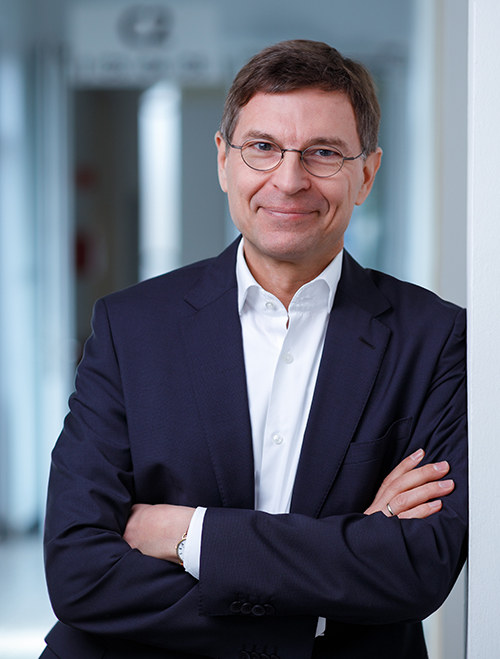
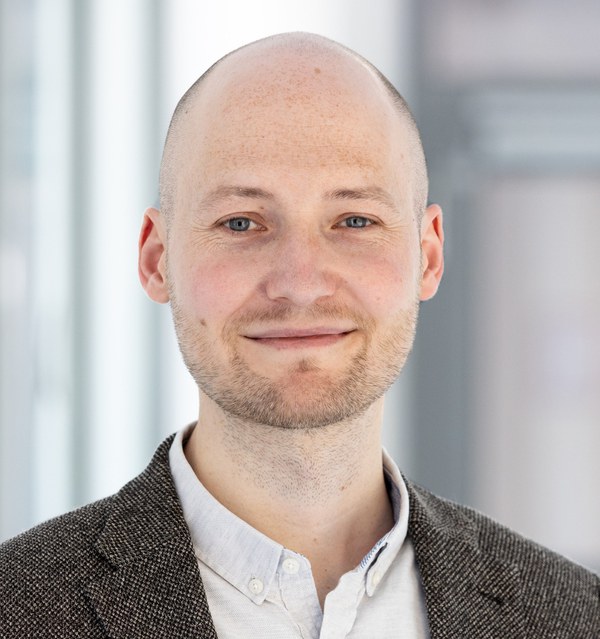
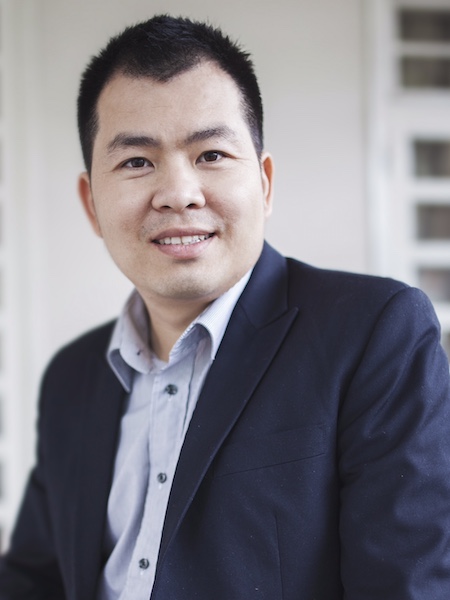
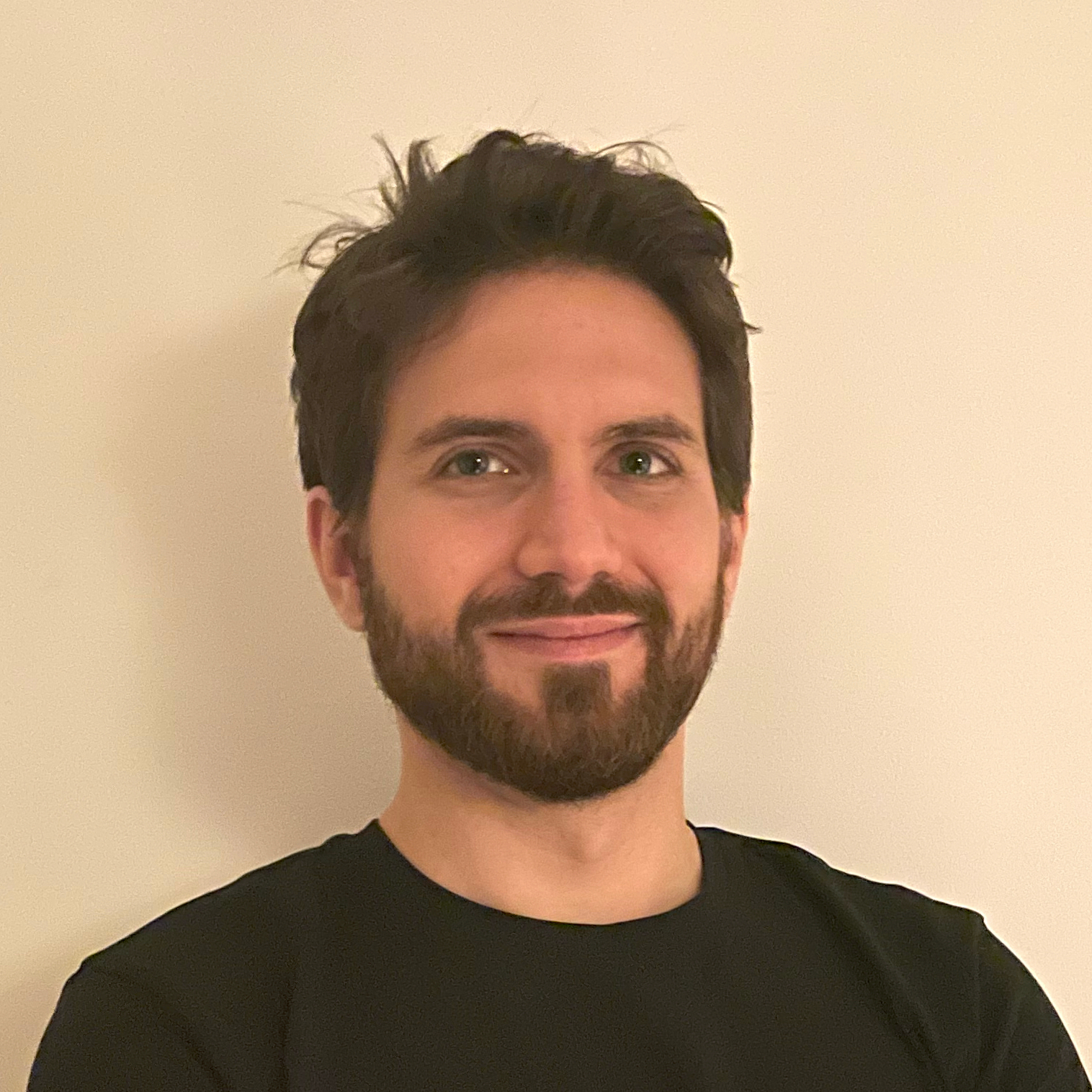
Prof. Martin Boeker is a Professor of Medical Informatics at the Technical University of Munich (TUM), affiliated with the TUM School of Medicine and Health. His work focuses on advancing healthcare through AI-driven solutions, interoperability frameworks, and precision medicine initiatives. Key projects include the German Medical Text Corpus (GeMTeX) and the MIRACUM DIFUTURE Alignment Hub. Expertise: Medical Informatics, AI in Healthcare, Federated Learning, Health Data Integration Key Contributions: FHIR-based systems, clinical decision support, patient-centered outcomes research Leadership: Director of the Institute for AI and Informatics in Medicine at TUM Hospital Right of the Isar Research emphasizes bridging clinical practice and data science through projects like modular health crawlers, automated guideline adherence monitoring, and cross-institutional medical NLP solutions. His work spans oncology informatics, rare disease management, and pandemic response data ecosystems. Recent articles highlight innovations in digital twins for precision oncology, federated analysis in oncology, and German-language medical NLP challenges. He collaborates internationally on EHR standardization and healthcare interoperability, contributing to the Medical Informatics Initiative (MII) and pandemic evidence ecosystems. Grants and collaborations involve the German Federal Ministry of Education and Research, European initiatives, and industry partnerships. Educational efforts focus on training future medical informatics professionals through MII competency programs.
Elena Simperl is a Professor of Computer Science and Deputy Head of Department for Enterprise and Engagement at King's College London's Department of Informatics. She co-directs the King's Institute for Artificial Intelligence and serves as Director of Research for the Open Data Institute. As a Hans Fischer Senior Fellow at the Technical University of Munich's Institute for Advanced Study, she leads the Trustworthy Knowledge Graphs focus group and contributes to advancing human-centric AI research across European institutions. Professor Simperl obtained her doctoral degree in Computer Science from the Free University of Berlin and her diploma from the Technical University of Munich. Prior to joining King's, she held academic positions in Germany, Austria, and at the University of Southampton, and was a Turing Fellow. Her career trajectory demonstrates consistent leadership in bridging academic research with practical applications in data ecosystems. Her research sits at the critical intersection of AI and social computing, focusing on human-centric approaches to building sociotechnical systems that integrate data, algorithms, and human capabilities. She investigates how to make knowledge engineering more accessible, how to leverage collective intelligence for data quality improvement, and how to design participatory AI systems that address societal challenges like misinformation. Her work spans knowledge graphs, semantic technologies, crowdsourcing, and open data, with particular emphasis on the social dimensions of data-intensive systems and the governance frameworks needed for trustworthy AI deployment. Analysis of her recent publications reveals a strong evolution toward integrating large language models with traditional knowledge engineering practices while maintaining human oversight. There's a clear trajectory from foundational work on knowledge representation toward increasingly applied research addressing real-world challenges in media ecosystems, citizen science, and data governance, with growing attention to policy implications of AI technologies. Fellow of the British Computer Society Fellow of the Royal Society of Arts Hans Fischer Senior Fellow at TUM-IAS (2023) Ranked among top 100 most influential scholars in knowledge engineering of the last decade Included in Women in AI 2000 ranking Professor Simperl has led 14 major European and national research projects totaling millions in funding, including MediaFutures (a Horizon 2020 program tackling online misinformation), QROWD, ODINE, Data Pitch, and ACTION. She currently co-chairs the Croissant working group in ML Commons developing data standards for AI, and serves as president of the Semantic Web Science Association. Her research has directly influenced the development of data ecosystems supporting startups and citizen science initiatives across Europe, demonstrating exceptional ability to translate theoretical advances into practical impact. As Director of Research at the Open Data Institute, she oversees initiatives connecting data entrepreneurs with artists and civic organizations. Her leadership in the MediaFutures project established a data-driven innovation hub that supported 51 startups/SMEs and 43 artists through three open calls, creating a sustainable model for arts-technology collaborations addressing media challenges. Her work with the ODINE project helped create a European ecosystem for data-driven startups, demonstrating her commitment to building practical applications of open data principles.
Jishen Zhao is an Assistant Professor in the Department of Computer Science and Engineering at the University of California, San Diego (Jacobs School of Engineering). His research focuses on computer architecture, non-volatile memory systems, and deep learning acceleration. Dr. Zhao has published extensively in top venues including ISCA, MICRO, ASPLOS, and IEEE Transactions. He collaborates with researchers at UCSD and beyond to advance systems for emerging applications in AI and autonomous vehicles. Dr. Zhao's primary research areas include persistent memory systems, hardware/software co-design for deep learning, and safety-critical computing. He develops techniques for crash consistency, memory disaggregation, and efficient neural network deployment. His work on autonomous vehicles addresses scenario generation and perception-aware system design. Recent projects explore LLM applications for software engineering and hardware verification. Analysis of Dr. Zhao's 2024-2025 publications reveals a strong shift toward AI-integrated systems research. He applies large language models to tasks like RTL verification and software issue localization while continuing to innovate in memory systems for serverless computing. There is growing emphasis on safety-critical systems for autonomous vehicles and energy-efficient neural network training using novel hardware architectures. Information about Dr. Zhao's scientific awards, advising activities, grants, and laboratory facilities was not available in the provided documentation.
Prof. Stefan Wrobel is a Professor of Computer Science at the University of Bonn and Director of the Fraunhofer Institute for Intelligent Analysis and Information Systems (IAIS). He holds leadership roles, including Co-Director of the Lamarr Institute for Machine Learning and Artificial Intelligence and Managing Director of the Bonn-Aachen International Center for Information Technology (b-it). His research focuses on AI, machine learning, and big data applications in industry and society. He earned his PhD from the University of Dortmund and has held academic positions at Magdeburg University and Berlin Technical University. Active in national/international AI initiatives, he chairs the Fraunhofer Strategic Research Field on Artificial Intelligence and co-leads the Machine Learning Rhine-Ruhr (ML2R) Competence Center. Education: Master's (Georgia Tech), PhD (University of Dortmund). Research emphasizes intelligent algorithms, data analysis, and AI ethics. Awarded GI-Fellow (2022) and honored by the German Computer Science Society for contributions to AI history. Key roles include Editorial Board member of Machine Learning journals and advisory roles in AI ethics and certification. Scientific contributions span over 100 publications in machine learning, data mining, and visual analytics. Advised numerous PhD students on topics like graph mining and trustworthy AI. Leadership in institutions like Fraunhofer Technology Hub for Machine Learning and the German Computer Science Society's Special Interest Group on Knowledge Discovery.
Dr. Jann Michael Weinand is the head of the Integrated Scenarios department at the Institute of Climate and Energy Systems (ICE-2) within Forschungszentrum Jülich GmbH. He leads a team of 30 scientists, PhD students, and master students focusing on energy system analysis, complexity management, and AI integration. His work addresses regional and international energy systems, emphasizing renewable energy resource assessment and techno-economic feasibility. Dr. Weinand holds a Dr.-Ing. from the Karlsruhe Institute of Technology (2020) and a Mechanical Engineering and Business Administration degree from RWTH Aachen University (2016). His research spans energy autonomy, renewable resource optimization, and the socio-technical challenges of energy transitions. Key research areas include energy system modeling, geothermal and wind energy potential, and data-driven methodologies. He coordinates interdisciplinary projects with academic and industrial partners, contributing to high-impact journals like Nature Energy and Joule. His team develops open-source tools (e.g., ETHOS workflows) for reproducible energy assessments and advocates for spatially disaggregated energy planning. Publications highlight trade-offs in energy system design, AI risks, and land-use conflicts for renewables. He emphasizes integrating social, technical, and environmental factors into energy policy frameworks.
Danh Le Phuoc is a Principal Computer Scientist at Technical University of Berlin, leading research at the PICOM.AI lab where his team develops autonomous information systems for robotics, autonomous vehicles, and IoT systems through pervasive intelligence in complex networks. With over 70 publications and significant academic impact (6811 citations, H-index 31), he has established himself as a notable researcher in semantic technologies. His educational background isn't explicitly detailed in the provided text, but his research expertise spans multiple domains requiring advanced technical knowledge. Le Phuoc's research focuses on bridging theoretical concepts with practical system implementation, particularly in RDF Stream Processing, Semantic Web technologies, and IoT middleware. His work emphasizes building real-world systems that process linked streams and data in real-time, enabling applications in intelligent transportation systems and connected vehicles. His research trajectory shows consistent innovation from foundational work on semantic mashups (2009) through to advanced stream processing frameworks (2017). His publications reveal strong trends toward processing real-time semantic data streams, with increasing focus on scalability, performance optimization, and integration of IoT systems with knowledge graphs. The progression shows movement from basic semantic web pipes to complex, elastic cloud-based stream processing systems. 22 Awards, Honours, Fellowships and Grants 10+ awards for innovative Semantic Web applications Multiple honors for IoT applications As an obsessive builder, Le Phuoc has developed numerous influential systems including The Graph of Things, CQELS (Continuous Query Evaluation over Linked Streams), Semantic Web Pipes, and Linked Sensor/Stream Middleware. His current focus is on ASAP (Autonomous Semantic Stream Processing), a platform for connected vehicles and intelligent transportation systems. His lab appears to maintain active GitHub repositories for several of these systems, suggesting ongoing development and community engagement.
Pierre Monnin is a Junior Fellow in AI at Université Côte d'Azur , conducting research within the Wimmics team at the I3S Laboratory . He also teaches within the EFELIA Côte d'Azur program. His work spans multiple institutions through funded projects like SHACKLE (EU Horizon), ECLADATTA and AT2TA (ANR), with collaborations at Télécom Paris , Università di Bari , and INESC-ID in Lisbon. Previous roles include temporary lecturer at TELECOM Nancy (2023-2024) and researcher at Orange (2020-2023). Research Interests focus on the knowledge graph lifecycle (construction, matching, refinement, mining, discovery) from neurosymbolic AI and analogical reasoning perspectives. He explores Domain knowledge injection into ML models Symbolic-semantics for graph embeddings Zero-shot bootstrapping techniques Context-aware semantic annotation Link prediction with constraint enrichment Life sciences applications Recent scientific awards include: Best Paper Award at ESWC 2024 (Student & Resource Papers) Best Thesis Award from French Association EGC (2022) 1st Prize (Accuracy Track) at Semantic Web Challenge (2021) His teaching portfolio covers AI fundamentals for foreign languages, marketing, and adult education programs, with specialized courses in Semantic Web technologies NoSQL databases XML tools Compiler implementation He supervises multiple PhD students and interns on topics involving neurosymbolic refinement , knowledge reconciliation , and analogical reasoning . Key software contributions include: KGPrune - Web application for thematic Wikidata subgraph extraction PyGraft - Synthetic knowledge graph generation tool DAGOBAH UI - Semantic table interpretation interface He also maintains datasets like PGxLOD and YAGO4-LP for pharmacogenomics and link prediction.
Oleg Lashinin is an active researcher in the field of Recommender Systems , with a focus on Machine Learning , Temporal Modeling , and User Behavior Analysis . He has contributed to 15 recent publications spanning 2021–2025, including conference papers at ECIR, SIGIR, RecSys, and workshops like KaRS@RecSys and ORSUM@RecSys. His work explores advanced techniques such as Self-Attention Models , Time-Aware Item Weighting , and Cost-Constrained Recommendations . Key research trends in his publications include Deep Learning for sequential recommendation tasks, Crowdsourcing for explanation evaluation, and Temporal Dynamics in user behavior. Notable projects include the GPT3RecBot Telegram chatbot and the RecBaselines2023 dataset for benchmarking recommender systems.
Oliver Karras is a researcher, data scientist, and lecturer at the Data Science and Digital Libraries research group at TIB – Leibniz Information Centre for Science and Technology. He holds a BSc, MSc, and PhD in Computer Science from Leibniz University Hannover. His research focuses on FAIR scientific knowledge, Open Research Knowledge Graph (ORKG), and national research infrastructure projects like NFDI-4Ing and FAIR-DS. He is a member of the German Informatics Society (GI) and spokesperson of the Requirements Engineering (RE) group, contributing to conferences and journals as a reviewer. Previously, he was a research associate and PhD student in the Software Engineering group at Leibniz University, leading the DFG project ViViReq on video integration in requirements engineering. His research interests include Data Science, AI, Knowledge Representation, Software Engineering, Requirements Engineering, Empirical Research, and Open Science. He has published over 60 papers in these areas, with notable contributions to knowledge graphs, FAIR data, and reproducibility frameworks. His work emphasizes organizing scientific knowledge for accessibility and collaboration across disciplines. He is actively involved in initiatives like the ORKG, promoting sustainable literature reviews and open science practices. His professional contributions extend to tool development, such as OntoAligner for ontology alignment and SciKGTeX for semantic annotation in LaTeX. Oliver Karras collaborates with institutions like Leibniz University, contributing to the NFDI consortium and energy research projects. His expertise bridges technical innovation and academic rigor, addressing challenges in knowledge management and reproducibility. His current roles include advancing TIB’s research infrastructure and fostering interdisciplinary collaboration through knowledge graph applications.
Kiril Gashteovski is a PhD candidate at the Chair of Practical Computer Science I: Data Analytics within the School of Business Informatics and Mathematics at the University of Mannheim. He is supervised by Prof. Dr. Rainer Gemulla and affiliated with the Data and Web Science Group. His primary research focuses on open information extraction, natural language processing, and machine learning applications. He concurrently holds a position as Research Scientist at NEC Laboratories Europe GmbH in Heidelberg, Germany. Education: PhD candidate (University of Mannheim, ongoing), prior academic background includes studies and research roles at institutions in Bulgaria, France, and North Macedonia. Research interests emphasize developing efficient open information extraction systems, knowledge base construction, and text analytics applications. His work bridges theoretical advancements with practical implementations in areas like entity linking and corpus development. Publications span topics such as OPIEC corpus development, citation-centered extraction, and toolkit creation for entity aspect linking. He actively presents at venues like AKBC and EMNLP. Advising and supervision include leading team projects like 'Complaint Handling via Text Analytics for Roche' and 'Data analytics on a ticketing system' with Abbvie. He also teaches courses in data mining and machine learning. Labs/Teams: Core member of the Data and Web Science Group at University of Mannheim, collaborating with industry partners like NEC Labs Europe.
Professor Javier Villalba-Diez serves at the Faculty of Business of Heilbronn University of Applied Sciences, Germany, where he integrates artificial intelligence with lean management principles in industrial and business contexts. His international collaborations include a cooperative doctoral program with Technical University of Madrid and Erasmus exchanges with Universidad Politécnica de Madrid. Dr. Villalba-Diez earned dual engineering degrees: Mechanical Engineering from Technische Universität München and Industrial Engineering from Universidad Politécnica de Madrid (2003). His PhD in Engineering, Economics and Organizational Innovation (2016) from Universidad Politécnica de Madrid received the institution's best doctoral thesis award. His research spans Artificial Intelligence (particularly Deep Learning applications), Hoshin Kanri strategic planning, Business Intelligence , and Lean Manufacturing . He pioneers sensor-based methodologies for organizational design, using EEG and industrial IoT to analyze problem-solving patterns and network resilience. His work bridges theoretical models with practical implementations across German, American, Japanese, and Spanish manufacturing facilities. Recent publications demonstrate a clear trajectory toward Industry 4.0 integration , with 60% of his 2019-2020 work focusing on deep learning applications in quality control, sensor networks, and cyber-physical systems. The journal Sensors (MDPI) serves as his primary publication venue, reflecting his emphasis on data-driven industrial analytics. His recognition includes: Prize for best doctoral thesis by Universidad Politécnica de Madrid (2016) As Guest Editor for Sensors and reviewer for journals like Sustainability and Journal of Manufacturing Systems , he shapes discourse in industrial AI. His doctoral supervision with Madrid focuses on AI-driven strategic organizational design, while industry collaborations with manufacturing facilities worldwide translate research into operational frameworks. He maintains active roles in curriculum development for Industry 4.0 education through the PROFH4 digital initiative. Dr. Villalba-Diez operates within international research networks, leveraging his multilingual capabilities (German, English, Spanish) to facilitate transnational projects. His work with Neo4j for Hoshin Kanri visualization exemplifies his approach to making complex organizational networks actionable for industry leaders.
Tien Ping Tan is an experienced researcher specializing in speech recognition , natural language processing , and machine learning applications. With a PhD in Automatic Speech Recognition for Non-Native Speakers from Joseph Fourier University (2008), his career spans two decades of impactful contributions across multiple domains.
Zaiwen Feng is a researcher actively contributing to data governance, semantic modeling, and causal inference. His work focuses on knowledge graphs, graph-based methods, and service-oriented architectures through collaborations with institutions like the University of Queensland and universities in China. Research Focus : Graph Differential Dependencies, Entity Resolution, Causal Effect Estimation, and Ontology Alignment Methodologies : Machine Learning, Variational Autoencoders, Prompt Engineering, and Semantic Retrieval Application Areas : Biomedical Data, Property Graph Recommendation, and Process Model Repositories Key trends in his publications include automated semantic modeling , neural approaches for entity resolution , and causal inference with graph structures . He frequently collaborates with researchers like Keqing He, Wolfgang Mayer, and Selasi Kwashie across conferences such as HPCC, BIBM, and WISE.
Jing Jiang is a prominent researcher at Singapore Management University, specializing in Natural Language Processing (NLP), Computational Linguistics, and Artificial Intelligence. His work spans diverse areas including Vision-Language Models, Machine Translation, Knowledge Graph Reasoning, Sentiment Analysis, and Social Media Discourse Modeling. Key contributions include frameworks for consistent client simulation in mental health counseling and counterfactual contrastive prefix-tuning for many-class classification. He has pioneered methods in zero-shot VQA with interpretable reasoning graphs , cross-lingual understanding with universal syntax , and modularized zero-shot architectures . His research often combines theoretical insights with practical implementations, as seen in works on stereotypical bias in vision-language models (VLStereoSet), tensorized self-attention for dependency modeling, and collaborative relation-augmented attention for knowledge graph completion. Jing Jiang's collaborations span global experts in NLP and AI, with co-authors from institutions like SMU, Waseda University, and Microsoft Research.
Jason J. Jung is a Professor in the Department of Computer Engineering at Chung-Ang University, Seoul, Korea. His academic work focuses on knowledge engineering , social media analytics , and data mining within the Knowledge Engineering Laboratory. Research Interests : Computer Science, Social Knowledge, Data Modeling, Sentiment Analysis Projects : IoT-based cultural systems, real-time social event detection, transmedia storytelling models The 15 most recent publications (2014-2018) demonstrate expertise in social network analysis , multimodal data processing , and context-aware systems applied to urban services, cultural tourism, and digital storytelling. Key trends include real-time analytics , trust modeling , and collaborative frameworks for O2O services. Professional activities include editorial contributions, invited talks, and patent developments. Students at all levels (PhD/MSc/BSc) conduct research under his supervision at the Knowledge Engineering Laboratory. Personal interests include travel, film, painting, literature, and music.