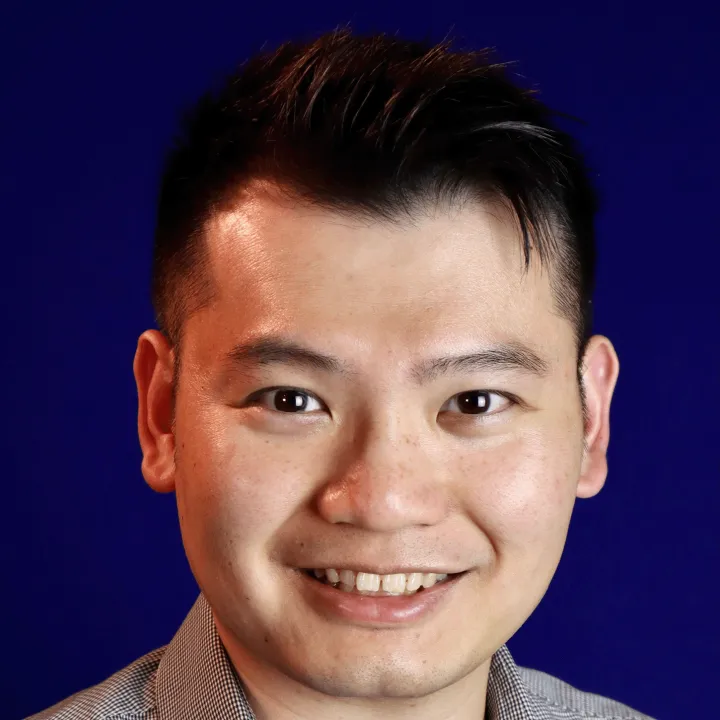
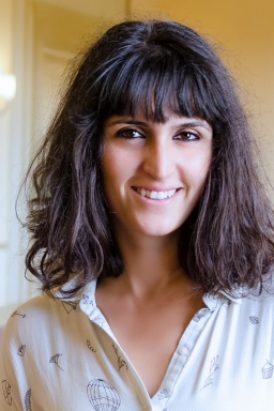
Alex Wong is an Assistant Professor of Computer Science at Yale University, specializing in computer vision, robotics, and medical imaging. His research focuses on sensor fusion, unsupervised learning, 3D vision, robust perception under adverse conditions, and medical image analysis. He holds degrees from the University of California, Los Angeles (UCLA), including a B.S., M.S., and Ph.D. in Computer Science. Wong’s work bridges theoretical advances with practical applications, particularly in depth estimation, autonomous systems, and medical diagnostics. He has received prestigious awards such as the NeurIPS Outstanding Student Paper Award (2011) and the ICRA Best Paper Award in Robot Vision (2019). His research often addresses challenges in unstructured environments, emphasizing robustness and adaptability. Recent projects include developing novel frameworks for unsupervised depth completion, adversarial robustness in vision systems, and multimodal fusion techniques. His contributions span conferences like CVPR, ICCV, and ICRA, with a strong focus on advancing AI for real-world applications in healthcare and robotics. Education: B.S., Computer Science, UCLA M.S., Computer Science, UCLA Ph.D., Computer Science, UCLA Awards: NeurIPS Outstanding Student Paper Award (2011) ICRA Best Paper Award in Robot Vision (2019) His lab at Yale Engineering focuses on AI-driven solutions for perception challenges, collaborating across disciplines to advance medical imaging and autonomous systems. Current efforts explore generative models, continual learning, and vision-language integration for robust scene understanding.
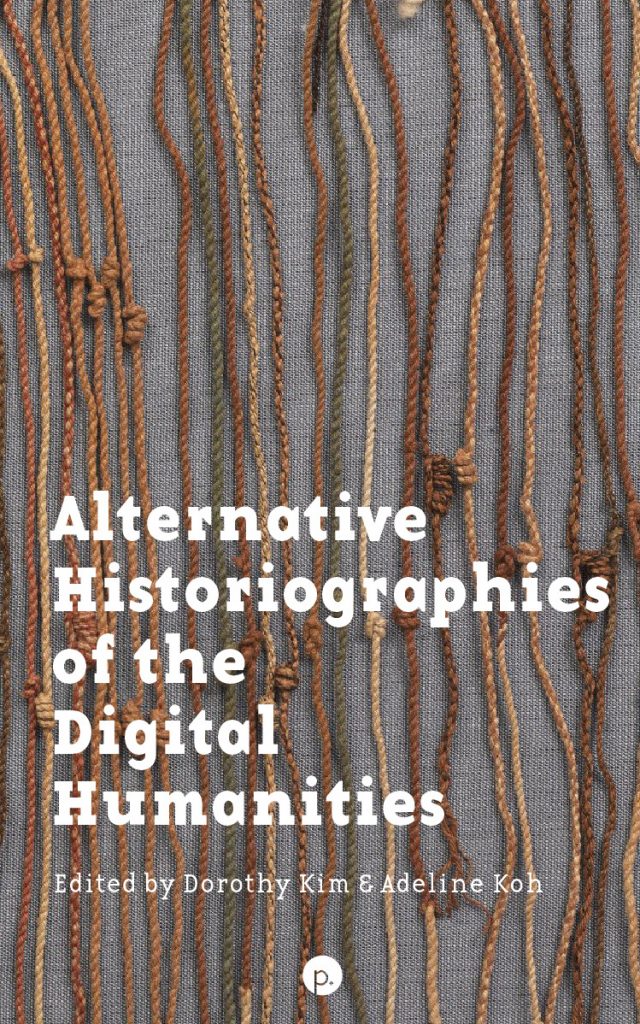
Dorothy Kim serves as Assistant Professor of English at Brandeis University with cross-appointments in the Department of Women's, Gender and Sexuality Studies and the Women's Studies Research Center. Her innovative scholarship bridges medieval literary studies, digital humanities, and critical race theory, examining how medieval history is weaponized by contemporary white supremacist movements and advocating for antiracist frameworks in academia. She earned her Ph.D. and M.A. from the University of California, Los Angeles and her B.A. from the University of California, Berkeley. Her educational trajectory reflects deep engagement with interdisciplinary approaches to literature and cultural studies. Kim's research centers on exposing the racialized foundations of medieval studies, particularly through projects analyzing digital white supremacy and medievalism's role in alt-right ideology. She pioneers methodologies connecting medieval women's literary cultures with contemporary trans feminism while interrogating Jewish/Christian difference in manuscript studies. Her work consistently challenges the field's historical whiteness and develops decolonial digital humanities practices. Her publication trends reveal a decisive shift toward critical race interventions in premodern studies, with increasing focus on database methodologies, sonic histories, and the material politics of medieval manuscript transmission. Recent works demonstrate how digital tools can either reinforce or dismantle racial hierarchies in academic knowledge production. Her distinguished honors include: 2023 Medieval Academy of America Article Prize in Critical Race Studies American Studies Association Digital Humanities Book Prize (2021) Society for Medieval Feminist Scholarship's Best Feminist Article Award (2021) AAUW Postdoctoral Fellowship (2018-2019) Folger Shakespeare Library Long-Term Fellowship (2025-2026) SSHRC, Ford Foundation, Fulbright, and Mellon fellowships Kim directs major collaborative projects including the NEH-funded An Archive of Early Middle English (161-manuscript database) and co-leads the Global Middle Ages Project. As co-director of RaceB4Race and the Reckonings Institute, she creates platforms for community archiving and social justice praxis. Her mentorship focuses on training students in critical digital methodologies through Brandeis' DH Lab while developing antifascist frameworks for humanities education. She currently leads the Brandeis University DH Lab housing her NEH project, co-edits Literature Compass's pre-1800 section, and develops two major book projects: Race, the Crusades, and the Katherine Group (based on her AAUW fellowship) and Music, Multimodal Manuscripts, and Remediating the Medieval Lyric for ArcPress.
Bunty Avieson is a Senior Lecturer in Journalism and Media at the University of Sydney's Faculty of Arts and Social Sciences. She holds a PhD and MPhil from Macquarie University, specializing in media theory and literary analysis. Her research focuses on Bhutanese media development, Wikipedia's societal impact, and the intersection of journalism with literary practices. PhD Thesis: Media development in Bhutan during its democratic transition MPhil: 'The Poetics of Paranoia' exploring self-construction through Derrida and Nagarjuna Research Interests: Her work spans media policy in Bhutan, Wikipedia's role in knowledge equity, and the ethics of memoir writing. She has published extensively on Bhutan's media evolution and co-edited volumes on memory mediation and trauma narratives. Articles Trends: Recent work examines lifestyle journalism identity, Wikipedia's pandemic-era contributions, and Bhutan's unique digital media strategies. Earlier research explored Bhutan's transition from oral traditions to social media under Gross National Happiness principles. Awards: Vice-Chancellor's PhD Commendation (2013), Ned Kelly Awards for crime fiction (2001-2003) Grants & Projects: Principal Investigator in the Bhutan-Wiki Project (DECRA-funded), co-developed the Australian Colonial Narrative Journalism Database. Received grants for Tamil diaspora storytelling and Bhutan media studies. Professional Roles: Wikimedia Australia Vice President, member of journalism education associations, and former editor of Woman's Day.
Christopher Potts is Professor and Chair of Linguistics at Stanford University, with a courtesy appointment as Professor of Computer Science. He serves as Director Emeritus of the Stanford Center for the Study of Language and Information (CSLI) and leads the Pragmatic Enrichment & Contextual Interface Lab. His work bridges theoretical linguistics and computational approaches to language understanding. Education: B.A. in Linguistics from New York University (1999) Ph.D. in Linguistics from University of California, Santa Cruz (2003) Potts' research focuses on how computational methods can illuminate linguistic phenomena, particularly in the areas of semantics, pragmatics, and sentiment analysis. His work explores how emotion is expressed in language and how linguistic production and interpretation are influenced by context. He has made significant contributions to understanding conventional implicatures, sentiment analysis frameworks, and the application of neural networks to linguistic problems. His recent work has increasingly focused on the interpretability of large language models and the development of frameworks like DSPy for building reliable AI systems. An analysis of Potts' recent publications reveals a strong trend toward the intersection of linguistic theory and practical AI applications. His work spans theoretical linguistics (e.g., compositionality, preposing constructions), neural network interpretability, and practical NLP systems (e.g., ColBERT, DSPy). The research demonstrates consistent focus on making language models more transparent, controllable, and linguistically informed, with particular attention to how context shapes meaning. Scientific Awards: Best Paper Award at 2024 ACL for 'Mission: Impossible Language Models' Outstanding Paper Award at 2024 ACL for 'CausalGym' ACL Test of Time Award 2023 Dean's Award for Distinguished Teaching (2015-2016) Best New Data Set or Resource Award at 2015 EMNLP Potts has secured numerous research grants as PI or Co-PI from major organizations including Google, Amazon, NSF, Office of Naval Research, and Stanford's HAI institute. His current projects focus on evaluation of retrieval-augmented generation systems, LLM-mediated communication in organizations, interpretability techniques for language models, and frameworks like DSPy for building next-generation AI systems. He has mentored numerous researchers who have gone on to make significant contributions in NLP and computational linguistics. As Director of CSLI (2013-2020) and current Chair of Linguistics at Stanford, Potts has played a key leadership role in shaping interdisciplinary research at the intersection of language, computation, and cognition. His Pragmatic Enrichment & Contextual Interface Lab continues to be a hub for innovative research combining formal linguistic theory with cutting-edge computational methods.
Kevin D. Ashley is a Professor of Law at the University of Pittsburgh School of Law. He is also a senior scientist at the Learning Research and Development Center and an adjunct professor of computer science at the University of Pittsburgh. His interdisciplinary work bridges artificial intelligence, legal analytics, and ethical reasoning. JD, Harvard Law School M.A. and PhD, University of Massachusetts BA, Princeton University His research focuses on computational modeling of legal reasoning , AI and ethics , legal text analytics , and case-based reasoning . He has pioneered AI applications for legal decision support, automated argumentation, and bias detection in legal corpora. Recent publications include studies on large language models in legal annotation, argument mining, and empirical legal analysis. His work has been supported by multiple National Science Foundation grants, emphasizing fairness in AI and access to justice. 2022 Codex Prize for Computational Law 2015 University of Massachusetts Outstanding Achievement Award 2002 AAAI Fellow for AI in Law contributions 2000 Chancellor’s Distinguished Research Award A former President of the International Association for Artificial Intelligence and Law, Ashley has held visiting roles at the University of Bologna, Stanford CodeX, and IBM Watson Research Center. He co-edits the journal Artificial Intelligence and Law and teaches courses on applied legal analytics.
Eytan Adar is a Professor of Information and Computer Science at the University of Michigan, holding dual appointments in the School of Information and the College of Engineering's Electrical Engineering and Computer Science department. His work sits at the intersection of human-computer interaction and artificial intelligence, focusing on large-scale systems analysis and novel interface design. Adar's research spans multiple domains including social media analysis (Twitter, Reddit), academic citation networks, meme propagation, information extraction, and political networks. His methodological expertise includes data mining, data visualization, and graph-based network analysis. His work often operates at internet scale, examining language, creativity, social network dynamics, and text production. His recent publications reveal a strong focus on AI-human collaboration, with particular attention to generative AI interfaces, visualization techniques for complex data, and ethical considerations in AI systems. His work shows a consistent pattern of bridging theoretical insights with practical system implementations. Best Paper Award at ProtoAI: Model-Informed Prototyping for AI-Powered Interfaces, IUI'21 Honorable Mention Award at CHI'24 for feminist interaction techniques research Best Paper Award at ICWSM'18 for Wikipedia language edition analysis Best Paper Award at ICML 2016 Workshop for neural language model visualization Best Student Paper at WSDM'09 for web dynamics research Best of CHI at CHI 2008 for web revisitation patterns analysis Adar has advised numerous PhD students who have gone on to prominent positions at organizations including Google, Apple, RAND, Northwestern University, and Stanford. His research is generously supported by the NSF, IARPA, NIH, the Education Department, and major technology companies including Adobe, Microsoft, Facebook, Google, and Yahoo. He is also a founder of the International Conference on Web and Social Media (ICWSM) and has served as Co-General Chair for WSDM and Co-Program Chair for UIST.
Alaina Lemon is a Professor of Anthropology at the University of Michigan, affiliated with the College of Literature, Science, and the Arts (LSA). She serves as Director of Undergraduate Studies in Anthropology and holds affiliations with the Center for Russian, East European, and Eurasian Studies (CREES), the Weiser Center for Europe and Eurasia, and the Interdepartmental Program in Anthropology and History. Her research focuses on socio-cultural anthropology, performance studies, and visual culture, with expertise in Russia, the Romani diaspora, and post-Socialist states. Education: BA in Anthropology (University of Wisconsin, 1987), MA (University of Chicago, 1988), and PhD (University of Chicago, 1996). Notable awards include the Wayne S. Vucinich Book Prize (2001), Heldt Book Prize (2001), and a 2023 visiting scholar position at the École des Hautes Études en Sciences Sociales (Paris). Her work bridges historical and contemporary issues, exploring themes like phatic labor, media infrastructures, and affective politics. Recent projects include editing the documentary Tremors (2023) and researching Soviet-era moral projects through studies of Moscow’s Metro and canine-human interactions. Lemon’s interdisciplinary approach integrates performance studies, linguistic anthropology, and critical race theory to analyze cultural dynamics in transitional societies. Grants include a 2019-2024 University of Michigan Office of Research grant for film collaboration and a 2002-2003 International Research and Exchanges Board fellowship. She has authored influential books such as Between Two Fires (2000) and Technologies for Intuition (2017), and her films document Romani experiences and urban cultural phenomena.
Alexis Battle is an Associate Professor at Johns Hopkins University with appointments in Biomedical Engineering , Computer Science , and Genetic Medicine (secondary). She directs the Malone Center for Engineering in Healthcare and serves as Deputy Director of the Data Science and AI Institute . Educated at Stanford University (PhD in Computer Science, 2013), Battle transitioned to academia after leadership roles at Google. Research Focus: Battle’s work bridges genomics and machine learning , emphasizing the impact of genetic variation on human health. Her lab develops tools like Watershed to predict functional effects of rare variants, aiming to enhance rare disease diagnosis. Key themes include non-coding DNA analysis , personalized genomics , and systems biology , with applications in cardiovascular disease and neurodegenerative disorders . Publications & Awards: Over 60 peer-reviewed articles in journals like Nature , Science , and Genome Biology , with recent emphasis on single-cell transcriptomics , multiomics integration , and telomere biology . Recipient of the President’s Frontier Award (2022), Microsoft Investigator Fellowship (2019), and Searle Scholar (2016). Scientific Awards: 2022 President’s Frontier Award 2019 Microsoft Investigator Fellowship 2019 Johns Hopkins Discovery Award 2017 Johns Hopkins Catalyst Award 2016 Searle Scholar Advising & Funding: Mentors 11 PhD students, 3 undergraduates, and postdoctoral fellows. Her research is funded by NIH, Searle Scholars, and institutional grants. The Battle Lab collaborates on projects like the GTEx Consortium , focusing on gene regulation and clinical genomics .
Gail E. Kaiser is a Professor of Computer Science and the Director of the Programming Systems Laboratory (PSL) in the Computer Science Department at Columbia University. She has been with Columbia University since 1985, becoming a full Professor in 1998. Prof. Kaiser's research spans software engineering, program analysis, software testing, and software security, with recent focus on addressing challenges in AI/ML systems testing and security. Prof. Kaiser received her PhD in Computer Science from Carnegie Mellon University in 1985 and her ScB in Computer Science and Engineering from MIT in 1979. Her dissertation at CMU was titled "Semantics for Structure Editing Environments" under advisor Nico Habermann, and at MIT she completed "Automatic Extension of an Augmented Transition Network Grammar for Morse Code Conversations" under advisor Al Vezza. Prof. Kaiser's research interests primarily focus on software engineering following a systems building approach, with recent emphasis on static and dynamic program analysis techniques to improve software reliability and security. Since 2005, she has investigated testing "non-testable" programs, particularly in machine learning, data mining, and scientific computing applications where traditional testing oracles are insufficient. She has developed novel techniques and tools for detecting bugs and verifying repairs in complex systems. Concurrently, she has worked on collaboration environments for computational scientists, creating knowledge sharing and domain-aware environments to support scientific workflows. Prof. Kaiser's recent publications demonstrate a strong focus on the intersection of software engineering and artificial intelligence. Her work addresses critical challenges in testing AI systems, code understanding through deep learning, vulnerability detection, and educational tools for computational thinking. There's a clear evolution from traditional software engineering topics toward AI/ML applications, with particular emphasis on metamorphic testing for non-testable systems, code similarity analysis, and educational applications. Prof. Kaiser has received numerous prestigious awards throughout her career: Distinguished Journal Award (10 Years) from 18th IEEE International Conference on Software Testing, Verification and Validation (ICST), April 2025 Best Research Paper Award at 24th IEEE International Conference on Source Code Analysis & Manipulation (SCAM), October 2024 Distinguished Reviewer Awards for ASE 2024 and FSE 2024 ACM SIGSOFT Distinguished Paper Award for "CONCORD: Clone-aware Contrastive Learning for Source Code", July 2023 Best Student Paper Award at ICCE 2021 Multiple ACM SIGSOFT Distinguished Paper Awards dating back to 2014 Presidential Young Investigator in Software Engineering and Software Systems from NSF (1988-1993) Prof. Kaiser has chaired Columbia's doctoral program since 1997 and served on editorial boards including IEEE Internet Computing and as a founding associate editor of ACM Transactions on Software Engineering and Methodology. Her lab has been continuously funded by major agencies including NSF, NIH, DARPA, ONR, NASA, and numerous companies. Current grants include significant NSF funding for secure containers architecture, learning semantics of code for software assurance, and finding semantic security bugs. As Director of the Programming Systems Laboratory (PSL), Prof. Kaiser leads research in software systems, program analysis, and software testing. The lab has developed numerous tools and techniques for software reliability and security, with recent focus on challenges in AI/ML systems. Her work bridges theoretical foundations with practical applications, often resulting in deployable tools that address real-world software engineering challenges.
Ceren Budak is an Associate Professor at the University of Michigan School of Information and holds a joint appointment as Associate Professor of Electrical Engineering and Computer Science in the College of Engineering. Her work bridges computer science, statistics, and social sciences through computational social science approaches. Her educational background includes a PhD in Computer Science from the University of California, Santa Barbara (2012) and a Bachelors degree in Computer Science from Bilkent University in Turkey (2007). Prior to joining the University of Michigan faculty, she was a Postdoctoral Researcher at Microsoft Research New York. Professor Budak's research centers on computational social science, with particular emphasis on analyzing large-scale datasets to address questions with social, political, and policy implications. Her work spans several interconnected domains: News Media Production & Consumption (examining bias in news outlets and reader preferences), Social Movements & Media (using social media data to study collective action), Social Networks (understanding information diffusion processes), and Measuring and Promoting the Quality of Online Discussions (developing tools to improve online conversations). She teaches SI 608 (Networks) and SI 618 (Data Manipulation and Analysis) at the School of Information. Her publication record demonstrates consistent contributions to understanding how online information ecosystems operate, with recent work focusing on AI-human collaboration, misinformation dynamics, social movement framing, and the application of computational methods to political communication. Her research shows a clear trajectory from foundational work on social network diffusion to increasingly sophisticated analyses of contemporary information challenges. Among her service activities, she has served as Registration chair for COSN (ACM Conference on Online Social Networks) 2015 and as Program Committee Member for numerous prestigious conferences including WWW, ICWSM, WebSci, AAAI, and others. She has also been involved in organizing the MSR NYC Data Science Seminar Series and instructing the Microsoft Research Data Science Summer School.
Sebastian Thies is Professor and Chair for Ibero-American Literary and Cultural Studies at the University of Tübingen, where he has been employed since October 2012. He serves as Vice Director of the Interdisciplinary Centre for Global South Studies (ICGSS) and coordinates the BMBF/DAAD thematic network 'Futures under construction in the Global South'. His academic journey began with a PhD in Hispanic Studies from the University of Osnabrück in 2000, followed by positions at the University of Bielefeld where he progressed from Junior Professor for Hispanic Literary and Media Studies to Full Professor for Inter-American Studies. Thies' research focuses on Global South Studies, with particular emphasis on Latin American literature, film, and media. His work explores subjectivity formations, entangled temporalities, and political communication across borders. He has directed significant research initiatives including the doctoral studies program 'Entangled Temporalities in the Global South' and has co-edited major reference works such as The Routledge Handbook for Global South Studies on Subjectivities (2024). His extensive publication record demonstrates a consistent engagement with transnational cultural phenomena, particularly examining how Latin American cultural production intersects with global political and social dynamics. Thies frequently collaborates with international scholars, reflecting his commitment to transdisciplinary and transregional approaches to cultural analysis. Project Leader: Research Training Network 'Entangled Temporalities in the Global South' Vice Project Leader: Thematic network 'Literary Cultures of the Global South' Associated Investigator: BMBF-Area Studies Project 'The Americas as a Space of Entanglement' Project Leader: Research Group 'E Pluribus Unum? Ethnic Identies in Processes of Transnational Integration' Thies actively supervises doctoral students through the Interdisciplinary Centre for Global South Studies and has established collaborative networks across Latin America, particularly with institutions in Mexico and Colombia. His current research agenda focuses on 'Futures under construction in the Global South' and continues to explore the intersections of cultural production, political communication, and subjectivity formation in transnational contexts.
Genesea M. Carter serves as the Associate Director of Composition and Associate Professor in the English and University Composition Program at Colorado State University. She holds a PhD from the University of New Mexico. Her research focuses on administrative systems in higher education, including curriculum design, teacher training, and workload equity, and their impact on instructors’ well-being. She also investigates how students from diverse backgrounds navigate academia, with a focus on working-class pedagogy and identity development. Her recent co-edited collection Systems Shift: Creating and Navigating Change in Rhetoric and Composition Administration (2023) addresses institutional transformation. Earlier work includes Class in the Composition Classroom: Pedagogy and the Working Class (2017), exploring socioeconomic diversity in education. Her articles span topics like digital literacy, interdisciplinary pedagogy, and critical theory in composition studies. Dr. Carter’s scholarship emphasizes equity, intersectionality, and dismantling neoliberal structures in academia. She has contributed to journals such as Composition Studies , Journal of Teaching Writing , and Open Words , and her work bridges practical administration with theoretical frameworks in rhetoric and composition.
İBRAHİM ERDEM SEÇİLMİŞ is a Professor of Economics at Hacettepe University's Faculty of Economics and Administrative Sciences. His research focuses on experimental economics, public goods theory, behavioral economics, and tax policy with notable contributions to understanding risk perception, social discount rates, and creative industries in Mediterranean economies. He has authored/co-authored over 40 peer-reviewed publications and edited several academic volumes. Key research areas include: Experimental analysis of public goods provision Behavioral responses to environmental policies Comparative analysis of social discount rates in transition economies Evaluation of tax reforms through behavioral lenses Impact of cultural industries on regional development Notable publications include seminal works on Turkish presidential election policies (2025), risk aversion in public goods (2019), and Mediterranean creative industries (2016). His work frequently bridges theoretical economics with policy applications, particularly focusing on sustainability and social equity. He has presented at international conferences such as the Regional Studies Association European Conference (2014) and contributed to edited volumes on game theory applications and economic philosophy. Current research trends emphasize behavioral tax policy design and the socio-economic consequences of rising inequality.
Mark Gales is Professor of Information Engineering at the University of Cambridge and an Official Fellow at Emmanuel College. He is currently on sabbatical leave for the 2024/25 academic year. Prior to his academic career, he worked as a consultant at Roke Manor Research Ltd, developing radar systems, before transitioning to speech and language processing. PhD in 'Model-Based Techniques for Robust Speech Recognition' (University of Cambridge, 1995) BA in Electrical and Information Sciences (University of Cambridge, 1988) His research focuses on speech and language processing , particularly in automated language assessment and low-resource speech technology . He leads the Automated Language Teaching and Assessment (ALTA) Institute , which collaborates with Cambridge University Press & Assessment (CUP&A) to develop commercial tools like Linguaskill and Speak & Improve . These platforms provide automated spoken/written assessment for millions of users globally. Recent publications highlight his work in LLM-driven speech processing , including adversarial attacks on foundation models, end-to-end spoken error correction, and uncertainty estimation frameworks. His team's research spans multilingual capabilities, with deployments in languages ranging from Dholuo to Tok Pisin . Awards : IEEE Fellow, ISCA Fellow Leadership : Fellows' Steward at Emmanuel College Mark has contributed extensively to Hidden Markov Model (HMM) applications in speech recognition, which underpinned early automatic speech systems. His work now bridges LLM-based language assessment with cross-lingual transfer learning and robustness testing for real-world deployments.
Sebastian Riedel is a Professor at University College London (UCL) and a Researcher at DeepMind, leading the UCL NLP Lab. His work focuses on teaching machines to read, reason, and write, integrating Natural Language Processing (NLP) with Machine Learning. He holds an Allen Distinguished Investigator award and has held roles at FAIR, UMass Amherst, Tokyo University, and the University of Edinburgh. Education: PhD in Computer Science from the University of Edinburgh (advisor: Ewan Klein), postdoctoral research at UMass Amherst (advisor: Andrew McCallum), and research at Tokyo University (advisor: Tsujii Junichi). Research Interests: NLP, machine learning, information extraction, and multimodal models like Gemini. He develops tools such as UCLEED (BioNLP event extractor), frontlets (Scala map wrappers), and thebibbrag (BibTeX to HTML converter). Awards: Allen Distinguished Investigator. Software contributions include GitHub repositories for NLP, machine learning, and data tools. Contact: s.riedel@ucl.ac.uk | Office: 1st Floor, 90 High Holborn, London WC1V 6LJ | Office Hours: Mondays 11 AM–12 PM.