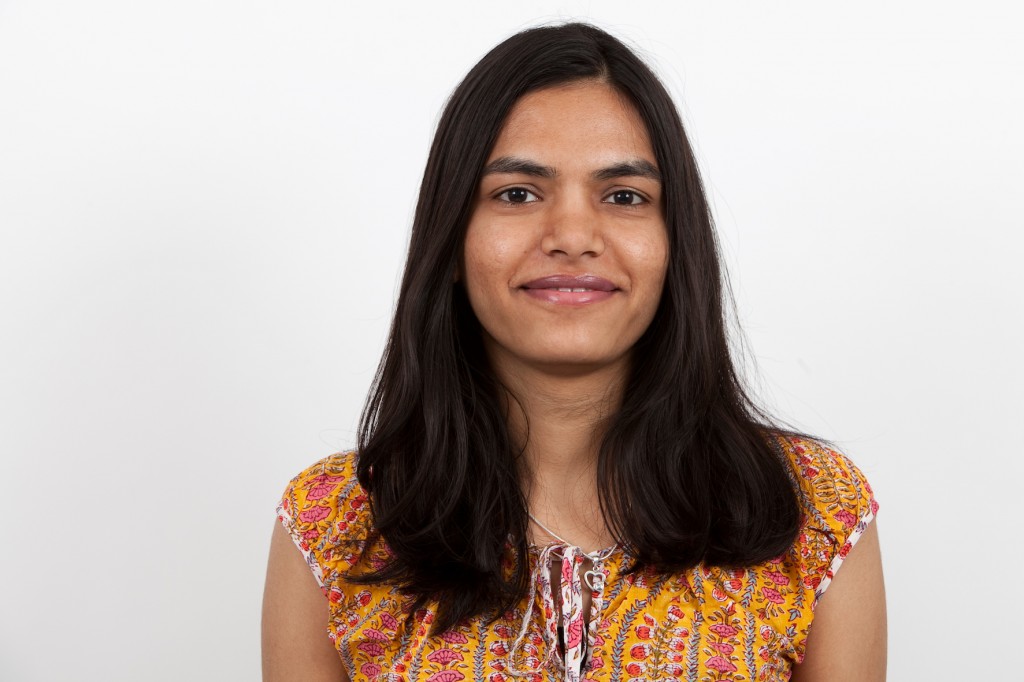
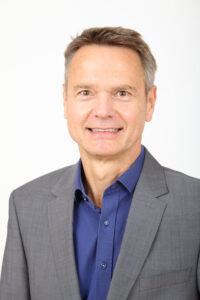
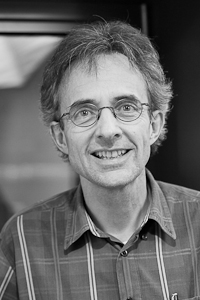
Tianwei Zhang is a predoctoral researcher at the Technische Universität Wien (TU Wien) within the Algorithms and Complexity department. His research focuses on theoretical computer science, particularly in the areas of artificial intelligence, knowledge compilation, and computational complexity. Position: PreDoc Researcher Projects: Overcoming Intractability in the Knowledge Compilation Map (2022–2025), REVEAL-AI (2020–2024) Zhang's work explores advanced techniques in satisfiability solving, constraint programming, and universal graph theory. His recent publications highlight contributions to model counting algorithms and SAT-based combinatorial optimization, bridging theoretical challenges with practical applications. His research trends emphasize scalable algorithms , computational intractability , and logic-based AI . Notable collaborations include work with Dr. Stefan Szeider on SAT solver applications for combinatorics. Contact: tianwei.zhang@tuwien.ac.at Phone: +43-1-58801-192154
Neha Lodha is a researcher in the Institut für Logic and Computation at TU Wien. Her work focuses on algorithms, complexity theory, and SAT/SMT solving techniques. She has contributed to graph encodings for combinatorial optimization problems and parameterized complexity analysis. Key research areas include SAT-based approaches for graph decomposition (branchwidth, treewidth), SMT methods for fractional hypertree width, and algorithm engineering for constraint satisfaction problems. Her work bridges theoretical foundations with practical algorithmic implementations. Notably, she received the 2016 SAT Conference Best Student Paper Award for her work on SAT encodings of branchwidth. This research was later expanded into a 2019 ACM Transactions publication. Her publications span conferences like IJCAI, CP, and SAT, with a focus on advancing the theoretical and practical aspects of computational logic and algorithm design.
Dr. Thomas Bolognesi is an Associate Professor at Grenoble Ecole de Management, specializing in governance, socio-economic dynamics, and environmental policy. His work focuses on understanding how policy instruments and institutions interact to address challenges like water governance, regional development, and urban sustainability. He emphasizes the co-evolution of economic development and environmental systems, often using empirical designs to analyze non-linear relationships. His research interests include institutional complexity traps, policy integration failures, and the socio-technical dimensions of public policy. He has extensively studied water resource management in Switzerland, France, and urban contexts globally. Bolognesi actively engages with societal impacts, aiming to translate academic findings into actionable policy recommendations. Recent publications highlight his focus on environmental governance dynamics, urban water challenges, and methodology critiques in the social sciences. His work often bridges interdisciplinary approaches, combining institutional theory with empirical case studies. Awards and grants are not explicitly listed, but his research has significant policy relevance across environmental and urban sectors. He advises on governance frameworks and collaborates with international organizations, contributing to handbooks and multi-author volumes like the Routledge Handbook of Urban Water Governance .
Mantas Simkus is an Assistant Professor at TU Wien's Institute of Logic and Computation, affiliated with the Database and Artificial Intelligence Group. He previously held an Associate Professor position at Umeå University (Sweden) within the Wallenberg AI, Autonomous Systems and Software Program (WASP). He leads the FWF-funded project 'KtoAPP: Compiling Knowledge into Applications' and contributes to the Cluster of Excellence 'Bilateral Artificial Intelligence'. His research focuses on logic-based data management, knowledge representation, and nonmonotonic reasoning, with applications in semantic web technologies and ontology engineering. Education: Bachelor's in Computer Science from Vilnius University. Research interests include logic programming, computational complexity, description logics, and their integration with databases. He explores techniques for efficient query answering, schema validation (e.g., SHACL), and reasoning under incomplete information. His work bridges theoretical foundations (e.g., complexity analysis, formal semantics) with practical systems (e.g., ontology-mediated query processing). Key projects include 'KtoAPP' (2018–2025), investigating automated knowledge compilation, and contributions to the 'SemDat' and 'OMEGA' initiatives. He teaches courses on deductive databases and semi-structured data at TU Wien. He actively participates in academic service: co-chair of RuleML+RR 2024, editorial board member of the Artificial Intelligence journal, and former co-chair of DL 2019. His research group collaborates on topics like graph databases, answer set programming, and hybrid knowledge representation systems.
Stefan Szeider is a full professor and chair of the Algorithms and Complexity Group at the Faculty of Informatics, Technische Universität Wien (TU Wien). He also serves as a visiting scientist at UC Berkeley's Simons Institute for the Theory of Computing. His academic journey includes positions at the University of Durham (UK) and the University of Toronto (Canada), and he earned his Mathematics PhD from the University of Vienna in 2001. Dr. Szeider's research focuses on designing efficient algorithms for problems in Artificial Intelligence, automated reasoning, and combinatorial optimization. He leads several initiatives, including the Vienna Center for Logic and Algorithms (VCLA), and has secured funding from the ERC, EPSRC, FWF, and others. His Erdős number is 2, reflecting his collaborative network in mathematics and computer science. Key achievements include the first ERC Starting Grant awarded to an Austrian computer scientist (2009), and awards such as the Highlighted Paper Award at SAT 2023 and Best Paper at CP 2020. He advises numerous PhD students and postdocs, fostering the next generation of researchers in algorithms and complexity. Notable contributions extend beyond academia to public outreach, including initiatives like the 'Algorithms Think Differently' educational program and the 'Algorithms in 60 Seconds' video competition. His work bridges theoretical foundations and practical applications, influencing both academic and real-world computational challenges.
Leroy Nicholas Chew is a PostDoc Researcher and FWF Projektassistent at the Vienna University of Technology (TU Wien). He is affiliated with the Department of Algorithms and Complexity within the Faculty of Informatics. His roles include contributing to research projects such as QBFPC (2022–2025), Overcoming Intractability in the Knowledge Compilation Map, and REVEAL-AI (2020–2024). These projects reflect his focus on advancing theoretical computer science and automated reasoning methodologies. While specific educational details are not explicitly provided in the text, Leroy Nicholas Chew holds a PhD, as indicated by his role listing. His current position suggests a strong background in computer science and theoretical foundations, consistent with his research activities. His research interests span several key areas in theoretical computer science, including proof complexity, quantified Boolean formulas (QBF), automated reasoning, and knowledge compilation. He explores the hardness of computational problems in logical frameworks, such as analyzing resolution and CDCL proof systems, developing optimal dual proof systems for answer set programming (ASP), and investigating model counting techniques. His work often bridges foundational theory with practical applications in formal verification and algorithm design. Recent publications (2024) highlight advancements in circuits and proofs, model counting, and ASP-QRAT proof systems. Earlier work (2016–2022) addressed QBF resolution calculi, dependency schemes, and certification challenges. These trends underscore his specialization in formal methods and computational logic. No scientific awards are explicitly mentioned in the provided text. In addition to his research, Chew is involved in multiple funded projects. These include the FWF-supported QBFPC (2022–2025), which examines QBF proofs and certificates, and the REVEAL-AI project (2020–2024), focusing on overcoming intractability in knowledge compilation. While specific grant details beyond project funding are not mentioned, his participation underscores his role in collaborative, grant-funded research initiatives. No formal advisees are listed. Chew is part of the Algorithms and Complexity department at TU Wien, collaborating on projects that emphasize proof systems, formal verification, and algorithmic foundations. His work integrates theoretical insights with practical computational methods.
Christoph Hochrainer is a PreDoc Researcher at Technische Universität Wien, affiliated with the Software Engineering department. His academic role involves research in software systems and formal methods, supported by projects like ForSmart (2023–2027) and MirandaTesting (2023–2028). He completed his Diploma in automated reasoning at TU Wien in 2020. His research spans software engineering, cryptography, and programming languages, with specialized interests in fuzzing techniques, architecture description languages, and smart contract security. Recent work emphasizes zero-knowledge circuits, Solidity benchmarking, and macro systems for domain-specific tooling. Christoph's publications consistently explore automated testing and formal verification, with a trend toward practical applications in blockchain and secure software pipelines. He supervises student theses, including work on inconsistency detection in Solidity smart contracts. He contributes to collaborative projects focused on formal methods and software reliability, operating within TU Wien's research units. No scientific awards are documented.
Maxime Jakubowski is a PostDoc Researcher at TU Wien's Faculty of Informatics, affiliated with the Databases and Artificial Intelligence research group. Based in Room HA0320 at Favoritenstrasse 9, he can be contacted at maxime.jakubowski@tuwien.ac.at and maintains an ORCID profile (0000-0002-7420-1337). His research centers on graph data management within the Semantic Web ecosystem, specializing in RDF validation through shape constraint languages like SHACL and ShEx. He investigates formal foundations, expressiveness boundaries, and practical implementations including SQL compilation and neighborhood-based graph description. Current projects include FRESH (2021–2026), KtoAPP (2018–2025), and TARGET (2024–2028), focusing on graph data theory and implementation. Recent publications (2021–2025) demonstrate consistent contributions to RDF validation standards, with 14 articles addressing shape language formalization, compilation techniques, and provenance tracking. His work bridges theoretical database concepts with industrial applications in knowledge graph validation. Dr. Jakubowski supervises bachelor theses and teaches courses including Management of Graph Data (192.161) and Project in Computer Science. His research collaborations span international projects and the Dagstuhl Seminar 24102 on Shapes in Graph Data. He is an active member of the Databases and Artificial Intelligence research group, contributing to TU Wien's leadership in graph data management and Semantic Web technologies through both theoretical research and practical tool development.
Dr. David Carral is a former Research Associate at the International Center for Computational Logic (ICCL) within the Faculty of Computer Science at TU Dresden. His work focuses on Knowledge Representation , Database Theory , and Computational Logic , particularly in the context of ontology-based data access, existential rules, and chase termination analysis. He contributed to projects like CFAED and collaborated on systems such as VLog and ROWL . David supervised theses including "Don’t Repeat Yourself: Termination of the Skolem Chase on Disjunctive Existential Rules" by Lukas Gerlach. His research bridges formal methods with practical applications in AI and database systems. Research interests include ontology design patterns , query rewritability , and efficient reasoning algorithms . He actively participated in conferences like KR and IJCAI, contributing to advancements in nonmonotonic reasoning and hyperproperties. His work integrates description logics, answer set programming, and semantic web technologies to address challenges in knowledge-based systems.
Marco Zaffalon is Professor and Scientific Director at IDSIA (Istituto Dalle Molle di Studi sull'Intelligenza Artificiale), affiliated with the Università della Svizzera italiana's Faculty of Informatics. He leads a 30-member research group on probabilistic machine learning and has published over 150 papers. Education: M.Sc. in Computer Science (Università degli Studi di Milano) Ph.D. in Applied Mathematics (Università degli Studi di Milano) Research spans probabilistic machine learning, causal AI, imprecise probabilities, and quantum computation. His work develops theoretical foundations for uncertainty reasoning and applies them to AI systems. Recent publications focus on causal inference with LLMs, counterfactual computation, and quantum decision models. Articles consistently explore intersections of probability theory, computational methods, and real-world applications like healthcare. Trends include advancing tractability in causal queries and bridging logical frameworks with machine learning. Administrative roles include co-founding Artificialy (as Chief Scientist) and directing IDSIA since 2019. He teaches courses in Causal AI, Uncertain Reasoning, and Probability.
Terry Mizrahi is a Professor at the Hunter College School of Social Work (HCSSW) and Director of the Education Center for Community Organizing. He holds a BA from New York University, an MSW from Columbia University, and a PhD in Sociology from the University of Virginia. His research focuses on medical sociology, healthcare policy, community organizing, and interdisciplinary collaboration. Key areas include physician behavior, patients’ rights, and organizational development in healthcare systems. He authored influential works like Getting Rid of Patients (1986), Community Organization and Social Administration (1993), and co-edited the Encyclopedia of Social Work—20th Edition (2008). His publications highlight trends in professional socialization, coalition-building, and policy advocacy. Awards: Lifetime Career Achievement Award (2004), Hunter College President’s Award (2008) As a leader, he served as NASW President and founded the Association for Community Organization and Social Administration. He directs initiatives fostering strategic partnerships and community engagement. His work bridges academia and practice, emphasizing applied scholarship in social work education and healthcare reform.
Leigh Zeitz is an Associate Professor in the Department of Curriculum and Instruction (Educational Technology) at the University of Northern Iowa's College of Education, with a career spanning over 25 years from 1992 to 2016. He specialized in educational technology, focusing on keyboarding instruction, concept mapping, and integrating technology into pedagogical practices. His roles evolved from Instructor (1992-1993) to Assistant Professor (1993-1997) before attaining the rank of Associate Professor from 1998 onward. He also contributed to the Department of Teaching from 2004-2005. Zeitz's research emphasizes practical educational tools, such as keyboarding proficiency development for elementary students and concept mapping in science education. His work bridges technology and learning, with notable publications on global collaboration projects, electronic editing, and cross-cultural educational exchanges. He authored guides for troubleshooting computer issues and designing technology workshops for educators. No formal awards or advising records are listed in this dataset. His contributions include advancing digital literacy through UNI ScholarWorks and creating resources for educators to implement technology-enhanced learning strategies. While no specific labs or teams are mentioned, his research consistently addresses classroom technology integration and student-centered learning methodologies.
Elias I Muhanna is an Associate Professor of Comparative Literature and History at Brown University, where he also serves as the Director of Middle East Studies. He is affiliated with the Department of Comparative Literature and the Department of History within the School of Humanities. His scholarship bridges classical Arabic literature, medieval Islamic history, and digital humanities. PhD, Near Eastern Languages & Civilizations, Harvard University (2012) AM, University of Pennsylvania (2004) AB, Duke University (2000) Muhanna’s research centers on encyclopedic traditions in the Islamic world, with a focus on figures like al-Nuwayri and the cultural dynamics of the Mamluk Empire. His work explores the intersections of book history, intellectual history, linguistic development, and the vernacular in premodern Arabic literature. He is particularly interested in how knowledge was organized, transmitted, and transformed in classical and medieval Islamic contexts. His recent publications reflect a strong engagement with both academic and public audiences. The articles span topics from medieval information systems to contemporary cultural criticism, revealing a consistent thread of intellectual inquiry into how knowledge and culture are shaped across time. His work in digital humanities highlights the evolving nature of scholarship in the 21st century, especially in relation to Middle Eastern studies. John Nicholas Brown Prize (2021) Morris D. Forkosch Prize (2018) British-Kuwait Friendship Society Book Prize (runner-up, 2019) Margaret B. Sevcenko Prize (2008) Whiting Fellowship (2010–11) ACLS Fellowship (2015–16) Muhanna has advised graduate students in areas such as encyclopedism, Arabic literary theory, and the history of the Arabic language. His research has been supported by major grants from the Whiting Foundation and the American Council of Learned Societies. He is also active in public intellectual life, contributing essays to The New Yorker , The New York Times , and The Nation . He leads initiatives connecting digital tools with traditional scholarship in Islamic and Middle East studies. He is involved in academic and public-facing projects that promote the digital humanities, including editorial work on the intersection of technology and Middle Eastern scholarship. His teaching at Brown includes courses on the 1001 Nights, pre-Wikipedia knowledge systems, and Orientalism.
Luc DAMAS is a Lecturer at Polytech Annecy-Chambéry within Savoie Mont Blanc University, actively affiliated with the LISTIC laboratory (Laboratoire d'Informatique, Systèmes, Traitement de l'Information et de la Connaissance) and the IC research team. His research spans foundational and applied computer science domains including: Knowledge representation and engineering systems Type theory and functional programming paradigms Formal language theory and compiler construction Advanced object-oriented programming methodologies Web technologies and distributed systems At Polytech'Savoie, he teaches specialized courses in type theory, compiler design, object-oriented programming, and web development. His work through LISTIC focuses on integrating theoretical computer science with practical knowledge engineering solutions, particularly in information systems and communication technologies.
Prof. Gerard Renardel de Lavalette is a Professor in the Department of Fundamental Computing Science at the University of Groningen’s Faculty of Science and Engineering. His research focuses on mathematical logic, formal methods, and theoretical computer science, with notable expertise in interpolation theory, modal logics, and belief revision systems. Academic Appointments: Deputy Programme Director for Computing Science. Research Interests: Intersection of discrete mathematics, intuitionistic logic, and computational logic applied to software verification and social simulation models. His work integrates foundational logic with practical applications in agent-based systems and GDPR-compliant data anonymization. Recent contributions include dialogical models for opinion dynamics and studies on pseudonymisation techniques. He has authored over 50 peer-reviewed publications across journals and conferences. Key research themes include formal semantics of modularization, Lindelöf properties in infinitary logics, and the design of knowledge-based programming frameworks.