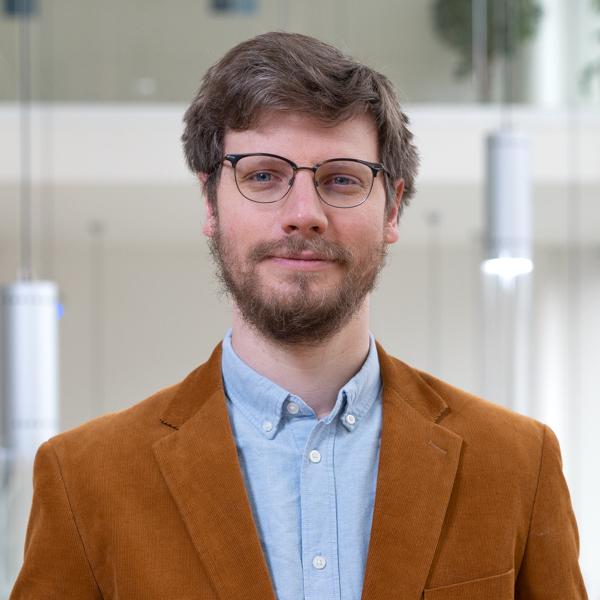
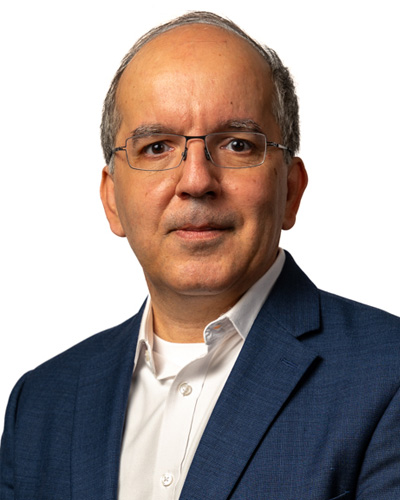
Prof. Marius Brezovan is a faculty member at the Department of Software Engineering, Faculty of Automatic Control, Computers and Electronics, University of Craiova. He earned his PhD in Automatic Systems in 1998 under Prof. Dr. Eng. Mircea Ivanescu. Teaching Subjects: Object-Oriented Programming, Expert Systems, Software Engineering, Compiler Design, Formal and Automatic Languages Research Focus: Formal methods in system modeling, concurrent object-oriented programming, image processing, and multimedia applications His publications span topics like Petri nets, image segmentation algorithms, and database migration. He led two CNCSIS-funded projects on object-oriented Petri nets for manufacturing systems and contributed to CNCSIS-accredited publishing houses. As a member of the Research Center 'Development of Multimedia Applications' and the editorial board of 'Else Software', he participates in international conferences as committee member and reviewer.
Nico Döttling is a faculty member at the CISPA Helmholtz Center for Information Security, where he leads research in cryptographic foundations. His work focuses on advancing theoretical and practical aspects of modern cryptography, with particular emphasis on homomorphic encryption, post-quantum cryptography, and secure multi-party computation. Dr. Döttling received his PhD in Computer Science from the Karlsruhe Institute of Technology in 2014 under the supervision of Jörn Müller-Quade. Prior to joining CISPA in 2018, he held positions as an Assistant Professor at Friedrich-Alexander University Erlangen-Nuremberg (2017-2018), a postdoctoral researcher at UC Berkeley (2016-2017) supported by a DAAD fellowship, and a postdoctoral researcher at Aarhus University's Cryptography Group (2014-2016) working with Ivan Damgård and Jesper Buus Nielsen. Dr. Döttling's research centers on the theoretical foundations of cryptography with practical applications. His work spans public-key encryption, communication-efficient secure multi-party computation, homomorphic encryption, and post-quantum cryptographic systems. He has made significant contributions to laconic cryptography, time-lock puzzles, and verifiable delay functions, with his ERC Starting Grant project 'Next Generation Laconic Cryptography (LACONIC)' driving innovation in communication-efficient cryptographic protocols. His research bridges theoretical computer science with practical security applications, addressing fundamental questions while developing usable cryptographic primitives. Analysis of Dr. Döttling's recent publications reveals a strong focus on efficient cryptographic primitives with particular attention to communication complexity, security proofs, and practical implementations. His work spans theoretical foundations of cryptography, post-quantum security, and novel applications of cryptographic techniques to real-world problems. A notable trend is his exploration of laconic cryptography - developing protocols with minimal communication overhead - which has applications in resource-constrained environments and large-scale distributed systems. Dr. Döttling's scientific achievements have been recognized with several prestigious awards: ERC Starting Grant for the project 'Next Generation Laconic Cryptography (LACONIC)' (2021) Best Paper Award at Crypto for 'Identity-Based Encryption from the Diffie-Hellman Assumption' (2017) Postdoctoral Fellowship at UC Berkeley sponsored by DAAD (2016) Best Paper Award at ProvSec 2015 for 'From Stateful Hardware to Resettable Hardware Using Symmetric Assumptions' (2015) Biennial dissertation award for best dissertation in computer science at Karlsruhe Institute of Technology (2014) As a faculty member at CISPA, Dr. Döttling leads an active research group focused on cryptographic foundations. His ERC Starting Grant provides significant research funding to advance laconic cryptography. While specific information about his advisees is not provided in the source material, his extensive publication record with multiple co-authors suggests active collaboration with students and researchers. His work bridges theoretical cryptography with practical security applications, making contributions that advance both academic understanding and real-world cryptographic implementations. Dr. Döttling leads the Algorithmic Foundations and Cryptography research group at CISPA, focusing on developing theoretically sound yet practically efficient cryptographic protocols. His team explores innovative approaches to longstanding cryptographic challenges, particularly in making cryptographic protocols more communication-efficient without sacrificing security. Current research directions include post-quantum cryptographic systems, verifiable delay functions, and novel applications of homomorphic encryption to privacy-preserving computation.
Ian Horswill is an Associate Professor of Computer Science at Northwestern University , with joint appointments in the Departments of Electrical Engineering/Computer Science and Radio/Television/Film. He directs the Division of Graphics and Interactive Media and the Animate Arts Program, blending AI research with interactive art and entertainment. Research Focus: Autonomous agents, emotion/personality modeling for virtual characters, procedural animation via the Twig system, and interdisciplinary education in the Animate Arts Program. Key Projects: Twig (procedural animation), Meta (Scheme-like programming language), and role-passing architectures for efficient inference in robotics. Publications span AI, robotics, and games, with a focus on real-time decision-making, believable character behaviors, and cognitive architecture. His work has been recognized with the 2001 Nils Nilsson Prize . Students: Robin Hunicke, Magy Seif El-Nasr, and Rob Zubek, all of whom contributed to systems for game difficulty adjustment, dynamic lighting design, and natural-language dialog with NPCs. Affiliations: Chair of the Doctorial Consortium for the 2009 Foundations of Digital Games conference, member of the IGDA Education Committee.
Jamie A. Jennings is an Associate Teaching Professor in the Department of Computer Science at North Carolina State University's College of Engineering. Her office is located in Engineering Building II, and she focuses on undergraduate education while maintaining active research interests in theoretical computer science applications. Education: Ph.D. in Computer Science from Cornell University (1995) Jennings' research spans multiple domains within computer science, with particular expertise in programming language theory, compiler design, and automata. She has made significant contributions to regular expression technology through her creation of the Rosie Pattern Language, which serves as a large-scale alternative to traditional regular expressions designed for complex industrial pattern matching. Her research also encompasses computational geometry, algorithm design, and distributed systems. Recent work focuses on command-line benchmarking tools like BestGuess, which addresses challenges in measuring program performance accurately. Her publication history reveals an interesting evolution from early robotics research to contemporary work on pattern matching and benchmarking. The earliest publications focus on cooperative robotics and mobile manipulation, while more recent work centers on regular expressions, pattern languages, and performance measurement. This trajectory reflects both her theoretical foundations and practical applications in software development. Jennings brings substantial industry experience to her academic role, having spent 19 years at IBM including positions as Research Staff Member at IBM's T.J. Watson Research Lab and Senior Technical Staff Member in IBM's Software Group. During her time at IBM, she chaired international technical standards groups related to mobile computing and holds multiple software patents. She returned to academia in 2018 after her industry career. She maintains an active research blog where she discusses technical topics related to programming languages, benchmarking, and software design, demonstrating her commitment to sharing knowledge with both academic and practitioner communities.
Paul Hübner is a Researcher affiliated with the Institute of Computer Science at the University of Heidelberg . His work focuses on source code and requirements traceability , software analytics , and knowledge management in requirements engineering . Education : Master's degree in Computer Science from the University of Ulm Key Research Areas : Traceability, Software Repository Analysis, Interaction Data Utilization His 14 publications (2012–2025) examine trace link creation using interaction logs, commits, and issue tracking systems. He has taught advanced software engineering courses at Heidelberg and collaborated extensively with Barbara Paech and others. Teaching Roles : Contributed to courses like "Introduction to Software Engineering" and "Software Practicum: Advanced Software Engineering" (2012–2018).
Prof. Maciej Ząbek, Ph.D. is a faculty member at the Institute of Ethnology and Cultural Anthropology of the University of Warsaw , serving as Head of the Department of Ethnic Anthropology and Global Studies . His research focuses on African societies, migration, and refugee studies, with a particular emphasis on Polish-African relations. Areas of Interest: African Studies, Cultural Anthropology, Migration Studies, Applied Anthropology His recent publications analyze topics spanning Sudanese politics, Dogon ethnography, and refugee experiences in Africa. He has received recognition including the Scientific Award of the Ministry of Science and Higher Education . His work bridges field research with contemporary global challenges.
Antoine Amarilli is an Associate Professor in Computer Science at Télécom Paris, part of Institut Polytechnique de Paris. Since September 2024, he has been on leave to work as an advanced researcher in the LINKS team at Inria Lille. His research spans theoretical computer science, focusing on query evaluation, probabilistic data, knowledge compilation, and computational logic. Member of DIG and LINKS research teams Part of LTCI (Information Processing and Communication Laboratory) Education: PhD in Computer Science (Télécom ParisTech, 2016) Habilitation (HDR) in Computer Science (Institut Polytechnique de Paris, 2023) Research Interests: He investigates efficient query evaluation on uncertain data, dynamic data maintenance, knowledge compilation techniques, and the interplay between circuits, automata, and logical languages. His work intersects database theory, graph theory, and computational complexity. Publications Trends: Recent articles address tractability of queries on probabilistic graphs, complexity classifications for MSO and regular path queries, and knowledge compilation frameworks for enumeration algorithms. Key subfields include probabilistic reasoning, graph constraints, and circuit-based optimizations. Awards: Best Paper at ICDT 2020 Best Paper at ICALP 2021 (Track B) Télécom Paris PhD Prize (2017) Beth Dissertation Award (2017) Teaching & Service: He taught competitive programming, algorithms, and data management at Télécom Paris and represented the institution on the MPRI master’s committee. He co-organized Highlights of Logic, Games, and Automata (2022) and served as a program committee member for ICDT, ICALP, and AAAI. Research Activism: Co-founded TCS4F (Theoretical Computer Scientists for Future) and No Free View? No Review! initiatives to address climate impact and open-access advocacy in academia.
Bård Torvetjønn Haugland is a postdoctoral researcher at the Department of Interdisciplinary Studies of Culture, Faculty of Humanities, Norwegian University of Science and Technology (NTNU). He is affiliated with the CaptureX project focusing on socio-technical drivers for large-scale carbon capture and storage (CCS), and previously worked on the DRIVERS project exploring automation and digitalization in road transport. Doctoral degree in Science & Technology Studies (STS) from NTNU Master's degree in STS from NTNU Bachelor's degree in Musicology with specialization in Media Studies from NTNU His research integrates Science & Technology Studies with climate policy, examining how technologies like CCS and autonomous vehicles intersect with governance, sustainability transitions, and societal expectations. Key projects include: CaptureX: Assessing CCS feasibility in Norwegian waste incineration and industrial clusters DRIVERS: Analyzing digitalization's impact on transport and human/non-human relations Transition Governance: Investigating policy consistency in circularity and stormwater management Recent publications explore Arctic transport framing, mainstreaming nature-based solutions, and socio-technical feasibility of CCS. Collaborative work addresses European wastewater policy and energy communities. Outreach includes academic lectures at conferences such as TCCS-13, IST, GHGT-17, and public engagement through media interviews and popular science talks.
Torben Ægidius Mogensen is an Associate Professor at the Department of Computer Science, University of Copenhagen, where he leads research in the Programming Languages and Theory of Computation section. His office is located at Universitetsparken 5, Copenhagen. His primary research focuses on: Automatic program analysis and transformation (especially partial evaluation and semi-inversion) Compiler technology for functional languages Domain-specific language design Reversible computing systems and languages Algorithms, complexity theory, and automata theory Applications in graphics and fractal generation His recent publications demonstrate a strong focus on reversible computation systems, including specialized programming languages like Hermes for encryption, reversible processor architectures, and functional programming extensions. His textbook publications on compiler design (2024) and programming language implementation (2022) indicate significant contributions to computer science education and foundational knowledge. He teaches courses on compilers, programming language technology, and game development, and maintains active research collaborations internationally. He is fluent in Danish and English, with working knowledge of German and Romanian.
Bengt-Ove Andreassen serves as Professor of Religious Studies at UiT The Arctic University of Norway, specifically within the Department of Teacher Education and Pedagogy. His academic work focuses on religious education in Norwegian schools, with particular expertise in Laestadianism, Sami religion, and the educational treatment of indigenous peoples and national minorities. Andreassen's research interests span religious didactics, religion in the Norwegian educational sector, Laestadianism, religion and media/communication, Sami religion, religious studies theory development, historical analysis of religious education, and discourse analysis of curricula and textbooks. His work consistently addresses how religious traditions, particularly minority religious communities, are represented and taught within Norwegian educational contexts. His recent publication output (2023-2025) demonstrates remarkable productivity, with multiple books on Laestadian history across different time periods (1930-1960, 1960-1990, 1990-2020) and comprehensive historical works. His research shows a clear trajectory from historical analysis of religious movements toward contemporary educational applications, particularly regarding how religious diversity is addressed in teacher training and school curricula. Professor Andreassen actively supervises master's and PhD students in the fields of religious studies and pedagogy. He is a member of several research groups including Skuvllas (Indigenous Peoples and Minorities in School and Education), the Religious Didactics Research Group, Indigenous Citizenship and Education (ICE), FAHUMNO, and ILP Teacher Education. His academic career includes previous roles as Associate Professor II in Religious Didactics at the University of Bergen (2011-2013) and guest lecturer at Leibniz University Hannover, Germany (2016). His work bridges historical religious scholarship with contemporary educational practice, making significant contributions to how religious diversity is understood and taught in Norwegian educational institutions.
Ziad Najem, Ph.D. is a Professor of Instruction in the Department of Computer Science at the University of Texas at San Antonio (UTSA), part of the College of Sciences. He holds a Ph.D. and M.S. in Computer Science from the University of Illinois at Urbana-Champaign, and a B.Sc. in Electrical Engineering from Kuwait University. His teaching focuses on Artificial Intelligence, Mobile/Web Applications, Programming Languages, and Compilers. His research interests span logic programming systems, heuristic classification, and compiler optimization techniques. Educational Background: Ph.D. in Computer Science, University of Illinois at Urbana-Champaign M.S. in Computer Science, University of Illinois at Urbana-Champaign B.Sc. in Electrical Engineering, Kuwait University Research emphasizes logic-based systems and AI applications, with notable work on Prolog system optimization, belief revision in logic programs, and incremental evaluation techniques. His publications from 1994 to 2016 demonstrate sustained contributions to programming language implementation and AI knowledge systems. Active in both teaching and research, Dr. Najem contributes to advancing computational methods through UTSA's academic programs and scholarly output. His work bridges foundational computer science theory with practical applications in software development and artificial intelligence.
Professor Thomas Tufte is an internationally renowned scholar in communication for social change, holding dual roles as Associate Dean for Research and Innovation and Professor in the Institute for Creative Futures . His academic journey includes positions at the University of Copenhagen (1992-2003), Roskilde University (2004-2016), University of Leicester (2016-2018), and Loughborough University London (2018-2024). He also serves as a Senior Research Associate at the University of Johannesburg and has held visiting roles at institutions globally. Research & Education Background: Tufte’s PhD (1995) focused on media ethnography of Brazilian telenovelas, blending cultural sociology with communication studies. His work spans over 30 countries, emphasizing Global South contexts, and he fluently operates in English, Spanish, Portuguese, Danish, Italian, and Greek. Research Focus: Specializes in decolonial communication theory, participatory methodologies, and the intersection of media practices with citizen engagement. Key themes include Paulo Freire’s legacy, activist citizenship, and the role of storytelling in social movements. Recent work critiques epistemic injustices in digital knowledge production and explores post-pandemic communication paradigms. Impact & Leadership: Secured over £2m in EU and international grants, leading seven major research projects (e.g., Media, Empowerment and Democracy in East Africa ). Founded/co-led research networks across Africa, Latin America, and Scandinavia. Authored 20 books and 100+ peer-reviewed articles, with co-edited journal special issues in Journal of Communication , International Communication Gazette , and others. Awards & Recognition: Member of Academia Europea, UNESCO Chair at University of Barcelona (2003), and frequent collaborator with global institutions like UNDP, World Bank, and International Media Support. Future Directions: Prioritizes bridging academic-practitioner knowledge gaps through collaborative research labs, including the Institute for Creative Futures , which explores innovative pedagogies and social change frameworks.
Dr. Steve Petruzza is an Assistant Professor in the Department of Computer Science at Utah State University (USU) and a Staff Scientist at the Scientific Computing and Imaging (SCI) Institute's Center for Extreme Data Management, Analysis, and Visualization (CEDMAV). He holds a PhD in Computer Science from the University of Rome 'Tor Vergata' and has conducted research at the University of Utah and KAUST. His work focuses on High-Performance Computing (HPC), scientific visualization, and scalable data analytics with applications in edge computing, cloud optimization, and large-scale scientific data management. Education: PhD in Computer Science, University of Rome Tor Vergata (2018) M.S. in Computer Engineering, University of Rome Tor Vergata (2013) B.E. in Computer Engineering, University of Rome Tor Vergata (2010) Research Interests: Dr. Petruzza’s research spans high-performance computing systems, in situ analytics, parallel I/O optimization, and scalable visualization frameworks. His work addresses challenges in managing and analyzing massive scientific datasets across domains like materials science, climate modeling, and geospatial imaging. Grants & Projects: National Science Foundation (NSF) grant for scalable I/O runtimes and adaptive data layouts. USGS collaboration for real-time multispectral aerial mapping. NSF ASPIRE ERC project for equitable EV charging infrastructure visualization. Leadership in the ALPINE project for exascale visualization infrastructure (DOE ECP). Labs & Teams: He leads the Computing Elevated Lab, which develops cutting-edge techniques for large-scale data analysis and visualization across edge devices to supercomputers. Collaborations include the OpenVisus framework for scientific data management and the ALPINE Ascent in situ visualization infrastructure.
Dr Marta Sinclair is a Senior Lecturer in the Department of Management at Griffith University's Business School. She holds a PhD in Organizational Behavior from The University of Queensland and an MA in Education from George Washington University. Her research focuses on intuition in business and personal contexts, with notable contributions to understanding intuition's role in decision-making, cross-cultural management, and entrepreneurship. Dr Sinclair has over 20 years of industry experience in Europe and the USA, including roles in software localization, intercultural training, and hospitality management. She founded Intuition in Organizations, a global research community, and is the Editor of major Handbooks on Intuition Research. She has supervised doctoral students, including Nicole Yeung on intuition in SME decision-making. Dr Sinclair has secured research funding, such as the 2021 project on unconscious thought in entrepreneurial opportunity evaluation. Her teaching interests include cross-cultural management and problem-solving methodologies. Education: PhD in Organizational Behavior, University of Queensland (1999–2003) MA in Education, George Washington University (1985–1986) BA from Charles University (1971–1975) Professional Activities: Founder of Intuition in Organizations (2005) Editor of Handbook of Intuition Research and Handbook of Research Methods on Intuition Discipline Leader for Management Majors (2016–present) Visiting Scholarships at LUMSA University (2014) and FAMU (2009–2010) Grants & Supervision: Lead researcher on the 2021–2023 project on entrepreneurial intuition Supervised doctoral candidate Nicole Yeung Labs/Teams: Member of Griffith Asia Institute Contributes to the Academy of Management's intuition symposia
Professor Ksenia Chmutina is a leading academic in Disaster Studies at Loughborough University, holding roles as Associate Pro-Vice Chancellor for Impact and Internationalisation and Director of the Institute of Advanced Studies. Her research focuses on disaster risk creation, disaster capitalism, and the intersection of urban sustainability/resilience with neoliberal policies and post-colonial contexts. She has pioneered innovative methodologies including participatory gaming for disaster risk reduction and audio-based communication of flood experiences. Key projects include the GRRIPP initiative addressing gender-responsive resilience in global South communities and the Beyond the Networked City project enhancing water/energy systems in African urban areas. Her work bridges technical solutions with socio-political analysis, emphasizing decolonizing disaster scholarship through critical discourse and inclusive frameworks. Education: MA and PhD in relevant fields Key Projects: GRRIPP, Beyond the Networked City, BUGIS (Indonesia BGI project), and EPSRC energy efficiency initiatives Awards: Fellow of the Higher Education Academy (FHEA) Research interests span disaster science communication, language’s role in risk reduction, and the politicization of disaster narratives. She critiques 'natural disaster' terminology and advocates for systemic socio-technical solutions to urban resilience challenges. Publications emphasize interdisciplinary collaboration, with recent work exploring spatial vulnerability modeling and rethinking disaster governance frameworks. Her work is informed by extensive global partnerships including collaborations with Tsinghua University and multiple international institutions.