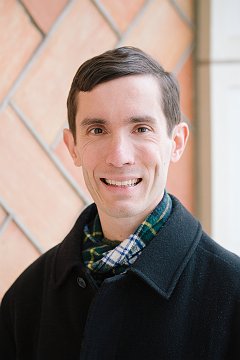
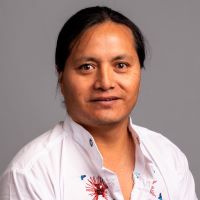
Didar Zowghi is a Senior Principal Research Scientist and Science Team Leader at CSIRO Data61, Australia's national science agency. His work focuses on advancing ethical AI systems, data quality frameworks, and requirements engineering methodologies. He leads research initiatives addressing challenges in AI governance, diversity/inclusion in technology, and human-centered AI development. Research interests include AI ethics, data completeness in healthcare systems, and the application of machine learning in requirements engineering. His contributions span theoretical frameworks for responsible AI patterns, empirical studies on user perceptions of AI tools like M365 Copilot, and analysis of AI's role in global diplomatic practices. Zowghi has published extensively on topics ranging from blockchain in supply chains to pedagogical innovations in software engineering education. His work often bridges technical systems and societal impacts, emphasizing real-world implementation challenges through collaborative industry-academia projects. Notable outputs include the Responsible AI Pattern Catalogue and studies examining barriers to data quality in IoT platforms. He has pioneered frameworks linking innovation initiatives to occupational skill requirements and developed tools like Elica for dynamic requirements knowledge extraction in agile teams.
Monique Boddington is a Management Practice Associate Professor and Director of the MSt in Entrepreneurship programme at the Cambridge Judge Business School, University of Cambridge. She holds a PhD from the University of Cambridge, where her thesis applied philosophical frameworks to archaeology to explore knowledge creation. Her research focuses on entrepreneurship, particularly early-stage venture formation, startup strategy, experimentation, pivoting, gender dynamics, and the application of sociological frameworks to entrepreneurial practice. She is dedicated to enhancing entrepreneurship education to empower future entrepreneurs. Her professional experience includes leading research initiatives such as the EVER project on early-stage venture strategy and EU-funded projects measuring entrepreneurship education impact. She advises on entrepreneurship policy globally and supports startups across industries. Monique teaches modules like Experimentation and Pivoting, Entrepreneurial Impact (Ethics and Diversity), and Management Praxis across Cambridge Judge programmes. Her research trends emphasize gendered norms in entrepreneurship, anthropological approaches to entrepreneurial action, and the intersection of education and innovation. She has contributed to over 15 peer-reviewed articles and edited books since 2014, focusing on gender inclusion, pivoting strategies, and educational methodologies. Monique has advised multiple students and collaborates on initiatives like the EnterpriseWISE programme to increase accessibility for women in science and engineering (WISE). Her work bridges theory and practice, influencing both academic discourse and real-world entrepreneurial ecosystems.
Bryan Parno is a Professor at Carnegie Mellon University in the Departments of Electrical & Computer Engineering and Computer Science . He is the recipient of the Kavčić-Moura Chair and leads the Secure Foundations Lab , focusing on end-to-end secure systems through formal verification. Research spans secure systems , applied cryptography , distributed systems , and zero-knowledge proofs Developed Verus (verified Rust systems) and Project Everest (verified HTTPS stack) Key contributions include Ironclad , Flicker , and Pinocchio , with impacts on Intel CPUs and Windows/iOS security models His work emphasizes open-source tools and reproducibility , often published in top venues like POPL, PLDI, and IEEE S&P. Recent projects address WebAssembly security and formal verification of complex distributed systems . Major Awards Jay Lepreau Best Paper Award (OSDI 2025) IEEE Cybersecurity Award for Practice (2024) Sloan Research Fellowship (2018) Test-of-Time Awards (IEEE S&P 2023, IEEE S&P 2020) Best Paper Awards at USENIX Security, OOPSLA, and PLDI
Santiago Gualapuro is an Assistant Professor of Spanish Linguistics at Southern Illinois University's School of Languages and Linguistics. An Otavalo Kichwa from Northern Ecuador, he earned his Ph.D. in Hispanic Linguistics from The Ohio State University in 2023. His work centers on indigenous language revitalization, particularly for Kichwa. Education: Ph.D. in Hispanic Linguistics, The Ohio State University (2023) Dr. Gualapuro's research spans sociolinguistics of indigenous-colonial language relationships, Kichwa-Spanish contact, indigenous ideologies, writing systems, and language activism. He aims to collaborate with Kichwa activists to revitalize the language through practical applications in education and science, focusing on decolonizing linguistic frameworks and developing accessible resources for Kichwa speakers. His publications reveal a consistent trend of adapting academic and scientific content to Kichwa, including educational tools like the periodic table adaptation and bilingual dictionaries. These works demonstrate his commitment to bridging indigenous knowledge systems with Western academic structures while empowering Kichwa communities through language preservation. Scientific Awards: No specific awards mentioned in available documentation Advising and Grants: While no formal student advisees are listed, he directs KISTH Foundation projects including the Kichwa Science Bee competition. Grant specifics are not detailed, but his work involves partnerships with U.S.-based NGOs and academic institutions for language revitalization initiatives. Labs and Teams: As a founding member of the Kichwa Institute of Science, Technology, and Humanities (KISTH), he leads cross-disciplinary teams developing Kichwa-language STEM resources. He is also establishing a center for Indigenous languages in the Americas at SIU to expand research collaboration across the continent.
Jacob Gardner is an Assistant Professor in the Department of Computer & Information Science at the School of Engineering and Applied Science, University of Pennsylvania. His research bridges machine learning and scientific discovery with emphasis on computational biology and molecular design. His primary research interests include: Machine Learning Bayesian Optimization Computational Biology Molecular Design Artificial Intelligence Gaussian Processes Analysis of his 2024-2025 publications reveals a dominant focus on Bayesian optimization techniques integrated with large language models for biological applications. Key trends include therapeutic design using knowledge distillation from scientific literature, RNA splicing prediction, antibiotic development, and scalable Gaussian process methods. His work consistently addresses dimensionality challenges in molecular modeling while improving computational efficiency for high-dimensional biological data. No scientific awards were mentioned in the provided text. No information regarding student advising or research grants was provided in the source material. His research appears supported by institutional initiatives including Penn AI, Innovation in Data Engineering and Science (IDEAS), and the Data Driven Discovery Initiative (DDDI).
Professor Martial Staub holds the position of Professor of Medieval History at the University of Sheffield, serving as Internationalisation Officer and SRDS Director within the School of History, Philosophy and Digital Humanities. He joined the university in 2004 after a research fellowship at the Max Planck Institute of History in Göttingen, Germany. His academic training includes degrees from the University of Paris I Panthéon-Sorbonne, Paris X Nanterre, and the Ecole des Hautes Etudes en Sciences Sociales, alongside studies at the Ecole Normale Supérieure de Fontenay/St Cloud. Staub’s research focuses on late medieval European history, particularly South German and Italian cities, with expertise in medieval philanthropy, historiography, and spatial mobility. He co-directs the Centre for the Study of Abrupt, Violent and Traumatic Change and leads projects on medieval global citizenship. His teaching spans undergraduate courses like 'Pagans, Christians and Heretics in Medieval Europe' and postgraduate programs such as 'Approaching the Middle Ages.' Professional roles include editorial board memberships for journals like Zeitschrift für Ideengeschichte and German History , alongside affiliations with institutions such as the Görres-Gesellschaft. His work bridges interdisciplinary collaborations, addressing themes of exile, urban history, and the interplay between medieval and modern contexts.
Bo Wu is an Associate Professor in the Department of Computer Science at Colorado School of Mines. His research focuses on compilers and programming systems, particularly program optimizations for heterogeneous computing and emerging architectures, with applications in machine learning and graph processing. He joined Mines in 2014 after earning a Ph.D. from The College of William and Mary and earlier degrees from Central South University in China. Education : B.S. in Computational Science and Technology (Central South University, 2005) M.S. in Computer Science (Central South University, 2008) Ph.D. in Computer Science (The College of William and Mary, 2014) Research Interests : Wu's work emphasizes enhancing data locality in heterogeneous systems, GPU scheduling, and optimizing applications for emerging architectures. His contributions include frameworks like GraphZero for efficient graph mining and FLEP for GPU preemption. Awards & Grants : NSF SPX Award (2018) NSF CAREER Award (2018) Supercomputing Best Paper Award (2015) Multiple NSF grants for GPU-related research Advising & Grants : Wu has led several NSF-funded projects and actively participates in conference program committees (e.g., PPoPP, SC, ICS). His research spans compiler optimizations, parallel computing, and high-performance systems. Labs & Teams : While specific labs aren’t named, his work involves collaborations on GPU-based systems, graph processing frameworks, and compiler toolchains.
Riad S. Wahby is an Assistant Professor in the Department of Electrical and Computer Engineering at Carnegie Mellon University's College of Engineering. His work focuses on designing secure hardware and software systems, with recent emphasis on cryptographic proof systems. He actively mentors PhD students and collaborates across disciplines in cybersecurity, blockchain, and formal verification. PhD in Computer Science, Stanford University MEng in Electrical Engineering, Massachusetts Institute of Technology SB in Electrical Engineering, Massachusetts Institute of Technology Wahby's research spans cryptography , blockchain security , zero-knowledge proofs , and secure hardware-software co-design . His work addresses challenges in verifiable computation, privacy-preserving protocols, and hardware subversion resistance. Recent publications reveal trends in zero-knowledge proof systems (SNARKs, MPC), blockchain security (anonymous blocklisting, decentralized auctions), and hardware-crypto integration (weird machines, verifiable ASICs). Technical focus areas include formal verification, side-channel analysis, and cryptographic compilers. Distinguished Student Paper Award, IEEE Symposium on Security and Privacy (Oakland16), 2016 Best Paper Award, USENIX Annual Technical Conference (ATC18), 2018 Wahby collaborates with researchers across institutions and industries, including Dan Boneh at Stanford, Mike Walfish at NYU, and Silicon Labs in industrial roles. His CyLab affiliations connect him to over $400K in seed funding opportunities and blockchain initiatives at CMU.
Jennifer Neville is a Senior Principal Researcher at Microsoft Research Redmond and holds the Samuel Conte Chair Professor of Computer Science and Statistics at Purdue University. With over 100 publications and 10K citations, her research spans data mining, machine learning, and AI algorithms for relational and networked domains including social networks, epidemiology, and web analytics. Education: BS in Computer Science, University of Massachusetts Amherst (2000) MS in Computer Science, University of Massachusetts Amherst (2004) PhD in Computer Science, University of Massachusetts Amherst (2006) Her work focuses on relational learning techniques that exploit connections between entities to enhance pattern discovery. Recent research explores large language models (LLMs), emphasizing alignment with user intent through interaction at scale, while addressing statistical biases from graph structures. Selected scientific awards include the NSF Career Award (2012), ICDM Best Paper (2009), and IEEE’s 10 to Watch in AI (2008). She served on the AAAI Executive Council (2015-2018) and chaired multiple conferences including SIAM Data Mining (2019) and ACM Web Search (2016). Contact: neville@cs.purdue.edu jenneville@microsoft.com
Pavel Panchekha is an Assistant Professor in the School of Computing at the University of Utah, where he holds the Warnock Chair for Junior Faculty. His research spans programming languages, web browsers, and numerical analysis, with a focus on developing programming language techniques to address challenges across computer science. Dr. Panchekha received his educational training at prestigious institutions: PhD in Computer Science from the Paul G. Allen School for Computer Science and Engineering at the University of Washington, advised by Michael D. Ernst and Zachary Tatlock BS in Mathematics from MIT Panchekha's research program has two major thrusts. First, he works on web browser internals , with projects including fuzzing layout invalidation, multi-tenant garbage collection, and optimizing 2D graphics. He is also authoring a textbook on web browsers that informs much of this research. Second, he focuses on automatic numerical analysis , with projects such as automatic accuracy improvement, synthesis via term rewriting, scalable static accuracy analysis, and math library implementation. He leads the FPBench and Herbie projects, which are major deployments of his research. His scholarly output demonstrates consistent contributions across programming languages, verification, and numerical methods. Recent work shows a growing emphasis on bidirectional typing systems, layout invalidation in browsers, and robust floating-point error analysis. His publications reveal a trajectory from foundational work on floating-point accuracy (notably the Herbie tool that won a Distinguished Paper Award at PLDI 2015) toward more comprehensive systems for program synthesis, verification, and browser optimization. Panchekha has received significant recognition for his research contributions: NSF Fellowship ARCS Foundation Fellowship Adobe Research Fellowship Wissner-Slivka Foundation Fellowship 2015 PLDI Distinguished Paper Award for work on the Herbie numerical analysis and repair tool As an advisor, Panchekha mentors a substantial group of students across multiple levels. He currently advises six students: Marisa Kirisame (PhD), Bhargav Kulkarni (PhD), Yumeng He (PhD), Artem Yadrov (MS), Jesus Ponce (BS), and Jonas Regehr (BS). Previously, he has advised over twenty students including PhD candidates like Ian Briggs and numerous MS and BS students. His advising spans theoretical topics in programming languages and practical applications in web browsers and numerical computing. Panchekha leads research groups focused on programming languages applications to web browsers and numerical analysis. His work on the Herbie tool for floating-point accuracy improvement has become influential in the programming languages community, and his more recent work on browser internals is shaping how researchers understand and optimize modern web rendering engines. He is currently developing a textbook on web browsers that aims to synthesize knowledge about browser architecture and implementation.
Alena Ledeneva is a Professor of Politics and Society at the School of Slavonic and East European Studies (SSEES) at University College London (UCL). She holds a PhD in Social and Political Theory from Cambridge University (1996) and has been at UCL since 1999. Her research focuses on informal governance systems, corruption, and networks in post-Soviet societies, particularly in Russia and Southeast Europe. She leads major EU-funded projects like ANTICORRP.eu and MARKETS, and founded the UCL FRINGE Centre and Global Informality Project. Education: PhD in Social and Political Theory, University of Cambridge (1996) MPhil, University of Cambridge (1992) BA, Novosibirsk State University (1986) Research interests include informal institutions, blat networks, systemic corruption (sistema), and cross-cultural informality. She has authored landmark books such as How Russia Really Works and Can Russia Modernize? , and edited the Global Encyclopedia of Informality series. Her work bridges political science, sociology, and organizational behavior. Key contributions include analyzing the 'dark and bright sides' of informal networks, modeling costs of informal practices in the Western Balkans, and critiquing global corruption paradigms. She advises on anti-corruption strategies and runs interdisciplinary research hubs. Labs/Teams: FRINGE Centre for Social and Cultural Complexity Global Informality Project (in-formality.com) Her art explores sociopolitical themes, displayed at alenaledeneva.com/art .
Christian Newman is an Associate Professor in the Department of Software Engineering at the Golisano College of Computing and Information Sciences, Rochester Institute of Technology (RIT). He serves as the Graduate Program Director and has expertise in software engineering methodologies, refactoring techniques, and source code analysis. His research focuses on improving code quality, developer practices, and automated documentation. Education: Newman holds a BS, MS, and Ph.D. from Kent State University. His academic background aligns with his current research in software engineering and empirical studies. Research Interests: His work emphasizes identifier naming standards, technical debt management, refactoring strategies, and code reuse. He explores how developers perceive and implement refactoring tools, as well as the role of large language models (LLMs) in programming education and code generation. Publications: Newman's recent work includes studies on identifier semantics, part-of-speech tagging for code analysis, and the performance of LLMs in introductory programming tasks. His research often combines empirical studies with tool development, such as SATDBailiff for technical debt tracking and TSDetect for test smell detection. Teaching & Advising: He teaches courses like SWEN-250 (Personal Software Engineering), SWEN-331 (Engineering Secure Software), and graduate-level thesis supervision. His courses emphasize secure development, software design principles, and team-based projects. Tools & Contributions: Newman has developed tools like srcSlice (static slicing), srcType (type resolution), and SCALAR (identifier analysis). These tools support software evolution, code comprehension, and empirical research in the field.
Jan Buts is an Associate Professor at the Sustainable Health Unit within the Faculty of Medicine at the University of Oslo, specializing in the intersection of translation theory, medical humanities, and corpus linguistics with a focus on sustainable health and development discourses. His academic background includes: Linguistics and Literature studies at KU Leuven (Belgium) PhD in Translation and Intercultural Studies from the University of Manchester (UK) Postdoctoral research at Trinity College Dublin (Ireland) Assistant Professor position at Boğaziçi University (Turkey) Buts' research centers on corpus-assisted discourse analysis applied to translation theory, medical humanities, and sustainable development. He actively develops the Sustainability and Health Corpus to analyze how language shapes public health narratives, gender discourses in development aid, and conceptual frameworks around sustainability. His work bridges linguistic analysis with critical perspectives on social justice and health equity. Analysis of his recent publications reveals a strong trajectory toward integrating corpus linguistics with medical humanities and sustainable development goals. Key trends include examining gendered vulnerabilities in policy discourse, translation's role in knowledge dissemination for sustainability, and digital media's impact on health communication – all characterized by methodological innovation in corpus construction and conceptual analysis. His scientific recognition includes: Runner-up for the Martha Cheung Award (2023) Buts serves on the executive council of IATIS (International Association for Translation and Intercultural Studies) and leads multiple research initiatives including the SHE Corpus project. His grant activities focus on interdisciplinary collaborations between translation studies and medical humanities, particularly through projects like KNOWIT (Knowledge in Translation) and MEDRA (Medicalisation of Democratic Rights in Abortion debates). He directs the Sustainable Health Unit, fostering cross-disciplinary teams that combine linguists, medical researchers, and public health experts to advance data-driven critical analysis of health and sustainability discourses through innovative corpus methodologies.
Stephen Alstrup is a Professor in the Algorithms and Complexity section at the Department of Computer Science (DIKU), University of Copenhagen, Faculty of Science. His research bridges theoretical computer science with practical applications in modern computational challenges. His primary research interests include: Algorithm design and analysis Graph algorithms and data structures Big Data processing techniques Streaming algorithms and Internet distribution Theoretical foundations with practical implementations Alstrup's work demonstrates how theoretical algorithm research can lead to real-world applications, as evidenced by his development of Octoshape technology for large-scale Internet streaming. His research spans from fundamental theoretical problems to applications in Big Data, cloud computing, and information retrieval systems. He has published extensively with 93 research outputs including journal articles, conference proceedings, and books. His recent work focuses on graph spanners, semantic hashing, recommendation systems, and universal graph structures, showing continued productivity in theoretical computer science. Alstrup actively engages with industry and media, contributing to discussions about Big Data applications, technology innovation, and how businesses can collaborate with universities to access cutting-edge knowledge and funding opportunities. His work has been featured in 10 media contributions discussing practical applications of algorithms in education, municipal IT projects, and business innovation.
Prof. Dr. Matthias Weidlich is a faculty member at Humboldt University of Berlin within the Institute of Computer Science under the Faculty of Mathematics and Natural Sciences . His research focuses on Process Mining , Complex Event Processing , and Data Privacy with applications in Business Process Management and Scientific Workflows . Research Interests: Business Process Management and Process Mining Complex Event Processing and Stream Data Analysis Data Privacy and Security in Process Systems Scientific Workflow Systems and User Behavior Heterogeneous Network Embeddings Algorithm Design and Optimization Recent Publications (2023-2025) demonstrate expertise in: Efficient stream processing techniques Privacy-preserving process mining frameworks Scientific workflow analysis tools Graph neural network applications Multi-modal data integration Adaptive querying systems Contact: Office: Unter den Linden 6, 10099 Berlin Phone: 030 2093-41277 Email: matthias.weidlich@hu-berlin.de Web: hu.berlin/data