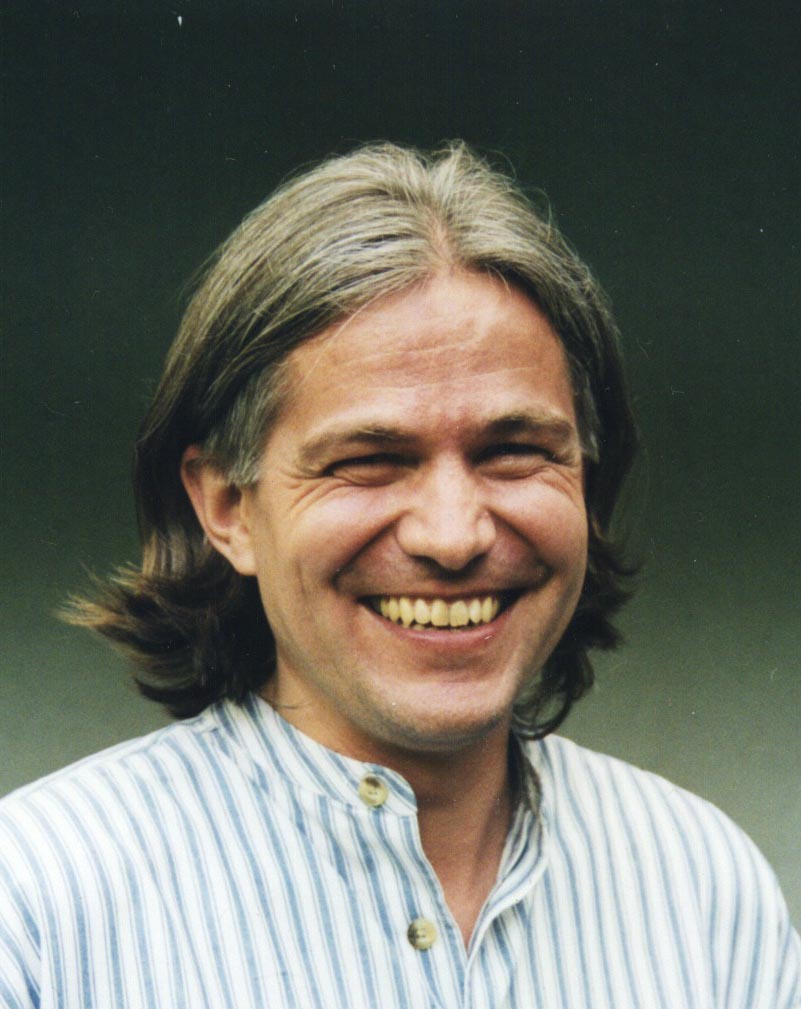
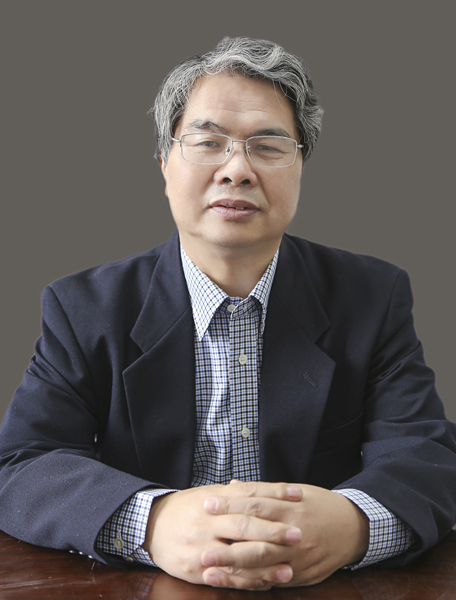
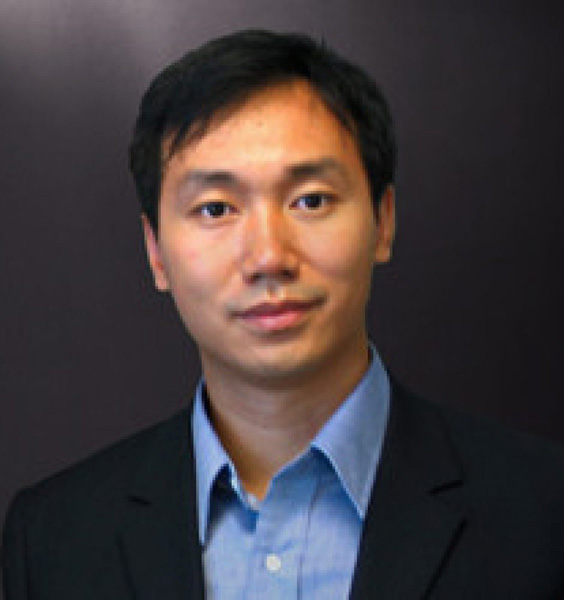
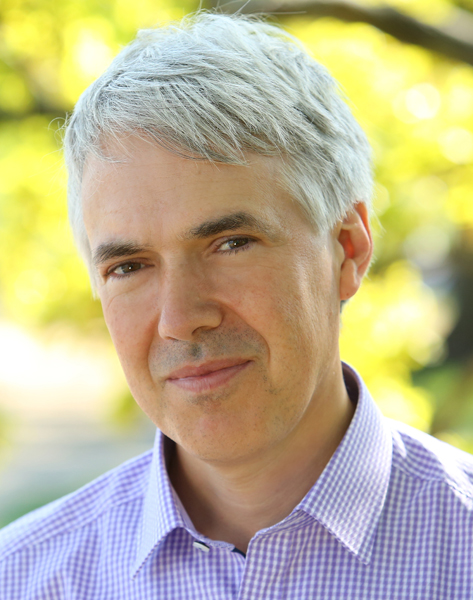
Katja Hose is a Full Professor of Data Management at TU Wien's DBAI research unit, heading the Data Management and Knowledge-Driven AI Lab. She previously held a Poul Due Jensen Foundation Professorship at Aalborg University. Her research focuses on data and knowledge engineering, including graph databases, knowledge graphs, querying, analytics, and machine learning, with interdisciplinary applications in bioscience, healthcare, and environmental assessment. Education: PhD in Computer Science (Ilmenau University of Technology, 2009), Postdoc at Max Planck Institute for Informatics (2009–2012). Academic roles include Program Co-Chair for ISWC 2024 and EDBT 2023, and editorial board membership at VLDBJ and TGDK. She leads projects like TARGET (health virtual twins) and ARMADA (data management). Research Interests: Knowledge Graphs, Semantic Web, Big Data, Machine Learning, Data Integration, and Provenance Systems. Key contributions include SHACL shape extraction, conversational data analytics, and environmental knowledge graphs. Awards include the 2025 Distinguished Meta-Reviewer Award and 2024 Manfred Paul Award. Advising and Grants: Supervised students including E. Pürmayr (Diploma Thesis 2025). Active in EU projects (TARGET, ARMADA) and grant coordination. Labs/Teams: DMKI Lab at TU Wien, collaborating with interdisciplinary teams in healthcare and environmental science.
Dr. Yunjie Yang is an Associate Professor at the University of Edinburgh's School of Engineering, with affiliations at the Edinburgh Futures Institute (EFI), the Edinburgh Generative AI Laboratory (GAIL), and the Edinburgh Centre for Robotics. He previously held the Chancellor's Fellow in Data Driven Innovation (2018-2023) and Bayes Innovation Fellow (2023-2024) positions. His research focuses on AI-powered sensing and imaging, machine learning, and soft sensors & electronics for robotics. Yang received his PhD in Engineering Electronics from the University of Edinburgh, MSc in Control Science & Engineering from Tsinghua University, and BEng in Measurement & Control Engineering from Anhui University. After his PhD, he worked as a Postdoctoral Research Associate in Chemical Species Tomography before securing his lectureship. His research interests center on developing intelligent sensing systems that replicate human perception capabilities for robotics and intelligent systems. He pioneers flexible sensing and imaging technologies across various scales through innovative multi-modal sensors, soft electronics, and their modeling using machine learning approaches. His work aims to enable autonomous physical artificial intelligence by bridging the gap between robotic systems and human-like perception. Analysis of his recent publications reveals a strong focus on soft robotics perception, particularly through electrical impedance tomography (EIT) and transformer-based architectures. His research spans medical imaging applications, digital twin modeling for industrial processes, and machine learning approaches for sensor data interpretation. The trend shows increasing integration of physics-informed deep learning with traditional tomographic techniques to achieve higher accuracy and efficiency. European Research Council (ERC) Starting Grant (2024) IEEE J. Barry Oakes Advancement Award (2024) IEEE I&M Society Graduate Fellowship Award (2015) Multiple Best Paper Awards Senior Member of IEEE Fellow of the International Society for Industrial Process Tomography Fellow of the Higher Education Academy ESI highly cited papers Dr. Yang serves as Associate Editor for IEEE Transactions on Instrumentation and Measurement and holds editorial positions with Scientific Reports and IEEE Sensors Journal. His research has been licensed to overseas research institutes and industry partners and received wide media coverage including BBC, EFE, USA Today, and STV. He has secured significant grant funding including the prestigious ERC Starting Grant. He leads the Edinburgh SMART Lab (Sensing/imaging + Machine Learning + Robotics), which aims to replicate human perception capabilities for robotics and advance flexible sensing technologies through innovative multi-modal sensors and machine learning approaches. The lab focuses on enabling autonomous physical artificial intelligence with applications spanning medical diagnostics, industrial monitoring, and advanced robotics systems.
Ian Horrocks is a Professor of Computer Science at the University of Oxford and a Fellow of Oriel College. His research focuses on knowledge representation, description logics, automated reasoning, and semantic web technologies. He has held academic positions at the University of Manchester (2003–2007) and served as Chief Scientist at Cerebra Inc. (2001–2006). Horrocks earned his BSc (1st class), MSc, and PhD in Computer Science from the University of Manchester (1981–1997). His work includes foundational contributions to ontology languages (e.g., OWL) and reasoning systems such as HermiT and ELK. He has supervised over twenty doctoral students and postdoctoral researchers. His honors include Fellowships from the Royal Society (2011), ECCAI (2009), and the British Computer Society (2005). He serves as Editor-in-Chief of the Transactions on Graph Data and Knowledge and leads initiatives in semantic web standards and knowledge graph applications. Key Roles: Editor-in-Chief (Journal of Web Semantics), Co-Chair (W3C OWL Working Group) Grants: EPSRC Senior Research Fellowship (2005), numerous international collaborations Labs: Oxford Semantic Technologies, involvement in projects like RDFox and PAGOdA
Peter Druschel is a Professor and founding Director of the Max Planck Institute for Software Systems (MPI-SWS) in Saarbrücken, Germany. He holds adjunct professorships at Saarland University and the University of Maryland. His research focuses on distributed systems, operating systems, and privacy-preserving technologies. He earned his Ph.D. from the University of Arizona in 1994 and has held roles at Rice University since 1994, including Professor of Computer Science (2002–2005). Education: Ph.D. in Computer Science, University of Arizona (1994) Research Interests: Distributed systems, operating systems, network security, accountable computing, and privacy technologies. Current projects include privacy compliance in data systems (Thoth), secure communication (EbN), and privacy-aware image capture (I-Pic). Awards: SIGOPS Mark Weiser Award (2008) NSF CAREER Award (1995) Member of Academia Europaea and German Academy of Sciences Leopoldina Grants & Leadership: Leads the ERC Synergy Project imPACT, chairs the Max Planck Society’s Chemistry, Physics, and Technology Section, and collaborates with institutions like Cornell and Google. Advises on policy issues related to technology and privacy. Labs/Teams: Distributed Systems Group at MPI-SWS, collaborations with Microsoft Research and MIT. Current team includes students and postdocs working on privacy, security, and distributed systems.
Jiao Licheng is a Distinguished Professor and Doctoral Supervisor at Xidian University, leading the School of Artificial Intelligence and the Department of Computer Science and Technology. He holds prominent roles such as Director of the Key Laboratory of Intelligent Perception and Image Understanding (Ministry of Education) and the International Joint Research Center for Intelligent Perception and Computing. His research focuses on Artificial Intelligence, Deep Learning, Evolutionary Computation, and Remote Sensing, with significant contributions to image understanding and brain-inspired computing. Education: B.E. (1982) from Shanghai Jiao Tong University, M.E. (1984) and Ph.D. (1990) from Xi'an Jiaotong University. Postdoctoral research at Xidian University (1990–1992). Research Interests include AI, Machine Learning, Image Processing, and Big Data Analysis. His work bridges theoretical advancements and practical applications, such as medical imaging, SAR image analysis, and autonomous systems. Recent articles emphasize innovations in remote sensing, deep learning architectures, and evolutionary algorithms. Awards include IEEE Fellow, IET Fellow, and the Wu Wenjun Artificial Intelligence Outstanding Contribution Award. Labs/Teams: Key Lab of Intelligent Perception, International Joint Research Center, and leadership in national innovation bases. Active in academic societies, including editorial roles in IEEE Transactions on Cybernetics and Geoscience and Remote Sensing.
Professor Thomas Lukasiewicz is a Full Professor and Head of the Artificial Intelligence Techniques research group at the Faculty of Informatics, Vienna University of Technology (TU Wien). His research focuses on enabling machines to mimic human-like intelligence through techniques spanning deep learning, symbolic reasoning, and predictive coding. Key areas include explainable AI, hybrid neurosymbolic systems, and applications in healthcare and law. He teaches courses such as Deep Learning for Natural Language Processing, Scientific Research and Writing, and multiple seminars in artificial intelligence and knowledge representation. His research projects include Explainable AI in Healthcare (2023–2027) and foundational work on predictive coding networks. His publications (15+ recent articles) address medical image segmentation, neurosymbolic frameworks, and language model evaluation in mathematics. Notable work includes neurosymbolic hybrid models (CCN⁺), reinforcement learning for medical report generation, and theoretical foundations of predictive coding networks.
Joseph Sifakis is a CNRS Research Director and founder of Verimag Laboratory in Grenoble, France. He holds the INRIA-Schneider endowed industrial chair since 2008 and has been instrumental in advancing concurrent systems specification and verification. Education: Electrical Engineering (Technical University of Athens), Computer Science (University of Grenoble) Research interests focus on component-based design , real-time systems , and correct-by-construction techniques . He pioneered the development of the BIP framework and contributed to model checking, a cornerstone of industrial system verification. Recent publications emphasize component-based modeling, formal verification, and distributed system design, reflecting his work's impact on embedded systems and critical applications like aerospace and telecommunications. Scientific awards include: Turing Award (2007) CNRS Silver Medal (2001) Test-of-Time Award (2012) Multiple honorary doctorates (2008-2011) Member of prestigious academies Industry collaborations span Airbus, ST Microelectronics, and the European Space Agency, with applications in aeronautics, telecommunications, and industrial software standards. He leads the ARTIST2 Network of Excellence and directs the CARNOT Institute 'Intelligent Software and Systems'.
Lin Chen is the Chair Professor of Finance and Stelux Endowed Professor in Finance at the University of Hong Kong (HKU), serving as Associate Dean (Research and Knowledge Exchange) in the Faculty of Business and Economics. He holds a PhD from the University of Florida and has held academic leadership roles at HKU and Chinese University of Hong Kong (CUHK). His research focuses on financial technology, banking systems, corporate finance, and economic development, with notable contributions to understanding financial resilience during crises and institutional reforms. Educations: PhD/MBA in Finance from University of Florida, B.E. in Engineering from South China University of Technology Leadership roles: Associate Dean (HKU), Board Member of HKU-Standard Chartered FinTech Academy, Currency Board Committee member Research interests span financial innovation , banking competition , corporate governance , and ESG integration . Key projects include RGC Theme-based grants on FinTech stability/inclusion and HK's financial center development. His work is published in top journals like Journal of Financial Economics and Review of Financial Studies . He has advised major institutions including Hong Kong Monetary Authority, World Bank, and China Construction Bank. Awards include the Jensen Prize (2011), Nobel nomination (2016), and honorary professorships from Edinburgh and Berkeley. Grants coordination includes HK$24.4 million FinTech project (2020-2025) and leadership roles in research centers like HKU’s Financial Innovation & Development Centre. Active in editorial roles for Management Science and policy advisory groups. Media engagements include BBC, Bloomberg, and Harvard Law School forums. Current initiatives focus on Web3.0 development in HK and financial inclusion strategies.
Claudia Plant is a Professor in the Faculty of Computer Science , leading the Research Group Data Mining and Machine Learning . Her research focuses on clustering algorithms, data mining, and machine learning applications in areas like biomedical data, wind energy, and causality inference. She has contributed to projects such as Knowledge-infused Deep Learning for Natural Language Processing (2020–2028) and Hybrid Computational Sciences (2021–2021). Plant has authored over 160 publications, with recent work emphasizing deep learning, anomaly detection, and GPU-optimized algorithms. She actively engages in academic activities, including talks on clustering methods and interdisciplinary projects like Governing Algorithms: The Politics of Data and Decision-Making . Her research interests span clustering algorithms , graph neural networks , causality discovery , and ethical digital transformation . Notable projects include causal analysis of wind farm dynamics and AI-enhanced education tools. Plant’s work bridges computational methods with societal challenges, such as empowering marginalized communities through ethical technology adoption.
Uwe Zdun is a Professor at the Faculty of Computer Science, University of Vienna, where he serves as Vice-Director of Studies for Computer Science and Head of the Research Group Software Architecture. His teaching portfolio includes core courses such as Software Engineering 2, Advanced Software Engineering, and Practical Software Courses for Bachelor's and Master's theses across multiple semesters (2024W-2025S). His research spans software architecture with emphasis on microservices, cloud computing, and DevOps. Key focus areas include architectural design decisions, infrastructure-as-code conformance, security in distributed systems, and the integration of machine learning operations (MLOps/RLOps). He investigates cognitive aspects of architecture practices through controlled experiments and develops model-driven approaches for quality assessment in complex systems. Recent publications (2024-2026) reveal three dominant trends: (1) Security and coupling analysis in infrastructure-as-code deployments, (2) MLOps/RLOps integration for Industry 4.0 cyber-physical systems, and (3) Performance optimization patterns for CI/CD pipelines and autoscaling. His work bridges theoretical architecture models with industrial practice, particularly in microservice ecosystems and reinforcement learning applications. Professor Zdun leads the Research Group Software Architecture at the University of Vienna's Faculty of Computer Science. The group focuses on empirical validation of architectural patterns, tool development for conformance checking, and advancing design decision methodologies in cloud-native and AI-driven systems.
Prof. Tobias Plieninger holds dual appointments as Professor of Social-Ecological Interactions at the Universities of Kassel and Göttingen, Germany, and currently serves as Dean of Research at Kassel’s Faculty of Organic Agricultural Sciences. He specializes in sustainability science focusing on rural landscape dynamics, ecosystem services, and transformative change processes. His work examines intersections between agriculture, forestry, nature conservation, and natural resource management. Education: PhD in Forest and Environmental Sciences (2004, University of Freiburg), Habilitation in Landscape Ecology (Humboldt-Universität zu Berlin). Prior roles include Associate Professorships at the University of Copenhagen and leadership at the Berlin-Brandenburg Academy of Sciences. Research focuses on biocultural landscapes, agroforestry systems, and participatory methods. Notable projects include coordination of the EU’s HERCULES initiative and leadership in IPBES’ Transformative Change Assessment. Recognitions include Clarivate’s Highly Cited Researcher (2019–2022) and the Henriette Herz Fellowship (2022). Editorial roles: Lead Author for IPBES, Associate Editor at Landscape and Urban Planning and People and Nature . Over 200 publications span topics like ecosystem service synergies, high nature value farming, and rewilding strategies. Active in policy engagement through Germany’s Leopoldina Academy and the Joint Programming Initiative on Cultural Heritage. Research Themes: Landscape sustainability, participatory governance, biodiversity in agricultural systems Key Projects: SINCERE (forest ecosystem services), AGFORWARD (agroforestry innovation) Awards: Clarivate’s Highly Cited Researcher, Alexander von Humboldt Foundation fellowship Current initiatives emphasize transdisciplinary approaches, integrating local knowledge with scientific frameworks to address global sustainability challenges.
Emanuel Sallinger is a Full Professor at TU Wien's Databases and Artificial Intelligence Group and Vice Dean of Academic Affairs for Business Informatics and Data Science. He leads the Knowledge Graph Lab, focusing on scalable knowledge-based systems, reasoning in knowledge graphs, and AI integration. His research spans computational logic, database theory, and blockchain applications. Education: PhD in Computer Science (awarded 'sub auspiciis praesidentis rei publicae'), Master's degrees in Computational Intelligence and Informatics Management, and a Bachelor's in Software and Information Engineering. Research Interests: Knowledge graphs (construction, reasoning, scalability), logic-based systems, AI/ML integration with databases, enterprise architecture modeling, and financial knowledge systems. His work emphasizes practical applications like enterprise modeling, sustainable waste management, and regulatory compliance. Grants & Projects: Lead Vienna Science and Technology Fund (WWTF)-funded Knowledge Graph Lab. Involved in projects like 'Knowledge Graph-driven Tour Management' (sustainability), 'SustainGraph' (waste processing), and 'Enterprise Architecture Knowledge Graphs'. Teaching: Offers courses on Knowledge Graphs, Generative AI, Database Systems, and research methodology. Supervises doctoral and master's students in AI, databases, and knowledge representation. Labs/Teams: Knowledge Graph Lab at TU Wien, collaborating with industry on blockchain-based systems, financial AI, and enterprise architecture frameworks.
Stefan Woltran is a Full Professor in the Databases and Artificial Intelligence department at TU Wien. He serves as Vice Dean of Academic Affairs for the Informatics Master program and leads the Research Unit for Databases and Artificial Intelligence. His research focuses on logic-based AI, including Propositional Logic, Nonmonotonic Reasoning, Argumentation frameworks, Knowledge Representation, and Logic Programming. He coordinates the Double-Degree Program Logic and Computation. His research projects include analyzing formal properties of logic-based AI approaches, complexity analysis, and developing algorithms via logic and dynamic programming. Notable projects include the HYPAR and REVEAL-AI initiatives exploring abstract argumentation and AI problem-solving. He has contributed to over 150 publications since 2001, focusing on argumentation frameworks, computational complexity, and formal methods. Woltran teaches courses such as Abstract Argumentation, Formal Methods in Computer Science, and Theoretical Computer Science. His work integrates theoretical advancements with practical solver development, such as the ASPARTIX system for argumentation tasks. He actively participates in international conferences and competitions in computational argumentation, emphasizing the application of formal methods to real-world problems.
Mathias Benedek is an Associate Professor at the Institute of Psychology, Faculty of Natural Sciences, University of Graz, Austria. He directs the Creative Cognition Lab and is actively involved in several research networks, including the "Complexity of Life" profile area, the "Brain and Behavior" research network, and the "FUTURE EDUCATION" research network at the University of Graz. His research focuses on the cognitive and neural mechanisms underlying creative thinking, with particular emphasis on the role of memory processes, metacognition, and eye movement patterns during creative ideation. Dr. Benedek's work bridges psychological theory with empirical research methods including eye tracking, neuroimaging, and computational modeling of creative processes. His research has important implications for understanding how creative potential develops and how it can be assessed and nurtured in educational and professional contexts. Dr. Benedek's publication record demonstrates a consistent focus on creative cognition across multiple dimensions. His recent work has expanded into emerging areas such as human-AI collaboration for creative tasks, automated assessment of creativity using large language models, and the relationship between physical activity and creative performance. His research shows a strong trajectory toward more ecologically valid methods for studying creativity in real-world contexts, moving beyond traditional laboratory paradigms. Seraphine Puchleitner Anerkennungspreis (PhD Supervision Award), University of Graz, 2021 William-Stern-Preis, German Psychological Society, 2019 Research Prize, University of Graz, 2017 Research Prize (Publication Category), Initiative Gehirnforschung, 2016 Berlyne Award, Division 10, American Psychological Association, 2015 Dr. Benedek has demonstrated strong commitment to mentoring the next generation of researchers, as evidenced by his 2021 PhD Supervision Award. His research has been supported by multiple grants from national and international funding bodies, though specific grant details are not provided in the available information. His professional service includes leadership roles in the Initiative Gehirnforschung Steiermark since 2010 and active membership in several psychological societies across Europe and North America. Dr. Benedek leads the Creative Cognition Lab at the University of Graz, which employs a multidisciplinary approach to studying creative processes. The lab integrates methods from cognitive psychology, neuroscience, and computational modeling to investigate the mechanisms underlying creative thought. Current research projects examine the relationship between eye movements and internal cognitive processes, the development of automated assessment tools for creativity, and the application of creativity research to educational contexts.
Judith Schoonenboom is a Professor at the University of Vienna and Deputy Head of the Department of Education. She teaches courses in quantitative and interpretive methodologies, research design, and PhD/master's thesis supervision, including seminars like 'Methodology and Research Design' and 'Quantitative Methodologies in Education Science'. Her academic responsibilities reflect a focus on advanced research methodologies in educational contexts. Schoonenboom's research centers on mixed methods and multimethod approaches in education science, emphasizing methodological innovation, data integration, and theoretical development. Key interests include the interplay between qualitative and quantitative research, design patterns in mixed methods, and strategies for enhancing inferential rigor in social science studies. Her work bridges epistemological frameworks with practical research applications. Her scholarly publications demonstrate a consistent focus on advancing mixed methods research, particularly through innovations in design, integration techniques, and theoretical reflection. Recent works explore causal inference in qualitative research, visualization of methodological interactions, and performative approaches, highlighting trends toward interdisciplinary synthesis and practical methodology refinement.