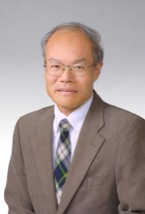
Kazuo Iwama is a Professor at the School of Informatics, Kyoto University, where he has been employed since 1997. He previously served as a Professor at Kyushu University's Department of Information Science (1992–1997) and held various academic positions, including Associate Professor and Visiting Associate Professor, at institutions such as Kyoto Sangyo University and UC Berkeley's Computer Science Division. Education Ph.D., Electrical Engineering, Kyoto University (1980) M.E., Electrical Engineering, Kyoto University (1975) B.E., Electrical Engineering, Kyoto University (1980) His research spans theoretical computer science, with a focus on algorithms, computational complexity, and quantum computing. Key areas include stable matchings, approximation algorithms, Boolean satisfiability, and quantum network coding. Scientific Awards 2008 Honorary Doctorate from University of Latvia 2005 Member, Science Council of Japan
Raka Jovanović is a Researcher at Singidunum University , affiliated with the Faculty of Informatics and Computing . His work bridges theoretical algorithm design with practical applications in transportation, energy systems, and optimization. Bachelor's, Matematički fakultet - Beograd (2002) Postgraduate, Matematički fakultet - Beograd (2007) Doctorate, Matematički fakultet - Beograd (2016) His research focuses on metaheuristics and matheuristics for complex optimization problems, including: Knapsack problems with penalty constraints Electric vehicle charging infrastructure planning Graph-based combinatorial optimization Energy management in extreme climates Integration of machine learning with traditional algorithms Recent publications demonstrate a strong emphasis on Fixed Set Search as a unifying methodology across diverse domains. Journal articles in 2024-2025 explore its application to: Maximum Diversity Problem Multidimensional knapsack Charging station placement Multi-objective optimization Conference papers from 2023-2024 highlight collaboration with international teams on: EV fleet scheduling Desert climate agricultural energy systems Max-Cut and disjoint dominating sets problems Waterway transport prediction models
Professor Ashraf Labib is a distinguished academic at the University of Portsmouth, serving as a Professor of Operations and Asset Management within the Faculty of Business and Law. He holds roles such as Associate Dean (Research) and Director of the DBA Programme. His research focuses on Strategic Operations Management, Decision Analysis, Reliability Engineering, and applications of Artificial Intelligence, with a strong emphasis on learning from failures and disasters. He has authored over 150 peer-reviewed publications and secured significant research funding from bodies like EPSRC, ESRC, and the EU. Affiliations: Portsmouth Business School, Centre for Operational Research and Logistics, Centre for Blue Governance, and Risk Reduction and Resilience. Education: PhD and MSc from the University of Birmingham, MBA from the American University in Cairo, and BSc in Mechanical Engineering from Cairo University. His research interests include resilience engineering, supply chain dynamics, and humanitarian operations. Notable projects include the CoBra EU-funded initiative for robotic cancer treatment and the ARCSAR project for Arctic Search & Rescue. He has supervised 20 doctoral students and collaborates with industries like EDF, HP, and Qatar Gas. Key contributions include frameworks for failure analysis, maintenance optimization, and disaster resilience. His work bridges academic research with practical applications, addressing challenges in manufacturing, healthcare, and environmental sectors.
Lech Madeyski is affiliated with the Faculty of Information and Communication Technology at Wrocław University of Science and Technology, serving as Head of the Department of Applied Informatics. His work bridges academic research and industrial applications in software engineering. Research Interests: Software Defect Prediction Machine Learning Applications in Software Engineering Requirements Engineering Code Quality and Technical Debt Empirical Evaluation of Software Practices Industrial-Academic Collaboration Scientific Contributions: His recent publications highlight trends in lightweight defect prediction models, explainable AI for industrial use, and optimization techniques in software quality assurance.
Karl Bringmann is a Professor at Saarland University since November 2019 and is affiliated with the Max Planck Institute for Informatics, where he works in the Department of Algorithms and Complexity. He has established himself as a leading researcher in theoretical computer science, particularly in fine-grained complexity and algorithm design. His work bridges theoretical insights with practical applications in optimization problems. Bringmann's research focuses on conditional lower bounds (often based on the Strong Exponential Time Hypothesis) and algorithm design, with particular emphasis on optimization problems, string algorithms, and computational geometry. His work has significant implications for fundamental problems like Subset Sum, Knapsack, and Integer Programming, with applications ranging from scheduling to post-quantum cryptography. He develops innovative approaches combining modern algorithmic techniques, mathematical structure theory, and fine-grained complexity to design faster algorithms and establish optimality. His publication record shows a consistent trend toward developing near-optimal algorithms for fundamental problems, with significant contributions to fine-grained complexity theory. His work often establishes tight conditional lower bounds while simultaneously providing matching upper bounds, creating a comprehensive understanding of problem complexity. He has made notable advances in string algorithms (particularly edit distance), geometric problems, and optimization. ERC Starting Grant 2019: Technology Transfer between Integer Programming and Efficient Algorithms (TIPEA) EATCS Presburger Award for Young Scientists 2019 Heinz Maier-Leibnitz-Prize 2019 EATCS Distinguished Dissertation Award 2015 Google European Doctoral Fellowship 2012-2014 Bringmann leads the ERC-funded TIPEA project (2019-2024), which investigates fundamental optimization problems with the goal of developing next-generation industrial solvers. He advises several PhD students including Nick Fischer, Alejandro Cassis, and Vasileios Nakos, and has served on numerous program committees for top theoretical computer science conferences including STOC, FOCS, SODA, and ICALP. His teaching includes advanced courses on Fine-Grained Complexity Theory and Competitive Programming.
Amy Peerlinck is a Lecturer in the Math & Computer Science Department at Western Colorado University. She holds a PhD in Computer Science from Montana State University (2023), an MS in Computer Science from the same institution (2019), and dual bachelor's degrees in Information Science (Karel de Grote College/University, 2016) and Applied Linguistics (University of Antwerp, 2013). Originally from Belgium, she relocated to Montana for a tech internship and discovered a passion for both mountain environments and computer science education. Her research focuses on applying computational intelligence to real-world problems, with expertise in: Machine learning and evolutionary algorithm development Precision agriculture optimization and sustainability Multi-objective problem solving using factored evolutionary approaches Neural network applications for agricultural prediction models Her publications demonstrate consistent focus on evolutionary computation and machine learning applications in agriculture, particularly through optimization algorithms like genetic programming and neural network ensembles. Conference papers frequently address yield prediction, experimental design optimization, and sustainable farming solutions.
Gianvito Urgese is an Associate Professor at the Interuniversity Department of Territorial Sciences, Planning and Policies (DIST) at Politecnico di Torino, where he is also a member of the EDA research group and the SmartData@PoliTO Big Data and Data Science Laboratory. His academic and research activities are deeply integrated into the Department of Control and Computer Engineering (DAUIN), reflecting his interdisciplinary focus on computer engineering and data science. His research spans artificial intelligence, bioinformatics, neuromorphic computing, edge computing, embedded systems, and Industry 4.0. He investigates optimized task-specific algorithms, designs heterogeneous software-hardware architectures for bioinformatics acceleration, and develops computational paradigms for neuromorphic platforms. His work also extends to digital lifecycle management in Industry 4.0, aligning with Sustainable Development Goals 9, 11, and 12. His recent publications reveal a strong trend in neuromorphic computing and quantum-inspired optimization, with contributions to benchmarking frameworks (NeuroBench), neuron-based encoding tools (WiN-GUI), and quantum annealing methods. These works are published in high-impact journals such as Nature Communications , IEEE Transactions on Emerging Topics in Computing , and Science Translational Medicine , indicating a multidisciplinary and high-impact research profile. Urgese is actively involved in supervising PhD students and teaching graduate-level courses such as Neuromorphic Computing and Engineering, Applied AI and Machine Learning, and System-on-Chip Architecture. He serves on doctoral colleges and course committees, demonstrating leadership in academic governance. Scientific and Research Leadership: Principal Investigator (Scientific Manager) in multiple commercial research projects on data analytics, fog computing, and firmware design (2019–2025). Supervision of PhD research on neuromorphic systems, bioinformatics algorithms, and AIoT solutions. Active contributor to European-funded initiatives in neuromorphic and Industry 4.0 domains. He collaborates with multidisciplinary teams, including researchers at the Candiolo Cancer Institute and participants in the Telluride Neuromorphic Cognition Engineering workshop, highlighting the collaborative and applied nature of his work.
Gerdus Benade is an Assistant Professor in the Information Systems department at Boston University's Questrom School of Business and a Junior Faculty Fellow at the Rafik B. Hariri Institute for Computing and Computational Science & Engineering. His research sits at the intersection of computer science and economics, focusing on making group decisions under uncertainty and the fair division of resources in dynamic settings. Boston University, Questrom School of Business (Current) Carnegie Mellon University, Tepper School of Business (PhD) Stellenbosch University (MSc) Benade's research primarily explores computational social choice, fair division and discrete optimization, with particular interest in applications to traditionally political issues like voting, participatory budgeting and political districting or gerrymandering. His work spans theoretical foundations of fair allocation mechanisms and practical implementations addressing real-world problems in democratic decision-making processes. He has made significant contributions to understanding how to achieve Rawlsian justice in food rescue systems, develop fair redistricting algorithms that balance optimization with partisan fairness, and design participatory budgeting methods that work effectively in practical settings. Analysis of Benade's recent publications reveals a consistent trajectory toward increasingly practical applications of computational social choice theory. While early work focused on theoretical foundations of fair division and social welfare functions, recent papers address concrete implementation challenges in participatory budgeting, political redistricting, and food distribution systems. His research demonstrates a distinctive approach that bridges theoretical computer science with real-world policy implications, particularly in democratic processes where computational methods can enhance fairness and representation. Benade's work has been recognized through presentations at major conferences including the ACM Conference on Economics and Computation (EC), NeurIPS, and AAAI. His research on political redistricting has been mentioned in The Washington Post, and his work on sortition was featured in Bloomberg. Benade has advised on projects involving Amazon's supply chain optimization technologies and collaborated with researchers at institutions including Harvard University and the MGGG Redistricting Lab. His teaching includes Machine Learning for Business Analytics courses at Boston University. As a Junior Faculty Fellow at the Rafik B. Hariri Institute, Benade contributes to interdisciplinary research at the intersection of computing and societal challenges, working alongside researchers addressing complex problems through computational approaches.
Daniel Solow serves as Professor in the Department of Operations at Case Western Reserve University's Weatherhead School of Management, where he has maintained continuous faculty appointment since 1978. His interdisciplinary expertise bridges operations research, complex systems theory, and mathematics education within the university's business school framework. His educational background includes foundational training at premier institutions: PhD in Operations Research from Stanford University (1978) MS in Operations Research from University of California at Berkeley (1972) BS in Mathematics from Carnegie-Mellon University (1970) Solow's research program operates at three interconnected frontiers: (1) Mathematical modeling of complex adaptive systems to analyze leadership emergence and optimal central control in organizational contexts; (2) Development of advanced optimization algorithms for deterministic, combinatorial, and nonlinear problems; (3) Creation of systematic pedagogical frameworks for teaching mathematical proofs and quantitative methods. His work demonstrates consistent translational impact from theoretical mathematics to practical business applications, particularly in team dynamics and decision-making under complexity. Analysis of his 15 most recent publications reveals strong thematic continuity in applying mathematical rigor to organizational phenomena, with increasing focus on leadership modeling since 2014. His research evolves from pure optimization techniques toward complex systems applications, maintaining strong representation in top-tier journals like Management Science and Organization Science while expanding into interdisciplinary outlets such as Mathematics and The American Scientist . His scientific recognition includes: Weatherhead Teaching Excellence Award (1981, 2010, 2015) Solow's academic contributions extend beyond publications through significant educational leadership. He has developed influential textbooks including How to Read and Do Proofs and Linear Programming: An Introduction to Finite Improvement Algorithms , while teaching quantitative methods across Weatherhead's MBA, master's, and PhD programs. His course development spans foundational topics like Statistics and Decision Modeling to advanced subjects including Operations Analytics and Python Programming, with documented excellence through multiple teaching awards based on student nominations. External service includes editorial roles for INFORMS Journal on Computing and committee leadership for curriculum development and faculty recruitment.
Michael Figelius is a postdoctoral researcher at the University of Siegen's Department of Electrical Engineering and Computer Science, supervised by Markus Lohrey. His work bridges theoretical computer science and mathematics. His research focuses on Algorithmic Group Theory , Number Theory , and their applications in IT-Security and Blockchain Technology . Key areas include automata theory, computational complexity, and cryptographic algorithm design. Recent publications (2020–2022) highlight his contributions to group-theoretical problems, complexity analysis of word problems, and algorithmic properties of wreath products and HNN-extensions. These works intersect with theoretical computer science, algebraic structures, and cryptographic security. He has taught courses such as Formal Languages and Automata , Computability and Logic , and Complexity Theory at the University of Siegen since 2016, including undergraduate mathematics instruction (2013–2017) in algebra, complex analysis, and statistics.
Professor Yu Gang serves as Professor of Management Practice of Innovation and Entrepreneurship at Cheung Kong Graduate School of Business (CKGSB), where he bridges academic theory with real-world business applications. He concurrently holds the position of Executive Chairman at New Peak Group (111.com.cn), demonstrating his dual commitment to academia and industry leadership in China's e-commerce sector. His academic foundation includes: Bachelor of Science from Wuhan University Master of Science from Cornell University PhD from the Wharton School of the University of Pennsylvania Professor Yu's research centers on operations management and supply chain optimization , with specialized focus on e-commerce logistics, healthcare systems, and internet-driven business models. His work consistently applies advanced mathematical frameworks to solve complex resource allocation problems across aviation, telecommunications, and retail sectors, emphasizing practical implementation in dynamic markets. His publication history reveals a sustained trajectory from theoretical optimization models in the 1990s toward applied solutions for digital commerce and healthcare logistics in the 2000s. The research demonstrates evolving expertise from airline crew scheduling to e-commerce supply chains, reflecting China's technological transformation. His distinguished recognition includes: 2002 Franz Edelman Management Science Achievement Award (INFORMS) 2002 IIE Transaction Award for Best Application Paper 2003 Outstanding IIE Publication Award 2012 Martin K. Starr Excellence Award (POMS) Professor Yu's industry experience as Vice President at Amazon and Dell directly informs his academic perspective, though specific grant details remain undisclosed. His leadership in founding CALEB Technologies and co-creating Yihaodian provides unparalleled case studies for entrepreneurship education at CKGSB. While current lab affiliations aren't specified, his past directorship of UT Austin's Center for Management of Operations and Logistics indicates his capacity for leading interdisciplinary research teams focused on operational excellence.
Ross James serves as Dean of Academic Governance and Deputy Vice-Chancellor - Academic at the University of Canterbury since November 1995, holding ORCID identifier 0000-0002-4889-4854. His office is located in Matariki Level 2, with contact number +6433693583 and email ross.james@canterbury.ac.nz. His research focuses on combinatorial optimization problems including scheduling algorithms, multi-dimensional knapsack problems, subset sum problems, and search heuristics. Specializing in mathematical programming approaches, his work bridges theoretical operations research with practical applications in production planning, resource allocation, and decision modeling. Key methodological contributions include entropy-based optimization techniques, neighborhood search heuristics, and surrogate constraint methods. Analysis of his publication history (29 entries through 2014) reveals consistent contributions to top operations research journals with significant impact in capacitated lot-sizing (89 citations), redundancy allocation (102 citations), and knapsack problem methodologies. His research demonstrates progression from fundamental combinatorial problems toward integrated systems modeling and knowledge discovery approaches for understanding algorithm performance. Professional activities include extensive journal reviewing for International Journal of Production Research, Annals of Operations Research, and Journal of Combinatorial Optimization. He has served on the Operational Research Society of New Zealand (ORSNZ) Council since 1996 with multiple terms, including Canterbury Branch Chair positions, and was on the Editorial Advisory Board for Computers and Operations Research from 1997-2002. Additional institutional service includes membership on the UC 360 point Degree Working Party and ongoing participation in ORSNZ activities, reflecting his commitment to academic governance and professional development in operations research.
Dr. Xiang Song is a Senior Lecturer at the Department of Mathematics, University of Portsmouth, within the Faculty of Technology and School of Mathematics and Physics. He is affiliated with the Centre for Operational Research & Logistics and the Portsmouth AI and Data Science Centre. His research focuses on cutting and packing problems, operational research, logistics optimization, and artificial intelligence applications in supply chain management. He has held EPSRC-funded projects, including the LANCS Initiative in Foundational Operational Research (2008-2011) and contributed to projects like automated algorithm selection for cutting/packing problems (2004-2008). His research interests include unmanned vehicle routing for offshore inspections, maintenance planning for renewable energy infrastructure, stochastic supply chain modeling, and heuristic algorithms for complex optimization problems. He has published extensively in journals like European Journal of Operational Research and Expert Systems with Applications. His work bridges theoretical advancements with real-world applications in logistics, healthcare, and manufacturing. PhD: Jointly awarded by CIMS, Shenyang Institute of Automation (Chinese Academy of Sciences) and Université de Technologie de Troyes (2004) EPSRC Projects: Including strategic maintenance planning for offshore wind farms and blood supply network optimization in disaster scenarios His research outputs span 27 peer-reviewed articles, with recent work addressing carbon cost impacts on supply chains, multi-modal logistics in medical supply networks, and UAV/USV coordination for offshore inspections. He supervises PhD students and collaborates with industry partners on practical operational research challenges.
Ariel Kulik is a Senior Lecturer in the Department of Industrial Engineering and Management at Ben-Gurion University. He previously held postdoctoral positions at the Technion (hosted by Roy Schwartz) and CISPA (hosted by Dániel Marx). His research focuses on parameterized approximation algorithms, polynomial-time approximation algorithms for resource allocation problems (e.g., knapsack, bin packing, submodular maximization), and algorithmic optimization under constraints. Education: Ph.D. (2021) in Computer Science from Technion IIT, supervised by Hadas Shachnai; M.Sc. (2011) in Computer Science from Technion, Summa Cum Laude; B.A. (2005) in Mathematics and Computer Science from The Open University, Summa Cum Laude. Key research areas include parameterized complexity, approximation algorithms for combinatorial optimization problems, and submodular function maximization. His work often addresses knapsack variants, matroid optimization, and the development of efficient approximation methods under budget or structural constraints. Notable contributions include advancements in FPTAS/FPTAS for budgeted matroid independent sets, parameterized approximation techniques for vector knapsack, and exponential-time approximation algorithms leveraging novel algorithmic frameworks. His research bridges theoretical foundations with practical algorithm design for resource allocation challenges. He has advised Ph.D. student Ilan Doron-Arad (joint with Hadas Shachnai). His publications span top venues in theoretical computer science and optimization, including FOCS, SODA, ICALP, and Algorithmica.
Raffaele Cerulli is a Full Professor of Operations Research at the Department of Mathematics of the University of Salerno, Italy, where he also serves as Head of Department. He is a Member of the Scientific Committee of UMI (Unione Matematica Italiana) and Director of the Laboratory "Model and Applications of Mathematical Methods." His office is located at the Fisciano Campus, Building F2, First Floor, Room 026, with reception hours on Tuesdays from 3:00 PM to 5:00 PM and Wednesdays from 3:00 PM to 4:00 PM. Dr. Cerulli's research focuses on Operations Research, Combinatorial Optimization, and Network Theory . His work spans multiple application areas including wireless sensor networks, vehicle routing, spanning tree problems, and graph optimization. He has made significant contributions to problems involving labeled graphs, minimum branch vertices spanning trees, and maximum lifetime problems in sensor networks. His research combines theoretical developments with practical applications, particularly in transportation and network systems. Analysis of his recent publications (2022-2025) reveals continued strong activity in combinatorial optimization, with particular emphasis on flow problems, spanning tree variants, and sensor network optimization. His work demonstrates consistent methodological innovation, frequently employing exact algorithms, metaheuristics, and mathematical programming approaches to solve complex combinatorial problems. Many of his recent papers represent extensions or novel variants of classical optimization problems with practical constraints. Throughout his career, Dr. Cerulli has maintained extensive collaborations, particularly with researchers Carrabs, Gentili, and Raiconi, resulting in numerous joint publications across top-tier operations research journals. His work has contributed significantly to both theoretical developments and practical applications of optimization techniques in network systems.