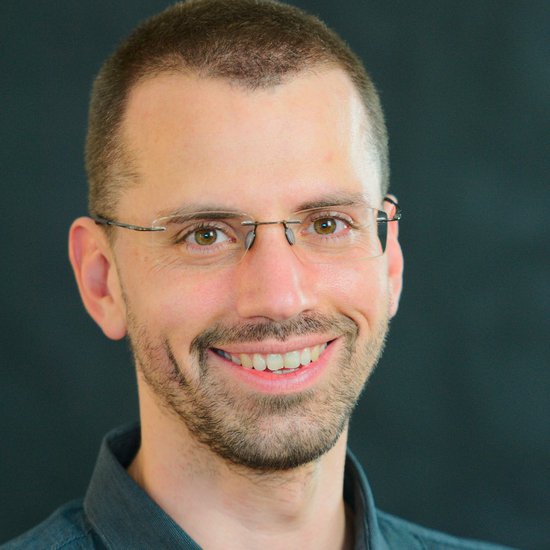
Axel Parmentier is a Lecturer and researcher at the École Nationale des Ponts et Chaussées, where he founded the AI for Air Transport industry research chair with Air France. His work focuses on the intersection of operations research and machine learning, particularly in data-driven combinatorial optimization and stochastic optimization, with industrial applications in air transportation, supply chain, and predictive maintenance. He holds a Ph.D. and has been recognized with awards including the AMIES Dissertation Award (2017) for applied mathematics with industrial impact and the Robert Faure Prize (under 35) from ROADEF. His research also includes contributions to structured reinforcement learning, optimization layers in machine learning, and explainable AI for operational decisions. Awards: AMIES Dissertation Award, Robert Faure Prize Labs/Teams: CERMICS laboratory, AI for Air Transport Chair (collaboration with Air France) Grants/Projects: Continent-scale inventory routing solutions, Renault’s logistics optimization His advising includes students like Victor Cohen, whose work on predictive maintenance was featured on France Culture.
Lene Monrad Favrholdt is an Associate Professor in the Department of Mathematics and Computer Science at the University of Southern Denmark (SDU), Faculty of Science. Her research is centered on algorithms, particularly online algorithms, graph algorithms, and combinatorial optimization. She is an active contributor to theoretical computer science with a focus on algorithmic performance under uncertainty and with predictions. Her research interests include: Online Algorithms and Competitive Analysis Algorithm Design with Predictions Graph Algorithms (e.g., edge coloring, minimum spanning trees) Combinatorial Optimization (e.g., bin packing, knapsack problems) Resource Allocation and Scheduling The recent trend in her publications shows a strong emphasis on integrating machine learning predictions into classical online algorithms to improve competitive ratios and practical performance. Her work spans theoretical analysis and experimental evaluation, appearing in top venues such as Algorithmica, ICML, and WADS. Her scientific achievements include receiving SDU's teaching award in 2022. She has served as an editor and peer reviewer for major algorithmic conferences, including the European Symposium on Algorithms (ESA) and Scandinavian Symposium on Algorithm Theory (SWAT). SDU's teaching award Lene Monrad Favrholdt has been involved in teaching courses such as Logic and Linear Algebra and has contributed to PhD supervision. She is actively engaged in research collaboration and academic service, including participation in workshops and conferences on new techniques in online algorithms. While specific grants are not mentioned, her extensive publication record and academic activities indicate sustained research funding and collaboration.
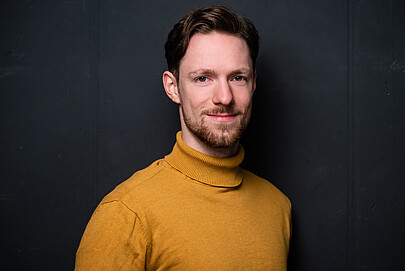
Tobias Mömke is a Professor for Theoretical Computer Science at the University of Augsburg , Germany. His research focuses on algorithmic optimization for problems with limited resources , particularly in Traveling Salesman Problem (TSP) variants , approximation algorithms , and online computation . He leads the Resource Aware Algorithmics team. Fields of Interest : TSP, Approximation Algorithms, Online Algorithms, Graph Theory Advising : Mentors students like Michael Ruderer, Aida Roshany-Tabrizi, and Morteza Alimi. Scientific Contributions : His recent work includes path cover techniques for TSP variants, bridge lemmas in algorithm design, and normalizing graphs for edge coloring. He has developed linear-time and polynomial-time solutions for scheduling and flow problems. Awards : DFG Heisenberg Grant (2020) , DFG Sachbeihilfe (2020) Email : moemke@informatik.uni-augsburg.de
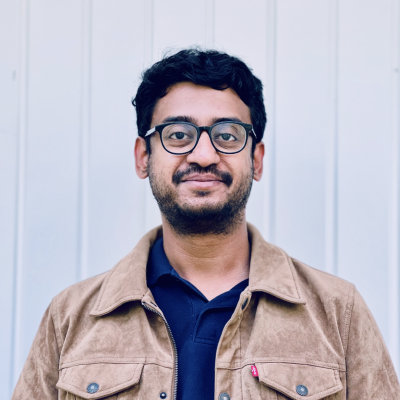
Luke Mathieson is a Senior Lecturer and Deputy Head of School (Teaching and Learning) in the School of Computer Science at the University of Technology Sydney. His academic career spans theoretical computer science with a focus on computational complexity and its applications. Dr. Mathieson's educational background includes a PhD in Theoretical Computer Science from Durham University, a Masters and Postgraduate Diploma in Higher Education from Macquarie University, and dual Bachelor's degrees in Computer Science (Honors) and Science (Chemistry) from the University of Newcastle Australia. His research interests are centered on parameterized complexity and its applications, extending to various areas of complexity theory, algorithmics, quantum computing, graph theory, and related mathematics. A major theme of his research is the complexity of graph editing problems, a topic in which he specializes. His recent work bridges theoretical complexity with practical applications in AI education, network science, and quantum computing. Dr. Mathieson has taught an extensive range of computer science subjects, particularly focusing on the theory of computation, computational complexity, and algorithmics. At UTS, he teaches or has taught subjects including Data Structures and Algorithms, Applications Programming, Computing Science Studio, Theory of Computing Science, Programming, and Advanced Algorithms. He serves as the Course Director for the Bachelor of Science in Information Technology suite of degree programs and the Course Coordinator for the IT Core. Senior Lecturer, University of Technology Sydney, School of Computer Science (2022-present) Lecturer, University of Technology Sydney, School of Computer Science (2021-2022) Scholarly Teaching Fellow, University of Technology Sydney, School of Computer Science (2017-2021) Research Associate, University of Newcastle Australia, Centre for Information Based Medicine (2014-2017) Adjunct Lecturer, Macquarie University, Department of Computer Science (2014) Postdoctoral Fellow, Macquarie University, Department of Computer Science (2011-2013) Research Associate, University of Newcastle Australia, School of Electrical Engineering and Computer Science (2010-2011) His research demonstrates consistent productivity across theoretical computer science with notable contributions to parameterized complexity and network controllability. Recent publications show an expanding scope incorporating quantum computing applications and educational technology innovations. The QB-suite: a framework for quantum algorithm design and benchmarking (2024-2027) National Industry PhD Program: Improving biosecurity through livestock history recording (2024-2028) Random Number Generation and Analytics for Client Understanding (2018-2019) He maintains active research collaborations across multiple institutions and is affiliated with the Faculty Centre for Quantum Software and Information (QSI) at UTS, reflecting his growing involvement in quantum computing research.
Tatsuhiko Shirai is an Associate Professor (non-tenure-track) at the Waseda Institute for Advanced Study, Waseda University, specializing in quantum computing and quantum open systems. His research focuses on developing algorithms for quantum and Ising machines to solve complex combinatorial optimization problems, as well as studying fundamental aspects of non-equilibrium quantum dynamics. His educational background includes: Doctoral Program, Department of Physics, Graduate School of Science, The University of Tokyo (2013-2016) Master's Program, Department of Physics, Graduate School of Science, The University of Tokyo (2011-2013) Bachelor's Degree, Department of Physics, Faculty of Science, The University of Tokyo (2007-2011) Shirai's research spans both theoretical and applied aspects of quantum computing. His primary interests include quantum open systems, where he investigates the dynamics of quantum systems interacting with environments, and quantum computing, where he develops novel algorithms for quantum annealers and Ising machines. His work on non-equilibrium statistical mechanics explores fundamental questions about thermalization in open quantum systems and the emergence of steady states. In practical applications, he has made significant contributions to constrained combinatorial optimization problems, developing techniques like variable reduction methods and multi-spin-flip engineering to improve the performance of quantum and quantum-inspired solvers. His recent publications reveal a strong focus on bridging theoretical quantum physics with practical optimization applications. The research trends show an evolution from fundamental quantum open system theory toward increasingly practical quantum computing applications, particularly in combinatorial optimization. His work spans across quantum simulation, quantum algorithms, Ising machines, and quantum-inspired classical computing approaches, demonstrating a unique interdisciplinary perspective that connects theoretical physics with real-world computational challenges. His notable scientific achievements include: 2022 SLDM Study Group Outstanding Paper Award from the Information Processing Society of Japan 16th Young Scientist Encouragement Award (area 11) from The Physical Society of Japan (March 2022) 197th SLDM Study Group Excellent Presentation Award from the Information Processing Society of Japan (January 2022) Shirai has been actively involved in multiple research projects funded by the Japan Society for the Promotion of Science, including the development of physical property control methods in non-equilibrium quantum open systems (2023-2027), high-performance computing for materials simulation using hybrid quantum-classical algorithms (2021-2024), and construction of analytical methods using typical non-equilibrium steady states (2018-2021). His work has attracted media attention, including coverage on EurekAlert! for his research on multi-spin-flip engineering in Ising machines and novel quantum algorithms for combinatorial optimization. As part of Waseda Institute for Advanced Study, Shirai contributes to an interdisciplinary research environment that fosters innovation at the intersection of physics, computer science, and mathematics. His work on quantum algorithms and quantum open systems forms part of a broader effort to advance both the theoretical foundations and practical applications of quantum information processing.
Prof. Dr. Steffen Goebbels is a Professor of Mathematics and Computer Science at Niederrhein University of Applied Sciences, Faculty of Electrical Engineering and Computer Science in Krefeld, Germany. He maintains an office in room F 202 and is actively involved in teaching and research. His academic work spans multiple disciplines with a strong focus on applied mathematics and computer science. His research interests center around 3D city modeling, mathematical optimization, and computer graphics. He has made significant contributions to the field of CityGML data processing and has developed algorithms for calculating 3D building models from land registry data and laser scan data. His work with the iPattern Institute has led to practical applications in cities like Krefeld, Leverkusen, and Dortmund. He has also contributed to neural network approximation theory and various optimization problems. Prof. Goebbels has published extensively in recent years, with publications spanning computer graphics, mathematical optimization, and machine learning. His research shows a consistent pattern of applying mathematical techniques to solve practical problems in 3D modeling and computer vision. He has also co-authored several influential textbooks on mathematics for computer science students. He has received recognition for his work through publications in reputable journals and conference proceedings, though specific awards are not mentioned in the available information. His research has practical applications in urban planning, architectural visualization, and manufacturing processes. Prof. Goebbels is actively involved in teaching mathematics courses (Mathematics 1-3), Numerical Analysis, Logic Programming, Functional Programming, and Scientific Computing. He has developed teaching materials including online courses and textbooks that are widely used in his institution.
Matteo Boffa serves as a Fixed-term Assistant Professor in the Department of Control and Computer Engineering (DAUIN) at Politecnico di Torino, Italy. He teaches courses including AI and Cybersecurity, Big Data for Internet Applications, and Databases across master's and bachelor's programs. His research spans cybersecurity, artificial intelligence, and data mining with emphasis on: Application of large language models for intrusion detection and malicious log analysis Social mining techniques for urban function identification Combinatorial optimization in network and security contexts Recent publications reveal a decisive shift toward leveraging language models for automated security analysis, with increasing focus on real-world deployment of AI-driven security tools since 2022. This trend bridges theoretical AI advancements with practical cybersecurity applications. Scientific Awards: No awards or fellowships were listed in available sources Teaching and Advising: Course collaborator for AI and Cybersecurity (Master's, 2024/25) Course collaborator for Big Data for Internet Applications (2022/23) Course collaborator for Interdisciplinary Projects (2022/23) Course collaborator for Databases (Bachelor's, 2024/25) Involved in doctoral supervision (2025 thesis: Language Models and Cybersecurity - Applications and Current Limits)
Professor Gleb Beliakov is a faculty member at Deakin University's School of Information Technology within the Faculty of Science Engineering and Built Environment. He has held roles including Associate Head of School (Research) from 2009–2012 and currently leads the Computational Intelligence and Data Analytics Research cluster and the Data to Intelligence research centre. His expertise spans fuzzy systems, computational mathematics, numerical optimization, and high-performance computation. Education: PhD and MSc from the Russian Peoples Friendship University. Research Interests: Focuses on fuzzy systems, aggregation functions, parallel programming, and their applications in decision-making and data analysis. Grants: Includes projects on Trusted Autonomy (CRC), Satellite Communication Systems (Defence), and Explainable AI (ARC). His research emphasizes fuzzy measures, Choquet integrals, and their use in addressing complex problems like resource optimization and multimedia piracy. He has supervised numerous PhD and master's students, contributing to advancements in preference mining, image processing, and watermarking techniques.
Dr. Henrietta Tomán serves as an Assistant Professor in the Department of Data Science and Visualization at the University of Debrecen's Faculty of Informatics, where she bridges advanced mathematical theory with practical medical imaging applications. Her work integrates abstract algebraic structures with cutting-edge AI systems to solve critical healthcare challenges. Her research portfolio spans three interconnected domains: Medical image processing (particularly ensemble-based segmentation and quality assessment for ophthalmic diagnostics) Geometric structures (quasigroups, loops, and differentiable manifolds) Stochastic optimization for resource-constrained AI systems Analysis of her publication trajectory reveals evolving expertise: early work (2010-2014) established foundations in geometric loop theory applied to image processing, while recent research (2020-2024) pioneers stochastic fusion techniques for medical image ensembles under computational constraints. Her most significant contributions involve translating mathematical abstractions into robust clinical decision-support tools, particularly in diabetic retinopathy detection and epidemic modeling. Current work demonstrates increasing focus on real-time AI systems that maintain accuracy under hardware limitations, reflecting urgent needs in telemedicine and mobile health applications. Dr. Tomán maintains active collaboration within the Doctoral School of Informatics and contributes to Hungary's national research initiatives in medical AI, with consistent publication output in top-tier venues spanning computer vision, medical imaging, and mathematical computing.
Lennart Binkowski is a doctoral candidate and scientific staff member at the Institute of Theoretical Physics , part of the Faculty of Mathematics and Physics at Leibniz University Hannover. His research focuses on quantum computing, particularly quantum algorithms and combinatorial optimization. University: Leibniz University Hannover School: Faculty of Mathematics and Physics Department: Institute of Theoretical Physics Email: lennart.binkowski@itp.uni-hannover.de Lennart's research interests span quantum algorithms, quantum walks, and optimization frameworks. His work explores quantum programming languages, Pauli transfer matrices, and hybrid quantum-classical systems. Recent publications highlight advancements in QAOA, quantum permutation generation, and tensor network applications. Lennart's 15 most recent articles focus on quantum computing trends, including algorithm design, constraint handling, and tensor structures. No scientific awards are mentioned in the provided data. Contact details: Schneiderberg 32, 30167 Hanover, Germany (Building 3702, Room 013).
Alberto Del Pia is a Professor in the Department of Industrial & Systems Engineering at the University of Wisconsin–Madison, where he has been a faculty member since 2014 and received tenure in 2020. His research focuses on mathematical optimization, discrete mathematics, and the mathematics of data science. He holds a Ph.D. in Mathematics from the University of Padova (2009) and has held postdoctoral positions at Otto von Guericke University, ETH Zürich, and IBM Research as a Goldstine Fellow. Educational Background: PhD in Mathematics (University of Padova, 2009); MS and BS in Mathematics (University of Padova, 2005 and 2004). Research Interests: Del Pia's work emphasizes theoretical and computational aspects of optimization, including convex quadratic programming, mixed-integer programming, and polynomial optimization. His contributions span the design of algorithms and polyhedral analysis, with applications in data science and operations research. Notable Awards: He has received the Egon Balas Prize (INFORMS Optimization Society, 2023), the INFORMS Computing Society Prize (2023), and the Young Researchers Prize (INFORMS Optimization Society, 2017). His postdoctoral work was supported by the IBM Herman Goldstine Fellowship (2013) and the INdAM Scholarship (2000). Teaching and Service: Del Pia teaches courses in integer optimization and linear optimization across multiple departments (Industrial & Systems Engineering, Mathematics, Computer Science). He has also organized conferences, such as the 2023 IPCO conference in Madison.
Rik Sengupta is a Part-Time Lecturer at the University of Massachusetts Amherst, located in the Lederle Graduate Research Center. His research focuses on graph theory, algorithms, combinatorics, and fair allocation mechanisms. He has contributed to theoretical computer science, discrete mathematics, and algorithmic economics. His work spans dynamic graph streaming algorithms, fair division under structured constraints, and optimization problems with fairness metrics. He also explores graph reconstruction techniques, quantifier complexity in boolean functions, and Ramsey theory applications. Recent publications highlight trends in graphical allocation models, probabilistic graph analysis, and algorithmic solutions for resource distribution challenges. Notable areas include EFX allocations over graphs, time-aware fairness in knapsack problems, and approximation algorithms for housing markets. Rik holds no explicitly listed academic awards or grants. His advising activities are not detailed in the provided texts. He is affiliated with computational theory research groups but no specific labs or teams are mentioned.
Adam Letchford is a Professor in the Department of Management Science at Lancaster University, specializing in Operations Research and Optimization. His research focuses on combinatorial optimization, integer programming, and algorithm design, with particular contributions to vehicle routing, network design, and polyhedral theory. He has authored numerous peer-reviewed articles, including works on clique partitioning polytopes, knapsack problems, and matheuristics. Letchford is actively involved in academic conferences and editorial roles, contributing to the advancement of operational research methodologies and applications in logistics and decision sciences. His work bridges theoretical foundations with practical implementations, addressing challenges in both academic and real-world contexts.
Francesco Quinzan is a Researcher at the University of Oxford's Department of Computer Science. His work focuses on advancing AI alignment, causal machine learning, and combinatorial optimization with applications in medical imaging, reinforcement learning, and fair algorithm design. He leads the ELSA project under Prof. Marta Kwiatkowska's supervision. Research interests include: Safe AI development through causal representation learning and doubly robust methods Optimization techniques for submodular functions and evolutionary algorithms Counterfactual analysis for bias detection in medical AI systems Reinforcement learning frameworks incorporating human feedback Recent publications (2020-2025) demonstrate contributions to: Causal feature selection and invariant predictors Scalable optimization methods for large-scale problems Robustness in multi-agent systems and diffusion-based models Algorithmic fairness in constrained feature selection Current projects involve: ELSA: Developing explainable and safe AI systems Optimal transport applications for domain correction Causal discovery from temporal data streams
Prof. Wojciech Bożejko is a Professor at the Department of Control Systems and Mechatronics within the Faculty of Information and Communication Technology at Wrocław University of Science and Technology. His research focuses on optimization algorithms, scheduling theory, and quantum computing applications in discrete optimization problems. He has contributed extensively to the development of metaheuristics for solving complex scheduling challenges, including cyclic job shop, flow shop, and single-machine scheduling under probabilistic or uncertain conditions. Notably, his recent work explores quantum annealing techniques on D-Wave systems for tackling knapsack problems and flow shop scheduling. Prof. Bożejko has also co-edited special issues on discrete systems and authored over 50 peer-reviewed articles in journals like *Computers & Industrial Engineering* and *Archives of Control Sciences*. His methodologies emphasize parallel computing approaches to enhance solution efficiency. Research Interests: - Quantum Computing Applications in Optimization - Metaheuristic Algorithms (Tabu Search, Simulated Annealing) - Cyclic and Flow Shop Scheduling - Stochastic and Robust Scheduling - Parallel Computing for Discrete Optimization Advising & Grants: While no specific grants or advisees are listed, his research outputs indicate significant contributions to collaborative projects in scheduling optimization and quantum computing applications. His work often involves interdisciplinary collaborations, such as with the Wrocław Centre for Networking and Supercomputing. Labs/Teams: Affiliated with the Department of Control Systems and Mechatronics, contributing to research groups focused on automation, discrete systems, and advanced optimization techniques.