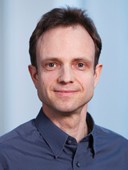
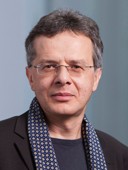
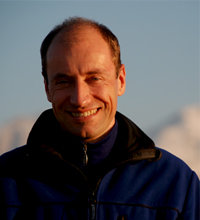
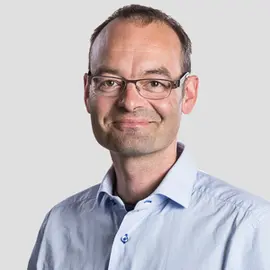
Thomas Michaels is an Assistant Professor at the Department of Biology, ETH Zürich, leading the Michaels Group . His research focuses on theoretical models of biomolecular condensates and protein aggregation in biological systems. Research Themes : Protein aggregation, liquid-liquid phase separation, membrane biophysics, and the role of condensates in neurodegenerative diseases like Alzheimer’s and Parkinson’s. Collaborative Approach : Integrates theoretical physics, control theory, and computational biology with experimental validation to design therapeutic strategies. Recent Publications highlight his work on amyloid formation mechanisms, lipid interactions, and phase-separated compartments as biochemical reactors. His group trains PhD students in systems biology and biocondensate physics.
Mikaela Iacobelli is an Associate Professor in the Department of Mathematics at ETH Zürich. During the 2024-25 academic year, she was a von Neumann Fellow at the Institute for Advanced Study in Princeton. Previously, she held faculty positions at Durham University and a research fellowship at the University of Cambridge. Her educational background includes: PhD in Mathematics from Sapienza University of Rome and École Polytechnique in Paris (2015) Master's degree from Sapienza University of Rome (2012) Bachelor's degree from Sapienza University of Rome (2009) Mikaela's research lies at the interface of analysis, kinetic theory, and statistical mechanics. She studies partial differential equations that model the collective behavior of many-particle systems, with a focus on Vlasov-type plasmas and gravitational dynamics. Her current projects range from quasineutral and singular-limit problems for Vlasov-type systems to quantization of measures, ultrafast diffusion, and gradient-flow structures that link microscopic particle models to macroscopic fluid descriptions. She makes extensive use of PDEs techniques, optimal transport, probability, calculus of variations, and Riemannian geometry in her work. Her recent publications demonstrate a strong focus on Vlasov-type equations, particularly examining quasineutral limits, stability properties, and connections to other physical systems like Euler equations and magnetohydrodynamics. She has made significant contributions to understanding Landau damping, quantization problems on manifolds, and the mathematical foundations of plasma physics. Her notable scientific awards include: SNSF Starting Grant (Swiss ERC) Challenges and Breakthroughs in the Mathematics of Plasmas (2025-2030) von Neumann Fellow at the Institute for Advanced Study, Princeton (2024-2025) Invited speaker at the International Congress of Mathematical Physics (2021) CO-PI of the Germaine de Staël Funding Program for French-Swiss cooperation (2021-2023) L'Oréal prize for Women in Science (2015) Mikaela actively mentors postdocs, PhD, Master's, and Bachelor's students. Her current mentees include postdocs Dennis Chemnitz, Rishabh Gvalani, Stefano Rossi, and Simon Becker, as well as PhD students Thérèse Moerschell, Ata Deniz Aydin, and Antoine Gagnebin. She has served as PI for the Starting Research Grant from the University of Rome Sapienza and is currently the PI for the SNSF Starting Grant. She co-organizes several academic seminars including the Zurich Colloquium in Mathematics, the PDE and Mathematical Physics seminar at ETH Zürich and UZH, and the Analysis Seminar. She also serves on various committees including as Chair of the European Mathematical Society Committee for Women in Mathematics.
Vincent Dufour-Décieux is a researcher at the Professorship for Energy and Process Systems Engineering at ETH Zürich , focusing on developing computational methods for material screening in separation processes and global net-zero transitions. He earned his Master's in Materials Chemistry from Ecole Polytechnique (France) and a PhD in Materials Science from Stanford University , where he pioneered statistical methods combining Kinetic Monte Carlo and random graph theory to study planetary diamond formation. Research Highlights: Application of Classical Density Functional Theory (cDFT) for 100x faster adsorption property predictions in porous materials Development of science-based definitions for "hard-to-abate" emissions to guide climate action prioritization Integration of Coulombic interactions in cDFT for CO2 adsorption accuracy Article Trends : His work spans computational materials science (cDFT, random graph theory) and climate policy analysis, with recent publications in Joule , AIChE Journal , and Physical Review E . These studies emphasize scalable solutions for carbon capture, material screening efficiency, and accurate thermodynamic modeling. Collaborations : Active in international conferences (FOA15, MolMod, Gordon Research Conference) and cross-institutional projects with teams at Stanford, ETH Zürich, and industry partners.
Pietro de Anna is an Associate Professor at the Institute of Earth Sciences (ISTE), University of Lausanne, since August 2021. He holds an Italian nationality and completed a Master's in Theoretical Physics (2009) at the University of Florence, followed by a PhD in Earth Sciences at the University of Rennes 1 (2012). His research focuses on reactive transport in porous media, filtration, and interactions between bacteriological activity and flow dynamics. He directs the Environmental Fluid Mechanics Laboratory since 2015, employing microfluidics, numerical simulations, and theoretical models to study coupled physical, biological, and chemical mechanisms in confined systems. He has published 21 peer-reviewed articles, teaches environmental science courses at the Bachelor's and Master's levels, and supervised two PhD theses and four postdoctoral researchers. His work includes investigations into microbial biomass accumulation in porous media, diffusion-limited mixing, and biocementation processes. Key research themes are spatial heterogeneity effects, chemotaxis, and quorum sensing in microbial systems. He has pioneered methods combining microfluidics with microscopy to analyze transport at pore scales.
Swiss Federal Institute of Technology in LausanneSwitzerland
Michele Dolce is a Lecturer and Scientist at the École Polytechnique Fédérale de Lausanne (EPFL), affiliated with the School of Basic Sciences (SB) and the Chair of Mathematical Analysis, Calculus of Variations and PDEs (AMCV). He previously held positions as a Postdoc at EPFL and a Research Associate at Imperial College London, where he worked under Prof. Michele Coti Zelati. His academic journey includes a PhD from the Gran Sasso Science Institute. Current affiliation: EPFL, School of Basic Sciences (SB), Department of Mathematics (MATH), AMCV Past affiliation: Imperial College London His research focuses on the mathematical analysis of Partial Differential Equations (PDEs) in fluid dynamics and kinetic theory. Key areas include hydrodynamic stability, long-time behavior of viscous vortex systems, and time-decay properties of kinetic models like the Boltzmann and Wave Kinetic Equations. Recent work explores vortex merging phenomena and Taylor dispersion in rotationally symmetric flows. Scientific activities include organizing workshops such as "Long time dynamics in random and deterministic systems" (2025) and co-organizing events like the "Deterministic and random features of fluids" summer school (2023) and the "Enjoying Probability and Fluids in Lausanne" workshop (2023). His publications span journals including Communications in Mathematical Physics, Archive for Rational Mechanics and Analysis, and Journal of Mathematical Fluid Mechanics. Supported by Swiss National Science Foundation (SNF Ambizione grant PZ00P2_223294) Partially funded by GNAMPA (INdAM group)
Swiss Federal Institute of Technology in LausanneSwitzerland
Pasquale Scarlino is a Tenure Track Assistant Professor in the Institute of Physics at École Polytechnique Fédérale de Lausanne (EPFL), where he founded and leads the Hybrid Quantum Circuits (HQC) Laboratory. He holds a dual appointment with the School of Basic Sciences (SB) and the Physics Section (SB-SPH), conducting research at the intersection of semiconductor and superconducting quantum technologies. His laboratory develops hybrid quantum hardware for advanced quantum information processing. His educational background includes a Master's degree in Physics from the University of Salento (Italy, 2011), where he was a student of Scuola Superiore ISUFI, followed by a Ph.D. from TU Delft (2016) in the Spin Qubits group of Prof. L.M.K. Vandersypen at the Kavli Institute of Nanoscience-Qutech. His doctoral work focused on Si/SiGe spin qubits in collaboration with the M. Eriksson Group at Wisconsin University. Scarlino's research centers on experimental quantum physics using hybrid superconductor/semiconductor devices with electrostatically defined quantum dots coupled to high-impedance microwave resonators. He investigates light-matter interactions in unconventional regimes, quantum transport in low-dimensional systems, and spin/charge qubit implementations. His work aims to merge semiconductor and superconducting platforms to expand quantum information capabilities, with applications in quantum computing, quantum optics, and analog quantum simulation. Early career achievements include establishing the first coherent interface between superconducting and semiconducting quantum systems using high-impedance resonators. His publication record shows strong focus on microwave photon-mediated interactions between quantum systems, with recent work exploring quantum acoustics, topological band engineering, and criticality-enhanced sensing. The articles demonstrate increasing specialization in hybrid quantum hardware, with a shift toward germanium-based systems and advanced resonator designs in the latest publications. Scarlino has advised eleven Ph.D. students at EPFL and teaches courses including General Physics (Electromagnetism), Solid State Systems for Quantum Information, and Introduction to Quantum Science and Technology. His teaching emphasizes experimental quantum hardware approaches and critical assessment of quantum computing platforms. The Hybrid Quantum Circuits Laboratory operates within EPFL's Institute of Physics, utilizing state-of-the-art nanofabrication facilities and cryogenic measurement setups. The team collaborates extensively with leading quantum research groups worldwide, maintaining strong ties with previous institutions including ETH Zurich, TU Delft, and Microsoft Station Q Copenhagen.
Ralf Hiptmair is a Full Professor at ETH Zürich, serving as Head of the Seminar for Applied Mathematics and Deputy Head of the Department of Mathematics. He also holds the position of Director of Studies for ETH BSc and MSc in Computational Sciences and Engineering (CSE). His research spans computational mathematics, numerical analysis, finite element methods, boundary element methods, computational electromagnetism, multigrid methods, discrete differential forms, shape optimization, wave propagation, and kinetic equations. Hiptmair's work on auxiliary space methods was recognized as a breakthrough in computational science in the 2008 DOE Report on recent significant advancements in computational science. His research focuses on developing and analyzing numerical methods for partial differential equations, with particular emphasis on structure-preserving discretizations, computational electromagnetism, and boundary integral equations. His work has significant applications in engineering, physics, and computational science. Hiptmair's publications demonstrate a strong focus on advancing numerical techniques for electromagnetic problems, wave propagation, and shape optimization. His recent work shows increasing interest in computational topology, geometric numerical integration, and interdisciplinary applications of numerical methods. Featured as breakthrough in computational science in the 2008 DOE Report on recent significant advancements in computational science (for Auxiliary space methods) Hiptmair has supervised numerous doctoral, master's, and bachelor's students across mathematics, computational science and engineering, and related fields. His research group has received funding for developing advanced numerical methods with applications in electromagnetism, fluid dynamics, and computational physics. He is actively involved in teaching numerical methods courses at both undergraduate and graduate levels. Hiptmair leads research efforts in the Seminar for Applied Mathematics, collaborating with industry partners like ABB Corporate Research and Siemens on practical applications of computational methods. His work bridges theoretical numerical analysis with real-world engineering challenges.
Swiss Federal Institute of Technology in LausanneSwitzerland
Georgios Moschidis is a Tenure Track Assistant Professor at École Polytechnique Fédérale de Lausanne (EPFL), affiliated with the Chair of Mathematical General Relativity (CMGR) and the Mathematics Section of the School of Basic Sciences (SB-SMA). He holds dual positions within the Department of Mathematics (MATH) and the SMA-ENS unit, focusing on advanced mathematical physics and geometric analysis. His research interests center on mathematical general relativity, differential geometry, and partial differential equations, with a strong emphasis on spacetime stability problems, trapped surface formation, and geometric analysis in curved spacetimes. He teaches advanced courses such as Differential Geometry IV (General Relativity) and Analysis IV, reflecting his expertise in theoretical physics and advanced mathematics. Moschidis' work includes groundbreaking studies on the instability of anti-de Sitter (AdS) spacetime, ergosphere instabilities, and scalar wave dynamics in black hole geometries. His publications span topics from Vlasov systems to geometric inequalities in Gauss spaces, demonstrating interdisciplinary rigor. He advises doctoral student Abraham Gabriel Dorsaz and maintains active research through the CMGR lab (https://www.epfl.ch/labs/cmgr/). His research is supported by EPFL's academic framework, and he contributes to both teaching and doctoral supervision within the School of Basic Sciences.
Prof. Ilya Karlin is a Lecturer at the Department of Mechanical and Process Engineering at ETH Zürich. His research focuses on advanced computational fluid dynamics, particularly leveraging lattice Boltzmann methods for simulating complex fluid phenomena. Key areas include non-ideal fluid behavior, multiphase flows, combustion processes, and hydrodynamic closures. He has contributed extensively to improving numerical methods for compressible flows, turbulent systems, and reactive mixtures in porous media. His work bridges kinetic theory with continuum mechanics, addressing challenges in hydrodynamic manifolds and non-local effects. Dr. Karlin's publications emphasize rigorous mathematical analysis alongside computational innovation, such as spectral closure techniques and entropy-based models. His research often explores the interplay between microscopic kinetic descriptions and macroscopic hydrodynamic equations. He has developed novel algorithms like the 'particles on demand' method for handling strong discontinuities in flows. Recent work includes studies on rarefaction effects, capillarity-viscosity balance, and exact hydrodynamic manifolds for BGK equations. His studies span diverse applications from microfluidics and phase transitions to detonation modeling and environmental fluid mechanics. While no specific awards are listed in the provided text, his prolific publication record indicates significant contributions to the field of computational fluid dynamics.
Pascal A. Niklaus is a Senior Lecturer and Adjunct Professor at the Department of Evolutionary Biology and Environmental Studies, University of Zurich. He leads the Global Change and Soil Ecology Group, focusing on plant-soil interactions, biogeochemical cycles, and biodiversity-ecosystem functioning relationships. His research integrates field experiments, statistical analysis, and microbial ecology to address global change impacts on ecosystems. Education: PhD in Botany, University of Basel (1997-2000) Postdoctoral positions at ETH Zurich and University of Basel National Science Foundation Postdoctoral Fellowship (2001-2002) Research Interests: His work explores how plant diversity influences ecosystem processes, particularly methane and nitrous oxide dynamics in soils. He investigates microbial community responses to environmental changes and the role of biodiversity in maintaining ecosystem resilience. His studies span terrestrial ecosystems, including forests and grasslands, using experimental approaches and advanced analytical techniques. Articles Trends: Recent work emphasizes climate impacts on tree traits, microbial diversity effects on carbon cycling, and the role of plant-soil interactions in mediating global change effects. Key themes include biodiversity-productivity relationships and the ecological consequences of species loss. Awards: No specific scientific awards listed, but recognized for editorial roles in Oecologia and Scientific Reports . Grants & Grants: Secured funding from NSF, Swiss National Science Foundation, and the Treubel Foundation. Current projects address soil ecology under global change and microbial community dynamics. Labs/Teams: Head of the Global Change and Soil Ecology Group at UZH, collaborating with international networks on biodiversity and ecosystem studies.
Swiss Federal Institute of Technology in LausanneSwitzerland
Jonathan Graves is Professor of Physics at the University of York's School of Physics, Engineering and Technology and Senior Scientist at EPFL's Swiss Plasma Center (SPC-TH). He serves as Editor-in-Chief of Plasma Physics and Controlled Fusion and Director of the Varenna-Lausanne International Workshop in Theory of Fusion Plasmas. His research focuses on magnetohydrodynamic stability, kinetic theory, and transport phenomena in tokamak and stellarator plasmas, with applications to magnetic confinement fusion and ITER/JET experiments. PhD in Theoretical Mechanics (University of Nottingham, 1999), preceded by a first-class joint honors in Electronic Engineering and Mathematics (1996) Senior Scientist at EPFL since 2014 Member of EUROfusion STAC and DEMO Technical Advisory Group since 2015 His research interests include: magnetohydrodynamic confinement and stability of tokamak plasmas, linear and non-linear resistive instabilities, long-wavelength kinetic instabilities, fast particle physics, 3D Alfvenic and wave codes (LEMan), guiding centre theory (VENUS-LEVIS), ion cyclotron resonance heating in 3D (SCENIC code), and impurity transport in rotating plasmas. He has directed PhD theses on topics such as Equilibrium β-limits in stellarators , Heavy impurity transport in 3D perturbed plasmas , and Non-linear MHD modeling in tokamaks . His recent publications emphasize tokamak β-limits, fast ion generation in stellarators, impurity transport under MHD perturbations, and 3D equilibrium modeling. Key tools developed include the VENUS-LEVIS guiding centre code, SCENIC ion cyclotron resonance code, and LEMan Alfvenic wave solver. Collaborative work spans JET, TCV, and Wendelstein 7-X experiments. Graves has contributed to integrated modeling of fusion plasmas, including neutron activation dosimetry, Alfven eigenmode analysis, and disruption prediction algorithms. His team at EPFL and York explores kinetic-MHD interactions, plasma diagnostics via tomography, and optimization of auxiliary heating schemes for reactors.
Zurich University of Applied Sciences (ZHAW)Switzerland
Prof. Dr. Jürgen Schumacher is Professor at the ZHAW School of Engineering and heads the research focus Electrochemical Cells & Energy Systems . Stationed in Winterthur, Switzerland, he spearheads numerous national and European projects aimed at advancing electrochemical energy conversion and storage technologies. Research Interests His work integrates multiscale modeling with experimental validation to address critical challenges in: Redox flow batteries – organic and hydrogen–bromine chemistries, membrane optimization, and system-level performance models. Proton exchange membrane fuel cells (PEMFC) – two-phase transport, water management, durability under heavy-duty cycles, and degradation coupling. Photoelectrochemical devices – band-structure engineering, optical and carrier-transport modeling for solar water splitting and dye-sensitized solar cells. Porous electrode theory – upscaling from pore-scale to macroscopic descriptions, Monte-Carlo and continuum approaches. Publication Trends Since 2014, his peer-reviewed output has concentrated on physics-based modeling frameworks that bridge electrochemical kinetics, transport phenomena, and material microstructure. Journal of Power Sources and Electrochimica Acta host the majority of his recent articles, reflecting a clear focus on flow batteries and PEMFC durability . A noticeable trend is the coupling of performance and degradation models , enabling predictive lifetime assessment. Ongoing Projects High-throughput screening & synthesis of active materials for flow batteries – Project leader. Robust PEMFC MEAs for heavy-duty applications – Project leader. Doctoral network on micro-process engineering for electrosynthesis – Project leader. Labs & Teams At ZHAW, Prof. Schumacher directs an interdisciplinary team combining electrochemical engineers , numerical modelers , and material scientists . The group operates state-of-the-art facilities for in-situ diagnostics , micro-computed tomography , and high-performance computing clusters dedicated to large-scale simulations of complete cells and stacks.
Dr. Paride Azzari is a researcher in the Sustainable Food Processing group at ETH Zurich , focusing on interdisciplinary approaches at the intersection of food science, biophysics, and soft matter physics. His work emphasizes scalable and sustainable bioprocessing techniques, particularly for microalgae and plant-based proteins. Key Research Areas : Pulsed electric field processing, liquid-liquid crystalline phase separation, and viscoelastic material behavior. Methodologies : Multiphysics simulations, experimental rheology, and open-source software development (e.g., Extrudion for tensile testing analysis). Recent publications highlight his contributions to optimizing biocompound extraction, understanding amyloid fibril organization, and advancing environmental bioremediation using agricultural waste. Notably, his work bridges fundamental soft matter research with industrial food processing applications.
Ben Schuler is a Professor of Molecular Biophysics at the Department of Biochemistry, University of Zurich, Faculty of Mathematics and Natural Sciences. He joined as Assistant Professor in 2004, was promoted to Full Professor in 2009, and served as Head of Department from 2016 to 2020. His research focuses on understanding protein structure, dynamics, folding, and misfolding using innovative biochemical and spectroscopic approaches. His educational background includes: PhD in Physical Biochemistry, University of Regensburg (1998) Diploma (MSc) in Biochemistry, University of Regensburg (1995) European Student Exchange Program (Erasmus), University of Kent at Canterbury, UK (1993-1994) Professor Schuler's research centers on biomolecules with pronounced conformational heterogeneity, particularly intrinsically disordered proteins (IDPs), protein-nucleic acid interactions, and protein misfolding. His laboratory employs an integrative approach combining molecular biology, protein chemistry, biophysical methods, single-molecule spectroscopies, and computational modeling. A key focus is developing novel single-molecule techniques to probe biological macromolecules across diverse conditions and timescales. His work aims to establish quantitative physical models that explain biomolecular function at a mechanistic level. Analysis of Professor Schuler's recent publications (2023-2025) reveals a strong emphasis on intrinsically disordered proteins, biomolecular condensates, and the development of advanced single-molecule techniques. His research increasingly explores the material properties of biomolecular condensates, the role of electrostatic interactions in protein complex formation, and the nanosecond dynamics of biomolecules. The work often integrates experimental and computational approaches to understand conformational heterogeneity and its functional implications. Professor Schuler has received numerous prestigious awards: Member of the German National Academy of Sciences Leopoldina (since 2025) Fellow of the American Physical Society (since 2024) Kazuhiko Kinosita Award in Single-Molecule Biophysics (2023) Fellow of the Biophysical Society (since 2020) Human Frontier Science Program Research Grant (2019) Young Fluorescence Investigator Award of the Biophysical Society (2009) Professor Schuler leads an active research group comprising senior scientists, postdoctoral researchers, PhD students, and master's students from diverse scientific backgrounds including physics, chemistry, and biology. His group has secured significant funding through competitive grants including the European Research Council Starting Independent Researcher Grant (2007) and the Human Frontier Science Program Research Grant (2019). He has mentored numerous graduate students and has established collaborations with leading researchers in biophysics worldwide. The Schuler Group operates as a multidisciplinary team focused on single-molecule spectroscopy of protein folding, disorder, and dynamics. The laboratory features state-of-the-art instrumentation for single-molecule fluorescence measurements and develops novel methodologies for probing biomolecular dynamics. The team includes specialists in molecular biology, protein chemistry, biophysics, and computational analysis who work collaboratively to address fundamental questions in protein science.
Carl Hemprich is a doctoral researcher at the Department of Mechanical and Process Engineering (D-MAVT) , affiliated with ETH Zürich . His work bridges thermodynamics and machine learning for property prediction and molecular design in energy systems. PhD candidate in Energy and Process Systems Engineering Active in computational methods for chemical engineering Research Focus : Digital Chemistry, molecular property prediction, and sustainable refrigerant development for high-temperature heat pumps. His group-contribution methods for PCP-SAFT modeling have advanced dipolar molecule analysis and cis-trans isomer differentiation. Publications span ACS Omega , International Journal of Refrigeration , and conference proceedings. Notable Trends : Integration of machine learning with thermodynamic modeling (e.g., PCP-SAFT), optimization of high-glide refrigerant blends, and in silico catalyst design. His work supports sustainable energy technologies and low-GWP refrigerants. Open-source Python package for vector-based GC methods SNF grant 203645 for high-temperature heat pump research Collaborative projects with André Bardow, Kai Leonhard, and interdisciplinary teams