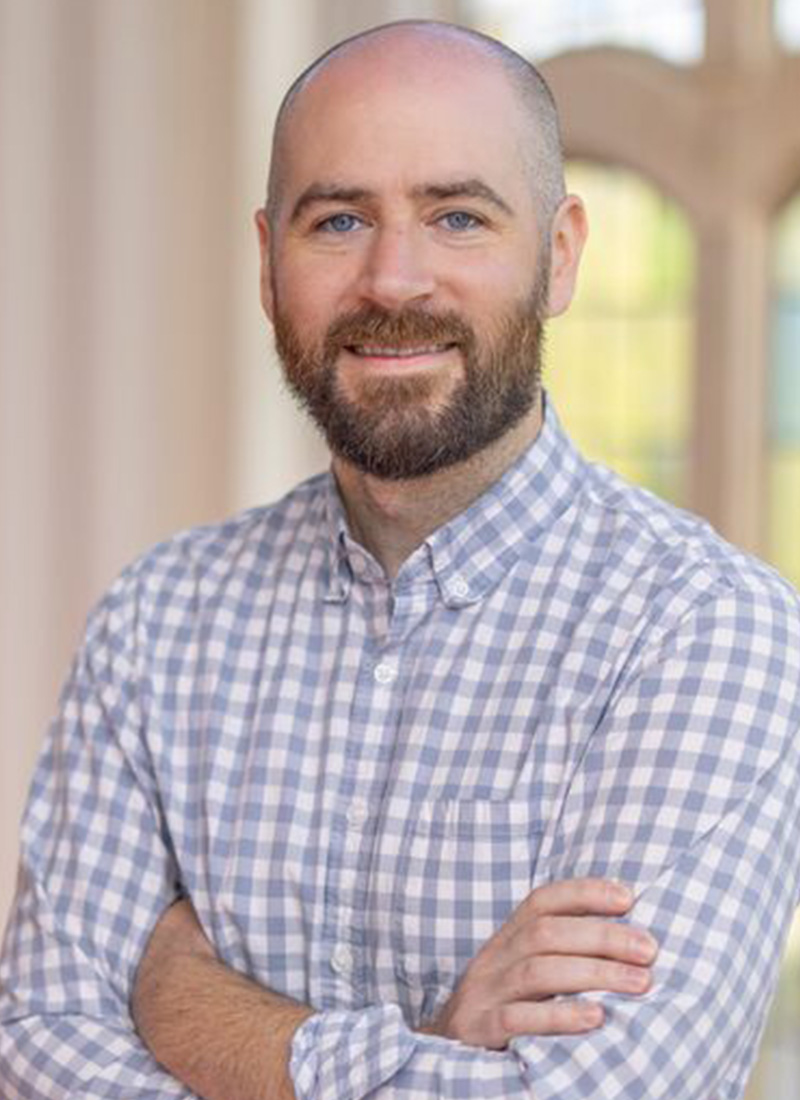
Fredrik Inglis is a researcher at the University of Missouri-St. Louis, Department of Biology, specializing in evolutionary ecology and microbial population dynamics. His work addresses the persistence of cooperation and diversity in bacterial communities, particularly in well-mixed environments where exploitation risks are high. Primary Affiliation: Department of Biology, University of Missouri-St. Louis His research spans evolutionary biology, focusing on mechanisms like kin selection, group selection, and social strategies such as spite and cheating in bacteria. Key themes include: Phase transitions in microbial populations Evolutionary trade-offs in stress responses Game-theoretic models (e.g., rock-paper-scissors dynamics) Antibiotic resistance evolution Biofilm mechanics and interfacial behavior Recent work emphasizes population dynamics, social evolution, and environmental interactions. His publications demonstrate interdisciplinary approaches blending ecology, genetics, and biophysics.
Sara Miller is an Assistant Professor in the Department of Biology at the University of Missouri - St. Louis, affiliated with the College of Arts and Sciences. She leads the Social Insect Diversity Lab, focusing on the interplay between genomics, behavior, and ecology in shaping biological diversity. Her research primarily investigates primitively eusocial Polistes paper wasps, examining speciation drivers, social behavior's impact on diversification rates, and biodiversity comparisons between social and solitary insects. Methodologies include genome assembly, population genetics, museum collections, and behavioral experiments. 2025: Evolution of cognition in social insects 2025: Genomic architecture and phylogeny 2023: Cooperation and recognition mechanisms 2023: Sex-linked genetic variation 2022: Polistes genome assemblies 2021: Environmental genomics and behavior 2020: Population structure and coevolution The Social Insect Diversity Lab serves as a hub for exploring social insect evolution through modern genomic and ecological approaches. Dr. Miller's work bridges molecular biology with macroevolutionary questions, emphasizing interdisciplinary research across biological scales.
Pierrick Bourrat is a Senior Lecturer in the School of Humanities at Macquarie University, where he is affiliated with the Ethics and Agency Research Centre. He holds a PhD from the University of Sydney (2015) and has held academic positions at the University of Oxford and the University of Sydney. His research spans philosophy of biology, evolutionary theory, and cognitive science of religion. Research Interests: His primary focus is on the philosophy of biology, especially evolutionary transitions, individuality, levels of selection, and heritability. He also explores the psychology of altruism, cultural evolution, and the cognitive foundations of religious belief. His work often integrates formal modeling with philosophical analysis. Recent Publications: His recent articles examine function pluralism in biology, causality in individuality, and multilevel selection. They reflect a strong trend toward clarifying conceptual foundations in evolutionary biology using tools from philosophy and information theory. Macquarie University Research Fellowship (2017) ARC Postdoctoral Research Associate (2015–2016) Advising and Grants: While no students are listed, Bourrat leads significant research projects funded by Macquarie University and collaborative grants. These include 'Solving the puzzle of the emergence of individuals in evolution' and 'Inheritance and the Emergence of Individuals: From concepts to practice'. He collaborates with leading scholars such as Karola Stotz, Paul Griffiths, and Alan Love. Labs and Teams: He is part of the Ethics and Agency Research Centre at Macquarie University, which fosters interdisciplinary work in moral philosophy, agency, and the ethical implications of scientific research.
Mitchel DE LARA is a Professor at École des Ponts ParisTech (part of Institut Polytechnique de Paris), specializing in Mathematical and Computer Engineering. His research focuses on control theory, stochastic optimization, and their applications in energy systems, environmental modeling, and sustainable resource management. He holds a PhD in Mathematics and Applied Computer Science (1991) and a Habilitation to Supervise Research (2000). Education: PhD in Mathematics and Applied Computer Science, 1991 Habilitation à Diriger des Recherches (HDR), 2000 Research Interests: Optimization under uncertainty, viability theory, energy management systems, smart grids, and applications to natural resource sustainability. Recent work includes stochastic multi-stage optimization for clean energy transition and robust viable control of ecosystems. Teaching & Outreach: Leads international courses on stochastic optimization, including winter schools at CIRM and IMCA. Authored books like Stochastic Multi-Stage Optimization and Control Theory for Engineers . Serves on scientific committees for PGMO, INERIS, and the Institute for Energy Transition EFFICACITY. Labs & Teams: Researcher at CERMICS (Centre d'Enseignement et de Recherche en Mathématiques et Calcul Scientifique), collaborating on projects like SESO (Smart Energy and Stochastic Optimization) and Optim'Planet.
Professor Christian Ghiglino is a faculty member at the University of Essex , serving as Head of the Department of Economics since 2019. His research spans Economic Theory , Growth , Social Networks , Wealth Inequality , and Fiscal Policy . He has extensive editorial experience as Associate Editor of leading journals. Education: PhD in Economics (University of Geneva, 1993), PhD in Particle Physics (CERN, 1988) Research Interests focus on the intersection of economic theory, network analysis, and inequality dynamics. Key themes include wealth distribution's impact on macroeconomic stability, social identity in fiscal policy formation, and network-based approaches to growth and innovation. Publication Trends show a consistent emphasis on network structures (2013-2024), inequality dynamics (2007-2021), and growth theory (1993-2024). His work combines general equilibrium modeling with modern network analysis techniques. Supervision includes 14 PhD/MRes students (2010-2023) working on topics like innovation networks, productivity analysis, and fiscal policy in oil economies. Current supervisee: Lu Liu.
Loeske Kruuk is a Royal Society Research Professor at the University of Edinburgh and holds an Honorary Professorship at the Australian National University (ANU). Her research focuses on evolutionary ecology, particularly the interplay between genetics and environment in shaping life history variation. She completed her PhD in population genetics at the University of Edinburgh (1997) and conducted postdoctoral work at Cambridge and Edinburgh, studying long-term wild animal populations like red deer and Soay sheep. Her current projects include climate change impacts on evolution, quantitative genetics, and studies on superb fairy-wrens and mosquitofish. Education: BSc in Mathematics, PhD in Population Genetics (Edinburgh), postdoctoral fellowships at Cambridge and Edinburgh. Awards include Fellowship of the Royal Society (2023), ESEB President’s Award (2018), and ARC Future Fellowship (2012). She edits Proceedings of the Royal Society B and has held editorial roles for Evolution and Journal of Evolutionary Biology . Research interests span evolutionary processes, climate adaptation, senescence, and sexual selection. Her work emphasizes long-term studies to explore microevolutionary dynamics. Recent articles address aging in fairy-wrens, climate-driven breeding shifts, and genetic architecture of maternal effects in red deer. Grants include ARC Future and Laureate Fellowships. She collaborates on projects involving bird populations, geckos, and mosquitofish, with a focus on quantitative genetics and phenotypic plasticity. Her lab maintains ties with ANU through honorary roles and continues work on global biodiversity challenges.
James Tumulty is an Assistant Professor in the Biology Department at Rhodes College . His research focuses on the ecology and evolution of animal social behaviors , particularly in Neotropical poison frogs and other species like paper wasps and salamanders. Ph.D., University of Minnesota M.S., East Carolina University B.S., Siena College His work examines how animals communicate through vocalizations and visual signals , impacting social cognition and group dynamics. The Tumulty Lab , launching in Fall 2024, uses an integrative approach combining field observations , laboratory experiments , genomics , and computational methods to study social recognition systems. The lab specializes in social recognition mechanisms involving signal production and perception, with research implications for understanding the evolutionary origins of complex social behaviors. Current projects span acoustic communication , parental care evolution , and territorial behavior in amphibians. Contact: tumultyj@rhodes.edu
Avelina Espinosa is a faculty member in the Department of Biology at Roger Williams University's College of Arts and Sciences. Her research spans protistology, parasitology, and evolutionary biology with a specialized focus on Entamoeba species and related protists. Her primary research interests include: Mechanisms of kin discrimination in protists Development of antiparasitic compounds from natural sources Evolution education and public understanding of science Molecular mechanisms of amoebic pathogenesis Dr. Espinosa's recent research has investigated the anti-amebic properties of Chinese rhubarb extracts and anthraquinones, discrimination behaviors in Entamoeba, and the evolutionary implications of microbial social behavior. Her publication record from 2009-2021 demonstrates a sustained research program that bridges laboratory science with educational research on evolution literacy. Her work has practical implications for developing new treatments for amoebic infections and theoretical contributions to understanding social evolution in single-celled organisms. She has collaborated extensively with Guillermo Paz-y-Miño-C on numerous publications examining evolution acceptance among educators and students.
Vaios Koliofotis serves as a University Lecturer at Eindhoven University of Technology with dual appointments in the Department of Industrial Engineering and Innovation Sciences and the Philosophy & Ethics group. He currently teaches Ethics of Technology and Engineering (ongoing since 2023) and Research Methodology for the Innovation Sciences (2015-2025). His research spans critical intersections of philosophy, biology, and technological innovation. Primary focus areas include: Philosophical foundations of evolutionary theory and causal explanation Ethical frameworks for emerging technologies Methodological approaches in innovation science History and philosophy of scientific explanation His publication record demonstrates specialization in philosophy of biology, particularly through his 2022 analysis of Hamilton's rule in evolutionary theory. This work bridges theoretical biology with philosophical inquiry into explanatory frameworks, contributing to debates about causal versus non-causal explanations in scientific modeling. No scientific awards were documented in available sources. Information regarding student supervision, research grants, laboratory affiliations, or collaborative research teams was not provided in the source materials. His academic activities appear centered on teaching and theoretical research within his dual departmental appointments.
Eric L. Walters is a Professor in the Department of Biological Sciences at Old Dominion University. He holds a Ph.D. in Ecology & Evolution from Florida State University (2004), an M.Sc. in Biology from the University of Victoria (1997), and a B.Sc. in Biology from the University of Victoria (1990). His research integrates behavioral ecology , conservation biology , and disease dynamics , with emphasis on: Cooperative breeding systems in acorn woodpeckers Migratory bird stopover ecology and habitat use Tick-borne pathogen transmission via avian hosts Urbanization impacts on bird-window collisions Social network analysis in avian communities His publications focus on avian behavior, disease ecology, and conservation, with recurring themes of cooperative breeding dynamics, migration hazards, and host-parasite interactions. Research is frequently collaborative, involving multi-institutional teams. Honors include: Excellence in Graduate Teaching Award (2024) Fellow, American Ornithological Society (2018) Distinguished Research Award (2023) Early Career Research Award (2015) He leads federally funded projects like "Evolution of Cooperation in Social Woodpeckers" (NSF) and "Spatial Eco-Epidemiology of Tick-Borne Pathogens," mentoring students through ODU's research apprenticeship program. Fieldwork spans Virginia’s Eastern Shore, California oak woodlands, and collaborative sites across North America.
Hanne Løvlie is a Senior Associate Professor in the Department of Physics, Chemistry and Biology (IFM) at Linköping University, where she leads the Lovlie Group. Her research is centered on animal behaviour, personality, and cognition, primarily using red junglefowl as a model species. She investigates how genetic, neurochemical, and environmental factors influence behavioural traits such as impulsivity, optimism, fearfulness, and social interactions. Her research interests include: Animal personality and individual variation Cognitive and affective states in non-human animals Behavioural genetics and neuroethology Effects of early life experiences and environmental enrichment Impact of human pharmaceuticals on animal behaviour Sexual selection and social competition The recent publications show a strong focus on monoaminergic systems (serotonin and dopamine) and their role in shaping behaviour across species including chickens, crickets, and fish. Her work often involves interdisciplinary collaborations and employs both experimental and meta-analytic approaches. Themes such as judgement bias, cognitive flexibility, and the genetic basis of learning are recurrent in her research. Hanne Løvlie has contributed to significant findings, including how enriched environments buffer stress in chickens, how kin recognition affects aggression in roosters, and how human medicines alter animal personalities. Her research has implications for animal welfare, evolutionary biology, and environmental science. She actively collaborates with researchers from institutions such as Stockholm University and contributes to public understanding of science through media engagement and outreach. While no formal list of students or awards is provided in the text, her role as a research leader suggests mentorship of junior researchers. She has secured research funding and leads an active lab group focused on behavioural genomics and physiology.
Ginny Greenway is a Postdoctoral Researcher at the School of Biological Sciences, University of East Anglia (UEA), actively contributing to research in evolutionary and behavioral ecology. Her current work is supported by a Leverhulme Trust Fellowship, reflecting her engagement in high-quality, independent research. Her research focuses on understanding how gradients of genetic relatedness influence reproductive behaviors and social dynamics in biological systems. This work sits at the intersection of evolutionary theory, animal behavior, and social evolution, aiming to uncover fundamental principles governing cooperation and conflict in natural populations. The ongoing project, It’s all relative: Understanding how relatedness continuums shape reproduction , demonstrates her expertise in designing and leading targeted research investigations. Although no publications are listed in the provided text, the project's scope suggests strong analytical and experimental skills in ecological and evolutionary modeling or empirical studies. Funding: Leverhulme Trust Fellowship: It’s all relative: Understanding how relatedness continuums shape reproduction (Feb 2022 – Aug 2025) She is affiliated with UEA’s research community in biological sciences and maintains a scholarly profile via ORCID (0000-0003-0297-0927). There is no indication of teaching, student supervision, or part-time status in the available information.
Dr. Marco van der Velde is a Researcher at the Groningen Institute for Evolutionary Life Sciences (Faculty of Science and Engineering), University of Groningen. He has held the position of Research Assistant since 2000, with continuous employment in various research roles within evolutionary biology and ecology departments. Education: PhD in Population Genetics (University of Groningen, 2000) MSc in Population Genetics & Animal Ecology (University of Groningen, 1995) Postdoctoral research in Evolutionary Genetics (University of Groningen, 2000–2003) Research Focus: His work spans molecular ecology, avian biology, and evolutionary genetics. Key areas include microbiome dynamics in birds, effects of environmental pollutants on telomere length, avian social behavior, and forensic applications of DNA techniques. He leads a lab specializing in molecular DNA analysis and supervises master’s and PhD students in ecological and evolutionary studies. Grants & Advising: Active in supervising student research projects. Contributions to collaborative grants in avian ecology and microbiome research. Labs/Teams: Operates a dedicated DNA laboratory within the Groningen Institute for Evolutionary Life Sciences, focusing on molecular methods for ecological and evolutionary studies.
Victoria Ingalls is a Professor of Biology in the Division of Science at Marist College, within the School of Science. She earned her Ph.D. in Zoology from the University of Massachusetts, Amherst, and has been a faculty member at Marist since 1985. Her academic journey includes promotion to Associate Professor in 1995 and Full Professor in 2013. Education: Ph.D. in Zoology, University of Massachusetts, Amherst (1987) M.S. in Zoology, University of Massachusetts, Amherst (1983) A.B. in Biopsychology, Vassar College (1978) Dr. Ingalls specializes in Behavioral Ecology, Sociobiology, and Evolutionary Psychology . Her research examines how evolutionary forces shape animal and human behavior, including predator-prey dynamics (e.g., blue jays and moths), birdsong communication (e.g., American redstart, Cocos Island flycatcher), and the evolutionary underpinnings of gender roles and hero archetypes in literature and popular culture. She integrates biological principles with interdisciplinary themes, especially in courses for non-science majors. Her publications reflect a unique synthesis of empirical fieldwork and theoretical analysis. Early work focused on avian vocalizations and anti-predator behavior, while more recent articles explore evolutionary narratives in fictional heroes and literature. This interdisciplinary trend highlights a shift from pure ornithology to evolutionary cultural studies, bridging science and humanities. Scientific Awards and Honors: Full Professor of Biology (2013) Gregory J. Kilgariff Distinguished Service Award (2009) Edwards Prize, Wilson Journal of Ornithology (2007) Board of Trustees Distinguished Teaching Award (1995) Frank M. Chapman Memorial Fund Award (1983) Phi Beta Kappa, Vassar College (1978) Dr. Ingalls has served as Chair of the Faculty (1996–1998) and has received multiple research grants and fellowships. She has taught core courses such as Animal Behavior , Evolution , and Vertebrate Physiology , as well as innovative interdisciplinary courses like Sex, Evolution & Behavior and Life on Earth . She is a member of several professional societies, including the Animal Behavior Society, Human Behavior and Evolution Society, and Sigma Xi. She has no known lab or research team explicitly mentioned, but she has collaborated with researchers including Dr. Cynthia Staicer (Dalhousie University), Dr. Thomas Sherry (Tulane University), and Dr. Donald Kroodsma (University of Massachusetts). Her future work appears to continue exploring the intersection of evolutionary biology and cultural narratives.
Dr. Michael Buratovich is a Professor in the Department of Biology and Biochemistry at Spring Arbor University (SAU), a Christian liberal arts institution in Michigan. His scholarly work bridges evolutionary biology, genomics, and bioethics, with particular focus on critiquing intelligent design while exploring theological implications of scientific discoveries. Chair of the Biochemistry Department Editorial contributions to medical reference works like Magill’s Medical Guide Research areas span: Evolutionary genetics of the Cambrian explosion Non-intelligent design arguments in human genomics Anticancer properties of flavonoids Ethical implications of stem cell research Science-religion interface in education His publications demonstrate interdisciplinary expertise combining molecular biology with theological analysis, particularly in: Origin-of-life challenges Gene regulation mechanisms Medical applications of metallorganic compounds Philosophical critiques of Dawkins' neo-Darwinism While no explicit awards are listed, his scholarship includes: Coauthoring significant cancer research reviews Contributing to national science education debates Developing Christian perspectives on biomedical ethics Dr. Buratovich has mentored students through works like The Stem Cell Epistles , while collaborating with researchers across disciplines in: Phytoestrogen studies Metallorganic chemotherapy agents Paleontological genetics