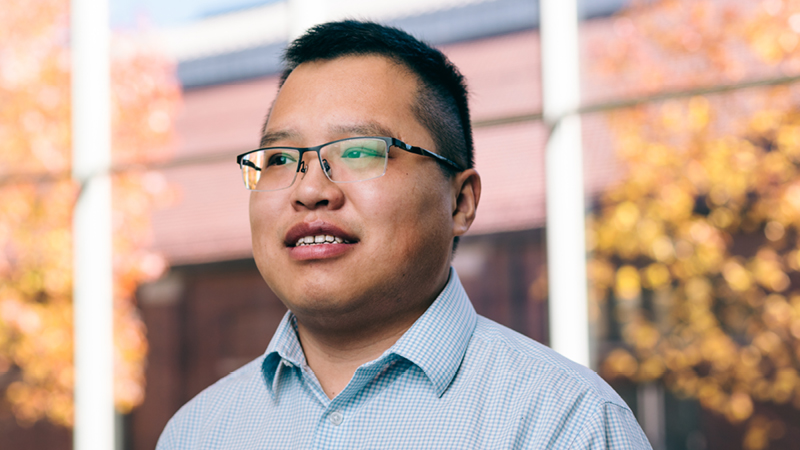
Rui Zhang is an Associate Professor in the Department of Computer and Information Sciences at the University of Delaware. He holds a PhD in Electrical Engineering from Arizona State University (2013) and has held academic positions at the University of Hawaii and industry roles at UTStarcom. His research focuses on cybersecurity, wireless networks, and privacy-preserving technologies, with notable work on secure edge computing and mobile authentication systems. Education: PhD, Electrical Engineering, Arizona State University, 2013 M.E., Communication and Information Systems, Huazhong University of Science & Technology, 2005 B.E., Communication Engineering, Huazhong University of Science & Technology, 2001 Research Interests: Rui’s work spans secure wireless systems, mobile crowdsourcing, accessibility technologies for visually impaired users, edge computing, and social network privacy. He has led NSF-funded projects on trustworthy hierarchical edge computing and secure mobile cloud sensing. Grants & Awards: Recipient of the NSF CAREER Award (2017) and multiple NSF grants totaling over $1M. Current focus includes NSF-funded research on edge computing security and privacy-preserving data aggregation. Teaching: Has taught courses in algorithms, network security, and computer networks at both University of Delaware and University of Hawaii. Labs & Teams: Leads research projects in secure edge computing and collaborates with Arizona State University on federally funded initiatives. Active in organizing academic conferences like ISC 2016 and serving on editorial boards of IEEE journals.
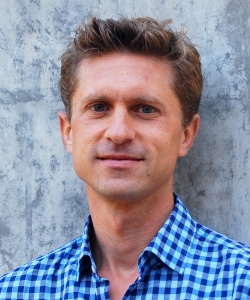
Jianguo Wang is an Assistant Professor in the Department of Computer Science at Purdue University, joining in Spring 2021. His research focuses on database systems for the cloud and large language models, including disaggregated databases and vector databases. He holds a PhD from the University of California, San Diego, and has worked at Zilliz (Milvus) and Amazon Web Services (AWS). Education: PhD in Computer Science (UC San Diego, 2019), MPhil (Hong Kong Polytechnic University), BSc (Zhengzhou University) Research interests include Disaggregated Databases, Vector Databases for Large Language Models, and cloud-native systems. Notable work includes OpenAurora (an open-source Amazon Aurora prototype) and contributions to Milvus. He has received grants like the NSF CAREER Award and honors such as the IEEE TCDE Rising Star Award. Advising a team of students in database systems and teaching courses like CS592 (Disaggregated Database Systems) and CS440 (Large-scale Data Analytics). Serves on program committees for SIGMOD, VLDB, and ICDE.
Swiss Federal Institute of Technology in LausanneSwitzerland
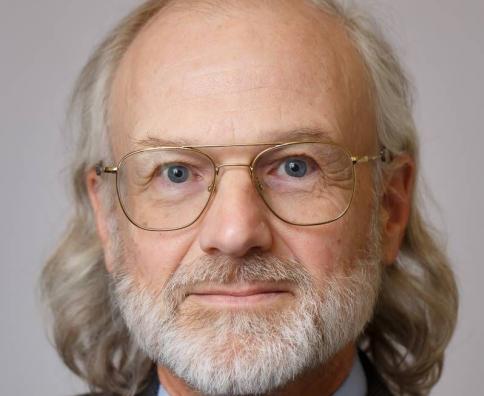
Babak Falsafi is a Full Professor at the School of Computer and Communication Sciences (IC) at EPFL, leading the Parallel Systems Architecture Laboratory (PARSA). He is a renowned expert in computer architecture, datacenter systems, and cloud-native server design. His research focuses on post-Moore era computing, emphasizing heterogeneous architectures, energy efficiency, and scalable IT infrastructure. Falsafi is the founder of EcoCloud, an EC-sponsored industrial-academic consortium investigating sustainable information technology. He holds ACM and IEEE fellowships, a Sloan Research Fellowship, and has contributed to major projects like Optimus Prime (data transformation acceleration), AstriFlash (flash-based online service systems), and Midgard (virtual memory re-design). His work spans hardware-software co-design, memory systems, and security. Falsafi advises numerous PhD students and collaborates with industry partners such as Google and Cavium. Key achievements include pioneering scalable multiprocessor architectures, snoop filters in IBM BlueGene, and spatial memory streaming in ARM cores. His lab develops open-source tools like QFlex for server simulation. He frequently presents at top conferences (HPCA, ISCA, MICRO) and chairs workshops on post-Moore infrastructure. Teaching roles include leading courses in computer architecture and parallel systems across multiple EPFL departments (SIN, EDIC, SSC, SMA). His work addresses datacenter challenges like the 'data tax' and mitigating latency through specialized accelerators.
Oana Balmau is an Assistant Professor in the School of Computer Science at McGill University, where she leads the Data-Intensive Storage and Computer Systems Laboratory (DISCS Lab). She also holds a status-only appointment at the University of Toronto and serves as a working group chair for MLPerf Storage. Her research focuses on creating storage infrastructure that enables fast and energy-conscious insights from data, with particular emphasis on storage and persistent memory technologies for machine learning, data science, and edge computing workloads. Dr. Balmau's research interests span computer systems, with specific focus on: Design and implementation of efficient key-value stores Storage systems for machine learning workloads Edge computing infrastructure Persistent memory technologies Performance optimization of data-intensive systems Her recent work has led to significant contributions in storage benchmarking through the MLPerf Storage benchmark and in edge computing frameworks. The MLPerf Storage benchmark has become an industry standard for evaluating storage performance in machine learning environments, while her work on hierarchical edge computing addresses security and performance challenges in distributed edge environments. Her publications show consistent high-impact contributions to top systems venues, with recent work focusing on processing-in-memory virtualization, stream processing reconfiguration, and efficient data preprocessing pipelines. Dr. Balmau has received numerous awards for her research, including: SEC 2024 Best Paper Award for "Falcon: Live Reconfiguration for Stateful Stream Processing on the Edge" MLCommons Hero Award 2023 for leadership as MLPerf Storage working group chair ACM SIGOPS Dennis M. Ritchie Doctoral Dissertation Award 2021 Honorable Mention CORE John Makepeace Bennett Award 2021 for the best Computer Science doctoral dissertation in Australia and New Zealand USENIX ATC 2019 Best Paper Award for "SILK: Preventing Latency Spikes in Log-Structured Merge Key-Value Stores" As an educator, Dr. Balmau teaches courses on advanced computer systems, operating systems, and principles of computer systems design at McGill University. She has served on program committees for top systems conferences including SOSP, SIGMOD, FAST, and EuroSys, and has co-organized workshops on resource-efficient machine learning and edge computing. She leads the DISCS Lab, which focuses on two main research directions: Systems for ML (including the MLPerf Storage benchmark) and Edge computing (including frameworks for fast and secure edge computing in hierarchical edge environments).
University of Illinois Urbana-ChampaignUnited States
Aishwarya Ganesan is an Assistant Professor at the Siebel School of Computing and Data Science, University of Illinois Urbana-Champaign. Her research focuses on distributed systems, storage systems, and fault tolerance mechanisms, with emphasis on high-performance computing and datacenter infrastructure. She leads projects addressing challenges in replicated storage, consensus protocols, and system resilience. Her work explores fault tolerance in disaggregated datacenters, log abstractions for low-latency applications, and novel replication strategies for modern storage systems. She has developed frameworks like LazyLog and IONIA to improve system efficiency and reliability. Her research also extends to automatic reliability testing for cluster management controllers and analyzing distributed storage vulnerabilities. Key contributions include demonstrating how redundancy alone does not guarantee fault tolerance, and proposing consistency-aware durability mechanisms for storage systems. She received the NSF CAREER Award in 2024 for her research on storage-aware fault tolerance. Her work spans 21 peer-reviewed publications, with notable contributions in conferences like SOSP, EuroSys, and FAST. Current projects investigate fault tolerance in emerging memory technologies and system recovery protocols for consensus-based storage.
Heiner Litz is an Associate Professor in the Computer Science & Engineering Department at UC Santa Cruz's Baskin School of Engineering. He holds the Kumar Malavalli Endowed Chair of Storage Systems Research and serves as Director of the Center for Research in Storage Systems (CRSS). He is also a member of UCSC's Hardware Systems Collective (HSC). Litz earned his PhD from Mannheim University and previously held positions at MIT, Google, and Stanford University. His research focuses on computer architecture and systems optimization , specifically improving hardware-software interfaces for data center workloads. Key areas include microarchitectural mechanisms (branch prediction, prefetching, cache design), profile-guided optimizations, and storage/disaggregated memory systems. His work bridges compiler techniques and hardware efficiency for emerging cloud applications. Recent publications emphasize profile-guided optimization across microarchitecture layers, storage scalability, and resource allocation in distributed systems. Trends include hardware-software co-design for data centers, RDMA-based protocols, and real-time control systems. Awards & Honors: Kumar Malavalli Endowed Chair of Storage Systems Research Best Paper Award at MICRO (2022) IEEE Micro Top Picks (2019, 2023) Best Paper Awards at ICPP (2008) and ARC (2009) Advising & Grants: He currently advises 11 PhD students and has graduated 8 MS/PhD students. Research is supported by NSF, Intel, Samsung, Google, Meta, Nutanix, HPE, ARM, Marvell, Cerabyte, Western Digital, and Broadcom. Labs & Teams: Directs CRSS, focusing on storage systems innovation, and collaborates with HSC on hardware-software integration projects.
Henry F. (Hank) Korth is a Professor of Computer Science and Engineering at Lehigh University, with a courtesy appointment in the Department of Decision and Technology Analytics in the College of Business. He serves as Director of the Blockchain Lab in the Center for Financial Services and Co-Director of the Computer Science and Business Program. Korth is a Fellow of the ACM and IEEE, and a recipient of the VLDB 10-Year Award and Bell Labs President's Silver Award for contributions to database technologies. PhD in Computer Science from Princeton University MA, MSE in Computer Science from Princeton University BA in Mathematics from Williams College Korth's research spans database systems, blockchain systems, distributed systems, and real-time systems. He has pioneered transaction management in parallel and distributed systems, query processing, and the impact of modern computing architectures on database performance. His recent work focuses on blockchain applications in enterprise databases, including acceleration of zero-knowledge proofs, benchmarking frameworks, central-bank digital currencies, and private-yet-provable accounting systems. His contributions are rooted in both theoretical advancements and practical implementations, such as the QTM™ aggregation engine and the DataBlitz™ main-memory storage manager. Scientific awards include: ACM Fellow IEEE Fellow 10-Year Award at the VLDB Conference Bell Labs President's Silver Award Korth actively supervises research within the Blockchain Lab and is affiliated with the Scalable Software Systems Research Group at Lehigh. His scholarly output reflects a deep engagement with blockchain benchmarking, concurrency control, verifiable databases, and the evolution of database systems in response to technological shifts.
Mélanie Ouvry is an Associate Professor and Dean of Faculty at MBS Education since 2017. With over 15 years of experience in higher education, she has held roles as program director for specialized master's programs, department head for marketing and interim management, and served as a communication strategy consultant at Publicis Group. Her research focuses on consumer behavior, retail dynamics, and cross-cultural marketing experiences. Her academic expertise includes strategic marketing, buyer behavior analysis, and advertising strategy. Key research themes explore multi-store shopping behaviors, consumer experience valuation, loyalty mechanisms, and the cognitive dimensions of retail environments. She has conducted extensive studies in retail distribution systems, communication strategies, and tourism-related consumer behavior in historical commercial districts like the Medina of Sousse. Her publications span topics from grocery shopping decision-making to television audience engagement, reflecting her interdisciplinary approach bridging marketing, cognitive science, and cultural studies. Teaching responsibilities include advanced marketing strategy courses and consumer behavior analysis modules.
Matt Nassar is an Associate Professor of Neuroscience and Assistant Professor of Cognitive and Psychological Sciences at Brown University. He leads the Learning, Memory and Decision Lab, which is part of the Department of Neuroscience and the Robert J. & Nancy D. Carney Institute for Brain Science. His research focuses on understanding how the brain flexibly processes information to achieve complex and adaptive behaviors through computational approaches that bridge cognitive psychology and neuroscience. Education: PhD, University of Pennsylvania (2012) BA, Colgate University (2004) Nassar's research examines how different cognitive systems—learning, memory, and perception—leverage common computational principles to optimize decision-making. His work particularly focuses on how the brain balances stability and flexibility in processing information, how uncertainty is represented and utilized in learning, and how neural computations underlie complex behaviors. Through computational modeling and empirical research, he investigates how modular information-processing systems impact decisions and complex behavior in dynamic environments. His research integrates methods from cognitive psychology, neuroscience, and computational modeling to address fundamental questions about human cognition. Analysis of Nassar's recent publications (2020-2024) reveals a strong focus on computational neuroscience applied to decision-making, learning, and psychiatric conditions. His work frequently employs Bayesian modeling approaches to understand belief updating, uncertainty processing, and structure learning. Key themes include the neural basis of flexibility in learning, computational mechanisms underlying psychiatric symptoms, and age-related changes in cognitive processing. His research bridges cognitive psychology, neuroscience, and computational modeling to provide insights into both healthy cognition and disorders such as depression and schizophrenia. Scientific Contributions: Developed computational models of belief updating and learning under uncertainty Investigated neural mechanisms of stability-flexibility tradeoffs in cognition Examined age-related differences in learning and memory processes Explored computational mechanisms underlying psychiatric conditions Studied the role of noise correlations in neural learning systems Investigated how prefrontal cortex representations shape decision processes Nassar actively mentors researchers in his lab, with recent announcements highlighting postdocs joining from prestigious institutions like Max Planck UCL and Freie Universität Berlin. His lab appears to receive significant research funding, supporting multiple postdoctoral positions and research projects. Collaborations span multiple departments at Brown University, particularly with researchers in Cognitive and Psychological Sciences, Neurology, and Psychiatry. The lab has produced numerous high-impact publications in top journals including Nature Human Behaviour, Brain, and eLife. The Learning, Memory and Decision Lab, led by Nassar, is an active research group that uses computational models to understand how the brain represents and stores information for effective decision making. Recent lab announcements (as of February 2025) indicate the lab is expanding with new postdoctoral researchers joining from Harvard, Max Planck UCL, and Freie Universität Berlin, suggesting strong research momentum and funding support. The lab appears to be well-integrated within Brown's neuroscience community, with collaborations spanning multiple departments and research centers.
Massachusetts Institute of TechnologyUnited States
Charles Fine is the Chrysler Leaders for Global Operations Professor of Management at MIT Sloan School of Management and concurrently serves as CEO, President, and Dean of the Asia School of Business (ASB) in Kuala Lumpur since 2015. He holds an AB in Mathematics and Management Science from Duke University, MS in Operations Research, and PhD in Business Administration from Stanford University. His research focuses on supply chain strategy, value chain roadmapping, and operations management in fast-clockspeed industries such as automotive and aerospace. He has pioneered frameworks for strategic innovation, entrepreneurial operations, and urban mobility systems. Key contributions include the concept of 'clockspeed' in industry dynamics and co-authoring Clockspeed (1998) and Faster, Smarter, Greener (2017). Fine co-directs MIT Sloan’s Driving Strategic Innovation executive program with IMD, Switzerland. He previously served on the board of Greenfuel Technologies, a biotech startup he co-founded. His work has been published in top journals like Management Science , Production and Operations Management , and Interfaces . Recent research highlights include analyzing unintended consequences of automated vehicles and exploring supply chain strategies for market expansion through O2S (Online-to-Store) models. He advises global corporations on supply chain resilience, value chain design, and innovation scaling.
Werner Reinartz is a Professor of Marketing at the University of Cologne since 2007, where he holds the Chair for Retailing and Customer Management . He serves as Vice-Rector for Transfer (2023–ongoing) and Director of the Center for Research in Retailing (IFH e.V.) . His career includes a part-time Associate Professor role at INSEAD (2007–2010) and tenured/untenured positions there from 1999–2007. He earned a Ph.D. in Marketing from the University of Houston (1999) and an MBA from Henley Management College (1997). His research focuses on Retailing , Customer Management , Digital Transformation , and Marketing Strategy . He investigates how platformization , geospatial data , and authenticity in TV advertising influence consumer behavior and business outcomes. His work also addresses CRM efficacy , B2B hybrid offerings , and value creation in dynamic markets . Key trends in his recent publications include: Digital transformation in retail and branding Behavioral economics in marketing decisions Quantitative analysis of TV advertising effectiveness Geospatial data applications in international markets Platform business models for enduring customer relationships CRM and customer profitability in noncontractual settings Scientific honors include: Academic Fellow, Marketing Science Institute (MSI) (2023) EMAC Distinguished Marketing Scholar Award (2023) Shelby D. Hunt/Harold H. Maynard Award (2022) Jan Steenkamp Award for Long-Term Impact (2021) Outstanding Area Editor, Journal of Marketing (2016) Donald R. Lehmann Award (2001) and John A. Howard Dissertation Competition Winner (1999) He contributes to editorial boards and collaborative research initiatives like the Research Initiative 'Digital Transformation and Value Creation' and the Cluster of Excellence ECONtribute: Markets & Public Policy , which examines market challenges through interdisciplinary lenses.
Dr. Song Jiang is a Professor in the Department of Computer Science and Engineering at The University of Texas at Arlington (UTA). He holds a PhD from the College of William and Mary (2004) and has held academic positions at institutions such as Wayne State University and Los Alamos National Laboratory. His research focuses on system infrastructure for large language models (LLMs) and big data processing, including GPU/CPU memory systems, file and storage systems, and high-performance computing (HPC) I/O systems. He has received significant funding from the National Science Foundation (NSF) and industry partners like VMware and Tencent. Education: B.S. and M.S. from University of Science and Technology of China (1993, 1996), Ph.D. in Computer Science from College of William and Mary (2004). Postdoctoral research at Los Alamos National Laboratory (2004–2006). Research interests include file and storage systems, data management, big data analytics, and optimizing computing architectures for AI/ML. Key contributions include the LIRS replacement algorithm (adopted in MySQL and NetBSD), CLOCK-Pro page replacement (used in Linux), and swap token algorithms (Linux kernel). Awards include the 2022 ACM SIGMETRICS Test of Time Award and 2009 NSF CAREER Award. His work has led to 15+ patents and impactful industry collaborations with Facebook, Baidu, and others. Advising: Supervised 14+ PhD/Master’s students, including current advisees Chen Zhong and Sujit Maharjan. Active roles in doctoral committees and thesis supervision. Grants: Over $2.5M in NSF funding for projects like 'Software Defined Cache for Index Search' and 'Taming Small Data Writes'. Industry grants include VMware’s $240K project on distributed key-value storage. Labs/Teams: Leads research on persistent memory systems, key-value stores, and LLM infrastructure through UTA’s CSE department and collaborations with industry partners.
Paul Grubbs is an Assistant Professor in the Department of Electrical Engineering and Computer Science at the University of Michigan. His research focuses on applied cryptography, security, and systems, particularly at the intersection of cryptographic protocols and real-world deployments. Education: PhD in Computer Science (Cornell University), BS in Mathematics and Computer Science (Indiana University) His work explores vulnerabilities in cryptographic systems, the design of secure key-value stores, and the societal implications of information security. Recent publications highlight advancements in zero-knowledge proofs, post-quantum cryptography, and encrypted database analysis. Key trends in his publications include: 1) Zero-Knowledge Proofs and Post-Quantum Security; 2) Privacy in Encrypted Systems; 3) Cryptographic Protocol Vulnerabilities; 4) Interdisciplinary approaches at the intersection of technology and societal impact. Scientific awards: IEEE Symposium on Security and Privacy 2023 Distinguished Paper Award USENIX Security 2020 Distinguished Paper Award Cornell Computer Science Dissertation Award Students include current advisees like Jiwon Kim, Anna Pui Yung Woo, and Chad Sharp (co-advised with Chris Peikert), plus former students Yang Du (MSc 2024), Quang Dao (MMath 2022), and Pengxiang Wang (BSE 2023). Grants include DARPA SIEVE (2021), Meta Privacy-Enhancing Technologies (2022), and NSF CAREER (2023). He has served on program committees for CRYPTO, IEEE S&P, and other leading conferences.
Yini Chen is an Assistant Professor in the Department of Apparel, Merchandising, Design and Textiles at Washington State University (WSU), part of the College of Agricultural, Human, and Natural Resource Sciences (CAHNRS). Their work focuses on retail innovation, consumer behavior, and sustainable practices in the fashion industry. Education: PhD in Individual Interdisciplinary Doctoral Program, WSU MS in Apparel, Merchandising, Design, and Textiles (AMDT), WSU MA in Organizational Leadership, Gonzaga University BS in Business Administration (B.B.A.), International Business, University of Technology Sydney, Australia AS in Business Administration and Management, Shanghai University, China Research Interests: Chen’s research explores omnichannel retail strategies, lifestyle retailing in emerging markets, consumer responses to sustainability initiatives, and the impact of technology (e.g., AR, social media) on shopping behavior. Key themes include: Omni-channel integration and consumer decision-making Environmental stimuli in luxury retail environments Sustainability in apparel recycling and material innovation Millennial consumer behavior in fashion consumption Publications: Chen’s recent work highlights trends in sustainable materials (e.g., regenerated cellulose fibers), post-pandemic retail shifts, and omnichannel strategies. Over 15 peer-reviewed articles and book chapters since 2017 reflect a focus on empirical studies of consumer behavior and retail innovation. Awards & Honors: 2nd Place, 2022 GPSA Research Expo Poster Competition CAHNRS 2021 Graduate Student Leadership Award 2022 GPSA Excellence Awards Graduate Student Instructor Awardee WSU 2020 President’s Award for Leadership Grants & Advising: PI on a $2,000 CAHNRS-funded 2023 study exploring metaverse shopping experiences. Teaches courses in retailing, sustainability, and leadership, emphasizing practical applications of research findings. Labs/Teams: Engaged in cross-disciplinary collaborations within CAHNRS and WSU’s School of Food Science to address retail and supply chain challenges in the apparel industry.
Goran Avlijaš is a researcher affiliated with Singidunum University in Belgrade, specializing in project management, operations research, and retail logistics. He holds a Doctorate in Engineering Management (2011–2016) from Singidunum University, a Master’s in Project Management (2008–2009) from the Faculty of Organizational Sciences, and a Bachelor’s in Management (2003–2007) from the same institution. His research focuses on optimizing project schedules through methods like Earned Value Management and Monte Carlo Simulation, analyzing supply chain efficiency, and exploring gig economy impacts on well-being in Balkan countries. Key research areas include: Project Management Innovation: Developing risk analysis tools (e.g., Event Chain Methodology) and applying earned value metrics to construction projects. Retail Operations: Investigating automated replenishment systems and inventory management challenges in retail environments. Social-Economic Dynamics: Studying gig economy effects on workforce well-being and regulatory impacts on entrepreneurship. His work spans 30+ peer-reviewed articles and conference papers, including contributions to Management , Sustainability , and Frontiers in Psychology . He co-authored textbooks like Project Management and Entrepreneurship for Singidunum University’s curriculum. Active in academic events such as Sinteza and FINIZ conferences, he bridges theoretical research with practical industry applications.