Michela Zedda is an Associate Professor at the Department of Mathematical, Physical and Informatics Sciences of the University of Parma . Her research focuses on complex geometry, differential geometry, and geometric analysis, with particular emphasis on Kähler and Sasakian manifolds, geometric flows, and quantization techniques. Her work includes studies on isometric immersions of locally conformally Kähler manifolds, stability in Lie group actions, J-flow dynamics on Sasakian manifolds, and Berezin-Engliš quantization of Cartan-Hartogs domains. Recent contributions address convergence properties of geometric flows and asymptotic expansions in geometric quantization. Professional Activities: She organizes workshops such as PREDICT 2025 and Informal Geometry Workshop in Paradiso 2025 , and participates in international conferences on complex and differential geometry.
Mason Porter is a Professor in the Department of Mathematics at the University of California, Los Angeles (UCLA). His research focuses on network science, nonlinear dynamics, and mathematical modeling of complex social systems. He explores topics such as opinion dynamics, temporal networks, multilayer networks, and the interplay between network structure and dynamical processes. Porter’s work spans theoretical and applied domains, including the analysis of social networks, epidemic spread, and infrastructure resilience. He has contributed to methods for detecting community structures, analyzing hypergraphs, and modeling collective behavior in systems ranging from online social media to biological networks. His recent studies emphasize bounded-confidence models, quantum walks on networks, and the application of topological data analysis to spatial systems. His research also intersects with interdisciplinary projects, such as modeling disease mitigation strategies, customer mobility in supermarkets, and the coevolution of disease spread and opinions. He has collaborated on initiatives like the NSF-funded project to predict microbiome assembly via multilayer networks. Porter’s publications reflect a deep engagement with both foundational theory and real-world applications, often leveraging computational and analytical techniques to uncover principles governing complex systems. His work bridges mathematics, physics, and social sciences, addressing challenges in data ethics, information diffusion, and network-driven phenomena.
Erick Delage is a Professor in the Department of Decision Sciences at HEC Montréal, holding the Canada Research Chair in Decision Making Under Uncertainty. He is a member of the Group for Research in Decision Analysis (GERAD) and an associate academic member of MILA. His research focuses on optimization under uncertainty, robust and stochastic optimization, machine learning, and risk management, with applications in finance, energy systems, and transportation. Delage holds a Ph.D. in Electrical Engineering from Stanford University, where he worked with renowned scholars like Andrew Y. Ng and Yinyu Ye. His teaching includes courses on Quantitative Risk Management, Decision Analysis, and Robust Optimization at institutions like HEC Montréal, Politecnico di Milano, and EPFL. He has supervised numerous PhD and master's students, leading to impactful contributions in areas like distributionally robust optimization and deep reinforcement learning for financial engineering. Delage's work emphasizes bridging theory and practice, with notable contributions to contextual optimization methods, energy transition pathways, and risk-averse decision-making. His research has been recognized with awards such as the Nicholson Award (2008) and membership in the Royal Society of Canada's College of New Scholars (2020). His laboratories and collaborations include the Supply Chains and Mobility research cluster funded by IVADO, focusing on data-driven decision-making for resilient systems. Key grants include leadership in energy transition optimization and robust supply chain frameworks.
Prof. Dr. Anna Dall'Acqua holds a position as University Professor (Univ.-Prof.) at the Institute for Applied Analysis, Universität Ulm. Her research focuses on partial differential equations, calculus of variations, geometric analysis, and mathematical physics, with specific interests in higher-order elliptic problems, elastic curves, Willmore surfaces, and Hartree-Fock theory. She leads a research group and has supervised doctoral students including Gabriel Knöbl and Manuel Schlierf. Her work is supported by grants from the German Research Foundation (DFG) and Taiwan’s MoST. Recent research includes studies on elastic networks, Willmore flow of tori, and obstacle problems in elasticity. She teaches advanced courses such as Functional Analysis, Calculus of Variations, and Analysis series at the university. Prof. Dall'Acqua’s publications span over two decades, with contributions to journals like Calc. Var. PDEs , Journal of Differential Equations , and Analysis & PDE . Her habilitation thesis (2011) and earlier work on boundary value problems and pseudorelativistic Hartree-Fock systems highlight her interdisciplinary expertise.
Tarunraj Singh is a Professor in the Department of Mechanical and Aerospace Engineering at the University at Buffalo, part of the School of Engineering and Applied Sciences. His research focuses on control systems, robotics, and dynamics, with emphasis on target tracking, optimal control, and vibration mitigation in complex systems. He holds a PhD from the University of Waterloo (1991) and earlier degrees from Indian educational institutions. His work integrates advanced mathematical techniques like polynomial chaos expansions and differential flatness with practical applications in aerospace, robotics, and biomedical engineering. Education : PhD, Mechanical Engineering, University of Waterloo, 1991 ME, Mechanical Engineering, Indian Institute of Science, 1988 BE, Mechanical Engineering, Bangalore University, 1986 Research Interests : Dr. Singh specializes in developing robust control strategies for nonlinear systems, with notable contributions to: Reference shaping for precision motion control Uncertainty quantification in dynamical systems Vibration suppression in robotic systems Bioengineering applications including blood glucose control for diabetics Space systems and tethered satellite dynamics His lab focuses on bridging theoretical advancements with real-world implementation through experiments involving UAVs, robotic manipulators, and biomedical devices. Research Trends : Recent work emphasizes energy-efficient trajectory planning, probabilistic control under uncertainty, and real-time sensor integration. His publications (2020–2025) consistently address challenges in optimal control with practical applications across robotics, aerospace, and biomedical systems. Lab Activities : Directs the Control, Dynamics and Estimation Laboratory, which develops novel algorithms for motion control, system identification, and safety-critical applications. Current projects include UAV payload stabilization, autonomous vehicle navigation, and smart agricultural robotics.
José E. Chacón is a Professor of Statistics at the Department of Mathematics, University of Extremadura, Spain. He is also a member of the Institute of Mathematics at the same university. His research focuses on nonparametric kernel smoothing, cluster analysis, and mathematical statistics. He earned his PhD in Statistics from the University of Extremadura in 2004. Chacón’s work emphasizes methodological advancements in density estimation, clustering algorithms, and statistical theory. His recent publications address topics like geodesic distributions, Bayesian taut splines for mode estimation, and bump detection via density curvature. He has contributed to applied areas such as animal home range estimation and data science for pandemic analysis. His articles often explore cross-validation techniques, bandwidth selection, and mixture model clustering. He co-authored the textbook Multivariate Kernel Smoothing and Its Applications (2018), consolidating his expertise in kernel-based methods. Chacón’s research bridges theoretical statistics with practical applications, influencing both academic and applied domains.
Hassan Doosti is a Senior Lecturer at the School of Mathematical and Physical Sciences, Macquarie University. His research focuses on statistical methodologies, particularly in flexible modeling techniques for complex datasets, with applications in medical studies and business analytics. He has authored or edited books such as Flexible Nonparametric Curve Estimation and Ethics in Statistics: Opportunities and Challenges . Research Interests Nonparametric estimation including wavelet methods and density estimation Statistical modeling of health-related data (e.g., colorectal cancer, stroke) Development of novel statistical algorithms (e.g., censored regression, numerical dependency analysis) Ethical considerations in data analysis for medical sciences Recent Projects Outside Studies Program (2025) APRIntern: Disease Risk Modelling (2019) Key Contributions His work bridges theoretical statistics with practical applications, including: Development of adaptive wavelet quantile density estimation techniques Statistical analysis of neurological and oncological data Advancing methods for handling censored and zero-inflated datasets Awards Recipient of the Faculty of Science and Engineering Award for Inter-School Collaboration (2023) for collaborative research excellence. Professional Activities Editor of multiple peer-reviewed books and active contributor to interdisciplinary projects involving healthcare, data science, and biostatistics.
Dr. Tobias Dornheim is the Head of the Frontiers of Computational Quantum Many-Body-Theory group at the CASUS - Center for Advanced Systems Understanding , part of the Helmholtz-Zentrum Dresden-Rossendorf (HZDR) . His research focuses on quantum many-body systems, particularly the dynamic properties of warm dense matter and electron liquids. He employs advanced computational methods like path integral Monte Carlo simulations and density functional theory to study electronic correlations, collective excitations, and thermodynamic behavior under extreme conditions. Key research areas include: Quantum plasmas and strongly coupled electron systems Thermal and electronic response diagnostics via X-ray Thomson scattering Development of computational tools for analytic continuation and kernel-based methods His work bridges theory and experiment, addressing challenges in warm dense matter physics, such as accurate temperature diagnostics and non-equilibrium phenomena. He collaborates with international facilities like the European XFEL to advance experimental validation of theoretical models. Dr. Dornheim’s contributions include pioneering studies on roton features in electron liquids, virial coefficients of the uniform electron gas, and the application of imaginary-time correlation functions for thermometry. His research aims to refine quantum fluid theories and enable first-principles simulations of dense hydrogen and other extreme materials.
Marco Russo is a PhD Student in Computer and Systems Engineering (38th cycle, 2022-2025) at the Department of Automatic Control and Computer Science (DAUIN) of the Polytechnic University of Turin. He serves as an external teacher/teaching assistant in DAUIN and holds a Contract Professor position at the Center for Autonomous Management of the Interfaculty University School of Strategic Sciences (SUISS) from November 2023 to October 2024. His research focuses on Quantum Computing, Quantum Machine Learning, and Quantum Simulations, with ERC sectors emphasizing machine learning and quantum computing formal methods. He teaches Computer Architecture courses for Computer Engineering Master's students. Russo's recent publications explore cutting-edge applications in quantum control, embedded systems integration with quantum algorithms, quantum security protocols, and neural-symbolic AI for puzzles. His work bridges theoretical advancements in quantum computing with practical implementations across gaming, communications, and aerospace domains. His academic roles include collaboration with PhD guardians Bartholomew Montrucchio and Olivier the Third. While no formal awards are listed, his contributions span interdisciplinary research areas at the intersection of quantum technologies and classical engineering systems.
Ali José Mashtizadeh is an Associate Professor at the Cheriton School of Computer Science, University of Waterloo. His research focuses on operating systems, distributed systems, and storage, with expertise in system reliability, network optimization, and concurrent programming. Education: Ph.D., Computer Science, Stanford University (2017) M.S., Computer Science, Stanford University (2017) M.Eng., Electrical Engineering and Computer Science, MIT (2007) B.S., Electrical Engineering, MIT (2006) His research centers on designing scalable and reliable systems, with recent publications exploring TCP network frameworks, in-memory data persistence, and microsecond-scale scheduling. Key themes include optimizing tail latency, neutralization-based memory reclamation, and fault-tolerant distributed services. His articles consistently demonstrate innovations in low-latency networking, operating system architecture, and cloud infrastructure, with recent emphasis on serverless benchmarks and processor customization. No scientific awards or advising relationships are detailed in the provided materials.
Luke Zoltan Kelley is an Adjunct Assistant Professor of Astronomy at the University of California, Berkeley . He holds a PhD from Harvard University (2018) and previously served as a Lindheimer Prize Postdoctoral Fellow (Northwestern University) and Cottrell Fellow (CIERA). His research focuses on theoretical astrophysics at the intersection of gravitational waves and cosmological environments, particularly using pulsar timing arrays (PTAs) to study massive black hole binaries (MBHBs). He chairs the Astrophysics Working Group in the NANOGrav Pulsar Timing Array collaboration. Research Interests: Multi-messenger astrophysics, low-frequency gravitational waves from MBHBs, stellar tidal disruption events, active galactic nuclei dynamics, and LISA mission science. He also develops software tools like kalepy and holodeck for analyzing gravitational wave signals and simulating MBHB populations. Key Achievements: Lead author on 13 papers including breakthroughs in Pulsar Timing Array analysis Advises 15 student-led studies on MBHB dynamics and gravitational wave detection Recipient of prestigious postdoctoral fellowships (Cottrell, Lindheimer) Publications: Over 87 papers with 8,926 total citations. Recent work includes detecting gravitational wave signals in NANOGrav data and modeling MBHB evolution in cosmological simulations. Labs/Teams: Leads the NANOGrav Astrophysics Working Group and collaborates with teams at NASA, CERN, and international observatories.
Jun Liu is a Professor in the Department of Statistics at Harvard University, renowned for his contributions to computational statistics, bioinformatics, and Bayesian methods. He leads research in statistical genetics, genomic data analysis, and algorithm development for biological systems. His work integrates advanced statistical theory with computational tools, such as the Gibbs Motif Sampler and Bayesian Aligner, widely used in bioinformatics. Research interests include Monte Carlo methods, statistical genetics, and machine learning applications in biology. He has developed influential software tools like BPPS, MDScan, and CLIC, addressing problems in motif discovery, genomic sequence analysis, and pathway expansion. Liu’s interdisciplinary approach bridges statistics and computational biology, with applications in cancer genomics, immune repertoire analysis, and evolutionary biology. Notable recognition includes fellowships from the American Statistical Association, Institute of Mathematical Statistics, and International Society for Bayesian Analysis. He advises numerous Ph.D. students and postdoctoral researchers, many of whom hold academic and industry positions globally. His lab collaborates internationally, organizing workshops on Monte Carlo methods and statistical forums in China. Liu’s publications span statistical methodology, computational biology, and genetics, with recent work on genomic element evolution, immune cell profiling, and algorithmic advancements in high-dimensional data analysis. He emphasizes inverse modeling and Bayesian approaches to tackle complex biological questions.
Rupert L. Frank is a Visiting Associate Professor in Mathematics at the California Institute of Technology (Caltech), part of the Division of Physics, Mathematics and Astronomy. His research focuses on Analysis, Partial Differential Equations (PDEs), and Mathematical Physics, with an emphasis on developing analytical tools to understand complex natural phenomena. Frank earned his Diplom from Ludwig-Maximilians-Universität Munich (2003) and his Ph.D. from the Royal Institute of Technology (2007). His research interests span functional inequalities, spectral theory, and mathematical physics, particularly in the context of quantum systems and PDEs. Frank has contributed to topics such as the Lieb-Thirring inequalities, fractional Sobolev spaces, and the liquid drop model for nuclear matter. He is an editorial board member for journals including Communications in Contemporary Mathematics , Journal of Mathematical Physics , and Journal of Spectral Theory . Frank’s work often bridges analysis and physics, addressing questions in quantum mechanics, nonlinear PDEs, and geometric analysis. His recent articles explore quantum corrections to polaron models, inequalities in Lp spaces, and energy asymptotics in critical elliptic equations. Collaborations include notable figures like Elliott H. Lieb and Robert Seiringer.
Abdulkadir Celikkanat is an Assistant Professor in the Department of Computer Science at Aalborg University, Denmark. He is affiliated with The Technical Faculty of IT and Design and the Data, Knowledge and Web Engineering research group. His research focuses on graph representation learning, network analysis, bioinformatics, and machine learning applications in dynamic systems. Key projects include the Villum Foundation-funded 'DarkScience: Illuminating microbial dark matter through data science,' which explores metagenomic binning and microbial ecology using advanced data science techniques. He has been recognized with the Best Paper Award (2023) for contributions to temporal graph analysis and modeling. His work spans continuous-time dynamic node representations, scalable genome profiling, and polarization detection in social networks. Celikkanat collaborates widely, contributing to interdisciplinary research at the intersection of computer science, biology, and environmental science. Recent publications highlight innovations in graph embeddings, citation network modeling, and hybrid membership latent distance models. His research addresses challenges in low-dimensional graph representations, efficient kernel methods, and integrating biological networks for protein analysis.
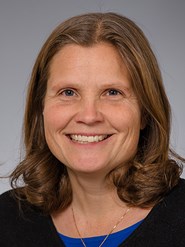
Marie Wiberg is a Professor of Statistics with a specialty in Psychometrics at the Department of Statistics, Umeå School of Business, Economics and Statistics (USBE) at Umeå University, Sweden. She holds a PhD in Statistics from Umeå University (2003) and has held academic positions there since 2003, advancing from Lecturer (2004–2005) to Assistant Professor (2006–2010), Associate Professor (2010–2015), and full Professor (2015–present). She has also held visiting roles at McGill University (2005) and the University of Twente (2006). Her research focuses on educational measurement and psychometrics , with emphasis on test equating , item response theory (both parametric and nonparametric), and international large-scale assessments like PISA and TIMSS. She has contributed to methodological advancements in kernel equating, statistical modeling, and the analysis of educational data. Her work bridges theoretical psychometrics with practical applications in standardized testing and policy analysis. Prof. Wiberg has supervised numerous PhD students, including Gabriel Wallin (2020), Jonathan Wedman (2017), and Inga Laukityte (2017). She actively contributes to academic governance, serving as an editor for journals like Behaviormetrika and on editorial boards for International Journal of Testing . Her awards include the Young Researcher Career Award (2008) and the Royal Skyttean Prize (2008). She is also a former member of Sweden’s Young Academy (2014–2018). Her research projects include developing statistical methods for standardized achievement tests (2020–2025) and analyzing Swedish student performance in international assessments (2007–2012). She collaborates internationally, with publications in Applied Psychological Measurement , Journal of Educational and Behavioral Statistics , and others.