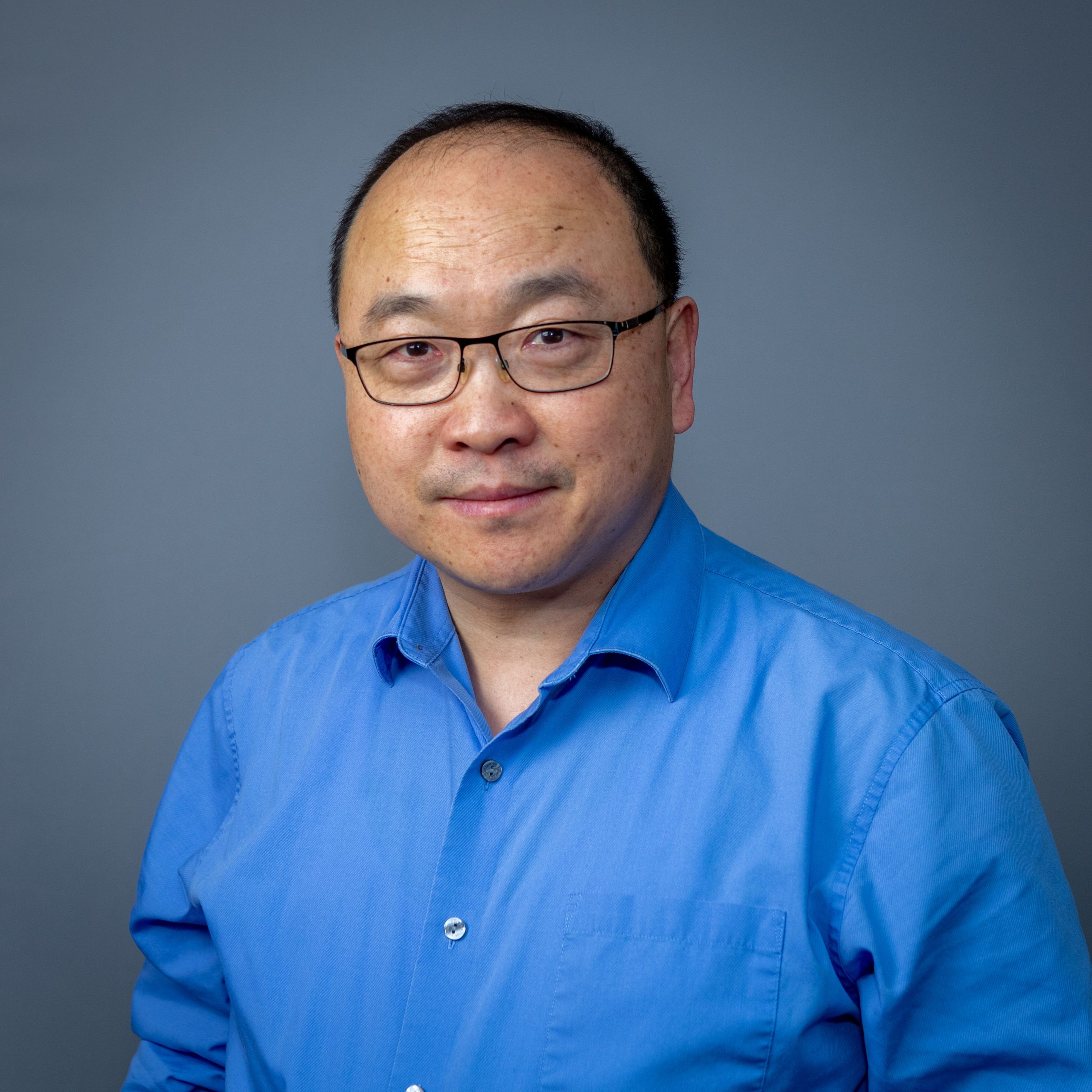
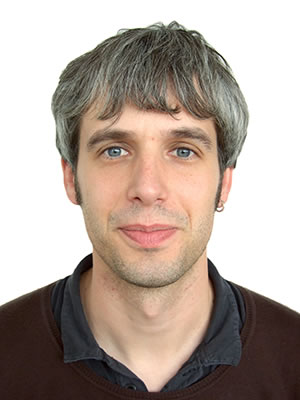
François Trahay is an Associate Professor at Telecom SudParis, affiliated with the SAMOVAR research laboratory. His research focuses on high-performance computing systems, storage optimization, and performance analysis tools for parallel and distributed environments. He completed his PhD at Université Bordeaux I (2009) and Habilitation (HDR) at Institut Polytechnique de Paris (2021). Research Interests: Trahay specializes in optimizing storage systems (SSDs, RAID configurations), developing performance analysis frameworks (e.g., EZTrace, NumaMMA), and enhancing energy efficiency in HPC. Key areas include I/O performance, parallel runtime systems, and adaptive computing for machine learning workloads. Publication Trends: His recent work (2018–2025) demonstrates strong focus on: (1) SSD/RAID management techniques for modern storage hardware, (2) HPC performance tools for tracing and analysis, and (3) optimization strategies for distributed deep learning systems. Laboratory Affiliation: Member of SAMOVAR Laboratory (UMR CNRS), conducting research in distributed systems, networks, and computational efficiency.
Professor Tianfeng Lu is a faculty member in the School of Engineering at the University of Connecticut, where he joined as an Assistant Professor in 2008 and was appointed as the United Technologies Associate Professor of Engineering Innovation in 2016. His research focuses on computational fluid dynamics, combustion chemistry, and turbulent flow simulations. He earned his B.S. and M.S. in Engineering Mechanics from Tsinghua University and his Ph.D. in Mechanical and Aerospace Engineering from Princeton University. Dr. Lu's work emphasizes reducing complex chemical mechanisms for efficient simulations of multidimensional turbulent flows and engineering systems. His contributions include advancements in ignition dynamics, detonation modeling, and plasma-assisted combustion. Key projects involve exascale simulations through initiatives like PELE and collaborations on real-fuel combustion models for engines. His articles highlight breakthroughs in combustion diagnostics, engine efficiency, and pollutant reduction, with recent efforts addressing hydrogen-methane mixtures and low-temperature combustion strategies. Awards include his endowed chair position, reflecting recognition of his impactful contributions to combustion science.
David S. Wack is an Associate Professor at the University at Buffalo's Jacobs School of Medicine & Biomedical Sciences, Department of Radiology. His research focuses on medical image analysis and neuroimaging, particularly in auditory processing and parameter estimation from PET, MRI, and CT images. He has held academic positions since 1992, progressing from instructor roles to his current rank. His work includes NIH-funded projects on imaging technologies and collaborations with institutions like Canon Medical Systems and UBNS. Education: PhD in Communicative Disorders and Sciences (SUNY Buffalo, 2010) MA in Applied Mathematics (SUNY Buffalo, 1992) BA in Applied Mathematics and Music Performance (SUNY Buffalo, 1989) Research Interests: Development of parametric maps from medical images Machine learning applications in neuroimaging Neuroimaging of auditory and language processing Dynamic image noise reduction and segmentation algorithms Neural markers of top-down compensation in speech processing Recent Projects: NIH-funded self-collimating SPECT breast tomography system 4D flow MRI for intracranial atherosclerotic disease assessment Machine learning for neuroimage classification Grants & Service: Member of Jacobs School faculty council and UB Faculty Student Association board Editorial roles at Frontiers in Neuroscience (Brain Imaging Methods, Decision Neuroscience) Labs & Teams: Buffalo Neuroimaging Analysis Center Collaborations with UBNS, Canon Medical, and VA Western New York Health Care System
Luciano Simone is an Associate Professor at the Department of Medicine and Surgery, University of Parma, Italy. He teaches Human Physiology and Research Methods in Cognitive Neuroscience across multiple degree programs, including Biomedical Laboratory Techniques, Medicine and Surgery (6-year program), and Translational Biomedical Sciences.
Dan Steinberg is a senior research scientist and team leader of the Decisions & Statistical Learning team at CSIRO Data61 in Canberra, Australia. His expertise lies in probabilistic machine learning, variational inference, Bayesian deep learning, causal inference, and their application to domains spanning synthetic biology, geospatial analytics, and algorithmic fairness. Education PhD in Computer Vision / Machine Learning (2013) – University of Sydney, Australian Centre for Field Robotics Bachelor of Engineering (Mechatronics, First-Class Honours) – University of Sydney (2008) Bachelor of Commerce (Finance) – University of Sydney (2008) Research Interests Steinberg’s core research agenda revolves around building scalable probabilistic models that can learn efficiently from limited or noisy data and provide principled uncertainty estimates. Key themes include: Variational Inference & Bayesian Deep Learning: developing lightweight yet powerful algorithms for approximate posterior inference in complex models (e.g., Aboleth, Revrand). Active Learning & Experimental Design: creating methods that decide which experiments or measurements will maximise information gain, with recent focus on in-silico protein engineering via Variational Search Distributions (VSD). Causal Inference: leveraging machine-learning tools to perform robust observational causal studies for evidence-based policy, including work on youth well-being and academic outcomes. Algorithmic Fairness: translating normative notions of equity into quantifiable objectives for regression-based decision systems. Large-scale Spatial Analytics: Landshark—an open-source TensorFlow toolkit for supervised learning on massive geospatial raster datasets. Notable Software & Tools Aboleth: A minimal-overhead TensorFlow framework for Bayesian deep learning. Landshark: Command-line tools for large-scale spatial inference. Revrand: Scalable Bayesian generalised linear models with non-conjugate likelihoods. libcluster: Extensible C++ library for hierarchical Bayesian clustering. Scientific Awards Oral Presentation Award – ICML 2025 Workshop on Scaling up Intervention Models (SIMS) Oral Presentation Award – NeurIPS 2024 Workshop on Bayesian Decision-making and Uncertainty (BDU) Oral Presentation Award – NeurIPS 2023 Workshop on Adaptive Experimental Design and Active Learning Spotlight Paper Award – NeurIPS 2014 (Extended and Unscented Gaussian Processes) Research Team & Collaborations As Team Leader – Decisions & Statistical Learning at CSIRO Data61, Steinberg directs a multi-disciplinary group that partners with government agencies (e.g., Jobs and Skills Australia, Australian Institute of Health and Welfare) and industry to deploy machine-learning solutions at scale. He has previously held roles as Principal Researcher at Gradient Institute (2019-2023), Senior Research Engineer at CSIRO Data61 (2016-2019), Researcher at NICTA (2013-2016), and Research Associate at the University of Sydney (2012-2013).
Michela Zedda is an Associate Professor at the Department of Mathematical, Physical and Computer Sciences of the University of Parma. Her research focuses on differential and symplectic geometry, particularly in Kähler metrics, Sasakian manifolds, and geometric quantization. Department: Mathematical, Physical and Computer Sciences (University of Parma) Academic Rank: Associate Professor Email: michela.zedda@unipr.it Her work explores the interplay between Kähler and symplectic structures, with key contributions to projectively induced metrics, immersions into complex space forms, and the geometry of Cartan-Hartogs domains. Recent publications (2024–2025) address scalar flat metrics on line bundles and symplectic cones over Sasakian manifolds. Zedda's research spans geometric analysis, including the Yamabe problem, Ricci solitons, and stability under Lie group actions. She has extensively studied diastasis functions, TYZ expansions, and balanced metrics in both Cartan and Hartogs domains. Teaching appointments include Geometry courses for Mathematics and Management Engineering students at the University of Parma (2022–2025) and previous roles in Mathematics and Dental Medicine programs. No scientific awards or advisees are documented in the provided texts.
Sascha Spors is a Professor at the Chair of Signal Theory and Digital Signal Processing within the Institute of Communications Engineering at the University of Rostock. His work spans spatial audio processing, medical signal processing, and data-driven methodologies. Chair of the AES Technical Committee on Spatial Audio Ombudsperson at the University of Rostock Research focuses on spatial sound capture/synthesis, perception of synthetic sound fields, and biomedical applications like implant monitoring via electrical impedance tomography. He contributes to open science initiatives and research data management frameworks. Key collaborations include memberships in the IEEE Signal Processing Society, Deutsche Gesellschaft für Akustik (DEGA), and Audio Engineering Society (AES).
Ariful Azad serves as an Associate Professor in the Department of Computer Science & Engineering at Texas A&M University, where he leads research at the intersection of high-performance computing and graph analytics. His work focuses on developing scalable algorithms for graph machine learning with applications in bioinformatics and security informatics. Educational Background: Ph.D. in Computer Science, Purdue University (2014) B.S. in Computer Science and Engineering, Bangladesh University of Engineering and Technology (2006) Research Focus: Dr. Azad specializes in high-performance graph algorithms , particularly for distributed-memory systems. His pioneering work includes the Combinatorial BLAS library and novel approaches for graph neural networks (GNNs), with emphasis on explainability through Shapley values and optimization of sparse matrix operations. His bioinformatics research tackles large-scale metagenomics challenges through projects like Exabiome. Publication Trends: Recent publications (2023-2025) reveal three dominant themes: (1) Scalable GNN explanation frameworks using distributed Shapley values, (2) High-performance sparse linear algebra for graph embeddings and knowledge graphs, and (3) Bioinformatics applications in metagenomics and network alignment. His work consistently bridges theoretical algorithm development with practical implementations for exascale systems. Scientific Recognition: NSF CAREER Award (2024) for foundational contributions to scalable graph algorithms Indiana University Trustee's Teaching Award (2024) U.S. Department of Energy Early Career Award (2021) Research Leadership: As principal investigator for multiple federal grants, Dr. Azad directs projects advancing graph analytics at extreme scales. His work on Weapons of Mass Destruction knowledge graphs demonstrates applied security research, while Exabiome represents significant contributions to computational biology. He actively develops open-source tools like PLANETALIGN for network analysis benchmarking, fostering reproducibility in computational science.
Tyler Bletsch is an Associate Professor of the Practice in the Department of Electrical and Computer Engineering at Duke University's Pratt School of Engineering. He joined the Duke faculty in November 2015 after several years of work in industry with NetApp, bringing practical industry experience to his academic role. His teaching focuses on practical aspects of computer engineering and systems programming. Dr. Bletsch received his B.S. from North Carolina State University in 2004, followed by his D.Phil. from the same institution in 2011. His doctoral research focused on software security, particularly addressing code-reuse attacks. His research interests span hardware and software security, with a particular focus on Rowhammer vulnerabilities and mitigation techniques. He also explores power-aware computing for high-performance systems and has interests in robotics and technology education with an emphasis on project-oriented learning. Dr. Bletsch's publication record shows a consistent focus on computer security, particularly Rowhammer attacks and mitigation strategies in recent years. His earlier work addressed code-reuse attacks like Jump-oriented Programming and Return-oriented Programming. He has also contributed to power management research for high-performance computing systems. Dr. Bletsch is actively involved in mentoring students through the Duke Combat Robotics club and FIRST robotics teams. He teaches a variety of courses including Computer Architecture, Digital Systems, Computer and Information Security, and Engineering Software for Maintainability. His teaching philosophy emphasizes hands-on, project-based learning. He maintains an active research laboratory focused on computer security and has been featured in Duke Today for his educational video "Tyler Bletsch Takes You on a Tour of the Insides of a Computer," which demystifies computer hardware for general audiences.
Dr. Roy E. Welsch is the Eastman Kodak Leaders for Global Operations Professor of Management and a Professor of Statistics and Data Science at the MIT Sloan School of Management and the MIT Center for Statistics and Data Science . He currently serves as Director of the MIT Center for Computational Research in Economics and Management Science . Education : AB in Mathematics from Princeton University (1969), MS and PhD in Mathematics from Stanford University Dr. Welsch's research spans advanced statistical methodologies and their interdisciplinary applications. His work focuses on: Robust statistical methods for regression and covariance modeling Applications in financial markets, biomedical imaging, and drug repurposing Machine learning algorithms for high-dimensional data analysis Statistical computing and computational finance Uncertainty quantification in experimental design His recent publications emphasize cross-domain applications of machine learning, particularly in financial forecasting, biomedical diagnostics, and network behavior modeling. Notable trends include: Development of robust statistical frameworks Integration of NLP techniques in financial analysis Biomedical image processing algorithms for disease quantification Time-series and high-content analysis Portfolio optimization under uncertainty Scientific Recognition : Fellow of the Institute of Mathematical Statistics Fellow of the American Statistical Association Fellow of the American Association for the Advancement of Science Eastman Kodak Leaders for Global Operations Professorship As a dedicated educator, Dr. Welsch teaches Data Analysis and Applied Statistics courses focusing on regression modeling, experimental design, and quality control with applications in finance and marketing.
Julien Ah-Pine is a lecturer at Laboratoire d'Informatique, de Modélisation et d'Optimisation des Systèmes (LIMOS) under Université Clermont Auvergne , with affiliations at Institut national polytechnique Clermont Auvergne and École des Mines de Saint-Étienne . He also holds a Researcher position at CNRS. Research Interests His work spans machine learning , information fusion , aggregation functions , and multi-criteria decision support , with a focus on complex data types like graphs , functional data , and multi-view datasets . Recent publications emphasize anomaly detection in spectral data streams , online learning , and interpretable AI for industrial applications. Selected Publications 2025 work on OnlineBootKNN introduces a novel framework for real-time spectral anomaly detection, while 2024 research explores multiple kernel methods in functional data classification. Earlier studies cover graph-based clustering , relational data mining , and linguistic network models for NLP tasks. Laboratory & Collaborations Works within LIMOS laboratory at Université Clermont Auvergne, collaborating with institutions like Mines Saint-Étienne and CNRS. Key partnerships include Nicolas Rojas Varela and Engelbert Mephu Nguifo on data stream analysis projects.
Dr. Yuan He serves as Lecturer (Teaching) at UCL Institute for Global Prosperity within The Bartlett Faculty of the Built Environment, University College London. She leads the MSc Global Prosperity program and co-directs the Asian Prosperity Hub, focusing on feminist democracy and development trajectories in China, India, and South Korea. Her educational foundation includes: PhD in Development Studies, University of Cambridge MPhil in Development Studies, University of Cambridge MA in Industrial Economics, Nanjing University BA in International Applied Social Sciences, Nanjing University Her research critically examines how women's political participation drives structural change in Asian authoritarian contexts, challenging purely economic development models. She documents everyday politics through fieldwork in rural India and China, emphasizing prosperity beyond GDP metrics. Recent publications unexpectedly bridge social sciences and computational methods, featuring machine learning applications in control theory and safe reinforcement learning—suggesting emergent interdisciplinary collaborations. Recognition includes: UKIERI funding award (2024) for 'Building Transformative Research Capabilities of Master's Students in Sustainability' with IIT Delhi She mentors MSc dissertation students while securing international grants, and has delivered gender training to 1,000+ corporate employees across Asia. Her media presence includes 40,000-view YouTube talks and commentary for Hong Kong Phoenix TV. As co-editor of UCL Press's 'Global Prosperity Thought and Practice' series and co-convener of 2024's 'Alternative Imaginaries: Feminist Politics in the Global South' conference, she actively shapes decolonial academic discourse.
Ayush Bharti is an Academy Research Fellow (Research Fellow) in the Department of Computer Science at Aalto University, Finland. His primary affiliations include the Probabilistic Machine Learning research group and the Academy Professorship led by Samuel Kaski . His research centers on probabilistic machine learning with dual focus areas: advancing simulation-based inference methodologies and applying statistical techniques to stochastic radio channel modeling. Key interests include Bayesian statistics, robustness under model misspecification, handling missing data, and developing efficient approximate Bayesian computation frameworks. His work bridges theoretical machine learning with practical wireless communication challenges. Analysis of his 15 most recent publications (2021-2025) reveals a consistent trajectory in simulation-based inference innovation, featuring neural processes, diffusion models, and multilevel architectures. Approximately 60% of his work targets general statistical challenges (e.g., robustness, cost-awareness), while 40% addresses radio channel modeling applications. Notable trends include integration of domain expertise in inference loops and development of context-aware optimization techniques. No information is available regarding student supervision or research grants. Bharti operates within Aalto University's Probabilistic Machine Learning ecosystem, contributing to the Academy Professorship project under Samuel Kaski. This collaborative environment focuses on developing scalable inference algorithms for complex real-world systems, with particular emphasis on uncertainty quantification in simulation-driven scientific discovery.
Dr. Simon Noah Nowak is a researcher at the Faculty of Mathematics, Bielefeld University , focusing on nonlocal partial differential equations (PDEs) and regularity theory. He is currently involved in the SFB 1283 collaborative research center, contributing to projects on differential/integro-differential operators with degenerate coefficients (TP A07) and analysis of manifolds/metric spaces/graphs (TP A03). His work bridges functional analysis, potential theory, and nonlinear PDEs. Research trends in his publications emphasize nonlocal equations with irregular coefficients, including fractional calculus, Sobolev/Hölder regularity, and Calderón-Zygmund estimates. Key subfields span gradient estimates , parabolic equations , nonlinear potentials , and De Giorgi iteration for vectorial systems. He has collaborated with prominent researchers such as Lars Diening, Lars Kaßmann, Yannick Sire, and Giuseppe Mingione. His recent work includes 2025 contributions to Annals of PDE , Calculus of Variations , and Journal of the London Mathematical Society , alongside 2024 studies in Mathematical Annals and Archive for Rational Mechanics and Analysis .
Professor Ying Xie is a leading academic at Cranfield University's School of Management, holding the position of Professor of Supply Chain Analytics. Her work bridges engineering, data science, and business management across diverse sectors including maritime logistics, healthcare, and disaster response. Her educational background includes a BEng, MSc, and PhD in Management Science from Coventry University. Key research interests focus on supply chain digitalization and decarbonization , renewable energy supply chain configuration , and AI applications in operational resilience . Her work consistently integrates machine learning with real-world business challenges, particularly in port management and sustainability. Recent publications reveal strong trends in maritime decarbonization (25%), AI-driven supply chain optimization (30%), and healthcare systems resilience (20%). Her research increasingly addresses climate adaptation through circular economy models and clean energy transitions. Principal Fellow of the Higher Education Academy (HEA) Expert reviewer for UKRI MRC, British Academy, and EU Horizon Professor Xie has supervised numerous PhD completions and secured two dedicated scholarships for port management and digital twin research. Her £20m+ grant portfolio includes major projects with EPSRC (£7.6m Net Zero Aviation CDT), Innovate UK (£174k Sustainability Platform), and EU Horizon (£5m MEDiate disaster management). She actively collaborates with the Port of Dover, Ocado Technology, and NHS England. She leads the Co-Innovation Group in the UK National Clean Maritime Research Hub and directs academic activities for the EPSRC Centre for Doctoral Training in Net Zero Aviation, shaping national maritime strategy through the Department for Transport's 'UK Ports the Future' report.