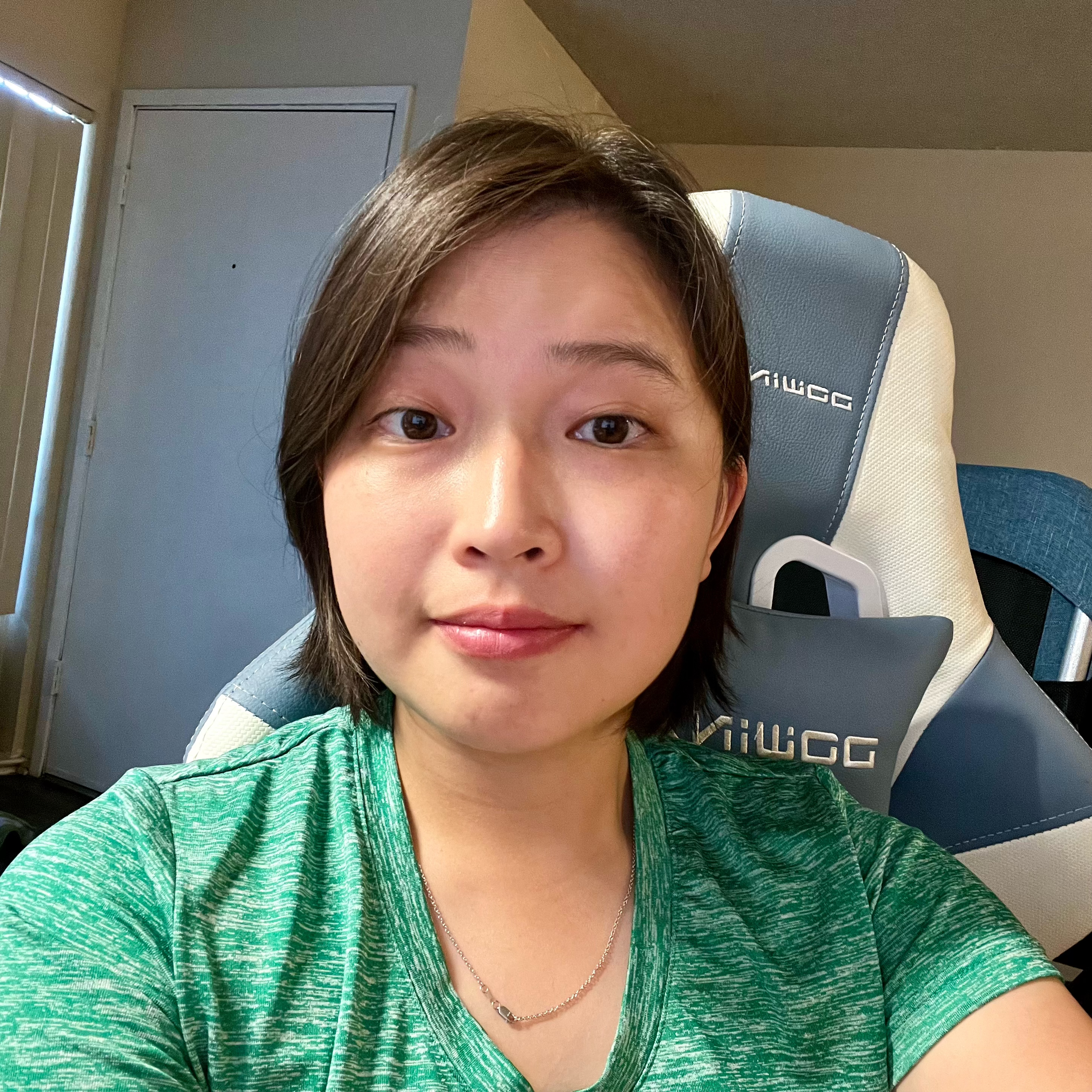
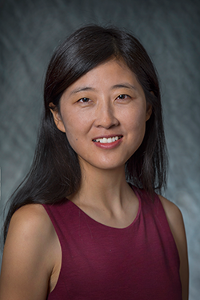
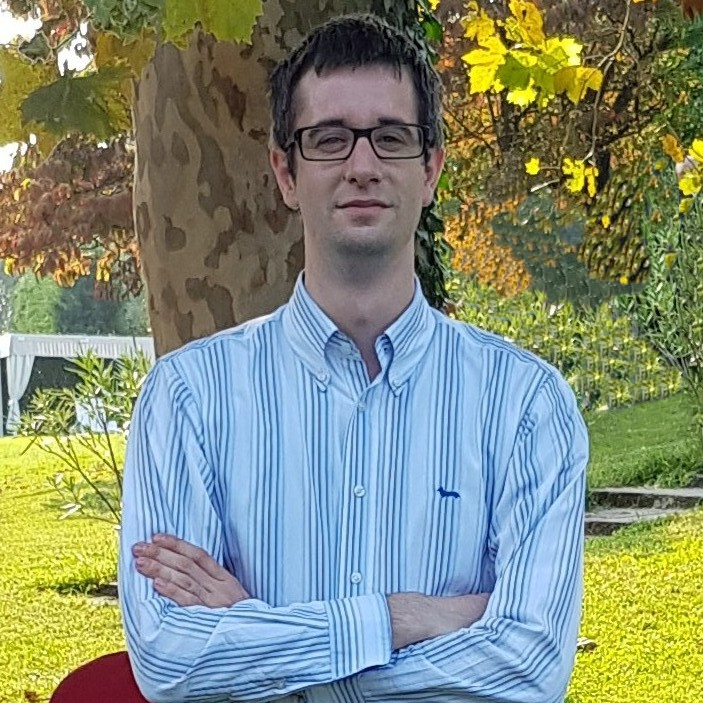
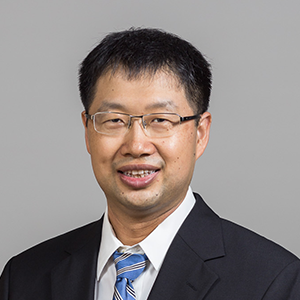
Frank Schurr is Professor of Landscape Ecology and Vegetation Science at the University of Hohenheim's Institute of Landscape and Plant Ecology. His research investigates biodiversity dynamics across hierarchical levels, examining how demographic processes shape ecological and evolutionary responses to environmental change. Schurr develops statistical frameworks integrating process-based models with experimental data to forecast ecological dynamics. Current projects focus on fitness consequences of biotic interactions in Fynbos ecosystems, evolutionary adaptation to global change, and functional trait influences on plant recruitment. His work advances predictive ecology through novel approaches to understanding species niches, range dynamics, and community assembly processes.
André Brinkmann is a full professor at the Department of Computer Science, Johannes Gutenberg University Mainz, leading the Efficient Computing and Storage Group. He previously served as head of the university's data center (2011–2021) and was an assistant professor at Paderborn University (2008–2011). He holds a Ph.D. in Electrical Engineering from Paderborn University (2004) and managed the Paderborn Centre for Parallel Computing (PC²). His research focuses on algorithm engineering for data center management, cloud computing, storage systems, and high-performance computing (HPC). Notable projects include: Development of ad hoc file systems like GekkoFS and IO-SEA for exascale architectures Optimization of storage systems (e.g., hybrid RAID, SSD garbage collection) Quantum computing compiler research for trapped-ion architectures Leadership in initiatives like the I/O Trace Initiative and BINARY (Big Data in Atmospheric Physics) He serves as Senior Associate Editor of ACM Transactions on Storage and co-chairs major conferences like FAST 2026 and ARCS 2026.
Nikas Thomas is an External Instructor at the Department of Informatics (DI) of the National and Kapodistrian University of Athens (NKUA). His work spans multiple interdisciplinary areas including quantum cryptography, fiber optic sensing technologies, and seismic monitoring. Key roles include advancing secure communication protocols through quantum key distribution (QKD) and developing novel Li-Fi transceivers using perovskite photodiodes. He also pioneers applications of Distributed Acoustic Sensing (DAS) for urban earthquake monitoring in Athens, leveraging existing fiber-optic infrastructure for environmental and geophysical studies. His research bridges theoretical frameworks (e.g., phase transmission analysis) with practical implementations in optical communication systems and seismic detection. Research interests focus on: Secure optical communication systems leveraging quantum principles Fiber optic-based seismic and acoustic sensing Emerging Li-Fi technologies for high-speed wireless networks Phase-sensitive fiber optic analysis for geophysical applications Publications from 2022-2024 highlight trends in: Quantum security protocols for optical and radio-over-fiber systems Urban DAS applications for earthquake monitoring Microwave frequency interferometry for low-cost seismic sensors No scientific awards are explicitly listed in the provided materials. His work often involves collaborative projects with industry and academic partners, though specific grants are not detailed here. Current projects include optimizing DAS for real-time urban seismic networks and exploring novel modulation formats for secure optical transmission.
Micah Beck is an Associate Professor in the Min H. Kao Department of Electrical Engineering and Computer Science at the University of Tennessee, Knoxville, within the Tickle College of Engineering. His research focuses on foundational challenges in computer networking, internet architecture, and system design principles like minimal sufficiency. He holds a PhD in Computer Science from Cornell University (1992), an MS from Stanford (1980), and a BA from the University of Wisconsin (1979). Education: PhD in Computer Science, Cornell University, 1992 MS in Computer Science, Stanford University, 1980 BA in Mathematics & Computer Science, University of Wisconsin, 1979 Research Interests: Beck critiques traditional internet architecture paradigms, exploring flaws in assumptions like end-to-end arguments and TCP reliability. He advocates for minimal sufficiency principles to enhance deployment scalability. Recent work addresses broadband accessibility, digital monopolies, and exposed buffer architectures for stateful networking. His writing often bridges theoretical rigor with practical system design critiques. Recent Article Themes: His 2025 article Hit the Goalie analyzes formal proof misapplications in engineering systems, while 2024's End-to-End Arguments re-evaluates foundational networking principles. He co-authored Breaking Up Digital Monopolies (2023) proposing regulatory frameworks for data governance. Awards & Grants: No explicit awards listed, but his work has influenced networking discourse through venues like ACM and IEEE. Active in initiatives like Cybercosm and Exposed Buffer Architecture development. Teaching & Advising: Teaches operating systems (COSC 361), computer networks (ECE 453/553), and cloud/edge computing (COSC 494/594). Projects include xv6 kernel modifications and network protocol analysis. No formal advisee roster provided. Labs/Teams: Collaborates on projects like the Wildfire Data Logistics Network and Cybercosm ecosystem. Engages with industry through presentations at conferences like IEEE MASS and ACM workshops.
Dr. Lingling Jin is an Associate Professor in the Department of Computer Science at the University of Saskatchewan. Her research focuses on Bioinformatics, Genome Evolution, Comparative Genomics, Natural Computing, and Mathematical Genomics. She holds a Ph.D. in Computer Science with a specialization in Bioinformatics from the University of Saskatchewan (2017), preceded by an M.Sc. (2010) and B.Eng. (2006) in Computer Science from the same university and Beijing University of Technology, respectively. Dr. Jin’s work integrates computational methods with genomic data analysis, addressing challenges in plant genomics, structural variant detection, and evolutionary biology. Her research explores topics such as polyploid subgenome inference, anti-CRISPR activity modeling, and environmental stress response in organisms like mites and legumes. She also applies machine learning techniques to problems in agriculture, such as wheat kernel defect detection and phenotype prediction from genomic markers. Recent projects include developing tools like SV-JIM and SVPS for structural variant identification, sequencing the Camelina neglecta genome, and advancing self-supervised learning for video object segmentation and dense-pattern analysis. Her interdisciplinary approach bridges computational science with biological applications, contributing to both foundational and applied research in genomics. No scientific awards or grants are explicitly mentioned in the provided text. She currently advises no listed students, though her research likely involves graduate students and collaborators in bioinformatics and computational biology.
Dong Chen is an Associate Professor in the Department of Computer Science at the Colorado School of Mines. His research focuses on building data-driven experimental systems in Cyber-Physical Systems (CPS), IoT, Embedded AI, and Embodied AI, with applications in smart devices, homes, cities, and renewable energy systems. He leads the Next Generation Cyber-Physical Systems Laboratory (CPSLab), emphasizing open-source systems and datasets. Dr. Chen holds PhDs in Electrical and Computer Engineering (2018, University of Massachusetts Amherst) and Computer Science (2014, Northeastern University). His work addresses security, privacy, sustainability, and efficiency in smart environments. Notable contributions include SolarFinder, SolarTrader, PrivacyGuard, and VoiceAttack, which tackle challenges in IoT privacy, energy trading, and adversarial attacks. He received the NSF CAREER Award (2023) and is a member of Sigma Xi, ACM, AAAI, and IEEE. His research spans system design, AI applications, and cross-cutting domains like solar energy modeling and edge computing. Current projects include AgileDART (edge stream processing) and SolarDetector (satellite-based PV array identification). Advising and collaborations: Dr. Chen seeks PhD and undergraduate students with strong CS/EE backgrounds. His lab focuses on CPS/IoT security, energy systems, and AI-driven solutions. He has published extensively on topics ranging from smart grid optimization to adversarial machine learning.
Theodora Bourni is an Associate Professor in the Department of Mathematics at the University of Tennessee, Knoxville, within the College of Arts and Sciences. Her research focuses on Geometric Analysis, Differential Geometry, and Partial Differential Equations, with specializations in Geometric Flows and Geometric Measure Theory. She holds a Ph.D. from Stanford University. Her work explores ancient solutions of geometric flows, particularly mean curvature flow and curve shortening flow, analyzing their convexity, collapse dynamics, and singularity formation. She has collaborated extensively on topics like free boundary problems, curvature estimates, and spectral geometry in non-Euclidean settings. Key contributions include classifying ancient solutions in convex domains and studying the interplay between geometric evolution equations and topological transitions. Her publications span journals such as the Journal of Differential Geometry, Calculus of Variations and Partial Differential Equations, and Annali della Scuola Normale Superiore di Pisa. She has edited conference proceedings on Mean Curvature Flow and authored a book chapter on minimal surfaces. Current research continues to investigate geometric flows' long-time behavior and their applications in differential geometry.
Chun-Yi Su is a Professor in the Department of Mechanical, Industrial and Aerospace Engineering at Concordia University. His research focuses on advanced control systems, mechatronics, robotics, and precision engineering. He specializes in nonlinear control, hysteresis compensation, and adaptive systems applied to soft actuators, UAVs, and smart materials. Key research areas include: Control of dielectric elastomer actuators Fault-tolerant cooperative control of unmanned aerial vehicles (UAVs) Adaptive neural network-based control for nonlinear systems Data-driven approaches for power electronics and energy systems Recent work emphasizes: Soft robotics actuation mechanisms Fractional-order control strategies Resilient control under cyber-physical attacks Biomimetic robotic systems His lab develops innovative solutions for smart materials, mechatronic systems, and autonomous robotics. Applications span renewable energy systems, biomedical devices, and aerospace engineering. Active in collaborative research with industry partners.
Giannopoulou Archontia is an Associate Professor at the Department of Informatics and Telecommunications of the National and Kapodistrian University of Athens. Her research focuses on theoretical informatics, particularly in graph theory, algorithm design, and parameterized complexity. She explores structural properties of graphs and their algorithmic implications, including graph minors, tree decompositions, and kernelization techniques. Her work emphasizes applications of graph searching, perfect matchings, and combinatorial optimization. Recent research trends include studies on flat wall theorems, matching minors in bipartite graphs, and directed tangle tree-decompositions. Her publications reflect contributions to both foundational theory and practical algorithm design in these areas. Giannopoulou has no listed scientific awards in the provided materials. Her advising and grant activities are not detailed here, though her extensive publication history suggests active research involvement. No lab or team affiliations are specified in the text.
Mudassir M. Rashid serves as Assistant Professor of Chemical Engineering and Director of the Pharmaceutical Engineering Program at Illinois Institute of Technology's Armour College of Engineering. His work bridges chemical engineering fundamentals with cutting-edge applications in biomedical systems and pharmaceutical manufacturing. His academic credentials include: Ph.D. in Chemical Engineering from McMaster University, Hamilton, Canada (2016) B.Eng. in Chemical Engineering from McMaster University, Hamilton, Canada (2011) Dr. Rashid's research program centers on three interconnected domains: Data-driven modeling and control for biological/chemical systems, specializing in recursive identification and adaptive control of nonlinear time-varying processes with variable delays Diabetes technology development through metabolic modeling, simulation of physiological pathways, and automated closed-loop insulin delivery systems Pharmaceutical manufacturing innovation via process analytical technology for real-time monitoring, control, and optimization of drug production quality attributes His methodology integrates advanced control theory with practical healthcare and industrial applications, demonstrating particular expertise in artificial pancreas systems and pharmaceutical process optimization. Analysis of his 15 most recent publications (2016-2019) reveals a dominant research trajectory in adaptive control systems for diabetes management, constituting over 80% of his output. Key themes include glucose prediction algorithms, plasma insulin estimation techniques, and disturbance-handling strategies for meals/exercise within artificial pancreas frameworks. The remaining publications address economic model predictive control applications in chemical batch processes and metallurgical systems, showcasing methodological versatility across biomedical and industrial contexts. No scientific awards are documented in the provided materials. While specific advising activities and grant funding details are absent from the source text, his leadership of the Pharmaceutical Engineering Program indicates significant academic administrative responsibilities. Dr. Rashid directs the Pharmaceutical Engineering Program at Illinois Tech, though the source material does not specify dedicated laboratory facilities or research team structures beyond his program oversight role.
Yidi Wang is an Assistant Professor in the Department of Computer Science and Engineering at Santa Clara University (SCU). She holds a Ph.D. in Electrical and Computer Engineering from the University of California, Riverside (2023), and previously worked as a Postdoctoral Scholar at UCR (2023–2024). Her research focuses on real-time, embedded, and cyber-physical systems, particularly addressing challenges in GPU scheduling, energy efficiency, and batteryless device operation. She teaches courses such as Introduction to Embedded Systems and Operating Systems at SCU. Education: Ph.D. in Electrical and Computer Engineering, UC Riverside (2023) M.S. in Electrical and Computer Engineering, UC Riverside (2019) B.S. in Electrical Engineering, Huazhong University of Science and Technology (2018) Research Interests: Real-time scheduling for GPU-accelerated applications, energy-efficient computing, heterogeneous platforms, and reliable systems for intermittently powered devices. Her work spans system-level implementations and theoretical analysis, including novel scheduling algorithms and mathematical models for performance optimization. Awards: None explicitly listed in the provided texts. Advising & Grants: Currently mentoring 3 students (2 MS, 1 undergraduate) and recruiting PhD/MS candidates. She serves on technical committees for RTSS and RTAS conferences and has reviewed for journals like Transactions on Computers and Real-Time Systems. Labs/Teams: Leads research on GPU scheduling and batteryless systems, collaborating with industry and academic partners.
Yongli Sang is an Associate Professor of Statistics in the Department of Mathematics at the University of Louisiana at Lafayette. She earned her Ph.D. in Statistics (2017) and M.S. in Statistics (2014) from the University of Mississippi, and holds a M.S. (2012) and B.S. (2009) in Mathematics from institutions in China. Ph.D. in Statistics, University of Mississippi (2017) M.S. in Statistics, University of Mississippi (2014) M.S. in Mathematics, Central China Normal University (2012) B.S. in Mathematics, Shandong Normal University (2009) Her research focuses on advanced statistical methodologies for high-dimensional data, time series analysis, nonparametric statistics, and robust statistical techniques for correlated data. She has developed innovative jackknife empirical likelihood methods for testing diagonal symmetry, homogeneity of variances, and K-sample problems with applications in diverse fields. Recent publications highlight her work on Gini correlations in high-dimensional settings, computational efficiency, and confidence interval estimation. She also explores transformations of linear processes and their memory properties, bridging theoretical statistics with applied data analysis challenges. At the University of Louisiana at Lafayette, she supervises Ph.D. student Sameera Hewage and teaches graduate courses including Mathematical Statistics, Regression Analysis, and Biometry.
Federico Reghenzani is an Assistant Professor at Politecnico di Milano in the Department of Electronics, Information and Bioengineering. His research focuses on computer science, embedded systems, fault tolerance, high-performance computing, real-time systems, and compiler technology. He leads the HEAP Lab where his team investigates reliability engineering and hardware-software co-design for safety-critical applications. Reghenzani's research examines software-based approaches to hardware fault tolerance, compiler technologies for reliability enhancement, and resource management in high-performance computing environments. His work has significant applications in aerospace systems, real-time embedded platforms, and next-generation computing architectures. His publications demonstrate a consistent focus on improving system reliability through compiler techniques, fault injection methodologies, and hardware-software co-design. The research spans theoretical frameworks, practical implementations, and experimental validation across diverse computing environments.
Andrew Stapleton is a Full Professor of Operations & Supply Chain Management at the University of Wisconsin-La Crosse, with over three decades of academic experience and 127+ peer-reviewed publications. He has held diverse professional roles, including Global Supply Chain Manager at General Motors, sports reporter for the Associated Press, and Visiting Professor at London South Bank University. Ph.D. in Supply Chain Management, New Mexico State University MBA in Business Management, New Mexico State University B.A. in Journalism, New Mexico State University His research focuses on green operations, digital twins, blockchain technology, and sustainable supply chains. Recent work examines AI's impact on maritime law, inventory leanness, and immersive pedagogical tools for teaching operations management. He has secured multiple research grants, including a $5,000 award in 2023 for digital twin studies. Stapleton actively mentors MBA students, having guided over 20 in research publications. He serves on the MBA Consortium for the University of Wisconsin system and has presented at international conferences in Europe and Mexico. Beyond academia, he is known for his unique hobbies, including training dogs to play football and creating mathematical puzzles for classroom engagement.
Dr. LIANG Zhenkai is an Associate Professor and Chairman of the Department of Computer Science at the National University of Singapore's School of Computing. He also serves as the Lead Principal Investigator for the National Cybersecurity R&D Lab (NCL). With extensive experience in academic leadership and cybersecurity research, Dr. Liang has established himself as a prominent figure in the field of system and software security. Dr. Liang received his Ph.D. in Computer Science from Stony Brook University in 2006 and his B.S. degrees in Computer Science and Economics from Peking University in 1999. His dual background provides a unique perspective on security challenges that bridges technical expertise with economic understanding. Dr. Liang's research focuses on system and software security , with particular emphasis on security in emerging platforms including Web, mobile, and Internet-of-Things (IoT) systems. His specific research interests include program analysis, Web and IoT system security, and virtualization. As the leader of the Curiosity Research Group, his team pursues missions centered around "Understanding systems (理解系统), abstracting knowledge (提炼知识), and connecting facts (参悟规律)". This philosophical approach to security research has yielded numerous significant contributions to the field. Dr. Liang's recent publications demonstrate a strong evolution from fundamental security mechanisms to sophisticated solutions addressing AI security, blockchain, and advanced vulnerability analysis. His work increasingly integrates machine learning techniques with traditional security approaches, focusing on developing robust defenses against sophisticated attacks while maintaining system usability. The trend shows a progression toward addressing contemporary challenges in large language models, secure system observability, and vulnerability propagation analysis. Dr. Liang has received numerous prestigious awards recognizing his research excellence: Outstanding Paper Award at ACSAC (2003) Best Paper Award at USENIX Security Symposium (2007) ACM SIGSOFT Distinguished Paper at ESEC-FSE (2009) Best Paper Award at W2SP Workshop (2014) Annual Teaching Excellence Award at NUS (2014, 2015) As an educator, Dr. Liang has taught various undergraduate and graduate courses including CS3235 Computer Security, CS5231 Systems Security, and CS5321 Network Security. His teaching philosophy, which he has published on in "Tool, Technique, and Tao in Computer Security Education," emphasizes both technical expertise and philosophical understanding of security principles. He has successfully mentored numerous students and researchers in the cybersecurity field. Dr. Liang leads the Curiosity Research Group, which actively seeks curious minds to join their exploration of security systems. The group maintains strong connections with industry and government cybersecurity initiatives, particularly through the National Cybersecurity R&D Lab (NCL). Their research environment encourages innovative thinking with the requirement that "Curiosity is required, while mentality for repairing things (such as bicycles) is a plus."