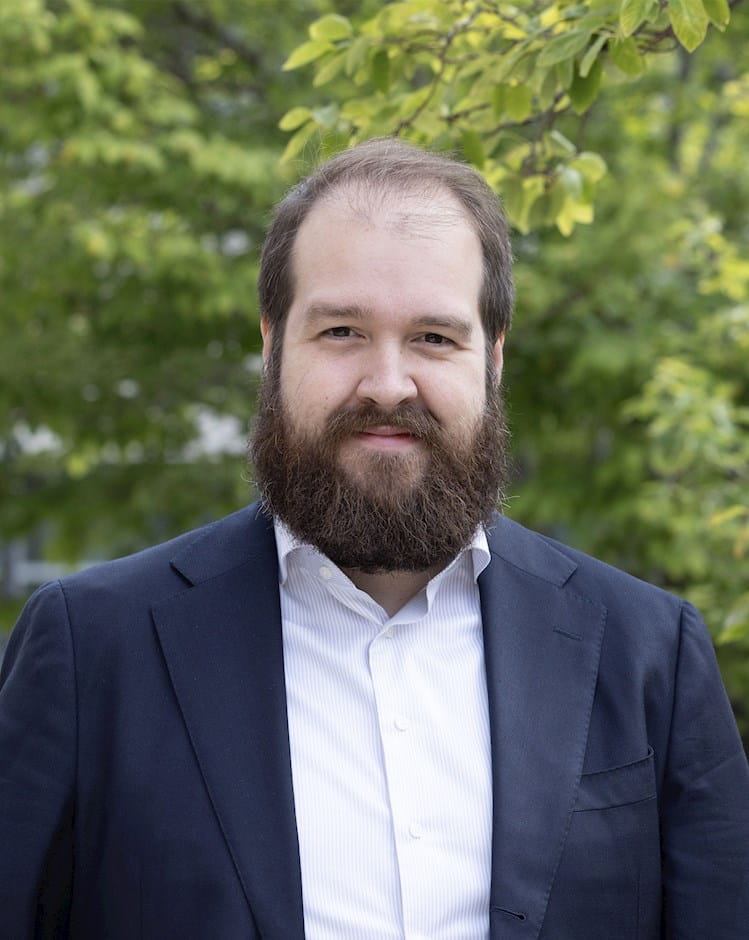
Michalis Vazirgiannis is a Professor at LIX, École Polytechnique (France) leading the Data Science and Mining (DaSciM) group. With academic backgrounds in Physics (Athens University), AI (Heriot-Watt University), and Informatics (Athens University), he has conducted research at Fraunhofer, Max Planck MPI, and INRIA/FUTURS while teaching at institutions across Greece, France, China, and Spain. His research spans Machine/Deep Learning for Graphs (GNNs, graph kernels, embeddings) Text Mining & NLP (Graph-of-Words, biomedical text analysis) Combinatorial Optimization for pandemic forecasting and energy systems Event/Anomaly Detection in time series and sensory data Industrial collaborations with Airbus, Google, Tencent, and BNP . He has supervised 29 completed PhD theses, published over 250 papers, and received prestigious awards including Marie Curie and Tencent Rhino-Bird Fellowships. His team leads the ANR-HELAS Chair (2020-2025) focusing on heterogeneous data deep learning.
Leland Bybee is an Assistant Professor of Finance at the University of Chicago Booth School of Business . He leverages machine learning and natural language processing to address economic and financial questions, particularly focusing on belief measurement with applications to asset pricing and behavioral economics. Ph.D. in Financial Economics, Yale School of Management (2024) M.S. in Statistics, University of Michigan (2017) B.A. in Economics, University of Chicago (2013) His research integrates computational methods with economic theory to analyze: Textual analysis of business news for macroeconomic tracking Narrative-driven asset pricing models Memory-based belief formation using kernel methods Macroeconomic determinants of currency returns He has received multiple awards including: Dimension Fund Advisors Distinguished Paper Award BlackRock Applied Research Award HEC Top Finance Graduate Award The Brattle Group PhD Candidates Award EFA Engelbert Dockner Memorial Prize Bybee teaches Machine Learning in Finance and participates in finance seminars, contributing computational tools like regIPCA (Python) and changepointsHD (R) to the research community.
Luo Mai is an Assistant Professor at the University of Edinburgh's School of Informatics , with an upcoming promotion to Associate Professor (UK Reader) in August 2025. He leads the Large-Scale Machine Learning Systems Group and co-leads the UK EPSRC Centre for Doctoral Training in Machine Learning Systems and an ARIA Project on Scaling AI Compute by 1000X . PhD in Computer Science (Imperial College London, 2018) MRes in Advanced Computing (Imperial College London, 2012) His research focuses on the intersection of computer systems , machine learning , and data management . Key contributions include award-winning systems like WaferLLM (wafer-scale LLM inference), Tenplex (elastic ML), and ServerlessLLM (serverless LLM serving), published at top venues (OSDI, SOSP, ICML, NeurIPS, JMLR). Recent publications demonstrate trends in GPU-based distributed systems , LLM optimization , and adaptive machine learning . His team has developed groundbreaking open-source projects including TensorLayer , TorchOpt , and ServerlessLLM . Awarded Microsoft Research StarTrack Scholar (2024) , secured ARIA grant (2024) with Imperial College & Cambridge University, and received Google Fellowship during PhD (2012-2016). As an educator, he designed Edinburgh's popular Machine Learning Systems course (150+ students). His group supervises multiple PhD students including Yao Fu (recognized as 2024 Rising Star in ML & Systems) and Leyang Xue .
Andrea Meilán-Vila is an Assistant Professor in the Department of Statistics at Universidad Carlos III de Madrid since 2021, holding a Juan de la Cierva Fellowship since 2023. She earned her PhD in Statistics from Universidade da Coruña (2021) and previously served as a Postdoctoral Fellow at Universidade de Santiago de Compostela's Department of Statistics, Mathematical Analysis and Optimisation. Her research focuses on nonparametric methods for analyzing complex data types, including directional, spatial, and functional data. Key areas include kernel smoothing techniques, goodness-of-fit testing for regression models, and spatial trend estimation. She serves as an Associate Editor for the Journal of Nonparametric Statistics . Recent work emphasizes applications in climate science (temperature curve modeling), fluid dynamics (wake flow control), and biomedical imaging (hippocampus shape analysis). Her methodologies address challenges like sparse data estimation and spatial correlation in regression frameworks. Key Projects: STENED (Stein-based goodness-of-fit tests for non-Euclidean data) Awards: Juan de la Cierva Fellowship (2023) Publications span journals like Journal of Fluid Mechanics , Statistical Papers , and TEST , with a focus on methodological advancements in statistical modeling and computational validation.
Luis Antonio Azpicueta Ruiz is an Associate Professor in the Department of Signal Theory and Communications at Carlos III University of Madrid. He leads research in the Signal Processing and Learning Group (GTSA) and Machine Learning for Data Science (ML4DS) group, focusing on interdisciplinary applications spanning acoustics, telecommunications, and machine learning. Research Interests: His work bridges signal processing theory with practical applications in environmental acoustics, adaptive filtering systems, and machine learning. Key research themes include: Advanced adaptive filtering architectures for nonlinear systems Distributed estimation in sensor networks Acoustic echo cancellation and room equalization Psychoacoustic evaluation methods Machine learning applications in noise monitoring and sound analysis Research Projects: Principal investigator for multiple funded projects including: Diagnóstico del ruido de chorro en aeronaves (AEI, 2022-2025) LearnINg FLow and Noise Dynamics via AI (COMUNIDAD DE MADRID, 2024-2026) BODYinTRANSIT - Sensory-driven Body Transformation (EUROPEAN COMMISSION, 2022-2026) Aprendizaje Automático para análisis Big Data (MINISTERIO DE ECONOMÍA, 2018-2021)
Francisco Manuel Alonso Chaves is a Professor in the Department of Earth Sciences at the Faculty of Experimental Sciences, University of Huelva, Spain. He is affiliated with the Huelva Scientific and Technological Center and leads the research group RNM276 APPLIED GEOSCIENCES. His academic focus lies in Internal Geodynamics, contributing significantly to the understanding of tectonic processes in the Betic Cordillera and surrounding regions. Education: PhD in Geology, University of Granada (1995). Thesis: "Tectonic evolution of Sierra Tejeda and its relationship with processes of crustal thickening and thinning in the Betic mountain ranges", supervised by Dr. Miguel Orozco Fernández. His primary research interests encompass Tectonics, Geodynamics, Seismology, and Structural Geology. He investigates crustal deformation, seismic activity, and the evolution of mountain belts, with a regional focus on the Betic Cordillera and the Iberian Peninsula. His work integrates field studies, geophysical methods, and advanced data analysis to unravel complex tectonic histories and assess seismic hazards. Analysis of his recent publications reveals a strong emphasis on tectonic processes, particularly in the Guadalquivir Basin and the Betic Cordillera. His work utilizes seismic noise recording, kernel density estimation, and passive seismic techniques to study basin architecture, fault reactivation, and crustal structure. There is a consistent focus on Neogene extension, earthquake analysis (including the Türkiye-Syria events), and the application of geospatial tools like QGIS for tectonic interpretation. Scientific Awards: No scientific awards mentioned in available information. Advising and Grants: No details provided regarding students supervised or research grants secured. Labs and Teams: Dr. Alonso Chaves is a key member of the RNM276 APPLIED GEOSCIENCES research group and conducts his work at the Huelva Scientific and Technological Center. His team focuses on applied geological research, including seismic microzonation, tectonic modeling, and environmental geology, contributing to both academic knowledge and practical applications in the region.
Albert Mas Blesa is an Associate Professor in the Department of Mathematics at Universitat Politècnica de Catalunya (Barcelona, Spain). His academic career spans positions at Universidad Autònoma de Barcelona (PhD 2011), Universitat Politècnica de Catalunya, Universitat de Barcelona, and Universitat Autònoma de Barcelona in postdoctoral roles. He specializes in Partial Differential Equations , Mathematical Physics , Harmonic Analysis , and Geometric Measure Theory . Education : PhD in Mathematics (2007-2011), Universitat Autònoma de Barcelona Master's in Advanced Mathematics (2006-2007), Universitat Autònoma de Barcelona Bachelor's in Mathematics (2001-2006), Universitat Autònoma de Barcelona His research focuses on the intersection of quantum mechanics and geometric analysis, particularly Dirac operators, MIT bag models, and nonlocal equations. Recent work explores heat kernel monotonicity, shape optimization, and spectral properties of relativistic systems. Collaborations with leading researchers like Xavier Cabré and Luis Vega highlight his contributions to theoretical and applied PDEs. His 15 most recent publications span topics from quantum dot modeling to fractional calculus, emphasizing variational methods, symmetry analysis, and spectral theory. Key themes include MIT bag models, Dirac operators, nonlocal CMC surfaces, and harmonic analysis on Lipschitz graphs. Albert Mas Blesa has no listed scientific awards in available records and no advising history is provided. His affiliations include UPC's Campus Diagonal Besòs and institutions across Spain's Catalan universities.
José E. Chacón is a Professor of Statistics at the Department of Mathematics, University of Extremadura, Spain. He is also a member of the Institute of Mathematics at the same university. His research focuses on nonparametric kernel smoothing, cluster analysis, and mathematical statistics. He earned his PhD in Statistics from the University of Extremadura in 2004. Chacón’s work emphasizes methodological advancements in density estimation, clustering algorithms, and statistical theory. His recent publications address topics like geodesic distributions, Bayesian taut splines for mode estimation, and bump detection via density curvature. He has contributed to applied areas such as animal home range estimation and data science for pandemic analysis. His articles often explore cross-validation techniques, bandwidth selection, and mixture model clustering. He co-authored the textbook Multivariate Kernel Smoothing and Its Applications (2018), consolidating his expertise in kernel-based methods. Chacón’s research bridges theoretical statistics with practical applications, influencing both academic and applied domains.
María Alonso-Peña is an Assistant Professor at the University of Santiago de Compostela , affiliated with the Faculty of Biology and the Department of Statistics, Mathematical Analysis, and Optimization . Her research focuses on nonparametric statistical methods, particularly in circular regression models and their applications in neuroscience and animal behavior analysis. She holds a PhD in Statistics from the University of Santiago de Compostela (2022), with a thesis titled New approaches to nonparametric circular regression models . Education: PhD in Statistics (2022), University of Santiago de Compostela Research Interests: Nonparametric statistics, circular regression, optimization, and statistical modeling in neuroscience and ecology Her work bridges theoretical statistics with applied problems, such as analyzing neuronal spike counts and animal escape behavior using advanced circular regression techniques. She has collaborated with institutions like KU Leuven and Universidad de Granada. Recent research includes a grant from the Xunta de Galicia (ED481A-2019/139) for neuroscientific applications. Key contributions include frameworks for circular local likelihood regression and parametrically guided kernel density estimators for spherical data. These methods address challenges in modeling directional and multimodal datasets, with implications for fields like neuroscience and environmental science.
Marta Arias is an Associate Professor in the Computer Science Department at Universitat Politècnica de Catalunya (UPC), Barcelona, and a member of the LARCA research group. She has held academic positions since 2007, including roles at Columbia University and the University of Edinburgh. Her research focuses on Machine Learning, Data Mining, Algorithm Design, and Logic in Computer Science. She teaches advanced courses in Machine Learning, Information Retrieval, and Complex Networks at undergraduate and master's levels, including the Erasmus Mundus program in Data Mining and Knowledge Management. Educations: PhD in Computer Science from Tufts University (2000-2004), Postgraduate Studies at University of Edinburgh (1999-2000), B.Sc. in Computer Science from UPC (1992-1997). Professional experience includes software engineering and research roles in New York and Barcelona. Research highlights include developing algorithms for real-time ranking systems, Twitter-based financial forecasting, and causal network analysis. Notable contributions include the 'Best Paper Award' at AIPESW@ECAI 2020 and a 3rd place award in football performance research. Her work spans theoretical foundations (e.g., Horn clause learning) and applied domains like cybersecurity, healthcare analytics, and energy systems. Teaching responsibilities include labs and lectures on Machine Learning, Information Retrieval, and Programming, with active involvement in curriculum design and pedagogical innovation. Ongoing projects include enterprise risk analysis, synthetic data generation, and network modeling.
Luis Gomez-Chova is a Full Professor at the Electronic Engineering Department of the University of Valencia, Spain, and a Senior Researcher at the Image and Signal Processing Group (ISP) within the Imaging Processing Laboratory (IPL). His roles include teaching Digital Electronics, Digital Signal Processing, and Machine Learning and Image Processing for Remote Sensing. He has held visiting researcher positions at institutions such as ESA-ESRIN (Italy), DLR-DFD (Germany), and DTU Space (Denmark). His research focuses on machine learning and signal/image processing applied to remote sensing data analysis, with a particular emphasis on cloud detection, multispectral image processing, and Earth observation. He leads projects funded by the Spanish Ministry of Science and Innovation, European Space Agency (ESA), and other international bodies. Notable projects include CH4AI (methane plume detection), DEEPCLOUD (cloud detection algorithms), and TECMAR (maritime activity monitoring). Gomez-Chova has received multiple awards, including the IEEE Senior Member distinction (2015), the 2013 IEEE GRS Letters Prize Paper Award, and the 2008 European Best PhD Thesis Award in Geoscience and Remote Sensing. His work has been supported by grants like the Google Earth Engine Research Award (2015) and Spanish Ministry grants such as PID2023-148485OB-C21. He has advised PhD students including Julia Amorós-López, Emma Izquierdo-Verdiguier, and Gonzalo Mateo-García. His research group is involved in developing advanced algorithms for satellite image processing, cloud masking, and environmental monitoring. Key collaborations include work with the European Space Agency on projects like OpenSR and Proba-V cloud detection. Gomez-Chova’s contributions extend to open-source datasets like CloudSEN12 and the development of benchmark frameworks for cloud detection. He actively publishes in top journals like IEEE Transactions on Geoscience and Remote Sensing and conferences such as IGARSS. His lab, part of the ISP group, emphasizes both theoretical advancements and applied solutions in remote sensing analytics.
Ian Dew-Becker serves as an Adjunct Associate Professor of Finance at the University of Chicago Booth School of Business and as a Senior Economist at the Federal Reserve Bank of Chicago. His academic work centers on theoretical and empirical asset pricing and macroeconomics, with particular emphasis on uncertainty, skewness, and tail risk in economic systems. He received his PhD in economics from Harvard University and has held prior positions at Northwestern University, Duke University, and the Federal Reserve Bank of San Francisco. His educational background includes: PhD in Economics, Harvard University Dew-Becker's research explores how agents form beliefs about economic fundamentals and how these beliefs translate into asset prices and macroeconomic outcomes. He investigates the dynamics of uncertainty and skewness across business cycles, develops novel measures using options data, and examines how production networks propagate economic shocks. His work demonstrates that firm-level uncertainty does not significantly forecast aggregate output, challenging existing models, while revealing how interconnectedness can reduce sensitivity to small shocks while amplifying vulnerability to large ones. Recent studies focus on real-time skewness measurement and tail risk transmission through input-output structures. Analysis of his publication record shows a consistent focus on risk measurement and pricing across financial and macroeconomic domains. Collaborating frequently with Stefano Giglio, he has pioneered methodologies using options data to construct cross-sectional uncertainty indices and measure conditional skewness. His research demonstrates that while exchange-traded options earn negative alphas implying rising risk aversion during downturns, synthetic options show constant risk aversion, suggesting intermediary frictions drive pricing anomalies. Key contributions include establishing empirical regularities about macro skewness and demonstrating how production networks generate left-skewed economic activity. No scientific awards were mentioned in the available information. Information regarding graduate student advising, research grants, or specific funding sources was not provided in the source materials. Dew-Becker teaches the Investments course at Chicago Booth during Autumn quarters but no details about mentored students or grant-supported projects are available. Dr. Dew-Becker actively collaborates with researchers across institutions including Stefano Giglio (Yale University), Andrea Vedolin (London School of Economics), and Bryan Kelly (Yale University), forming a network focused on financial economics and macro-finance linkages. His work bridges theoretical modeling with empirical analysis of market data, particularly options markets, to address fundamental questions about risk and uncertainty in economic systems.
Christian Igel is a Professor at the Department of Computer Science (DIKU) and Director of the SCIENCE AI Centre at the University of Copenhagen. His academic journey includes a Computer Science degree from the Technical University of Dortmund, a Doctoral degree from Bielefeld University, and a Habilitation degree from Ruhr-University Bochum. He has held academic positions since 2003, including a W1 Professorship at Ruhr-University Bochum before joining DIKU in 2010 as a Professor with Special Duties in Machine Learning and becoming a Full Professor in 2014. Research Interests: Deep learning, kernel methods, evolutionary optimization, reinforcement learning, PAC-Bayesian analysis, and ML applications for sustainability. Affiliations: SCIENCE AI Centre (Director), European Lab for Learning and Intelligent Systems (ELLIS Fellow). Editorial Roles: Editor of KI – Künstliche Intelligenz , Associate Editor of Evolutionary Computation Journal and Artificial Intelligence Journal . Education: Technical University of Dortmund (Computer Science), Bielefeld University (Doctorate), Ruhr-University Bochum (Habilitation).
Silvia Novo is an Assistant Professor at the Department of Statistics of Universidad Carlos III de Madrid. She holds a PhD in Statistics and Operations Research from Universidade da Coruña (2021) and previously obtained a Mathematics degree and MSc in Statistical Techniques from Universidade de Santiago de Compostela. As an Associate Editor of Computational Statistics, her research focuses on methodological advancements in functional data analysis, semiparametric regression, regularization techniques, quantile regression, and computational statistics. Education: Mathematics Degree, Universidade de Santiago de Compostela MSc in Statistical Techniques, Universidade de Santiago de Compostela PhD in Statistics and Operations Research, Universidade da Coruña (2021) Her publications demonstrate expertise in statistical learning with functional data, including novel approaches for combining partial-linear/single-index models with k-NN estimation, sparse regression for mixed functional/high-dimensional predictors, and automated location-adaptive estimation techniques. Recent work applies these methods to real-world problems like Tecator data analysis, emphasizing computational efficiency and interpretability. Editorial Role: Associate Editor at Computational Statistics.
Hamish Flynn is a Researcher in the Department of Engineering Artificial Intelligence and Machine Learning. His work focuses on developing advanced algorithms for sequential decision-making systems, with a strong emphasis on theoretical guarantees and practical implementations. His research interests span several core areas of machine learning: Bandit algorithms (contextual, linear, and multi-armed variants) PAC-Bayesian theory and applications Reinforcement learning systems Online optimization under uncertainty Statistical learning theory Flynn's recent publications (2022-2025) demonstrate consistent focus on improving sequential learning methods. Key research themes include: non-iid noise modeling in bandits, confidence bound optimization for sequential regression, sparse nonparametric methods, and hardware-efficient machine learning implementations. His work frequently combines theoretical frameworks (PAC-Bayes, martingale theory) with practical applications in reinforcement learning and adaptive systems. No scientific awards, students advised, grant activities, or lab affiliations are mentioned in the available information.