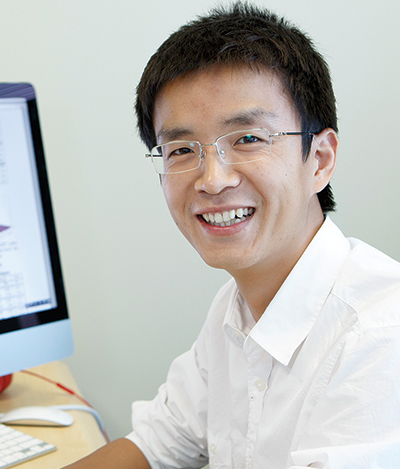
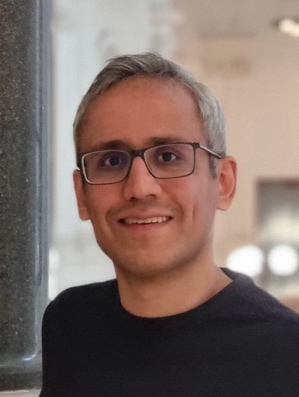
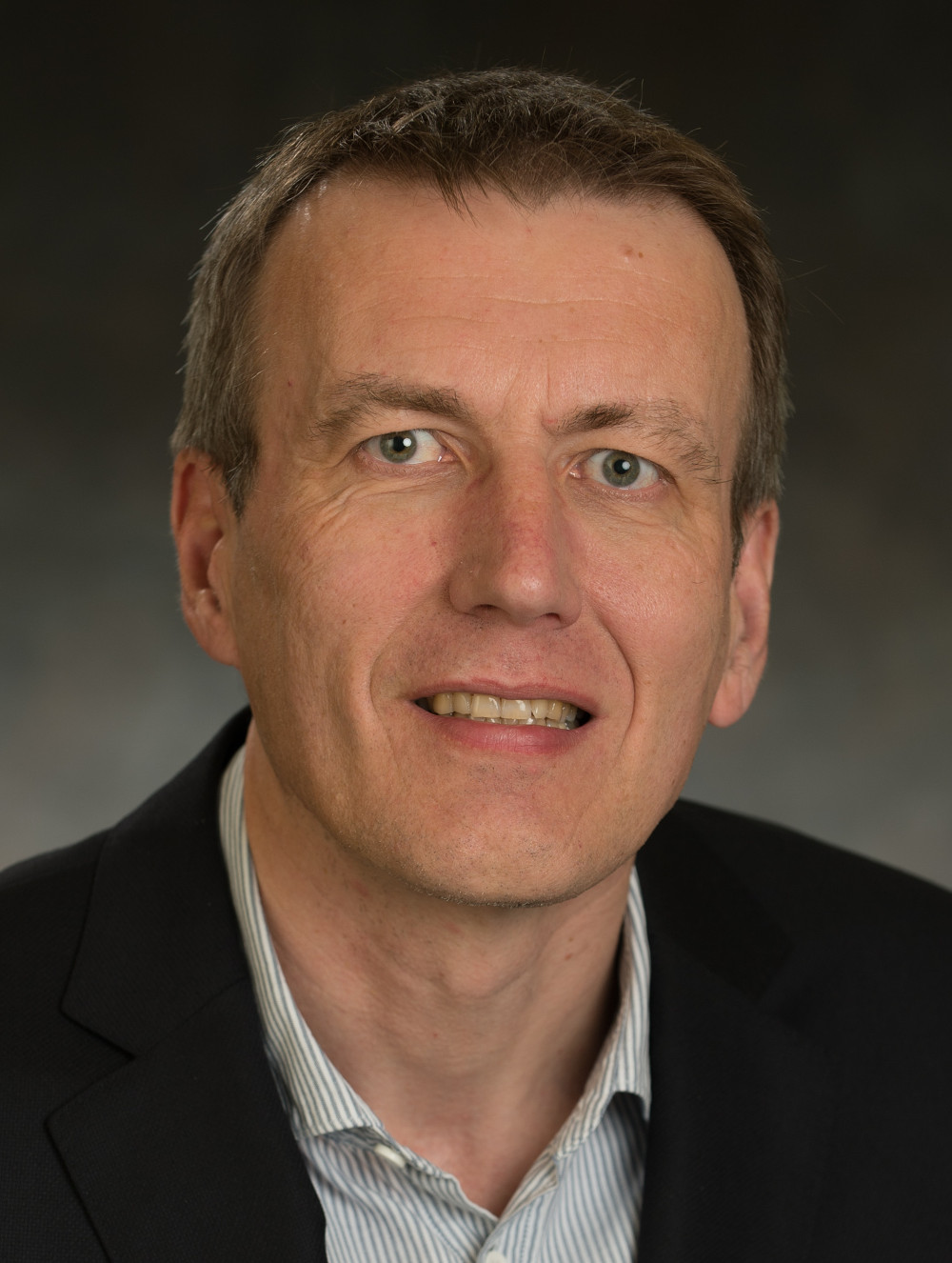
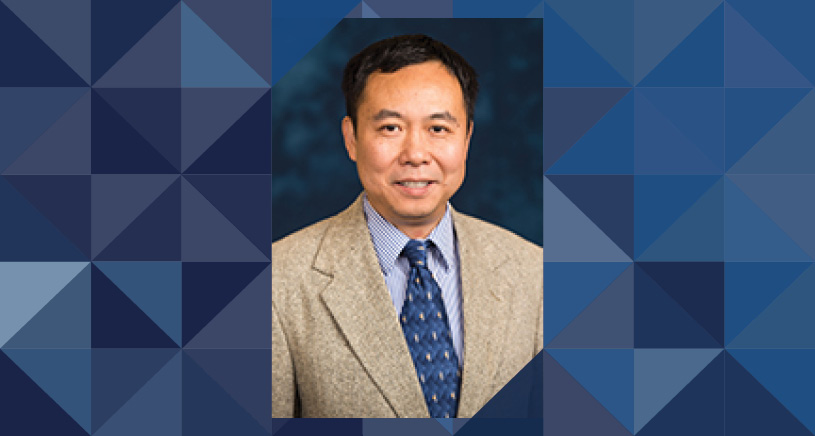
Roman Krems is a Professor and Distinguished University Scholar at the University of British Columbia (UBC) in the Department of Chemistry, with affiliations to the Stewart Blusson Quantum Matter Institute. His research focuses on the intersection of quantum physics, machine learning, and chemistry, particularly in quantum materials and quantum technologies such as quantum computing and sensing. Key Roles: Professor at UBC (2013–present), Distinguished University Scholar (2017–present) Education: Ph.D. from Göteborg University (2002), Postdoctoral Fellow at Harvard-MIT Center for Ultracold Atoms (2003–05) Research Interests include: Quantum machine learning (QML) for solving complex physics problems Quantum scattering theory in electromagnetic fields Applications of quantum computing to chemistry Developing machine learning algorithms for quantum dynamics Recent publications highlight advancements in extrapolating quantum observables, Gaussian process models for collision dynamics, and quantum walks in disordered systems. His work bridges theoretical physics, computational methods, and experimental applications in cold molecule research. Scientific Awards include the UBC Killam Teaching Prize (2017), election as Fellow of the American Physical Society (2015), and the Keith Laidler Award (2013). He has held editorial board positions for journals such as Machine Learning: Science & Technology and New Journal of Physics . Research Group members include graduate students and postdocs working on quantum technologies, machine learning, and molecular scattering. He also contributes to outreach through invited talks and seminars at institutions like MIT and Lawrence Berkeley National Laboratory.
Lingming Zhang is an Associate Professor at the Department of Computer Science, University of Illinois Urbana-Champaign, affiliated with the Grainger College of Engineering. His research focuses on the intersection of Software Engineering, Programming Languages, and Machine Learning, with a particular emphasis on automated program repair, compiler testing, and large language model (LLM) applications in software engineering. He has published over 100 papers, achieving an h-index of 50+, and holds an ACM Distinguished Member status. Research Interests: LLM-based software testing, repair, and synthesis Fuzzing of deep-learning libraries and compilers Open-source code LLMs (e.g., StarCoder2, Magicoder) with over 1M downloads Automated program repair systems (e.g., AlphaRepair, ChatRepair, Agentless) Recent Contributions: Developed TitanFuzz for coverage-guided compiler fuzzing Released Agentless , an LLM-based coding tool adopted by OpenAI and DeepSeek Proposed SWE-RL to enhance LLM reasoning via reinforcement learning Service Roles: Program Co-Chair for ASE 2025 and LLM4Code 2025 Associate Chair for OOPSLA 2024 and Area Chair for ICSE 2025/2026 Recipient of NSF CAREER Award and ACM SIGSOFT Early Career Award Lab/Teams: Develops open-source tools like UniAPR for efficient patch validation Active in releasing industry-adopted LLM-based software engineering tools
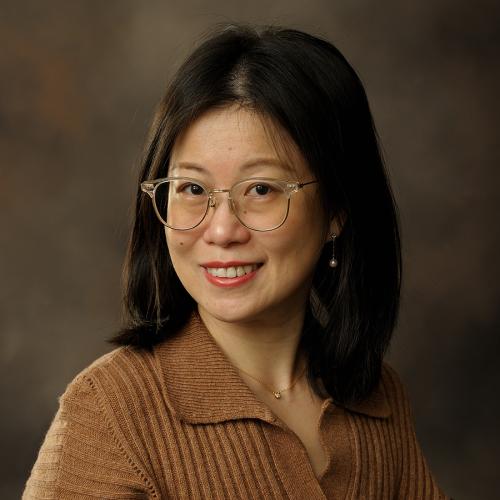
Dr. Bei Jiang is an Associate Professor in the Department of Mathematical and Statistical Sciences at the University of Alberta , Canada. She holds the Canada CIFAR AI Chair and is affiliated with the Alberta Machine Intelligence Institute (Amii) . Her academic journey includes a PhD in Biostatistics (2014) from the University of Michigan, MS (2008) and BS (2004) from the University of Alberta and Beijing University of Technology, respectively. Current Positions : 2021–Present (Associate Professor), 2022–Present (CIFAR AI Chair) Past Appointments : Assistant Professor (2015–2021), Postdoctoral Fellow at Columbia University (2014–2015), Research Assistant at University of Michigan (2009–2013) Research Interests : Dr. Jiang specializes in methods for joint modeling of longitudinal and health outcome data , Bayesian hierarchical modeling , functional and imaging data analysis , and statistical machine learning . Her work integrates kernel machine regression , differential privacy , and synthetic data generation to address challenges in heterogeneous health data and neuroimaging. Scientific Awards : Highlights include the 2015 SAMSI New Research Fellow , multiple Rackham Conference Travel Awards (2013, 2012), and prestigious NSERC scholarships (2009–2012). She has also received the J Gordin Kaplan Graduate Award (2008) and Statistical Society of Canada Travel Award (2008). Grants : $375,000 (CIFAR AI Chairs, 2022–2027), $480,000 (MITACS Accelerate, 2022–2025), and $210,000 (Canadian Statistical Sciences Institute, 2022–2025) Students and Postdocs : She mentors numerous PhD , MSc , and Postdoctoral Fellows , including Junxi Zhang (2023–Present), Enze Shi (2022–Present), and former advisees like Wenxing Guo (now Lecturer at University of Essex) and Yafei Wang (Assistant Professor at University of Alberta).
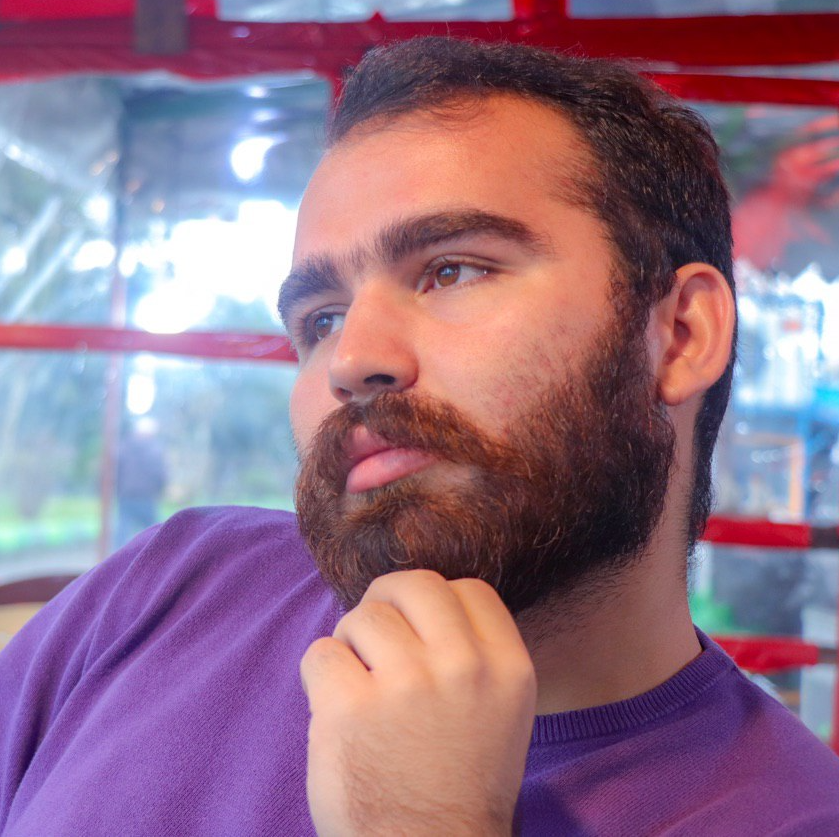
Shayan Aziznejad is a Senior ML Scientist at Distran, working on the intersection of machine learning and acoustic imaging. He was previously an ML researcher at Daedalean AI (October 2022–December 2024) and a Ph.D. candidate at Ecole Polytechnique Fédérale de Lausanne (EPFL) , where he focused on mathematical optimization and signal processing under Prof. Michael Unser. His academic background includes dual B.Sc. degrees in Electrical Engineering and Pure Mathematics from Sharif University of Technology . Research Focus: Machine learning, neural network certification, wavelet analysis, Hessian-Schatten regularization, and sparse modeling. Scientific Recognition: Swiss National Science Foundation Postdoc Fellowship (2021) Best Student Paper Award at ICASSP (2019) Gold Medalist at Iranian National Mathematics Olympiad (2011) Academic Contributions: Authored 15+ publications in top-tier journals (SIAM, IEEE, etc.) and conferences (ICASSP, EUSIPCO), with a focus on Lipschitz-regularized models, spline-based optimization, and inverse problems. Advising Experience: Supervised 11+ students across master's theses, summer internships, and semester projects, including Eliana Renzo, Joaquim Campos, and Haojun Zhu. Email: shayan.aziznejad@gmail.com
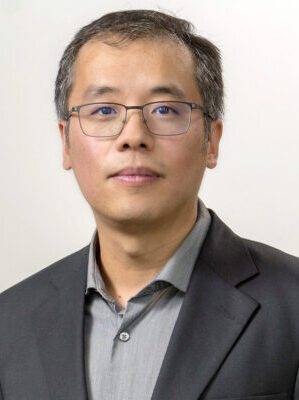
Dr. Giang Tran is an Associate Professor in the Department of Applied Mathematics at the University of Waterloo, where she leads research in sparse modeling and computational mathematics. She holds a PhD from UCLA and previously served as a Bing Instructor at the University of Texas at Austin. Her research explores sparse optimization techniques with applications in medical imaging, dynamical systems, and data science. Recent publications focus on developing novel algorithms for sparse random feature expansions and dynamical system identification. She mentors numerous graduate and undergraduate researchers through projects on neural networks, transformers, and epidemic forecasting. Awards include the NSERC Discovery Grant and SIAM Student Paper Prize. Dr. Tran teaches advanced courses in numerical methods and functional analysis, contributing to curriculum development in computational mathematics.
Lexin Li is a Professor in the Department of Biostatistics and Epidemiology at the University of California, Berkeley School of Public Health, with additional affiliations at the Helen Wills Neuroscience Institute, the UC Berkeley-UCSF Joint Program on Computational Precision Health, and the Center for the Theoretical Foundations of Learning, Inference, Information, Intelligence, Mathematics and Microeconomics at Berkeley (CLIMB). He received his BE in Electrical Engineering from Zhejiang University (1998) and PhD in Statistics from the University of Minnesota (2003), followed by postdoctoral training at UC Davis School of Medicine. He joined North Carolina State University as Assistant Professor in 2005, was promoted to Associate Professor in 2011, and served as visiting faculty at Stanford University and Yahoo Research Labs (2011-2013) before joining UC Berkeley as Associate Professor in 2014, where he was promoted to Full Professor in 2018. Dr. Li's research spans statistical methodology development for neuroimaging data analysis, tensor statistics, and machine learning applications to biomedical problems. His work focuses on brain connectivity and network analysis, imaging causal inference, tensor regression, dimension reduction, and statistical machine learning with applications to Alzheimer's disease, Parkinson's disease, and other neurological disorders. His methodological innovations bridge theoretical statistics with practical neuroscience applications, particularly in multimodal neuroimaging analysis and brain network modeling. His recent publications demonstrate a strong trajectory in integrating deep learning with classical statistical inference, particularly in tensor analysis, functional data modeling, and causal inference. The research shows increasing sophistication in handling high-dimensional, complex neuroimaging data while developing rigorous statistical frameworks for inference. His work increasingly focuses on multimodal data integration and developing methods that can handle the complexity of real-world neurological data. Dr. Li has received numerous prestigious honors including being elected as a Fellow of the American Statistical Association (2017), Fellow of the Institute of Mathematical Statistics (2021), Elected Member of the International Statistical Institute, and Fellow of the American Association for the Advancement of Science (2024). Fellow, American Statistical Association (2017) Fellow, Institute of Mathematical Statistics (2021) Elected Member, International Statistical Institute Fellow, American Association for the Advancement of Science (2024) Editor-in-Chief, Annals of Applied Statistics (2025-2027) As an academic leader, Dr. Li serves as Co-Director of the Biostatistics Program (2019-) and Director of Graduate Admissions (2015-) at UC Berkeley. He is an active editor, currently serving as Editor-in-Chief of the Annals of Applied Statistics (2025-2027), and has held associate editor positions at multiple top statistical journals including the Journal of the American Statistical Association and Journal of Computational and Graphical Statistics. He also serves as a Standing Member of the NIH Emerging Imaging Technologies in Neuroscience Study Section (2023-2027). His research has been supported by various NIH grants focused on statistical methodology for neuroimaging analysis. Dr. Li leads a vibrant research group focused on statistical neuroimaging and machine learning methodology, with strong connections to the Helen Wills Neuroscience Institute and collaborations across multiple departments at UC Berkeley. His team develops innovative statistical methods that address real challenges in neuroscience research while maintaining rigorous theoretical foundations. The group maintains active collaborations with neuroscientists and clinicians working on Alzheimer's disease, Parkinson's disease, and other neurological conditions.
Morteza Haghir Chehreghani is a Professor of Artificial Intelligence and Machine Learning at the Data Science and AI Division of Chalmers University of Technology , Sweden. He leads the Machine Learning and Decision Making Lab and is affiliated with WASP , CHAIR , and ELLIS . Education : PhD in Computer Science (2014) from ETH Zurich under Prof. Dr. Joachim M. Buhmann Prior Roles : Staff Research Scientist at Naver Labs Europe (2014-2018) Research spans Interactive Machine Learning , Sequential Decision Making , Federated Learning , Efficient Deep Learning , and Graph-Based Learning . Key application areas include Transport , Autonomous Systems , Energy , Drug Discovery , and Computational Biology . Selected Publications (2020-2025) demonstrate expertise in Reinforcement Learning for drug design, Minimax Distance Measures for clustering, and Graph Neural Networks for trajectory analysis. Current work focuses on Combinatorial Bandits and Human-in-the-loop AI . Teaching includes graduate courses like Advanced Topics in Machine Learning (DAT441/DIT41), Algorithms for Machine Learning (TDA233/DIT382), and PhD-level Advanced Reinforcement Learning . He has also taught Statistical Methods for Data Science and Theoretical Foundations of ML . Patents include systems for Autonomous Vehicle Motion Control , K-NN Search via Minimax Distances , and Trip Prediction Algorithms . Collaborative projects involve Nature Communications (2022) and multiple ICML / CVPR publications.
Dr. Stefan Klus is a Lecturer at the School of Mathematics and Physics, University of Surrey. His research focuses on data-driven model reduction, transfer operator approximation, and kernel-based machine learning applied to dynamical systems. He specializes in interdisciplinary applications across quantum physics, fluid dynamics, and computational biology. Education: PhD in Industrial Mathematics (2011, Paderborn University) and Habilitation (2020, Freie Universität Berlin). Research Interests : Data-driven modeling and reduced-order methods Koopman operator theory and transfer operators Machine learning for dynamical systems (e.g., Deeptime library) Tensor decompositions and quantum systems analysis Graph-based analysis (e.g., microbiome dynamics) Publications : Klus has contributed to over 50 peer-reviewed articles, with recent work emphasizing: Kernel methods for quantum chemistry and physics Tensor-based approaches for high-dimensional systems Applications in climate science (e.g., Pacific SST modeling) Agent-based modeling and social systems Technical Contributions : Co-developer of the Deeptime Python library for dynamical modeling Pioneer in Koopman operator-based model reduction Advanced graph kernel methods for microbiome analysis
Jukka K Nurminen is a Professor of Computer Science at the University of Helsinki (since 2019) and a Research Professor at VTT. He leads the Empirical Software Engineering research group and supervises doctoral students in the Doctoral Programme in Computer Science. His career spans academia and industry, including roles as Adjunct Professor at Aalto University (part-time, 2016-2021) and Principal Scientist at VTT (2016-2019). His research focuses on efficient software systems , particularly energy-efficient software , mobile cloud computing , and data-intensive systems . Recent work addresses AI system testing , ethical decision-making in software , and quantum computing software . His publications highlight trends in quantum algorithms , machine learning for edge computing , and ethical AI . Best Paper Award (2023) Nurminen has supervised 6 PhD theses, 48 MSc theses, and 21 BSc theses. He has secured over 1 MEUR in research funding, including projects like FrameQ and EM4QS for quantum middleware. His teaching innovations include hackathons and summer schools, with excellence recognized in tenure-track evaluation (2018) and adjunct professorship (2015).
Lieven Vandenberghe is a Professor in the Electrical and Computer Engineering Department and Department of Mathematics at the University of California, Los Angeles (UCLA). His research focuses on convex optimization, semidefinite programming, and applications in signal processing, system identification, and control theory. Books: Co-author of Convex Optimization (2004) and Introduction to Applied Linear Algebra (2018) Courses: Teaches graduate-level courses in linear programming, convex optimization, and numerical computing (ECE236A/B/C, ECE133A/B) Software: Developer of CVXOPT, CHOMPACK, and SMCP for optimization algorithms His research group has produced significant work in sparse matrix computations, operator splitting methods, and applications to machine learning and control systems. Publications span topics like Bregman splitting, proximal gradient methods, and semidefinite programming for signal processing. His advisees include PhD students in optimization and postdoctoral researchers in applied mathematics.
Cristina Butucea is a Professor of Statistics and Machine Learning at ENSAE-CREST, Institut Polytechnique de Paris . She was nominated an IMS Fellow (2019) for her contributions to nonparametric and high-dimensional statistics. She has co-organized major conferences like Fréjus 2018 , Luminy 2019-2020 , and Oberwolfach 2021 , and serves as Associate Editor for ALEA . Fields of interest: Nonparametric statistics, quantum statistics, differential privacy, inverse problems, machine learning. Awards: IMS Fellowship, conference organization leadership. Research trends: Focuses on optimal estimation under privacy constraints, quantum state reconstruction, high-dimensional inference, and adaptive nonparametric methods. Email: Cristina.Butucea@ensea.fr | Cristina.Butucea@ip-paris.fr
Jingrui He is a Professor and MSIM Program Director at the School of Information Sciences, University of Illinois Urbana-Champaign. She holds multiple faculty affiliate positions including with the Department of Computer Science, National Center for Supercomputing Applications (NCSA), Illinois Informatics, Center for Digital Agriculture (CDA), and Mayo Clinic Arizona. Her research spans machine learning with applications in diverse domains including healthcare, agriculture, security, and finance. Dr. He received her PhD in Machine Learning from Carnegie Mellon University in 2010. Her research focuses on heterogeneous machine learning, active learning, neural bandits, and self-supervised learning. She addresses complex data challenges where multiple types of heterogeneity coexist, developing methods for exploring, understanding, characterizing, and predicting real-world data through statistical machine learning techniques. Her recent publications demonstrate a strong focus on graph learning, federated learning, fairness in AI, and neural bandit algorithms. She has developed innovative approaches for class-imbalanced graph learning, Byzantine-robust federated learning, and privacy-preserving graph machine learning. Her work bridges theoretical foundations with practical applications across multiple domains. Her scientific awards include the Amazon Research Award (2025), ACM Distinguished Member (2023), AAAI Senior Member (2023), FAccT Distinguished Paper Award (2022), NSF CAREER award (2016), and multiple IBM Faculty Awards. She has been recognized as an excellent teacher and received Best Paper awards at major conferences including ICDM and SDM. Dr. He directs the iSAIL Lab and leads several major research projects including the AI Institute for Future Agricultural Resilience Management and Sustainability (AIFARMS). She has successfully mentored numerous doctoral students who have become co-authors on her publications. Her research has been funded through prestigious grants including the NSF CAREER award and IBM Faculty Awards.
Yi Li is the M. Anthony Schork Collegiate Professor of Biostatistics at the University of Michigan School of Public Health. With a PhD in Biostatistics from the University of Michigan (1999) and postdoctoral training at Harvard (1999-2000), Dr. Li has established himself as a leading researcher in statistical methodology with applications across multiple biomedical domains. Dr. Li's research spans survival analysis, data science, high-dimensional inference, machine learning, deep learning, spatial data analysis, random-effects models, clinical trial design, and infectious disease modeling. His methodological work finds application in cancer genetics/genomics, radiomics, racial disparity analysis, chronic disease research, and opioid overuse studies. With over 230 publications in major statistical journals including JASA, Biometrika, JRSSB, and Biometrics, as well as premier subject matter journals like PNAS, JAMA, and JCO, Dr. Li's work has significantly impacted both statistical theory and biomedical applications. His research portfolio demonstrates consistent evolution from foundational methodological work in survival analysis and spatial statistics to cutting-edge applications in high-dimensional data, machine learning, and deep learning approaches for complex biomedical problems. The recent publications reveal increasing focus on integrating multiple data sources, causal inference in observational studies, and developing interpretable machine learning models for clinical applications. Dr. Li's work has been continuously supported by NIH funding since 2003, including multiple National Cancer Institute grants (R01 CA95747, 1P01CA134294-010002, R21CA157219, R01CA249096, R01CA269398) and a National Institute on Aging grant (R21AG058198). He actively collaborates with researchers from the University of Michigan and Harvard University on clinical and observational studies. As an educator, Dr. Li has taught advanced courses in survival analysis and statistical methods, mentoring the next generation of biostatisticians. His methodological contributions have been widely recognized through invitations to serve on NIH study sections (BMRD 2008-2012, EPIC 2015-2019) and as Associate Editor for leading statistical journals including Journal of the American Statistical Association, Biometrics, and Scandinavian Journal of Statistics.
Professor Rajen Shah is a faculty member in the Statistical Laboratory at the University of Cambridge, part of the Department of Pure Mathematics and Mathematical Statistics (DPMMS) within the Faculty of Mathematics. His research focuses on statistical methodology, particularly in high-dimensional data analysis, machine learning, and robust statistical inference. He is known for contributions to areas such as change-point regression, inverse propensity score weighting, and efficient estimation techniques in complex models. Key research interests include developing novel methods for variable selection, robust hypothesis testing, and scalable algorithms for large-scale data. He has collaborated on interdisciplinary projects, such as functional genomics studies (e.g., screening conserved genes of unknown function). His work often emphasizes theoretical rigor alongside practical applications in fields like causal inference and computational statistics. Prof. Shah has published extensively in top-tier journals like The Annals of Statistics , Bernoulli , and Journal of the Royal Statistical Society Series B . His recent articles address challenges in cross-validation for change-point detection, rank-transformed subsampling, and sandwich boosting methods. He is actively involved in the academic community, contributing to the Cambridge Statistics Clinic and supervising research in statistical methodology. His research group is affiliated with the Statistical Laboratory at the Centre for Mathematical Sciences, Cambridge. The lab focuses on advancing statistical theory and applications, with a strong emphasis on high-dimensional and assumption-lean methods.
Dr. Xuhui Fan is a Lecturer in Artificial Intelligence at the School of Computing, Macquarie University. He holds a PhD in Computer Science from the University of Technology Sydney (Australia) and a bachelor's degree in Mathematical Statistics from China. Prior to his current role, he worked as a project engineer at Data61 (formerly NICTA), a postdoc fellow at the University of New South Wales, and a lecturer at the University of Newcastle. His research focuses on Bayesian methods, federated learning, temporal point processes, and neural network architectures. He is affiliated with the Data Horizons Research Centre and the Frontier AI Research Centre at Macquarie University. Key research interests include developing interpretable AI models, advancing federated learning for privacy-sensitive applications, and applying Bayesian techniques to complex data analysis. His work bridges theoretical advancements in machine learning with practical applications in areas such as anomaly detection, generative models, and spatio-temporal data analysis. Dr. Fan’s publications span top-tier conferences like NeurIPS, ICML, and IJCAI, covering topics such as diffusion models, nonstationary processes, and scalable relational models. He has contributed to surveys on Bayesian federated learning and developed novel frameworks for dynamic customer segmentation and network sustainability. His research collaborations span institutions in Australia and internationally, reflecting his expertise in interdisciplinary AI applications. Current projects emphasize ethical AI practices, efficient uncertainty quantification, and scalable inference techniques for large-scale datasets.