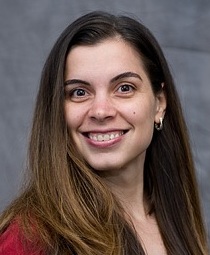
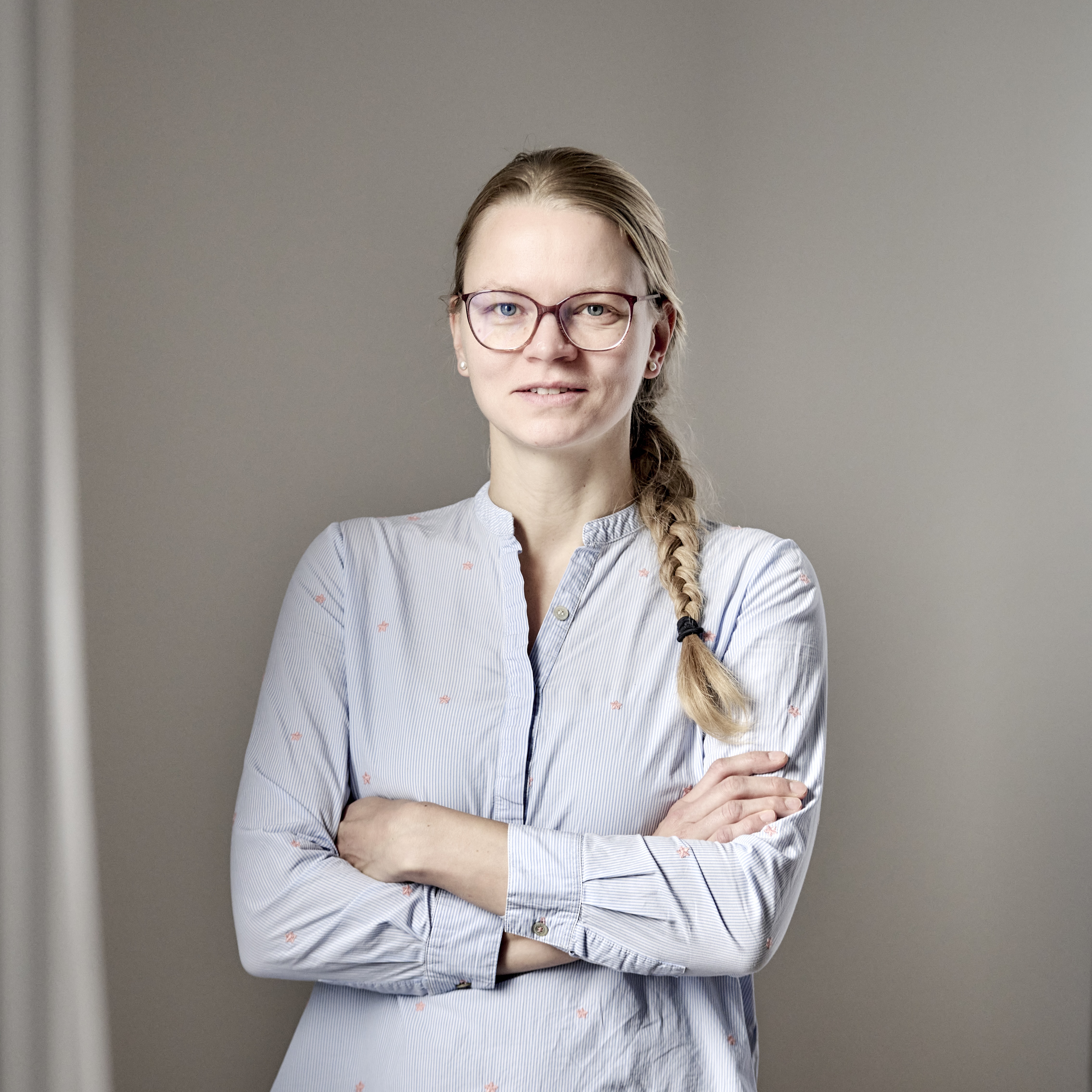
Ellen Zegura is the Stephen Fleming Chair and Professor in the School of Computer Science at Georgia Tech's College of Computing. She holds multiple degrees from Washington University in St. Louis: BS in Computer Science, BS in Electrical Engineering, MS in Computer Science, and DSc in Computer Science. Her research focuses on computer networking, social responsibility in STEM education, and computing for development. She co-founded the Computing for Good initiative, emphasizing project-based learning to address societal challenges. Zegura is an IEEE and ACM Fellow, and serves on the Computing Research Association (CRA) Executive Board. Her education spans interdisciplinary fields at Washington University, combining computer science and electrical engineering. She has held leadership roles at NSF and CRA, advocating for equitable technology policies. Notable contributions include advancing QoE metrics for video conferencing, analyzing mobile broadband infrastructure disparities, and developing ethics education frameworks for computing curricula. Research interests include network measurement, community-empowered data practices, and bridging technical innovation with social impact. Recent work examines tribal mobility during pandemics, sensor co-design with Indigenous communities, and ethical pedagogy for teaching assistants. Her labs and collaborations, such as CERCS, emphasize interdisciplinary problem-solving. Zegura’s awards reflect her dual impact in technical innovation and societal engagement.
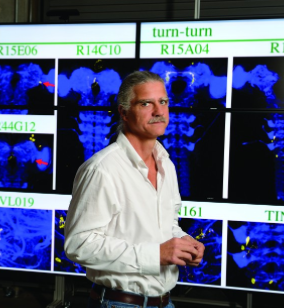
Nina Balcan is the Cadence Design Systems Professor of Computer Science at Carnegie Mellon University's School of Computer Science, with affiliations in both the Machine Learning Department (MLD) and Computer Science Department (CSD). She maintains her office in Gates Hillman Center (GHC) 8205 and is a prominent figure in theoretical machine learning and algorithmic game theory. Her research spans multiple critical areas in computer science, with a strong focus on the theoretical foundations of machine learning, algorithm design and analysis, and computational approaches to game theory and economics. Balcan has made significant contributions to developing principled algorithms for deep learning, learning with limited supervision, representation learning, and life-long learning. Her work uniquely bridges theoretical computer science with practical applications, particularly in the analysis of complex objects and processes, including algorithmic learning and multi-agent systems. Analysis of her recent publications reveals a strong trend toward data-driven algorithm design, with particular emphasis on learning to optimize combinatorial algorithms, revenue-maximizing mechanisms, and robust learning frameworks. Her work consistently demonstrates how theoretical guarantees can inform practical algorithm development across diverse domains from optimization to economics. Major Awards and Honors: ACM Fellow AAAI Fellow Simons Investigator 2019 ACM Grace Murray Hopper Award (awarded to the outstanding young computer professional of the year) Winner of Outstanding Student Paper Award at UAI 2024 Winner of Exemplary Artificial Intelligence Track Paper Award at ACM EC 2019 Runner Up Best Paper Award at COLT 2012 Professor Balcan has served as Program Committee Co-chair for major conferences including NeurIPS 2020, ICML 2016, and COLT 2014, demonstrating her leadership in the machine learning community. Her teaching portfolio at CMU includes foundational courses such as 10-701 Machine Learning, 10-315 Machine Learning, and 10-715 Advanced Introduction to Machine Learning, where she has mentored numerous students in both theoretical and applied aspects of the field. Her research group focuses on developing theoretically sound yet practically applicable machine learning algorithms, with particular attention to algorithm configuration, data-driven optimization, and learning in strategic environments. Current projects involve learning to improve combinatorial algorithms, designing revenue-maximizing mechanisms, and developing robust learning frameworks that can operate effectively in challenging environments.
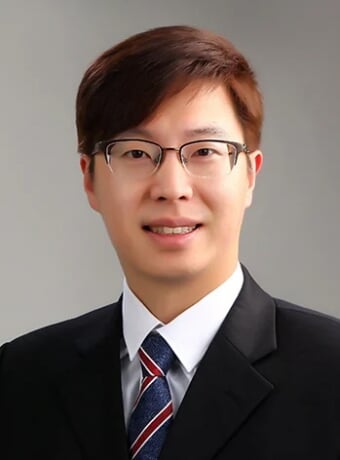
Xiaolei Fang is Associate Professor in the Edward P. Fitts Department of Industrial and Systems Engineering at North Carolina State University. His research develops advanced statistical learning, deep learning, and optimization methods for industrial applications involving high-dimensional data, with particular focus on condition monitoring, failure prognostics, and system performance optimization. He holds a PhD in Industrial Engineering and MS in Statistics from Georgia Tech. Professor Fang's research integrates machine learning with industrial engineering to solve complex problems in predictive maintenance, quality control, and energy systems. His methodological innovations include federated learning approaches for privacy-preserving prognostics, distributionally robust machine learning models, and tensor-based statistical methods for manufacturing quality diagnostics. He has received multiple prestigious awards including the ISE Outstanding Research Award (2024), Sigma Xi Best PhD Thesis Award (2019), and SAS Data Mining Best Paper Award (2016). His research has been funded by NSF, Cisco Systems, and the US Department of Energy. Professor Fang teaches courses in Quality Design & Control, Statistical Models for Systems Analytics, High-Dimensional Data Analytics, and Optimization Models. He has supervised 9 PhD students to completion and currently advises 7 graduate students working on projects spanning federated learning for prognostics, tensor-based quality control, and machine learning applications in manufacturing and energy systems.
Carey E. Priebe is a Professor in the Department of Applied Mathematics and Statistics at the Whiting School of Engineering, Johns Hopkins University. He maintains strong affiliations with multiple research centers including the Johns Hopkins University Center for Imaging Science, the Mathematical Institute for Data Science, and the Human Language Technology Center of Excellence. His academic career spans several decades with significant contributions to statistical methodology and theory. Dr. Priebe's research focuses on computational statistics, statistical pattern recognition, and statistical inference for high-dimensional and graph data. His work bridges theoretical statistics with practical applications in areas such as brain connectome mapping, network analysis, and image processing. He has made significant contributions to spectral graph theory, graph matching, and vertex nomination, with applications ranging from neuroscience to national security. His publication record demonstrates consistent contributions to statistical methodology, with a notable emphasis on graph-based statistical methods. His research trajectory shows increasing focus on network data analysis, particularly in the last decade, with applications to brain mapping and connectome analysis as evidenced by his NSF BRAIN Initiative grant and Nature publication. 2013 Erskine Fellow (University of Canterbury) 2011 McDonald Award for Excellence in Mentoring and Advising 2010 ASA SDNS Distinguished Achievement Award 2009 Erskine Fellow (University of Canterbury) 2008 National Security Science and Engineering Faculty Fellow 2008 Pond Award for Excellence in Teaching NSF BRAIN EAGER grant recipient (2014) Professor Priebe has supervised an extensive number of doctoral students whose work spans statistical methodology, network analysis, and machine learning. His students have secured positions at prestigious institutions including academia (University of Wisconsin, Boston University), government research labs, and major technology companies (Microsoft, Facebook, Amazon). His research has been supported by significant grants from NSF, DARPA, and other agencies focused on national security applications and fundamental statistical methodology development. He maintains active collaborations across multiple disciplines and institutions, as evidenced by his numerous conference presentations and visiting appointments including at The Alan Turing Institute and The Isaac Newton Institute. His work bridges theoretical statistics with practical applications in neuroscience, security, and data science.
Richard A. Davis is the Howard Levene Professor of Statistics at Columbia University's Faculty of Arts and Sciences. He is affiliated with the Data Science Institute (DSI) and the Financial and Business Analytics Center. His research focuses on applied probability, time series analysis, stochastic processes, and extreme value theory, with applications to financial data and spatial modeling. He co-founded the Space-Time Aquatic Resources Modeling and Analysis Program (STARMAP), supported by an EPA-STAR grant. Education details are not explicitly provided in the text, but his academic roles indicate advanced qualification in statistics. His work combines theoretical advancements with practical applications, such as analyzing financial time series models (e.g., GARCH) and spatial environmental data. Recent research emphasizes high-dimensional extremes, sparsity, and privacy-preserving methods. His articles explore cutting-edge topics like kernel PCA for multivariate extremes, quantile treatment effects, and goodness-of-fit testing for time series. He has also contributed to applications in healthcare imaging and disaster economics. His collaborative projects aim to bridge statistical theory with environmental and societal challenges. Key contributions include the STARMAP initiative and grants focused on extreme value analysis. His work often integrates advanced statistical techniques with real-world data challenges, reflecting a commitment to both methodological innovation and interdisciplinary impact.
Florence d'Alché-Buc is a Professor at Télécom Paris (Institut Polytechnique de Paris), holding an Isaac Newton Institute Simons Chair (2025) and leading the Data Science and Artificial Intelligence for Digitalized Industry & Services (DSAI) Chair. She heads the Image, Data, and Signal Department and is part of the Signal, Statistics, and Learning (S2A) team at the LTCI laboratory. Her research focuses on machine learning, bioinformatics, and industrial applications, emphasizing kernel methods, structured prediction, and reliable AI. Education: Previously a professor at Université d’Evry and deputy director of the IBISC lab. Co-director of the Paris-Saclay Data Science Master and creator of specialized AI programs (e.g., Certificate of Specialized Studies in AI). Research highlights include contributions to operator-valued kernel methods, graph prediction, and frugal AI. She actively collaborates with institutions like Inria, École Polytechnique, and industry partners (Airbus, Engie, etc.). Notable roles: Scientific director of Digicosme Labex, Ellis Fellow, and board member of IVADO (Montreal). Her recent work addresses AI explainability, robustness, and sustainability, including projects on interpretable networks and energy-efficient models.
Byung-Jun Kim is an Assistant Professor in the Department of Mathematical Sciences at Michigan Technological University, where he joined as a tenure-track faculty in August 2020. His research focuses on statistical methodologies for complex observational data, particularly in nonparametric/semiparametric regression frameworks under high-dimensional and measurement error scenarios. PhD in Statistics from Virginia Tech (2020) BS/MS in Statistics from Chung-Ang University Research Expertise: Multivariate data analysis Covariance matrix estimation and graphical modeling Kernel regression in machine learning Statistical inference with measurement errors
Soosan Beheshti is a Professor and Program Director in the Department of Electrical, Computer, and Biomedical Engineering at Toronto Metropolitan University. She holds a B.S. from Isfahan University of Technology and M.S./Ph.D. from MIT. Her research focuses on signal processing, statistical learning, and information theory, with applications in biomedical systems, data denoising, and system modeling. She has received awards such as the Dean's Teaching Award (2010) and the EECS Carlton E. Tucker Award (1998). Education: B.S., Electrical Engineering, Isfahan University of Technology (1996) M.S. & Ph.D., Electrical Engineering, MIT (2002) Research Interests: Statistical Signal Processing Information Theory Data Denoising & Compression System Modeling & Control Machine Learning Applications Awards: Dean's Teaching Award (2010) Gold Paper Award (PacRim 2009) Best Paper Award (Remote Sensing 2008) MIT Teaching Excellence Award (1998) Teaching: Courses include Signals and Systems, Control Systems, and Statistical Inference. She has supervised numerous graduate students and postdocs in her Signal and Information Processing (SIP) Lab. Labs/Teams: Director of the SIP Lab, conducting research in signal processing, information theory, and biomedical applications. Collaborates with industry partners like Myant Inc. and Huawei Technologies.
Dieu Tien Bui is a Full Professor in the Department of Business and IT at the University of South-Eastern Norway (USN) School of Business. His research focuses on Geospatial Artificial Intelligence Machine Learning GIS and Remote Sensing Natural Hazard Modeling Environmental Problems (landslides, floods, soil salinity, biomass) . He has contributed to over 15 recent publications in journals like Science of the Total Environment , Remote Sensing , and Geomorphology , emphasizing hybrid AI models for landslide and flood susceptibility. His work spans Vietnam, India, China, and Iran with applications in climate change adaptation and disaster management. Scientific Awards: Global Highly Cited Researcher PhD Supervision: He has supervised 8 PhD students at institutions including USN, NTNU, and Vietnamese universities.
Johanna Ziegel is a Professor of Statistics at ETH Zurich, Switzerland, since 2024, and a Visiting Scientist at the Heidelberg Institute for Theoretical Studies (HITS). Previously, she held positions at the University of Bern, where she was promoted to Full Professor in 2023. Her research focuses on decision-theoretically sound methods for forecast evaluation, probabilistic forecasting, risk measures in finance, and applications in meteorology, medicine, and climate science. She is actively involved in editorial roles for journals like Bernoulli , JASA: Theory & Methods , and SIAM Journal on Financial Mathematics . Education: PhD in Stereological Analysis of Spatial Structures from ETH Zurich (2010), supervised by Paul Embrechts and Eva B. Vedel Jensen. Postdoctoral research at the University of Melbourne and Heidelberg University. Research Interests: Forecast evaluation, elicitable functionals, risk measures, isotonic regression, statistical calibration, and applications in finance, climate science, and biostatistics. Her work bridges theoretical statistics with practical challenges in uncertainty quantification and decision-making under uncertainty. Advising & Collaborations: Supervised 7 PhD students and mentored several postdocs. Collaborates with the Computational Statistics group at HITS and the Oeschger Centre for Climate Change Research. Her group explores distributional regression under order constraints and novel methods for forecast comparison. Recognition: Credit Suisse Award for Best Teaching (2022), H.I.T. Program for Academic Leadership (2021–2022). Active in professional service, including the Bernoulli Society Council and editorial boards.
Guido Montúfar is a Professor in the Departments of Mathematics and Statistics & Data Science at the University of California, Los Angeles (UCLA), effective since 2024. He also leads the Mathematical Machine Learning Group at the Max Planck Institute for Mathematics in the Sciences (MPI MIS) in Leipzig, Germany since 2018. His academic journey includes a PhD in Mathematics from Leipzig University (2012), and Diplom degrees in Physics and Mathematics from TU Berlin (2009 and 2007). Montúfar's research focuses on the theoretical foundations of deep learning, mathematical machine learning, and the interplay between geometry and learning. Key areas include neural network architecture theory, optimization landscapes, and information geometry. His work bridges algebraic statistics, graphical models, and topological data analysis. His grants and awards include an ERC Starting Grant (2018-2023), a Sloan Research Fellowship (2022), and an NSF CAREER Award. He has advised numerous PhD students and postdocs, contributing to significant advancements in machine learning theory and applications. Montúfar teaches courses on applied mathematics, optimization, and machine learning at UCLA. His research also explores topics like oversquashing in graph neural networks and the geometry of policy gradients in reinforcement learning.
Yen-Chi Chen is an Associate Professor in the Department of Statistics at the University of Washington. He also holds positions as a Data Science Fellow at the UW eScience Institute and as a co-investigator and statistician at the National Alzheimer's Coordinating Center. His academic career spans multiple interdisciplinary fields including statistics, data science, and astrostatistics. Chen's educational background includes a Ph.D. from Carnegie Mellon University, where he received prestigious awards including the Umesh K. Gavasakar Thesis Award (2017) and the William S. Dietrich II Presidential Ph.D. Fellowship Award (2015). His research focuses on nonparametric statistics, topological data analysis, missing data methodologies, cluster analysis, manifold learning, and applications in large-scale structure analysis and astrostatistics. Chen has made significant contributions to the development of statistical methods for analyzing cosmic web structures, GPS data, and causal inference with continuous treatments. His work bridges theoretical statistics with practical applications in astronomy, neuroscience, and public health. Analysis of his recent publications reveals a strong emphasis on developing novel statistical frameworks for complex data structures, particularly focusing on density-based methods, manifold learning, and approaches that address challenges in missing data and causal inference without standard assumptions. ASA Noether Early Career Scholar Award, American Statistical Association (2022) CAREER Award, National Science Foundation (2022-2027) Umesh K. Gavasakar Thesis Award, Carnegie Mellon University (2017) William S. Dietrich II Presidential Ph.D. Fellowship Award, Carnegie Mellon University (2015) Chen has advised numerous graduate students across multiple publications, with a focus on developing new statistical methodologies. His research has been supported by major funding agencies including the National Science Foundation and the National Institutes of Health. He is actively involved in several research groups including the UW Geometric Data Analysis Group, the UW Center for Statistics and the Social Sciences, and the National Alzheimer's Coordinating Center.
Pierre Marion is a Researcher at INRIA Paris, working within the Sierra research team since September 2025. His work focuses on the theoretical foundations of deep learning and he is beginning to explore applications of AI in mathematics. Marion has established collaborations across multiple institutions including EPFL, Sorbonne Université, and Google DeepMind. His educational background includes: Engineering degree from École polytechnique (2015-2018) with specialization in Applied Mathematics Master's degree from Sorbonne Université (2019-2020) PhD from Sorbonne Université (2020-2023) under the supervision of Gérard Biau and Jean-Philippe Vert Postdoctoral research at EPFL (2024) supervised by Lénaïc Chizat Marion's research interests primarily focus on the theory of deep learning, where he investigates the optimization and statistical properties of various neural network architectures. His work spans from shallow networks to complex generative models, with a particular emphasis on understanding the mathematical foundations that govern deep learning performance. Recently, he has begun exploring applications of AI in mathematical research, aiming to bridge the gap between theoretical machine learning and mathematical discovery. His research often combines rigorous theoretical analysis with practical implications for training deep neural networks. Analysis of Marion's recent publications reveals several key trends in his research. He has made significant contributions to understanding the role of large learning rates in optimization dynamics, demonstrating how they can accelerate convergence in logistic regression and prevent memorization in score-based generative models. His work on attention mechanisms has provided theoretical guarantees for their effectiveness in specific tasks like single-location regression and clustering. Additionally, Marion has extensively studied the connections between residual networks and neural ordinary differential equations , establishing generalization bounds and exploring scaling properties in the large-depth regime. His earlier work included contributions to natural language processing and quasi-Monte Carlo methods, reflecting a broad mathematical foundation that informs his current deep learning research. Marion has received several notable scientific awards: Runner-up PhD Award of AFIA (French Association for Artificial Intelligence) in 2024 Google PhD Fellowship in 2022 Ecole polytechnique Grand Prize of Research Internships in 2018 As an advisor, Marion currently supervises PhD student Yu-Han Wu (since 2024), with whom he has co-authored multiple publications on large learning rates and denoising score matching. Previously, he co-supervised several Master's students including Seorim Park, Yerkin Yesbay, and Nathan Doumèche. Marion has been actively involved in the machine learning community through conference organization (NeurIPS@Paris meetups), session chairing (ICSDS 2022), and extensive reviewing activities. He has served as a reviewer for top journals including JASA and Annals of Statistics, and conferences including NeurIPS and ICLR, where he was recognized as a top reviewer at NeurIPS 2023. Marion is a member of the Sierra research team at INRIA Paris, which focuses on machine learning theory and applications. He has also collaborated with researchers at CREST (Center for Research in Economics and Statistics), as evidenced by his participation in seminars organized by Anna Korba and Karim Lounici. His work often bridges theoretical computer science, statistics, and applied mathematics, reflecting the interdisciplinary nature of modern machine learning research.
Hans-Georg Mueller is a Professor in the Department of Statistics at the University of California, Davis. His research spans multiple domains of modern statistical methodology, with groundbreaking contributions to functional data analysis, metric statistics, and nonparametric inference for random objects. Key research areas include Fréchet regression, distributional data analysis, network regression, and optimal transport Applications span longitudinal growth studies, brain development, aging and longevity, plant genomics Research Interests : He has pioneered methods for analyzing complex data structures such as functional data, manifold-valued data, and random objects. His work on the PACE approach for longitudinal data has become foundational in the field. Recent Publications demonstrate strong trends in Fréchet analysis, metric statistics, and distributional data modeling, with applications in both biomedical and environmental domains. Books and Edited Works : Author of the foundational monograph Nonparametric Regression Analysis for Longitudinal Data (1988), and co-editor of influential volumes including Change-point Problems (1994) and Mathematical Modeling in Experimental Nutrition (1998).
Christian Wald is a Post-doctoral researcher at Technical University Berlin working under Professor Gabriele Steidl, focusing on generative modeling, flow matching, and stochastic processes in machine learning. His research bridges theoretical probability with practical medical imaging applications, particularly in MRI reconstruction and analysis. He completed his PhD at Humboldt University of Berlin in 2017 with a thesis on p-adic quantum groups. His academic journey transitioned from pure mathematics to interdisciplinary machine learning research, reflecting his versatile expertise. Wald's primary research explores generative models through the lens of optimal transport and flow matching, with significant contributions to Wasserstein geometry and conditional distance metrics. His work frequently integrates stochastic processes to enhance medical image reconstruction, demonstrating strong cross-disciplinary impact in both theoretical machine learning and clinical applications. Recent publications highlight innovations in sliced MMD flows, Bayesian OT methods, and uncertainty-aware medical image analysis. Analysis of his 15 most recent publications (2019-2025) reveals a consistent trajectory toward unifying geometric probability with deep learning. Key themes include flow-based generative modeling for medical time-series data, optimal transport applications in image reconstruction, and novel kernel methods for distribution matching. His work spans both foundational theory (e.g., Fisher-Rao curves) and high-impact medical applications (e.g., coronary calcium scoring). No specific scientific awards are documented in the provided text, though his publications appear in prestigious venues including ICLR, IEEE TMI, and Physics in Medicine & Biology. Wald maintains extensive collaborations with the medical imaging group at Technical University Berlin, particularly with Andreas Kofler and Gabriele Steidl. His co-authored works demonstrate consistent contributions to MRI reconstruction pipelines and segmentation frameworks, though no formal advising roles or grant leadership are indicated. Current projects focus on uncertainty quantification in active learning for medical image segmentation. He operates within Gabriele Steidl's research group at Technical University Berlin, which specializes in mathematical imaging and machine learning. The team combines expertise in optimization, probability theory, and deep learning to solve medical imaging challenges, with Wald contributing core algorithmic innovations in generative modeling and stochastic reconstruction.