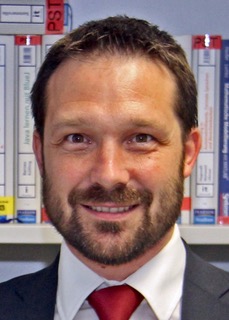
Hans-Georg Mueller is a Professor in the Department of Statistics at the University of California, Davis. His research spans multiple domains of modern statistical methodology, with groundbreaking contributions to functional data analysis, metric statistics, and nonparametric inference for random objects. Key research areas include Fréchet regression, distributional data analysis, network regression, and optimal transport Applications span longitudinal growth studies, brain development, aging and longevity, plant genomics Research Interests : He has pioneered methods for analyzing complex data structures such as functional data, manifold-valued data, and random objects. His work on the PACE approach for longitudinal data has become foundational in the field. Recent Publications demonstrate strong trends in Fréchet analysis, metric statistics, and distributional data modeling, with applications in both biomedical and environmental domains. Books and Edited Works : Author of the foundational monograph Nonparametric Regression Analysis for Longitudinal Data (1988), and co-editor of influential volumes including Change-point Problems (1994) and Mathematical Modeling in Experimental Nutrition (1998).
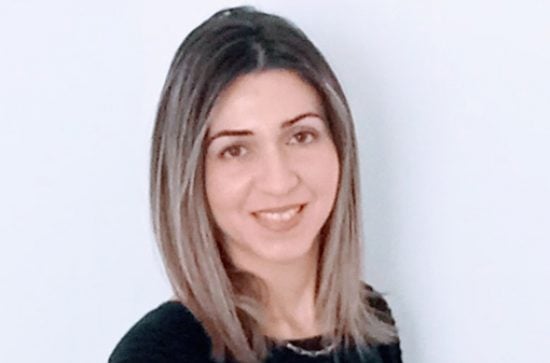
Dr. Galatia Cleanthous is a Lecturer in the Department of Mathematics and Statistics at Maynooth University, Ireland, affiliated with the Faculty of Science & Engineering and the Hamilton Institute. She joined Maynooth in 2020 after postdoctoral positions at Trinity College Dublin, Newcastle University, and University of Cyprus, and holds a PhD in Pure Mathematics from Aristotle University of Thessaloniki (2014). Education PhD in Mathematics, Aristotle University of Thessaloniki, Greece (2014) MSc in Mathematics, Aristotle University of Thessaloniki, Greece Diploma in Mathematics, Aristotle University of Thessaloniki, Greece Research Interests Her research bridges pure and applied mathematics, focusing on Mathematical Analysis , Probability , and Statistics . Specifically, she explores Geometric Analysis , Geometric Function Theory , and Harmonic Analysis on manifolds and metric spaces. In statistics, she works on Nonparametric , Spatial , and Environmental Statistics , developing adaptive estimation techniques and studying Gaussian random fields on spheres and other domains. Publication Trends From 2025 back to 2013, her work has consistently appeared in top journals such as Annals of Statistics , Bernoulli , Journal of Nonparametric Statistics , and Transactions of the American Mathematical Society . A clear trend emerges: early publications concentrate on pure analytic topics like Fourier multipliers and function spaces, while recent outputs integrate these theoretical tools into modern nonparametric statistics, density estimation on manifolds, and stochastic modeling of environmental and seismological data. Scientific Awards Master’s degree ranked first with grade 9.8/10, Aristotle University of Thessaloniki (2011) Diploma ranked first among ~200 students, grade 9.7/10, Aristotle University of Thessaloniki (2009) Undergraduate merit awards for three consecutive academic years (2005-2008), State Scholarship Foundation of Greece National first place in Cypriot high-school mathematics entrance exams (2005), Ministry of Education, Cyprus Advising & Outreach Dr. Cleanthous has supervised BSc and MSc students, including Ultán Doherty (BSc, 1st Class Honors, 2021) and Anush Harish (MSc, 2022). She serves as Chair of the Department PR Committee, Member of the University STEM Promotions Committee, and Member of the departmental Equality, Diversity & Inclusion committee. Beyond campus, she trains young mathematicians at the North Kildare Maths Problem Solving Club and organizes public engagement events for Science Week. Labs & Teams She is associated with the Hamilton Institute at Maynooth University, a multidisciplinary research institute fostering collaboration between mathematics, computer science, and engineering.
Jaouad Mourtada is an Assistant Professor in the Department of Statistics at ENSAE/CREST, École Nationale de la Statistique et de l'Administration Économique since September 2020. Previously, he was a postdoctoral researcher at the Laboratory for Computational and Statistical Learning at the University of Genoa (2019-2020). He completed his PhD in Statistics at École Polytechnique under the supervision of Stéphane Gaïffas and Erwan Scornet. His educational background includes a Master's degree in Mathematics with specialization in Probability and Random Models (2016), a Master's degree in Fundamental Mathematics (2015), and a Bachelor's degree in Mathematics from Pierre and Marie Curie University and École Normale Supérieure (2013). Dr. Mourtada's research focuses on the intersection of statistics and learning theory, with particular interest in high-dimensional statistics, online learning, and density estimation. His work explores the complexity of prediction and estimation problems through rigorous theoretical analysis. His research spans statistical learning theory, robust statistics, and the theoretical foundations of machine learning algorithms. His publication record since 2017 demonstrates consistent contributions to top-tier venues in statistics and machine learning, with recent work focusing on universal coding, aggregation methods, robust regression, and the theoretical analysis of kernel methods and random forests. His research shows a progression from online learning and expert aggregation to more complex statistical learning problems involving high-dimensional data and model misspecification. He teaches courses including Statistical Learning Theory for Master 2 Data Science students and Probability Theory at ENSAE. His teaching spans theoretical foundations of machine learning and core probability concepts for advanced statistics students.
Pascal Vincent is an Associate Professor at the Department of Computer Science and Operational Research , University of Montreal, and a key member of the Montreal Institute for Learning Algorithms (MILA) . He holds a PhD in Computer Science from the University of Montreal and has been pivotal in advancing machine learning and artificial perception. Education: PhD in Computer Science (University of Montreal, 2003) His research spans machine learning , deep learning , representation learning , and neural networks , focusing on unsupervised methods and geometrically inspired algorithms. He explores how intelligent systems can autonomously build meaningful representations from raw data, driven by principles like the manifold hypothesis . Key projects include generative stochastic networks , contractive autoencoders , and high-dimensional sequence transduction . His work has resulted in 15+ recent publications in top venues like NIPS, ICML, and CVPR. Scientific Awards : Best student-paper award at ICML 2012 Honorable mention at NIPS 2011 Funded by FCI, FRQNT, CRSNG, CIFAR, and IBM Pascal has supervised 15+ doctoral and Master’s students , including Florian Bordes, Tom Bosc, and Nicolas Boulanger-Lewandowski, across topics like representation learning and generative models . He is also a co-founder of the UNIQUE (Union Neurosciences & Intelligence Artificielle Québec) research consortium.
Prof. Dr. Ahmet ÖZMEN is a Professor at Sakarya University's Faculty of Computer and Information Sciences, Department of Software Engineering. He has held various administrative positions including Head of the Software Engineering Department (2019-2028) and Director of the Computer Research and Application Center (2019-2022). With extensive experience in academia since 1991, he has made significant contributions to computer vision, traffic monitoring systems, and sensor technologies. Sakarya University: Professor (2019-present), Associate Professor (2011-2019) Dumlupınar University: Assistant Professor (2001-2011), Research Assistant (2000-2001, 1993-1998) Istanbul Technical University: Research Assistant (1991-1993) Prof. ÖZMEN's research spans computer vision applications for traffic monitoring, indoor air quality systems, parallel computing, and sensor technologies. His work bridges theoretical computer science with practical engineering applications, particularly in developing vision-based systems for nighttime vehicle detection, traffic flow monitoring, and environmental sensing. His interdisciplinary approach combines machine learning, image processing, and embedded systems to solve real-world problems in transportation and environmental monitoring. His publication record shows a clear evolution from parallel and distributed systems in his early career to computer vision and sensor applications in recent years. The majority of his recent work focuses on traffic monitoring systems using computer vision techniques, particularly for nighttime conditions, and indoor air quality monitoring systems using sensor networks. His research demonstrates strong industry and societal relevance, with applications in smart transportation, environmental protection, and educational technology. TÜBİTAK Publication Awards (2006, 2008, 2009, 2010) Physical implementation award from TÜBİDER (2008) Microsoft Certified Professional Certificate (2005) YÖK overseas study scholarships (1993, 1998) Elginkan graduate scholarships (1990, 1991) Prof. ÖZMEN has supervised numerous graduate students across multiple institutions, with a focus on practical engineering problems. His research has been supported by various projects including TÜBİTAK projects, institutional research grants, and industry collaborations. He has led significant research initiatives in traffic monitoring systems, indoor air quality monitoring, and educational technology platforms. His administrative leadership has included directing research centers and shaping curriculum development in software engineering. His work has involved establishing research teams focused on computer vision applications, sensor network development, and educational technology. These teams have produced numerous publications, developed practical systems, and trained the next generation of computer engineers. Current research directions include advanced traffic monitoring systems using deep learning and multi-camera setups for urban planning applications.
Dr. Roy Lederman is an Assistant Professor at the Department of Statistics and Data Science , Yale University. He is affiliated with the Quantitative Biology Institute (QBio) , the Applied Math Program , the Institute for Foundations of Data Science (FDS) , and the Wu Tsai Institute (WTI) . He was awarded the Sloan Research Fellowship (2023) . He previously held a Gibbs Assistant Professorship at Yale (2014-2015) and a postdoc at Princeton University (2015-2018) . Education: PhD in Applied Mathematics, Yale University (2014); dual BSc in Physics and Electrical Engineering, Tel-Aviv University. Teaching: Courses include Computational Tools for Data Science, Signal Processing, and Mathematical Machine Learning. Research Areas: Dr. Lederman works at the intersection of computational biology , structural biology , Bayesian inference , numerical analysis , and machine learning . His recent work focuses on cryo-EM and hyper-molecules for studying molecular heterogeneity, alternating diffusion for common variable recovery, and Zernike polynomials for 3D imaging. He also develops Hamiltonian Monte Carlo methods and randomized DNA sequencing algorithms . Publications Trends: His publications (15 most recent) emphasize structural biology and cryo-EM applications, machine learning (Bayesian deep learning, diffusion maps), numerical analysis (Fourier/Laplace transforms), and computational biology (DNA sequencing algorithms). Key sub-fields include heterogeneity analysis , manifold learning , Hamiltonian Monte Carlo , and Zernike polynomials . Scientific Awards: Sloan Research Fellow (2023) Dr. Lederman actively mentors graduate students and postdocs at Yale, and co-organizes the One World Cryo-EM seminar series . His lab develops open-source software (e.g., prolate function implementation ) and explores theoretical bounds on transforms and common variable recovery in multi-sensor experiments.
Martin Wainwright is a Professor at the University of California at Berkeley with joint appointments in the Department of Statistics and the Department of Electrical Engineering and Computer Sciences (EECS). His research spans high-dimensional statistics , information theory , statistical machine learning , and optimization theory . He has made significant contributions to understanding computational and statistical trade-offs in high-dimensional settings, as well as developing advanced message-passing algorithms for graphical models. His educational background includes a Bachelor's degree in Mathematics from the University of Waterloo and a Ph.D. in EECS from MIT . His work has been recognized with prestigious awards such as the COPSS Presidents' Award (2014) , IEEE Joint Paper Award (2012) , and Sloan Research Fellowship (2005) . He has advised numerous prominent researchers, including Nihar Shah , John Duchi , and Yuchen Zhang . Publications by Wainwright reflect trends in machine learning , high-dimensional data analysis , and graphical model inference . Notable works include advancements in Markov Chain Monte Carlo algorithms , pairwise comparison models , and distributed computation methods . He has also contributed extensively to signal processing and LDPC codes . COPSS Presidents' Award (2014) IEEE Joint Paper Award (2012) Institute of Mathematical Statistics Fellow (2011) NSF CAREER Award (2006) Okawa Research Grant (2005) Sloan Research Fellow (2005)
Aryeh Kontorovich is a Professor in the Computer Science Department at Ben-Gurion University. His research primarily focuses on theoretical machine learning, with expertise in probability, statistics, Markov chains, and metric spaces. His research interests span theoretical machine learning, with particular emphasis on: Probability theory and concentration inequalities Statistical learning theory Markov chains and mixing time estimation Metric space learning Kernel methods Sample compression schemes Professor Kontorovich's recent publications (2021-2025) demonstrate a continued focus on theoretical foundations of machine learning. His work shows strong trends in statistical estimation for Markov processes, distribution learning, metric space analysis, and sample compression. Many papers explore the intersection of probability theory and machine learning, particularly examining concentration inequalities, minimax optimality, and theoretical guarantees for learning algorithms. His research consistently bridges abstract mathematical theory with practical machine learning applications. Scientific awards and recognitions: Distinguished contribution award at MLG 2007 for "A Universal Kernel for Learning Regular Languages" Professor Kontorovich has advised numerous students and collaborated extensively with researchers in theoretical machine learning. His work spans both theoretical foundations and practical applications, with significant contributions to understanding the mathematical limits of learning algorithms. While specific grant information isn't provided in the source material, his extensive publication record in top venues suggests successful funding for his research programs. He maintains active collaborations with researchers worldwide, including prominent names like L. Gottlieb, D. Berend, and S. Hanneke.
Charles Doss is an Associate Professor in the School of Statistics at the University of Minnesota. He earned his PhD from the University of Washington in 2013 under Jon Wellner and holds a B.S. in Mathematics from the University of Chicago. His research focuses on empirical process theory, nonparametric estimation/inference for functions with shape constraints (e.g., concavity, log-concavity), and applications to causal inference, birth-death processes, and unlinked regression. His recent publications address problems such as doubly robust estimation for continuous treatments, heteroscedasticity detection, and convex stochastic optimization. He has received significant funding, including NSF grants DMS-2210312 and DMS-1712664, as well as institutional awards. Warwick Mid-Career Faculty Research Award (2022–2023) NSF DMS-2210312 Grant NSF DMS-1712664 Grant He has served as an Associate Editor for The Electronic Journal of Statistics (2022–present) and The American Statistician (2020–2024). He mentors students such as Guangwei Weng, Daeyoung Ham, and Oliver VandenBerg and contributes to outreach programs like Run the World, a Machine Learning summer camp for high school students.
Stephen Pankavich is a Professor and Department Head in the Department of Applied Mathematics and Statistics at the Colorado School of Mines. He holds a PhD in Mathematical Sciences from Carnegie Mellon University, with research focused on partial differential equations, kinetic theory, and mathematical biology. His work bridges theoretical analysis and computational methods, addressing challenges in plasma dynamics, epidemiological modeling, and multiscale systems. Education: PhD, Mathematical Sciences, Carnegie Mellon University (2005) MS, Mathematical Sciences, Carnegie Mellon University (2001) BS, Mathematical Sciences, Carnegie Mellon University (2000) Research interests include the analytical and numerical study of collisionless plasmas, HIV dynamics, and epidemiological models. He has received awards such as the W.M. Keck Mentorship Award and the Colorado School of Mines Alumni Teaching Award. His articles explore topics like plasma decay rates, HIV therapy models, and particle-tracking algorithms. He has advised over 20 graduate and undergraduate students, contributing to impactful research in applied mathematics and computational science.
Bryan S. Graham is a Professor of Economics at the University of California, Berkeley. He specializes in econometrics, focusing on network formation, social interactions, and panel data analysis. His research explores topics such as peer effects, poverty traps, and small sample properties of econometric methods. Graham holds a Ph.D. from Harvard University (2005) and has held visiting positions at Harvard, CEMFI (Spain), and NYU. He is an elected Fellow of the International Association of Applied Econometrics. Education highlights include a Rhodes Scholarship (1997–2000) at Oxford University, a Fulbright Scholarship (1997–1998) at the Australian National University, and a B.A. in Quantitative Economics from Tufts University (1993–1997). His work has been published in top journals like Econometrica and the Review of Economic Studies . Key awards include NSF grants (multiple), the Review of Economics Studies Tour, and the Daniel Ounjian Prize. Graham’s research has practical applications in policy analysis, particularly in education and social spillover effects. He also actively contributes to academic service, including editorial roles at Review of Economics and Statistics and Journal of Econometrics .
Cristina Butucea is a Professor of Statistics and Machine Learning at ENSAE-CREST, Institut Polytechnique de Paris . She was nominated an IMS Fellow (2019) for her contributions to nonparametric and high-dimensional statistics. She has co-organized major conferences like Fréjus 2018 , Luminy 2019-2020 , and Oberwolfach 2021 , and serves as Associate Editor for ALEA . Fields of interest: Nonparametric statistics, quantum statistics, differential privacy, inverse problems, machine learning. Awards: IMS Fellowship, conference organization leadership. Research trends: Focuses on optimal estimation under privacy constraints, quantum state reconstruction, high-dimensional inference, and adaptive nonparametric methods. Email: Cristina.Butucea@ensea.fr | Cristina.Butucea@ip-paris.fr
Anna Korba is an Assistant Professor at École Polytechnique, specifically affiliated with ENSAE/CREST in the Statistics Department since September 2020. She is also a co-administrator of the Master Data Science program at École Polytechnique. Her academic journey has positioned her as a leading researcher in machine learning, with particular expertise in kernel methods, optimal transport, and statistical optimization. Dr. Korba received her PhD from Telecom ParisTech in 2018 under the supervision of Prof. Stephan Clémençon. Prior to her current position, she was a postdoctoral researcher at University College London's Gatsby Computational Neuroscience Unit working with Arthur Gretton from December 2018 to August 2020. Her academic foundation includes a Master's degree in Machine Learning and Computer Vision (MVA) from ENS Cachan and ENSAE in 2015. Anna Korba's research primarily focuses on machine learning with emphasis on kernel methods, optimal transport, optimization, particle systems, and preference learning. Her work bridges theoretical statistics with practical machine learning applications, particularly in developing novel sampling and optimization methods. She has made significant contributions to understanding Wasserstein gradient flows, density ratio estimation, and variational inference techniques. Her publication record demonstrates a strong trajectory in top-tier machine learning conferences including ICML, NeurIPS, AISTATS, and ICLR. Her research shows a clear evolution from foundational work on ranking and preference learning during her PhD to more recent contributions in Wasserstein-based optimization, sampling methods, and deep probabilistic modeling. The interdisciplinary nature of her work connects statistics, optimization theory, and practical machine learning applications. Top 10% Oral Presentation at AISTATS 2022 Top 15% Long Oral Presentation at ICML 2021 She actively mentors PhD students and postdoctoral researchers, currently advising seven PhD candidates and having successfully guided several alumni to prestigious positions. Dr. Korba also contributes to the academic community through her role in administering the Master Data Science program and collaborating with researchers across institutions worldwide. As part of the CREST research center, Dr. Korba works within a vibrant team of researchers focused on statistics, machine learning, and their applications to economic and social sciences. Her research group includes current PhD students and postdocs working on various aspects of her research interests, creating a dynamic environment for advancing the field of statistical machine learning.
Jeroen Dalderop is an Assistant Professor of Economics at the University of Notre Dame. His research focuses on advanced econometric methods for financial time series analysis and asset pricing. Ph.D., University of Cambridge (2018) M.Phil., University of Cambridge (2013) M.Sc. & B.Sc., Tilburg University (2012) His work develops nonparametric and semiparametric techniques to model financial asset price dynamics and their connections to macroeconomic factors. Recent publications examine: Risk modeling through density ratio frameworks Market-implied pricing kernels Latent variable structures in asset pricing Current research includes projects on central clearing mechanisms in OTC derivative markets. Jeroen maintains active collaborations with financial econometrics scholars and contributes to methodological advancements in derivative pricing and risk assessment.
Rupert Frank is a Professor of Mathematics at the University of Munich (LMU Munich) . He has held academic positions at Caltech (2013–2021) and Princeton University (2009–2013). His research spans Mathematical Physics , Spectral Theory , and Functional Inequalities , with a focus on quantum many-body systems, stability of matter, and nonlocal operators. Research Themes : Analysis of eigenvalues for Schrödinger and Pauli operators with complex potentials Semi-classical spectral asymptotics and effective theories for quantum systems Matrix inequalities and quantum information theory Calculus of variations in models like the liquid drop problem Geometric inequalities and their applications to quantum mechanics Magnetic field effects on spectral properties Recent Publications : 2025: Sharp stability for Sobolev/log-Sobolev inequalities with dimensional dependence 2025: Endpoint Schatten class properties of commutators 2024: Degenerate stability of Caffarelli-Kohn-Nirenberg inequality 2024: Hardy inequalities for large fermionic systems 2023: Review on Scott conjecture for Coulomb systems Scientific Awards : Young Scientist Prize in Mathematical Physics (2009) Grants and Collaborations : Principal Investigator in CRC TRR 352 (2023–) PI in Munich Center for Quantum Science and Technology (2019–) Multiple NSF grants (2009–2020) DFG and DAAD grants Editorial and Conference Leadership : Editorial boards: Communications in Mathematical Physics , Journal in Mathematical Physics , Journal of Spectral Theory , SIAM Journal on Mathematical Analysis , Springer Lecture Notes Organized conferences/workshops on quantum many-body systems, spectral methods, and functional inequalities (2018–2025)