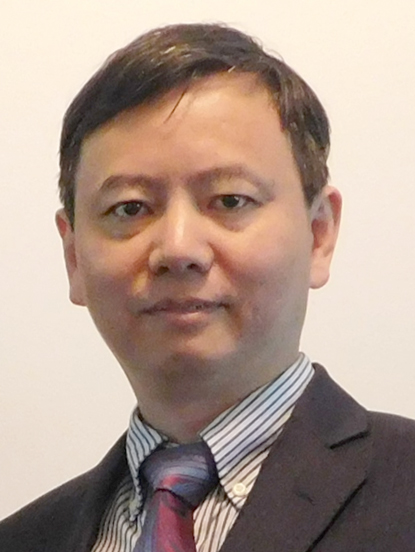
Ali Ahmed, DPM is an Assistant Professor of Orthopaedic Surgery in the College of Medicine at the University of Kentucky. He specializes in reconstructive foot and ankle surgery at UK Healthcare, contributing to both clinical care and interdisciplinary collaboration. Educated at Xavier University (undergraduate), Scholl College of Podiatric Medicine (DPM), with residency at Intermountain Medical Center and fellowship in Louisville Active in clinical practice, focusing on trauma, limb salvage, and sports medicine Collaborates with Vascular Surgery and Endocrinology departments His research interests emphasize patient-centered care, complex foot deformities, and sustainable treatment approaches. Dr. Ahmed prioritizes patient education and interdisciplinary alignment in clinical practice. Notable achievements include serving as Chief Resident during residency training. Patient reviews highlight his compassion, communication skills, and technical expertise.
Stephen Parada is a Professor at the Medical College of Georgia, with academic appointments in the Department of Orthopedic Surgery. He is actively involved in clinical education and research, contributing significantly to orthopedic surgery, particularly in shoulder and elbow arthroplasty and biomechanics. Research Interests: His work spans orthopedic surgery, biomechanics, surgical outcomes, and the application of artificial intelligence in patient education. He focuses on improving clinical outcomes in total joint replacement, understanding shoulder instability, and evaluating publication trends in orthopedic research. The recent publications indicate a strong trend toward evidence-based orthopedics, with emphasis on predictive modeling of surgical outcomes, implant longevity, and the role of digital tools in patient communication. His research bridges clinical practice with academic scholarship. Scientific Awards: AAOS Kappa Delta Award, AAOS, 2025 Resident Research Award, Georgia Orthopaedic Society, 2022 GME Exemplary Teaching Award, Medical College of Georgia, 2021 GME Exemplary Teaching Award, Medical College of Georgia, 2020 Teaching and Service: Dr. Parada teaches key surgical clerkships and orthopedic externships. He serves on the AAOS Exhibits Committee and holds leadership roles in the Georgia Shoulder & Elbow Society. His professional service includes roles in ASES, AANA, and AAOS annual meetings, reflecting active engagement in national orthopedic communities. Laboratories and Research Teams: He is involved in Orthopaedic Research at the Medical College of Georgia (2023–present), contributing to a collaborative environment focused on advancing musculoskeletal care through innovation and education.
Dr. Robert Lieck is an Assistant Professor in the Department of Computer Science at Durham University. His research focuses on interdisciplinary applications of machine learning (ML) and artificial intelligence (AI), emphasizing interpretability, robustness, and ethical considerations. He explores computational models in music cognition, communication dynamics, and medical image analysis, aiming to bridge theory and practical tools for domain experts. Before Durham, he was a postdoctoral researcher at EPFL's Digital and Cognitive Musicology Lab (2018–2021) and earned his PhD from the Learning and Intelligent Systems Lab in Stuttgart/Berlin (2012–2017). His work combines probabilistic modelling, neuro-symbolic systems, and reinforcement learning to address challenges in music analysis, autonomous decision-making, and medical robotics. Key research themes include: Music structure and perception modelling Symbol emergence in multi-agent communication Ethical AI and autonomous systems governance Medical imaging applications (CT/MRI analysis) Recent projects involve developing patient-agnostic diabetes management systems using deep reinforcement learning and surgical workflow anticipation through graph learning algorithms. He actively contributes to conferences such as NeurIPS, ISMIR, and AAAI, with publications spanning music informatics, robotics, and biomedical engineering. Current supervision includes four postgraduate students focusing on AI applications in healthcare, music technology, and autonomous systems. His work bridges technical innovation with societal impact, addressing challenges in policy, legislation, and interdisciplinary collaboration.
Prof. Alexander Geissler holds the position of Full Professor of Health Care Management at the School of Medicine (Med-HSG) within the University of St. Gallen. His research focuses on health systems research, health economics, and health policy, with particular emphasis on digital transformation in healthcare and patient-reported outcomes. He has contributed extensively to studies on healthcare quality improvement, public reporting systems, and the integration of artificial intelligence in medical diagnostics and screening programs. His work spans topics like optimizing hospital digital maturity (e.g., German DigitalRadar project), analyzing surgical outcomes (robotic vs. open prostatectomies), and evaluating patient empowerment through quality information. He has pioneered methodologies for interpreting patient-reported outcomes (e.g., EQ-5D-3L) and designing clinical dashboards to enhance care delivery. Recent research highlights include investigating AI applications in breast cancer screening and cost-effectiveness of remote patient monitoring post-joint replacement surgery. Geissler’s publications demonstrate a strong focus on healthcare policy implications, such as hospital capacity planning, payment systems for specialized care, and cross-country comparisons of healthcare transparency initiatives. His work frequently bridges academic rigor with practical policy recommendations, particularly in Switzerland and Germany. Notably, he has addressed low-value care reduction, price sensitivity in healthcare demand, and the socio-demographic factors influencing healthcare utilization. While no specific awards are listed, his prolific research output reflects sustained leadership in health systems analysis. His academic contributions are disseminated through the Alexandria Research Platform and international peer-reviewed journals.
Prim. Clin. Assoc. Prof. PD Dr. Dietmar Dammerer, MSc PhD is the head of the Clinical Department of Orthopaedics and Traumatology at Krems University Hospital, affiliated with Karl Landsteiner Private University of Health Sciences. He has been in this role since February 2022, leading the merger of orthopedics and traumatology into a unified clinical department. A dual-trained specialist, he is recognized for his expertise in endoprosthetics and tumor orthopedics, and actively promotes interdisciplinary collaboration and team-based medicine. His educational background includes a PhD in Musculoskeletal Sciences (2015), an MSc in Advanced Orthopaedics and Traumatology (2017), and board certification in both orthopedics and traumatology (2017, 2018), culminating in habilitation in 2019. He has received prestigious Traveling Fellowships from the European Hip Society and European Musculo-Skeletal Oncology Society. Dietmar Dammerer’s research focuses on orthopedic oncology, joint reconstruction, biomechanics, and minimally invasive surgery. His work emphasizes the integration of clinical inquiry with research to improve patient outcomes. Recent publications analyze pelvic sarcoma reconstruction, spinal metastases, cartilage repair techniques, and health disparities in sarcoma care. His 15 most recent articles reflect a strong trend in musculoskeletal oncology, surgical biomechanics, and evidence-based orthopedic practice, with frequent use of systematic reviews, retrospective studies, and multicenter collaborations. Topics include implant performance, surgical safety, and global access to specialized care. Scientific awards include: Traveling Fellow Stipendium from the European Hip Society (2018) Traveling Fellow Stipendium from the European Musculo-Skeletal Oncology Society (2020) He is deeply committed to mentoring and team development, emphasizing that medical success is measured by the success of one’s colleagues. He leads a research-active department that hosts international observers, conducts training courses for physicians across Europe, the Middle East, and Africa, and maintains a high rate of peer-reviewed publication. The department collaborates closely with the Departments of Biomechanics and Anatomy and Developmental Biology, reflecting a multidisciplinary research approach.
Ellen Arruda is the Tim Manganello/BorgWarner Department Chair and Maria Comninou Collegiate Professor of Mechanical Engineering at the University of Michigan. She holds joint appointments in Biomedical Engineering and Macromolecular Science and Engineering. Her research bridges biomechanics and materials science, focusing on soft tissue mechanics and polymer behavior. PhD (Mechanical Engineering, MIT, 1992) MS (Engineering Mechanics, Penn State, 1988) BS (Engineering Science, Penn State, 1985) Her research spans biomechanics , soft tissue engineering , and polymer mechanics , with applications to knee ligament replacement , impact-resistant materials , and brain-protective helmets . She utilizes full-field displacement mapping and computational modeling to analyze tissue and polymer responses under extreme conditions. Recent publications emphasize knee ligament characterization , nanocomposite design , and impact mitigation . Her work has attracted major funding from DARPA , NSF , and NIH , among others. National Academy of Engineering (2017) A.C. Eringen Medal (2021) Nadai Medal (2019) Distinguished Faculty Achievement Award (2014) As Principal Investigator of the Soft Tissue and Polymer Mechanics Lab , she leads a team exploring tissue engineering strategies and advanced material solutions. Her lab has developed 3D scaffold-free constructs for bone-ligament interfaces and blast-resistant composites .
Professor Garry Tew serves as the founding Director of the Institute for Health and Care Improvement and holds the position of Professor of Clinical Exercise Science at York St John University's School of Science, Technology and Health. As a BASES Accredited Sport and Exercise Scientist, he leads interdisciplinary research initiatives focused on improving community health through evidence-based practices. He also serves as the Academic Lead of Scarborough Coastal Health and Care Research Collaborative (SHARC), a partnership with York and Scarborough Teaching Hospitals NHS Foundation Trust. Professor Tew's research program centers on the role of physical activity and exercise in preventing, managing, and treating long-term health conditions. He is internationally recognized for his pioneering work on exercise interventions for intermittent claudication and exercise-based prehabilitation to enhance surgical readiness. His research spans mental health contexts, inflammatory bowel disease, peripheral artery disease, and multimorbidity in older adults, with a particular focus on developing accessible interventions for diverse patient populations. His extensive publication record demonstrates significant contributions across multiple health domains, with recent work emphasizing co-produced physical activity programs for severe mental illness, chair-based yoga for older adults with multiple conditions, and digital health coaching for surgical preparation. These publications reflect a consistent trajectory toward developing practical, evidence-based exercise interventions that can be implemented in real-world healthcare settings. Professor Tew actively contributes to the research community as a member of the East Midlands Nottingham One Research Ethics Committee and serves on the Selection Committee for the NIHR Doctoral Fellowship Programme. He regularly reviews grant applications for major funding bodies including the National Institute for Health and Care Research, Medical Research Council, and British Heart Foundation. His teaching expertise encompasses research methods and exercise physiology at both undergraduate and postgraduate levels. He also conducts specialized workshops for staff and postgraduate research students on research-related topics, demonstrating his commitment to developing the next generation of researchers in health and care disciplines.
Dr. Philipp Fisch is a Researcher affiliated with ETH Zurich's Institute for Biomechanics, specifically within the Tissue Engineering and Biofabrication research group. His work focuses on advancing biofabrication techniques for complex biological structures, particularly in cartilage regeneration and auricular reconstruction. Key areas of expertise include 3D bioprinting, hydrogel development, and patient-specific tissue engineering solutions. Research Interests: Dr. Fisch's research integrates biomaterial science, cell biology, and engineering principles to create functional tissues. Central themes include: Development of biodegradable materials for cartilage and bone regeneration Optimization of bioprinting parameters for clinical translation Integration of patient-derived cells for personalized therapies Investigation of immune responses in transplanted biofabricated tissues Recent Work Trends: His publications emphasize translational applications, such as auricular reconstruction for microtia patients and immunocompetent animal model validation. Thematic clusters include hydrogel-based systems, anisotropic material design, and inflammation-resistant tissue engineering strategies. Labs/Teams: Active contributor to the Institute for Biomechanics' biofabrication initiatives, collaborating on projects involving eluting mold casting, multi-layered tissue transplants, and advanced scaffold development.
Professor Hemant Pandit is a Clinical Professor in Orthopaedic Surgery at the University of Leeds and holds a joint title at the University of Oxford. He leads the Leeds Institute of Rheumatic and Musculoskeletal Medicine (LIRMM) and serves as Clinical Director at Chapel Allerton Hospital. His expertise spans hip and knee arthroplasty, translational research, and global health in musculoskeletal care. He has published over 250 articles and book chapters. Roles: Institute Director (Head of School, LIRMM), Clinical Director (Chapel Allerton Hospital) Research Focus: Remote patient monitoring, peri-prosthetic fractures, joint-preserving treatments, and global health initiatives. His research portfolio includes NIHR, charitable, and industry grants addressing topics like liposomal bupivacaine in knee surgery, theatre efficiency tracking, and biologic DMARDs in inflammatory arthritis. He collaborates internationally, particularly in Sub-Saharan Africa, on surgical training and capacity building. Qualifications: FRCS (Trauma and Orth), DPhil (Oxon) Professional Memberships: American Knee Society, British Society for Surgery of the Knee, European Knee Society Teaching includes undergraduate medical students, postgraduate registrars, and global surgical training programs. He advocates for joint replacement innovation and patient outcome measures through wearable sensors and large datasets.
Lisa A. Mandl is an Associate Professor of Population Health Sciences and Medicine at Weill Cornell Medical College, Cornell University. She also serves as an Associate Attending Physician at NewYork-Presbyterian Hospital. Her work bridges rheumatology and population health through clinical practice, education, and research. M.P.H., Harvard School of Public Health (2000) M.D., University of British Columbia Faculty of Medicine (1993) B.A., Williams College (1988) Lisa Mandl's research focuses on rheumatoid arthritis , psoriatic arthritis , ankylosing spondylitis , osteoarthritis , and systemic lupus erythematosus . She investigates frailty , patient-reported outcomes , and total joint arthroplasty with particular attention to social determinants of health , geriatric rheumatology , and clinical decision-making . Her work spans infectious disease implications in rheumatology patients and interdisciplinary care models . Her recent publications examine social isolation and mental health in lupus patients, vaccine safety in osteoarthritis, and novel patient-reported outcome measures for autoimmune skin conditions. She has published extensively in Arthritis & Rheumatology , The Journal of Rheumatology , and Osteoarthritis and Cartilage , with recurring themes in clinical epidemiology and health services research . Scientific Awards & Recognitions Awards for teaching excellence Dr. Mandl has mentored numerous rheumatology trainees and led NIH-funded research on patient-reported outcome measures and surgical decision-making frameworks. She co-developed core domains for total joint replacement trials and contributes to health literacy and medical education initiatives.
Karl Koenig, M.D., M.S., serves as Professor in the Department of Surgery and Perioperative Care at Dell Medical School, The University of Texas at Austin, while also holding leadership roles as Executive Director of the Musculoskeletal Institute and Program Director for the Joseph Miles Abell Jr., M.D., Clinical Fellowship in Orthopaedic Surgery. His academic credentials include an M.D. from Baylor College of Medicine, Orthopaedic Surgery residency at Dartmouth-Hitchcock Medical Center (2009), Adult Reconstruction fellowship at Stanford University Medical Center (2010), and an M.S. in evaluative clinical sciences from the Dartmouth Institute for Health Policy and Clinical Practice. Dr. Koenig specializes in complex hip and knee arthritis management, primary and revision joint replacement, periprosthetic fracture treatment, and prosthetic joint infections. His research integrates clinical practice with cost-effectiveness analysis and patient outcomes measurement, focusing on musculoskeletal care accessibility and integrated practice unit development for lower extremity conditions. Fellow of the American Orthopaedic Association Fellow of the American Academy of Orthopaedic Surgeons Fellow of the American Association of Hip and Knee Surgeons As Fellowship Program Director, he mentors orthopaedic surgery trainees while co-leading the lower extremity integrated practice unit with Dr. Kevin Bozic. His community initiatives specifically target improved musculoskeletal care access for underserved Austin populations facing healthcare barriers. Through the Musculoskeletal Institute, he drives cross-disciplinary collaboration in clinical innovation, research translation, and value-based care models for musculoskeletal conditions across Central Texas.
Dr. Zhengqing Hu is a tenured, full-time Professor in the Department of Otolaryngology – Head and Neck Surgery at Wayne State University School of Medicine. He holds joint appointments in the Department of Physiology/Cell Biology and has active research programs in stem cell-based hearing restoration. Dr. Hu's academic journey includes dual MD and PhD training in China, a second PhD at Karolinska Institute, Sweden, and postdoctoral work at the University of Virginia. Education : MD from Shanghai Medical University, PhD in neurotology from China, second PhD in cell replacement therapy at Karolinska Institute Grants : NIH R01, DoD grants, VA SPiRE, and Wayne State OVPR funding His research focuses on auditory synapse regeneration , epigenetic reprogramming for hair cell repair, and development of biological hearing restoration models . The Hu lab employs stem cell biology, in vitro and in vivo transplantation, advanced microscopy, and electrophysiology to investigate inner ear progenitor cell differentiation and neural integration. Recent publications highlight DNA demethylation strategies for hair cell regeneration and auditory neuron synaptogenesis. Dr. Hu serves on multiple NIH, VA, and international grant review panels. He teaches graduate courses in Stem Cell Biology , Molecular Physiology , and Cell Biology at Wayne State University, including directing the Embryonic Stem Cell Biology course. His lab's work aims to establish a Biological-EAR model for future hearing loss treatments.
Ken B. Johnson, MD, MS is a Professor in the Department of Anesthesiology at the University of Utah School of Medicine, where he has served on faculty since completing residency in 1999. His clinical expertise spans regional anesthesia, acute pain management, processed electroencephalogram monitoring, and neuromuscular blockade monitoring. His research program focuses on: Genetics and epigenetics of pain pathways Clinical pharmacology of anesthetic agents Medical device development for monitoring and simulation Simulation-based experiential learning for all medical trainees Analysis of his 15 most recent publications reveals dominant themes in pharmacokinetic-pharmacodynamic modeling (40% of works), opioid-related pain management (30%), and innovative monitoring techniques (20%). His work consistently bridges basic science with clinical applications, particularly in trauma scenarios and perioperative optimization. Professional recognition includes: Editorial board membership for Anesthesia and Analgesia Leadership in American Society of Anesthesiologists Simulation Education Role as standardized oral board examiner for American Board of Anesthesiology Dr. Johnson's educational leadership extends to curriculum development for medical students through faculty, with emphasis on simulation-based training for airway management and crisis response. His collaborative research spans multiple departments including Orthopedics and Pharmacology, with recent focus on genetic determinants of pain response in joint replacement patients.
Elise Laende, PhD, is an Assistant Professor in Systems Design Engineering and Biomedical Engineering at the University of Waterloo, and holds an adjunct position as an Assistant Professor in Mechanical and Materials Engineering at Queen’s University’s Smith School of Engineering. Her research focuses on engineering solutions for healthcare, particularly in biomechanics, orthopaedic implants, and imaging techniques like radiostereometric analysis (RSA) and markerless motion capture. Education: PhD in Biomedical Engineering, Dalhousie University MASc in Biomedical Engineering, Dalhousie University BASc in Mechanical Engineering, University of Waterloo Research Interests: Biomechanical analysis of musculoskeletal systems Implant fixation and migration in total joint replacements Development of clinical tools for orthopaedic surgery Markerless motion capture for gait analysis Radiostereometric analysis (RSA) for in vivo implant assessment Research Trends: Dr. Laende’s work emphasizes precision in implant stability measurement, with a focus on RSA’s role in predicting aseptic loosening. Her recent studies explore the impact of patient-specific biomechanics (e.g., tibial slope, sex differences) on implant performance and the reliability of markerless motion capture under varying conditions. Advising & Grants: While no students are listed, her collaborative projects suggest involvement in clinical research and industry partnerships. Her research has been supported by grants focused on orthopaedic implant innovation and biomechanical assessment tools. Labs/Teams: Her work is conducted at the University of Waterloo’s Systems Design Engineering labs and in collaboration with clinical partners, leveraging advanced imaging and motion capture technologies.
Dr. Kevin J. Deluzio is an Associate Professor in the Department of Mechanical and Materials Engineering at Queen's University and serves as Dean of Smith Engineering. He holds a cross-appointment in the Centre for Health Innovation and is affiliated with the Canadian Orthopaedic Research Society and multiple biomechanics societies. His research focuses on musculoskeletal health, biomechanics of human locomotion, and knee osteoarthritis treatment evaluation. Dr. Deluzio earned his BSc (1988), MSc (1990), and PhD (1997) from Queen's University, followed by postdoctoral training at Harvard University. He previously held a faculty position at Dalhousie University, establishing the Dynamics of Human Motion Laboratory. Education: Bachelor of Science (Honours) in Mathematics and Engineering, Queen's University (1988) Master's of Science in Mechanical Engineering, Queen's University (1990) Doctor of Philosophy in Mechanical Engineering, Queen's University (1997) Post-doctorate in Orthopaedic Biomechanics, Harvard University (1999) Research Interests: Dr. Deluzio investigates biomechanical factors of musculoskeletal diseases (e.g., knee osteoarthritis), non-invasive therapies, and surgical treatments like total knee replacement. His work involves markerless motion capture systems and collaborations between engineering and medicine through the Human Mobility Research Centre at Kingston General Hospital. Grants & Awards: While no specific awards are listed, his research has been supported through academic appointments and institutional affiliations. Labs & Teams: Directs the Dynamics of Human Motion Laboratory and collaborates at the Human Mobility Research Centre, integrating engineering and medical expertise to advance musculoskeletal health solutions.


/prod01/yorksjacuk/media/content-assets/staff-profile-images/garry_tew-2.jpg)