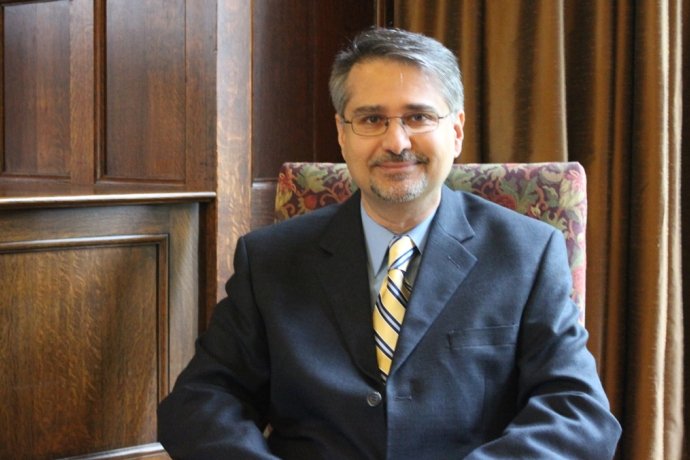
Mohsen Goudarzi is an Associate Professor of Islamic Studies at Harvard Divinity School (HDS), part of Harvard University. He joined the faculty in 2021 after teaching at the University of Minnesota. His academic background includes a PhD from Harvard University and an MA from Stanford University. His research focuses on the Qur’an and early Islamic history, employing literary, linguistic, comparative, and historical approaches. Key interests include the Qur’an’s role in Late Antique religious developments, Islamic exegetical traditions (tafsīr), and theological frameworks (kalām). His current projects explore the Qur’anic worldview’s interpretation and the significance of Meccan cultic rituals to early Islamic identity. He has received teaching excellence awards, including a certificate from the University of Minnesota’s Center for Educational Innovation and three teaching distinctions from Harvard’s Office of Undergraduate Education. Research outputs include groundbreaking articles on Qur’anic exegesis, cultic practices, and interreligious dynamics. Notable works analyze the Qur’an’s engagement with Abrahamic traditions, ritual practices in Mecca, and the textual history of early Islamic manuscripts. His collaborative work on the Ṣan‘ā’1 codex redefined understandings of early Qur’anic canonization. Teaching spans HDS and Harvard’s Faculty of Arts and Sciences (FAS), covering Islamic studies, Qur’anic studies, and religious history. He advises students in HDS programs and contributes to interdisciplinary initiatives at the intersection of theology, history, and textual criticism.
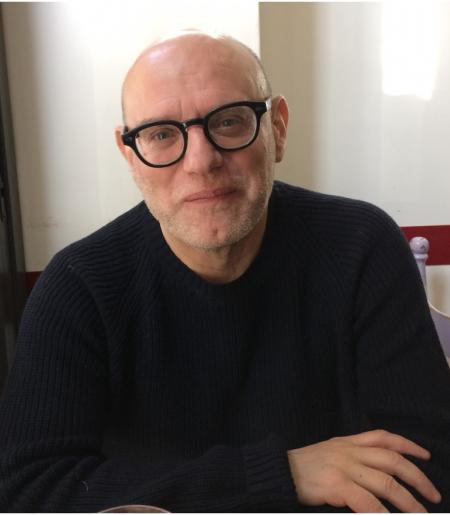
Cynthia Gabbay is a researcher at the Institute of Cultural History and Theory, Humboldt University of Berlin, and is completing her Habilitation at the University of Orléans, France. She is a multilingual poet, translator, and editor specializing in Jewish and Romance languages with primary affiliations in Jewish studies and Latin American research. Her educational background includes a Ph.D. from the Hebrew University of Jerusalem and ongoing Habilitation research at the University of Orléans. Ph.D.: Hebrew University of Jerusalem Habilitation: Rémélice Laboratory, University of Orléans Gabbay's research explores Jewish diaspora experiences in Latin America through interdisciplinary lenses of translation studies, multilingualism, and historical memory. She investigates how cultural legacies are preserved through literature and bibliographic projects, with particular focus on Argentina's Jewish communities and transnational connections to Iberian history. Her work bridges literary analysis, archival research, and creative practice as a poet and translator. Recent publications demonstrate a trend toward examining traumatic historical events through Jewish cultural frameworks, connecting Argentine Jewish settlements with Spanish Civil War narratives. This reflects growing scholarly interest in comparative diaspora studies and the role of literature in reconstructing fragmented histories. Scientific recognition includes: Maurice Amado Foundation Fellowship at University of Pennsylvania German Research Foundation Project Grant for 'The Jewish Library in Argentina' New Frontiers in Contemporary Jewish Life Fellowship (2025-2026) Gabbay coordinates the Network for the Study of Jewish Translation and Multilingualism and serves on the administrative board of the Latin American Jewish Studies Association (LAJSA). As editor-in-chief of the Latin American Jewish Studies Series (De Gruyter), she oversees scholarly publications while co-editing the journal Lingua Franca: The History of the Book in Translation . Her upcoming event 'Figuring Dystopia in 'Ho! Literary Magazine' (November 2025) continues her exploration of literary responses to historical trauma. She founded and coordinates Simania: Salon Readings, creating platforms for multilingual literary exchange within the Latin American Jewish Studies Association framework.
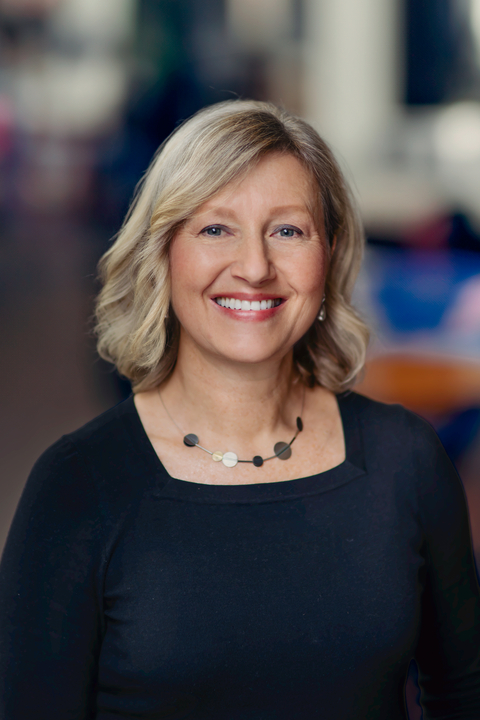
Kristin Schwain is a Professor in the Department of Art History at the University of Missouri's School of Visual Studies. She holds a PhD in Art History and Humanities from Stanford University and a BA in Art History and Humanities from Valparaiso University. Her interdisciplinary research examines marginalized objects and practices in American art history, emphasizing their cultural significance through lived experience. Her educational background includes: PhD in Art History and Humanities, Stanford University BA in Art History and Humanities, Valparaiso University Dr. Schwain's research centers on American Material and Visual Culture, Art and Religion, Arts of the African Diaspora, and Public Humanities. She investigates overlooked artifacts to reveal their influence on everyday life, challenging assumptions about modernization's impact on religious expression. Her work bridges historical analysis with contemporary relevance through studies of traditional craft, artist books, photojournalism, and mass-produced objects as lenses into social practices. Her recent publications demonstrate consistent focus on art-religion intersections in American cultural history, from Henry Ossawa Tanner's biblical paintings to Afro-Cuban religious themes in Ediciones Vigía artist books. This body of work reveals evolving methodologies for uncovering marginalized narratives through interdisciplinary frameworks spanning visual culture, material studies, and diaspora scholarship. Her scholarly recognition includes: First Biennial National Basketry Association Book Award for Rooted, Revived, Reinvented: Basketry in America Dr. Schwain has secured major grants from the Smithsonian Institution, Luce/American Council of Learned Societies, Center for the Study of Religion and American Culture, and Georgia O’Keeffe Museum Research Center. Her collaborative public humanities projects with the Missouri School of Journalism's Pictures of the Year International and Scruggs-Vandervoort-Barney department store collection demonstrate institutional partnerships that translate academic research into community engagement. She actively collaborates with the Museum of Art and Archaeology at the University of Missouri on exhibitions like Rooted, Revived, Reinvented: Basketry in America and Juan Roberto Diago: Foraged Materials, Assembled Histories , fostering cross-generational dialogues through multi-venue traveling shows and digital initiatives including The iCatalog .
University of California, Los AngelesUnited States
Kyeyoung Park is Professor of Anthropology and Asian American Studies at UCLA, holding the Korea Times-Hankook Ilbo Endowed Chair in Korean-American Studies. She is a sociocultural anthropologist whose work focuses on inequality, social justice, and the migration of people, particularly displaced populations and their relationship to political economy, critical race theory, and transnationalism. Her research spans Korean American communities in the United States and Korean diaspora communities in Latin America, examining how structural forces shape cultural beliefs and ideologies across different contexts. Ph.D., City University of New York (1990) Professor Park's research centers on urban anthropology, inequality across race, class, and gender dimensions, migration and diaspora studies, and transnational processes. She examines how structural imperatives of migration lead to transformations in gender, kinship, family, politics, and religion among Korean diaspora communities. Her work employs intersectional analysis to understand multi-ethnic relations, with particular focus on Korean communities in both the United States and Latin America, exploring how axes of inequality impact racial minorities and their relationships with each other in global contexts. Her recent scholarship demonstrates consistent focus on Korean diaspora communities across the Americas, bridging urban anthropology with critical race theory to examine how race, class, and gender intersect in immigrant experiences. She has made significant contributions to understanding Korean-Latino relations in Los Angeles and Korean immigrant entrepreneurship in South American textile industries, reflecting her broader interest in immigrant adaptation and inter-ethnic dynamics across diverse geographic settings. Professor Park has received numerous prestigious awards and grants for her scholarship: 1998 Outstanding Book Award from the Association for Asian American Studies for "The Korean American Dream: Immigrants and Small Business in New York City" 1997-98 Visiting Scholar Award from the Russell Sage Foundation 2016-19 Research Grant from The Republic of Korea's Ministry of Education and Korean Studies Promotion Service 2008-09 Translation Grant from The Overseas Korea Foundation for "The Korean American Dream" 2008-09 AAP Faculty Recognition Award from UCLA Professor Park has secured substantial research funding throughout her career, including multiple grants from The Academy of Korean Studies, Korea Foundation, and UCLA research programs. Her funded projects have examined Korean diaspora communities across the Americas, with particular focus on transnational connections between Korean American and Latin American contexts. She has served as Principal Investigator on projects exploring Korean routes of migration in the Americas and second-generation Korean American transnationalism, demonstrating her sustained commitment to understanding immigrant experiences through anthropological and interdisciplinary lenses. Professor Park has been actively involved with UCLA's Center for Korean Studies (CKS) and the International Institute, where she served as Deputy Program Chair for Korean Studies in Latin America from 2006-2011. Her collaborative work extends to research teams examining Korean diaspora communities across the Americas, including partnerships with scholars in Latin America. She has also participated in interdisciplinary initiatives such as UCLA's Urban Humanities Institute Faculty Research Seminar, reflecting her commitment to cross-disciplinary approaches to understanding migration, diaspora, and transnational processes.
Richard Steigmann-Gall is an Associate Professor of History at Kent State University's Department of History, within the College of Arts & Sciences. He previously served as Director of the Jewish Studies Program (2004–2010). Holding degrees from the University of Michigan (BA, MA) and the University of Toronto (PhD), his research focuses on religion and Nazi Germany, transatlantic fascism, and antisemitism. His seminal work, *The Holy Reich: Nazi Conceptions of Christianity, 1919-1945*, has been translated into Spanish, Portuguese, and Italian, earning widespread academic and public acclaim. His research has been supported by grants from institutions like the Social Science and Humanities Research Council of Canada, the Max Planck Institute, and the U.S. Holocaust Memorial Museum. Dr. Steigmann-Gall has presented globally, including at Georgetown, NYU, Cambridge University, and the University of Sydney. He is a recipient of the Distinguished Teaching Award from Kent State's College of Arts & Sciences (2004) and has been a frequent media commentator on fascism and modern political movements. Research & Education: His expertise spans Nazism’s religious dimensions, comparative fascist ideologies, and the cultural underpinnings of antisemitism. Current projects include a chapter on religion and genocide in pre-WWII American fascist thought for *American Fascism: Past and Present* (Cambridge). He has published in journals like *German History*, *Journal of Holocaust Research*, and *Totalitarian Movements and Political Religions*. Teaching & Outreach: Dr. Steigmann-Gall teaches courses on modern European history, fascism, and the Holocaust. He has mentored students in topics including Nazi Germany and transnational extremism, and his pedagogical approach has been recognized through teaching awards and nominations. He has also engaged with public discourse through media appearances in *The New York Times*, *The Daily Beast*, and documentaries on the History Channel. Awards & Grants: Distinguished Teaching Award (2004) Grants from the Max Planck Institute, SSHRC, and the U.S. Holocaust Memorial Museum Collaborations & Networks: He has collaborated on edited volumes and contributed to projects at institutions worldwide, reflecting his commitment to transnational historical inquiry.
David M Feldshuh is a Professor in Performing and Media Arts at Cornell University with over 40 years of service, uniquely combining a board-certified emergency medicine physician career with theater artistry. As founding Artistic Director of the Schwartz Center for the Performing Arts, he leads a resident company of professional actors collaborating with students across Cornell. His education spans Dartmouth College (B.A. Philosophy, Phi Beta Kappa, cum laude), London Academy of Music and Dramatic Arts, and dual Ph.D. (Theatre) and M.D. (Medicine) from the University of Minnesota, followed by Emergency Medicine residency at Hennepin County Medical Center and board certification. Feldshuh’s research centers on theater as a vehicle for social change, particularly at the arts-healthcare intersection. He pioneers creativity training methodologies derived from Zen meditation, Gestalt Therapy, and martial arts to enhance professional presence. His work examines ethical dilemmas in medical practice through performance, with emphasis on cultural bias mitigation and historical trauma processing. His creative output reveals consistent focus on social justice narratives, evolving from historical adaptations like Antigone to contemporary explorations of systemic inequity. Recent works demonstrate increasing formal innovation through multi-role performance structures and transmedia storytelling approaches that bridge academic and public engagement. Major honors include: Pulitzer Prize Finalist and 5 Emmy Awards for Miss Evers' Boys Cornell’s Stephen H. Weiss Presidential Fellowship (highest teaching honor) Distinguished Service Award from Tuskegee University’s National Bioethics Center AMA “Freddy” Award for medical film excellence CINE Golden Eagle for documentary work Feldshuh mentors through honors tutorials and developed the globally adopted eCornell course Acting in Public , teaching 1,600+ students across 15 countries. His Schwartz Center leadership established institutional grant frameworks supporting large-scale productions like Bernstein’s Mass with 138 performers. Current initiatives include leadership workshops for Cornell Tech and corporate clients, extending his presence-training methodology beyond academia. He maintains active creative practice through the Schwartz Center’s resident company, directing major productions while integrating medical ethics into performance pedagogy. His stadium announcing role at Cornell commencements for 20+ years exemplifies his commitment to institutional community engagement.
University of Illinois Urbana-ChampaignUnited States
Erik S McDuffie is an Associate Professor in the Department of African American Studies and History at the University of Illinois at Urbana-Champaign. He also holds professorial appointments with the Program in Jewish Culture and Society, Center for African Studies (where he serves as Director), Lemann Center for Brazilian Studies, and Center for Latin American and Caribbean Studies. He earned his Ph.D. in History with a concentration in the African diaspora and U.S. history since 1865 from New York University, an M.A. in History from Temple University, and a B.A. in History from Hamilton College. Originally from Detroit, he is a sixth generation Midwesterner with family roots spanning the United States, Canada, and St. Kitts. Dr. McDuffie's scholarly work centers on the African diaspora, black feminism, black queer theory, black radicalism, and the significance of the Midwest in global Black freedom movements. His research reveals how Black political thought has developed through transnational connections between the American heartland and global liberation struggles, challenging conventional narratives that center only coastal urban centers. His publications demonstrate a consistent engagement with critical questions about Black political thought across time and space, with recent work focusing on Garveyism's global impact through the lens of the Midwest. This research trajectory shows increasing attention to transnational connections and the global dimensions of local Black political movements. Wesley-Logan Prize (2012) from the American Historical Association and ASALH Letitia Woods Brown Award (2011) from the Association of Black Women Historians Helen Corley Petit Award (2010) Outstanding Teaching Award in African American Studies (AY 2010-11) Outstanding Research Contribution in African American Studies Award (2017) National Endowment for the Humanities fellowship (2016) Richard and Margaret Romano Professional Scholar award (2014) American Council for Learned Societies fellowship (2017) Dr. McDuffie has secured significant research funding including major fellowships from the American Council for Learned Societies and National Endowment for the Humanities. As Director of the Center for African Studies, he leads initiatives promoting interdisciplinary research on Africa and the African diaspora. His current book project on Garveyism in the Diasporic Midwest represents a major contribution to understanding how Black political thought developed through connections between the American heartland and global liberation movements, drawing from original research across multiple continents.
Sohail Hashmi is a Professor of International Relations and Politics at Mount Holyoke College , where he has taught since 1994. His work bridges Western and Islamic moral and political philosophy, focusing on ethics in international relations, religion and politics, and Middle East politics. Education: Ph.D., A.M., A.B. from Harvard University; M.A. from Princeton University. Hashmi specializes in comparative international ethics , particularly just war theory and peacebuilding, alongside Islamic political ethics , including civil society, pluralism, and humanitarian intervention. His research examines the intersection of Islamic thought with international law and contemporary issues like poverty relief and territorial boundaries. Scientific Awards and Grants: Carnegie Scholars Fellowship (2005), National Endowment for the Humanities, Social Science Research Council, and W. Alton Jones Foundation grants. Notable Publications: Editor of Just Wars, Holy Wars, and Jihads: Christian, Muslim, and Jewish Encounters and Exchanges (Oxford University Press, 2012) and Islamic Political Ethics: Civil Society, Pluralism, and Conflict (Princeton University Press, 2009). His recent work analyzes ethical pluralism, ISIS, and the impact of international law on Islamic theory.
Susannah Heschel is the Eli M. Black Distinguished Professor of Jewish Studies at Dartmouth College , chair of the Jewish Studies Program, and faculty member of the Religion Department. She is currently the Joseph Engel Visiting Professor for 2025-2026 at Swartz Hall, Cambridge, and a Guggenheim Fellow researching European Jewish scholarship on Islam. Education: A.B. from Trinity College, M.T.S. from Harvard Divinity School, Ph.D. from the University of Pennsylvania. Research Interests: Her work bridges Jewish and Protestant thought (19th-20th centuries), focusing on biblical scholarship, antisemitism, and Jewish perceptions of Islam. She explores intersections of race, gender, and ethics, particularly in Nazi Germany and modern prophetic traditions. Publications Trends: Recent articles examine Holocaust-era biblical interpretation, prophetic leadership in civil rights, racial theology, and sensory dimensions of antisemitism. Her scholarship spans historical analysis, ethical critique, and interdisciplinary engagements with theology and politics. Scientific Awards: Guggenheim Fellowship National Humanities Center Fellowship Wissenschaftskolleg in Berlin Fellowship Moses Mendelssohn Prize (Leo Baeck Institute) Five Honorary Doctorates Elected Member, American Society for the Study of Religion and American Academy for Jewish Research Grants & Visiting Roles: Recipient of Ford Foundation and Carnegie Corporation grants. Visiting professorships at Universities of Cape Town, Frankfurt, Princeton, Edinburgh, and Lucerne. Convening a 2026 conference on 'Sexual Violence and Antisemitism' with Carnegie support.
Enzo Traverso is the Susan and Barton Winokur Professor in the Humanities at Cornell University, affiliated with the College of Arts and Sciences. His scholarly work bridges the Department of History, French Studies Program, Jewish Studies Program, and Romance Studies. Born in Italy, he studied at the University of Genoa and earned his PhD from EHESS in Paris (1989). Before joining Cornell in 2013, he taught political science in France for two decades and held visiting professorships across Europe and Latin America. Education: University of Genoa (Italy), Ecole des Hautes Etudes en Sciences Sociales (PhD, 1989) Traverso’s research explores intellectual history, historiography, and critical theory, focusing on twentieth-century Europe. His work interrogates the intersections of war, fascism, genocide, revolution, and collective memory. His authored books, translated into over fifteen languages, have established him as a leading scholar in these areas. His recent publications reflect a trajectory analyzing historical memory, revolutionary ideologies, and the resurgence of far-right movements. Articles in journals like History & Theory and Historical Materialism further contextualize his contributions to debates on totalitarianism, Jewish modernity, and postwar political thought. Awards: Premio Pozzale (2014), Premio Lo Straniero/Gli Asini (2018), Premio Napoli (2022) Traverso has advised students through courses on topics such as Left-Wing Melancholia, Holocaust memory, and the European Civil War. His academic influence extends via editorial contributions to journals like Jacobin, Constellations, and Il Manifesto.
The University of Tennessee at ChattanoogaUnited States
Thomas P. Balázs is an Associate Professor in the Department of English at the University of Tennessee at Chattanooga . He specializes in Creative Writing , Speculative Fiction , and Comics and Graphic Novels , blending literary craft with cultural and religious commentary. His teaching extends to Western Humanities , British Literature , and Modernism , with a focus on psychoanalytic themes in literature. Research Focus: Balázs explores intersections of Jewish identity, antisemitism, and cultural memory through fiction and nonfiction. His work often critiques contemporary societal issues, such as in Art Over Man: The Roger Waters Test Case (2024) and The Nihilism of Antisemitism (2023). Publications: He has authored the short story collection Omicron Ceti III (2012) and contributed to anthologies like Horror Library and journals such as Tablet Magazine and Quillette . His narratives frequently merge supernatural elements with Jewish theological concepts. Engagement: Balázs participates in literary conferences (e.g., StokerCon, Meacham Writers Conference) and community events, often discussing diversity in comics and horror fiction. His Substack features biweekly reflections on culture and identity.
Susannah Heschel serves as the Eli M. Black Distinguished Professor of Jewish Studies and Chair of the Jewish Studies Program at Dartmouth College, holding a faculty appointment in the Religion Department. Her academic leadership extends through elected memberships in the American Academy for Jewish Research and American Society for the Study of Religion, with visiting professorships at Frankfurt, Cape Town, and Princeton Universities. Her educational background includes: A.B. from Trinity College M.T.S. from Harvard Divinity School Ph.D. from the University of Pennsylvania Heschel's research centers on 19th-20th century Jewish and Protestant intellectual history, with groundbreaking work on Christian theologians in Nazi Germany, Jewish scholarship on Islam, and the theological roots of antisemitism. Her scholarship uniquely bridges biblical studies, feminist theory, and Holocaust research, examining how religious frameworks shape identity and persecution. Current projects explore European Jewish scholarship on Islam through a Guggenheim Fellowship. Her recent publications reveal persistent engagement with prophetic tradition across Jewish-Christian contexts, Holocaust memory studies, and the intersection of race/gender in theological ethics. Works consistently analyze how religious texts are weaponized for oppression while recovering marginalized voices in interfaith dialogue. Honors include: National Jewish Book Award for Abraham Geiger and the Jewish Jesus Mendelssohn Prize from Leo Baeck Institute Five international honorary doctorates Guggenheim Fellowship Research support spans major foundations: Current: Guggenheim Fellowship (2023-2024) Maimonides Institute Fellowship (University of Hamburg, Winter 2024) Previous: Rockefeller Fellowship (National Humanities Center) Wissenschaftskolleg Berlin Fellowship (2011-2012) Carnegie Foundation grants Ford Foundation grants Though not directing formal labs, Heschel collaborates internationally through fellowships at Hamburg's Maimonides Institute and Berlin's Wissenschaftskolleg, advancing comparative research on Jewish-Muslim-Christian intellectual history while mentoring junior scholars through Dartmouth's Jewish Studies Program.
Edyta Bojanowska serves as Professor of Slavic Languages and Literatures at Yale University with an affiliated appointment in the Department of History. Her academic career bridges literary scholarship and historical analysis, focusing on imperial and postcolonial frameworks within Russian and Central European contexts. Bojanowska earned her Ph.D. in Slavic Languages and Literature from Harvard University and completed her undergraduate studies at Barnard College with a dual major in English and Russian. Her educational trajectory established the foundation for her interdisciplinary approach to Slavic studies. Her research program critically examines 19th-century Russian literature through the lenses of empire, nationalism, and globalization. Key interests include settler colonial dynamics, spatial theory, travel writing, and the interplay between ideology and literary form. She has pioneered methodologies connecting Russian cultural production to global imperial histories, particularly through her award-winning work on Goncharov's The Frigate Pallada and Gogol's Ukrainian-Russian identity negotiations. Bojanowska's publication record reveals consistent engagement with colonial paradigms in Russian literature, evolving from early studies of Gogol and Pushkin toward broader imperial frameworks. Her recent scholarship demonstrates increasing focus on racial discourse, indigenous land rights, and the spatial dimensions of empire, culminating in the Ab Imperio Award-winning analysis of Tolstoy's Bashkir estate. The thematic continuity across her work establishes her as a leading voice in post-Soviet imperial historiography. National Humanities Center Fellowship (Spring 2025) Ab Imperio Award for Best Study in New Imperial History (2022) Guggenheim Fellowship (2020-2021) AATSEEL Best Book in Literary Scholarship (2019) MLA Scaglione Prize for Best Book in Slavic Studies (2007-2008) Bojanowska actively shapes her field through editorial leadership on Ab Imperio and the PMLA Advisory Committee. Her teaching portfolio reflects her research expertise, featuring undergraduate seminars on War and Peace and Russian short fiction alongside graduate courses on spatial theory and imperial culture. Current leave status for Spring and Fall 2025 accommodates her National Humanities Center residency while maintaining her position as a central figure in Slavic literary studies.
Michael E. Heyes is Associate Professor of Religion and Chair of the Department at Lycoming College, where he teaches courses on religion, literature, and the history of Christianity. He received his Ph.D. in Religious Studies from Rice University (2015) and an M.A. in Comparative Religion from the University of Washington (2008). Previously, he held a visiting instructorship at the University of South Florida – Tampa. Education: Ph.D., Religious Studies, Rice University, 2015 M.A., Comparative Religion, University of Washington, 2008 Heyes' research interests span both medieval and modern religious phenomena. His work explores religion and literature , monstrosity and demonology , saints’ lives , gender and race in religious narratives , and American civil religion . He has published extensively on how religious identities are constructed through narratives of the monstrous, from medieval hagiography to contemporary film and conspiracy theories like QAnon. His teaching includes introductory religion, theory-driven courses, religion in fiction and film, and western esotericism. His scholarly output includes two monographs— Demons in the USA (2024) and Margaret's Monsters (2020)—and an edited volume, Holy Monsters, Sacred Grotesques (2018). His articles analyze themes such as demonic corporeality, the racialization of monsters in film, and the gendered dynamics of sainthood. The publications reveal a strong interdisciplinary trend, blending religious studies with literary analysis, cultural criticism, and film theory, particularly focusing on how media shapes spiritual imagination. Scientific Awards: No awards listed in the provided text. Heyes is actively involved in academic service, including co-editing The Journal of Gods and Monsters and organizing special issues on displacement and monstrosity. He has also issued calls for book chapters, such as on Lovecraftian horror in Japan, indicating ongoing research leadership. There is no mention of advising students or receiving grants in the provided material. He maintains a scholarly presence on Academia.edu and has presented at various academic forums. Labs and Research Teams: Co-editor, The Journal of Gods and Monsters Organizer of academic panels and symposia on religion and monstrosity
Rachel Buff is a Professor of History at the University of Wisconsin-Milwaukee (UWM), affiliated with African and African Diaspora Studies, Gender and Women's Studies, and Jewish Studies. She holds a PhD in American Studies from the University of Minnesota (1995) and a BA from Brown University (1985). Her research focuses on migration, immigrant rights movements, and transnational cultural politics, with particular attention to the Cold War era and contemporary issues like sanctuary spaces and border resistance. She previously served as Chair of UWM’s History Department (2022–2024). Teaching interests include U.S. survey courses, immigration history, and the historical intersections of empire and migration. Her work bridges academic scholarship and public engagement, with essays published in Academe , Jacobin , and Truthout . Current projects include a collection of essays titled Lost in the Red Scare and a bilingual historical glossary of migration terms. Research emphasizes the global dimensions of U.S. immigration policy, exploring how Cold War-era repression and McCarthyism shaped modern immigrant advocacy. Her publications analyze deportation histories, refugee rights, and the legacies of anti-immigrant policies. She collaborates across disciplines to address contemporary migration crises through a historical lens.