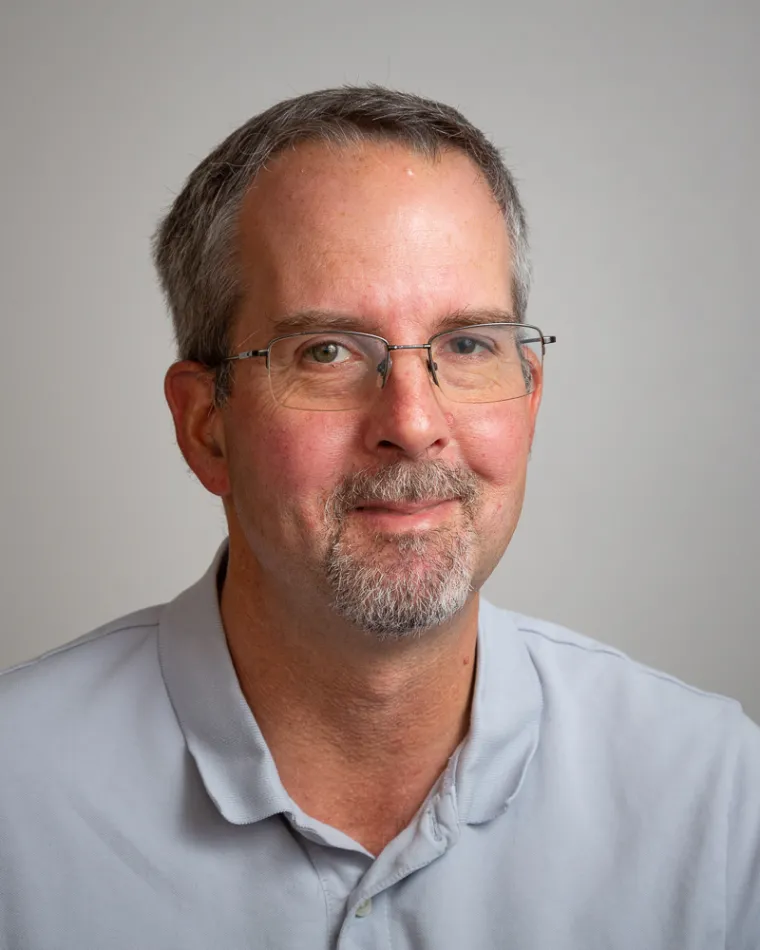
Erich Varnes is a Professor of Physics at the University of Arizona, affiliated with the Department of Physics within the College of Science. His primary research focuses on high energy physics at the Large Hadron Collider (LHC), particularly through the ATLAS experiment. He has contributed to searches for vector-like quarks and studies of top quark production mechanisms. Education: Ph.D. in Physics (1997, U.C. Berkeley) Research interests include developing electronics for upgraded LHC trigger systems to handle higher data rates. His work bridges experimental particle physics with advanced detector technologies. Publications emphasize collaborative efforts in multi-collider analyses (ATLAS, D0, CDF, BaBar) with a focus on Standard Model validation and beyond. Notable contributions include top quark helicity measurements and Higgs boson searches. Awards: Excellence in Graduate Teaching (2018), Robert H. Dicke Fellowship, Galileo Circle Team Research Award Active in international collaborations, he has advised multiple experimental teams but no individual students are listed here. His current projects aim to prepare for upcoming LHC upgrades through detector innovation.
Jurgen Schukraft is an Adjunct Professor at Yale University, affiliated with the Department of Physics. He is a key member of the Relativistic Heavy Ion Group (RHIG) at Yale, focusing on experimental research in relativistic heavy-ion physics. His work primarily involves studying the quark-gluon plasma (QGP) through experiments at the Relativistic Heavy Ion Collider (RHIC) at Brookhaven National Laboratory and the Large Hadron Collider (LHC) at CERN. Schukraft collaborates with the STAR and ALICE collaborations to investigate high-energy nuclear collisions and their implications for understanding early universe matter and dense astrophysical environments. His research interests span experimental particle physics, nuclear physics, and cosmology, with a focus on detecting exotic particles, measuring jet quenching, and developing detector technologies for future colliders like the Electron Ion Collider (EIC). Recent work includes studies on event-shape engineering, jet suppression mechanisms, and R&D for the ePIC experiment at BNL. Schukraft's contributions include advancements in collision dynamics analysis, path length determination in QGP, and underlying event modeling in RHIC energy regimes. His team's interdisciplinary approach bridges particle physics with astrophysics and condensed matter systems, leveraging both experimental and theoretical frameworks to explore fundamental questions in quantum chromodynamics.
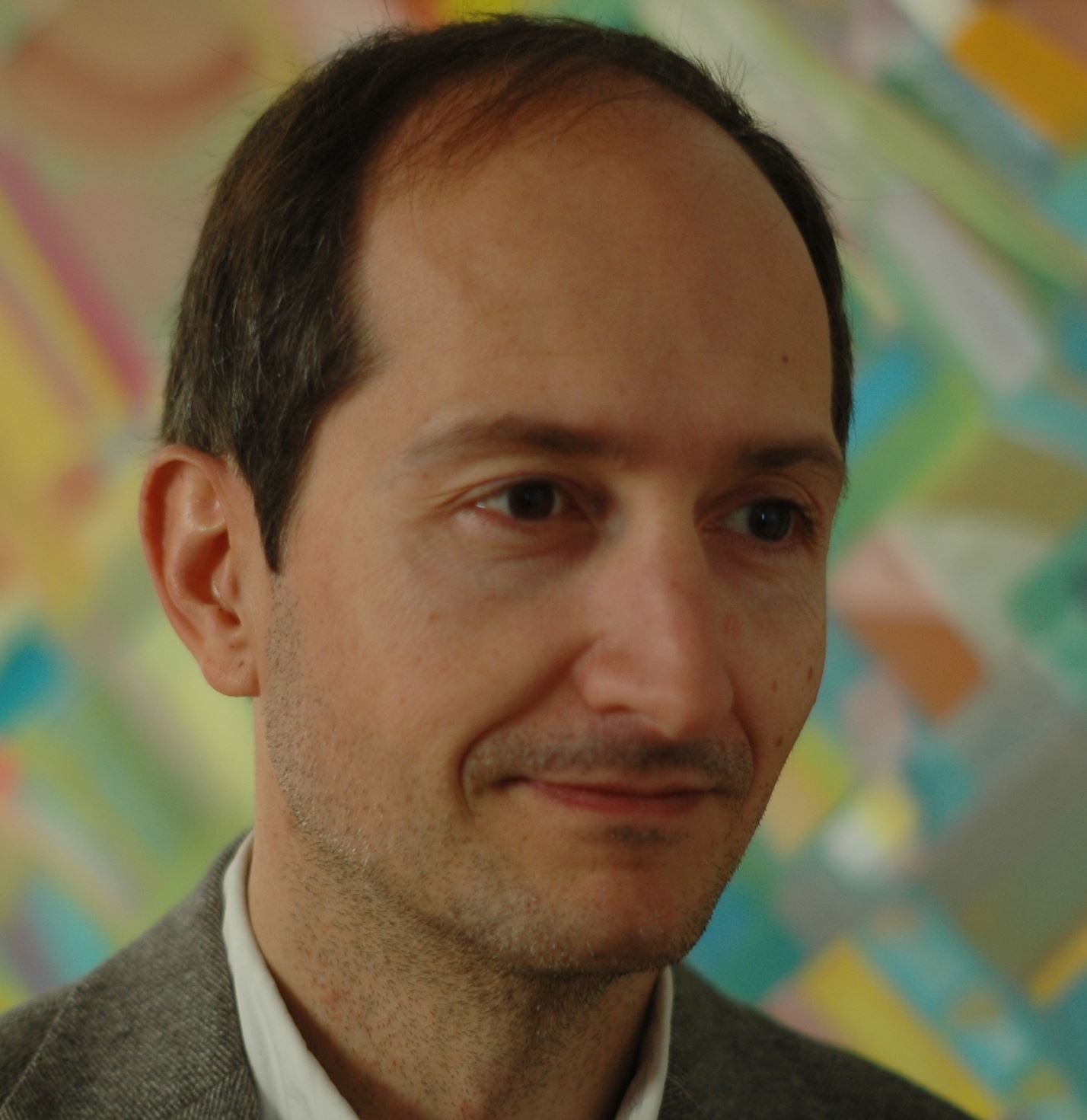
Emmerich Kneringer is an Associate Professor at the Institute for Astro- and Particle Physics, Faculty of Mathematics, Computer Science and Physics, University of Innsbruck. He is a key member of the Experimental Particle Physics research group and actively contributes to the ATLAS collaboration at CERN. His research focuses on experimental high-energy physics, particularly Higgs boson physics, top quark physics, electroweak interactions, and searches for physics beyond the Standard Model, including supersymmetry, dark matter, and exotic particles. He also works on advanced data analysis methods such as neural simulation-based inference and machine learning applications in particle physics. Dr. Kneringer's recent publications (2023–2025) show a strong trend in precision measurements (e.g., Higgs and top properties), combination of search results, and innovative analysis techniques. His work spans detector performance, cross-section measurements, and searches for new phenomena in proton-proton and heavy-ion collisions. He is actively involved in public outreach, delivering lectures on astronomy, cosmic radiation, and particle physics to schools and the public, including events like Masterclasses and the Long Night of Research. Experimental Particle Physics Higgs and Top Quark Physics Machine Learning in Physics Beyond Standard Model Searches Heavy-Ion Physics Dr. Kneringer has no listed scientific awards in the provided text. He advises no named students in the material. His research is conducted within the ATLAS collaboration, a large international team at CERN, and he contributes to both physics analysis and detector performance studies. He also participates in educational initiatives, including public lectures and training programs.
Tommaso Dorigo is a Professor at the University of Padova, affiliated with the Department of Physics and Astronomy 'G. Galilei'. He serves as First Researcher at INFN-Padova and contributes to international collaborations including CMS, CDF, MODE, DarkMachines, and SWGO. His roles span research, teaching, and leadership in interdisciplinary initiatives. 2022-2025: President of USERN Organization 2020-Present: Coordinator of MODE Collaboration 2014-2019: Scientific Coordinator of AMVA4NewPhysics ETN 2016-2020: Board member of INFN CSN1 Research Interests: His work bridges Particle Physics (Higgs boson physics, top quark studies, new physics searches) and Statistics (parameter estimation, frequentist methods, nuisance parameters). In Computer Science , he develops machine learning tools for detector optimization, anomaly detection, and differentiable programming. Recent articles focus on end-to-end detector design, extended Higgs models, and systematic uncertainty-aware neural networks. Scientific Contributions: He has authored over 1600 publications (H-index 223) and pioneered algorithms like MuScleFit, INVERSE BAGGING, and INFERNO. His outreach includes a popular science blog with 15M+ visits and books like Anomaly! Collider Physics and the Quest for New Phenomena at Fermilab . Grants: Marie Curie ITN grants (AMVA4NewPhysics 2015; INSIGHTS 2017) Editorial: Editor for Elsevier journals Reviews in Physics and Physics Open Advising: Supervised 44 undergraduate/masters students and 11 PhD students Labs/Teams: Member of CMS experiment (CERN), former CDF (Fermilab), and leader of MODE collaboration
Volodymyr Aushev is Professor in the Department of Nuclear Physics, Faculty of Physics, Taras Shevchenko National University of Kyiv, Ukraine. He simultaneously maintains a senior-researcher affiliation with the Institute for Nuclear Research of the National Academy of Sciences of Ukraine. His career spans four decades, beginning in 1978 at the Institute for Nuclear Research (Kyiv) and expanding through long-term visiting-scientist engagements at DESY (Germany), the Max-Planck Institutes, and Fermilab (USA). Education & Training: PhD studies focused on polarised recoil β-active nuclei and nuclear spin physics at low energies. Extensive specialised training in Quantum Chromodynamics, heavy-flavour physics, top-quark physics and neutrino physics through participation in HERA-B, ZEUS, D0, LHCb, Belle II, DUNE, WA105 and FCAL collaborations. Research Interests: Professor Aushev leads the Kyiv high-energy physics group whose principal goal is understanding the fundamental constituents of matter and their interactions at the highest energies. His work centres on experimental particle physics , with major themes including: Quantum Chromodynamics and parton distribution functions; Production and decay of charm, beauty and top quarks; Neutrino oscillations and astrophysical neutrinos; Development of radiation-hard detectors and advanced instrumentation for collider and neutrino experiments. Recent Publications Overview (2010-2016): The twelve highlighted papers reflect an intensive focus on HERA ep/γp data (ZEUS), Tevatron pp̅ data (D0) and early DUNE/Belle-II planning . Analyses span precision measurements of structure functions, heavy-quark cross-sections, top-quark properties and searches for exotic hadrons, underlining a commitment to multi-TeV energy-frontier physics and long-baseline neutrino science. Scientific Awards & Recognition: Author of ≈120 peer-reviewed papers in high-energy physics and ≈30 in nuclear physics, averaging 33.4 citations each. Group leader for Ukrainian participation in ZEUS, D0, Belle II, DUNE, WA105 and FCAL collaborations. Advising & Outreach: Professor Aushev mentors a vibrant team of post-doctoral researchers, PhD and master’s students within the Kyiv high-energy physics group. He teaches lecture courses on High-Energy Physics , Nuclear Astrophysics , Dark Matter , Neutrino Physics and Modern Experiments in High-Energy Physics , and leads outreach programmes to inspire school pupils and undergraduates. Laboratories & Teams: He heads the Kyiv High-Energy Elementary Particle Physics Group , comprising three faculty members, post-docs, PhD students and undergraduates. The group is responsible for detector R&D (radiation-hard calorimeters, micro-strip monitors), software development and physics analyses for international experiments in Europe, the United States and Japan.
Andrey Golutvin is a Professor and Chair in Physics at the Department of Physics within the Faculty of Natural Sciences at Imperial College London. He is based at the Blackett Laboratory on the South Kensington Campus and serves as a leading researcher in particle physics. His work is primarily associated with the High Energy Physics Group and the Physics of Particles research area at Imperial. Professor Golutvin's research focuses on searches for new fundamental particles which are very weakly-interacting. His primary research activity is the Search for Hidden Particles (SHiP) experiment, which he proposed in 2013 to search for light, new particles. The SHiP experiment aims to search for a wide range of light and weakly interacting particles that could solve major problems in particle physics, including the matter-antimatter asymmetry in the Universe, neutrino masses and mixing patterns, and dark matter candidates. Under his leadership, the SHiP collaboration has grown from 16 authors in the original Letter of Intent to 250 authors from 33 institutes in 16 countries. CERN management approved the experiment in March 2024. His recent publications reveal a strong focus on rare particle decays, precision measurements in B physics, neutrino detection, and searches for physics beyond the Standard Model. His work spans both theoretical investigations and experimental analyses, with significant contributions to the LHCb experiment where he served as spokesperson from 2008-2011 and previously led the LHCb calorimeter project from 1998-2008. His research often involves collaborations with major international laboratories and has resulted in numerous high-impact publications in journals like Nature, Physical Review Letters, and Journal of High Energy Physics. Professor Golutvin has advised various international laboratories on scientific policy, serving on committees including the INFN scientific committee at LNF (Italy), the Belle Advisory Committee at KEK (Japan), and CERN's Scientific Policy and Large Hadron Collider committees. His work with the search engine company Yandex applied machine learning tools to signal-background separation in particle physics, demonstrating his interdisciplinary approach to research problems. His laboratory and research activities are centered around the High Energy Physics Group at Imperial College London, with significant involvement in the LHCb experiment at CERN and the SHiP experiment. He collaborates extensively with researchers across the globe, as evidenced by the large international author lists on his publications. His work continues to push the boundaries of particle physics, particularly in the search for physics beyond the Standard Model through both direct searches at colliders and dedicated experiments like SHiP.
Dr. Trevor Vickey is a Reader in Particle Physics and Astrophysics at the School of Mathematical and Physical Sciences, University of Sheffield. He is an active researcher working with the ATLAS collaboration at CERN's Large Hadron Collider, focusing on precision measurements of the Higgs boson and searches for physics beyond the Standard Model. His research interests span multiple areas of high energy physics, including Higgs boson properties, searches for Beyond Standard Model Higgs bosons, investigations of new physics in tau lepton final states (including graviton, third-generation leptoquarks, Z' bosons, and supersymmetry), top quark properties, tau lepton identification techniques, and silicon detector technology. His work leverages the full capabilities of the ATLAS detector to probe fundamental questions in particle physics. Dr. Vickey's publication record shows consistent productivity with numerous high-impact papers in leading journals including Journal of High Energy Physics, Physics Letters B, and Physical Review D. His recent work (2023-2025) demonstrates expertise across multiple frontiers of particle physics, from precision Higgs measurements to exotic searches for new particles. The publications reveal a strong focus on analyzing data from LHC Run 2 and early Run 3, with particular emphasis on Higgs physics, top quark physics, and searches for new phenomena. As a member of the ATLAS collaboration, Dr. Vickey contributes to one of the largest scientific collaborations in history, working alongside thousands of researchers worldwide. His position at the University of Sheffield places him within a strong UK particle physics community that has made significant contributions to the ATLAS experiment since its inception.
Chunhui Chen is a Professor at the Department of Physics and Astronomy at Iowa State University, specializing in experimental high-energy physics. He received his Ph.D. in Physics from the University of Pennsylvania in 2003, where his thesis focused on charm meson production at Fermilab's CDF II experiment. After postdoctoral work at the BaBar experiment at SLAC (University of Maryland), he joined Iowa State University in 2009. His research focuses on CP violation in B-meson decays, Higgs physics, and precision measurements at particle colliders. He collaborates with the Belle II, ATLAS, and BaBar experiments. Key affiliations include the ATLAS Collaboration at CERN (2009–2020), the Belle II Collaboration (2019–present), and the BaBar Experiment (2003–present). His work contributed to Nobel Prize-winning efforts confirming CP violation theory and Higgs boson discovery. He explores Quantum Loop effects and new physics beyond the Standard Model through precision measurements at Belle II and ATLAS. His articles span topics like Higgs boson production, resonance searches at the LHC, and B-meson decay analysis. He has pioneered techniques in jet substructure and flavor tagging for boosted particles, advancing collider physics methodologies.
Falciano Speranza is currently Director of Research at the National Institute for Nuclear Physics (INFN) in Italy since 2001. He has held prominent roles such as Vicepresident of INFN and serves on key international committees including ECFA. His research focuses on particle physics, detector systems, and technology transfer. Notable honors include the 2020 Italian Excellence Award and Meritorious Membership in the Italian Physical Society. Director of Research, INFN (2001–present) Scientific Associate at CERN (1998–1999 and 1989–1990) Assistant Professor at ETH Zurich (1982–1983) Research interests span particle physics detectors, trigger systems, computational methods, and interdisciplinary applications. He has contributed to major experiments like the ATLAS detector at CERN's LHC. Awards and recognitions highlight his leadership in physics infrastructure and policy: Member of the Gran Sasso Lab Scientific Committee, Governing Body of GARR Consortium, and Italian delegate to the EPS Council. His work involves collaborations with institutions like the Bruno Kessler Foundation and the University of Sassari, advancing both fundamental physics and applied technologies.
Amitabh Lath is a Professor in the Department of Physics and Astronomy at Rutgers University, specializing in Experimental High Energy Physics. His research focuses on fundamental particle interactions, particularly at the Large Hadron Collider (LHC) CMS experiment and previously at the Tevatron CDF experiment. He has contributed to Higgs boson discovery efforts and precision measurements of electroweak parameters. Lath holds a PhD from MIT under Nobel laureate Henry Kendall, with prior work at SLAC and Fermilab. He actively engages in outreach, delivering talks on particle physics to high school students and academic audiences. Education: PhD in Physics (MIT, 1996), SB in Physics (MIT, 1989). Past affiliations include Fermilab (CDF experiment), SLAC (SLD experiment), and KTeV collaboration. His work bridges theoretical predictions with experimental validation, emphasizing multijet resonance searches and Higgs boson physics.
Laszlo J. Gutay is a Professor of Physics at Purdue University, where he has held the position since 1976. He earned his B.A., M.A., and Ph.D. in Physics from Oxford University (1959-1960) and Florida State University (1964), respectively. His research focuses on high energy experimental physics, particularly Higgs boson searches, supersymmetry, and quark-gluon plasma studies using the CMS detector at CERN's LHC. He leads Purdue's High Energy Physics Group and oversees the CMS muon detector construction and robotic quality control systems. His work includes pioneering robotics applications in cathode strip chamber manufacturing and accelerator physics innovations. Professional contributions include roles as Task Leader at CMS Muon Endcap and co-spokesman for the Purdue Task D collaboration. Awards include the Herbert Newby McCoy Distinguished Research Award and Hungarian national medals for bravery and freedom. Gutay has supervised 13 Ph.D. theses and currently advises 6 graduate students. His 287 refereed publications span experimental particle physics, detector development, and accelerator technologies. Research highlights include Higgs studies at LEP, robotic chamber fabrication, and LHC physics. Current projects involve analyzing LHC Run 3 data for new physics signals, including dark matter, supersymmetric particles, and exotic Higgs decays.
Caterina Doglioni is a Senior Lecturer and Researcher affiliated with the Department of Physics at Lund University's Faculty of Science. She is part of the Particle and nuclear physics division and serves as a Project Manager for eSSENCE: The e-Science Collaboration. Her work focuses on experimental high-energy physics, particularly using the ATLAS detector at CERN's Large Hadron Collider (LHC). Doglioni contributes to trigger system development, particle identification, and dark matter searches, with emphasis on top quark physics, Higgs boson studies, and beyond Standard Model phenomena. Research interests include: Collider physics at the LHC Detector calibration and performance Searches for supersymmetry and dark matter Jet substructure and tagging Top quark and Higgs boson properties Her publications emphasize precision measurements, combination analyses, and machine learning applications in particle physics. Notable contributions include studies of trigger systems, missing transverse momentum signatures, and Higgs decay channels. Doglioni also participates in computing initiatives like eSSENCE to advance data analysis workflows. Labs/Teams: Active member of the ATLAS Collaboration and Lund University's particle physics group.
Marc Osherson is an Assistant Professor in the Department of Physics & Astronomy at the University of Notre Dame. His research focuses on analyzing high-energy proton-proton collisions at CERN's Large Hadron Collider (LHC), particularly using the CMS Detector. His work emphasizes reconstructing signatures of exotic new physics, such as hypothetical particles decaying through multiple intermediate states, and developing 'big data' techniques and machine learning tools to process massive LHC datasets. He is also involved in optimizing the use of 'scouting' datasets—partially reconstructed events used to decide which full events to retain—to uncover hidden phenomena. As a member of the CMS Collaboration, he contributes to detector maintenance and upgrades for future LHC runs. Education: Princeton University, B.A., 2010 Johns Hopkins University, Ph.D., 2016 Research interests include: Collider-based searches for beyond Standard Model physics Machine learning applications in particle physics Data analysis and optimization techniques Detector development and upgrades Recent articles emphasize resonance searches, diphoton signatures, vector-like quarks, and Higgs boson studies. His work bridges theoretical predictions with experimental challenges, leveraging cutting-edge computational methods to handle the LHC’s vast data output. Scientific awards: No specific honors listed in available texts.
Kyoungchul (KC) Kong is a Professor of Physics & Astronomy at the University of Kansas, serving as Director of Graduate Studies. His research focuses on theoretical particle physics, particularly Physics Beyond the Standard Model, including collider physics, supersymmetry, extra dimensions, and dark matter. He also explores applications of AI and quantum algorithms in physics. Kong holds a PhD from the University of Florida (2006) and has held positions at SLAC and Fermilab before joining KU in 2010. Affiliations: University of Kansas (2010–present), SLAC National Accelerator Laboratory (2009–2010), Fermi National Accelerator Laboratory (2006–2010) Research Interests: Collider Physics, Quantum Machine Learning, Dark Matter Detection, Supersymmetry, and Extra Dimensions His work bridges theoretical and experimental particle physics, with contributions to detector design (e.g., the ILD detector for the Future Circular Collider) and collaborations like the FCC and Muon Collider initiatives. He has pioneered methods for dark matter detection and leveraged machine learning for jet classification and top quark analysis. Key Awards: 2021 University Scholarly Achievement Award 2011 NSF EPSCoR First Award 2009 Outstanding Young Research Award (AKPA) 2005 Graduate Student Research Award (UF) Grants & Collaborations: Kong leads KU’s contributions to FCC and muon collider projects, emphasizing detector development and quantum computing applications. His lab focuses on interdisciplinary approaches to collider physics and dark matter.
Prof. Jean-François Arguin is a Full Professor at the University of Montreal's Department of Physics, affiliated with the Faculty of Arts and Sciences. He leads research in experimental particle physics through the ATLAS experiment at CERN's Large Hadron Collider (LHC). His work focuses on discovering new physics phenomena, including supersymmetry, dark matter, and top quark studies using advanced machine learning techniques. He has held leadership roles in ATLAS, coordinating top quark and pixel detector research. Education: Ph.D. 2005, University of Toronto (Top Quark Mass Measurement) M.Sc. 2000, Université de Montréal (Particle Physics) B.Sc. 1998, Université de Montréal (Physics-Mathematics) His research explores the LHC's tera-electron-volt energy frontier, targeting discoveries like supersymmetry and dark matter. He employs machine learning for data analysis and detector optimization. Key projects include ATLAS upgrades and silicon pixel detector development. Publications highlight ATLAS collaborations' findings on supersymmetry, top quark physics, and detector performance. Awards include the Tanaka Prize and recognition from the American Physical Society. Awards: Tanaka Prize (APS), Association of American Universities Award Grants: Multiple NSERC and Canadian Innovation grants for ATLAS research, detector upgrades, and machine learning applications. He advises over a dozen graduate students on topics like electron identification, supersymmetry searches, and detector mechanics. His lab focuses on advancing particle physics through cutting-edge experimental and computational methods.