Jon Fieldhouse is a Senior Lecturer in Occupational Therapy at the University of the West of England (UWE Bristol), based at the Frenchay Campus in Bristol, United Kingdom. His role focuses on academic instruction and research within health sciences. His research spans critical areas of occupational therapy practice, with emphasis on: Rehabilitation methodologies Clinical patient care systems Therapeutic intervention design Health education frameworks Though publication details are unavailable in the scraped data due to JavaScript limitations, his work contributes to advancing occupational therapy standards in contemporary healthcare settings.
Anne-Gaelle Colom is a Teaching Fellow, Assistant Head of School, and Principal Lecturer at the University of Westminster. With over 20 years of experience in web and mobile development, she champions technology-enhanced learning and open-source innovation. She holds an MPhil in Mobile Computing, a PG Cert in Higher Education, and a BEng in Electronics. Her research spans: Education technology and mobile learning methodologies Front-end web development (HTML5, CSS3, JavaScript) Open-source ecosystems and jQuery frameworks Emerging fields: Generative AI, Web3, and Blockchain Award highlights include: Net Award for Innovation (2011) with jQuery Mobile Team Bloomberg WISE Award (2016) for open technology Excellence in Teaching (2009) She maintains active roles in: jQuery Mobile Team and Foundation (since 2011) W3C Web Platform group representing JS Foundation
Thorsten Riemke-Gurzki is a fulltime Professor for Web Technology, Corporate Portals & Usability at Stuttgart Media University in Stuttgart, Germany, where he has been working since 2008. Prior to his academic career, he worked as a freelance and employed consultant for various companies including SAP Germany. He describes himself as having 'grown up with hardware, CP/M, mailbox systems' and being 'web addicted since 1991,' positioning himself as both a frontend and backend developer and a 'web technology evangelist.' Professor Riemke-Gurzki's research interests span a comprehensive range of web technologies: Frontend and backend web development HTML, CSS, JavaScript and modern frameworks (React, React Native, Vue.js) Server-side technologies including Node.js, Go, Docker, and database systems Microservices architectures and single page applications Web 3D/AR, AI applications for the web, and Internet of Things User experience, usability, and content management systems His recent publications demonstrate a strong focus on practical web development techniques, covering topics from CSS fundamentals to advanced server implementation in Go and exploration of emerging technologies like JavaScript-based microcontrollers. His work bridges academic research with practical industry applications through his website riemke.dev where he shares technical articles and hosts a podcast on web development topics. Professor Riemke-Gurzki maintains an active presence in both academic and developer communities, with educational materials on GitHub and engagement with industry technologies like the Daimler UXLab truck. His approach emphasizes hands-on learning and practical application of web technologies.
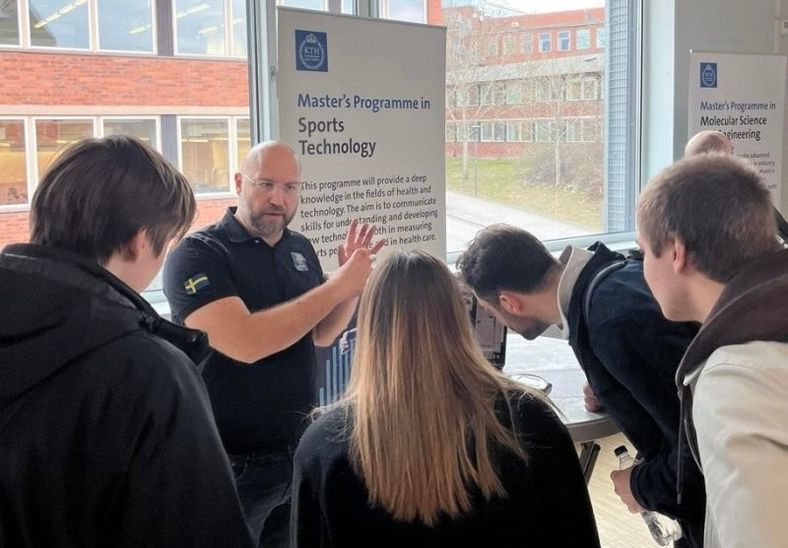
Jonas Willén is a Lecturer at KTH Royal Institute of Technology, working within the Division of Health Informatics and Logistics. He serves as Program Director for the MSc in Sports Technology and Director of RIU (National Sports University) at KTH. His professional focus centers on developing technological solutions to improve quality of life through health and sports applications. Willén's research interests span health informatics and sports technology, with particular emphasis on wearable sensor systems, data synchronization, and applications for assisted living. His work addresses critical issues in elderly care, such as developing mobile security alarm systems that overcome the limitations of current home-bound solutions. He also focuses on sports instrumentation for performance analysis and coaching, with applications for both elite athletes and general fitness. His publication record from 2011-2025 shows consistent research in sensor networks, wearable technology, and applications in healthcare and sports. The research trends indicate a progression from foundational work on data synchronization and sensor networks toward more applied solutions in health monitoring and sports performance analysis. His recent work demonstrates increasing focus on real-world implementation of these technologies. As an educator, Willén teaches multiple courses including FullStack Development and DevOps, Health and Sports Instrumentation, Medical Engineering, Mobile Applications and Wireless Networks, and Sports Technology and Instrumentation. His teaching reflects his research interests, bridging theoretical knowledge with practical applications in technology development. Willén's professional philosophy emphasizes technology's potential to evolve human capabilities, particularly in health and sports contexts. His work consistently aims to translate technical solutions into tangible benefits for end users, whether seniors needing reliable security systems or athletes seeking performance insights.
Ali Mesbah is a Professor in the Department of Electrical and Computer Engineering at the University of British Columbia (UBC), where he leads the SALT lab. His research focuses on software engineering with emphasis on AI-driven software analysis, software testing, and software evolution. Previously, he was a Visiting Research Scientist at Google during 2017-2018. Dr. Mesbah received his BSc/MSc (2003) and PhD (2009) degree cum laude in Computer Science from the Delft University of Technology (TUDelft). After completing a postdoctoral fellowship with the Software Engineering Research Group at TUDelft and a Visiting Researcher position at Fujitsu Laboratories of America, he joined UBC in 2011. His research interests span software engineering with particular focus on AI-driven software analysis, software testing, software evolution, program comprehension, fault localization and repair. His work has significant applications in web application testing, JavaScript analysis, and automated program repair. He has pioneered techniques for testing modern web applications, analyzing JavaScript code, and leveraging AI for software maintenance tasks. His recent publications demonstrate a clear evolution toward integrating large language models with traditional program analysis techniques, focusing on test generation, bug repair, and understanding multi-hunk patches. His work bridges theoretical software engineering concepts with practical applications, particularly in web technologies and AI-assisted development. Amazon Research Award (2023) Killam Accelerator Research Fellowship (KARF) (2020) Killam Faculty Research Prize (2019) NSERC Discovery Accelerator (DAS) award (2016) ACM Distinguished Paper Awards at ICSE (2009, 2014) IEEE Distinguished Paper Award at ICST (2018) Best Paper Award at ESEM (2015) Best Paper Award at ICWE (2013) Dr. Mesbah has advised numerous PhD and MASc students, many of whom have gone on to positions at leading technology companies including Google, Amazon, Apple, Microsoft, and SAP. His research has been supported by various grants including the Amazon Research Award and NSERC funding. He leads the SALT lab at UBC, which focuses on software analysis, testing, and learning, with current research directions including AI-driven software engineering, web application testing, and program repair. The lab maintains active collaborations with industry partners and academic institutions worldwide.
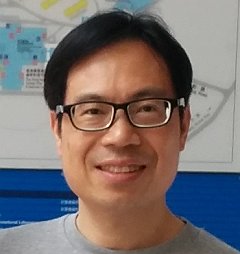
Shing-Chi Cheung is a Professor of Computer Science and Engineering at the Hong Kong University of Science and Technology (HKUST), School of Engineering. He founded the CASTLE research group and co-founded the International Workshop on Automation of Software Testing (AST) in 2006. His leadership includes serving as General Chair of FSE 2014 and chairing multiple APSEC conferences. His research focuses on software quality enhancement through program analysis, testing, debugging, and AI techniques, targeting Android apps, open-source software, deep learning systems, smart contracts, and spreadsheets. Current projects include metamorphic testing frameworks, binary analysis tools, and vulnerability detection systems for emerging technologies. His publication portfolio demonstrates consistent contributions to software engineering since 2016, with recent work emphasizing AI-integrated testing methodologies, smart contract security, and deep learning system reliability. Key trends show increasing focus on cross-language analysis, data visualization quality, and compiler-level verification for modern software stacks. Distinguished Member of the ACM Fellow of the British Computer Society Editorial board member: Science of Computer Programming (SCP), Journal of Computer Science and Technology (JCST) Former editorial board member: IEEE Transactions on Software Engineering (2006-2009), Information and Software Technology (2012-2015) Four patents in China and the United States Cheung actively mentors through the CASTLE research group and serves on program committees for major conferences including ICSE, ESEC/FSE, and ISSTA. His work bridges academic research with practical applications through industry collaborations and tool development. He has contributed to numerous workshops and symposia as steering committee member and program chair.
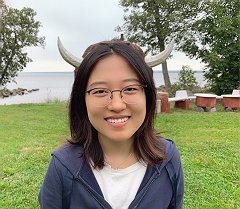
Xiaoning Du is a Senior Lecturer (equivalent to U.S. Associate Professor) at the Department of Software Systems and Cybersecurity within the Faculty of Information Technology at Monash University, Australia. She was promoted to this position effective July 1, 2025, having previously served as a Lecturer (Assistant Professor) since joining Monash in February 2021. Her research bridges the gap between theory and practical applications of program analysis and formal methods in evaluating traditional and AI-assisted software systems. Dr. Du's educational background includes: PhD from Nanyang Technological University (2020) Bachelor's degree from Fudan University (2014) Dr. Du specializes in software engineering, artificial intelligence, and cybersecurity , with particular focus on SE4AI (Software Engineering for AI), software analysis and testing . Her research has made significant contributions to the security and quality assurance of intelligent software systems, especially intelligent software engineering tools. She is best known for her work on Devign , BigCodeBench , DeepStellar , and SimPy , which have advanced the fields of code generation, program analysis, and AI security. Her approach consistently bridges theoretical foundations with practical applications to improve software quality and security. Dr. Du's recent publications demonstrate a strong focus on the intersection of software engineering and AI, particularly examining how large language models interact with source code. Her work addresses critical challenges in code generation efficiency, security vulnerabilities in AI-assisted development, and fairness in AI systems. She has made significant contributions to benchmarking frameworks like BigCodeBench and has pioneered research on watermarking techniques to protect code datasets from misuse by neural code completion models. Dr. Du has received numerous prestigious awards and recognitions: 2024 Google Research Scholar Award in Software Engineering ACM SIGSOFT Distinguished Paper Award (ISSTA'24) ICLR Oral presentation (2025) 2024 FIT Dean's Early Career Researcher of the Year Award Multiple FIT ECR Seed Grants (2021-2023) Dr. Du actively mentors PhD students, with notable successes including Terry (2024-2025 IBM PhD Fellowship Award recipient) and Zhensu (2024 Bytedance Scholarship Award recipient). She is currently seeking self-motivated PhD students with strong programming skills and relevant research experience, offering full scholarship support. Her research has been supported by multiple grants including the Google Research Scholar Program award and several FIT ECR Seed Grants that have enabled her team to pursue innovative research in software security and AI-assisted development. Dr. Du leads a research group focused on intelligent software systems security and quality assurance. Her team has developed several influential tools and benchmarks including Devign, BigCodeBench, DeepStellar, and SimPy. These resources have become important assets for researchers and practitioners working at the intersection of software engineering and artificial intelligence, particularly in the areas of code generation, program analysis, and security testing of AI systems.
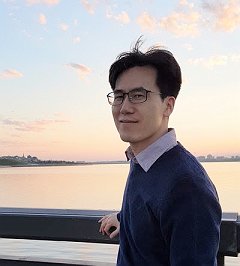
Jooyong Yi is an Associate Professor in the Department of Computer Science and Engineering at UNIST (Ulsan National Institute of Science and Technology). He leads the LOFT (Lab of Software), focusing on autonomous techniques for software reliability in AI-generated code environments. Research Interests: His work spans program analysis, automated repair, testing/debugging, and verification. Core themes include developing scalable methods for bug detection (via static/dynamic analysis), AI-compatible repair systems, and verification frameworks for safety-critical systems. Recent emphasis integrates fuzzing techniques with repair validation. Publication Trends: His 15 most recent works (2015-2025) show progression from foundational program repair techniques (e.g., Angelix, DirectFix) toward AI-era innovations: greybox fuzzing for efficiency, memory-leak repair for web frameworks, and deep-learning library testing. Over 50% of publications focus on optimizing repair validation and scalability. Awards: ACM Distinguished Paper Award at ASE 2023 Students & Grants: Currently advises 5 PhD, 1 MS/PhD, and 2 MSc students. Secured ₩20B+ in funding for projects including: MSIT Binary Micro-Security Patch Technology (2024-2026) Patch Validation for Automated Repair (2023-2026) AI-Powered Low-Code Platform (2023-2025) Memory-Safe Language Integration (2024-2027) Lab: LOFT lab develops verified repair tools (e.g., LeakPair, Verifix) and benchmarks (BUGSC++), prioritizing human oversight in AI-generated software.
Gian Luca Scoccia is an Assistant Professor at the Gran Sasso Science Institute (GSSI) in Italy, where he also completed his PhD in 2019. He maintains active roles in major software engineering conferences as a program committee member for ASE (2024-2025) and SANER (2026). His academic background includes: PhD from Gran Sasso Science Institute, Italy (2019) Scoccia's research centers on empirical software engineering with specialized focus areas including mobile app security , software repository mining , and program analysis . His recent work increasingly integrates artificial intelligence into software development practices, particularly examining ethical implications in autonomous systems and energy efficiency in LLM-driven applications. He employs rigorous empirical methodologies across all research domains. Analysis of his 2023-2025 publications reveals strong convergence between traditional software engineering and AI innovation, with significant emphasis on mobile contexts, developer tooling, and ethical frameworks. His work consistently combines theoretical architecture design with empirical validation through user studies and systematic assessments. Scoccia demonstrates deep community engagement through program committee service for ASE and SANER conferences, contributing to the advancement of software engineering research standards and discourse.
Wataru Toyokawa serves as Unit Leader at the Computational Group Dynamics Collaboration Unit, BTCC, RIKEN CBS, Tokyo, and Research Scientist at the University of Konstanz's Department of Psychology. His interdisciplinary work integrates computational modelling, Bayesian statistics, and real-time behavioural experimentation to investigate human social dynamics and collective intelligence. His academic background includes: PhD in Behavioural Science, Hokkaido University (2015) M.Sc. in Behavioural Science, Hokkaido University (2012) B.Sc. in Fisheries Science, Hokkaido University (2010) Toyokawa's research centers on complex systems and social psychology, examining how individual learning strategies shape collective phenomena like cultural evolution and group decision-making. Using mathematical analysis and online experiments, he explores how social learning mitigates cognitive biases and resolves social dilemmas through computational frameworks. His work bridges evolutionary game theory with real-world behavioural data. Recent publications reveal consistent focus on the tension between individual exploration and social information use in collective intelligence. His studies demonstrate how conformity prevents suboptimal decision cascades and how risk tolerance modulates cooperative behavior in social dilemmas, advancing understanding of human group dynamics in complex environments. His scientific recognition includes: Japan Society for Promotion of Science Fellowships (2012-2019) Multiple Young Researcher Awards from Human Behavior & Evolution Society Japan Best-Poster Award from Japan Ethological Society (2012) EHBEA student travel award (2014) Toyokawa secures competitive funding including Association of Psychological Science Estes Fund grants (2022-2023) for COSMOS summer schools and CASCB Large Project grants for collective foraging research. He mentors postdoctoral researchers while teaching experimental methods, R programming, and seminars on social learning at Konstanz. He leads the Computational Group Dynamics (COGNAC) Unit at RIKEN CBS, developing real-time online experiments using Mechanical Turk and computational tools (R, Stan, JavaScript). The unit's research combines evolutionary game theory with human behavioral data to model cultural transmission and collective problem-solving in dynamic environments.
Blagoj Nenovski serves as Associate Professor at the Faculty of Law, Kichevo, within St. Kliment Ohridski University - Bitola. He teaches Informatics 1 and 2 for undergraduate studies and pioneered the ICT in Scientific Research course for doctoral programs. Elected to his current rank in 2020, he holds dual specializations in Informatics and ICT Application in Higher Education. His academic journey includes: Diploma in Engineering (2009) from Technical Faculty in Bitola (8.63 GPA) Master's in Informatics and Computer Engineering (2012) (10.00 GPA) PhD in Informatics and Computer Engineering (2020) (10.00 GPA) Nenovski's research spans Augmented Reality systems, digital banking transformation, and disinformation countermeasures. His AR work focuses on outdoor object recognition using NFT markers, while legal domain contributions include establishing an ICT Training Department for lawyers. Recent banking sector studies analyze digital services' competitive impact, and cross-national research examines problematic internet use patterns. Publication trends reveal increasing focus on disinformation threats (particularly deepfakes) and spatial exploration technologies since 2022, while maintaining strong output in banking digitization and educational informatics. His interdisciplinary approach consistently bridges technical ICT solutions with domain-specific applications. Though no formal awards are documented, Nenovski actively serves on thesis evaluation committees, curriculum development boards for Law and Technology programs, and multiple university governance committees including elections oversight and study guide creation. He has coordinated research projects and provided peer review services for academic publications. As coordinator of the Department for ICT Training of Lawyers since 2021, he leads initiatives at the ICT-law intersection, developing digital resources for legal professionals. His technical proficiency spans Windows/Linux systems, Spring Boot, React, JavaScript, and network security frameworks, supporting both academic innovation and administrative responsibilities including OJS system management for university journals.
Rubén Alcaraz Martínez is an Associate Professor at the Department of Library Science, Documentation and Audiovisual Communication at the University of Barcelona's Faculty of Information and Audiovisual Media. He teaches in the bachelor's degree in Information Management and Digital Documentation, the master's degree in Digital Content Management, and the master's degree in Digital Humanities at UB, while also collaborating with UPF on master's programs in Search Engines, Digital Documentation, and UX, as well as with EINA (UAB) on Graphic Design and Art and Design Research programs. Doctor in Engineering and Information Technologies (UdL) Master in Digital Content Management (UB/UPF) Diploma in Library Science and Documentation (UB) Senior Technician in Web Application Development Alcaraz Martínez's research focuses on digital accessibility, human-computer interaction, usability and user experience (UX), digital repositories and libraries, and search engine optimization (SEO). His work demonstrates a strong commitment to inclusive design, particularly in making data visualizations accessible for people with low vision. He has pioneered methodologies for evaluating the accessibility of statistical charts and has explored the integration of search experience optimization (SXO) with information architecture and web accessibility. His recent publications (2023-2025) reveal a research trajectory centered on practical applications of digital humanities, with particular emphasis on accessibility challenges in data visualization, SEO ethics, and the intersection of AI with design practices. His work bridges theoretical frameworks with practical implementation, often involving user testing and real-world applications. The publications span multiple disciplines including information science, human-computer interaction, digital humanities, and media studies, demonstrating his interdisciplinary approach to digital information systems. Rubén Alcaraz Martínez is actively involved in the Adaptabit and Culture and Digital Content research groups at the University of Barcelona. He has previously served as a member and coordinator of the COBDC's Free Software Working Group for Information Professionals and has provided consulting services related to web accessibility for public administration and SEO for both public and private companies. His work extends to the development of teaching materials on accessible document composition, color contrast in web accessibility, and accessible data visualizations through the Open University of Catalonia (FUOC).