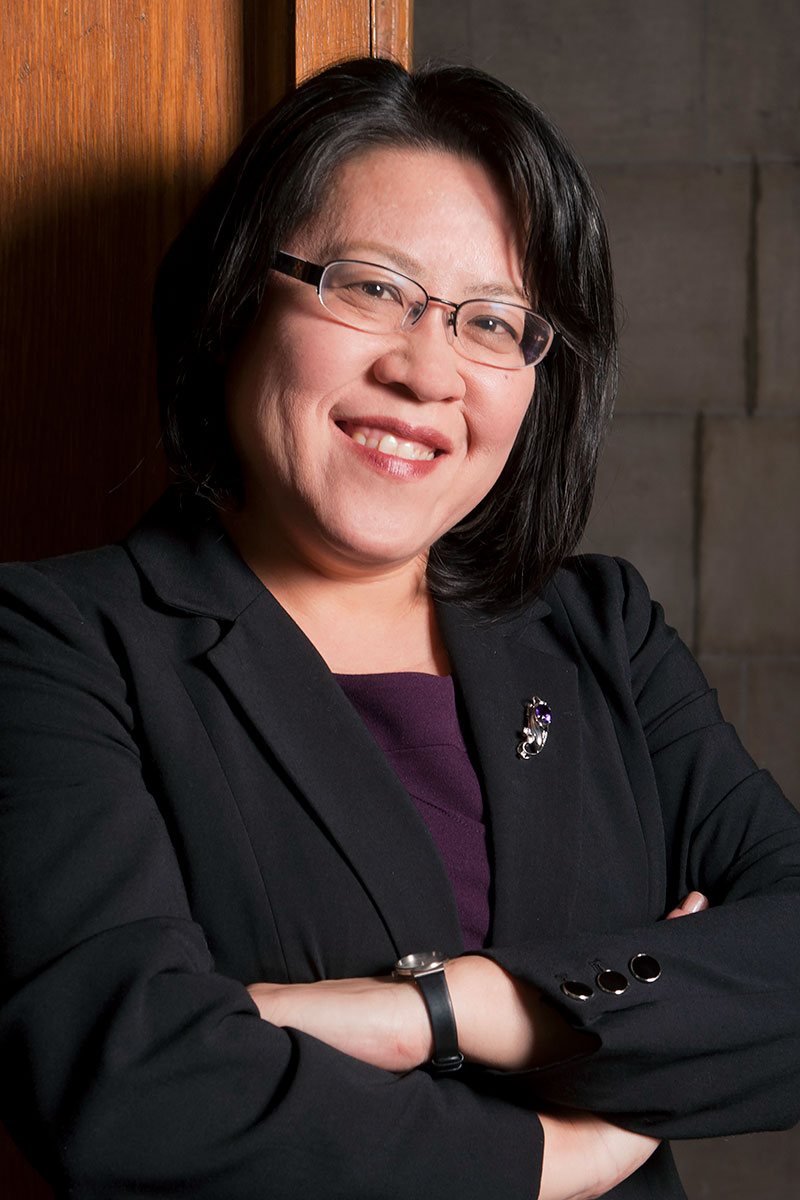
Sophie Volpp is a Professor in the Department of East Asian Languages and Cultures and Comparative Literature at the University of California, Berkeley. Her research focuses on Chinese literature from the 16th to 19th centuries, with particular emphasis on theatricality, material culture, and literary objects. She is the author of *Worldly Stage: Theatricality in Seventeenth-Century China* (2011) and *The Substance of Fiction: Literary Objects in China, 1550-1775* (2022). Her current projects include a book on the National Peiping Library’s preservation efforts during the Sino-Japanese War and an analysis of referents in *The Story of the Stone*. Her scholarly work bridges literary analysis and cultural history, examining themes such as gender, power, and spectacle in late-imperial China. She has translated works by pre-modern women poets and dramatists, contributing to gender-centric scholarship in East Asian studies. Her publications span journal articles and edited volumes, addressing topics like Qing-era theatrical design, material circulation in classical novels, and cross-cultural influences in literary production. Her research has been published in venues such as *Harvard Journal of Asiatic Studies* and *Journal of Asian Studies*.
Lindsay Turner is an Associate Professor in the Department of English at Case Western Reserve University. A poet, critic, and translator, her work bridges creative writing, translation theory, and interdisciplinary research. Her prior role as Assistant Professor at the University of Denver’s Department of English and Literary Arts underscores her commitment to literary education. AB in English, Harvard College Masters in cinema studies, Université Paris III Sorbonne-Nouvelle MFA in poetry, New York University PhD in English, University of Virginia Turner’s research spans creative writing , transnational poetry , and gender studies , with a focus on the intersections of literature and labor. Her recent work examines gendered domestic and reproductive labor through poetic forms. Key trends in her publications include experimental translation , queer theory , and postcolonial philosophy . National Translation Awards Best Translated Book Awards French American Foundation recognition She has received grants such as the WPR Creative Grant from Harvard’s Woodberry Poetry Room and multiple French Voices Grants . Her translations have been praised by The New Yorker and The New York Times for their intellectual rigor and stylistic innovation.
Michael Mejia is an Associate Professor in the Department of English at the University of Utah, where he teaches creative writing. He is also Editor-in-Chief of Western Humanities Review and co-founding editor of Ninebark Press . Mejia is the author of the novels TOKYO and Forgetfulness , with his work appearing in journals like AGNI , DIAGRAM , and Seneca Review . His creative practice bridges fiction, nonfiction, and visual media, interrogating narrative form and socio-cultural dynamics.
Hiromi Tsuchiya Dollase is an Associate Professor of Chinese and Japanese at Vassar College since 2003. Her research focuses on Japanese women’s literature, girls’ magazine culture, and manga, with a particular interest in integrating popular media into language education. She teaches courses such as 'Japanese Popular Culture and Literature' and 'The Gothic and the Supernatural in Japanese Literature.' Dr. Dollase holds a PhD in comparative literature (Japanese and American) from Purdue University (2003), an MA from Illinois State University, and a BA/MA from Baika Women’s College. She authored *Age of Shojo: The Emergence, Evolution and Power of Japanese Girls’ Magazine Fiction* (2019) and has contributed to numerous edited volumes and refereed journals. Her work spans topics like child abuse depictions in manga, sex education in historical fiction, and queer reinterpretations of classic narratives. She co-edited *Women’s Voices in Manga* (2024) and *Manga!: Visual Pop-Culture in ARTS Education* (2020). Her research bridges literary analysis with cultural studies, emphasizing the intersection of gender, media, and education. Dr. Dollase has been featured in media discussions about Japanese literary icons like Nobuko Yoshiya. She actively contributes to interdisciplinary programs in Asian Studies, Media Studies, and Women’s, Feminist, and Queer Studies at Vassar.
Rutgers, The State University of New JerseyUnited States
Nick Kapur is an Associate Professor in the Department of History at Rutgers University–Camden, within the School of Arts and Sciences. He specializes in modern Japan and East Asia, with a focus on transnational perspectives, US-Japan relations, environmental history, gender, and cultural studies including literature and film. His educational background includes a Ph.D. from Harvard University (2011), an M.A. from Stanford University (2003), and a B.A. from Stanford University (2002). Kapur's research examines the intersections of political economy, culture, and international relations in modern Japan, particularly in the postwar era. His acclaimed book, Japan at the Crossroads: Conflict and Compromise after Anpo (2018), analyzes the 1960 protests and their lasting impact on Japanese society and US-Japan relations. He has also published extensively on the Japanese student movement, environmental policy, and Meiji centennial celebrations. His recent and forthcoming articles reflect a sustained engagement with Cold War Japan, dissent, nationalism, and transnational history. Kapur is known for innovative teaching methods, including historical simulations on Pearl Harbor and samurai-era Japan. He is the founder of the Modern Japan History Association and has contributed significantly to digital humanities through projects like the Digital Archive of Japan’s 2011 Disasters and the development of educational apps. His publications from the past decade show a consistent focus on political protest, cultural memory, and international relations in 20th-century Japan. His scholarly contributions include numerous peer-reviewed articles, book chapters, translations, and book reviews in leading journals such as Diplomatic History , The Journal of Asian Studies , and The Asia-Pacific Journal . Kapur advises graduate students and teaches courses on Japanese, Chinese, and Korean history, World War II, and environmental history. He has played a leadership role in promoting Japanese studies globally and continues to be an active researcher with works forthcoming in 2025. His current projects include digital applications for historical education.
Carol Apollonio is a Research Professor in the Department of Slavic and Eurasian Studies at Duke University's Trinity College of Arts & Sciences. She specializes in Russian literature, Russian-Japanese translation, and language pedagogy, with a career spanning academia and high-level U.S. Government interpretation in nuclear weapons negotiations. Education: Ph.D. in Slavic Languages and Literatures (1987) from University of North Carolina, Chapel Hill Her research focuses on Anton Chekhov's literary legacy, cross-cultural translation dynamics, and pedagogical innovation. Recent publications in The Times Literary Supplement explore Chekhov's reception in English-speaking contexts and translation methodologies. Professional Activities: Co-editor of Chekhov's Letters (2018) Translator of Alisa Ganieva's works (2015-2022) Public intellectual contributions on Russian culture and academic labor
Beth M. Carter is an Assistant Professor of Japanese at Case Western Reserve University, specializing in premodern Japanese literature. Her research focuses on mourning rituals and practices in The Tale of Genji and related texts. Education: B.A., Sarah Lawrence College; M.A., Johns Hopkins University; M.A. and Ph.D., University of Pennsylvania Her work introduces the concept of "mourning poetics," analyzing the interplay between post-death rituals and lament poetry in Japanese literary traditions. Secondary research explores women's voices in historical Japanese texts. Recent publications (2016–2025) examine corporeal expressions of grief, regional symbolism in mourning scenes, and the evolution of ritual practices in classical Japanese narratives. Scientific Awards Fulbright Graduate Research Fellowship (Kyoto, Japan 2013, 2015) Blakemore Freeman Fellowship for Advanced Asian Language Study (Yokohama, Japan 2014) Current affiliations include Department of Japanese, Guilford House 313, and Phone: 216.368.2102.
Miryam Sas is a Professor of Comparative Literature at the University of California, Berkeley. Her work bridges Japanese literature, film, theater, and avant-garde arts with critical theory. She specializes in 20th-century cultural movements, postwar Japanese experimental arts, and media theory. Her research includes studies on surrealism, intermedia, and post-Holocaust representation, with notable works like Feeling Media: Potentiality and the Afterlife of Art (2022) and Experimental Arts in Postwar Japan (2010). Her research interests span Japanese modernism, intermedia art, feminist film analysis, and photographic theory. She has curated exhibitions for institutions such as MoMA, the Getty Museum, and the Mori Art Museum, contributing essays on postwar avant-gardes and Japanese photography. Recent projects include translations of modernist poets Sagawa Chika and Ema Shōko, and collaborative archival work on Finding Zbaraż . Prof. Sas has been awarded the UC President’s Research Fellowship for her media theory work. Her teaching focuses on critical theory, Japanese cinema, and media studies, offering courses on infrastructural aesthetics and transnational Asian media. She actively participates in interdisciplinary dialogues through lectures and radio programs like France Culture’s La Fabrique de l’Histoire .
Takashi Miura is an Associate Professor at the University of Arizona specializing in Japanese religions from the early modern to modern periods. His work explores millenarian movements, Shinto practices, and Buddhist visual culture. He holds degrees from the University of Hawai'i at Mānoa (B.A./M.A.) and Princeton University (Ph.D.). Dr. Miura's research examines religious innovations like the rise of 'yonaoshi' renewal gods and deified peasants. His 2019 monograph Agents of World Renewal analyzes apocalyptic concepts in Japanese history. Current projects include a study on early modern peasant deification and its societal impacts. He teaches courses on Buddhism and Japanese religious practices, including EAS 160A1 and JPN 220. His publications span academic journals and edited volumes, addressing topics from Meiji-era polemics to post-war new religions. His work frequently bridges textual analysis with visual and material culture studies.
David Armitage is the Lloyd C. Blankfein Professor of History at Harvard University, where he serves as Chair of the Committee on Degrees in Social Studies and teaches intellectual history and international history. He also holds affiliations with the Harvard Department of Government, Harvard Law School, and is an Honorary Professor at the University of Sydney and Queen's University Belfast. Previously, he chaired Harvard's Department of History (2012-14, 2015-16) and taught at Columbia University for eleven years before joining Harvard in 2004. Armitage was born in Britain and educated at the University of Cambridge and Princeton University. His academic journey includes: Undergraduate studies at University of Cambridge PhD at Princeton University Teaching position at Columbia University (1993-2004) Professorship at Harvard University (2004-present) Honorary positions at University of Sydney, Queen's University Belfast, and St Catharine's College, Cambridge Professor Armitage specializes in intellectual history, international history, and global history, with particular expertise in the history of political thought, empires, and international law. His scholarly approach emphasizes the longue durée perspective, seeking to understand historical phenomena across extended time periods rather than narrow chronological frames. He has been a leading voice in advocating for historians to engage with "big history" that spans centuries, arguing that contemporary challenges like climate change and economic inequality require historical understanding that transcends the short-term thinking prevalent in modern politics and policy. His extensive publication record demonstrates consistent engagement with foundational texts and concepts in political theory, declarations of independence, civil wars, and oceanic history. Armitage's work shows a clear trajectory toward increasingly global and interdisciplinary approaches, connecting intellectual history with legal, political, and environmental frameworks. His scholarship bridges early modern and contemporary history, examining how historical concepts continue to shape modern international relations and political thought. Armitage's significant contributions to historical scholarship have been recognized with prestigious awards: Caird Medal from the National Maritime Museum (2006) for "conspicuously important work ... of a nature that involves communicating with the public" Walter Channing Cabot Fellow from Harvard (2008) for "achievements and scholarly eminence in the fields of literature, history or art" LittD from Cambridge University (2015), the university's highest degree, for "distinction by some original contribution to the advancement of science or of learning" As an advisor and mentor, Armitage has guided numerous graduate students through doctoral programs at Harvard and previously at Columbia. His scholarly leadership extends to co-editing two major book series with Cambridge University Press ( Ideas in Context and Cambridge Oceanic Histories ), serving on the Steering Committee of the Center for Early Modern Political Thought at the Folger Shakespeare Library, and contributing to various academic organizations. His work has attracted significant research funding supporting his global historical investigations. Professor Armitage is deeply involved in collaborative scholarly initiatives, particularly through his work with the Harvard Academy for International and Area Studies, where he serves as a Senior Scholar. His research often involves interdisciplinary teams examining oceanic histories, international law, and global political thought. He has been instrumental in developing the "Cambridge Oceanic Histories" series, which brings together scholars from multiple disciplines to explore the historical significance of oceans as connective spaces rather than barriers.
Ryuichi Abe is the Reischauer Institute Professor of Japanese Religions at Harvard University, currently on leave during 2025-26. He holds a Ph.D. in Religious Studies from Columbia University and teaches graduate and undergraduate courses on East Asian religions, premodern Japanese religions, and Buddhism. Education B.A. in Economics from Keio University M.A. from School of Advanced International Affairs, Johns Hopkins University M.Phil. and Ph.D. in Religious Studies from Columbia University Professor Abe's research focuses on Japanese Buddhism and its intersections with visual culture, literature, and gender studies. He explores historical developments of esoteric Buddhist traditions and interactions between Shinto and Buddhist practices. His work spans critical analyses of Buddhist textual theory, medieval origin narratives, and the cultural impact of figures like Zen Master Ryōkan. Publications include studies on Kūkai's esoteric discourse, the Lotus Sutra's medieval interpretations, and Xuanzang's Heart Sutra in Japanese kami worship contexts. Key themes in his research include ritual consecration, medieval Buddhist environments, and the symbolic integration of Shinto elements into Buddhist frameworks. He has contributed to journals such as Japanese Journal of Religious Studies and Impressions .
Jisoo M. Kim is the Korea Foundation Associate Professor of History, International Affairs, and East Asian Languages and Literatures at George Washington University. She holds leadership roles as Founding Director of the GW Institute for Korean Studies (2017–present) and Founding Co-Director of the East Asia National Resource Center (2018–present). She also serves as Editor-in-Chief of the Journal of Korean Studies . Her work focuses on gender, sexuality, law, emotions, and affect in Korean history, with expertise in legal culture, forensic medicine, and rights-claiming in East Asia. Dr. Kim earned her M.A., M.Phil., and Ph.D. in East Asian Languages and Cultures from Columbia University. She teaches courses such as Gender, Power, and Sexuality in East Asia and History of Korea , emphasizing intersectional approaches to Asian studies. Her research explores legal performance, emotional dimensions of justice, and the role of women’s voices in historical legal contexts. Notable works include The Emotions of Justice: Gender, Status, and Legal Performance in Chosŏn Korea (2016), awarded the 2017 James B. Palais Prize, and co-edited volumes like The Great East Asian War and the Birth of the Korean Nation (2016). Her publications span legal history, comparative frameworks between Korea and Europe, and the evolution of legal systems under colonialism. Current projects include Criminalizing Intimacy: Marriage, Concubinage, and Adultery Law in Korea, 1469–2015 . Kim’s academic contributions bridge historical analysis with contemporary debates on law, gender, and identity, supported by leadership in interdisciplinary research centers and scholarly journals.
Justin McDaniel is the Edmund J. and Louise W. Kahn Endowed Professor of the Humanities at the University of Pennsylvania's Department of Religious Studies. His research focuses on Lao, Thai, Pali, and Sanskrit literature, Buddhist rituals, manuscript studies, and Southeast Asian history. He has authored multiple award-winning books and published over 100 articles and reviews. Education includes a BA from Boston College (1993), MTS from Harvard Divinity School (1998), MA and PhD in Sanskrit and Indian Studies from Harvard University (2001, 2003). His research explores intersections between Buddhism, material culture, and social history. Recent work includes studies on Siamese manuscripts and Thai Buddhist art. He has held grants from NEH, Mellon, Rockefeller, and others. Awarded teaching excellence at multiple institutions, McDaniel’s innovative courses like Existential Despair and Living Deliberately have been featured in national media. He serves as co-editor for Buddhism Compass and Journal of Lao Studies . Publications include Cosmologies and Biologies (2024), Wayward Distractions (2023), and Architects of Buddhist Leisure (2015), supported by NEH and Kyoto University. Forthcoming projects address Thai manuscripts and Buddhist biographies.
Si Nae Park is an Associate Professor at Harvard University's Faculty of Arts and Sciences and Director of Graduate Studies for Regional Studies East Asia. Her research focuses on the interplay between cosmopolitan Literary Sinitic and vernacular Korean in premodern East Asia, examining genres like yadam (vernacular stories) and sosŏl ŏrokhae (fiction glossaries). Affiliation: Department of East Asian Languages and Civilizations, Harvard University Role: Director of Graduate Studies for Regional Studies East Asia Her work explores inscriptional ecologies, vernacular reading practices, and the materiality of texts in Chosŏn Korea. She has written on the Tongp’ae Naksong and the evolution of vocal reading practices. Publications include her monograph The Korean Vernacular Story (2020) and peer-reviewed articles on Confucian classics (2019), yadam heritage narratives (2021), and Chosŏn manuscript culture (2022). She co-organized a 2022 Harvard conference on Korean book history. Her current project, Within Earshot , investigates oral-aural dimensions of reading in Chosŏn Korea, analyzing how auditory practices shaped textual authority and literary production. She has contributed to translations of premodern Korean prose and Japanese studies on the Sinographic Cosmopolis.
Melissa McCormick, Andrew W. Mellon Professor of Japanese Art and Culture at Harvard University, holds a Ph.D. in Japanese Art History from Princeton University (2000) and a B.A. in art history and Japanese from the University of Michigan (1990). She has taught at Columbia University as the Atsumi Assistant Professor of Japanese Art (2000-05) and at Harvard since 2005, where she was promoted to Professor with tenure in 2009. She has held visiting professorships at the University of Zurich and Universidade Estadual de Campinas, Brazil. Education : University of Michigan (B.A.), Princeton University (Ph.D.), Gakushūin University (1996-98) Affiliations : Harvard Art Museums, Metropolitan Museum of Art, NHK Documentaries, Getty Foundation Her research explores the interplay of text and image in Japanese art, focusing on emaki (narrative scrolls), The Tale of Genji , and Buddhist themes. Her 2018 monograph The Tale of Genji: A Visual Companion and 2009 book Tosa Mitsunobu and the Small Scroll in Medieval Japan established new frameworks for analyzing scroll format and narrative. Current projects examine Buddhist nun-artist Ōtagaki Rengetsu and bridal manuscript traditions. Selected articles highlight her work on Hakubyō (ink-line painting), medieval Genji genealogies, and the poetics of chigo (novice) tales. She has contributed to exhibitions at the Metropolitan Museum of Art and Dartmouth College’s Hood Museum. Scientific Awards : Mellon Fellowship in the Humanities (1990) At Harvard, McCormick teaches courses ranging from introductory surveys ( Arts of Japan ) to advanced seminars on gender, tea culture, and museum research. She co-curated the 2019 Tale of Genji exhibition at the Met, which received critical acclaim, and developed an edX course with over 20,000 enrollments. Her consultancy work extends to opera and dance companies, including Japan Society and Asia Society of Texas.