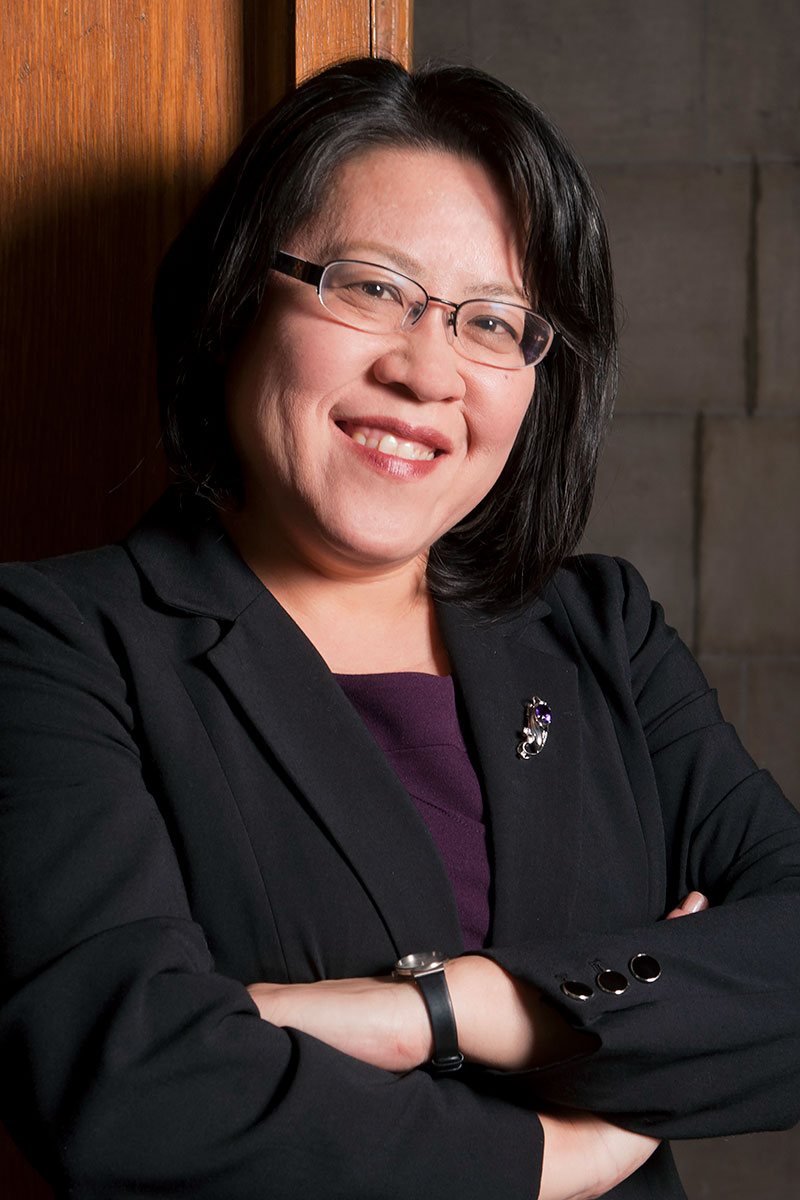
Hiromi Tsuchiya Dollase is an Associate Professor of Chinese and Japanese at Vassar College since 2003. Her research focuses on Japanese women’s literature, girls’ magazine culture, and manga, with a particular interest in integrating popular media into language education. She teaches courses such as 'Japanese Popular Culture and Literature' and 'The Gothic and the Supernatural in Japanese Literature.' Dr. Dollase holds a PhD in comparative literature (Japanese and American) from Purdue University (2003), an MA from Illinois State University, and a BA/MA from Baika Women’s College. She authored *Age of Shojo: The Emergence, Evolution and Power of Japanese Girls’ Magazine Fiction* (2019) and has contributed to numerous edited volumes and refereed journals. Her work spans topics like child abuse depictions in manga, sex education in historical fiction, and queer reinterpretations of classic narratives. She co-edited *Women’s Voices in Manga* (2024) and *Manga!: Visual Pop-Culture in ARTS Education* (2020). Her research bridges literary analysis with cultural studies, emphasizing the intersection of gender, media, and education. Dr. Dollase has been featured in media discussions about Japanese literary icons like Nobuko Yoshiya. She actively contributes to interdisciplinary programs in Asian Studies, Media Studies, and Women’s, Feminist, and Queer Studies at Vassar.
Beth M. Carter is an Assistant Professor of Japanese at Case Western Reserve University, specializing in premodern Japanese literature. Her research focuses on mourning rituals and practices in The Tale of Genji and related texts. Education: B.A., Sarah Lawrence College; M.A., Johns Hopkins University; M.A. and Ph.D., University of Pennsylvania Her work introduces the concept of "mourning poetics," analyzing the interplay between post-death rituals and lament poetry in Japanese literary traditions. Secondary research explores women's voices in historical Japanese texts. Recent publications (2016–2025) examine corporeal expressions of grief, regional symbolism in mourning scenes, and the evolution of ritual practices in classical Japanese narratives. Scientific Awards Fulbright Graduate Research Fellowship (Kyoto, Japan 2013, 2015) Blakemore Freeman Fellowship for Advanced Asian Language Study (Yokohama, Japan 2014) Current affiliations include Department of Japanese, Guilford House 313, and Phone: 216.368.2102.
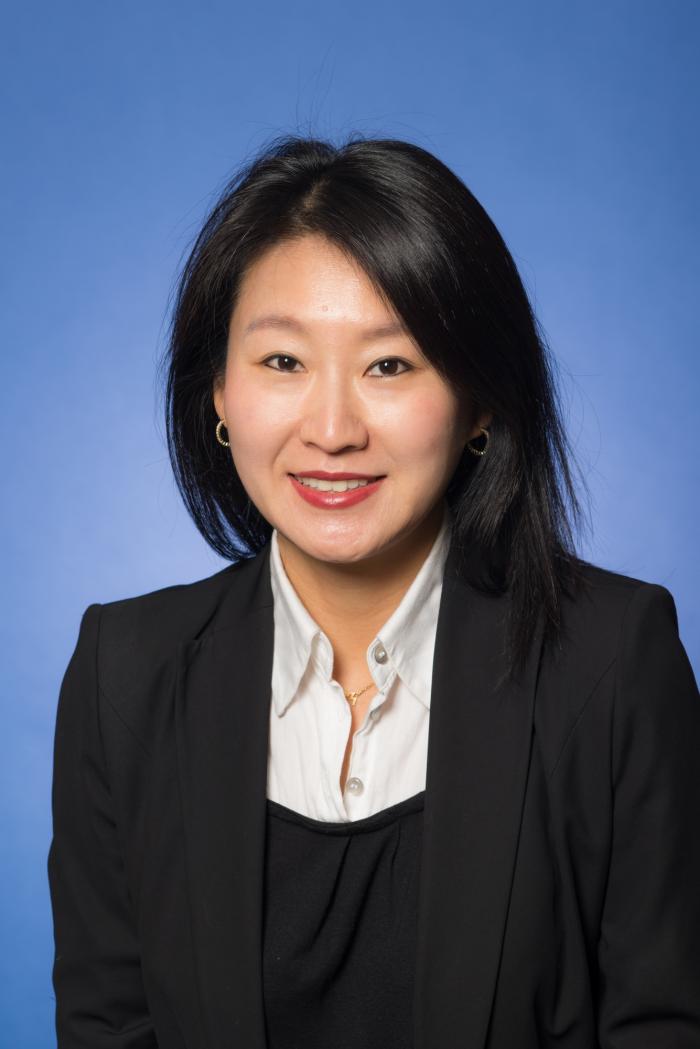
Jisoo M. Kim is the Korea Foundation Associate Professor of History, International Affairs, and East Asian Languages and Literatures at George Washington University. She holds leadership roles as Founding Director of the GW Institute for Korean Studies (2017–present) and Founding Co-Director of the East Asia National Resource Center (2018–present). She also serves as Editor-in-Chief of the Journal of Korean Studies . Her work focuses on gender, sexuality, law, emotions, and affect in Korean history, with expertise in legal culture, forensic medicine, and rights-claiming in East Asia. Dr. Kim earned her M.A., M.Phil., and Ph.D. in East Asian Languages and Cultures from Columbia University. She teaches courses such as Gender, Power, and Sexuality in East Asia and History of Korea , emphasizing intersectional approaches to Asian studies. Her research explores legal performance, emotional dimensions of justice, and the role of women’s voices in historical legal contexts. Notable works include The Emotions of Justice: Gender, Status, and Legal Performance in Chosŏn Korea (2016), awarded the 2017 James B. Palais Prize, and co-edited volumes like The Great East Asian War and the Birth of the Korean Nation (2016). Her publications span legal history, comparative frameworks between Korea and Europe, and the evolution of legal systems under colonialism. Current projects include Criminalizing Intimacy: Marriage, Concubinage, and Adultery Law in Korea, 1469–2015 . Kim’s academic contributions bridge historical analysis with contemporary debates on law, gender, and identity, supported by leadership in interdisciplinary research centers and scholarly journals.
Melissa McCormick, Andrew W. Mellon Professor of Japanese Art and Culture at Harvard University, holds a Ph.D. in Japanese Art History from Princeton University (2000) and a B.A. in art history and Japanese from the University of Michigan (1990). She has taught at Columbia University as the Atsumi Assistant Professor of Japanese Art (2000-05) and at Harvard since 2005, where she was promoted to Professor with tenure in 2009. She has held visiting professorships at the University of Zurich and Universidade Estadual de Campinas, Brazil. Education : University of Michigan (B.A.), Princeton University (Ph.D.), Gakushūin University (1996-98) Affiliations : Harvard Art Museums, Metropolitan Museum of Art, NHK Documentaries, Getty Foundation Her research explores the interplay of text and image in Japanese art, focusing on emaki (narrative scrolls), The Tale of Genji , and Buddhist themes. Her 2018 monograph The Tale of Genji: A Visual Companion and 2009 book Tosa Mitsunobu and the Small Scroll in Medieval Japan established new frameworks for analyzing scroll format and narrative. Current projects examine Buddhist nun-artist Ōtagaki Rengetsu and bridal manuscript traditions. Selected articles highlight her work on Hakubyō (ink-line painting), medieval Genji genealogies, and the poetics of chigo (novice) tales. She has contributed to exhibitions at the Metropolitan Museum of Art and Dartmouth College’s Hood Museum. Scientific Awards : Mellon Fellowship in the Humanities (1990) At Harvard, McCormick teaches courses ranging from introductory surveys ( Arts of Japan ) to advanced seminars on gender, tea culture, and museum research. She co-curated the 2019 Tale of Genji exhibition at the Met, which received critical acclaim, and developed an edX course with over 20,000 enrollments. Her consultancy work extends to opera and dance companies, including Japan Society and Asia Society of Texas.
Ming-Cheng Lo is a Professor of Sociology at the University of California, Davis. She holds a Ph.D. in Sociology from the University of Michigan, along with an M.A. in Comparative Literature and a B.A. in Foreign Languages and Literature from National Taiwan University. Her research focuses on health, immigration, civic engagement, and culture, particularly exploring how marginalized groups navigate challenging social environments through hybrid cultural strategies. She has conducted extensive studies on healthcare access for immigrants, disaster recovery in Taiwan, and the interplay of cultural codes in civil society. Her academic career includes co-editing the Routledge Handbook of Cultural Sociology (2010, 2019) and authoring Doctors within Borders: Profession, Ethnicity, and Modernity in Colonial Taiwan (2002). Her work bridges sociological theory with empirical studies, emphasizing themes like cultural capital, resistance, and transnationalism. She has received grants from institutions including the Pacific Rim Research Program and Robert Wood Johnson Foundation, supporting projects on pandemic governance, immigrant healthcare, and civil society dynamics. Professor Lo teaches courses on immigration, health sociology, and social movements at both undergraduate and graduate levels. Her research has been recognized through fellowships such as the Davis Humanities Institute Fellowship and APRU Fellowship, and she has authored over 50 peer-reviewed articles in leading journals like Theory and Society and Sociological Perspectives . Her recent work examines Taiwan’s pandemic governance during the 2021–2025 period, linking public health responses to broader sociopolitical trends. She collaborates with global scholars to analyze cultural mechanisms in disaster recovery and populism resistance, reflecting her commitment to sociological inquiry with global relevance.
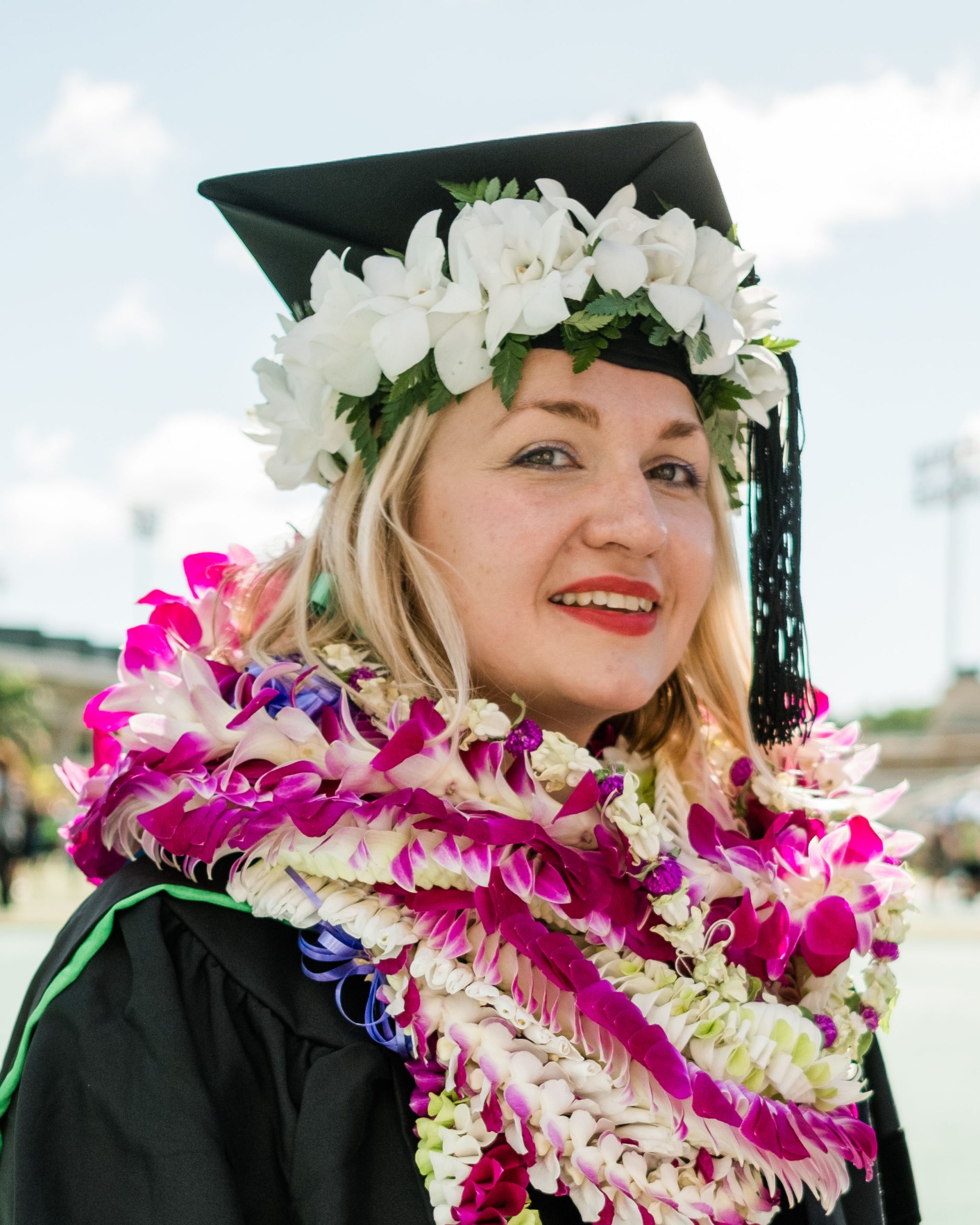
Małgorzata K. Citko-DuPlantis is an Assistant Professor of Japanese Literature and Culture at the University of Tennessee’s Department of World Languages and Cultures, within the College of Arts and Sciences. She holds a Ph.D. from the University of Hawaiʻi at Mānoa, alongside M.A. and B.A. degrees from Polish institutions (Collegium Civitas and University of Warsaw). Her research interrogates the instability of premodern knowledge systems, focusing on the Man’yōshū’s evolving cultural significance across medieval and modern eras. She challenges the canonical fixation on a single manuscript of this foundational poetry collection, arguing its role as a malleable cultural construct. Her work spans interdisciplinary areas including digital humanities, medieval Japanese poetry reception, and contemporary pop-media depictions of premodern Japan. Citko-DuPlantis has authored/co-authored monographs and peer-reviewed articles in English, Polish, and Japanese, with notable works like Clashes of Dragons and Dragonflies (2012) and her forthcoming monograph Embracing Instability: Imagining “Man’yoshū” in Medieval and Modern Japan . She has been awarded grants from the Japan Foundation, Fulbright, and MEXT, and has presented at major conferences such as the Association for Asian Studies and MLA. Her research awards reflect sustained scholarly impact, complemented by multilingual competence in languages including Arabic, Chinese, French, German, Hebrew, Italian, Japanese, Korean, Portuguese, Russian, and Spanish. Citko-DuPlantis actively engages with both academic and public spheres, bridging historical textual analysis with modern cultural phenomena.
Jaime Harker is a Professor of English and Director of the Sarah Isom Center for Women and Gender Studies at the University of Mississippi. She specializes in American literature, LGBTQ literature, and gender studies. Her research explores topics such as Japanese translation, Cold War gay literature, and women’s liberation movements. She holds a Ph.D. in English from Temple University (1998), and M.A. and B.A. degrees from Brigham Young University (1993 and 1989, respectively). Her notable works include America the Middlebrow , Middlebrow Queer , and The Oprah Affect . She has edited volumes on queer literature, Faulkner, and feminist print culture. Her upcoming monograph, The Lesbian South , examines Southern queer literary canons and feminist activism. Her academic contributions span literary criticism, cultural studies, and pedagogy. She has published widely on topics such as Oprah’s Book Club’s cultural impact, Faulkner’s sexualities, and 20th-century LGBTQ literary movements. She actively engages in interdisciplinary research, linking Southern studies with global cultural contexts.
Yoshiko Matsumoto is the Yamato Ichihashi Professor in Japanese History and Civilization and Professor of East Asian Languages and Cultures at Stanford University, with a courtesy appointment in Linguistics. She has been a faculty member at Stanford since 1992, progressing from Assistant Professor to her current distinguished position. Matsumoto also serves as coordinator of the Japanese Language Program and has held significant administrative roles including Chair of the Department of Asian Languages (2003-2005) and Interim Chair of the Department of East Asian Languages and Cultures (2016). Matsumoto earned her Ph.D. in Linguistics from the University of California, Berkeley (1989), following M.A. degrees in Linguistics from UC Berkeley and General and Applied Linguistics from the University of Tsukuba, an M.I.A. in American Studies from the University of Tsukuba, and a B.A. in English Language & Literature from Japan Women's University. Professor Matsumoto's research focuses on linguistic pragmatics from cross-linguistic perspectives, with particular expertise in Japanese language. Her work spans structural and sociocultural aspects of language in use, including noun-modifying clause constructions, honorifics, discourse markers, and the intersection of language with gender and aging. She has pioneered research on conversational narratives of older adults, examining how ordinary framing strategies help individuals navigate difficult experiences. Her current projects explore intergenerational communication through haiku, communicative abilities of people with dementia, and noun-modifying constructions across Eurasian languages. Matsumoto's scholarship consistently bridges theoretical linguistics with practical applications for understanding human communication in diverse social contexts. Matsumoto's recent publications reveal a growing focus on practical applications of linguistic research for social benefit, particularly in intergenerational communication and dementia care. Her work increasingly integrates arts-based approaches, especially haiku poetry, to bridge generational divides and enhance communication with elderly populations. The research shows a consistent trajectory from theoretical linguistic frameworks toward applied, human-centered language studies that address real-world challenges in aging societies, with particular attention to how ordinary language practices help individuals navigate life transitions and difficult experiences. Dean's Award for Distinguished Teaching, School of Humanities and Sciences, Stanford University (2000) Richard E. Guggenhime Faculty Scholar, Stanford University (2000-2003) Violet Andrews Whittier Fellow, Stanford Humanities Center (2019-2020) Faculty Research Fellow, Michelle R. Clayman Institute for Gender Research (2014-2015) Research Fellow, Japan Foundation (2002) Internal Fellow, Stanford Humanities Center (2005-2006) Presidential Fund for Innovation in the Humanities, Stanford University (2009-2011) Professor Matsumoto has mentored numerous students through her teaching in Japanese language and linguistics courses, including specialized offerings on language and aging, points in Japanese grammar, and haiku-based communication. Her research has been supported by prestigious grants from the National Endowment for the Humanities, the Japan Foundation, and Stanford's Presidential Fund for Innovation in the Humanities. She has served on multiple editorial boards including the Journal of Pragmatics since 1992, demonstrating long-standing leadership in her field. Matsumoto has also advised students through individual studies and thesis projects in East Asian Languages and Cultures. Matsumoto leads several collaborative research initiatives including the 'Sharing Conversations' project which examines intergenerational communication through haiku, and research on communicative abilities of people with dementia. Her work often involves interdisciplinary teams spanning linguistics, gerontology, and creative arts, with fieldwork conducted in both Japan and the United States. The 'Noun-Modifying Constructions in Languages of Eurasia' project represents a major international collaboration examining linguistic structures across cultural boundaries. She also directs the 'Language, Old Age and Gender in Japan' project supported by the Stanford University/Japan Foundation, and the 'Difficult Conversations Continue: Memories of the 3.11 Disaster and Bereavement Narratives' project focused on post-disaster communication.
Michael K. Bourdaghs is the Robert S. Ingersoll Professor in East Asian Languages and Civilizations and the College at the University of Chicago, where he also chairs the Committee on Japanese Studies. He specializes in modern Japanese literature, culture, and intellectual history, with particular expertise in Japanese popular music and literary/critical theory. Professor Bourdaghs's research focuses on Japanese literature within global contexts, emphasizing how Japanese literature moves across multiple global networks. His current project rethinks Japanese cultures of the Cold War era, examining how Japanese writers, filmmakers, and musicians participated in multiple Cold War networks beyond the typical U.S./Japan bilateral framework. His scholarly work reveals consistent themes across Japanese literature, critical theory, and cultural history, particularly regarding property ownership, nationalism, and geopolitical alignments. His extensive publication record includes major works such as Sound Alignments: Popular Music in Asia's Cold Wars (2021), A Fictional Commons: Natsume Sōseki and the Properties of Modern Literature (2021), and Sayonara Amerika, Sayonara Nippon: A Geopolitical Pre-History of J-Pop (2012), demonstrating his interdisciplinary approach connecting literary analysis with political, historical, and theoretical frameworks. Professor Bourdaghs has received recognition for his scholarly contributions through numerous publications with prestigious academic presses including Duke University Press, Columbia University Press, and the University of Michigan Center for Japanese Studies. As an educator, Professor Bourdaghs teaches courses on East Asian popular music, Japanese literature, and sound in Japanese literature. His commitment to bridging academic communities extends to his editorial work introducing Japanese critical theory and scholarship to English-language readers, fostering greater academic exchange between Japan and Western institutions.
Jing Tsu is the Jonathan D. Spence Chair Professor of Comparative Literature and East Asian Languages and Literatures at Yale University. She holds affiliations with the MacMillan Center for International and Area Studies (as Senior Research Fellow), the Humanities Program, Women’s, Gender, and Sexuality Studies (WGSS), and Ethnicity, Race, and Migration (ER&M). Her interdisciplinary research focuses on modern Chinese literary and cultural studies, with specialties in diaspora, science history, and comparative frameworks. Her key works include Sound and Script in Chinese Diaspora (2010) and Failure, Nationalism, and Literature (2005), which explore themes of cultural identity, transnational networks, and historical transformations. Tsu has held prestigious fellowships from institutions including Harvard Society of Fellows, Alexander von Humboldt Foundation, and the Institute for Advanced Study at Princeton. Her research bridges literary analysis with technological history, examining how language, script, and scientific knowledge shape cultural power dynamics. Her recent publications analyze global literary frameworks (e.g., 2023’s World Literature and National Literature(s) ) and the intersections of science translation with national identity (e.g., 2014’s Science in Translation: Yan Fu’s Role ). Tsu’s work consistently interrogates the boundaries between global and local cultural systems, emphasizing the agency of marginalized voices in shaping intellectual histories. Awards: Harvard Society of Fellows Fellowship, Radcliffe Institute Fellowship, Mellon Foundation Fellowship, and others. Grants/Advising: Extensive institutional support through fellowships; her advisory roles focus on guiding interdisciplinary scholarship in Sinophone studies and transnational literatures. Labs/Teams: Collaborates through the MacMillan Center’s international studies initiatives and interdisciplinary programs like ER&M and WGSS.
Bonnie Wheeler is an Associate Professor and Director of Medieval Studies at Southern Methodist University (SMU), where she has been since 1975. She previously taught at Columbia University and Case Western Reserve University. Her research focuses on medieval narrative, Chaucer’s poetry, medieval gender studies, and interdisciplinary pedagogy. She founded Arthuriana , the first peer-reviewed journal of Arthurian studies, and has edited/co-edited over 11 books, including Medieval Mothering and Eleanor of Aquitaine: Lord and Lady . Wheeler holds a Ph.D. from Brown University. She has received numerous accolades, including SMU’s Outstanding Teacher Award (six times), the Phi Beta Kappa Perrine Prize, and the 2023 Medieval Foremother Prize. She is a frequent consultant for historical media (A&E, BBC) and was honored with the Bonnie Wheeler Fund, supporting women in medieval studies. Her scholarly contributions span Arthurian literature, medieval women’s studies, and pedagogical innovation. Notable articles include analyses of Chaucer, Malory, and Abelard’s legacy. She has held leadership roles in professional organizations like the Medieval Academy of America and serves as series editor for The New Middle Ages and Arthurian and Courtly Cultures book series. Awards and mentorship: The Bonnie Wheeler Fellowship Fund, established in her honor, supports women medievalists striving for promotion. She has mentored countless scholars, including recipients like Lisa Reilly and Dawn Marie Hayes.
Dr. Emily Wilcox is the Margaret Hamilton Professor of Chinese Studies at William & Mary and core faculty in the Asian and Middle Eastern Studies Program. She holds affiliations with the University of Michigan’s Lieberthal-Rogel Center for Chinese Studies and multiple interdisciplinary programs. Her research focuses on modern Chinese performing arts, cultural diplomacy, and Cold War transnational networks. Wilcox earned degrees from Harvard, Cambridge, and UC Berkeley. She has held roles as Interim Chair of Modern Languages at William & Mary and Associate Chair at the University of Michigan. Her awards include the 2024 Guggenheim Fellowship and the 2019 de la Torre Bueno Prize. Her research explores Sino-Japanese cultural diplomacy, Cold War dance exchanges, and the role of performance in Asian geopolitics. Recent work includes analyzing the Matsuyama Ballet’s White-Haired Girl adaptation and China’s Bandung-era dance diplomacy. Wilcox has authored six books and over 30 articles, co-curated major exhibitions on Chinese dance history, and directs the Chinese Dance Collection at the University of Michigan. Her work bridges dance studies, cultural history, and East Asian studies.
Liang Luo is a Professor of Chinese Studies at the University of Kentucky’s Modern and Classical Languages, Literatures and Cultures department within the College of Arts & Sciences. He holds a Ph.D. from Harvard University’s East Asian Languages and Civilizations program, preceded by MA and BA degrees in Chinese literature and comparative literature from Beijing Normal University. Luo’s research focuses on intersections of performance, politics, and popular culture in modern China, Japan, and the international avant-garde. His work explores Sino-Japanese cultural relations, gender politics, and folklore, particularly through the lens of the White Snake legend. Education: Ph.D., East Asian Languages and Civilizations, Harvard University M.A., Comparative Literature, Beijing Normal University B.A., Chinese Language and Literature, Beijing Normal University Research Interests: Performance studies, propaganda, and avant-garde movements Cultural politics of gender and intersectionality Multimedia adaptations of classical legends East Asian comparative literature and film Awards and Recognition: Harvard-Yenching Doctoral Fellowship Reischauer Institute Fellowship NEH Summer Stipend (Stanford University) Harvard’s Certificate of Distinction in Teaching Professional Affiliations: International Studies Chinese Studies Folklore & Mythology Gender and Women’s Studies Global Asias Luo’s publications include The Global White Snake (2021) and The Avant-Garde and the Popular in Modern China (2014), analyzing intersections of cultural politics and performance. His work bridges classical and modern studies, with recent projects exploring digital activism through folklore and transnational cultural narratives.
University of California, Los AngelesUnited States
Jordan A. Y. Smith is an academic specializing in contemporary Japanese literature, comparative literature, and translation studies. He served as Associate Professor of Intercultural Studies at Josai International University, teaching in MA programs on Translation Studies and International Administration. He has also held visiting positions at UC Riverside, Pepperdine, Waseda University, and Sophia University. His research bridges literary analysis with cultural and translation studies, focusing on transnational ideologies and transpacific literary exchanges. Holding a Ph.D. in Comparative Literature from UCLA, Smith’s work spans poetry creation (in English and Japanese), literary translation of leading Japanese poets, and editorial roles including Editor-in-Chief (emeritus) of the Tokyo Poetry Journal. He is also an art curator for exhibitions at DIESEL Art Gallery (Shibuya), N&A Gallery (Tokyo), and Arts Maebashi. His creative output includes poetry volumes like Syzygy and Sea of Trees , showcasing experimental forms and thematic depth. Smith’s recent articles (2015–2018) explore topics such as transnational literary systems, gender dynamics in Japanese women’s poetry, and postcolonial narratives. His work exemplifies interdisciplinary approaches, merging literary criticism with cultural studies and visual arts. Though no formal awards are listed, his prolific publication record and curatorial activities highlight sustained academic and creative engagement. He has advised students across multiple institutions but none are explicitly listed here. Grants and funding details are not provided in the available text. Beyond academia, Smith has produced media content for BBC World Service, BBC Radio 4, and Naro TV, further demonstrating his multimedia and cross-cultural expertise.
Danica Truscott is a Lecturer on Classical Japanese (Bungo) and Kanbun at Harvard University's Department of East Asian Languages and Cultures (EALC). She holds a Ph.D. from UCLA’s Department of Asian Languages and Cultures (2022), an A.M. from Harvard’s Regional Studies–East Asia program (2014), and a B.A. in Japanese Language from UC Berkeley (2011). Previously, she served as a postdoctoral fellow at the Reischauer Institute of Japanese Studies (2022–2023). Her research focuses on premodern Japanese literature, particularly women’s literary history, gender performance, and the reception/translation of classical texts. She is currently working on a feminist reinterpretation of the Man’yōshū , Japan’s oldest poetic anthology, centering on Lady Sakanoue’s contributions to Nara period literary culture. In teaching, Dr. Truscott offers courses in Classical Japanese, Kanbun, and advanced-level seminars that integrate both linguistic forms at EALC.